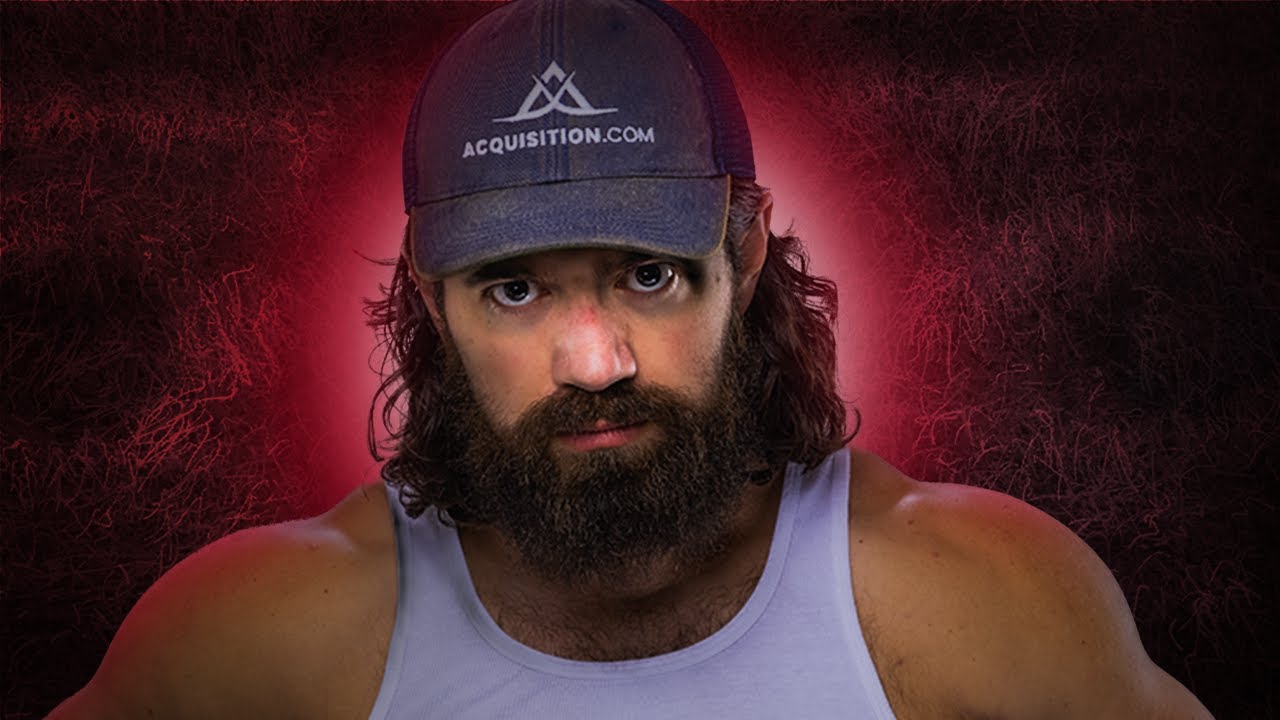
I sold everything
22:28

I sold everything

Alex Hormozi 21.03.2022 352 972 просмотров 11 843 лайков

Machine-readable: Markdown · JSON API · Site index

Поделиться Telegram VK Бот
Транскрипт Скачать .md
Анализ с AI
Описание видео
Download your free scaling roadmap here: https://www.acquisition.com/roadmap-yta190 The easiest business I can help you start (free trial): https://www.skool.com/hormozi Business owners: Want to scale faster? We provide in-person advisory for companies doing at least $1M per year: https://www.acquisition.com/workshop-yta190 If you're new to my channel, my name is Alex Hormozi. I'm the founder and managing partner of Acquisition.com. It's a family office, which is just a formal way of saying we invest our own money into companies. Our 10 portfolio companies bring in over $250,000,000+ per year. Our ownership stake varies between 20% and 100% of them. Given this is a YT channel, and anyone can claim anything, I'll give you some stuff you can google to verify below. How I got here… 21: Graduated Vanderbilt in 3 years Magna Cum Laude, and took a fancy consulting job. 23 yrs old: Left my fancy consulting job to start a business (a gym). 24 yrs old: Opened 5 gym locations. 26 yrs old: Closed down 6th gym. Lost everything. 26 yrs old: Got back to launching gyms (launched 33). Then, lost everything for a 2nd time. 26 yrs old: In desperation, started licensing model as a hail mary. It worked. 27 yrs old: "Gym Launch" does $3M profit the next 6 months. Then $17M profit next 12 months. 28 yrs old: Started Prestige Labs. $20M the first year. 29 yrs old: Launched ALAN, a software company for agencies to work leads for customers. Scaled to $1.7mmo within 6 months. 31 yrs old: Sold 75% of UseAlan to a strategic buyer in an all stock deal. 31 yrs old: Sold 66% of Gym Launch & Prestige Labs at $46.2M valuation in all-cash deal to American Pacific Group. (you can google it) 31 yrs old: Started our family office Acquisition.com. We invest and scale companies using the $42M in distributions we had taken + the cash from the $46.2M exit. 32 yrs old: Started making free content showing how we grow companies to make real business education accessible to everyone (and) to attract business owners to invest or scale their businesses. 34 yrs old: I became co-owner of https://Skool.com, which is a platform for people to build communities online, making a living doing what they love, with people like them. 36 yrs old: I did a $106M book launch selling 3.6M copies of my $100M Money Models book, in 72 hours, breaking the Guinness world record for the fastest selling non-fiction book of all time. Today: Our portfolio now does $200M/yr between 10 companies. The largest doing $100M/yr the smallest doing $5M per year. Our ownership varies between 20% and 100% ownership of the companies. Many of them we invested in early and helped grow (which is how we make our money - not youtube videos). To all the gladiators in the arena, we're all in the middle of writing our own stories. The worse the monsters, the more epic the story. You either get an epic outcome or an epic story. Both mean you win. Keep crushing. May your desires be greater than your obstacles. Never quit, Alex DISCLOSURE Information shared here is for educational purposes only. Individuals and business owners should evaluate their own business strategies, and identify any potential risks. The information shared here is not a guarantee of success. Your results may vary. Copyright © 2025.
Оглавление (15 сегментов)

Intro

Last year, I sold a $12 million business, two businesses for just under 50 million and two cars that were both exotic cars and a $4 million house in Austin. And that left me with really no, I would say, I mean, I did have like equities and stocks and stuff, but I didn't really have like material belongings. And I did that because I wanted to have a reset. And so, what I want to do in this video is talk to you about one um what life was like or why I made the decision. Two, what life was like after I made the decision. what I learned and then uh some of the realizations I had along the way and what I'm doing now. And so if you don't know who I am, my name's Alex Mosi. I own acquisition. com. Uh we have a portfolio of companies about $85 million a year. I make these videos because I just want to transfer whatever lessons I have learned along the way to hopefully help some other people. Let's dive in.

Why I sold everything

So why did I go and sell everything last year? I think the biggest thing is it felt very heavy. I felt like I had all these material things that were weighing me down and taking my attention. And I have lived my life in seasons. And what I mean by that is like I look back on my life and I've had like three to five year seasons. I had a season where I went to college and then became man a management consultant. I had a season of running gyms. licensing gyms and starting three kind of bigger companies which is what we just sold last year. And the season that we're in now, which is now we just full-time, you know, find uh service- based businesses or e-learning businesses that are doing like 1 to 10 million a year um in profit and invest in them, right? That's what we do now. I thought that I wanted to have, and I said this often, my dream state going into this was, I want to have an unlimited credit card and just consume my lifestyle with one bag. And my wife and I more or less did that after we sold. So, I basically got rid of all my clothing um with the exception of like one bag's worth. And we set off and spent a bunch of time in different areas. And part of this was because we wanted to figure out where we wanted to live. And I have a the requirements

Walkable distance

for what I was looking for. I have this big list that I made uh before we did this journey and I'll tell you where we went in a second. But I wanted something and this might be useful for you to like you know think through. I wanted things to be walking distance from me. So having lived in a handful of different areas, very expensive areas, very cheap areas. Um I realized that 90% of like my life is really just predicated on the things that are in my immediate walkable distance. And so I wanted nature to be in walkable distance because we like Leila and I walk probably an hour or two every day. Um I wanted restaurants because we got to eat a lot and having the convenience of just something that we can go eat regularly is really you know useful and has high utility for us. Number three is I wanted to have a very sick gym in like the immediate vicinity. And that's because for me I've realized that that's a very important part of my life in terms of like things that bring me joy. And then number four having a grocery store really nearby. That sounds silly but like it's actually very convenient to have grocer. Those are like my big walking distance things that either have to be inside of the building or within like walkable distance. In terms of like things that the home that I wanted to have requirements was a view of either the ocean, lake or mountain. Like that was important to me because at least for me when I look out the window

Home requirements

like it's nice. Super fast Wi-Fi. Um a hot tub/pool with a view. An office and studio. Three bedrooms minimum ideally more. Um and a big balcony or patio. All right. Those are like kind of the house things. And then additional features were kind of like more area specific. So it has to be reachable by Amazon Prime. I want it to be in a zero tax state because for me uh the difference between two different areas is much more dependent on the subm market that you are in. So like for example, people like to say that they love a certain city. But I think if you really think about it, there's just a handful of tiny little neighborhoods because like you as one human probably are like, "Oh, I visited Nashville one weekend. Nashville's awesome. " And what you're making a judgment on like Nashville is the 3 to 10 people that you spent time with and the, you know, six places that you went when Nashville has a thousand places. And so it's like we take these, we make these snap judgments on areas based on such limited data, they're almost irrelevant. You could have a terrible experience in Nashville because you had the wrong people or the wrong three to five locations that you visited and an amazing one in Cincinnati because you were in a very wealthy area and that was the microcosm. You probably wouldn't even know the difference if you were in the suburbs of Cincinnati versus the suburbs of whatever. You know what I mean? And so I've realized this because Leila and I actually spent two years on the road before we settled down to start the three bigger businesses doing gym turnarounds. And so we actually were in 33 cities in 18 months and we spent like two to three weeks in each one of them. And so we got a lot of feel for what America feels like. And what's interesting is there was a couple times where I was walking through like a Target and I remember thinking to myself I knew the Target like the back of my hand because almost all of them are set up the same way and I was like what city am I in again? And the thing is like most cities especially in like the higherend areas if that's what you're trying to get into. They have the Whole Foods, they have a Target, they have the same chains of rest. It's all so similar that we have these like super strong beliefs about like one city versus another and they're almost identical when you get into like the submarkets, right? And so for me, that's why and I've made videos about why I don't think you should make decisions based on tax. I have no marginal difference in living. And so since there is no marginal difference, I then say, okay, well, if there's no difference, then I would rather pay less in taxes. And so that is why 0% tax was one of the the requirements or preferences rather. I wanted to have a way to meet lots of neighbors that were interesting. And so this is one of those like I prefer to live in a wealthy area because then and ideally ultra wealthy and I say that because I've lived in quote wealthy areas and you get a lot of upper middle class and there's nothing wrong with that. It's just that those people don't necessarily understand like my lifestyle or the things that I find important. They just had very different priorities than me and it became very difficult to have any kind of meaningful conversations or relationships in general because there's just not a lot of common ground. The next one is I

Airport requirements

ideally and I cover good entrepreneur scene a central airport close by and so I'm sharing these things so that maybe these you can add them to your own personal list as you're looking for houses and where you want to set up shop a central airport close by because I do travel a lot and or people travel to me you know if you're in a you know BC market sometimes you have to have always connections to get everywhere and for me that's a massive pain and so I prefer to have a big airport that I can get direct anywhere I want to go or people can have direct to me. I wanted to also have lock it and leave it flexibility. So, because I travel and because I like flexibility and that is what I kind of optimized for, I wanted to be able to lock the house and leave it and then come back and not have like a ton of stuff that I had to like figure out. I wanted to also be in a market that I could attract talent. So, if I was going to hire people, which is probably certain. I wanted to be in a market that um I could attract the best talent. And if I was going to have a an office, I would want the office to be within 15 minutes of my house. And part of that is predicated on the idea of if you're going to have something that you have a business where you have inerson employees, then that would be a function. I currently don't have this. Um, and I think that we made the decision um over the last year to go remote. And I'll walk through that um in a second, but sold everything. These are the requirements that I had. And then Leila and I spent basically the last 9 months living all over the place. And so we went to just for uh an idea, we spent uh a month in Cabo, which was awesome by the way. Really sick. like really like Cabo personally. And maybe that's just the microcosm that I experienced, but experienced in uh San Jose and San Lucas, we spent two weeks in each was really nice and I actually really enjoyed it a lot. It was totally Americanized. You could like you could get around not speaking Spanish with like zero problems and everything was really cheap. Um which is also a nice benefit. And like the real estate there, like you can get an oceanfront infinity pool, you know, 6,000 8,000 foot mansion for like $5 million, which you know in the US would probably be like 20. So, I mean, like there's still just a massive price difference. And if you did choose to lo uh live there six months or more of the year, you actually uh functionally pay no state income tax as well as a fun side benefit. So, we went to Cabo, we went to Scottdale, we went to Flagstaff, we went to Bear Lake in Utah, which is like a beautiful mountain lake setup. Highly recommend. Really nice. And then uh we went to Vegas and there's a couple Oh, we went to Southern California uh for a while. We went all over. You know what I mean? And you're like, "That's a lot of Pacific Southwest. " And that's true. So, I guess it's not that all over. Um, but for us, those are kind of a lot of different it had feels to it. And so, after going through

Renting

that where we basically owned nothing, just had the bags and traveled and just, you know, leased the lifestyle for for lack of a better term. And I would say to give you an idea in terms of like the scale of what we were renting, we were probably renting stuff in the neighborhood of like $50 to $100,000 a month in terms of cost. So, like they were high-end places that were nice. And this is kind of what I learned now a year later from that kind of process. The first one is that I think the idea that I had of wanting just to have an unlimited credit card and just consume my lifestyle, lease the lifestyle and then walk away from wherever I was and just leave it behind. The cool part about it was like we could go where like where do we want to go next? But I think that after having done

Social circles

it, I really did miss the elements of familiarity of having people who knew you all around, having social circles, you know, like you can't stay somewhere for a month and then and really get to know people or build any kind of meaningful relationship. So that was kind of not as expected. I just didn't think through it. The other one that was kind of interesting for me was I didn't have all my stuff around me. Like I have grown very accustomed to having like my little spot where I have all the stuff that I like. And you're like, "Well, Alex, you're in a closet right now. " And that's because I'm in a tiny condo and I actually don't like windows where I work. Uh cuz for me, I get super easily distracted and I'll just stout out the window and like 30 minutes will go by and I wouldn't even realize it. Um and so that is why I'm in a closet. For those of you who are like, "Why do you have so much money and why do you have such a shitty office? " That's why

Longterm rentals

beyond that, you can't really make changes to long-term rentals the way you can a house. You will probably like things a certain way. And I think the more money you have and the more you learn about yourself, the more particular you sometimes become because you've just realized that these are things that add attention back in your life. So, you get more bandwidth. And so I have a lot of particulars, you know what I mean, in terms of like how I like having a recording studio. I don't have one right now. That's why we're here. But I like having a recording studio. I like having a gym that's like in my house that's commercial level or within walking distance from me cuz I just like being able to work out when I want to work out and not have it be like a thing. I like uh I like the mass, you know, the sweet views, but it's also like I like all my stuff in the kitchen. You know what I mean? Like I like my sauces and my my supplements and just the stuff that I it's just my stuff. And in the lease your lifestyle thing like I think there's I overcorrected for like I don't like having stuff to going all the way the other way where I had nothing. And I think that it's probably more in the middle. And so I'll tell you what we ended up settling on. I think that as you become more, you know, ultra wealthy, whatever you want to call it, like as you level up, and the reason I'm making this is because like I didn't know this as I was going into it. So hopefully I can just help someone avoid the overcorrection that I made is that I think the ideal setup is having two to three maybe four primary homes that you actually stock with all your stuff in the meantime. So you can just basically pick up and leave so you have the flexibility of moving but you have the familiarity of like your things and then in the meantime you can still go travel but you still have like a home base. Not having a home base uh was not advisable. I felt kind of like a I felt like a nomad but like free floating in a way that I didn't like. Um and I realized that over time as we were kind of going through this process. One of

Hedonic adaptation

the other realizations that I had was uh around hedonic adaptation which is basically like as you get exposed to uh new cool stuff eventually you get used to it and it no longer confers any value. And so like people get this, you know, can this can be real for you in terms of like if you've ever bought a new car. Um it's really cool for the first however long and then within like a month or two it's just like that's the car I have, right? And some people are like car super enthusiasts, but even then they buy another car and buy other cars because they kind of get used to hedonic adaptation the things that you had. And so um Leila and I did this like uh pulled leasing thing where we like can swap out our car whenever we want. So it's like we pay a fixed price. I think it's like a,000 bucks a month and then you can like swap your car whenever you want. Uh but you pay for like but you commit to like a year. So anyways, kind of interesting. You think that you're going to switch cars out but then you never want to do the pain in the ass. And so I've actually had the exact same car since day one. Um so it's like some of these things you think you're going to do and then you don't actually end up doing it which for me was like a fun uh interesting thing. And my uh my videographer was like, "Hey man, you should answer this question. " So he sent me these questions for this video which

materialism

was like, "How do you how do you see materialism? " And so I having, you know, having had the ability to buy pretty much whatever I want, you know, including private jets and things like that, I know that for me, not only do most of those things not bring me joy, but I actually feel a certain amount of like wastefulness. And maybe that's just something that's internalized to me, uh, but like I just I don't like waste in general. And so to me, it just it actually it's almost net negative. And buying things for the sake of status, I've gotten over that a long time ago. I don't really I the only thing I ever bought that would I think I would consider like a status symbol was I got a Bentley which is one of the cars I sold last year. It was a Flying Spur was brand new. It was like 300 and something thousand. And I got it because a lot of people were like, "Dude, you never spend money. Like you should live a little bit. " And so I was like, "Okay, I'll try it. " And I I used it. And I'll say the benefits of having the exotic car, this is the only benefit that I think functionally helped is that when you pull up to places, people do treat you better. And so I enjoyed the higher level of service, but I think there was kind of a taint to it because I knew that I didn't get that treatment when I would have just a normal car. And then it made me like see people in a worse way, which is crappy. I probably shouldn't have made that conclusion, but I like flying under the radar and just doing my own thing. Um, and that definitely attracted attention. So there's elements that were good, there was elements that were bad. Uh, was it worth the money? Absolutely not. I don't really care about cars at all. Um, and I did it definitely for the wrong reason, but in some ways I'm glad I did so that I can just say like I now know that for me it's useless. So, and maybe that'll save you $300,000 in a

private jets

waste of car. And then, you know, what do I think about jets? Uh, private jet wise, I think it's really nice for travel to be honest with you. Like, it's one of the few things that I still spend money on. Uh, because there's a lot of function for it, right? Like, and people are like, "How can you not like waste and then do that? " Well, the jet is already there and it's either sitting there or it's being used. So, in some ways, I'm actually less wasteful as I'm using it. But the relative cost, and people really have to understand this, is like I've taken home more than a million dollars a month for the last half decade. So like just imagine like a million dollars hits your bank account and then a month goes by and another million dollars hits your bank account and then another month goes by and then another million and then you do that for years and then all of a sudden like the cost of things relative to your income becomes very low. I'll give you a math example to explain this, but like let's say you just did $10 million, which is less than a million dollar a month, FYI. If you took on $10 million a year and the average American family takes home on $50,000 a year, then everything so it's 200 times more money than the average American family. And so if something costs, let's say $10,000, right? Divide that by 200 and you've got $50. And so it cost 50 bucks for me relatively to take a private flight. If you if you're not at that income level yet, I I'm trying to make it relative so it makes sense. But like if you had the option of immediately pulling your car up, getting on the plane, having no one else on the plane, getting to your destination, having a car there already packed with your stuff, you get out of the plane into the car on the runway. So it's literally like you drive 2 hours, and then you drive again. And so it's like literally just the transit time is the transit time, which makes all of the US way more accessible to you. And for me, I don't waste days. I'm not exhausted. I don't have like a recovery period, and I am more likely to travel because the hassle is low. And what it does do, and this is the biggest thing that I can communicate uh of of flying private, is that it it shifts it transforms transport from a negative experience to a positive experience. It's not even like I would say like traveling first class still overall a negative experience, just less negative, but uh but flying private is almost I would say a positive experience. And so that is really the biggest transformation that happens when you fly private, which is why I still do it. But I just wanted to give you guys an example. But like if that if you were able to transform the experience from negative to positive, not have the the drain, the me the mental and emotional drain, the energy drain, the recovery time that would have to occur, the prep time, the getting your documents, the finding the flights and all that kind of stuff. If you got to skip all that, um would you pay $50 for that rather than paying a dollar? Right? Most people would make that difference, right? If it's like it's a buck for normal flight and 50 for the private one, like a lot of people I think would make that trade. And so that's the reason that people, you know, why people who have more do make that trade is because like relative to income, it makes more sense. Okay, so the last

unifying theory

piece I'm going to hit on is kind of like my unifying theory in terms of how I make decisions around material goods because it's like, okay, I have I had a lot of stuff, a lot decent amount of stuff. Sold it all. Lived almost a year on the road uh with just a bag and now uh Leila and I just bought a home, a very nice home. It's an 8 figureure house, so I'll just leave it at that. It's a really nice house and it's on a mountain top and it's really cool and I like it a lot. Why would I do that after this whole period? So, number one is I do think it's necessary or at least for me I don't want to speak that over you but like for me I prefer having uh a home base, a headquarters where all my stuff is. And so I think that from there we can do the travels, consumption, but then we have some place to come back to. And so that's number one. Number two is that from a work season, which is what I'm entering again now because I'm we're building up acquisition. com companies. So we're taking all the portfolio companies actively as we speak right now that are in that you know e-learning and service space, business service, consumer services and growing those companies actively right now and it's a ton of fun and there's nothing that's more interesting to me. And so for me like I don't need any stimulation from my exterior surroundings because I get so much stimulation from the work that I do. And so that is paramount. That is the biggest priority. And so that's where the home base becomes really helpful because I'm just more efficient and more productive when I have all the things that I already know that work well for me around me. And so

form over function

from a unifying theory standpoint, it comes down to form over function. And so I will spend money on things that are expensive. I'll use quotes here. If they have improved function and so I don't have one of my flannels with me, but like the flannels that I wear are actually really expensive. And it's just because they like fit me really well and I like them. And so I buy them. This on the other hand, I get five packs from Amazon for like 10 bucks. And so like because I've had the really expensive like Lululemon tank tops and stuff and like I like these cheap cotton ones better. They breathe better and they don't bother me and I they're interchangeable and they can get dirty when I go to the gym and if something tears I don't care, right? Um and so that's why I wear these things, right? And so from a form perspective or sorry from a function perspective that is what I make all my decisions based on. And so I think that for uh having kind of lived the entire spectrum if you can have a unifying theory around how you buy things I think it would be incredibly helpful. And from a clothing perspective this is a nice one that I that I picked up is I've realized that lots of clothing actually decreases my quality of life. And so when I walk into a closet and I see lots of clothes or lots of t-shirts, I feel guilty. Um, and maybe I could fix that about myself, but for me it's much less effort to just fix the surrounding. And so I realized when I gave away 90% of my clothing and just kept 10% for the bag that I actually felt better. And I was like, "Huh, okay. So this is something that I'm keeping with me. " Even though I'm going to a headquarters that has all my stuff, clothing is not among them that are meaningful to me.

fun side note

And so if I'm going to buy something, I have to in my mind I'll throw something else out. So that way my actual closet stays around stays the same size, but the quality always increases in terms of like its net utility to me. And so I have to take out something that's the lowest utility shirt or shorts and then replace it with something that has higher utility overall. And as a fun side note, I have found that for me, if I find a shirt that I like, I will buy six colors that I like in that shirt, and I will usually replace in bulk the other t-shirts that I had prior to that didn't fit me necessarily as well as these ones did. Um, and so you're like, are you really talking to me about these things? Well, these are the things that you think through as you're trying to optimize different aspects of your life so that you can make better decisions and have more head space throughout the day so you can ultimately make more money. Um, or at least that's how I function. That is the that is kind of where we landed was uh the one really really nice home. And we will probably buy another place that will be in the summer and winter. And so weather, which I should have mentioned earlier, was a primary driving factor. And so I figure that between two and three climates, I can have the weather that I want year round with the novelty of change of environment without having the nomad feeling of not having any of my stuff. And so that is kind of the plan that we are moving through right now is having two to three homes in different areas with different vibes. So probably beach, mountain, and then probably lake uh would be like the or maybe desert just so different vibes. And then like in the summers when it's really hot in, you know, like Vegas, then I'll go somewhere that's really cool. And so that way I can kind of get the best of everything and not also have to be like on the tra, you know, on the road all the time because to me that is also somewhat stressful now having done

conclusion

it for a year. I made this video because I did not know this um as I was coming up and I thought first I should have lots of stuff and I did that and that weighed me down and then I transitioned to selling everything and just leasing my lifestyle. And when I did that I realized that I did like having some stuff maybe not all of it. And so I think that like Buddha, the middle path is the way. And so you can have the nothing and you can have everything. And I think that everyone just has to figure out what the just right is for you. But for me, my unifying theory around it is form over function. Sorry, function over form. So what it does for me and the net utility it provides me in my life is the primary driving factor. And then that gives me a decision-m process that makes my life easier because like we make thousands of decisions every day as entrepreneur. And if you can have a unifying theory, it's kind of a decision algorithm like if this then that, then you can pre-make decisions and then you can always just run them through the algorithm without having to like use mental bandwidth. And so in another video I'll walk you through like I have tons and tons of decision algorithms that I've already made to just make my life easier. Um so that I can only allocate all of my time to making new decisions rather than remaking old ones. Um and so if you like this, my name's Alex Mosie. Again, welcome to Mosy Nation. I hope you enjoyed the video and I'll see you in the next one. Back.

Другие видео автора — Alex Hormozi

Ctrl+V

Экстракт Знаний в Telegram

Экстракты и дистилляты из лучших YouTube-каналов — сразу после публикации.

Подписаться

Дайджест Экстрактов

Лучшие методички за неделю — каждый понедельник