The 8 Laws of Business I Learned From Charlie Munger
20:08

The 8 Laws of Business I Learned From Charlie Munger

Alex Hormozi 14.05.2021 227 815 просмотров 10 017 лайков

Machine-readable: Markdown · JSON API · Site index

Поделиться Telegram VK Бот
Транскрипт Скачать .md
Анализ с AI
Описание видео
Download your free scaling roadmap here: https://www.acquisition.com/roadmap-yta75 The easiest business I can help you start (free trial): https://www.skool.com/hormozi Business owners: Want to scale faster? We provide in-person advisory for companies doing at least $1M per year: https://www.acquisition.com/workshop-yta75 If you're new to my channel, my name is Alex Hormozi. I'm the founder and managing partner of Acquisition.com. It's a family office, which is just a formal way of saying we invest our own money into companies. Our 10 portfolio companies bring in over $250,000,000+ per year. Our ownership stake varies between 20% and 100% of them. Given this is a YT channel, and anyone can claim anything, I'll give you some stuff you can google to verify below. How I got here… 21: Graduated Vanderbilt in 3 years Magna Cum Laude, and took a fancy consulting job. 23 yrs old: Left my fancy consulting job to start a business (a gym). 24 yrs old: Opened 5 gym locations. 26 yrs old: Closed down 6th gym. Lost everything. 26 yrs old: Got back to launching gyms (launched 33). Then, lost everything for a 2nd time. 26 yrs old: In desperation, started licensing model as a hail mary. It worked. 27 yrs old: "Gym Launch" does $3M profit the next 6 months. Then $17M profit next 12 months. 28 yrs old: Started Prestige Labs. $20M the first year. 29 yrs old: Launched ALAN, a software company for agencies to work leads for customers. Scaled to $1.7mmo within 6 months. 31 yrs old: Sold 75% of UseAlan to a strategic buyer in an all stock deal. 31 yrs old: Sold 66% of Gym Launch & Prestige Labs at $46.2M valuation in all-cash deal to American Pacific Group. (you can google it) 31 yrs old: Started our family office Acquisition.com. We invest and scale companies using the $42M in distributions we had taken + the cash from the $46.2M exit. 32 yrs old: Started making free content showing how we grow companies to make real business education accessible to everyone (and) to attract business owners to invest or scale their businesses. 34 yrs old: I became co-owner of https://Skool.com, which is a platform for people to build communities online, making a living doing what they love, with people like them. 36 yrs old: I did a $106M book launch selling 3.6M copies of my $100M Money Models book, in 72 hours, breaking the Guinness world record for the fastest selling non-fiction book of all time. Today: Our portfolio now does $200M/yr between 10 companies. The largest doing $100M/yr the smallest doing $5M per year. Our ownership varies between 20% and 100% ownership of the companies. Many of them we invested in early and helped grow (which is how we make our money - not youtube videos). To all the gladiators in the arena, we're all in the middle of writing our own stories. The worse the monsters, the more epic the story. You either get an epic outcome or an epic story. Both mean you win. Keep crushing. May your desires be greater than your obstacles. Never quit, Alex DISCLOSURE Information shared here is for educational purposes only. Individuals and business owners should evaluate their own business strategies, and identify any potential risks. The information shared here is not a guarantee of success. Your results may vary. Copyright © 2025.
Оглавление (16 сегментов)

Intro

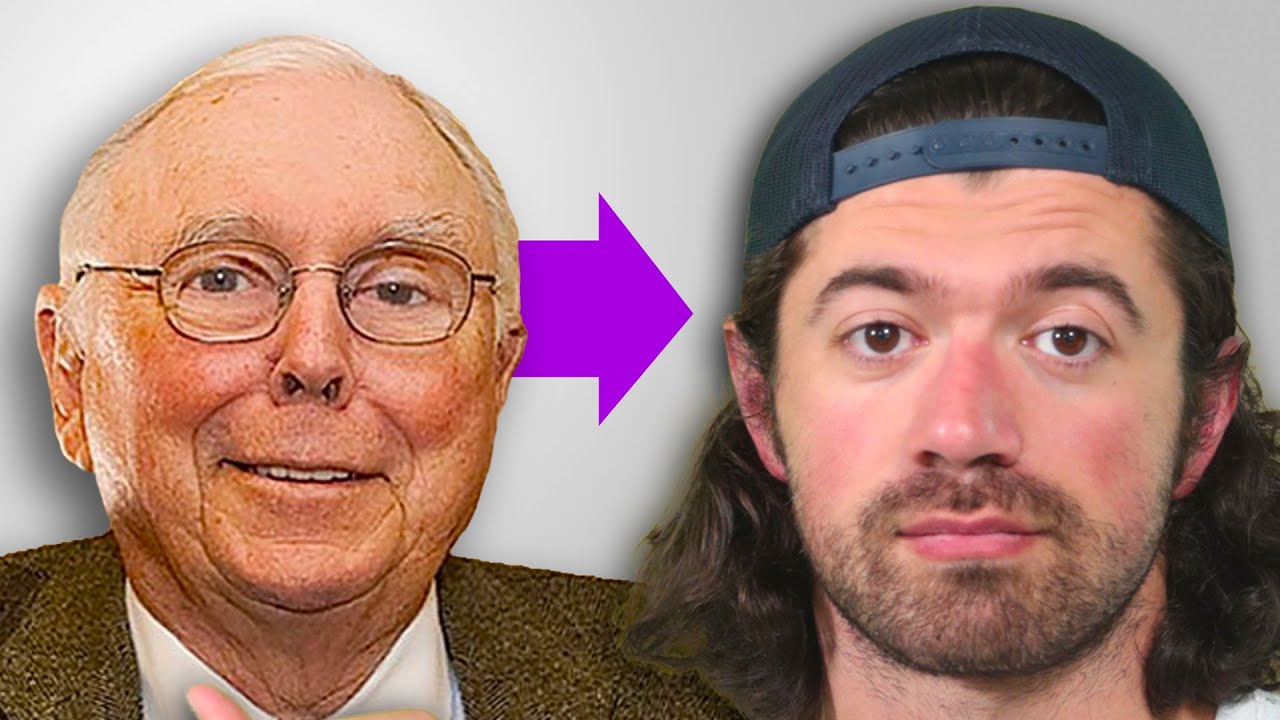
What's going on everyone? My name is Alex Rozzi. I'm the CEO and founder of Allen Prestige Labs Gym Launch and we own a portfolio of other companies. We've done 120 plus million in the last four years. In this video, what I want to do is show you the eight principles Charlie Mer taught me to succeed in business and life. And uh by no means am I saying that I have completely executed all these things in my life. These are just aspirational things that I think benefit most humans. For those of you who know me, I'm a huge a huge fan. I've consumed a lot of his materials and so I wanted to consolidate his speeches and his work into these principles for anyone who's kind of new to Charlie Mer. And so I'm not going to do these in order. I'm the order I think it makes the most sense to present them. The first one is invert. Always invert. And so he references Johnny Carson in one of his speeches to always try and solve problems in reverse. And this has been something that's been immensely powerful I think because for us using thinking

Dont ingest chemicals

frameworks in order to make decisions in order to solve problems as both you know entrepreneurs business people and then just in daily life so many times we try and solve it logically going forward towards it and it gives you this entirely fresh perspective to start at what you don't want and then try and solve from that direction and that'll kind of lead way into the other eight excuse me the other seven uh of the lessons and at the very end I'll give you the one thing that I if just from the things that we've done that I would add uh to the list that has been really helpful for us or rather things to avoid. So his first thing that you hear him talk about all the time is just don't ingest chemicals to alter your state. Right? He's like I've never heard of someone like if I wanted to be really poor or really unsuccessful in life, what would I do? He's like well I would definitely get addicted to chemicals. Right? And so this sounds so logical and like obvious to us, but in instead so many of us uh still use that stuff on a regular basis to alter our mood because we can't cope with some of the issues that are coming up in our lives. He's

Envy

like, I can't imagine anyone who's thought to themselves, man, my life is so much better now that I because I do drugs and because I drink. And I'm not saying that, you know, that's a judgment in any way. It's just one of the principles that he's found to be a successful trait for himself and others. Number three, envy. So, one of the things that has been a gift for Warren Buffett and Charlie Mer together is this statement that they made, both of them being, you know, super billionaires, and they said, "Every single year, someone is doing better than us. " And for me that was so like uh gut-wrenching is the wrong word, but like that hit me because I think I am so I am innately so competitive that I suffer from comparison all the time. I was actually texting a friend this morning who's also a you know multi-billionaire decad billionaire and he was saying he's like I feel like the more money I make the poorer I feel and it's totally true because what ends up happening is that your measuring stick changes. I remember you know when I was

Measuring Stick

really young my measuring stick for money was Chipotle burritos. It was just how many Chipotle burritos does this amount of money equate to? And so I actually think that we have like a stick or a unit that becomes our base unit uh when we're measuring wealth for ourselves. And that's why when I think I had $100,000 in my bank account, that was probably the wealthiest I have ever felt because I had proportional to what my measuring stick was, which at that time was still meals. $100,000 was so much money, so many of those units. At this point in my life, a million dollar is kind of my measuring unit that I used as a base unit for how many of these do I have in this, how many how many, you know, how many sticks do I have in, you know, real estate? in in my portfolio? how much do I have in equity in these companies, etc. And so that stick changes, but someone is always doing better, but I think it's so much more about not thinking about them because the way that they roll the dice and play the game has no effect on us. And so simply, it's an imaginary way to make yourself suffer. So if you want to suffer, definitely be envious of people.

Re resent people

The fourth one was definitely resent people. Like really hold on to resentment if you want to be miserable. And so one of the stories that Charlie tells is of a king who committing trying to not be resentful of people. What he would do is every time he'd want to resent someone, he'd write their name down and he'd put it on a slip of paper in a drawer. And periodically, he'd go to that drawer, open it up, and read the names and realize how life had dealt with those people without him having to do anything. And so I think it's one of those long-term mindedness that like most people live in karmic balance independent of whether or not you believe in, you know, that kind of woowoo stuff, but simply like people who do bad things eventually that catches up to them and it is worse for them. And so you like someone who exists in that state is already dealing with the suffering of being who they are. And so you know if you want to be miserable definitely resent people. The next one is uh be unreliable, right? Like if you want to definitely be miserable, like be unreliable, say you're going to do something and don't do it. Say you're going to be somewhere and be late. Uh be flaky, make commitments that you don't keep. And this one is one of those ones that he references a lot of times as he's like, "If you just get this one right and you are reliable, it's very difficult to be miserable. unsuccessful. " And there was a guy that I was that I knew in high school. And this is when I had a, you know, a bigger ego than I have now. And I was such a so dick. I honestly I was just there's no other way to say it. I just was. And this kid was just like he stayed he went to all the extra credit for teachers. He worked so hard and he had nothing going for him. Like he wasn't like the best looking kid. He wasn't athletic. Like he didn't have like this natural processing power. He wasn't quick like that. But I remember and I was such a mean guy to this kid. And I remember one time he we got in some sort of spat and I was like, "In what world will you ever be better than me at anything? " And I remember saying that you can feel it's so dripped in ego and it's just kind of disgusting. But anyways, I said this to him and he ended up getting into a better college than me. I ended up going to Vanderbilt. He Duke. And I just remembered that moment because it was such a deep lesson for me that like he was more reliable than I was. He was more long-suffering consistent than I was. He showed up to every teachers thing. He showed up. He did all the extra credit. homework. He like he did all those things and he just showed up. And that was a huge lesson for me that I was like, if I can just show up like that guy does, like man, things will open up for me. But if you want to fail, definitely be unreliable. The next one is overspend your income, you know, definitely if you want to get if you want to put yourself in a hor horrible situation on a regular basis and consistently have stress, definitely spend more than you make, which you know, America is doing right now with their own GDP. We won't even get into that. But definitely overspend what you make. Like don't save, you know, spend more than what you have. Always have bigger aspirations than you have the ability to fulfill on. And definitely always live in debt and the wrong kind of debt, the bad debt. And so if you've any followed any of my stuff, my I'm a huge proponent of living broke all the time. Um, and it's because I believe wealth is a ratio between income and expenses. It's not a number, right? If you can live on 1% of what you make as a hypothetical example, then you are in you are infinitely wealthy because you already have a hundred times more your income is 100 times more than your expenses which means you could live veritably for 100 years and so just on one year's income. So that's an extreme example just to illustrate the point. But if you like for me I feel less and less anxiety the greater the percentages um of excess I have in my expenditures versus how I live. And so there's two ways to get there. One is you can increase how much you make. The other way is you can decrease how much you spend. But the thing is no matter where you are right now, the one that you can immediately change is how much you spend over time you can use those that those extra funds, invest in yourself, grow the top line so that you can even make that discrepancy crazier so that your wealth can increase. That ratio being And so for me, I try and live on 10%. That $100,000 story

Learn From Your Own Mistakes

that I gave you earlier once I was I had a million dollar in my bank account. I still lived on $30,000 a year. And so I was, you know, I was living on 3% um at that point of my wealth, but my income was already surpassing a million dollars a year at that point. And so I was living on 3% of what I was taking home. And honestly, I felt so free because I just knew that I had way more money than I would ever need. That's very freeing. So, but if you want to fail, definitely overspend your income. The next one is learn only from your own mistakes, right? Don't learn from the mistakes of others. Don't learn from other people's successes. And what I want to add uh as a wrinkle to this is that depending on where you're at in your journey, this is something that I've observed is um you in the very beginning you have no value to offer. I get messages frequently of people being like, "Hey, uh let's start a business together. I'll give you half. " And I'm like, "Well, you're providing no value. I'm the one who would know how to run this business, so this is not a good trade for me. You know, return on my time is not very good. " Another one is, "Hey, I'll work with you, you know, I'll work for you

Work For You For Free

for free, you know, if you teach me everything. " And I was like, "Yeah, that's so I'm getting someone who has no skills and no value in exchange you're getting an education from someone, you know, like that's not a fair that's not a good exchange for me, right? " And so what you have to do is find ways where even that you can trade your base level, which is time for someone who has a need for that level of skill who's ahead of you. And that's where like small businesses, like if someone's making $100,000 a year or $200,000 a year in a business, that's not a very big business. But if you say I will work for free for you then someone like that can still use for lack of a better term just hands right someone who can just help and just be there as a body and I know that may sound dimminitive towards you but if you have no base skills that is your base skill that you have is you have your time in your hands right and so you use that and then you can learn some more skills and then from that point you develop the next level which is where you can start affording coaches right uh from the level above that when I say learning only from your own mistakes first is you learn from people for free by exchanging

Learn From Others

your time. Then you learn from coaches. Then um you can learn from masterminds which is people where you are now at this point equal with other people in the room who are good. And what I will tell you is this. If you're at eight figures, I'm switching gears in terms of who I'm talking to. But as you go up this journey, how you network and learn from others changes. It evolves. And you know, I went the coach route for the first, you know, 3 four years of my entrepreneurial journey. And then it was much more towards the mastermind route uh later on. But the thing is once we passed eight figures for us in terms of yearly revenue and yearly income, it it's shifted to being much more about networking and adviserss. So that's kind of two different things. Networking is like other people who are at that level that you just network with and you meet at things and you donate to same charities, that kind of thing. And the other aspect is like well if you want someone ahead of you at that point it a lot of times a you can still get it from the network sometimes but if you really want to get a lot from someone you need to make sure that there's some sort of exchange that's fair and that's where kind of advisory relationships work really well and so I have an adviser and

Heroes

that means that you know they get a minority percentage in something that you guys are working on and so they have an incentive to teach you some of these elements and you at this point you're already proven as an effective person. You have the character traits of being reliable. you know, not being envious, having longsuffering, having the abilities to execute. So they know that they can just drop the information in and then it will be incorporated and then they can succeed with you. And then the final aspect is what I would say the highest level is heroes because a lot of people we don't have access to. You know what I mean? Uh even this video right now like I don't know Charlie Mer. I have not met Charlie Mer. But Charlie Munger is a hero of mine. And so I feel like I've been directly mentored by Charlie despite the fact that I've never met the man. And so I'm eternally grateful for the man because he's, you know, significantly changed my life for the better. Which will naturally lead me to the his last point and then I'll give you the one that I would add um just from my own experience in my life. So his last point would be quit when you have your third or fourth big failure in life. He said so if you want to if you

Quit Early

life. He said so if you want to fail and you want to be miserable, you should definitely quit soon. Quit early. Right? He's like because no matter who you are, you're going to fail not just once or twice or three times or four times, but you will fail many times. And if you quit early then you can guarantee that you will be you know miserable for a very long time uh after that because then you have given up hope and you'll have nothing to strive towards and you'll have no purpose. And so if you want to be miserable definitely quit early right and even count the amount of times you failed because for some reason that means something right it doesn't mean anything. And so to wrap this up, I'll give you Alex's one um that's been tremendously helpful for me, which is um this is kind of started from a speech I heard one of the presidents say um uh from the past, but was the way to be successful is to be able to handle pressure, right? So if you want to if you want to fail, definitely crack under pressure. Like no matter what happens, just crack under pressure. Crack when people need you. And so um my candid solution for this or the things that have helped me is understanding a what it is which is most of us just create arbitrary expectations and then crumble under pressures that we put on oursel that don't actually exist in the world. We literally create things to weigh ourselves down which I feel like the further along you get in the entrepreneurial game it becomes heavier and heavier um because you realize it's so much just about the limits that you place on yourself. And so here's three strategies that I have used that are mentally have that have mentally made me much more resilient. The first and I got this from Trevor who got it from Epictitus which is aged philosopher is negative visualization. And so let me give you a tactical example of that. This is a simple example. So I just spent a couple hundred on a shirt and I really like the shirt and I don't really spend money a lot on clothing. Um and after I washed the shirt it was like messed up. I'll just put it simply, right? This is a simple example to illustrate. And then he had just taught me about this negative visualization the day before.

Negative Visualization

And he said, "Take something that happens negative and then imagine it happening a thousand more times in a row. How would you feel in the thousandth time? " And I thought to myself, if every time I washed a shirt, you know, it shrunk like this or something or it became rougher around the edges and I got it cuz it was soft, I probably wouldn't care that much. It would just be like, "Ah, that's just how these things are. " And so what it means is that my expectations would change in my mind to what they to match reality and then at that point my misery would disappear. And so that's literally what I did in the moment and I felt myself just stop caring about this thing. That actually bugged me a little bit cuz I was like man that's annoying. But you can use that same concept with any of the things that occur in your life when it's like man my my wife said this thing. Well what if she said that thing a thousand times in a row. You'd be like well I guess that's just kind of how she is or things are. and then all of a sudden you would acclimate it. But you can rapidly force the acclamation to stress by visualizing it happening thousands of times and then skipping to the end. Because if you can

Expect the Worst

feel that way after a thousand times, then you might as well feel that way after the first time. And that has been so powerful for me because we have so many stressors that come in our lives and we set expectations that we're even not aware that we're setting and then get underperformed on. The second uh thing that's been really helpful for me is that if I want to start a new behavior or I'm trying to do something that is difficult, then what I want to do is go into it and expect the worst. And let me give you a real that sounds obvious, but realistic reasoning for this. So, let's say that you want to start working out. Mentally prepare yourself for the fact that every time I work out, I'm going to be tired. not be motivated. Um, and that's just going to be my base reality. If I happen to be motivated or I happen to not be exhausted have a lot of work to do, then that's just a bonus. It's ser serendipitous. [clears throat] It's just a happy uh coincidence. But I expect that every time I work out, I will be tired. I will have more things to do and I will not, you know, be motivated to do so. And if I come in

Fine Mist

with that expectation and I set that as my baseline, then I am not surprised when I go to work out and I feel that way because then it is in alignment with the expectations that I have in my mind. The third of the sub subtext of uh you know creating false expectations um and crumbling under pressures that we create for ourselves um is one that is will probably be controversial for some of you but this is a belief that I hold and it has been immensely powerful for me in terms of um increasing my joy in life which is Elon Musk. I heard him talk a while back about how he said eventually the universe will expand infinitely until everything becomes a fine mist. everything just becomes a fine mist if you extend the time horizon long enough. And for me um that means that everything that we create on earth and as humanity will eventually disappear. So the skyscrapers, the books that I write, the people that we help, people who remember us, the legacy that we are trying to have after we die, even that will eventually turn into a fine mist and not

Meaning Making Machines

matter. And for me that is so immensely powerful because it means that nothing matters and at the same time it means that we get to choose what things we create meaning with. And so I believe our brains are simply meaning making machines. And I love that term so I'm giving it to you. Is that just I have this meaning making machine in my mind which everything has no meaning. And then I can choose to highlight aspects that I I will create meaning for. And so understanding that the millions that I have, maybe the billions that I'll make in my lifetime and the wealth that I accumulate, the reputation, the books, the impact, all of that stuff will eventually disappear. Truly, it will eventually be gone. There will be a day where no one knows that I existed or anything like that. In some ways, it frees me in the present knowing that everything that I do will eventually mean nothing. And so all of us are essentially in my mind, you know, there's the Nazi concentration camps. Uh people would dig holes and

All Of Us Are In My Mind

then they'd fill holes back up again. And it was basically meaningless work. But it was only meaningless because they believed that it was meaningless, right? But essentially all of us in my own mind, and my understanding of reality are simply just digging holes every day that will eventually when the time horizon is long enough get filled back with dirt. And so what that means is imagine I was in that same concentration camp for example which might be an analogy for life and instead of being given a shovel to dig holes they said you can do whatever you want but at the end of your life you have to undo it all right well then I could probably have I could probably engineer a fairly joyful experience for myself because I would do things that are stimulating for me and that I find uh enjoyable. Right? And so by doing that, it just removed all of the expectations and a lot of the envy that I have for other people because I know that all of us in the end, there's no box that we take with us, right? And so that's just been just wildly impactful

Decrease Pressure

for me as a human being. And in terms of decreasing pressure in my life, in business, there's just nothing that's that big of a deal, right? Because eventually all of it's going to disappear anyway. So if someone's upset with you, it's like, well, you know, we're all going to become a fine mist in the future eventually. You know, like ah, you know, we've got this competitor who's who's stealing our stuff, you know, we're all going to disappear into a fine mist eventually. And that has been so calming for me and has relieved so much pressure for me mentally. That may be depressing for some people. For me, it's wildly freeing. And so, um, I guess if it's depressing for you, then don't think about it. But if it if that resonates with you, then maybe you can use that as a weapon in your arsenal to defend against the pressures that we inevitably put on ourselves that we can deconstruct and deflate. And so anyways, um those are the lessons that I have learned from Charlie Munger as my hero and mentor uh from consuming so much of his content. I hope you found value in that. If you are, you know, if you're a business owner, I make a lot of more tactical things about how to make money and all that stuff on this channel. If you like this stuff, uh click and subscribe. Otherwise, hope you enjoyed and I'll catch you on the next video.

Другие видео автора — Alex Hormozi

Ctrl+V

Экстракт Знаний в Telegram

Экстракты и дистилляты из лучших YouTube-каналов — сразу после публикации.

Подписаться

Дайджест Экстрактов

Лучшие методички за неделю — каждый понедельник