❤️ Check out Lambda here and sign up for their GPU Cloud: https://lambdalabs.com/papers
📝 The papers are available here:
https://hover-versatile-humanoid.github.io/
https://blogs.nvidia.com/blog/robot-learning-humanoid-development/
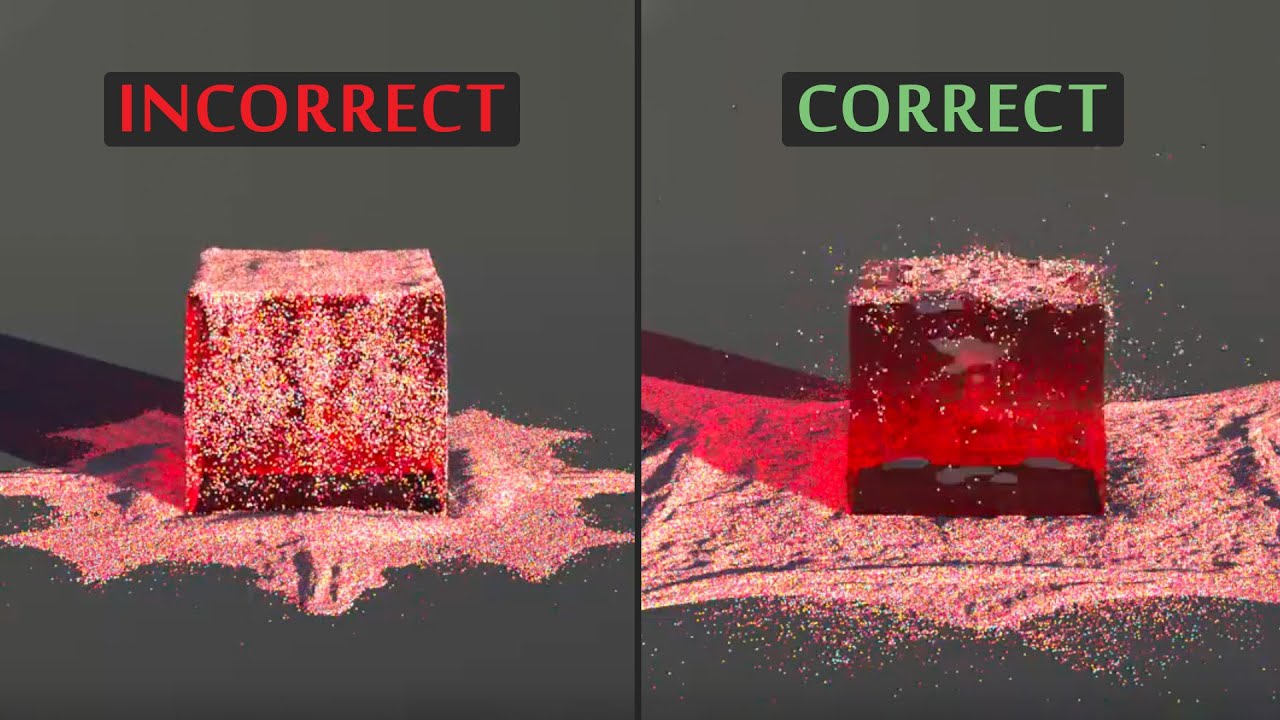
📝 My paper on simulations that look almost like reality is available for free here:
https://rdcu.be/cWPfD
Or this is the orig. Nature Physics link with clickable citations:
https://www.nature.com/articles/s41567-022-01788-5
🙏 We would like to thank our generous Patreon supporters who make Two Minute Papers possible:
Alex Balfanz, Alex Haro, B Shang, Benji Rabhan, Gaston Ingaramo, Gordon Child, John Le, Juan Benet, Kyle Davis, Loyal Alchemist, Lukas Biewald, Martin, Michael Albrecht, Michael Tedder, Owen Skarpness, Richard Sundvall, Taras Bobrovytsky,, Thomas Krcmar, Tybie Fitzhugh, Ueli Gallizzi.
If you wish to appear here or pick up other perks, click here: https://www.patreon.com/TwoMinutePapers
My research: https://cg.tuwien.ac.at/~zsolnai/
X/Twitter: https://twitter.com/twominutepapers
Thumbnail design: Felícia Zsolnai-Fehér - http://felicia.hu
#nvidia
Оглавление (2 сегментов)
Segment 1 (00:00 - 05:00)
Robotics is not really working. Yet. And one of the reasons why is that there is simply not enough data for robots to learn from. And the other problem is that we, humans don’t have time. But no matter, because this work speeds up time by 10,000 times. Yes, really, but not in the way you think. To teach an AI English, it can read the whole internet. There is tons of data. But for robot arms and humanoid robots, not so much. Since data is the engine of all AI applications, this is not great news. Now here are 2 amazing new, unexpected research works that might make them work sooner than we think. You see, one very good way to reach robots is where they learn directly from humans. Human demonstrations, that is. After one human demonstration, this kind of appears to be doing the task, things are being grabbed here, but it moves slowly, and isn’t too confident. And…after a 1000 demonstrations, let’s see... now we are talking! This works so much better. Okay, so the number of demonstrations really matters. But there is a problem. What is the problem? Well, the problem is that nobody is going to do the same task a 1000 times to teach a robot something that is this simple. So here is a crazy idea, from a new paper called SkillGen. What does it do? Well, it takes a look at 10 human demonstrations, and generates 200 or even more out of it. So cool! But does it work? Let’s have a look. Dear Fellow Scholars, this is Two Minute Papers with Dr. Károly Zsolnai-Fehér. When learning from 200 demonstrations, the robot can be successful roughly 3 times out of 10, but after 5000 demonstrations, now about 8 times out of 10. Huge difference. We just went from unusable to promising with just one idea. Loving it. And here comes the best part that I did not expect at all: these synthetic demonstrations give us comparable results to actually having hundreds of human demonstrations. So the synthetic generated ones can be close to as good as the real ones. I think that is unbelievable. Wow. Now, the other problem is that we humans don’t really have time to wait for these robots to learn these tasks. So, how could that be addressed? We can’t just speed up time. Except that we can. Here’s how. We can build a simulation environment for robots, and run it on a powerful computer that can run this simulation quicker than real time. How much quicker? Well, for every one second in real time, this can simulate about 10,000 seconds. Wow. It can get a year’s worth of learning in one hour! That is great, however, still not good enough. We have more data problems. You see, human demonstrations are nice, but there are so many ways to do that, for instance, you can have a virtual reality headset that tracks your head, and if you are lucky, your hands too, or it can just be a camera put down somewhere that records the motion, or an exoskeleton that gives you the movement of most of the joints in the body, maybe only robot arm data, no lower body info, this is a huge mess. How are we supposed to learn from this huge soup of data? Well, this new paper called Hover, gives us a way to do exactly that. Yes, it can take all of these control modes, and it is able to train one unified controller to move virtual, and even real humanoid robots around. That is absolutely incredible. But we are not done yet, we said this speeding up time, which is basically a superpower needs a powerful computer. And that is unfortunately not enough. If we have these heavyweight neural networks like ChatGPT, we don’t stand a chance because computing the next move just takes too much time. These networks have hundreds of billions of parameters inside, and even a small neural network has about 500M. But not this new proposed system in Hover. Yes, now hold on to your papers Fellow Scholars, because all this needs is not hundreds of billions of parameters, and not even 500 million parameters. Only 1. 5 million. It’s almost unbelievable
Segment 2 (05:00 - 06:00)
how small that is in today’s standards. Your phone can run that easily, it eats it up like a lollipop, and probably even your smart watch. And yet it can pull off these control tasks. I am completely stunned by this. Wow. What a paper! So the robots of the future will be able to learn from very few human demonstrations, generate their own demonstrations to learn from, enter a world where time is sped up 10,000 times compared to our world, and they will be able to learn from absolutely anything. So I hope that this will lead to these helpful little robots that will finally fold my laundry while I read my papers. What a time to be alive! So, what do you think? What would you Fellow Scholars use this for? Let me know in the comments below.