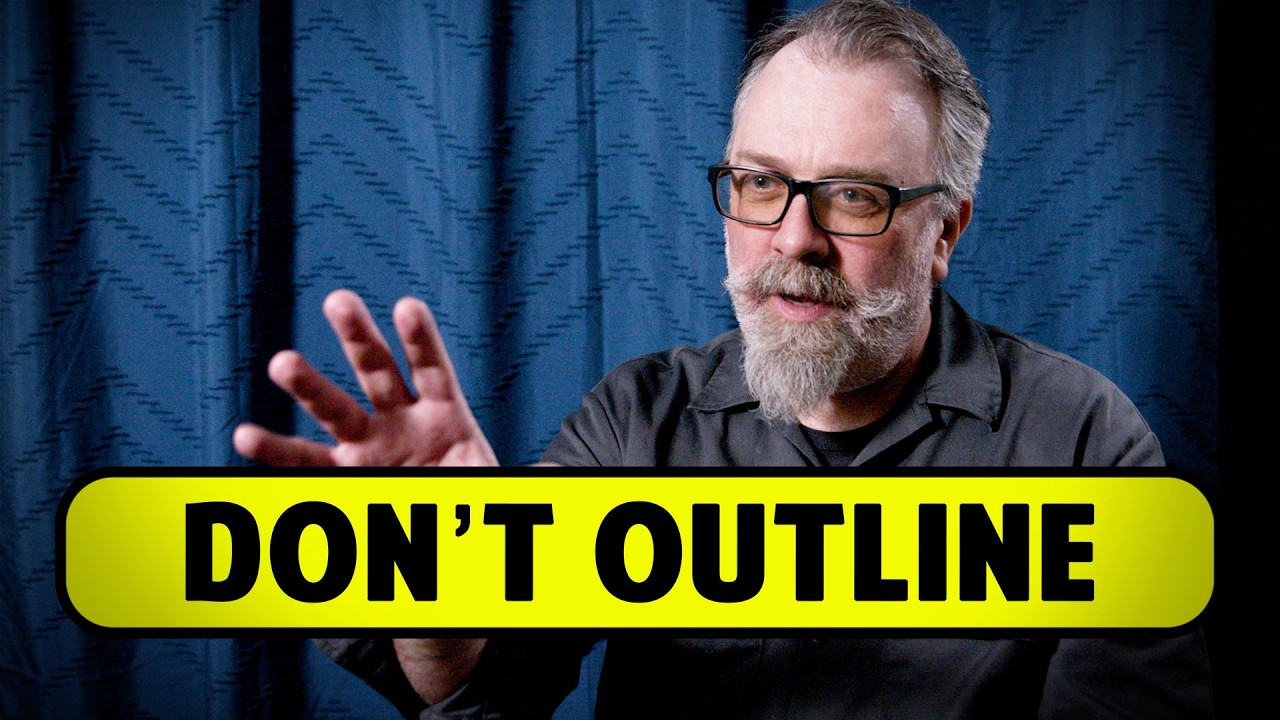
Why I Don't Outline Before I Write The First Draft - Tony DuShane
15:30

Why I Don't Outline Before I Write The First Draft - Tony DuShane

Film Courage 21.02.2026 4 707 просмотров 205 лайков

Machine-readable: Markdown · JSON API · Site index

Поделиться Telegram VK Бот
Транскрипт Скачать .md
Анализ с AI
Описание видео
Our two new books... STORY QUESTIONS: How To Unlock Your Story One Question At A Time - https://payhip.com/b/ZTvq9 and 17 Steps To Writing A Great Main Character - https://payhip.com/b/kCZGd Tony DuShane is the author of the semi-autobiographical novel Confessions of a Teenage Jesus Jerk. He adapted the screenplay for director Eric Stoltz, and the film is now available on Amazon Prime. His journalism and essays have appeared in The Los Angeles Times, Mother Jones, Penthouse, The Believer, and other media outlets. DuShane has hosted the author interview show Drinks with Tony since 2002. He teaches novel and screenwriting at UCLA Extension. MORE VIDEOS WITH TONY DUSHANE https://bit.ly/3mFoq28 CONNECT WITH TONY DUSHANE http://www.tonydushane.com https://www.drinkswithtony.com https://dushane.substack.com https://twitter.com/tonydushane https://www.instagram.com/tonydushane https://linktr.ee/tonydushane RELATED VIDEOS Beginner's Guide To Writing A Story - https://youtu.be/8FxdZ1wdltw How To Write A Beat Sheet For A Screenplay - https://youtu.be/MAic1zKQPiM Beginners Guide To Story Beats: How To Outline A Screenplay - https://youtu.be/D2-hOoMlYrg How Screenplay Outlines Work - https://youtu.be/yFggEUJkqYY Save The Cat Beat Sheet: What Everyone Gets Wrong - https://youtu.be/AKezNZUO2b4 Do Screenwriting Beat Sheets Work? - https://youtu.be/NUSO958ZayA CONNECT WITH FILM COURAGE http://www.FilmCourage.com http://twitter.com/#!/FilmCourage https://www.facebook.com/filmcourage https://www.instagram.com/filmcourage http://filmcourage.tumblr.com http://pinterest.com/filmcourage SUBSCRIBE TO THE FILM COURAGE YOUTUBE CHANNEL http://bit.ly/18DPN37 PERSONALLY SPONSOR FILM COURAGE https://ko-fi.com/filmcourage SUPPORT FILM COURAGE BY BECOMING A MEMBER https://www.youtube.com/channel/UCs8o1mdWAfefJkdBg632_tg/join SUPPORT FILM COURAGE BY BECOMING A PATRON https://www.patreon.com/filmcourage LISTEN TO THE FILM COURAGE PODCAST https://soundcloud.com/filmcourage-com (Affiliates) ►BOOKS WE RECOMMEND: THE NUTSHELL TECHNIQUE: Crack the Secret of Successful Screenwriting https://amzn.to/2X3Vx5F THE STORY SOLUTION: 23 Actions All Great Heroes Must Take http://amzn.to/2gYsuMf SAVE THE CAT! The Last Book on Screenwriting You'll Ever Need https://amzn.to/3dNg2HQ THE ANATOMY OF STORY: 22 Steps To Becoming A Master Storyteller http://amzn.to/2h6W3va THE ART OF DRAMATIC WRITING - Lajos Egri https://amzn.to/3jh3b5f ON WRITING: A Memoir of the Craft https://amzn.to/3XgPtCN THE WAR OF ART: Break Through the Blocks and Win Your Inner Creative Battles http://amzn.to/1KeW9ob ►FILMMAKER STARTER KIT BLACKMAGIC Design Pocket Cinema Camera 4K - https://amzn.to/4gDU0s9 ZOOM H4essential 4-Track Handy Recorder - https://amzn.to/3TIon6X SENNHEISER Professional Shotgun Microphone - https://amzn.to/3TEnLiE NEEWER CB300B 320W LED Video Light - https://amzn.to/3XEMK6F NEEWER 160 LED CN-160 Dimmable Ultra High Power - https://amzn.to/3XX57VK ►WE USE THIS CAMERA (B&H) – https://buff.ly/3rWqrra ►WE USE THIS SOUND RECORDER (AMAZON) – http://amzn.to/2tbFlM9 ►Stuff we use: LENS - Most people ask us what camera we use, no one ever asks about the lens which filmmakers always tell us is more important. This lens was a big investment for us and one we wish we could have made sooner. Started using this lens at the end of 2013 - http://amzn.to/2tbtmOq AUDIO Rode VideoMic Pro - The Rode mic helps us capture our backup audio. It also helps us sync up our audio in post https://amzn.to/425k5rG Audio Recorder - If we had to do it all over again, this is probably the first item we would have bought - https://amzn.to/3WEuz0k LIGHTS - Although we like to use as much natural light as we can, we often enhance the lighting with this small portable light. We have two of them and they have saved us a number of times - http://amzn.to/2u5UnHv *Disclaimer: This video and description contains affiliate links, which means that if you click on one of the product links, we’ll receive a small commission. This helps support the channel and allows us to continue to make videos like this. Thank you for your support! #writing #reading #books
Оглавление (4 сегментов)

Segment 1 (00:00 - 05:00)

And I feel like I've learned over the years that the writers that I enjoy are also writers that never outline. And the writers that I go, I'm not connecting with this book are the writers that are known for outlining. — What is outlining? — Outlining for me, I don't outline uh before I do a first draft. Uh, I kind of maybe have ways where I'm going, but I like to just let the characters write scenes and I see how the characters play out. And um, somebody I' I've used this example before with uh, Quinton Tarantino. He outlines the first half of his film and then he stops and then he writes the whole film because he doesn't want to know how it ends. And I kind of I don't even not only do I not want to know how it ends, I don't want to know exactly how I'm going to get there. And so that is so when I outline it's maybe by the third draft when I'm like, "All right, now I got to start what seeing what I have scene-wise and where it goes. " And then it tends to get shifted around on next draft, next draft. though. Um, which is a bit I kind of do it in a very scattered way. But for me, I need to see my character in action before I uh I need to get to know my character and only the only way is to write out the scene and see what my character does in the scene where I'll know what the scene is, but when I'm writing it, all of a sudden it kind of takes over and I go, "Whoa, that I didn't know that was coming up. " And that's going back to journaling. when I'm writing so fast without any um without any uh idea of this is going to be seen by anybody that helps me get into the practice of writing so fast that I'm writing almost ahead of my thoughts so that it's going almost faster than me and that's kind of that's when I'm in the zone and you know 90% of the time that's not going to work out and 10% of the time it's a beautiful surprise. Do you find some of the students that you work with um actually do want outlining? I know it's been kind of some people turn their nose up at it. It's too structured. — Oh yeah. I all my screenwriting students I make them outline uh completely the um and I've done it that way too before and um I enjoy it and I mean I do enjoy that when it comes to film and I think I'm gonna do that process again. Uh, I've been so in a novel space for so long that it's I'm trying to still shake off the uh the pros and but I but I'm excited to get back to script and part of me is almost excited to go you know what we're going to outline all the beats and we'll let's see what happens. So I guess outlining I my answer is very vague because it's I find it very useful and I also uh I have a reluctance to it but at the same time it works. — So for screenwriting outlining seems like it's a must but then with pros writing you like to kind of find the character first. — Yeah. Well the same thing with uh screenwriting. I will write in pros for a while before I decide that wait a second this is a film with the book that I just finished. I was writing it as a screenplay and I went oh crap this is a book. So uh it I think there's a area of time where the story tells me what it is and sometimes it's not the medium I'm working in. — How soon were you into this screenplay before you realized it was a book? M I was maybe 10 pages and some outlining and an outlining of the points I needed to get to. I figured it out I think within the first month and a half and it was because it just it was pinging too much in my head and I was like okay I'll try it as a book and I hope this doesn't work. I hope I realize this is not a book and this is a script because I really wanted to do the script and uh and it just was like no here's your hug we're a book. I'm like dang it. Okay, let's go. — I saw on your website it said you were going to be working on something or finishing up December 2025. Was that what is that what you're planning on starting? Is that are you like sort of — Oh, I I uh I am I have been working on a um on an idea for a film um that I've been kind of plotting out, but I've been plotting it out very slowly as I've been working on other things like new workshops that I'm putting together as well as uh I just got started on Substack which I'm like excited

Segment 2 (05:00 - 10:00)

about and it's and I'm treating it like I'm sending my work to my old editors at the Chronicle. school or at Mother Jones and I'm like relax dude not everybody's putting in this much time for one post and I'm and I had one that was like 5,000 words and I'm like and I'm was structuring it and try and I got it down to 2,000 and I'm just like can you put some there a little stop you know stop your long form journalism and have a little fun with it too. Well I am having fun with it but — what is it Tony Duchain or Substack? — It's just duchaane. substack. com. Yeah. Okay, great. — And this is recent that you just started it. — Yeah. And I And this is something that I this and you know, I'm glad uh that this came up because this is something that I've had in my back pocket for a long time and people have been telling me to do. And I was just like I felt uncomfortable doing it cuz I felt uncomfortable putting something raw out there or only working on something for a few days and posting it to the public. Um, and I finally just went, "Would you just do it, dude? " And I did it. And uh, I was, and this is when I was in my um, I was in that space where like, "Oh, they'll find out that I really suck. " You know, it's they'll find out that I'm terrible at this or that. It's all the imposttor syndrome was coming in. And it turned out that I'm just enjoying it. And all I was like, why didn't I just enjoy this earlier? Oh, well, it's fine. We'll just enjoy it. And it doesn't have to I guess I was people were pitching it to me as like, oh, this leads to something. And I think if it leads to something, I go back to my old uh punk rock psycho way and it can't lead to anything. If it if I don't give it any pressure, then it's fun. And that's the same with the novel that I'm querying right now where I feel like I'm giving it pressure and I'm like that maybe that's the rejection thing where I'm like I don't want that rejected. I don't want to put pressure on it and I'm like I still want the whole world to see it and you know be uh at the 92 Street Y in New York discussing it to a big audience if you know — you know it's funny you must be uh inuitively uh guessing our questions because I actually have a question on that I'm going to skip. Yeah, that sorry you're the plant the chip in there is working. Um, and that is, uh, do you have this or do you see this in some of the writers that you work with in your classes and that they're afraid to have people read stuff, but at the same time, oh, please read it. It's like this weird thing. — Yeah. And um, I feel like I'm better as a teacher in that situation and let's all get together and play and have fun. And yet when I start to do the new thing, I need to practice what I preach, which is the which is which is so important for me to teach and also do the work. Because if I'm not practicing what I preach, then what am I doing on my pulpit to these students going, you need to get uncomfortable and then I'm uncomfortable and I'm stopping myself. And it's such a um it it like I just I feel with the substack it just blows my mind cuz it's I feel there's an importance to it which is weird because there is no importance to it but my soul feels lifted when I just write something for it and I get a little crazy on it and I'll work on something for a week where people are just posting you know oh this happened to me at the deli today and it reminds me of this friend I lost and their work's probably way better than mine as I'm sitting there trying to craft. I have no idea. But it's um it's just I've had it brought fun. I guess it brought fun back and I think I needed that after I labored over a final draft on a novel and this process right now. It's just this Substack's now given me, oh, let's go play on the playground and uh throw snowballs at each other. — Nice. But so that is a thing then it sounds like that with writers like we're afraid to have someone read it but then it's equally terrifying that no one wants to read it. — I think and this is what I have found that I need to work on. It's not about the um it it's about my writer peers. I go, "Oh, wait. This person who is high, you know, higher up than me in the writing process or in the writing world that I'm friends with, they'll look at it and think this and that other guy that I'm friendly with, he'll make fun of me for it. " So, it blows my mind

Segment 3 (10:00 - 15:00)

that we have our um the uh the tribalism still of uh who we want to appease. And I get worried about other people that are doing the same thing as me and not essentially think about, oh, but there's other people out there that read stuff or um that want to look at film that aren't engaged in the business of or putting their life into it. And they don't need to. They just need to be entertained or not entertained, you know. It's — Yeah. and people can, you know, they can be scathing online. So, I can see how people would get scared, but there's also probably a fear that no one will read it. So, I was just wondering, you know, which is worse, that someone may find it and I feel shameful or no one reads it. — Um, I mean, I don't have a lot of readers, I don't think. Uh, so it's not it's not blowing up on any level, but at the same time, I'm having fun. I'm having fun putting the articles together, getting the images, uh, kind of just playing in the sandbox, um, and then putting it out there. And then some people are reach out and go, "Oh my god, I you mentioned that book. I never would have read that book, but it was so good. Thank you. " And I'm like, "Oh, okay. Well, there's one person that uh connected with it. That's nice. " So you can keep the sort of the again go back to the punk rock ethos of I'm just doing this thing and it doesn't have to lead to anything commercial. — Yeah. But I at the same time, you know, the poll in my heart is I would love for something to be commercial. The book that I'm quering right now, I would, you know, put it on the New York Times bestseller list. Let's get a Man Booker prize while we're at it. It's, you know, it's uh the um the Beasty Boys said about the lotto where they're like, you got to be in it to win it. that's why they buy a lot ticket. And it's uh it's just like I'm in it to win it. But at the same time, I know that that's a huge pipe dream. But another huge pipe dream is having a book actually published, which I've been lucky to do, or a film that's actually been produced and released, which I didn't know how I didn't know the odds of it like dying at every single step of the way were. And it's it just now I kind of appreciate it more and go, "Oh, okay. It's uh yeah, it's so it's uh I'm I'm finding the fun again. Maybe I was hitting a depression um as of the breakup of working with my protagonist in the novel that I had going for so long that the Substack kind of gave me a little life again. " and uh where I it's like I don't necessarily have to write fiction even though I'm writing fiction on the side because I have some ideas I want to go with but now I want to write some articles and essays. It's I want to play with that and not try to get them published in any I mean print magazines aren't really paying these days anyway. This was if this was 10 years ago, I'd be pitching to uh you penthouse, Mother Jones, all the all the ones that got you money and status, but just doesn't feel like there's that much out there anymore for uh for that. — If you were teaching someone how to outline, what would you want them to really understand about it? One of your students — if we're talking about screenwriting. — Well, yeah, we could do screenwriting in one column and then uh pros writing in the — Sure. Yeah, I mean I guess it's all hero's journey in the end. Uh with screenwriting, there's beats that you just have to hit. There's just no getting around it for a film. Um it's we have been um conditioned to the medium of film and how film and stories are presented to us that we kind of need that act one and all those things to break and happen. And if act one goes too long, we're not sure why we don't like the movie, but the movie is the problem is act one went too long. Whereas if we're looking at a novel, there's so much more leeway for how to get to a place and you and that's where the your voice is so much more important and the voice should carry through. So when outlining a novel, it's like, yeah, let's get to a certain place. But when I teach novel writing workshops, I personally advise against outlining um when it's comes to the novel. And that's a and I feel like I've learned over the years that the writers that I enjoy are also writers that never outline. And the writers that I go, I am not I'm not connecting with

Segment 4 (15:00 - 15:00)

this book are the writers that are known for outlining. And it's just an aesthetic choice. And there are a lot of people that love Philip Roth. I can't read Philip Roth, but Philip Roth is an outliner. And it's just it has nothing to do with me being the king of taste. It's just I don't connect. — Thank you for watching the video all the way to the end. Here is a complimentary question from our book story questions.

Другие видео автора — Film Courage

Ctrl+V

Экстракт Знаний в Telegram

Экстракты и дистилляты из лучших YouTube-каналов — сразу после публикации.

Подписаться

Дайджест Экстрактов

Лучшие методички за неделю — каждый понедельник