Join EditRave 2024 (FREE ACCESS - Limited Seats): https://editrave.com
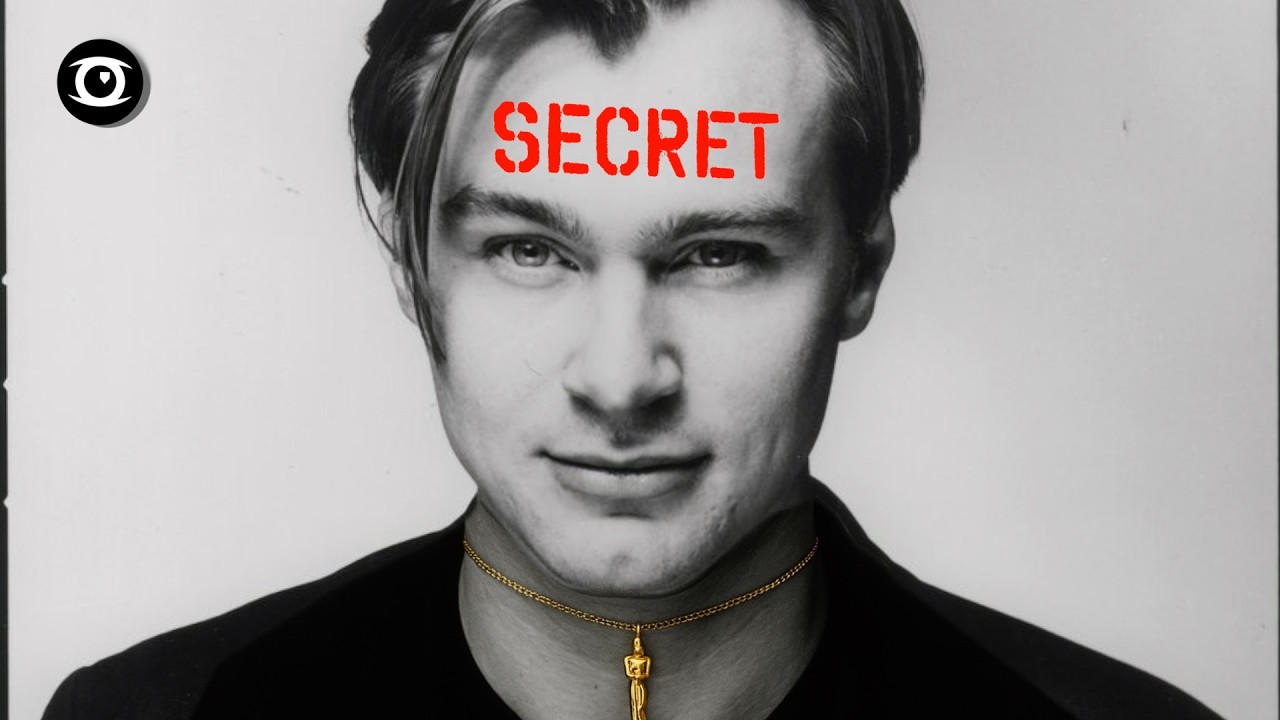
**Christopher Nolan's Openings and Endings: A Study of Cinematic Mastery**
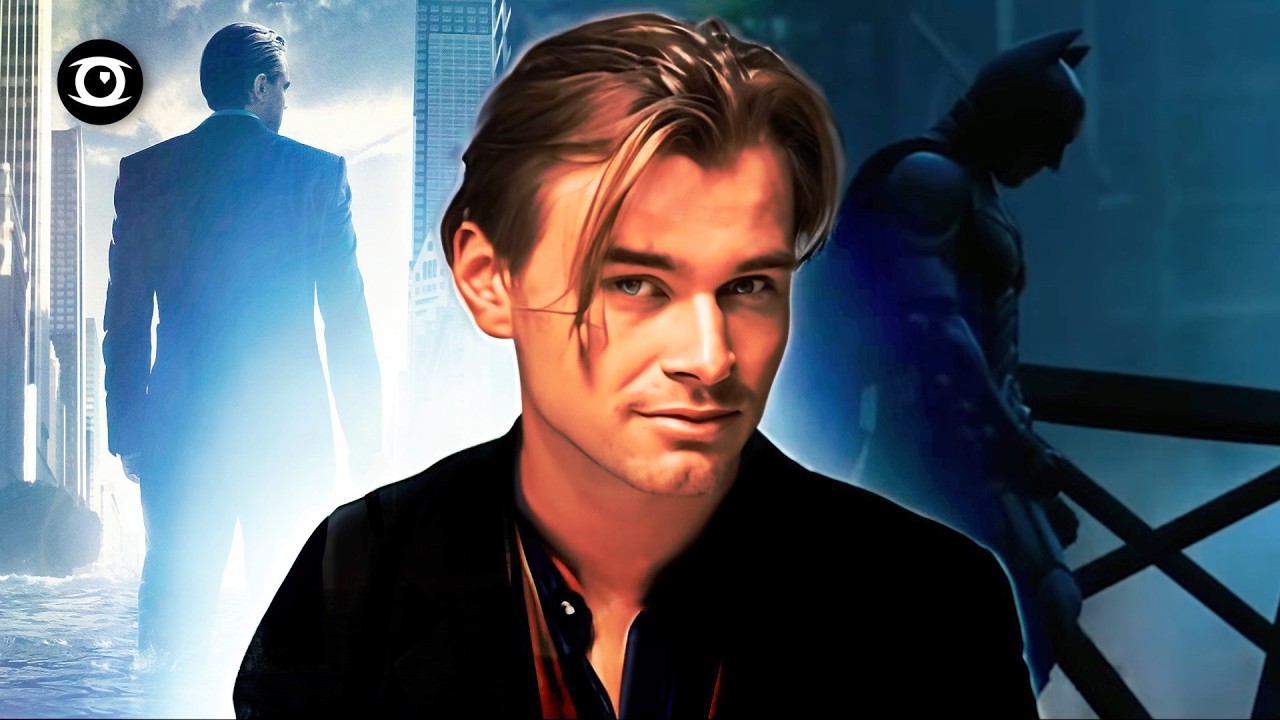
Dive into the captivating ways Christopher Nolan opens and closes his films. Starting with the iconic ending of *Inception*, Sven explores how Nolan uses cinematic elements—like the symbolic spinning top—to draw viewers into the psychological journey of his characters. With insights into Nolan’s choices, such as the opening raindrop motif in *Oppenheimer* or the first three shots that reveal a filmmaker's vision, this video uncovers how Nolan’s beginnings and endings leave lasting impressions.
From mind-bending storytelling to powerful visuals, Nolan consistently elevates the cinematic experience through memorable first and final scenes.
References:
Doodlebug: https://youtu.be/h8_MTxvtT0w?si=HYY8kgX6YHOrJoZ4
Following - Full Movie: https://youtu.be/sLCfCqQ1PNE?si=1ggMT60GmJwJ_Ssi
Memento Explained by Christopher Nolan: https://youtu.be/67e_jl4flpE?si=TnOdE0SnfZjGrqOw
★- - - - - - - - - - - - - - - - - - - - - - - - - - - ★
THIS GUY EDITS (TGE) is a YouTube channel by film editor Sven Pape, an A.C.E. award nominee whose credits include work for directors James Cameron, Joseph Gordon-Levitt, and Sundance filmmaker Mark Webber.
➜ MY FREE MINI-COURSE-
https://secreteditinghacks.com
➜ ONLINE EDITING TRAINING-
https://thegotoeditor.com
★- - - - - - - - - - - - - - - - - - - - - - - - - - - ★
#christophernolan #filmanalysis #filmediting
Оглавление (8 сегментов)
Segment 1 (00:00 - 05:00)
(soft music) - [Sven] I had this idea for this video when I recently watched "Inception," and I saw this shot right here. If you haven't seen the film, it doesn't mean a whole lot to you, but if you remember, this obviously is a very symbolic shot of this little spindle. Whether it's gonna tip over or not, is gonna reveal what state of mind the character is. Has he finally reached resolution that he's been seeking. - And idea is like a virus, resilient, highly contagious. - And I thought it was such a powerful ending. It really sort of started making me think about Christopher Nolan's way of how he ends films and then even furthermore, how he opens these films. - [Christopher] Opening with the raindrops on the water came late to myself and Jen Lame in the edit suite, but ultimately became a motif that runs the whole way through the film, became very important. - And I remember a quote by Steven Soderbergh that sort of along the lines said that once he's seen the first three shots of a film, he kind of knows whether this filmmaker knows what they're doing or not. So I thought, well, I should really look at Christopher Nolan's work. He's the filmmaker that I feel like really operates on another level. With every film, he always thinks about like time and how messing with time enables us to feel like the characters, so the state of mind of the character and how they experience their world. He wants to create that feeling within the audience, which is why like "Memento," he tells the story sort of fragmented. There is an intent there. There is a reason why he tells the story that way, because it creates a feeling that is very similar to what the character is going through, which is basically he can't retain short-term memory, so that we as the audience are just as confused. This is not a one-off. This attempt that he's been doing, you can see throughout his whole work. And I actually went back to all his earlier works as much as I could, and if you look over here, I created a bin for each of his films. I was trying to find each film. What I want to do with this video is I wanna look at the opening and closing of each of Christopher Nolan's films. Look at those first three shots and see if they really kind of get us into the film in a way where we feel like, oh my God, this filmmaker knows what they're doing, but I want to do more. I want to really sort of see if there's anything else that we can glean as filmmakers, as storytellers, or even just as audience members, to appreciate this overall way of how he attacks his films. I'm gonna just sort of do some basic analysis of length of shots, composition, the style of editing, and see if I recognize anything that's repeatable. But I also want to look at like what's the opening image and how does that represent kind of the theme, the overall theme of the film, which I think is very interesting and this is something that like Blake Snyder, who's a screenwriter who wrote a book, "Save the Cat," talks about a lot about the opening image of a film that kind of represents bigger premise. According to him, the opening image sets the tone, mood, and style of the movie. It acts as a visual representation of the protagonist's world and the story stakes, giving the audience a snapshot of what to expect. He also describes the opening image as the before snapshot, which contrasts with the after image of the film's conclusion, highlighting the protagonist journey and transformation. This book ending technique underscores the character's development and the thematic resolution of the story. Book ending could also be something that Nolan does quite a bit, which means like whatever happens at the beginning, he calls it back at the end. He reminds us about that. Sort of highlights the change of state. So I wanna investigate if book ending is something that he uses quite a bit in his films. Are there any repeatable patterns, certain tricks or techniques that he uses to get us into and out of a film? So that was the idea. It's gonna take basically the opening of each scene and then put it in a timeline and then look at the actual scenes per se. As I'm recording this opening of the video, I've already done all the leg work and I've created kind of a Google Doc of each of the films, when they were shot, what genre they are, how long each one is and all this. But I want to show a little bit of the process of how I got here. I'm gonna go back in time now and show you how I started creating this. Then I'm gonna do a full analysis to see what takeaways we can glean from Christopher Nolan's work. All of this in this video. (soft music) Well, I just looked at Christopher Nolan's IMDB list right here and I'm gonna try and find the opening of each one of these films. Really excited to see some of the earlier stuff, the shorts, (phone ringing) and if you watch "Doodlebug," you can already tell he knows what he's doing in terms of storytelling, figuring out a story that has, I don't wanna say a twist to it, but has something to it, because that film is already super strong.
Segment 2 (05:00 - 10:00)
"Tarantella" used to exist online, but I think Nolan actually made an effort to remove this film and apparently it doesn't have a lot of storytelling in it per se. It kind of is a psychological thriller about some monsters. This is himself right here, but unfortunately I wasn't able to see the actual film, so I can't really speak to the storytelling there. I tracked down "Following," which was his first feature film. I bought the VHS. - It could be 20 and have been living together for years. - [Speaker] Yeah, now look at the books. The college educated probably graduated when they're 21 or 22. - Well, I watched it yesterday. I was so blown away, in a way, because you could clearly tell the type of storyteller he is and how spot on he was with this idea of non-linear storytelling. It's already very present in following. I wish I would've seen this film way back then. I think it might've actually had a big impact on me. I intend to do an extra video just about "Following," because it's kind of a masterclass I think in storytelling. The earliest film that I've seen of Christopher Nolan is the one and only "Memento. " Six was "Insomnia," which I've only seen one time. "Batman Begins. " Then we got "The Prestige," "The Dark Night. " If you've been on my channel for a while, you know that I'm have this affinity towards Christopher Nolan. I've seen a lot of his films. I've done a lot of videos on them, specifically "Interstellar," which is my favorite film of all time. So what I've done here is I've created 16 bins, 16 folders, of the various Christopher Nolan movies directed. I've already pulled quite a bunch of the openings and closings. This, in particular, is an analysis of "Memento," so anything that's related to these films, I'm now gonna drag into these folders. I just remember I recently watched "Interstellar" again. It was incredible, the sound alone of that film, the music, the sound design is insane. There was no way for me to know by just seeing it on television. The audience was so engaged, so riveted while watching the film. I started sort of thinking about the beginning is very meaningful there, because it kind of already gives away kind of the secret of the film. It's not the right word I'm using. It started make me pay more attention to openings. Anything that I've found, I'm gonna put in these different folders. I'm gonna keep on putting these in there. I'm gonna start creating a timeline with all these things. And now I'm gonna come back to you and we're gonna take a look at the first three shots and the last three shots of each Christopher Nolan film. I'm gonna start off with the "Following," which is Christopher Nolan's first movie. And what I want to do is I wanna take the first three shots of each movie and put them in. There we go. That's the first shot. (unnerving music) That's the second shot. That's the third shot. And that's where we ended. I put them on a timeline and now I'm gonna do the closing. The last shot before the credit. I think this is where we're at. I'm gonna put this in and then see how I feel. And then what I'm gonna do is I'm gonna figure out how long the sequence is. The sequence is 21 seconds and let's make the screen, lets see how long this is. This is 28 seconds, five frames. I'm gonna keep track of all kinds of measures here. I'm not really sure what I'm looking for. I just sense that there's a pattern with Christopher Nolan, and then I'm gonna go over it with you, give you my assessment, and then at the end of this video I'm going to see if I can figure out any takeaways from this experiment. Could be a complete disaster, could make no sense whatsoever. I thought it would be a nice idea to give it a try. If this works out and if there's something to be gleaned from it, maybe there's some other directors that I would want to do this with. (upbeat music) Now I'm just gonna go through it and I figured them all out. So let's start off with the first short that we have available from Christopher Nolan. This already is a very mature film that is far beyond your average student thesis film that you would usually see, including my own film that I made at AFI. So this is the opening shot of "Doodlebug" from 1997. (mysterious music) Pulling back. Probably is a dolly from a close up to a wide shot
Segment 3 (10:00 - 15:00)
or full shot. Cut on the action and he's trying to squash some kind of bug. That's the setup, right? This is like a closeup right here, medium closeup to a full shot. Cut on the action right there. That's a pretty good cut. To this. I'm gonna link this short. I really recommend that you take a look at this, because it's a really nifty little story that he tells there. It's kind of the perfect short, where you have one clever idea that you turn into a story. So now let's look at the ending. The last three shots. (mysterious music) Tries to squish this bug. Something comes up behind him, it's himself and he gets squished. So I kind of gave it away, but I added the fourth shot. I don't do that with any of the other films. Just so that you kind of get a sense of what's happening here. Little guys trying to squish a bug, normal guy squishing a bug, which is little guy, big guy, squishing normal guy. That's the whole gimmick of this short. And I thought, oh wow, that's already really, really nifty storytelling. Let's look at this in more detail. How long is this? 51 seconds and then the ending 12 seconds. And I can already reveal that the length of all these films, there is no consistency whatsoever. It's kind of to be expected like that. There wouldn't be anything. Because why would Christopher Nolan adhere to some sort of outside rule, the beginning needs to be told within 20 seconds or something like that. I wrote them all down here and you can see there's no consistency of how long the first three shots last together or the closing is the same idea. There's some bookmarking happening here, right? We're opening up on him trying to squash a bug. He's gonna continue trying to do this and then at the end we'll reveal kind of that he is the bug. Let's look at "Following. " (unnerving music) Insert of a hand with a glove. It's opening some sort of box and there's some keepsakes in there. If you've seen the film, you'll understand that this kind of thematically, represents what the film is about. This is a character who decides that he's gonna randomly follow people, because he's kind of a loner. He considers himself to be a writer and then he gets himself into trouble by following the wrong person. We definitely have insert, insert. The whole thing is 21 seconds long and then at the end we have kind of the resolution of the film. I call this a co-star, but it's basically I wanted to figure out do we see the hero or a co-star at the end, which will become very clear as we go through these films that there is a certain pattern. I do. (mysterious music) - Yes. - And then that last shot is about this co-star of him, another one, that disappears in the crowd and it actually is a bookmark, because if you see the film, even though it's not represented in the first three shots, very much in the beginning, our main character talks about how he follows people in a crowd and how he feels like he's more alive when he is doing this. And we see similar shots of him kind of just blending in. Thematically there's a bookmark idea in this film. Once again, I have to say, this film is amazing. I highly recommend that you watch "Following" if you haven't yet, and you can't really tell the early ways of him using non-linear storytelling to tell an interesting story. He has this main character here. It's very easy to follow along where we are in time, because of his haircut and his face. There's like three different states of there. And then at the beginning you think it's kind of like there's no real rhyme or reason how we tell the story, but then as we reveal more and more pieces of the puzzle, we realize, okay, that's a very linear way of how this story evolved. - What's your name and what's in your bag? - My name's Cole. Take a look for yourself. - So if you're interested in seeing this particular film and me talking about it and doing a little sort of reaction analysis of it, I'll leave a link in the video and then you can pick it up right there.
Segment 4 (15:00 - 20:00)
And then we come to "Memento," and I'm so thrilled to actually have re-watched it again and I'm pretty sure I didn't quite get it while I was watching it in theaters, but I got it emotionally this time too. But then after sort of watching Christopher Nolan explaining the hairpin structure of this film, I'll leave a link of that video. - So we alternate scene here, scene there, scene there, and then meet towards the end of the film. - [Sven] Well, it takes him about 18 minutes to fully explain how the structure of this film works and he can tell how his mind works on a level. I mean he's very precise about explaining what's going on, but when you hear him talk about it, you're like, what? But you can tell that he thought about this. That's the great thing about Nolan is there's method to his madness of how he tells these stories. So this is the opening of "Memento. " (soft music) Blends the title into the first shot. Look at the Polaroid. Maybe now you start to realize what's happening with the Polaroid. Starts to fade. It's disappearing. Okay, so the Polaroid is gone. We're starting to understand right here that something is off. Maybe we already realize that it's actually in reverse, which is kind of representing the theme, the symbolism of this film as well. Like memories fade. This is the closing of the film. We have a shadow of the main character, that's a medium closeup, to an insert. Car license. Without having seen the film, this doesn't make a lot of sense, but this is actually a very meaningful ending in the sense that the character made a very active choice. He's now on a path that he can't stop and it's the wrong path in a way. But what we can take away from this is we have the main character. We have an insert, And this is one of the things that will start to become a little bit of a pattern, that we're ending on the main character and there's going to be more significant things happening as we go through these other films of a pattern that I noticed. As I was doing this analysis initially and writing this down, I was trying to find some things that are in common. For example, that he cuts to black at the beginning between shots is something that popped up three times here. - Oh, my dad was a farmer. Like everybody else back then. - Themes is quite a bit a little hint. I always wonder why Christopher Nolan had made "Batman. " I'm not a super hero fan, so I don't tend to really want to watch these kind of films. I remember I was watching one of the "Dark Knight" films and I stopped pretty much after 10 minutes. Now for this particular video, I watched them back to back all three of them and I was still wondering why Christopher Nolan would make these films. But then when I watched the "Following," I started to realize there's a reason why he made these films. I'll hint to that in that video, why that is. Cut to black, by the way, tends to be the go-to move for him of the last shot. It's not a fade usually. There's only one here and there's some form of, I call it a swoosh, but it's kind of like where something flies into the camera and then it gets dark. That's what I call a swoosh as opposed to a whoosh. The next film is "Insomnia. " Initially when I look at Christopher Nolan's work, without having seen his first couple of films, I was like, this is kind of a very different film for him. But I think that's kind of his natural progression where he wanted to end up to do these psychological thrillers. (dramatic music) Opening shot of the plane, super wide shot. That's a wide shot of the plane. So we don't really get character here at all. What we get is scenery of the world that we're entering, which is kind of up there in Alaska, some glaciers. And the fact that it's always daylight, which for the main character is really important, because what's really interesting about this film is that main character just doesn't sleep through the entire film and he gets more and more in a state of hallucinating in a way, a little bit, or he's just somebody that isn't quite present anymore. So let's look at the ending of the film. Insert of bullets. Co-star.
Segment 5 (20:00 - 25:00)
(mysterious music) She's holding onto these bullets, which is proof that our main character did something. Wide shot. Fade to black. This interaction between the co-star and the main character is starting to become more and more visible as he progresses with his films. And I marked this here for the first time. Medium co-star, co-star, co-star, co-star. Ending the films on some form of interaction between the co-star and the main star is starting to become a repeatable pattern. Let's look at "Batman Begins. " The whole Batman series, I think on its own in a way that it might have its own rules. And one of those is this opening shot. It's a swarm of bats and we're starting to see this symbol. Now this happens with every of the Batman films. (mysterious music) - [Speaker] I knew Harvey Dent. I was his friend. - So this is something that he repeats with every film. Okay, so that first shot is sort of taken away by this logo. Then we have a moving driving shot. Insert co-star. This is the ending. (mysterious music) "Batman" from behind. - And you'll never have to. - You'll never have to thank me. That relates to co-star here. And that's the detective that is supporting him. Reaction, Batman. Flying into the lens. That pattern persists. Let's go to "The Dark Knight. " (dramatic music) Heading to the super wide helicopter shot towards the building. This film is rated 9. 0 on IMDB. It's one of the highest rated films that I know of. And then one of the bad guys is breaking the window. Batman drives away. - He's a cyber guardian. - Co-star. Batman drives away, into the light, cut to black. Let's look at the last film, slightly different. Symbol. - I knew Harvey Dent. I was his friend and it will be a very long time before someone inspires. - Co-tar. - The way he did - Kind of a fade to black on him. - I believed in that. - Pulling in. Fade to black. Moving shot of a field. And then the story begins. Badman, co-star, seeing him in a restaurant, having a normal life. Cut to the new guy, Robin. Discovering the cave, kind of implying that there's gonna be a sequel. I didn't really read up on this. I don't know if there were talks about doing another Batman film. If it never happened. Christopher Nolan maybe decided he's done enough of it or it might still come. Who knows? Let me know in the comments if you know anything about this, whether this ending shot here actually implies that there will be more films coming. So let's look at these films together in context. So we got Batman, we got "The Dark Knight," and "The Dark Knight Rises. " The ending very clearly shows this sort of interaction between the co-star and the main one. The relationship between the co-star and Batman has cemented on a new level. That really became a pattern in those films. And it's a pattern that throughout these films from this point forward continues to happen. So for example, if we look at "Interstellar," and we'll look at the ending here. We have the co-star. (soft music) She found the only planet that is habitual, can be inhabited. Cut to. Now I'm going to say this means cut to the star, even though he's not there. The shot is showing that he took off and he's coming towards her, Matthew McConaughey, 'cause that spaceship, he stole it. He took off. Cutting to her. She's alone at a new home, this new planet, and we get to see it. It's all set up.
Segment 6 (25:00 - 30:00)
All she needs now is a companion and she's gonna raise all these fertilized eggs that she brought with her. But again, this pattern of the co-star versus the star seems to become something very strong with each new film. "Interstellar" is the other film that sort of made me wanna look at the opening of each of Christopher Nolan's films. The opening and closing. Because it really strongly represents the theme. This opening image represents sort of the premise of the film. It's the bookshelf with the dust falling down. Little bit of gravity idea here as well. Fade to black, - [Speaker] Oh my dad was a farmer. - Cut to black. And then opening to this interview. And then a kind of a dolly shot, bird's eye view of a field. And this bookshelf is obviously kind of the magical transition between the future, the present and the past and the key to saving humanity, which will all become clear in the film. So it's nice to start off on this bookshelf. We don't know what it really represents, but then when you look back at it, it sort of makes it really, really round. This is not a bookmark per se, but this cutting to black is something that starts to become an idea that sometimes happens. Not all the time. But let's look at "Dunkirk" for this cutting to black right here. (dramatic music) I love "Dunkirk. " I made a video about "Dunkirk" where I looked at the sort of non-linear storytelling of the three different timelines in there. So that black here actually has a title in there and then we cut to our main character, over the shoulder. We end on our main character. - Until in God's good time, the new world with all its power and might steps forth to the rescue, - Technically cutting to our co-star, which is Tom Hardy burning his plane that he crashed landed and he doesn't want the enemies to get hold of it. Fade to black. Cutting to our main character, cut to black. So again, this idea, main character co-star, is somewhat present there. "The Prestige," which in its own is an interesting film. First of all, that opening shot we're in the forest. The title is in there, so it's kind of like "Memento" and we see all these top hats. We don't know what it means at this point. And then we're stating kind of the premise of the film, "The prestige. " What is "The prestige? " How magic trick works, the pledge, the turn, the prestige, which is the sort of the surprising reveal of the trick. There's actually some book ending going on here, because what we saw later on in this opening, is actually relating to the ending of "The prestige. " Reaction of, I'm gonna call this a costar, book ending here to. - [Speaker] Because, of course, you are not really looking. - The top hats. - [Speaker] You don't really wanna work it out. - This is revealing how this trick worked. - [Speaker] You want to be- Which is the supernatural element of the film, is that there was actual cloning happening, which is represented by these top hats, because Tesla was building this machine and testing it with this hat that he then continued to clone and then ultimately he continued to clone Jackman here. Do a trick where he basically kills himself, but then transforms to a new space. Christopher Nolan in between did this documentary and if I'm not mistaken, one of these guys he's worked with in the past, and this is maybe a little bit of supporting them, an homage. It's a documentary about them making these animation puppetry films. And I think they worked on "Tarantella" together, which may be where they created some creatures. So we kind of have this reveal out of focus dark. He's entering the room. Cut to handheld, over the shoulder. Starting to open up this room. Giving it light, turning the light on. So how this light comes on here actually doesn't quite makes sense. I think this is basically then Nolan turns on one of the lights himself to have in focus this puppet or doll. And this is the ending. The light disappears again. It's that same shot again. And the main character.
Segment 7 (30:00 - 35:00)
- [Speaker] For the projects and for the chance to carry off some of these projects that you've held dear all your life. - Leaves the space for the day. I thought I threw that in there. If you want to see this documentary, I'll leave a link in the video description. Okay, "Tenet. " "Tenet" is the film that I have to rewatch, 'cause I didn't get it the first time watching it. I had a real hard time with it, but I feel like now I might actually be ready to appreciate it. (soft music) Shot of an opera house or concert hall. I think it's in Russia. Pulling away. This is like incredible if that's like a real thing where they just close this off. Shot to one of the terrorists. Pulling away. A lot of moving shots here. And this is probably one of the targets and that's how the film opens and this is how the film ends. Co-star watched by our main character. That's a POV on her walking away. And then finally we got "Oppenheimer. " On an insert of a puddle with light rain. (soft music) Medium closeup. Pushing in on main character. What he's imagining or sort of symbolizing. He's doing what he's about to do, building the bomb. So that's him, that's young Oppenheimer. And then we end on old Oppenheimer after the fact. Closeup, pushing in. This is now the result of what he kind of maybe potentially envisioned or kind of foreshadowing is now playing out. The world is on fire and he closes his eyes. What has he done? He's kind of saved the world and at the same time destroyed the world. We're now in a state, in a new state, new normal. He's feeling the burden of this responsibility. That's how Christopher Nolan opens and ends his films. (upbeat music) Let's look at the takeaways more closely. At the beginning I talked about, well, we wanna find out length, shot, composition and editing style. There's nothing really super consistent here. Times are different, the style's different. Sometimes he cuts to black, he fades to black. Sometimes he has the title dissolve into it. The story dictates the style, which I think what you should be doing as a filmmaker. You should never try and stick to a style that doesn't make sense with the story that you're telling. Style should always be dictated by the limitations of the story. Do I recognize an opening image that represents the bigger theme of the film? I would say most of the time we do. He really thinks about, okay, what is the film? What is it about? What's the main character? What is the state at the beginning? What's end of the film? And he reflects those ideas in the opening image of the film in the way that he closes. Any bookending. Bookending does happen. I would say, about 50% of the time we do see book endings happening here. That's sort of represented by this color, the cyan, the hats, and the forests. We cut back to that in "Prestige. " We see it as the first shot in the opening and then we see it as one of the last shots in the closing. It is certainly something that he does for some of his films quite often. Any repeatable pattern. I think the thing that is most prominent is this interaction between the main character and the co-star. It kind of cements their relationship or the state of the character, the main character, where they are now, after they've gone through the struggles, after they've overcome and failed and then tried harder, found the real truth and learned and grew, and that is reflected in the last three shots. I think the ending is actually quite meaningful on that Christopher Nolan film. It doesn't fizzle, it doesn't end on just a real like back to normal. It ends on just where the character has found its new normal and it's repeatable. It's something that he does quite a bit in these films and something that I think I will definitely keep in mind as I'm cutting films, trying to figure out how am I gonna end? I'm certainly gonna pay more attention to the main character and potentially the interaction it has with the supporting character. This co-star. I think that the biggest takeaway for me was to really understand that each film is a reflection of a path that Nolan is on in terms of how he deals with non-linear storytelling, main character's state of mind, and how it's being reflected in a way that the audience can empathize and feel the same way. It's not so much about telling the audience how the character feels. It's not about showing them, it's making the audience feel the same way
Segment 8 (35:00 - 35:00)
as the main character. And I think that's the biggest accomplishment for Christopher Nolan's work, is that he's very successfully doing that with all of his films. That's where I arrived. This was a real fun exercise for me to figure out. Let me know if you've found any value in this. I certainly found value in the fact that I rediscovered some of these films. I feel like more complete about that particular filmmaker and my knowledge about it and how it will affect my filmmaking career. I certainly am so eager and interested to share with you how I felt about following. And if you're interested, that video will be right here. Happy editing and cheers.