Get FREE 2-week access to smarter training with the BWS+ app:
https://bws.plus/g1
Click below to subscribe for more videos:
https://www.youtube.com/jeremyethier/?sub_confirmation=1
How much protein to build muscle? Do you expect your muscles to grow bigger and bigger by shoveling more protein into your body? What if a high protein intake isn’t just unnecessary — but actually makes muscle building harder? In this video, I walk you through new research that challenges what we thought we knew about protein intake to build muscle, exposes the protein hype, and reveals the two things that reliably build more muscle than simply piling on extra protein.
What does protein do? When you lift, you trigger muscle protein synthesis. Protein supplies the bricks that let your body act on that signal. But somewhere along the way, “more bricks = bigger house” turned into an iron law. From golden-era stories of 300–400 g/day to today’s protein cereals, chips, cookies, and “extra protein” lattes, it’s easy to assume more is always better.
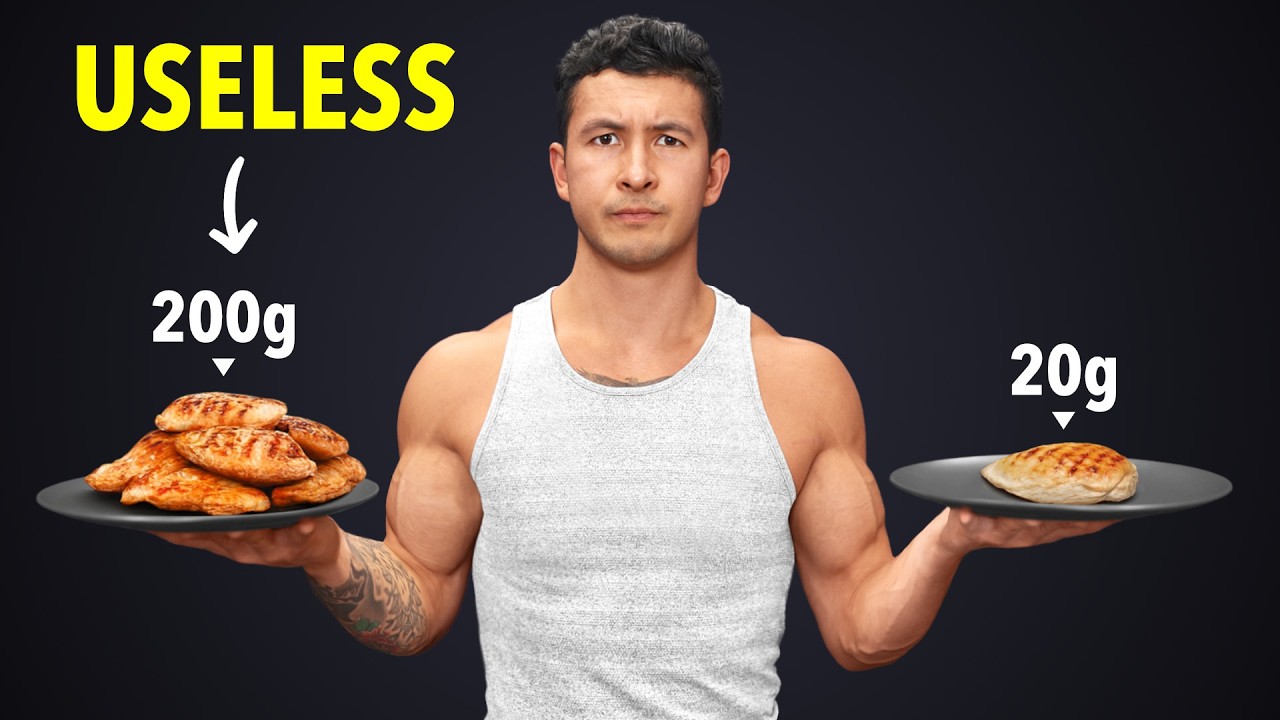
So, how much protein? Is more better? A group of top protein researchers gathered 62 long-term resistance-training studies and charted protein intake against actual growth. The surprise: the overall trend was basically flat. Doubling protein didn’t double gains. In one study, lifters on what most would call “low protein” grew about the same as lifters eating twice as much. In another, lifters eating roughly three times more protein actually gained less muscle. If you’re asking how much protein to build muscle, the data suggest that “more” isn’t automatically “better,” especially once you’re past a sensible, moderate intake.
As Dr. Eric Trexler explains, having more bricks than the blueprint calls for doesn’t give you a bigger house — you just have leftovers to haul away. It’s a useful way to think about protein intake for muscle building: enough bricks to build the house, not a mountain of unused materials that add cost and effort without improving the result.
What about protein type? Natural pro bodybuilder Alex Leonidas cut his intake roughly in half and switched to plant-based sources — often around 90 g/day — with no hit to recovery, progressive overload, or strength. His training logs and on-camera lifts show consistency despite the lower intake. That doesn’t “prove” one universal number for optimal protein intake, but it challenges the belief that sky-high targets are mandatory for progress.
If the key question isn’t just how much protein intake to build muscle, then what matters most? Training quality: Without hard, progressive lifting, extra protein does nothing. With a solid program, even modest intake can still build muscle. Technique, effort, progression, and recovery habits usually explain far more of your gains than chasing another scoop. Total calories: In a classic experiment, lifters adding a 2,000-calorie carb-only shake made similar muscle gains to lifters adding a 2,000-calorie shake with protein. The extra calories — not the extra protein — drove the improvement. Flip the script and go into a steep deficit, and muscle loss becomes likely even when protein is high. This is why, when calculating how much protein to build muscle, you also have to look at energy balance and carb availability for performance.
Protein still has clear roles. Moving from very low intake to a reasonable moderate target supports growth and recovery. During a cut — especially when you’re already fairly lean — a higher protein target helps manage hunger and maintain muscle. And for adherence, some people simply enjoy eating protein-rich foods. A quick shake can be a convenient 30 g that helps you hit the day’s target without overthinking it.
There are times when protein can quietly work against your goals. Protein is filling and has a higher thermic cost, which can be a problem if you’re trying to eat enough to gain. High-protein choices can also cost more per calorie. And, if protein intake crowds out carbs and fats, you may compromise glycogen, training performance, or hormones. When planning how much protein to build muscle, remember you’re distributing a finite calorie budget.
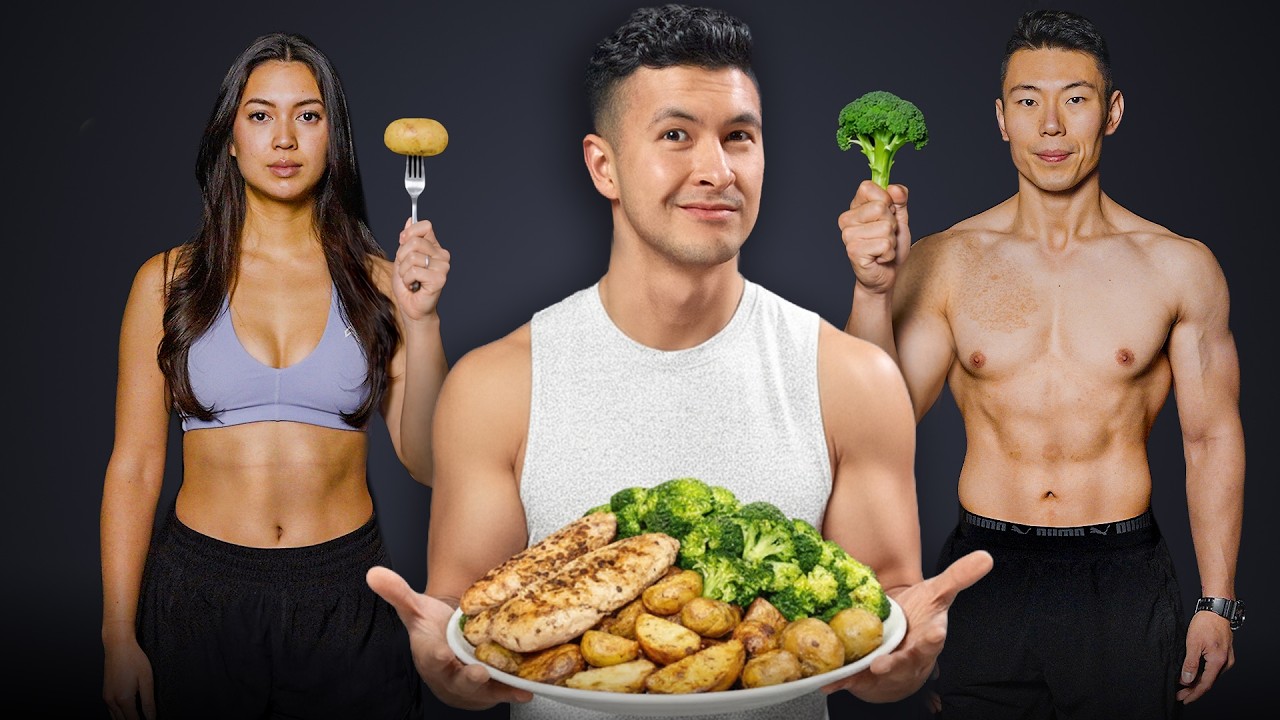
So… how much protein to build muscle? For the majority of lifters, consuming 0.55 to 0.63 grams of protein per pound of body weight will already be close to maximizing their gains. Protein also “sneaks in” from foods you might overlook: bread, beans, potatoes, oats, peanut butter, mixed meals. Often, hitting the target is as simple as anchoring the day with one protein-rich meal and a shake, then letting regular meals do the rest. Now, if you want a little extra “insurance,” you can go to about 0.64 to 0.72 grams per pound. And lastly, if you’re dieting and below 15% body fat, OR you’re just someone who wants the reassurance that you’re definitely maximizing your gains, you can bump it up to 0.73 to 1 gram per pound of bodyweight.
Оглавление (3 сегментов)
Segment 1 (00:00 - 05:00)
Do you expect your muscles to grow bigger and bigger by shoveling high protein into your body? But what if eating more protein isn't just unnecessary, but actually makes it harder to grow? Today, I'll walk you through the new research that challenges everything we thought we knew and reveal the two things that actually build more muscle than protein. But how did protein become known as the most important nutrient in the first place? — I mean, there was some diets, I'm not going to lie, ate 140 egg whites a day. People think it's crazy that I've eaten 200 g of protein for almost 20 straight years. When you lift weights, you trigger muscle protein synthesis, a molecular message to your muscles that says build. But building muscle is just like building a brick house. Without bricks, nothing gets built. Protein is those bricks. Eat enough of it and you've got the raw materials to actually turn that growth signal into new muscle. But when gym bros learned this, they didn't just want to build houses. They wanted mansions. Back in the golden era, it wasn't uncommon for bodybuilders to eat over 300 grams of protein per day, a dozen eggs in one sitting, and pounds of chicken breast. Fast forward to today, and you'll still find listers chasing 200 plus g of protein per day, or following the 1 g per pound of body weight rule like it's gospel. I know I did. I used to believe that if I didn't hit my daily protein target, I was leaving tons of gains on the table. But it wasn't just bodybuilders. The food industry realized that they could cash in on this obsession. Suddenly, you've got protein cereal, protein chips, protein cookies, even Starbucks lattes with extra protein. Most of it is just cheap protein sprinkled in. But because they can slap high protein on the label, they charge you 20% more, and people will happily pay for it. But here is where things get really interesting. Recently, a group of top protein researchers were curious about just how much extra muscle you build by eating more protein. So, they got together and they gathered every long-term growth study they could find, 62 in total, where participants lifted weights but ate different amounts of protein. Then they plotted all those results on a graph. Protein intake on the bottom, muscle growth on the side. The results were not what they were expecting. In one study, participants ate what most lifters would call low protein. So 0. 45 grams per pound of body weight. For someone who weighs 180 pounds, that's just 82 grams of protein a day. Basically, two chicken breasts. This mark in the y-axis represents how much growth they got. Now, what happens if you take a similar group of lifters, but you feed them double that? Four chicken breasts per day. Using gym bro math, that should mean at least double the gains, right? Surprisingly, the growth was pretty much identical. H. But now, let's really push it. 270 grams per day. That's six chicken breasts. Well, despite participants in this study eating three times more protein, they actually gained less muscle. But I know what you're thinking, Jeremy. You can't just cherrypick studies and call it a day. And you're right. So, let's widen the lens a bit. Here are all the studies in the analysis that looked at moderate to high protein intakes with just two outliers removed because it reported way larger than normal gains. Now, if eating more protein really has a powerful effect on growth, you'd expect these dots to climb up and to the right. The trend is basically flat. And so, what that means is the anticipated benefit of pushing your protein even higher is very, very small. and frankly so small that many researchers aren't even confident that a benefit exists at all. That's Dr. Eric Trexler, a published researcher at Duke University who spent his career studying muscle growth. If you're building a house and you have more bricks than the blueprint calls for, that doesn't mean you end up with a bigger house. Basically, you just bunch of leftover bricks and eventually you're going to have to haul them away from the construction site. So, when you're building a house, that's tedious. It's a waste of time. But graphs are one thing. Let's say you somehow managed to convince a pro bodybuilder to not just cut his protein intake in half, but to stop eating meat, eggs, and fish, getting all of his protein only from plant-based sources. Surely, he would shrivel up and lose all his gains, right? Well, that's exactly what pro-natural bodybuilder Alex Leonitis did 2 and 1/2 years ago. Alex used to eat 200 g of protein every single day. Now, he eats as low as 90 g per day. And all of it comes from plant-based sources. I've noticed absolutely nothing. Recovery is exactly the same. Progressive overload is the same as it's been for many years. I would consider myself a an elite natural lifter. I've been documenting all my training since 2020. I have SD cards filled to the max. My gains have not been affected whatsoever. I've tried up to 220 g, including being at single digit body fat. Comparing that to 120, which is 100 g less, I'm just as strong
Segment 2 (05:00 - 10:00)
as I've ever been. 405 bench at 181. — So, if you're wondering how far a person can possibly get with a low protein diet, Alex is living proof that the answer is pretty damn far. — I just feel like people need to focus more on their health instead of just one sole macronutrient, protein. And I'm not the first person to report this. I don't know if you if you've looked at Brian Bournestein and a couple other guys, but it's a common thing that they're now dropping their levels to around the zone that I'm talking about. And that's been surprising to me, too, because now I'm saving money and I don't have to stress about it as much. But now, you're probably wondering, if protein doesn't matter as much as we thought, then what does? Well, let's take a look at a few clues. In one study, researchers had one group of people double their protein intake to about 140 gram a day, while another group stayed at 70. The catch, neither group trained. And after 8 weeks, guess what happened? Nothing. No muscle, no strength, no gains, just more expensive pee. On the flip side, another study looked at patients with kidney issues who were forced into extremely low protein diets, less than 50 g a day. Now, you'd expect that would completely shut down muscle growth. But when half of them started lifting weights, even on that tiny amount of protein, their muscles still got over 20% bigger and 30% stronger. But what about your diet? What if I told you eating this bowl of rice could get you the same muscle growth as eating all this extra protein? Well, in one experiment, researchers split lifters into three groups. All of them followed the same lifting program. Group A got nothing extra, just their normal diet. Group B added a 2,000 calorie shake made mostly of carbs, and group C added a similar 2,000 calorie shake, but with 82 g of protein mixed into it. After the 8 weeks, both shake groups gained significantly more weight and muscle than the control group who didn't get extra calories. But here's the kicker. the carb group experienced similar gains as the extra protein group, suggesting it was the extra calories, not the protein driving the gains. And we see the same thing in the opposite direction. In fat loss studies, people who train hard and eat plenty of protein can still build muscle if they're at maintenance calories or in just a very small deficit. But once that deficit gets too steep, around 500 to 700 calories per day, most people start losing muscle even with a high protein diet. So you put all these studies together and the most important drivers of growth becomes quite obvious. Number one, hard training. Number two, eating enough calories to fuel your training and recovery. And unless you're severely restricting it, protein actually comes in for support. And number three, in fact, there's even some cases where protein can actually start hurting your growth rather than helping it. For one, protein is arguably the most filling food you can eat, and it also burns the most calories to digest. If you struggle to gain weight, this can make it harder to eat enough to grow. Not to mention the GI discomfort and flatulence that can come from higher protein diets. You're not going to like it and neither will the people around you. Second, it's expensive. Let's say your body only needs about 100 g of protein a day, but you decide to push it up to 200. That extra 100 g isn't giving you any additional muscle. Your body just burns it for energy. Now, if that extra protein is coming from chicken, that's about $5 added to your grocery bill every single day. But if you replace those calories with carbs, like potatoes, you get the same amount of energy for less than a dollar. That's a difference of around $120 a month or nearly $1,500 a year. And third, when protein takes up too many of your calories, it pushes out carbs and fats. Too low fat can mess your hormones, whereas too low carbs drains your glycogen, tanking your workout performance. Now, I'll share exactly how much protein I'm currently eating and the ranges I'd recommend at the end of this video. But just because protein is overhyped, it doesn't mean it's useless. There's actually three situations where protein has major benefits. First, although you can still build muscle without very much protein, the analysis that I showed you earlier, it does suggest a meaningful bump in gains when you go from very low protein intakes up to moderate ones. In fact, Alex mentioned that once he starts going below 90 g of protein per day, his muscle recovery becomes noticeably slower. This threshold is right around 0. 55 g per pound of body weight. So, if you take the number of grams of protein you eat in a day and you divide it by your body weight in pounds and the number that you get is below 0. 55, you'll almost certainly see more growth by eating more protein. The second scenario is when you're dieting. We often talk about how protein can backfire because, you know, it has such a satiating effect. It can reduce appetite, but that becomes really a big game changer when we're dieting down, right? So, being able to attenuate hunger and increase fullness on a high
Segment 3 (10:00 - 13:00)
protein diet becomes really helpful when we're trying to lose weight and restrict calories. Now, if you're over 15% body fat, you know, you've got plenty of stored energy, so you don't have to worry too much about cutting into muscle as you're losing weight. Um, but once you start to get below 15% body fat, protein becomes extra important. We recently published a meta analysis specifically on lean dieting people and found that their protein needs tend to be a lot higher than we would typically see in people who are either not dieting or not quite as lean. And the third scenario is adherence. Some people just enjoy eating protein. I'm Filipino and for me, rice without some kind of protein on the plate, it just feels incomplete. And that's also why I still use protein powder. I even sell my own brand. And while this video probably isn't the best marketing for it, I still use it almost every day. Not because it's magic, but because it's a quick, tasty, and versatile way for me to get 30 g of protein in just a single scoop. But let's get to what you're actually waiting for. How much protein should you actually eat? So, for the majority of lifters, eating 0. 55 to 0. 63 g per pound of body weight will already be close to maximizing your gains. For a 160 pound person, that would be around 88 to 100 grams of protein per day. And remember, protein sneaks into your diet in more ways than just shakes and chicken breast. Bread, beans, peanut butter. It all adds up. I even scanned a simple meal with my app. Just a protein shake and two slices of peanut butter toast. And that's already 50 g of protein. So, hitting your protein target could be as simple as adding one protein shake to your day. Now, if you do want a little extra insurance, you can go slightly higher to about 0. 64 to 0. 72 g per pound. Think of this zone as very likely maximizing your gains. But if you're dieting and you're below 15% body fat, or let's just say you're somebody who wants the reassurance that you are definitely maximizing your gains, then you can bump this up to 0. 73 to 1 g per pound of body weight. As for what I'm currently doing, I used to sit at well over 1 gram per pound of body weight per day because I just thought it was necessary. These days, I'm actually closer to 0. 73, right at the lower end of this maximized range, and I noticed no differences in my gains. If anything, shifting some of those calories towards carbs instead has made my training as well as my digestion feel a whole lot better. Plus, I used to panic about protein whenever I'd travel. Now, I know that even just one protein shake and a high protein dinner, that's pretty much covering my bases. So, next time before you buy those overpriced protein snacks, maybe buy a calculator to figure out how much protein you actually need first. Or you can just use my Built with Science Plus app. It shows you exactly how much protein you need and the right workouts to combine it with. Plus, it adjusts your plan based on how your body is actually responding. You can try it for two weeks completely free by scanning this QR code or heading to builtwithscience. com. But since your training is what really drives growth, highly recommend you check out this video next where I break down the only two exercises you need for a wider back. Thank you so much for watching. I'll see you next