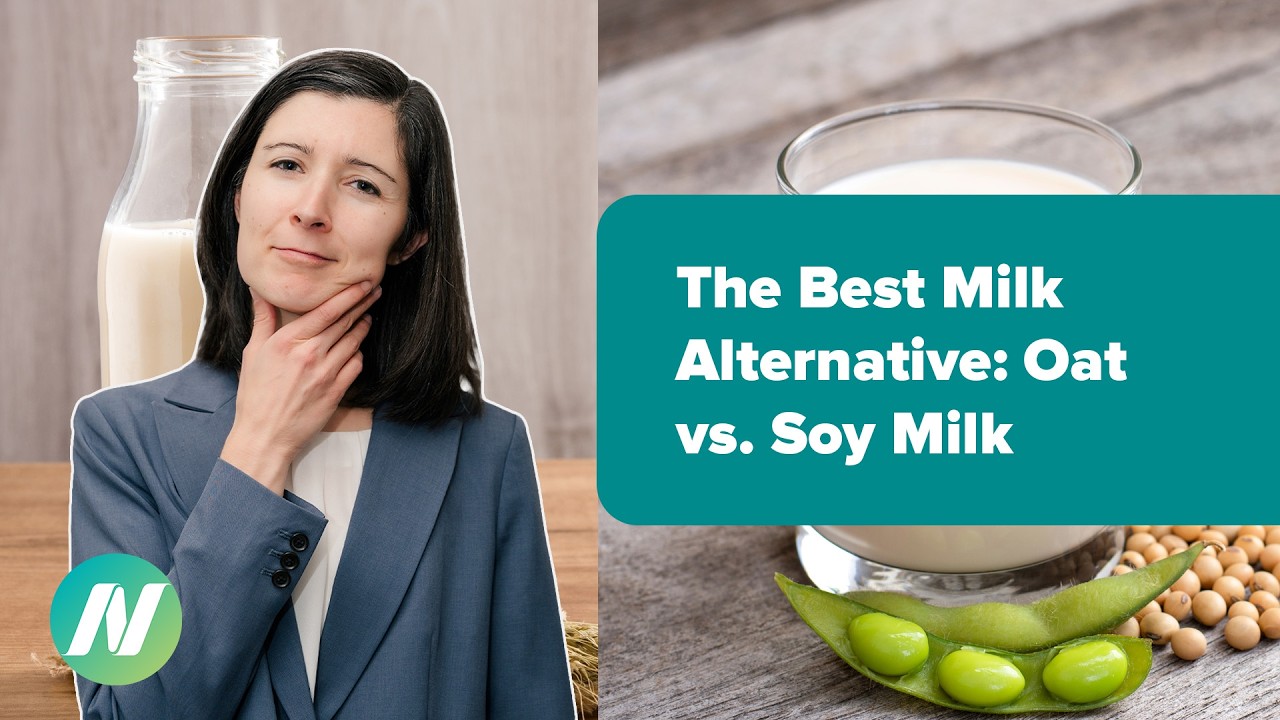
The Best Milk Alternative: Oat vs. Soy Milk
6:06

The Best Milk Alternative: Oat vs. Soy Milk

NutritionFacts.org 09.03.2026 14 693 просмотров 874 лайков

Machine-readable: Markdown · JSON API · Site index

Поделиться Telegram VK Бот
Транскрипт Скачать .md
Анализ с AI
Описание видео
Can oat milk’s nutritional profile compete with soy milk’s? This is the video I mentioned: Is Soy Milk the Most Nutritious Non-Dairy Milk? (https://nutritionfacts.org/video/is-soy-milk-the-most-nutritious-non-dairy-milk/). Who Shouldn't Eat Soy? (https://nutritionfacts.org/video/who-shouldnt-eat-soy/?queryID=21c003ead8f1b75f2ad99220ed2d00d6). Check out the video to find out. For more on soy milk, see: • Soy Milk for Vaginal Menopause Symptoms (https://nutritionfacts.org/video/soy-milk-for-vaginal-menopause-symptoms/) • Soy Foods for Menopause Hot Flash Symptoms (https://nutritionfacts.org/video/soy-foods-for-menopause-hot-flash-symptoms/) • Should Women with Fibroids Avoid Soy? (https://nutritionfacts.org/video/should-women-with-fibroids-avoid-soy/) • The Role of Soy Foods in Prostate Cancer Prevention and Treatment (https://nutritionfacts.org/video/the-role-of-soy-foods-in-prostate-cancer-prevention-and-treatment/) • Fermented or Unfermented Soy Foods for Prostate Cancer Prevention? (https://nutritionfacts.org/video/fermented-or-unfermented-soy-foods-for-prostate-cancer-prevention/) New subscribers to our e-newsletter always receive a free gift. Get yours here: https://nutritionfacts.org/subscribe/. Have a question about this video? Leave it in the comment section at http://nutritionfacts.org/video/the-best-milk-alternative-oat-vs-soy-milk and someone on the NutritionFacts.org team will try to answer it. Want to get a list of links to all the scientific sources used in this video? Click on Sources Cited at https://nutritionfacts.org/video/the-best-milk-alternative-oat-vs-soy-milk. You’ll also find a transcript and acknowledgements for the video, my blog and speaking tour schedule, and an easy way to search (by translated language even) through our videos spanning more than 2,000 health topics. Thanks for watching. I hope you’ll join in the evidence-based nutrition revolution! -Michael Greger, MD FACLM Captions for this video are available in several languages; you can find yours in the video settings. View important information about our translated resources: https://nutritionfacts.org/translations-info/ https://NutritionFacts.org • Subscribe: https://nutritionfacts.org/subscribe • Donate: https://nutritionfacts.org/donate • Podcast : https://nutritionfacts.org/audio • Books: https://nutritionfacts.org/books • Shop: https://drgreger.org • Facebook: https://www.facebook.com/NutritionFacts.org • Twitter: https://twitter.com/nutrition_facts • Instagram: https://www.instagram.com/nutrition_facts_org
Оглавление (2 сегментов)

Segment 1 (00:00 - 05:00)

"The Best Milk Alternative: Oat vs. Soy Milk" Plant-based milks continue to expand their share of the "milk" market. Some see this shift as a "palatable disruption," where people are encouraged to care enough about the environment, health, and animal welfare to adopt plant-based milks but ultimately remain consumers of a commodity food. Do people even need to consume milk, whether plant-based or dairy? Recent guidelines from the Academy of Nutrition and Dietetics recommend that one- to two-year-old children consume whole cow's milk, explicitly stating that plant milks should be avoided with the exception of soy milk. This triggered an outcry in the medical community with significant concerns about dairy industry influence and the lack of data showing cow's milk offers any benefit over plant-based milks to young children. Dr. Greger covered this controversy in detail. After weaning, milk of any kind is not required and, in fact, should not be relied upon as a main source of calories. Water is fine provided it is combined with a healthy, balanced diet. U. S. federal nutrition policy and dairy industry promotions have long recognized dairy milks as a high-quality source of protein and calcium. However, although cow's milk is rich in calcium, it does not appear to reduce bone fractures. What's more, consumption of cow's milk carries its own risks and must be compared against risks of plant-based milks, which are primarily only problematic when they are used inappropriately in otherwise unbalanced diets that provide inadequate solid foods. Some milk products, whether dairy or plant-based, are fortified with vitamin D or vitamin A. Plant-based milk alternatives could benefit from nutrient density standards, particularly if individuals rely on them as sources of protein and calcium. In a survey of plant-based milk alternatives in the U. S. market, only soy milks served as a "good" source of protein, with around 7g per cup (240 ml) and were consistently fortified. Most other plant-based milks, like almond, rice, coconut, hemp, flaxseed, and cashew "milks," are not great options for toddlers and young children. They have inadequate nutrient profiles to meet needs for protein, calcium, and vitamin D. Other fortified plant-based milks, like pea milk and possibly oat milk, might be more reasonable options for young children who need an alternative to soy milk. But not everyone agrees; others recommend that other fortified plant beverages, like oat or almond milk, are only okay for older children. Globally, soy milk has dominated the plant-milk market, making up more than 50% of global plant-milk production. But oat milk's popularity continues to grow steadily, outperforming others like almond milk and coconut milk. Oat milk came to the U. S. market about 30 years ago, but only recently, with the arrival of the Swedish brand Oatly and its strategic marketing campaign, did oat milk start overtaking soy milk as the #2 plant-based milk sold in the United States. In Europe, oat milk has become the #1 most widely-consumed plant milk. With more oat milk appearing in refrigerator cases at grocery stores, how does it compare to other plant milks, particularly NutritionFacts-recommended unsweetened soy milk? In terms of calcium and vitamin D, oat and soy milks have similar amounts to cow's milk. Soy surpasses oat in terms of protein content, and soy milk is generally lower in added sugar, but there is considerable variation, with unsweetened and very sweetened options on the market. An important caveat to note is that fortification of plant-based milks can differ by global region. For example, in the United States, about 80% of plant-based milks are fortified with vitamin D, but only about 20% are in Australia and just 50% in Europe. As some people rely on milk for calcium and vitamin D sources, this is your reminder to check the nutrition labels, whether for added sugar content or fortification, so you know exactly what you are or are not getting. What happens when you put oats to the test for cholesterol? People's LDL can drop 10 points from eating two small servings of oatmeal a day for eight weeks. Oat-based cold cereals like Cheerios appear to also work, dropping LDL around 7 points more than control in the same time frame. Does oat milk have similar effects? You don't know, until it has been put to the test. Oat milk versus soy milk versus cow's milk. People drank 3 to 4 cups (720–960 ml) a day of the respective milk for 4 weeks, and those who drank oat milk or soy milk had a significant drop in LDL, around 8 points, but drinking cow's milk had no significant effect. A slightly larger trial of about 50 men had similar results for oat milk, an 8-point drop in LDL over 5 weeks

Segment 2 (05:00 - 06:00)

for those drinking 3 cups (720 ml) of oat milk per day, versus no effect in the control group drinking rice milk. So, 3 cups of oat milk has similar effects on LDL cholesterol as a cup and a half (360 ml) of cooked oatmeal. Some of these cholesterol-lowering effects may be due to the beta-glucan fiber in oats. Oats are one of the few foods, because of their beta-glucan content, that can have a "health claim" for lowering heart disease risk put on their packaging. But the soy protein in soy milk can, too. And soy milk has more than 10 times the polyphenol content of oat milk. Polyphenol-rich diets have been associated with a reduced risk of chronic diseases, like heart disease, some cancers, and Type 2 diabetes, yet another reason it is the healthier choice.

Другие видео автора — NutritionFacts.org

Ctrl+V

Экстракт Знаний в Telegram

Экстракты и дистилляты из лучших YouTube-каналов — сразу после публикации.

Подписаться

Дайджест Экстрактов

Лучшие методички за неделю — каждый понедельник