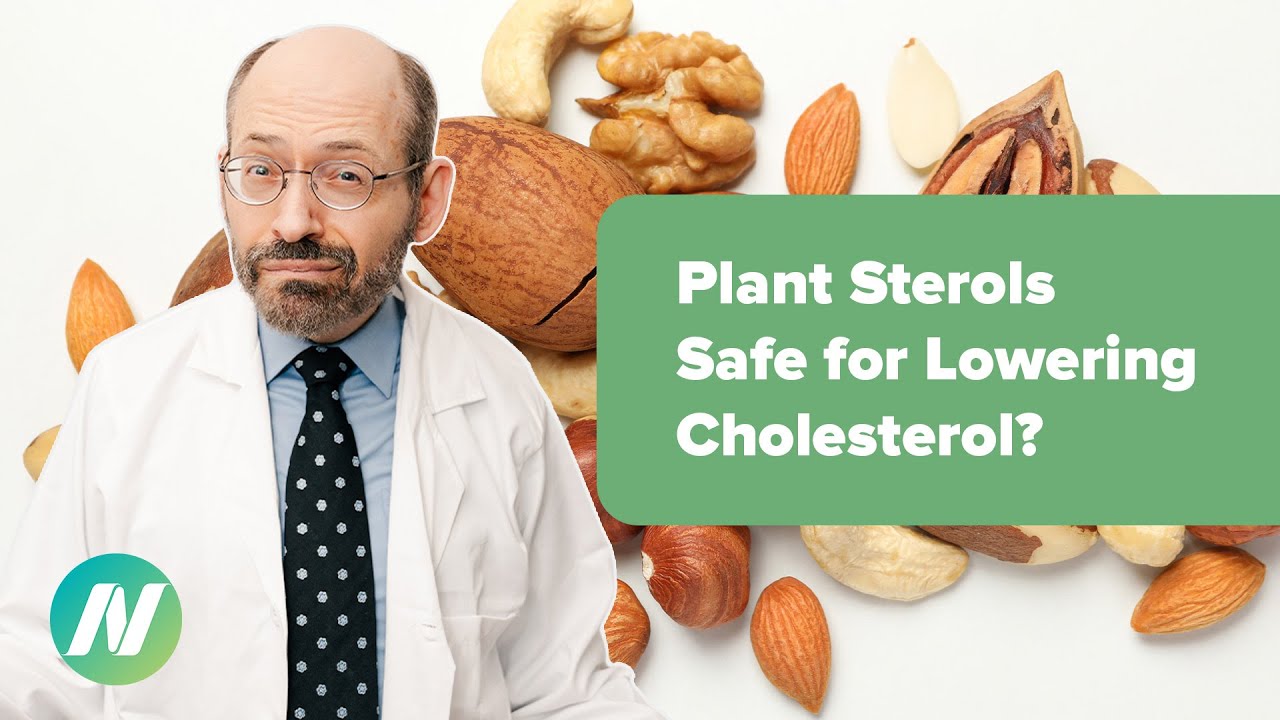
Are Plant Sterols Safe for Lowering Cholesterol?
5:52

Are Plant Sterols Safe for Lowering Cholesterol?

NutritionFacts.org 02.03.2026 10 579 просмотров 701 лайков

Machine-readable: Markdown · JSON API · Site index

Поделиться Telegram VK Бот
Транскрипт Скачать .md
Анализ с AI
Описание видео
Are there any downsides to taking cholesterol-lowering phytosterol supplements? Safety concerns regarding phytosterolemia, red blood cell fragility, oxysterols, and the absorption of fat-soluble nutrients are addressed. This is the seventh video in an extended series on the critically important topic of how to lower LDL cholesterol, the primary driver of our primary killer. In this series, we take a deep dive into ways we may lower our cholesterol through diet. We’ll explore the Portfolio Diet, plant sterols, and cholesterol-lowering supplements, foods, herbs, and spices, then conclude with my Portfolio Plus Powder recipe “cooking” video. If you don’t want to wait for all the videos to be released over time, we’ve compiled all the information into my latest book, Lower LDL Cholesterol Naturally with Food (https://nutritionfacts.org/book/portfolio/), available as a softcover, ebook, and audiobook. If you missed the previous videos in this series, see: • Why Isn't Everyone on Cholesterol-Lowering Statin Drugs? (https://nutritionfacts.org/video/why-isnt-everyone-on-cholesterol-lowering-statin-drugs) • How Effective Are Statins? (https://nutritionfacts.org/video/how-effective-are-statins) • The Side Effects of Statins: Are They Worth It? (https://nutritionfacts.org/video/the-side-effects-of-statins-are-they-worth-it) • What Is the Best Statin Cholesterol-Lowering Drug? (https://nutritionfacts.org/video/what-is-the-best-statin-cholesterol-lowering-drug) • How to Lower Cholesterol with the Portfolio Diet (https://nutritionfacts.org/video/how-to-lower-cholesterol-with-the-portfolio-diet) • Are Plant Sterols Effective for Lowering Cholesterol? (https://nutritionfacts.org/video/are-plant-sterols-effective-for-lowering-cholesterol) New subscribers to our e-newsletter always receive a free gift. Get yours here: https://nutritionfacts.org/subscribe/. Have a question about this video? Leave it in the comment section at http://nutritionfacts.org/video/are-plant-sterols-safe-for-lowering-cholesterol and someone on the NutritionFacts.org team will try to answer it. Want to get a list of links to all the scientific sources used in this video? Click on Sources Cited at https://nutritionfacts.org/video/are-plant-sterols-safe-for-lowering-cholesterol. You’ll also find a transcript and acknowledgements for the video, my blog and speaking tour schedule, and an easy way to search (by translated language even) through our videos spanning more than 2,000 health topics. Thanks for watching. I hope you’ll join in the evidence-based nutrition revolution! -Michael Greger, MD FACLM Captions for this video are available in several languages; you can find yours in the video settings. View important information about our translated resources: https://nutritionfacts.org/translations-info/ https://NutritionFacts.org • Subscribe: https://nutritionfacts.org/subscribe • Donate: https://nutritionfacts.org/donate • Podcast : https://nutritionfacts.org/audio • Books: https://nutritionfacts.org/books • Shop: https://drgreger.org • Facebook: https://www.facebook.com/NutritionFacts.org • Twitter: https://twitter.com/nutrition_facts • Instagram: https://www.instagram.com/nutrition_facts_org
Оглавление (2 сегментов)

Segment 1 (00:00 - 05:00)

"Are Plant Sterols Safe for Lowering Cholesterol? " According to an expert consensus statement from the European Atherosclerosis Society, at the recommended daily intake of two grams of plant sterols a day, the available evidence does not suggest any adverse effect associated with long-term intake. And evidence from animal and cell studies suggests a protective role of plant sterol intake and risk of certain cancers. Human population studies have also found a protective effect of dietary phytosterol intake on cancer risk; those who consumed the most had a 37% lower risk of cancer. But where are phytosterols found? Healthy foods like nuts and seeds. Even just a single ounce of nuts (30 g) a day is associated with less cardiovascular risk and a lower risk of dying from cancer and from dying from all causes put together. So, phytosterols may just be a marker for healthy food intake, though it's also possible that phytosterols may be one of the reasons nuts and seeds are so good for us. There's a new class of anti-cancer agents known as histone deacetylase inhibitors, available for the low, low cost of $38,000 a month, but in terms of the most potent naturally occurring such inhibitors reported to date, phytosterols may fit the bill, perhaps one of the reasons healthy plant foods are so good for us. Post-marketing surveillance studies are said to have given phytosterols a clean bill of health based on thousands of consumers, but the study was done by the company that sells those products; so, I don't take much comfort from it. There's a concern that plant sterols could reduce the absorption of certain fat-soluble vitamins. They don't seem to impact concentrations of blood levels of vitamins A, D, or K, but they can drop vitamin E levels by about 10%. The main concern, though, has been about the loss of carotenoids like beta carotene. One modeling study suggested that if margarines became a hundred percent fortified with phytosterols, the incidence of night blindness— difficulty seeing in dim light— may increase as much as 19 in a thousand every year, whereas that would also result in one in a thousand not getting heart disease. Since night blindness is considered a relatively minor visual disturbance, the benefits of fortification might clearly outweigh the putative risk, but there's no need to have any risk at all, because the relatively small suppression of plasma carotenoid levels can be countered by just eating more fruits and vegetables. The problem with fortifying something like margarine with phytosterols is that people may cook with it, and that could cause the plant sterols to oxidize into phytosterol oxidation products. We know cholesterol oxidation products are particularly bad, but we aren't sure about oxidized phytosterols. We don't know enough about what happens when we heat them; so, better safe than sorry. Don't cook with phytosterol-fortified products. There was a concerning finding in rats, where phytosterols were found to make their red blood cells more fragile, but in mice, the opposite was found— their red blood cells became less fragile, and in hamsters, there didn't seem to be any effect. So, are we more like rats, mice, or hamsters? Now, the amount of plant sterols researchers used in the rats was, like, 50 times higher than you'd see in people, but you really don't know what normal amounts can do until you put it to the test, and it turns out that doesn't appear to be an issue. There is, however, a rare genetic condition called phytosterolemia, where people end up with extremely high levels of phytosterols in their blood and end up with horrific heart disease, even as kids. But the same mutations that allow for the increased absorption of phytosterols also cholesterol; so, these unfortunate kids end up with cholesterol levels in the 700s. No wonder they're dying of heart attacks. So, when those who just genetically end up with higher levels of phytosterols in their bloodstream have higher rates of cardiovascular disease, it's not necessarily because plant sterols increase the risk of coronary heart disease, as some had feared, but rather because those people are also sucking up extra regular cholesterol. These genetic variations in sterol transporters, result in increased blood levels of phytosterols, increased intestinal cholesterol absorption and subsequently result in higher LDL. In fact, that's how we estimate how good people are at absorbing cholesterol, by just seeing how many plant sterols they have in their blood. So, people with lots of phytosterols in their blood also have markedly elevated LDL cholesterol. No wonder they're at risk for heart disease. However, this increase in cholesterol absorption doesn't fully explain the increased risk; so, it's possible that phytosterols may indeed contribute directly to heart disease, raising questions about the safety of supplementing food with phytosterols for the purpose of cardiovascular risk reduction.

Segment 2 (05:00 - 05:00)

But the risk in LDL achieved by the consumption of phytosterol-enriched foods is 20 to 40 times greater than the increase in phytosterols in the blood. Thus, phytosterols would need to cause 20 to 40 times more atherosclerosis than cholesterol to cancel out their positive effect on cholesterol reduction. Yet, there is no apparent evidence for this. In fact, at the levels we get in our blood from consuming a few grams of plant sterols a day, there is no association with cardiovascular events in population studies. So, that's how you get these assurances that phytosterols are safe.

Другие видео автора — NutritionFacts.org

Ctrl+V

Экстракт Знаний в Telegram

Экстракты и дистилляты из лучших YouTube-каналов — сразу после публикации.

Подписаться

Дайджест Экстрактов

Лучшие методички за неделю — каждый понедельник