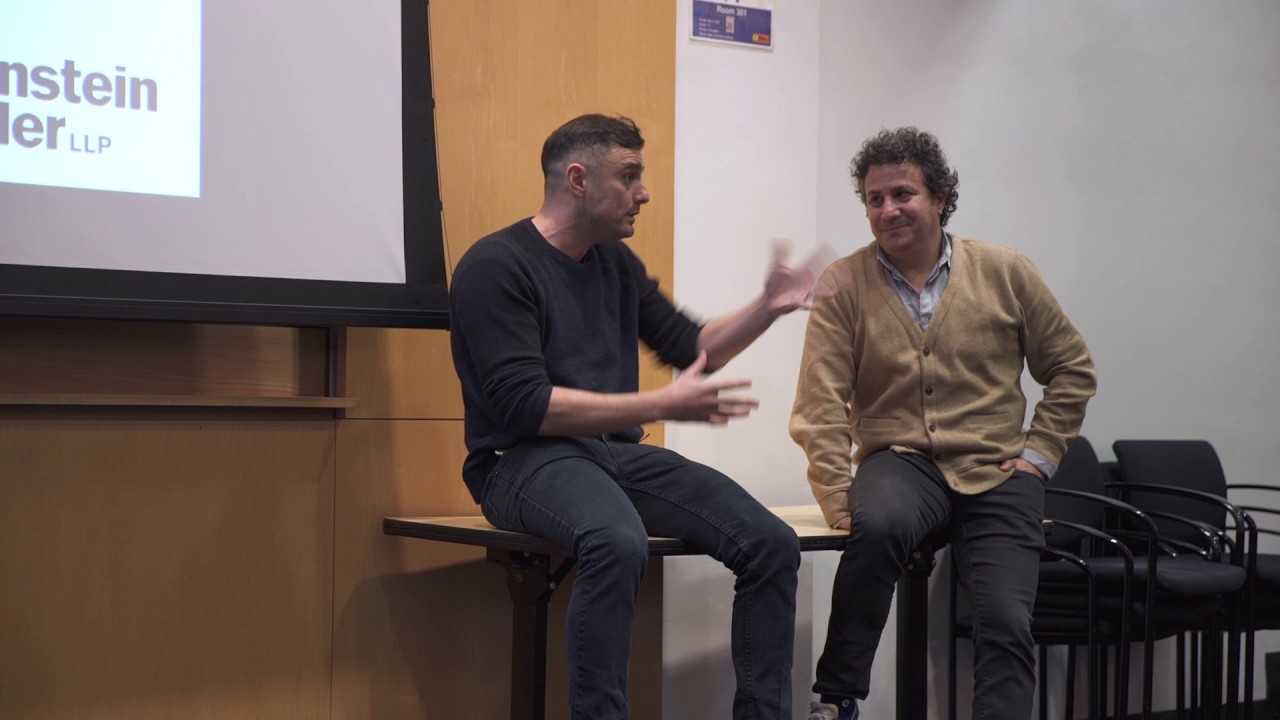
Q&A I had on November 1st, 2016, with the Venture Capital & Angel Investing course at Columbia's MBA program.
--
► Subscribe to My Channel Here http://www.youtube.com/subscription_center?add_user=GaryVaynerchuk
--
Gary Vaynerchuk builds businesses. Fresh out of college he took his family wine business and grew it from a $3M to a $60M business in just five years. Now he runs VaynerMedia, one of the world's hottest digital agencies. Along the way he became a prolific angel investor and venture capitalist, investing in companies like Facebook, Twitter, Tumblr, Uber, and Birchbox before eventually co-founding VaynerRSE, a $25M angel fund.
The #AskGaryVee Show is Gary's way of providing as much value as possible by taking your questions about social media, entrepreneurship, startups, and family businesses and giving you his answers based on a lifetime of building successful, multi-million dollar companies.
Gary is also a prolific public speaker, delivering keynotes at events like Le Web, and SXSW, which you can watch right here on this channel.
Find Gary here:
Website: http://garyvaynerchuk.com
Wine Library: http://winelibrary.com
Facebook: http://facebook.com/gary
Snapchat: garyvee
Twitter: http://twitter.com/garyvee
Instagram: http://instagram.com/garyvee
Medium: http://medium.com/@garyvee
Оглавление (10 сегментов)
Segment 1 (00:00 - 05:00)
- [Elevator] Third floor. - [Woman] Hello professors. - [Andy] Hey Gary. - Hey man. (laughing) Oh, I'm so sorry - [Ed] Andy was just talking a little bit. I don't know if you can physically sit for a little while? - You mean like reduce the energy to sit? - You mean to sit while he's talking? - No, stand. - I'm thrilled to sit. - No, stand up. - Okay. - Alright, so you were gonna talk a little bit about something that was like relative to the decision here in yield X. - I was. - You remember the call we had? You don't have to. - Well just prompt me. - Prompt you? - Yeah. - The go long or sell. - Right, so being a founder or being an entrepeneur is an intensely personal decision. - Yeah. - You're also balancing lots of different interests. You're balancing interests of your investors, partners, you're balancing interests of your board of directors, and your employees. But ultimately at it's heart, it's an intensely personal decision, and with one of those decisions only the person can make it. So you may make the right one or the wrong one, but it's intensely personal at it's core, and it's really hard for someone on the outside to make the investor, like us, to say "come on man, go for it. " 'Cause we have diversified portfolios of investments and businesses, and in fact if you think about the concept of a diversified portfolio, I say this to founders all the time, the success of your individual business or company doesn't really affect me. What affects me is the diversification of 24 companies that I invest in over a four year period out of one fund. That's all you have, and I'm constructing a diversified portfolio that I know 60 to 70 percent are probably not going to return the money, and 20 to 30 percent will return my capital, and one or two will deliver those outside returns. So in that balance, that's not equal, how can you say to someone, "you should go for it"? - So would you back Doug again, if you had been an investor and he had taken the term deal? - Well yes, potentially, because that's a great set of experiences. Most first time entrepreneurs don't have an experience to build a company. Having to raise outside capital, how to sell it. Have to balance those, that could be good set of experiences. - So we're talking about a company that got a very, very early offer. - We talked about it. - But maybe you can-- Andy gave a little bit of his background and his career trajectory that led him to a fund that would invest in his company, and you have a really interesting career trajectory, which maybe you could start-- - I think I should get Gary to invest in my company either. - Did you try? - Of course I tried. - Why did you-- - I don't recall. Let me ask you a quick question. (laughing) - You don't recall because it didn't even register? - No, I wanna get back to that in a minute. But there was something interesting that just happened. Did you ask him, would he invest in the person, who, if he took the term deal, which is the early deal, right? - Yeah. - Well the interesting part there is that he would have not known the other outcome. - Right. - Like if they took that first deal, they just wouldn't know. - Right. - So I think that's something I'm always fascinated by, which is people are so crippled by decisions, there's just no way to know what would have happened, you know, at the time you're making the decision. So much of this is Monday morning quarterbacking. Fascinating. So anyway, none the less. - Let's move over to the middle. - Yeah. (laughing) I've known this man since I was 14, 15 years old, because my family had a liquor store in Springfield, New Jersey, that I started working at when I was 14, that I later turned into something called Wine Library, and launched one of the first three or four e-commerce wine businesses in America, called WineLibrary. com back in 1996, and your professor here was a hard core wine nerd, that knew way to much about wine for such a young dude, and I was a child, but that was like my whole life and what I cared about, and I built my dad's business from a three to a 65 million dollar business with no capital infusion in '98 to 2003. - [Ed] Wait, he didn't make a modest $14 million loan? - No, no modest $14 million loan. (laughing) But he came to America. I was born in Belarus with no language and a hundred bucks and lived in a studio apartment in Queens with eight family members, so he's very much my hero to build it up to a three million dollar level. But I did it on digital marketing innovation of the time. In 1997 I had an e-mail newsletter that had 91 percent open rates, because nobody was e-mail marketing, and instead of sending catalogs from Sherry-Lehmann's or Zachys, I was getting to customers first with the hottest wines
Segment 2 (05:00 - 10:00)
on this thing e-mail. I was trying to send as many e-mails as possible in '97, 'cause I thought people would eventually charge for it. It seemed such a great deal. Launching a website, e-mail-- (laughing) Really! It's funny but very honestly, if we start talking about VR, we're gonna make a lot of assumptions right now that are either gonna play out or not play out in 20 to 30 year window. 1996 internet was a whole different fucking world, and so I kept innovating. Bought the word wine on the day Google AdWords came out for five cents a click, that was a good bet. (laughing) And owned it for a long time, and just did a lot of smart digital marketing things, and then I did a show on YouTube, a couple months after YouTube came out, called Wine Library TV where I sat in front of a camera and drank four bottles of wine for 20 minutes. (laughing) And a lot of people watched that and that's how I hit the scene in the tech world, and then what happened was YouTube sold for $1. 7 billion, and I was like fuck, I was right about e-com, Google AdWords, I was right about cookie retargeting banner ads, I was right about YouTube. Maybe this skill I have for selling more Burgundy and Priorat can be deployed against something more financially interesting. So when I read the article about YouTube's sale, there was one article that featured Ron Conway's angel investor, investment, and I said what the fuck's an angel investor? I googled it. (laughing) Within 20 minutes I decided I would be an angel investor. (laughing) And went to South by Southwest three months later, became friends with Ev Williams and Blaine Cook, the original CTO, and I think your firm at the time, me and Kevin Rose, bought up Blaine's original stock of Twitter, so I bought a ton of Twitter, real cheap. I didn't think of myself as an angel investor, I just thought that was a smart decision because I thought Twitter would be big. Then I went home f rom South by, made a-- - [Ed] Profit, by the way? - Well it did for me because I sold my shares, so I did good. (laughing) Came home, made a video, I was making wine videos, came home, made a video that said Facebook should be worried about Twitter. There was a guy who was head of platform at the time, at Facebook, that I didn't know, by the name of Dave Morin, sent me an e-mail like, "Hey, this video has gotten really viral "inside of Facebook, would you come out to Palo Alto "and give a talk? " So I came to room like this, in front of the whole company, it was only 400 employees, and talked about consumer behavior and why I thought the world was changing. That caught Mark's attention, we went out to dinner that night, and a week later I bought a lot of stock from his parents, and then somehow I got David Karp to reopen the B round of Tumblr, by the way stick with me here, the B round at a $14 million valuation, and I made an investment into Tumblr. So the first three things I invested in were Twitter, Facebook, and Tumblr. (laughing) Yeah, it was when I was smart, I was making bets on things that I thought would be successful. I didn't think of myself as an investor. I got progressively stupider after that. (laughing) - [Ed] Why do you think that was? - Because I started trying to be an investor. I literally went from being, I'm a businessman, these are good businesses, this is good. The market changed. I mean this is Tumblr B round 2008. B round 14 million. Now every fake, bullshit entrepreneur running around this campus wants seven million, four million for their bullshit idea that they have no prayer on, because entrepreneurship is popular, and instead of going to Bain or McKinsey, they think they can start a fucking app that people are gonna use. (laughing) (clapping) - [Ed] Those people who are clapping, are you clapping because he just described you? (laughing) - Ed, they're always clapping and laughing when I speak because it's the truth, we all know it. This is the greatest era of fake entrepreneurship ever, which makes it challenging for anybody here that wants to go into venture investing. I barely created one investment for myself last year 'cause I'm so scared of the early stage ecosystem, because the supply and demand curve of actual entrepreneurs that can see these things through, versus everyone who fancies themselves in that, has broke. And so I'm just desperately, I don't understand macro, global economics well enough to understand who and why this is being held up for so long, but I'm just desperately waiting for this whole fucking thing to crash. (laughter) - But here's the interesting thing to me is that at a certain point, you just decided you were gonna be an angel investor, you didn't know what it was, right? - That's right. - So you just kinda like, you just decided that's what you were gonna be. - I thought there was a moment in time where the internet that I grew up in, built my dad's liquor store was starting to hit true scale and consumer behavior was about to change for real. And so things like Birchbox and Uber and other things I did well with they were all still, back in 2007 to 2010-11 time frame where valuations were a little not more fair, but I would tell you that we were all I was very early stage, we were still dealing with four million dollar idea stage, the difference is
Segment 3 (10:00 - 15:00)
the entrepreneurs that were building those companies in 2007, eight, nine, 10, they couldn't breathe doing anything else. There was no-- - They didn't think they were going to get rich doing it. - Some of them, I think some, especially the early part. My South-By 2007 experience was wild. I went there. I said something about business and everybody looked at me like I was the worst piece of shit they'd ever seen. This Web 2. 0 movement Growing from the ashes of the first Web bubble, these were people that wanted to change the world for real. I just wanted to sell more Peter Michael Les Pavots. That's for you. - [Ed] That's a wine. - That was for you. So, yeah, that's true, but they were also true entrepreneurs every day, I meet, every month I meet with 15 people that 10 years ago, were gonna be consultants and bankers that now think the Uber of dry cleaning is their way out. - But how do you evaluate that? that person now, compared to what you called were the true believers? - So, it really is interesting. I've really gravitated later and later stage because I realized my marketing talent and what I was good at over the last decade is actually far better used for things that have a little maturity to them, where I can use my arbitrage of marketing capabilities. So, I've become less interested in the very early stage because the only thing I now eval--, if I'm going to make an angel investment pure idea phase, I need to know that person's, my 100% evaluation now is on the person could care less about the idea and I need to know if they sold Blow-Pops in junior high. Like, I'm not kidding, like. - [Ed] When you say Blow Pops, it doesn't matter if they sold Blow Pops as long as they started some business. - Zuck sold, like, like he like put music on CD's and sold them in cla-- Like, that's salesmanship DNA, that grit, that I can't breathe without selling thing is very needed because the other problem we have in the ecosystem and we deal with this is we also have a crazy reaction to failure. I've been at too many dinners where the dinner is, I went out of business and everybody sits around the table in a circle jerk of oh, it's great that you learned. (laughter) - [Ed] And your view is it sucks that you learned? - My view is like, fuck, I don't wanna lose my money. And, like, I definitely don't wanna buy you dinner and make you feel good that you suck. (laughter) But, right? I mean we have an unbelievably awesome culture that has a unique twist to it. Like, I don't know, like it feels very weird that I've worked very hard my whole fucking life wrote a $250,000 check. The person was skiing, four months before his company went outta business and then I'm supposed to go to a dinner and celebrate the learnings he had in three years? That's broken. That's the softness of our current culture. I genuinely believe that. - [Ed] And do you think that's your view because does that relate back to your upbringing? - Sure. I think it's a hell of a lot easier to feel the way I feel that, because I walked K-Mart when I was seven and split toilet paper with my mom versus going to fucking Horace Mann in Columbia. Yes. - But Zuck didn't grow up that way. - Oh, by the way, I'm talking 'bout me personally. I don't think my path is the only path. I think there's killers that went to Horace Mann in Columbia. But if you're asking me the question yes, I think that my reaction to that-- - [Ed] By killers you mean homicidal killers? - Nah. (laughter) I mean the slang term for real executors. Here's what I know. The balance of this ecosystem, I don't know what the class wants to do, whether build their companies or go and invest. as it currently sits right now, it's never been tougher at the earliest stage, because you have just so many pretenders, and the truth is it's hard. It's hard to like, figure them. I can ask you about putting music on CD's but like that's only one little tiny data point You're really-- - But the number of pretenders you have is correlated with the rise in the dollars available to those pretenders-- - And the romance and branding of being an entrepreneur. The brand equity around being an entrepreneur today is stunning. It is stunning for me to, in the world like I can't believe how cool it is in real life to be an entrepreneur. And that makes a lot of young individuals gravitate towards that. - But you're suggesting overall that's worse than if those young individuals went to work for Goldman Sachs or McKinsey - I am, 'cause I'll tell what we are not-- - You think the world is a better place even with the bad ideas? - No, I do not. - And getting funded by - And let me explain why. The biggest conversation that I'm fascinated by is the suicide rate at Wharton last year. So we have, in parallel a narrative that anybody can do it. And everybody's entitled to win in entrepreneurship. And there's an underbelly in our world that I'm concerned about, and you know we've talked about this in a different panel
Segment 4 (15:00 - 20:00)
This is a big thing, I mean like there's certain individuals who've been winning in the first 20 years of their life in a game that was fixed before they played it. And then they go into the market and the market punches them in the mouth and they don't know how to react and so yes, I do think for the cliched picture that I'm painting right now that there are certain individuals that I just genuinely believe would have had a better life being the number seven at Facebook instead of the number one of Shitbook. (laughter) Or, or making 230,000 a year on Wall Street or Consulting Land at 29 years old. Yes, I think there's a lot of people that would be better. Like, I love entrepreneurship the most but nothing works when it's forced or off-balance. Nothing. - [Ed] And Andy your point is just like do anything other than Goldman's? - Yeah, sort of, right, in other words-- - Unless you're built for Goldman-- - But what does that mean, right? - Well I know one thing. Not everybody's built to be an entrepreneur. - No, that's right. - That's insane. - Right, but it works the same way too, right. In other words, it used to be, right, you graduate school and then you go work for a bank or a law firm or you go into medicine. Those were a bunch of different paths. - Which all suck if, for me. - And they may, but some people still do that, right? - Yes. - Entrepreneurship is about being empowered to take control of your professional life. - Okay. - Right, at some level. - Do you know how many people are not capable of that? Do you know how hard entrepreneurship is? - But that's the market though, that's called the market. It won't work for everyone. Not everyone that goes to work at McKinsey or Goldman Sachs is gonna be successful. - That's like literally telling a basketball player that you should become a hockey player. You know that, right? Like, like self-awareness is very important. And something that should be debated. And I think we're forcing too many people into the entrepreneurial track that do not have the stomach to be an entrepreneur. - When you say we're forcing meaning we are, or Ed is, or who is? - All of us combined, the ecosystem the self-promotion within itself the outside world that decided it was the cool thing to talk about for a decade. These pendulums swing. But what I'm most worried about, and I refer to it 'cause I believe that this room all understand it better than me I'm dying to know why it can still stay up. Like there's so much money in the system. There's so much other stuff going on and government involvement and so many other variables that are playing out that are just above my pay grade that I'm fascinated by when they cripple because this much fakeness has an inevitable fate. - [Ed] So why are you raising a fund? - I'm raising a fund because I'm going Series B and Series C where I think my marketing machine that I've spent--so my behavior, as you guys know over the last five, six years instead of where I had a lot of leverage to raise capital and do my thing I took a major, on paper, step back and built a client service digital social agency that I've grown in the last five years from zero to 100 million in revenue right? To give me leverage for when the shit hits the fan. And so, what I want to do with the fund in the short term is deploy it against later stage things that need a marketing arbitrage to create victory. - [Ed] So, you've basically said I'm gonna make these wild investments, I'll do it in Series B because that's where the funnel pinch works for me. - They'd feel a lot less wild for me coming from angel A, so there's a lot more data of an actual business and B, I can look at it and say, okay her business she's got it all down her one opening or opportunity or soft spot is marketing arbitrage the way I do it which I believe is best in class that's a good bet for me 'cause I can bring the smartest money to the table. - [Ed] And so, it's not just that you've opened a barber shop to get paid to do haircuts in a downturn, so that you don't lose all your venture capital investible dollars, it's that there's a symbiosis between the barber shop and-- - Even further the reason I am building VaynerMedia right now is long term, I think it plays out for me on private equity where I buy businesses at scale and run them through the machine as I call the VaynerMedia and make that arbitrage. I took a step back seven years ago and said, you know what, now that I'm hanging out with all these fancy people, you characters and way fancier than you Travis, Sacca, those kind of dudes, I'm like I don't look like these dudes and chicks, I'm not these people, like, here's what I am, I'm a marketer and let me quadruple down at that skill, build infrastructure around that and deploy it against this world I believe in so that's what I've been focused on. - [Ed] And where does wine fit into this? - So wine fits into it in a couple of different ways. I'll get very real and transparent with you guys and you know, you have such a unique perspective on this. My dad and I are very different, you know, like as different as you can really get, you know, personality-wise, viewing the world, our backgrounds. As I was building Wine Library and I was getting more attention and things of that nature, there was a real forming tension for the first time in our relationship because, as you know, my dad gave me the greatest gift, I walked in as a 22-year-old and he gave me free reign. I ran that business, every decision, which is remarkable
Segment 5 (20:00 - 25:00)
in hindsight, especially now that I'm 40 and he was 44 when he allowed me to do that. But as the narrative changes, the business changed, there was tension between our relationship on, you know, him disappearing from the narrative within our industry that, and at the same time I made these good bets and AJ, my brother was graduating college, just felt like the right time to like make a decision where I would hand it more day to day back to him and the management team I built, Brandon and those guys. So the real life answer is for anybody that's been in a family business, the family business dynamic created a scenario where, because I had all these other amazing options, there was no reason to create friction with one of the two or three most important relationships in my life. That's the real answer and because I haven't been involved day to day as much, I've never enjoyed wine more because I don't look at a label anymore and think profit margin, you know, which has been fun actually. Ironically I'm probably enjoying wine more than ever and, you know, in a different way, the way that you look at it because you have such a passion for it, I don't want to buy Dujac or things of that nature, but I think I might make a run at some point in creating a three to $800,000,000 Yellow Tail like brand just 'cause I think I can do it and because I want to buy the New York Jets. (laughing) I don't know that's just a-- - [Ed] That's a good opportunity for us to see, in the unlikely event that any of you have questions (laughing) for these folks, I'm happy to field them. Do you want to start? - [Clifton] Yeah, so with this sort of inflating-- - What's your name? - [Clifton] Clifton. - [Clifton] It's nice to meet you. - Nice to meet you, man. - In this sort of inflated ecosystem that you came in as want to be entrepreneurs, do you feel that it has at least provided more good innovation that wouldn't have existed otherwise? - I don't know is the real answer. My intuition is probably a little bit, yes, but I genuinely believe that great entrepreneurs making great things, like Travis was an entrepreneur before Garret was an entrepreneur, like, I don't know. I don't know, not as much as some people may want to think because I think those people would have saw it through. I think we grossly underestimate hard wiring and talent. I think we grossly, those things would have broke through and would have happened anyway and were happening anyway, but probably, I mean if you have more people playing the game that wouldn't have played the game and done something else, of course there's going to be some but I don't think as much upside and I'm not sure as much casualty for the players in a net-net offsetting game. My opinion, what do you think? - I think, this is where you and I disagree a little bit-- - Yep. - Although we agree on some potential, I think the karma in the world is increased by more people believing themselves to be entrepreneurs, whether they have the skills to be successful or not, I think the karma in the world is increased, you know, so, so I think overall yes. - I also think the internet, itself, has created the opportunity as much as anything else. The infrastructure costs to be in the game are so low that's as much of a thing, I don't think anybody became more talented or capable or visionary because the internet came along. I think it just exposed the opportunity-- - but what's interesting-- - At a greater level. - Here's what's interesting, at the same time that also made it much more difficult for any individual to succeed because everyone can do it. - I totally agree. - Right. It makes it definitely more difficult-- - But, but-- - to be investors, too. - For sure. - Right? - I agree, but the cost of starting is so low-- - It's zero. - So low, you just say it, you're an entrepreneur. Mazel Tov. (laughing) - [Ed] So, so-- - I'm so used to doing Q and A, I'm like... What? - [Ed] What are the ramifications-- - You're asking your own guy. - [Ed] We know we're on your show. What are the ramifications of this fallout for all of the venture funds because there are some interesting structural ramifications to what your saying. Right? Because obviously and I do agree that there is definitely more garbage in and there definitely, you know, used to be that, like, it was nerdy, it was geeky and people would ignore you they would want to go talk to the people who run hedge funds. - Yep. - [Ed] And that's great, and that was actually a much more comfortable place to be for a whole bunch of reasons but structurally we're going to be screwed if we have a whole wave of venture funds investing in companies that never should have attracted investment capital-- - That's what's going to happen. - [Ed] And behind them a whole bunch of LP's managing pension funds and endowments that lose their money by investing in these misguided and venture funds-- - Except that, except that the software internet based technology as an asset cost is pretty small. So the damage, right, if 50% of all venture investments, investments in the venture funds this year went bust it's 15 billion dollars, it's not that big.
Segment 6 (25:00 - 30:00)
- It's just big for the human individuals. - [Ed] That's real money. - No, no, it's not big for like macroeconomics. - Yeah. - There's no - Yeah, that's true. - The first bubble we shifted the risk to the public. - [Ed] Yeah. - That's more meaningful. Now we've contained the risk to institutional investors. When we raised our last fund this year, earlier in the year, when we were out talking to our investors, we told them that we believe for the next ten years venture returns on average will be lower than they were the ten years before and they should expect the return from our fund and all the funds they invest in to be somewhere between 20% and 50% lower. - That's called sandbagging. - Yes. (laughing) But also believe in that. - Yeah, so-- - You look at the data suggests-- - So are you also raising money for Union Square ventured short fund? (laughing) - No, but our last two investments have been in hedge funds though. - Yes, go ahead. - [Woman] So you talked a little bit about inflated entrepreneurship but you could argue there's also right now inflated investors, like-- (Gary blows raspberry) - You are damn right, sister. (laughing) They work hand in hand. - [Woman] Right, so the question is, who should then, you talked about who should be an entrepreneur, investor? - You know, I don't get to judge who should. I'm just excited to see how it plays out. (laughing) Do you know what I mean? I mean who should? Who should do anything in the world? The people, you know, what I love about this is there'll be plenty of winners during this era, there'll just be a lot more losers. You know and so that's all. It's just a timing thing. This is so classic. This is every market on everything always and forever. It's why I love brands so much. This is when brand takes over reality. (loud slamming) (laughing) I know that was a big statement. (laughing) So I think a lot of, like I grew out of, my crew grew out of the angel, super angel, guys and gals that were successful in their first internet business, made some money, and had enough Twitter followers, let's get to the punch line to attract unbelievable deal flow. I made a lot. I'm going to continue to make a lot of money from that pocket, but a lot of us shouldn't necessarily be investors. We maybe should keeping some investment behavior but we should all really map ourselves, but yeah, I think it's, I think all of this comes down to the supply and demand of the skills. I just think people are very attracted to this world and I think if you, especially when I sit in a class like this, you know, I try to reverse engineer every situation I'm in, especially how do I bring value? If I could get one person in this room to actually pay attention tonight, go home, look in the mirror, and try to start deploying aggressive self-awareness, it could change the upside of their lives. I genuinely believe that. I just,-- - As long as they don't work for Goldman and Sachs. - Or they should, I mean, or maybe they should work for their family business. I don't know but I know that way too many people just go with the flow. I know how strong minded I am and how easy that is for me to get caught up and so I just think it's a worthwhile conversation, especially 'cause too many people make a decision on the now, not on when they're actually playing it out. Doesn't really matter to you if you do in this world today, it matters what the impact is over a 36 to 60 month window and that you have to really quantify that. Looking at data told you what happened. You need to deploy real intuition and other kind of signs to what's going to happen so you can make the decision for you. - You have a question? - [Man] So I guess this question is supposed to be around internet tech entrepreneurship. So, you guys see this kind of hype going on, craziness going on, but outside this industry, do you see any other industry that was like internet, many, many years ago, started booming in it's early days, but has very great potential? - I mean, real estate does this all the time. Real estate gets hot and then gets real cold when the C players show up. And I'm sure historically every market has gone through this. It's the same old narrative. It's really rinse and repeat. You can deploy the same thesis on this over and over. There's something that's right. Early visionaries take advantage of it, get disproportionate returns on it. Everybody hears about it. The next fast followers move in, do sometimes alright. And then the worst part happens, everybody shows up. - So it's interesting because you're concerned with the personal cost... - I am. - Of that last part. - Because, nobody here really gives a fuck about macroeconomics. - No, I understand that, right. - They care about their lives. - Right. - So that's what I'm deploying here, if this was the macroeconomics summit, maybe I would talk a little bit about that. - Yeah but, I think you can combine them right? - I think so. - Because history tells us that bubbles actually may not be a bad thing. - I agree. - They may be a good thing, right? A way to figure out the proper allocation of capital. - You mean when people... I totally agree. - Right? - That's the best part of the market, right? I really want death...
Segment 7 (30:00 - 35:00)
- Right. - Right now, like I want shit to get carnage, because that's a good, you know? Because then you get rid of D players. - Right, and you start that whole cycle over again. - Yeah, I mean people go to these events and parties... Go ahead. (laughter) I mean, it's an ecosystem, it's a broken ecosystem. People drinking expensive wine at parties, at fucking... in Aspen. It's just like... - My parties. - My parties too, I mean it's an ecosystem. - So, but I think the question was what's the specific industry that you would encourage him to go out and attack, right now. - I don't know. - What he means is, he knows and fuck if he's gonna tell you. (laughter) - I don't know and it's timing right? The only thing on the horizon of arbing the internet world is the VR world, but is that 30 years from now? So many of our friends are gonna lose a ton of money on consumer VR, because they want it to be here in 24 months. It's not And so, there's things that are, the smart-ification of products, AR, that's real. That's voice space with Alexa and things like that. There's gonna be places to play, there's micro-trends within our world. I don't know things outside of tech, you know? I just don't know. Or consumer, direct to consumer brands is gonna happen over the next 20 years. Your toothpaste is coming to your house. The channel conflicts between retail and CPG. Very real. They'll be money to be made. So, there's stuff. But do you have the timing down? Do you know which jockey to bet on? - [Man 2] So, you talked about printing and pressing CDs in drive and you know, having brought a sales process or whatever that may be. Are there certain triggers, you know, tangible or intangible, either of you look for in a founder to signal that it's not one of these crap companies that you're alluding to? - I met a founder yesterday and he's going blind. And for the past three years he's been building voice applications for himself. Because he can't see a screen anymore. - Scratching your own itch. - Right? And it may be a good business and it may not, doesn't matter. But, for me it's like, are you trying to solve a problem that you experience? something that bothered you? And this is an extreme example. This is a guy that can't see a web page, can't see his phone. But there are lots of other flavors of that. - I would say mine, less in theory and more in practicality. There's only two things that I've... Like right now I'm not investing in first time entrepreneurs that have had zero success ever before. Let me remind you, most of the biggest wins in our space came from those kind of people. So I don't think that's right, it's just what I'm comfortable with right now. I want to see a body of work, of doing it before. You don't need a big exit, but I wanna see how you rolled, because I think the thing... Some of the best companies I've invested in, in my last fund, the entrepreneur is dealing with the people issue. It's the people issue. They're the right product guy or gal. They have the right vision. They've got a lot of things in place. They're a great engineer. They don't know how to manage people, or the people issue, so. But I'm a huge fan, when I think of my ecosystem of people. When I really poke and prod of the entrepreneurs that have graced the cover of business magazines from our world over the last half decade, I know so many of them. God, a stunning amount of them sold shit. And I like it. And I associate with it. And that's it, it's important to me, because it shows a desire to sell stuff, and that's part of building a business and very black and white. But there's obviously a lot of backgrounds that people come from and win. But those are the two things I'm looking at. - So are you only investing in people who've actually already made some money? - Not made money, but something that I can look at and understand. Not, I have an idea and I think this is cool. - So we're a bit of the opposite, we believe in the drive of the person that has never done it and that wants to succeed so badly. - So fucking cool. - It's just different strategies. - No it's cool because, the truth is, it just reminds everybody in this room, there's no right answer. - Right. - But I do think there's a right answer for you. And I think that's something to really focus on. Not because it worked for that person you admire, but because that's where your strength lies. - Go ahead. - [Woman 2] When you meet with an entrepreneur, or a potentially big entrepreneur and decide not to invest in them, or their company, how candid are you with that person, those people and how do you balance that with exactly what you guys have talked about, about trying to help people find their way, or be frank with each other or get the shit out of the system? - I'm not super candid. I hate confrontation, believe it or not. (laughter) And it's a weakness of mine. I'd rather not deal with the negative vibes, and so, I do a really terrible, poor, non-noble job in my rejections of investments. - [Woman 2] Is that also, in part, because you want to keep the door open should they...
Segment 8 (35:00 - 40:00)
- Possibly, maybe. - [Woman 2]... keep the door open should they... - It's more predicated, for me personally it's more predicated on just my general dislike for negativity and confrontation if I don't have to deal with it. - You feel like you just don't want to be disliked? - Yeah. - Is that why you agreed to come here? - Yeah. (laughter) - We appreciate that. - No worries. I mean I think if, you know, time. You know, Phil can tell them we're passing. That's just good for me. It's faster and I didn't have to feel the bad feelings, I don't know, that's my truth. I'm sure they do it way more professionally. - (Laughing) I don't know if it's a better way to do it. We deal with... I think as an investor, you deal with uncertainty and so you're telling someone you're not interested in their company is your perspective. You know, you could be wrong. A lot of times we've been wrong. We were wrong about Uber. airBnB. - It's just part of the game. - Yeah, so who knows. - I was super wrong about Yobongo. - What? - Yobongo. I was obsessed. In thesis I was right. I was obsessed with the fact that Grindr was gonna become a male-female thing. Which it did. Tinder and all that. So I was chasing that space. There was a company called Yobongo, that I invested in, in 2008. Which was people discovery. Highlight. One. I just kept chasing all of them and of course it was incubated inside of IAC, the one that won, but I just was convinced that was gonna be a huge winner. - Why was that a category that you felt good about investing in the first place? - All my money, in my whole life, will be predicated on understanding people's behaviors slightly ahead of the market. That's where I win. I just was a 100% positive that people would date. Male and female dynamics would translate the same way that male and male dynamics played on Grindr. I just was a whole pot committed. Like I was with social. Like I am with VR, long term. And then you just, then it's a timing game. - Go ahead. - [Man 4] So I'm curious, for some of the business school students, that may not think of themselves as founders, but do want to work for portfolio companies in a functional role that fits their skill set. What's your thought around that, where maybe in some way, we're motivated by the equity that entrepreneurs might be... - Yeah. - [Man 4] focused on, but it is the right role and it can be a good trajectory as well. - Yeah again, I'm so not interested in my point of view carrying all that much weight, but that being said, yeah I think that's really right. Whatever it is that is most self-aware, if you've got that, roll with that all the way through. Not what mommy and daddy or Fast Company or Zucks told you. Yeah, I mean I think that's great. And I would tell you another thing. We've never lived in an era where you can get to that person so easily. It's just relentless attack. Twitter and LinkedIn and email and... You can get to that per... It's unbelievable who you can get to, if you just try. - What's the best way to get to you? - Twitter. I still look at every mention. Believe it or not, Twitter is still the best way. - You have like a million, some odd followers. - Yeah, but I still look at those mentions. It's data collection for me. It's how I make a lot of my decisions and so of course I'm gonna see the person... You know, I'm gonna see it, doesn't mean I'll, you know. - Yeah. Are there more questions? Go ahead. - [Man 5] So back to the investment side, I believe a lot of people in this room are interested in pursuing a VC career right out of school like a junior investment professional. What do you guys think about this idea? Do you think there's a lot of fakeness there as well? (laughter) - I don't know what fakeness is. Gary can talk about what fakeness is, but here's what I think. I think that one of the things that's interesting about being in a venture, if you think about, you've got two parties and there's a power relationship, right, and there's a perception that the investor has a lot of power, so your ego is satisfied by being that investor, but at the same time the reality is for the good businesses that get entrepreneurs that's actually not the way it is, right, it's flipped around the other side, and so I don't, it took me, I had to start my company and raise money 'til I realized that and I was 20 years into my career 'til that insight, which helps me invest now, 'til I realized it, I don't know how you would learn it. The problem with venture is that you don't get paid for 10 years. You have to be willing to not get paid for a decade. Well, I mean, okay, but you get paid a lot of base salary. - You also invest an enormous amount--
Segment 9 (40:00 - 45:00)
- Yes, but Ed's right, you know how many people have venture firms just for the fuckin' management fees? Like, that's just real. Like, there's a lot of people that were able to off their personal brand in this era, build $25-150 million venture funds and make a real fucking awesome living just on that two percent because they're thinking so short term. That's real, that's a real thing, it's a nice living compared to other things. - I don't know that those things are so short term, though, because there're also thinking like why am I not going to do a great job at this? - Yes, I think others are, like, 'cause we've all been there at three o'clock in the morning, like, hey listen, the booby prize is a great fuckin' salary to have a great fuckin' lifestyle. I mean, that's just real. That's not the market, but that is the growing, there is a subset growing market of what I just described, and the other thing is I genuinely believe that this class doesn't have this many people in it seven years ago. - It didn't. - Right, so-- (laughter) Well, seven years ago was after '08. Before '08 they were all going to Goldman and McKinsey and Bain and it was like a third of the size. - The far majority of this room, not everybody, but there's an enormous amount of majority of this room that follows a certain track that makes this class have more people in it, and that supply and demand issue is the problem. - It is, but at the same time-- - I believe, one man's point of view. - I think there's a counter. The counter is, you had this up on your screen before, 10 years ago, if you're a venture firm and you're raising money, your slide #2 talked about this thing called proprietary deal flow, which was the way you got deals-- that no one else could see. Right? But here's the thing, they're all just internet businesses, so there's nothing proprietary. You all can subscribe to App Annie and look at the app charts all day long-- - Every day. - I have no advantage over anyone in this room, right? - No, that's not true. - No, yes it is. - It's not true. - Sure it is, no, no, you're right. Of course you have an advantage over him. - No, but if I-- (laughter) - You have personal brand equity and firm equity. - But the entry point. - Yeah, the entry point's zero. - No, the entry point's the same. - Correct. - It used to be only I saw it, right? - Yes, that game is over. - That game is over, right? - Yes. - So the entry point-- - Which is why brand matters more now. - Right, but I may have reputation, I have a fund that has capital that will do follow on investments-- - Charisma. - But the (laughter) but the en, you're running out of time, but the entry point, the entry point is the same. You may have an insight-- - You get the data-- - You had an insight that selling wine about social media, that was the line for you, right? So someone else could replicate that a different way. Someone else could find that somewhere today on Twitter, on Facebook, right? So the entry point's the same. That means we have to do better, we have to hold our brand-- - Or it speaks to why the game we're playing is actually broken. If everybody's looking at the same data, you all end up in the same place when the opportunity's somewhere completely else. - That's separate, though. - And very important. - Yes, so to answer your question, that's the market to look at. - Agreed. - The someplace else market? - Yeah. - Yep, oh by the way, always, right? - Tulip bowl. - Always, though. There's somebody who had a hand over there, I saw, yeah. - [Man 6] I got a question on that. So, you came from Betaworks and now those guys Nick and whatnot spun that off in (mumbles). You seem (mumbles) Brooklyn, Grand Central, and a lot of those bigger ones in the middle. Is there this hybrid space developing where you are, you do have an investment vehicle, but you're also committed to the companies and to the people involved with you there, day in and day out. Is there more interest and integrity with that? - I don't know if there's more interesting integrity. The thing that happened, you know, capital used to be scarce and capital isn't scarce. Attention is the last remaining asset that's scarce, and so, if that's the last remaining-- - What's the last remaining? - Attention. - Attention, giving someone's attention and getting someone's attention, so if that's it, right, the advantage that I may have as an investor is how I manage my attention and how I manage the attention of someone who wants my money or someone I've invested in, not the capital itself, so those things are kind of interesting. Like no one cares more about his companies than Charlie Adom. He may be a good investor, he may not, but no one spends more time with them. - There's a different between the founder, and this goes back to the case we did today, there's a difference between being a founder-led company and saying, I have a really good idea, let's go hire some young person and give them eight percent of the company to go, they'll stay here and even though they can make a lot of the decisions, they can't make all of the decisions-- - I get it. - And I am big brother watching, and it's my money, and I'm spending up from LPs to make this shit all happen. And they get to move out of my space when I tell them, and they get to hire this person if I tell them that's okay. They're walking around with a card that says CEO-- - I get it. - But they're not < font color="#ff0000"> really the CEO, and it depends on some of those spaces, but I've seen that model a lot, and you won't invest in a company
Segment 10 (45:00 - 45:00)
where the CEO isn't really the CEO and doesn't have enough equity in the business to make it matter, because that person took a job, that person is not a founder, he took a job. - I understand, I'll tell you the reason I really try hard, is because I care more about my legacy and reputation than anything else in the world. - And that's a great place to end, thank you, thank you very much. (applause)