Science Based Learning Strategies In 16 Minutes
16:26

Science Based Learning Strategies In 16 Minutes

Tina Huang 24.02.2025 60 351 просмотров 3 420 лайков обн. 18.02.2026
Поделиться Telegram VK Бот
Транскрипт Скачать .md
Анализ с AI
Описание видео
Head to http://brilliant.org/TinaHuang/ to get started for free with Brilliant's interactive lessons with 20% off an annual membership. 🤖 Sign up for my upcoming 4-week AI Agents Bootcamp! https://www.lonelyoctopus.com/ai-agent-bootcamp 🤖 Want to get ahead in your career using AI? Join my FREE workshop: https://www.lonelyoctopus.com/workshop In this video I cover science based learning strategies to learn things faster and better. 🤝 Business Inquiries: https://tally.so/r/mRDV99 🖱️Links mentioned in video ======================== 🔗Affiliates ======================== My SQL for data science interviews course (10 full interviews): https://365datascience.com/learn-sql-for-data-science-interviews/ 365 Data Science: https://365datascience.pxf.io/WD0za3 (link for 57% discount for their complete data science training) Check out StrataScratch for data science interview prep: https://stratascratch.com/?via=tina 🎥 My filming setup ======================== 📷 camera: https://amzn.to/3LHbi7N 🎤 mic: https://amzn.to/3LqoFJb 🔭 tripod: https://amzn.to/3DkjGHe 💡 lights: https://amzn.to/3LmOhqk ⏰Timestamps ======================== 00:00 intro 📲Socials ======================== instagram: https://www.instagram.com/hellotinah/ linkedin: https://www.linkedin.com/in/tinaw-h/ discord: https://discord.gg/5mMAtprshX 🎥Other videos you might be interested in ======================== How I consistently study with a full time job: https://www.youtube.com/watch?v=INymz5VwLmk How I would learn to code (if I could start over): https://www.youtube.com/watch?v=MHPGeQD8TvI&t=84s 🐈‍⬛🐈‍⬛About me ======================== Hi, my name is Tina and I'm an ex-Meta data scientist turned internet person! 📧Contact ======================== youtube: youtube comments are by far the best way to get a response from me! linkedin: https://www.linkedin.com/in/tinaw-h/ email for business inquiries only: hellotinah@gmail.com ======================== Some links are affiliate links and I may receive a small portion of sales price at no cost to you. I really appreciate your support in helping improve this channel! :)
Оглавление (1 сегментов)

  1. 0:00 intro 3542 сл.
0:00

intro

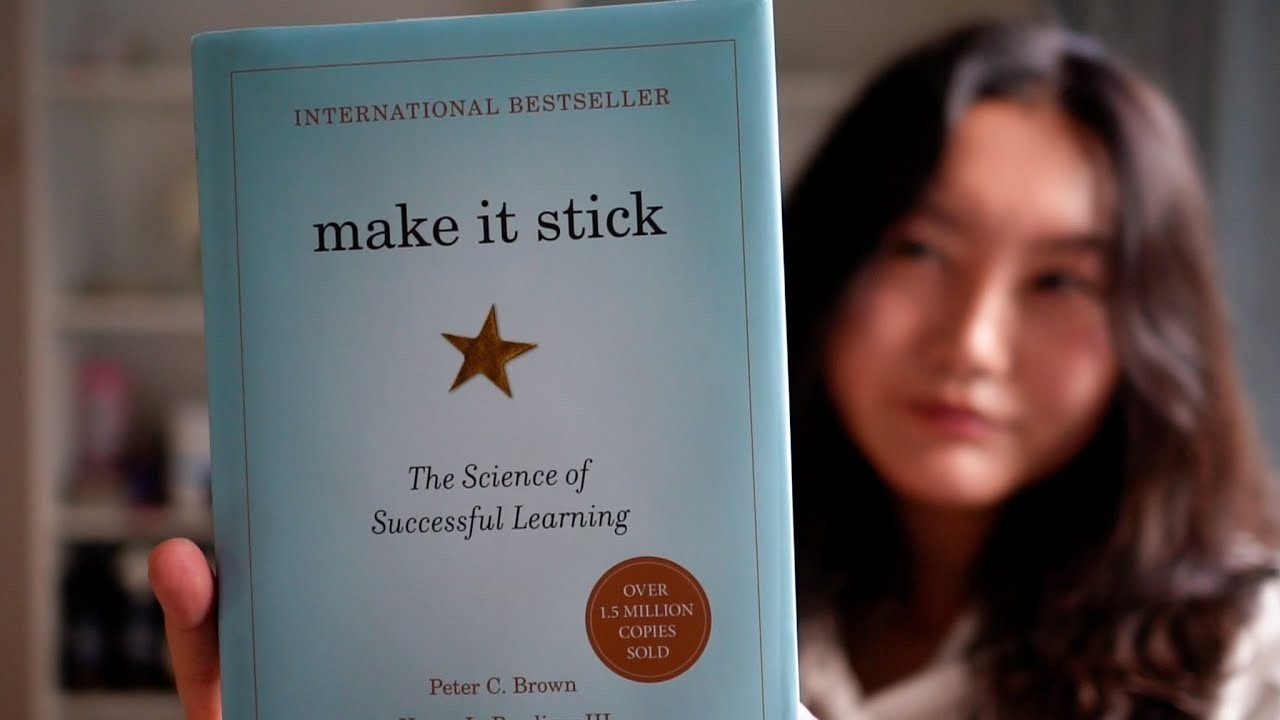
welcome back to another episode of learning to learn where I distill resources and share different learning strategies because the world that we live in is moving so quickly right now and the best skill that we can develop is our ability to learn whether that be in AI coding personal finances a different language this book called make it stick is one of the best scientifically backed books I've ever read it explains all of the common learning traps that people fall into and how to correct them which is what I'm going to be sharing with you guys today as per usual it is not enough to listen to me talk about stuff after reading this book I realized that having different little quizzes throughout the video is actually going to help you more in learning the material so that's what I'm going to do a portion of this video is sponsored by brilliant in fact we're going to start off with a quiz you may be wondering right now Tina what why are we starting off with a quiz you haven't even said anything yet well actually it's because testing is so effective that's even effective before you learn something and this is a technique called priming where I'm going to expose you to the information you're about to learn so pop quiz which of these do you think are effective study techniques highlighting rereading testing teaching other people cramming repeated practice taking notes taking breaks coming up with your own Solutions now before I give you the answer I'm going to first go through three different misconceptions that people have about learning which is going to help you understand why certain learning techniques are better than others the first misconception is that you think you're good at knowing if you're learning or not this is such a trap people are in fact really poor judges of whether they're learning well or not so many people fall into this trap if you've ever just like felt like you're trying to learn something you're concentrating really hard and you're trying to like get that information you're banging your head against the wall but you just can't seem to grasp that information you may feel like you're not making any progress when in fact you are it's just subconscious at that point and you got to keep going and push through until you can actually see the fruits of your labor which by the way is where most people fail because they just feel like they're not making progress and they just end up giving up which is so sad because so many people are stuck in that like beginner Loop where they just try to learn something and then just give up before they ever see any progress on the other hand the opposite is also true we may think that we're learning something and we're learning something well when in fact you're not really doing anything like for example say that you're listening to a teacher explain a math problem to you they might be like okay you know when you see math problem you first do this and then you get the result over here and you're like wow that makes sense that makes perfect sense and you feel like you have learned this information now when in fact if you actually try to do it the math problem yourself you will find that you have actually not learned the information another example is say that you're like rereading stuff like over and over again and you feel like you're like retaining that information in your brain when in fact you're actually not as well you are simply falling into what is called the familiarity trap which is when you feel like you're becoming more and more familiar with the information being presented it doesn't mean that you've actually learned that information and that is actually a great transition to talking about the second big misconception that people have about learning which is that learning should be easy it's actually the opposite the more effortful and hard learning feels the deeper and more durable it is a quote from the book learning that's easy is like writing in sand here today and gone tomorrow a general rule of thumb is that the harder something feels the more it is that you're actually learning and if learning ever feels easy you're probably falling into the familiarity trap misconception number three is that during a study or practice session you should go really hard like practice practice until you nail whatever it is that you're trying to learn if anybody has told you that practice makes perfect it's not wrong but it's also not quite right like if you just practice something over and over again like trying to practice the baseball swing or doing a math question or a similar type of math question over and over again that doesn't actually work very well it's actually much better to space out your practice sessions take breaks in between allow yourself to get a little bit Rusty on what you've learned before reviewing it again and even better try to learn the same material in different ways instead of just staring at a math problem and trying to solve it in a specific way try breaking it down in different ways approaching it from different methods there's actually a strategy that is extremely effective but wildly unpopular because it falls into these three different misconceptions very counterintuitive and I'll tell you about it in just a little bit but first let's actually go back to that quiz you now have the information to figure out which of these study strategies are good versus bad hi highlighting is very bad because you're just reading something and it's super easy and you're just falling into the familiarity trap rereading also bad same problem testing is very good even if you don't actually know most of the information because it's forcing you to recall and retrieve different types of information from your brain spacing out your testing even better teaching other people is really good as well it's very difficult to take that information repackage it and explain it to somebody else which is an indication that it's a good strategy cramming before an exam you might do well on the test but you're probably going forget everything after that bad repeated practice bad much better to space out your study sessions taking notes so this is a hot take but I believe that it is actually not a great strategy because not that it can't be a good strategy but most people when they take notes they're trying to just like regurgitating whatever it is that they're learning and you just end up falling into the familiarity trap as well but if you're able to synthesize what it is that you're learning and take notes in your own words that will be much better I actually have a video over here where I talk more about note taking and my system before note taking breaks good and coming up with your own solutions to things really hard therefore good let me know in the comments if you're surprised by this I would be surprised if nobody is surprised by this because surveys show that highlighting rereading and taking notes are some of the most popular ways that people learn things despite them not being very helpful let me now tell you the extremely effective but wildly unpopular learning technique it is called interleaving this is the practice of alternating between two or more different subjects or skills to learn let me explain and prove it to you using science so there was a research study that was done in which there were two groups of college students who are all being taught how to find a volumes of four geometric solids which are wedges spheroids spherical cones and a half cone it's not really important you don't really need to know what those actually are but basically two different college students were all trying to learn the same thing but one group was given practice questions that were cluster like there were before questions on Computing the volume of a wedge and then there was four questions on Computing the volume of a spheroid and then four on spal C and then finally four on De half cone now the other students had the exact same set of questions but instead of having them clustered by question type the sequence of these questions was mixed up or inter leaped so when a student is doing the questions they might get one spheroid question followed by a wedge question and then a cone question and maybe another SPID question hope that makes sense during the practice sessions the first group of students that were given the questions in clustered averaged 89% of questions correct compared only 60% for the second group that had the interleaved questions but when the final test day came around a week later students that practice solving declustered questions only averaged 20% correct while the students that solved the interleaved questions averaged 63% correct that is a 25 boosted performance from the interleaved group I just need to repeat this again just by taking the questions and mixing them up to give to students they actually scored worse when they were practicing but at the very end they scored 2 15% better than the students that did the question sequentially remember the misconception that we're poor judges of when we're learning well yeah that clearly shows here even during practice it seemed like the inter leave students were doing worse and it was also a lot more annoying and harder for those students no wonder this technique is extremely unpopular but so effective and now you know next time you're learning something use interleaving even if it feels like it's not working out just trust the process some other ways that you can use interleaving is if you're studying multiple different subjects instead of studying say like AI for 4 hours today and then math for 4 hours tomorrow do like 2 hours of AI today and 2 hours of math and then tomorrow do another 2 hours of AI and 2 hours of math this way you're mixing up the different subjects you can also inter leave by using different ways of studying the same material say if you're trying to learn cantones like I am because I recently moved to Hong Kong while I'm studying Cantonese I could do 1 hour of speaking practice and 1 hour of listening practice and maybe one hour of Writing Practice okay so in addition to interleaving I also want to share some of the other useful learning techniques from this book the first one relates to remembering things and to do that you want to make things more memorable more visual pneumonics are a great strategy and I use them a lot for example for this prompt engineering video that I did over here a pneumonic to remember a framework for how to prompt better is Tiny crabs ride enormous iguanas it's like a very visual image that I can remember and it stands for task context resources evaluate and iterate which is way easier to remember anyways the book also mentions a technique called generation which is actively trying to force your brain to come up with something instead of just looking at the solution first for example if you're learning how to code you should actually try to write your own code first and test it out before looking at a solution or if you're learning a new vocabulary word try to like guess what it is that you think it means before checking the definition another technique is called reflection this is the process of thinking about what you just learned analyzing how it connects to the previous knowledge that you have and considering how it is that you can now apply this new piece of information for example after a study session you can ask yourself the questions what did I learn how does this relate to what I already know and what strategies work the best for me next up is elaboration which is just a fancy way of saying explaining things in your own words for example if you're learning about a historical event imagine teaching it to somebody else and adding like modern connections to what it is that you're learning if you can actually do that out loud it's even more helpful I remember when I was practicing for my interviews I literally just like talked to myself in the middle of a library for hours I probably look like an insane person but I passed the interviews and finally there is testing we've already talked about this a couple of times but I really want to elaborate on this point because testing is just such an effective way of learning things it turns out that testing is one of the most effective ways possible to learn material there is a lot of research that has been done on this subject but I'm going to share with you one of the first ones that showed how powerful this technique is the researchers were experimenting on students as per usual in which the students were told a story that named 60 concrete objects again it doesn't really matter that much but basically they were supposed to remember some stuff there was a group of students that were tested immediately after being told the story and they were able to recall 53% of the objects then they were tested a week later and they were able to recall 39% of the objects a second group of students which was the control group was not tested immediately after exposure and just tested um one time at the end of a week and they were able to recall only 28% so it seemed like just by having that single test that literally took a couple minutes they were able to boost performance by 11% after 1 week but the researchers did not stop there they were interested in seeing what happens if you test multiple times so there was a third group of students that were tested three times in total after the initial exposure who were able to finally remember 53% of the objects so what it seems like is that if you testing students multiple times they were immunized to forgetting so they started off by recalling 53% and a week later they were still able to recall 53% % it seems like having multiple testing sessions help people remember things and especially if the testing sessions were spread out throughout the week now this study was replicated many different times with many different tasks but the results were pretty consistent even in IRL settings this worked out there was experiments that were done on college students in which some college students were given just one midterm and one final exam some of them were given multiple different tests throughout they found that consistently students that were given multiple tests did better than if it was just one midterm and one final and what's really interesting to me is that priming technique where you're literally testing someone before they even learn something even that is able to increase your ability of retention up to 40% just by testing on things that you didn't even know yet super counterintuitive isn't it but speaking of testing I'm going to now give you a little quiz of all the things that I just covered please pause the video and put in the comments your answers to these questions okay let's now talk about different learning styles I find this to be really interesting so I'm sure many of you guys have heard of the three different learning styles like there's visual Learners people who learn best by looking at things there's auditory Learners or people who learn the best by listening to things and there's kinesthetic Learners who learn the best by doing things makes sense doesn't it but except that the research doesn't actually back this up what like sure people have different learning preferences like for me my favorite learning preference is listen to things in an auditory way most of the time but there's no research that shows that I would learn worse if I try to learn it from like a visual perspective for example however it doesn't mean that the way that you're presenting information doesn't actually matter it does matter but it's not about the individual it's more about matching what you're trying to learn with the correct learning style let me explain say for example if you're trying to identify bird species if you're just trying to learn the different bird species by reading text describing the different birds you're probably going to have a pretty bad time so in this case having a visual learning style where you're showing people different pictures of birds is going to be a much better approach if you're learning to play an instrument doesn't really matter what your preferred learning style is having a kinesthetic approach where you're actually practicing things yourself is going to have the best results same thing like you're trying to learn a practical skill like how to use AI just you actually doing it is going to be much better and final example say you're trying to learn a foreign language a mixture of listening speaking reading and writing is going to be the most beneficial for you regardless if you're more of a kinesthetic visual or audio learner so next time when you're trying to learn something don't think so much about your preferred learning style but think more in terms of what is the best way for you to learn that specific thing all right final section I want to talk about is how to increase your learning abilities people tend to think that ability to learn is just kind of like what it is right there's like some kids in school that were just better at learning things and got better grades than other people and they think that oh it's like this is just kind of like what it is while there is a grain of truth to this some people are in fact better at learning things than other people most of us though never actually get even close to what our potential for learning is like if you're a competitive memory champion and you want to be like the best memory Champion ever and you're memorizing like a thousand different things like yeah maybe your genetics and your like inherent intelligence will come into play but for the majority of us who are not you know trying to push those boundaries we're just kind of like stuck in our mindsets and not really learning to learn so that we can actually improve ourselves and that is really just the final message to end on like learning how to learn is like such an important skill to have and it's also very important to treat it with a growth mindset which means the belief that you can improve your intelligence and your learning abilities and hopefully with the techniques that I talked about in this video you're able to take that and become a better learner Maybe by learning some of the topics that I cover on this channel such as this AI course all right now before I end this video as promis here is the final quiz if you can answer these questions then congratulations you have improved your learning abilities I will see you in the next video or live if you're watching this video you're probably interested in self-learning so if you're interested in self-learning stem subject specifically I highly recommend that you check out brilliant is a stem self-learning platform that specializes in interactive Hands-On learning I first learned about brilliant myself when I was interviewing for meta and they were actually the ones that told me and recommended me to check out brilliant to brush up on my math and stats prior to the interview and that's because brilliant is just so effective at learning stem subjects with interactive problem based learning if you're interested in generative AI they have a short sweet course that is super fun overview of the subject and doesn't even involve any coding they also have Timeless course offerings like math and stats and programming with python as well as new course offerings to explore topics like neuron networks and Quantum Computing you can join a millions of people already learning on brilliant by going to this link over here to get started for free or just scan the QR code on screen also linked in description if you go through my link you'll get 20% off their annual membership thank you so much brilliant for sponsoring this portion of the video

Ещё от Tina Huang

Ctrl+V

Экстракт Знаний в Telegram

Транскрипты, идеи, методички — всё самое полезное из лучших YouTube-каналов.

Подписаться