► Subscribe to Gary's Channel Here - http://bit.ly/GaryVeeSubscribe
Bob Wright's Book: http://www.amazon.com/Wright-Stuff-NB...
#Request of the Day: For more info on Autism Speaks: www.autismspeaks.org
#QOTD: Is video an objective or does it aid communication?
#Timestamps:
0:00 Intro
14:01 - We are a nonprofit that helps veterans learn to code at no cost to them. How do we get into new communities that are tech and talent rich and build relationships with those communities (even if we are not located there)?
18:25 - How would I use social media to find core donors for a symphony?
21:19 - How can we nonprofits get donors to also provide assistance to the nonprofit's workplace culture?
26:44 - We have a very niche cause with limited resources, how do we broaden our interest base?
30:16 - We are an online radio station for the cancer community. In 2016, how do we grow our listenership and funding? What platforms should we use?
#LINKS
FOLLOW MY SNAPS: http://snapchat.com/add/garyvee
MY BOOKS: https://garyvaynerchuk.com/books
AUTISM SPEAKS: https://www.autismspeaks.org/
SURVIVOR RADIO: http://www.survivorradio.org/
INVISIBLE PEOPLE: http://invisiblepeople.tv/blog/catego...
VETSWHOCODE: https://twitter.com/search?q=%23VetsW...
NEW WORLD SYMPHONY: https://www.nws.edu/
ART CONNECTS NY: http://www.artconnectsnewyork.org/
--
Gary Vaynerchuk builds businesses. Fresh out of college he took his family wine business and grew it from a $3M to a $60M business in just five years. Now he runs VaynerMedia, one of the world's hottest digital agencies. Along the way he became a prolific angel investor and venture capitalist, investing in companies like Facebook, Twitter, Tumblr, Uber, and Birchbox before eventually co-founding VaynerRSE, a $25M angel fund.
The #AskGaryVee Show is Gary's way of providing as much value value as possible by taking your questions about social media, entrepreneurship, startups, and family businesses and giving you his answers based on a lifetime of building successful, multi-million dollar companies.
Gary is also a prolific public speaker, delivering keynotes at events like Le Web, and SXSW, which you can watch right here on this channel.
Find Gary here:
Website: http://garyvaynerchuk.com
Wine Library: http://winelibrary.com
Facebook: http://facebook.com/gary
Snapchat: garyvee
Twitter: http://twitter.com/garyvee
Instagram: http://instagram.com/garyvee
Medium: http://medium.com/@garyvee
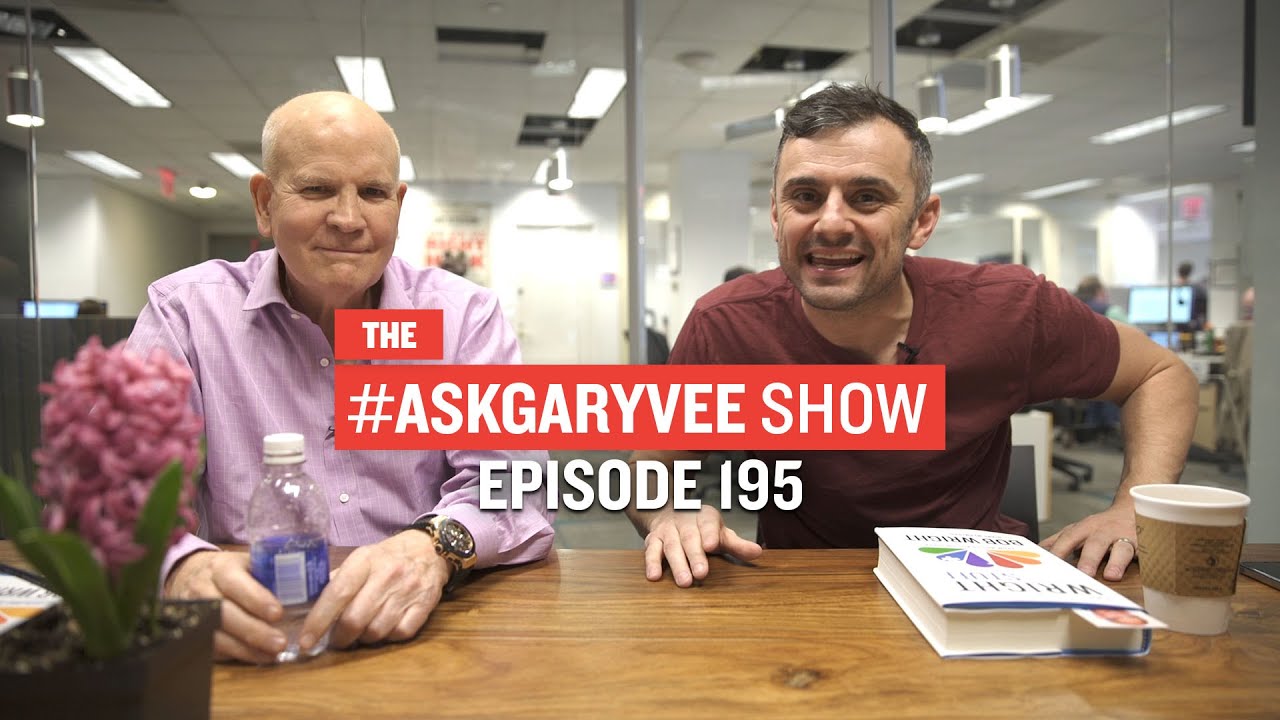
- On this episode, I have legendary Bob Wright. (upbeat hip hop music) - [Gary] You ask questions, and I answer them. This is the #AskGaryVee show. - Hey everybody, this is Gary Vay-ner-chuk and this is episode 195 of the #AskGaryVee show. And we have a guest, Mr. Wright. Bob, why don't you tell the Vayner Nation, why don't I give you 60 to 90 seconds here to create a little context, your career, the book, the things that you're involved with. Actually let's roll to India. India, we've curated a show here today by the way let me jump in here for second. Sorry Bob, for a second. We're trying to do more thematic shows. We obviously had guests the other day for influencer marketing. We've got three or four more in the bucket and this falls into that series so why don't you tell the Vayner Nation 'cause they like you very much what were doing here where the questions are coming from. - The questions today are all from nonprofits, and people who work at nonprofits or NGOs and we reached out to some people that we know from the Vayner Nation or just being on the Internet and on Twitter. Using a very Gary tactic of getting out there into the trenches and searching for questions and asked people to film their questions in to videos and that's what they're going to be. - Bob, I think throwing it to you under that framework may be a little bit about your professional career and maybe how you fit within the context of that world a little bit. - Sure. Maybe the unique angle I can talk about is we formed Autism Speaks while I was working as the CEO of NBC Universal. We did all that kind of work while I was still working and that surprises some people. But you can do more than one thing at the same time. I've been CEO for 22 years at that point in time and it did it caused us to have to really be very focused on how we used our time so that I wasn't interrupting my work or other people's work to do this. I brought in people for board members established people in the New York community that had some interest in it or had a relationship with a person in their family or some friend. One of the people didn't have that but he did have his history with dyslexia and he knew how difficult it was for children to learn. We put this whole organization together in 2004 and I made a determination that we wanted to run this like a business and so I said we're going to have all of our financials are going to be audited. We're going to file it every single state in the United States. We have to file twice, we had to file to raise money, we have to file money to operate in there. And we did all these things and are very business-y way so that we could get out and right after we started in 2005 we could get going and we could act anywhere in the country. And then the other thing I looked at is I looked for other organizations that were dealing with children or adults with autism. We wanted to deal with children because it's more difficult to deal with adults because their resources are not as attractive and children we knew that you could help them and if you miss all that helping as an adult you're losing and all awful lot. We wanted to start with people that we could help like my grandson who is the reason why, he's 14 years old by the way, he's not going to be working for Google anytime soon. He has very limited communication ability. I'd say on a scale of 1 to 10 he's a 3 or 4 perhaps. And he can only talk when he's heavily prompted. He needs people with them all the time, he can't be left alone because you just don't know what he'll do. He doesn't communicate and give you the signals as to what his next idea is going to be. It's that sort of thing. Anyway, we did all this and then we looked at three organizations and I went out and met with these parent organizations. They're all kind of exhausted and that's what happens in the not-for-profit especially disease-related ones. People work very, very hard and then all of a sudden they usually their view is they want to do a lot of science, things, they make a lot of commitments but they get tired of raising money and it's tiring and pretty soon they've got debt or-- - Do you feel the business DNA of being a CEO of one of the biggest companies in the world for so long was a massive advantage in running that Autism Speaks organization with that DNA because you felt the vulnerabilities in organizations that have been done and a political bureaucratic more kind of corporate, less entrepreneurial environment? - Absolutely. But I'd also say that anybody that has business experience should not forget that business experience going into a not-for-profit. You build up skills and you build up ability to manage people or deal with people you don't lose that because you're not-for-profit. - It's one of my biggest arguments. I yell it to my audience and a lot of people in startup culture that so many venture capitalists even of they've built business she or he has built a business in the past they start giving advice to these startups that are more predicated on raising finances than actually building a business. - Yeah. - I think there's a huge parallel. Before we go into more of the nonprofit and talk a little bit about Autism Speaks. I want to respect the audience which I know is a very heavy business organized audience. I think some would find it quite fascinating on how you made the rise to such a prestigious CEO job. For kicks and giggles, give me 60 seconds on where you are born what kind of kid you were, what then happened and then what was the transition and how did your career go. - I grew up in the New York area on Long Island. - Did you grow up a Jets fan? - A Jets fan? Yes, I did. I was on Long Island. - There for all the good stuff. - Jets Jets. - This is getting better by the second. Keep going. - My goal in life I want to be Edward Bennett Williams which at the time was America's most famous lawyer, courtroom lawyer. He had all the toughest cases in all of these remarkable things and I went to high school in Long Island, I went to college and then went to law school and I'm married to Suzanne Wright. We've been together for 50 years and 48 years married and by the way she unfortunately October 29th last year was diagnosed with pancreatic cancer so were really having a struggle right now in that respect. Now I'm right back into the not-for-profit issue. Now I'm dealing with my own trying to develop medicine based on her tumor. It never ends. You just kinda keep learning. Anyway, I did a bunch of different things and I ended up having gone through the Virginia Bar, the New York Bar, the Massachusetts Bar and the New Jersey Bar. - Well no wonder it wasn't scary to register in every state for Autism Speaks you basically did it in the law world. - No, it wasn't scary at all. So I was a pretty good lawyer and I did a lot. - How long did you practice? - I was in private practice for 5 1/2 years and I got recruited to Pittsfield, Massachusetts to work for Jack Welch and they had the fastest growing businesses in GE at that time in the 1970s, early 70s. I came in as a lawyer and I very quickly moved into business. On a law background it was fantastic. It's worked just like I'm saying law background works in business and I just kept pyramiding on what I knew. And I got a chance. You have to take chances. We moved 11 times before I was 40. Suzanne and I and three kids. People don't do that now. I saw a statistic the other day that's since 1990 only 10% of people move a couple of times. It's remarkable. I moved 11 times. - Unbelievable. - But that was all necessary for me. One of the things that I learned early is if I wanted to be successful and I was ambitious then I needed to take full responsibility for my own career. There's no excuses. All the excuses have to be if it's a rainy day that's not an excuse. If I got a bad person I'm working for, you should get out of it. You shouldn't work there. The fact that I got sick is not an excuse. - Do you know that I mentally decided six years ago to not get sick again and I haven't. I know that sounds strange. - No, I understand. - I have a big belief that we don't understand the brain. And I don't like saying it out loud. I kinda threw it at you because when I hear myself even saying it I'm like who's this cuckoo bird? I'm smiling and I'm sure a lot of the audience is smiling right now because maybe I throw a couple more curse words into the rant that you just had but it is absolutely the same exact. Listen, the market is a market. They don't care about your headaches. It is what it is. - And if it doesn't work out you have to start over again. Or go someplace else or do something else. - Do you feel that experience as a businessman and entrepreneur do you feel like that gave you the intestinal fortitude to be able to deal with life's challenges as they've come in your family life? - I do. I absolutely do. We accepted a lot of challenges. Some of them were really difficult to overcome. But that was what I wanted to do. It's ironic that you wanted staying well. I'm in the position where I can't get sick. - Right. - I can't get sick because my wife needs me and she is desperately sick and there can't be two of us sick. So I have to do everything right now to make sure I do not get sick. And that's my number one issue that I'm facing in this particular situation. - Yes. - But anyway we did a lot of different things and I had a chance, I raised my hand General Electric was trying the Cox family and old-line family in Atlanta had Cox Communications, still alive big, big company, they wanted to sell part of their business. I worked my way down to become president of the company and the cable business was what I was focused in on. It was brand-new at that time. I thought it's going to be really exciting. I went down there I gave up all my stuff with GE. - Why don't you tell a lot of my friends real quick here who are watching, as I yell about why Snapchat or mobile devices or other things are going to be good, why don't you give us a little bit of a history lesson? This may run a little bit long than most episodes but I'm going to take full advantage of having you here. Why don't you tell the youngsters here, all the 20, 30-year-olds who are watching right now or even 40 years who were caught in the interesting generation of non-innovation on what the people of the world in the early 80s said about this cable thing and the establishment? What was the establishment's point of view on HBO, on cable, on these cockamamie things above Channel 13 in America? - It's a little ironic, it reminds me of the Trump thing. The people loved it, the business people hated it and the institutions didn't like it at all. And everybody wanted to stay where they were with the three channel universe and that was good enough and cable was opening up these other doors and people liked it. The customers liked it but the institutions didn't like it. - The institutions that had something to lose? - Institutions that were lending money. They didn't like it. The investors were very worried about it. The people that were in-- - Did you understand that 36 channels was going to be a good thing? That that successful? Did you believe the ESPNs the MTVs at that point your career did you say these, in the way that I look at a Snapchat or a MusicAlly and I say what you just said and they hear me say it is not that I'm saying this, 150 million people are downloading it and using it each month. I'm not making any predictions the data is there. Did you see that? - That's exactly where we fell. When I came in it was only 12, 13 channels and 36 was a big jump. We had the biggest cable system in the country in San Diego and that was 36. That was a big deal. - And did people say silly things like "How are you going to fill that programming? " - Yeah. Yes but that gave us a chance to try to produce-- - Right. - and fill that programming ourselves and that was not something cable operators did at that time. They hung wires and they split the boxes in and they ran the-- - Is that where Ted Turner did some smart maneuvering? - Yes. Ted Turner never was a cable operator. He was a producer. - That's exactly right. - He was on the other side and we were on the side of the cable operator. We were one of the first systems to put CNN on. We were one of his first customers. But he was never, he never wanted the wire business. - That's right. - He just was a visionary that had the energy to force through his thoughts regardless of how difficult it was going to be. And I admired that. We lived in Atlanta, that's where he live. - Of course. And the Braves stunk at this point, right? Just for everybody's context? - The what? - The Braves, the Atlanta Braves, they were terrible. - Yeah. - You find that to be an intriguing fun fact? - I remember going to a lot of games, it seems it was always raining and I was sitting out there for an hour and a half in the rain. - Alright India let's get into a question because I have a feeling I'm going to just milk this into a four hour video.
We are a nonprofit that helps veterans learn to code at no cost to them. How do we get into new communities that are tech and talent rich and build relationships with those communities (even if we are not located there)?
- Hey Gary. Hey crew. First and most, I absolutely love the podcast. Secondly, I absolutely love this book. Instant best seller. My name is Jerome Hardaway I am head geek in charge for Vets Who Code also known as Frago formerly United States Air Force. What we do here is that we teach veterans how to program 100% online at zero cost of the veteran. By utilizing a pragmatic approach and focusing on one language and problem solving with that language our guys and girls of the Armed Forces are focused more solving problems and thinking like a programmer as opposed to learning how to do the same procedures in multiple languages. Thanks to this we been able to help 75 veterans gain jobs in the software technology sector totaling $3. 2 million worth of salaries. My question to you GaryVee is how do we get into new communities that are tech rich and talent rich and be able to build relationships with those communities even though we are not natively there. Such as New Orleans or Boulder, Colorado. Thank you. I thank you for supporting veterans and thank you supporting Vets Who Code. - Political help. Get political help. That's a very good story. You're going to need some governmental assistance. I hate to say that because at the same time you can raise money, you can raise money privately but your argument for what you're doing has a lot of political clout. And if you go down and if you're in Louisiana and you want to go into New Orleans there's enough politicians down there that would see this as an opportunity-- - To make themselves look good. good and to do something in the community. I think you have a good political handle there to use. And by the way, once you start raising money with the politics you get other people wanting to join the program. It's a good sounding situation. - This is why this show is so fun when you have two people that can give advice because they come from such different angles and I think that's incredible good advice. I would also say, my friend, that getting in front of the tech companies who are going to hire your developers when you're not in Silicon Valley, you're not in Boulder is actually stunningly easy. It's called grit. You can spam people I'm sure you had people through your career, in your career probably sent you letters and faxes and now emails. I've been in my professional career it's been mainly email where they'll email me every day. Gary, I need to see you for 15 minutes. I need to get to you. You don't want to get into stalker-land and be inappropriate but if you want to email Slack, Facebook, if you want to email Uber or Airbnb, these companies are becoming bigger by the moment too and are also looking to have relationships no different than a politician that they can put on the website or put in a press release while the getting yelled at for setting up in Ireland and not paying taxes they can throw this kind of thing and you're right your narrative and we're about to hear some more. Nobody's ever, ever the in history of America going to publicly say I'm not that into the veterans. - No. - There is zero. There's people disagree on many things but not that one. I would say perseverance of reaching out to the companies in Boulder, Silicon Valley, New York and trying different tactics and also using Twitter search and engaging with them because that's the one cocktail party of the Internet where there's permission for you to create a relationship. Those are two tactical things that I would do. - The other thing to do would be to try and get another location somebody working with you in the tech sensitives areas. Not necessarily Silicon Valley but certainly New York or Boston so that you can take this and develop something like yourself down there now you got three groups out there and that's where going to be able to spread and job opportunities becoming back both ways. - There's a lot of ways to deploy remote teams especially around an issue like this because so many of families affected by it. So many people, I'm not effected by it but I'm passionate about it, I've been involved in it so there's a lot of tactics there. India. - [India] This one. This is my dad. - This is your dad? India this is very, very exciting. Your dad has made the show. - He's made the show.
How would I use social media to find core donors for a symphony?
- Hello GaryVee. Love the show. Please don't stop producing it I watch every episode. Question from the New World Symphony of Miami Beach. Our stability really depends on having a group of core donors to give continuously year after year. Their generosity is essential to our sustainability. We know how to do this with the old-fashioned ways using snail mail and email but how does one do this with social media? Thanks in advance for your answer. Bye now. - Now is he dealing with Vets here? What-- - [India] He works for a symphony orchestra. - Oh Do like the kind of music? - I do but that's always a tough one to raise money with. - It's more a nice to have versus the kind of heavy stuff that we've been talking about in the beginning or even the Vets. Okay so a couple things-- - That's a big place. There's a lot of music down there this should be able to do that. - The interesting part of this question that I find fascinating, he's also very good looking man man, India, which makes a ton of sense. (India laughs) VaynerMedia my company and I'll be curious to hear in your company days back to business always dictating my non-profit, my family life, the structure, the thesis. When I started this client service business the thought of letting a client be too big of a percentage of my overall revenue I was visceral to. I even turned out some opportunities because I didn't want to open Pandora's box. I would tell you the thing that scares me there is having any organization that relies on, and you've seen this a lot at the levels you've played at, 1 to 3 people being so passionate that they're driving so much of it and then something could change. A life event could change where something else starts and were sitting here in a real-life example. - I have that problem myself with our Autism Speaks because Suzanne and I have raised so much of the money and we have been infrastructure that we provided in everything that pulling back is-- - There's a guilt. - I can see there's a gap there. - Yeah and there's an emotional guilt there for you, right? - Yeah, we built this and now these guys have to run it. They're saying we don't have you so, you know. - I think the answer this is funny to have you on the show, your daughter's part of this ecosystem. I think you need to create content. Whatever is compelling in mail form that got people to say I want to call and have a coffee and find out more about this, you need to create the videos and pictures that can do that in a social media environment but here's some good news you can target people of a certain wealth and demo and location on Facebook that can be very efficient and is better data than historic snail mail data and create that. There's that lovely gal that I know thinks or two about this. I don't want you hogging up any more time because you can chat to your lovely daughter about this she knows the gig. So let's move on India. - Hi Gary.
How can we nonprofits get donors to also provide assistance to the nonprofit's workplace culture?
First, I want to thank you for your overnight sensation video. All your stuff is great but the overnight sensation video when I get discouraged I watch it and it kicks my ass. Thank you. The nonprofit sector is broken. Money controls everything. And for the nonprofit sector to change and there hasn't been a unique idea, a brilliant idea, a disruptive idea in so, so long. It needs to change. And one of the examples that I like to use his coffee kiosks. Here's a coffee kiosk at YouTube. At Google they're at every 150 feet. They're common at most startups. Free yogurt, free milk and free Red Bull and all kinds of free stuff. Here's our coffee kiosk. I'm CMO of a large nonprofit upstate New York. It's not that we don't care any less about our employees, it's there's no funding. There's no funding for even free coffee. So the problem is the top and how do we change that? How do we get funders to have a startup mentality? If you look at the startup world Twitter, Uber, Airbnb these are ideas that might be considered radical different disruptive but somebody funded them and they funded free coffee along with it. We are not gonna see change in the non-profit sector until the funding streams change that empower us to do the work. How can those of us in the nonprofit sector that care how can we explain that? How can we affect change? How can this top-down change come into the nonprofit sector? - Want me to take a shot at this one? The answer to that is you got to be blunt. You've got to go out and finds some angels. Some people that you have reason to believe are interested in your non-for-profit and have some funds and have some ability may be to have a store, maybe to have to money or something and you have to get them be frank with them and do just what you're saying. We're trying to do all the things we got all these people volunteering but we need some startup money here. We need some angel to help us get through this until we can have a larger thing. If you beat around the bush with people they'll say well I'll give you small gift. No, no I really need your help. Big help. - I got something to add on this. You mentioned Uber, Airbnb and Twitter. These are the top. 01% of startups. I know many startups this startup, my company, started in the conference room of another company and I guess we stole their free coffee and things of that nature but the interesting thing is Robin Hood and many other organizations They have a lot of money. My biggest problem is there's a lot of NGOs that I know that have a lot of money and are wasting it or not deploying enough of percentage against the right thing so I think that we need to be a little bit careful here. There's thousands of startups that don't have free coffee. You're also talking about people being incentivized by capitalism. The reason people write checks to Google and Uber and Airbnb is 'cause they want to make money back. And I think you need to play the reverse game in NGO which is much like the narrative of your life and I've always known, since I was a young man because I always believed I'd be successful. That the things I would capture my attention though I became very involved in Charity: Water and very involved in Pencils of Promise and through Matt Higgins have been involved with you guys and done stuff here for Vayner for you guys as well with Autism Speaks. - Matt Higgins is on our board. - I'm very aware. I know with all that being said that the things that get the most of my attention will be the things that affect me. Now I can finally say it because very recently my brother announced, my partner in this company, VaynerMedia, that he's going to be leaving in a month 'cause he has Crohn's disease. The pressure of it all is the one thing he just want to be proactive luckily everything's okay. He's just projecting and being smart. That is something that's pulling my heart the same with my money investing in a company pulls at my wallet, Crohn's is going to pull in my heart because it affects me. You need to go out and find the things that you're solving for, who are the 500, 5,000 wealthiest, that's the truth, people that are affected by the issue because your conversion rate is gonna be better. I don't accept and I love you and thank you for watching the show but I do not accept this notion that you have to compare yourself to the five or six biggest Internet companies in the world where I can take this camera with Staphon right now and walk down the street and show you real shitty offices from startups that didn't get that funding and are grinding and guess what Google, and I was at Twitter, I was at Twitter when there was 11 people at that office. It looked like crap. After they won it look nicer. Google tried to sell their company for a couple hundred thousand dollars to Yahoo. Their office wasn't amazing at the time. We need to be careful of how we contextualize ourselves as well. India. - [India] How about Kim? - Kim. Oh, our Kim. - Our Kim, yeah. - Kim. I love Kim.
We have a very niche cause with limited resources, how do we broaden our interest base?
- Hi Gary, here's my question for you: I am on the board of an organization in New York that is a nonprofit called Art Connects New York and we work with local curators and artists to do permanent art installations in social service agencies all around New York City. It's an amazing organization we have partnered with hundreds of artists and dozens of organizations but it's also super niche and so we are working really hard to broaden the base of people who are interested in Art Connects and ultimately will help donate to the cause. But with such a niche cause and then we have one and a half full-time employees who work for the organization. They do everything from coordinating the installations to fund raising. We are super strapped and so were looking for some ways that we can quickly gain momentum to broaden interest in the organization knowing that we have very, very limited resources. Thanks Gary. - My sense is if you have a venture and it's got some complexity you have to have some people or one person anyway that is really full-time on this. - She said one and a half right? - Whether that person is paid or not paid is irrelevant. If everybody's a part timer I don't see how anything you get it done because somebody's always going to looking at their watch in terms of I got to go and what and it's not going to be hard to raise money that way. The other side of it is just as bad where you take the money you raise and you pay two people that are average to be there all the time and now you've got your energy level for the others goes down. - I don't know the details but I was always from afar when I became aware what you are doing here was so impressed that you guys were able to do so much when you were so busy being CEO one of the biggest. Obviously, I don't know who was full-time underneath or what happened. - First things we did I went out to recruit a director an executive director and I got a very attractive guy who had been in not-for-profit world for a long time with cancer, leukemia. And he had a good personality and I knew that we could get him trying to meld these groups together. You need somebody that's going to be full-time on that issue, not part-time, and he was very helpful. We were able to pull together three different parent driven organizations with very few full-time people. But we had to every time we got the scale I had to have somebody full-time in there. Even though it was a drag on the cost it was necessary. - Kim, listen, and you know I'm never tone deaf. We're not confused that the air cover and brand equity and the place where Bob was in his career is different than this organization and that's always quite important. I think the thing to really think about is get the word quickly out of the equation. Unless you have a miracle situation where some art installation or art moment become so culturally relevant that everybody becomes aware and I wants to donate a. k. a. the ice bucket challenge. People want to be cynical about that, the data is very real. Incredible. Very real. They had a moment but that's a virality that comes around once in a generation and so we need to be much more practical in that those one and a half people and they're incredible I would like to think, look, I think anybody that devotes their careers and all their time to nonprofit are so passionate about that they can be patient over 5 to 7 to 12 year window.
We are an online radio station for the cancer community. In 2016, how do we grow our listenership and funding? What platforms should we use?
- Hey Gary. It's Keri here with SurvivorRadio. org. We're an online radio station aimed for the cancer community. Our goals are to provide both insight and monetary support for incidentals and cancer patients all around the world. We're a fairly new nonprofit with limited resources. So how do we grow both our listenership and our funding in 2016? What platforms should we be doing this on? We're trying to grow both so looking forward to any answers man, thanks. - And I notice in the copy he says the older demo. Keri, I would tell you Facebook groups. I'm obsessed with Facebook group virality. I would go and search Facebook, look for groups whether it's cancer support groups or people that are passionate or have vibes in that environment or just even general medical or different groups of that nature. Literally email the admin, which you can do in those environments, try and join them and see if those groups can bring some awareness. In the beginning, you have to ask. When you have nothing else when you don't have dollars you have your creativity and you have a grit. So you have to ask. Whether it's influencers, I mean look, you just did here. You asked on Twitter you followed what were doing and now 50,000 people in a week will see this. You're going to linked up in here. Staphon, let's link of all the organizations because I want to make sure everybody clicks and finds out about them. In the same way that you asked and you took a shot here hundreds of other people took a shot and didn't get on the show, won't get the exposure. That's just the way the game works. I think Facebook groups the older demo is actually a very, very intriguing play. Any other thoughts from your standpoint on things that you've seen outside of your own ecosystem where you had equity, Bob. Things that you've watched from afar or have watched over the last 30, 40, 50 years of seeing things grow from not having any leverage in the beginning and them hacking their way or people that were able to get to you through your career that had no relationship or anything but just reached out to you and I thinking a friend who reached out to Malone and a bunch of other titans in media and actually got to spend the day with most of them because most of them actually just said yes. - Let me offer a comment to you that probably not directly on that point but something that's been bothering me for a year or so people come to me and ask me how do I get into the business? You want to look at yourself and decide what kinds of things you really want to be associated with. You gotta kinda make some decisions you can't be dragging 15 different ideas. You gotta make some decisions. But given the situation today especially with the Internet the best thing you can do when you're starting out is to get in Learn whatever you can on the technical side of the business. What you're doing here with the camera and you're picking up information how do you use the Internet from a standpoint of the technical part. You become very valuable to other people. Whether it's a not-for-profit especially not-for-profit where everybody wants to do they want to do Facebook groups and so forth, how many people know how to do that easily? If you really get comfortable in these areas then you can be very useful and much in demand. - Become a practitioner, go figure? Actually have a skill. Go figure. - And you keep learning once you're in here you're learning and learning more so I don't have to call up Ahmed every minute to figure out why I can't do this or that and the other thing. And it kills me. If you're comfortable with it, you're building a basis that's going to be very attractive whether it's for-profit or not-for-profit and you can really help people and that's what, people who looking to hire people who can help. - 100%. Bob, as were wrapping up the show any last thoughts and then it's customary when somebody is on the show for them to get to ask the entire community a question of the day. Given the context of the show any requests from me and the Vayner Nation that could be beneficial. A requested the day. A little bit new. - My request is that since my real charity as Autism Speaks and we're all around the country and we represent people with autism, family with autism and our website is on all the time. We're on Facebook, we're on Twitter but our website has been or primary method of communicating with people. - Via email as well? - Yes. If you have issues, questions, you want to be part of it and you know something that could be helpful please go there. And make yourself known. Everybody will be happy to meet you and it's very local. There's not a large of community in the country that we're not active in. - Fantastic, so we'll link that up. We'll make that link Staphon let's make sure we get that stuff all right. What about, Bob, a question of the day? This could be a business contextual question, an NGO space, we could talk about the Jets, you can ask a Jets question if you're in the mood. Any kind of question of the day that you want to ask the Vayner Nation? - This is a kind of a general one. One of the things it appears that like personalized medicine we're not doing personalized video and since it's more and more people want to control where they use video they have the tools now, the technical tools, are there to do it. There is a potential that may get so far but that also distances you from other people if you're watching video and you're picking out personally if you not connecting to other people you're getting a more of a loner situation. - Are you scared about what technology's doing, Bob? - I'm not scared, no. I'm just worried that people will want this are going to do and they're going to realize at some point in they're not getting enough social connection if they're just doing personal video. Everything is going to be available, everything. It's only a fraction of what's available today. There's a lot more. And you're going to be able to... Video it's eating up a lot of time. And if you're not communicating with anybody else in that process I don't know where that goes. - Well, I think you know this because I've been very fascinated by it or I'm curious if you know this-- - Exchanging data is different because you're exchanging with somebody. - Well, I think you can also look at the argument the otherway, Bob, right? Which is that in 1947 without these tools if my cousin lived in St. Louis I may be was not communicating with that person at all. Or through written word. Or we go back and read all the things that were said about the telephone and how is going to destroy communication. I the existing part of the question is it a negative or is it a positive, right? - I don't know what it is. - You just know it's different. - It's different. Maybe we're going to be more into the mode of using the tools of only lasting 15 minutes or 20 minutes or 30 minutes and that's the one that the fastest-growing of all the apps. But maybe that's the way-- - Are you big Snapchat enthusiast? - I'm not. - Yet. - But, I'm trying to figure out why I'm not. - Good, I like that. - Because it allows you to clear your mind about it. You don't have to carry around this list of things that you said over the last 10 years here. You can start every day fresh. - Bob, I think we're living through... It's an evolution. Again, as being somebody who's lived a little longer than the rest of this room you remember things where literally people said Elvis Presley was the devil because he shook his hips. I don't know if you seen what the kids do now but it's a little bit more of aggressive than how good old Elvis brought it. Right? And when you look at what people said about the telephone, listen wait a minute I'm missing a big opportunity here, many people said 36 channels on television was going to ruin the kids because there have too much information or what I grew up with which was I don't know if you know this but Atari and Nintendo we're going to ruin me. I think the one thing on this issue that I think is very curious is I find the younger generation to actually be more social and not less. Yes me us older folk, me included everybody 40 and above that didn't grow up with this as kids, may look at them as less social but I would argue that they're just being social and a different way. - My real focus is video a help or is it objective or is it just an aid in the communication? - I'm curious to see what everybody has to say. My friend. - Thank you. - Thank you being on the show. - Thank you very much for having me. It was a lot of fun. - I wish you well. - You keep asking questions, we'll keep answering them. (upbeat hip hop music)