#QOTD - When was the last time you had a really great experience and what was it?
#Timestamps:
0:00 Intro
6:18- How do you distinguish between bad marketing strategy that's not working and just having a crappy product?
8:45- What do you think about "😂" being the Oxford 'word' of the year? Communication shift?
10:36- What does the future look like for the auto industry? Will local car dealers be cut out of the business model?
13:28- Gary how do you analyze all the social media data that you get every day? Personally and corporately.
16:57- It seems like everyone speaks about not giving up no matter what, but how do you know when it's time to let it go?
#LINKS
Brian's Book :) http://www.amazon.com/Experience-When-Business-Meets-Design/dp/1118456548/ref=sr_1_1?s=books&ie=UTF8&qid=1447807028&sr=1-1&keywords=brian+solis
--
Gary Vaynerchuk builds businesses. Fresh out of college he took his family wine business and grew it from a $3M to a $60M business in just five years. Now he runs VaynerMedia, one of the world's hottest digital agencies. Along the way he became a prolific angel investor and venture capitalist, investing in companies like Facebook, Twitter, Tumblr, Uber, and Birchbox before eventually co-founding VaynerRSE, a $25M angel fund.
The #AskGaryVee Show is Gary's way of providing as much value value as possible by taking your questions about social media, entrepreneurship, startups, and family businesses and giving you his answers based on a lifetime of building successful, multi-million dollar companies.
Gary is also a prolific public speaker, delivering keynotes at events like Le Web, and SXSW, which you can watch right here on this channel.
Find Gary here:
Website: http://garyvaynerchuk.com
Wine Library: http://winelibrary.com
Facebook: http://facebook.com/gary
Twitter: http://twitter.com/garyvee
Instagram: http://instagram.com/garyvee
Medium: http://medium.com/@garyvee
Оглавление (6 сегментов)
Intro
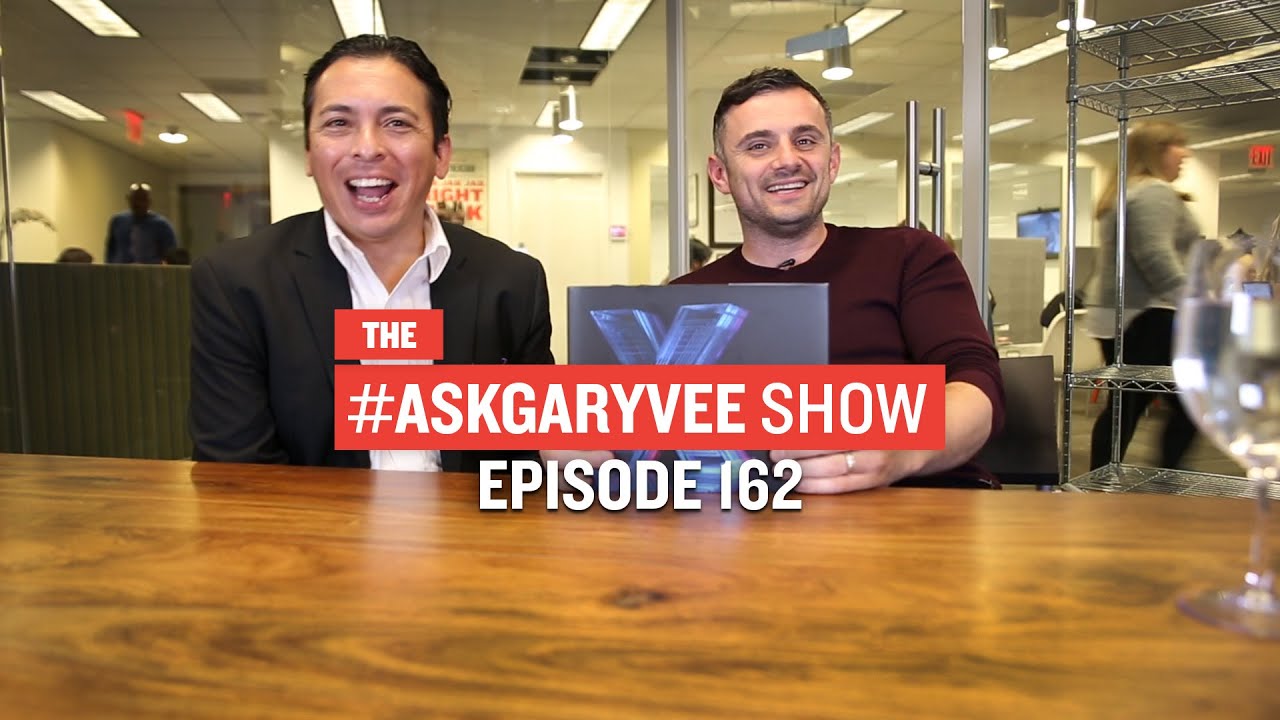
- On this episode, my homie Brian stops by and talks about his new book. (upbeat, hip hop music) You ask questions, and I answer them. This is the #AskGaryVee Show. Hey everybody, this is Gary Vay-ner-chuk, and this episode 162 of the #AskGaryVee Show. This is a very special episode, because I just got off the plane from my family vacation for my 40th birthday, so this is the first episode in my 40s. I'm also here with a very dear friend. As a matter of fact, Staphon, I'm gonna have you make an edit. There has to be video of your last, I don't, that was your last book, that was two books ago when we did it? - Two months ago, when we were in South By. - There's video of that somehwere. Staphon, just show a little cut. This is us in our younger days, Brian. - We have none other than Gary Vaynerchuk. How are you, brother? - How are you, man? - Awesome, so, I've got a book, went out and bought this really amazing thing called the Thank You Economy. You ever heard of it? - Form what I hear, it's the greatest business book written of all time, so I think you made a very wise $13 decision. Alright, that was good. I'll get you that clip, Staphon, and, Brian, why don't you tell the Vayner Nation who you are? It's really good to have you here, I'm glad we made it happen. And you have a new book, which is really the only reason my friends stop by the #AskGaryVee Show, is to sell their books to the Vayner Nation, which I respect, because, in March, I'll be stopping by everybody's house. - You will be stopping by my house, but if it means a lot, though, I'm actually here to officially welcome Gary Vee into his 40s, so he can join my club, although I think I look a lot younger. - You do, man, you have no grays. - Just a couple here and there. - How old are you, Brian? - I am 44. - You look good, man. - Well, it's the oil of Olay. - Do you use that? - It's red wine, actually. - Is it? Well, shit, then I should look 13. Didn't work for me. Oh, wait a minute, wait a minute, you have to, we continue the trend of a, I apologize, a VaynerMedia employee. We were just talking about Orlando, so, a VaynerMedia employee joining each episode, so why don't you tell the Vayner Nation who you are and say hello and what you do and all that? - I'm Kelly, I'm a community manager here, I started three months ago, I'm from Orlando, Florida, Disney, and yeah, I love it. I just moved up to New York. It's great, it's a blast. Yeah, very different. - Enjoying? - [Kelly] Yeah, love it. - Thanks for joining us. - [Kelly] Of course. - Keep going. - Well, yeah, so. - We transition quick here, Bri. - I'm ready, clutch in. So I'm a digital analyst, I work at a place called Altimeter Group, we study disruptive technology, it's impact on business. I'm also a digital anthropologist, studying disruptive technology's impact on us. Have a new book out. - This is gorgeous, man. - Incredibly ironic that I'm talking about disruptive technology and I'm gonna write a book. - Look at this. - Took about three and a half years. Disney. - This was years? - Yeah, because I studied UX, UI, and a lot of attention spans, focus, sentence structure, and sort of tried to reinvent what a book could be in 2016, and if you notice in the pages, it looks a lot like a mobile app. - Interesting. - And so it's designed after some of the most popular apps, no table of tentents, it's all very interesting. It's about experiences, so I thought if I'm gonna talk about experiences, the book should be an experience. - Very cool, good for you, man. How's it going so far? When's it come out? - It just came out. It's going, I think it's going good, you know. - Just came out a la when? - Like, a week ago. - Got it, last Tuesday. - Yeah, I think last Tuesday. So let's see. - A week from today? - How this episode goes. - Last Tuesday, very good. - You know how Amazon is. So whenever Amazon gets it, boom. - Staphon, let's link that up in Facebook and Youtube. Vayner Nation, we've had people come through, so you know where my words sit on this. Brian is an early friend of mine from the early, kind of like when I entered the tech space, a quality human being, you know, I'm a fan, you know, I don't read books, Bri, as you know, which is weird, but I'm positive that you put in good effort. I know that this was definitely, you've written a lot of books. So this one seems to be the biggest break in time, do you feel great about that, like, do you feel like this one you put in more work than the norm kind of? I mean, there's some truth to that. - Yeah, no, it was, I felt like I was losing relevance along the way, you know, and trying to find other, you know, media to sort of stay in front of people, but I also thought that I wanted to take the time to do it right because if the point of the book is to create experiences that matter to people today and that people are different. - Then the book itself had to do that. - It Let me get into a rant, because I like to rant. My number one favorite thing of all time is everybody who consults and gives advice on using new technologies to sell stuff, and then their books don't sell. Like, I've, like, to me, if the #AskGaryVee book is not a, doesn't sell a lot of copies, then, like, what is my, and to your point there, right, like, if you're own, like, behavior doesn't map the thesis, you're dead. Like, and so, like, I'm sure that you probably, I noticed you brought in Mechanism, a great agency, like, you probably took a lot of thought about that. - Oh yeah, man, look. I set the way not just as author, but also acted as art director, as researcher to figure it out, because it is my pet peeve, too, go rant, so many authors talk about the future and how to be different, but they don't, they're not different, right. I mean, this is so different. It's the shape of an iPad Air 2, we had to come up with all-new printing processes, the paper, you know, if you just look at the color saturation on the page, you are jamming printers everywhere. - Good job by, is it Wiley? Good job by Wiley, willing to allow you to like, produce this, right? They had a bet. - Well, you know, they gave Mechanism and I a shot, and it's just, you swipe right on it, you know. - Alright, India. It is time to get into the show. - A little classy that time. - Yeah, I'm classy in my 40s.
How do you distinguish between bad marketing strategy that's not working and just having a crappy product?
Let's do it. - [Voiceover] Andrew asks, "How do you distinguish "between bad marketing strategy that's not working, "and just having a crappy product? " - Got it, so Andrew's been watching enough to know that I talk a lot about, like, even the best marketing in the world isn't gonna fix your crap product. So he's asking, how do we decipher? Bri, do you wanna take a shot at that, or do you want me to go? - You go, and I'll add. - You know, to me, it's pretty easy. There's only those two things at some level, and so I think what you do first is, if you're unsure, you change your entire marketing approach, and I would say you do that twice. So, over a 12-to-24 month period, you change your marketing approach radically. If you go oh-for-three, there's chances that your marketing sucked all three times, but it is starting to give you an indication that nobody wants your pet rock, or your iPhone case that glows in the dark, or your crappy wine that you made. So, the other thing to do is to look at your lifetime value and repeat business. One of the reasons I know that Wine Library works, is we have incredible lifetime value, and a lot of repeat business, so then the waves of that business are usually predicated on the marketing, because once we get people in, they stay. And so, I think we can feel that as people that write books, you'll look at your numbers this week, and you probably will look at, like, historically, since you've written seven. What's your most successful book? - End of Business As Usual and Engage were, I think, the most successful. - Got it. So, like, to me, like, it's funny, I think that Thank You Economy is the best book I wrote, but it's the least successful, and I look back at, like, yeah, I gave it the less umph, by far the least umph, because it was deep in the starting of running VaynerMedia. So, I think you look at lifetime value and repeat business and what your product is, because if people are coming in and they're using it and buying or what have you, well, then you just need to figure out how to get more of them in. If you're getting a ton of people in, but you're not getting any long-tail action, that's your vulnerability. - And I think we live in a time of social media, right, and the key part of that is social, so I think some of the best marketing starts before the marketing, right, so, listening, talking, being inspired by people through all these technologies that humanize people again and humanize communities. I think you can actually take that insight and build better products, and build not just products, but products that are experienced and so that you can invest in relationships and lifetime value and retention as well as acquisition. - Love it, let's move it, India.
What do you think about "😂" being the Oxford 'word' of the year? Communication shift?
- [Voiceover] Elton says, "Hey, Gary, "what do you think about the crying emoji "being the Oxford word of the year? "Communication shift? " - I'm thrilled, I'm so fired up about this, you can't even imagine. I think it's an important signal. I've been talking about communication shifting, I use emojis, with 50-60 year olds in the crowd saying, how many of you have used emoji. I just did a talk in Orlando, ironically, two days before I went, had to fly back and forth for the Thursday night game, I told you I was right about that Bills-Jets. Staphon, I'm on fire with my predictions. Anyway, little quick shout-out for all you Houston Texan fans, I'll be in the stadium on Sunday as well, flying in and out for that game. Going to every game this year, I think I've decided. I'm pumped, I think it's a great, significant step, it's a headline that a lot of people are gonna come across over the next 48 hours, and it continues the thing that I care about the most, which is eliminating romance and just dealing with the reality. The world's changing, pictures are clearly becoming a way we communicate, emojis, a lot of it happened in Asia where the keypads, and transitioned over here. Listen, we used to draw on caves. Like, inside caves, we drew on them. Did they get mad when the words came along? Like, I'm sure there's, like, grandpa caveman was like, 'this is bullshit,' like, 'we should always draw on cave, these words are bad,' we get used to our norms, you know. In 100 years from now when we're only doing emoji-like things, words are less used, I mean, do you know how much better my life is that I actually misspell things on purpose and let autocorrect fix them? I don't romance over spelling improperly, I just wanna get my words to somebody. - We live in a time when a magazine is an iPad that doesn't work, so it'll work, too, the folks at Oxford, I will give you this response. - Love it, love it.
What does the future look like for the auto industry? Will local car dealers be cut out of the business model?
- [Voiceover] Joel asks, "Gary, what does the future look like for the auto industry? "Will local car dealers be cut out of the business model? " - It's a great question. Look, I think direct-to-consumer over a 50 year period is very real, and so, anybody who's, including what I do for a living, like, selling wine and liquor, like, I do believe that the internet is the middle man, period, and I think a lot of industries just haven't been affected by it yet. So, the hotel industry's been affected by it, airBnB, the car, you know, the black car industry's been affected by it, the bookstore industry's been affected by it. Systematically, over next half century, most of the things that sell to customers will be affected by it, and I think auto is in play. I mean, look, Tesla's selling direct, so, I think that, yes, I do think, now, I think way too many people think about things, and they think they're gonna happen tomorrow. I've learned that, that's what I've learned. Now that I'm 40 and wise, where I was 20, I would've, if my 20-year-old self was sitting here, since Brian looks 20, according to Brian, I'll say Gary, 20-year-old Gary, not everything's gonna happen as fast as you think. And that's the thing I've learned, that it takes time, but do I think over a 50-year period? Absolutely. If you're asking as a 48-year-old who owns a car dealership, I don't think you need to sell it tomorrow, but if you're asking as a 12-year-old who wants to take over grandpappy's dealership, you may wanna consider going in a different direction then you're trying to triple-down on the model. Bri? - I love car dealerships. Said no one ever. - That hurts. - Look, I just actually came off some research with Google about this, and we sent in the moments of truth about the highly digital customer shops for cars, and I think there's an opportunity for dealerships to be relevant to today's society, it's not based on yesterday's model. - Sorry, just showing my new kicks, go ahead. - But, if you study it is, look up autoshopping micromoments and you will start to see exactly where you add relevance and value to the value chain, but if you do not, Tesla-like models are gonna take over, and it's just inevitable, people need to get what they want when they want it, and how they want it. - And things have been flow, like, we used to have the downtown market, like, the Main Street, American, then we went to the suburbs, and we had, you know, supermarkets and Costco's, and now, more than ever, people are moving back into the cities, the Detroits of the world, and now you have Main Street merging again, so ebbs and flows, and so technology overlaying that is gonna cause a lot of disruption over the next 50 years, and I do think the direct consumer model is very real. It's just economically sound for the people that the take the biggest risk, who are the people that actually make this crap. - I think that just reminded me of Clueless, where the, rollin' with my homies. - Rollin' with the homies. God, I love that movie.
Gary how do you analyze all the social media data that you get every day? Personally and corporately.
- [Voiceover] Joseph asks, "Gary, how do you analyze all the social media data "that you get every day? "Personally and corporately. " - What's the corporately part, like, how does VaynerMedia do it versus me? I do it completely on what got me here in the first place, and Brian, you know, this might be interesting, Brian, it'd be interesting, this is probably to make me feel good, but you can go anywhere you want with it, you have an interesting perspective, because you were actually there when my thing happened. There's not that many people that were. So, you know, I did it back then on feel. I was right about a lot of things intuitively, and that's what I do now, I mean, I just read it, I read my feeds, I read my comments, I look at the enagement levels on what I'm putting out, so I'm analyst on my own stuff. Vayner as a corporate entity is doing it much more Excel sheet than gut feel than I am, they're analyzing numbers deeper, they're converting that into a report for their clients, I'm sure you guys do similar stuff, but me, personally, I'm just reading it. Like, I'm watching how fast I get likes on Instagram when it's convenient, not every post. You know, if I'm on a plane and I do it right before I take off, and as soon as I get the Wi-Fi, I can look at it, like, there's kind of serendipity to the way I analyze, but I'm feeling it. I was very intuitive in the way I marched in, '06-7-8-9, a lot of those things worked out. I continue to do that, I continue, look, I'm doing it even with the show. If you're noticing, Brian is now the culmination of a period here where we brought in a lot of guests by comparison, so I'm always testing and learning, looking at the comments, trying to understand, trying to vibe with it. Bri? - The one thing I will say about you as your friend, is that you've always cared, right, so at a time where, we've come up with a lot of people over the years that just really try to buy into the hype, create the hype, and really try to grow their fan bases, and all of that activity, without actually adding value to the community. You're still hustling probably harder than ever before, maybe more than you did early on. You take that feedback, I watched this, you actually do something with it, you do shows like this where you can add value to people's lives, people's streams, with everything that you do, so I think your metric system is just sort of a validation of the fact that you're listening to people and trying to give back to the community. That's evident, and you should be rewarded with that. - Appreciate it. You like that, India? And by the way, I have been asked by 900 people to sit in this seat and do this, and we've been at 6, and, like, 5, and one of them was my father-in-law, so it's not, you know, I think it speaks to your ways. Well, and then there's all the behind-the-scenes stuff that you and I know, which is, there's the business stuff, and you can be very business-oriented, this is a good lesson for a lot of the youngsters, there's the black-and-white business stuff like, 'yo, homie, support my book? ' Sure, I could do that, but then there's just life, right. Like when somebody's sick, when you post something on your Facebook that you're having a tough time, or the, all the people that we share in common that we've never sat in the same room with, that, how they talk about us to each other when we get brought up in a setting, right? It's all those other things that are part of the equation as well. - You know, I think, if there's one thing I've learned along this journey is to constantly give more than you take and. - 51-49. - Treat people in ways that make them feel more special when they leave an engagement with you, and then, last is, just live and act and breathe as if you want people to talk about you when you're not in the room in a way that's complimentary. - 100%. Legacy and brand.
It seems like everyone speaks about not giving up no matter what, but how do you know when it's time to let it go?
- [Voiceover] Meet asks, "Hi, Gary, "it seems like everyone speaks about "not giving up no matter what, "but how do you know when it's time to let it go? " - So, I'm, this is something I struggle with, like, having a loss on your resume is so scary, and the business ventures that I've had in the past where I wasn't actively running and I've talked about Cork'd or Forrst. Lindsay and Kyle, amazing entrepreneurs that I don't feel that I supported enough and thus those two, Obsessed TV with Samantha Ettus, where I try to produce a video show, that didn't start me. I never was able to give it enough energy, and the thing I spent the most time with is when do I let it go? Because there's a point where you realize, by the way, I realize this with employees, you know, I know a lot of VaynerMedia employees watch this, but I'm gonna tell the truth. There's 5 to 6 employees that I think it might be time to not work together anymore, and do I struggle with that? Boy, that. One, mainly because I don't like letting other people down more than anything. The truth is, Meet, I think this is a very personal answer. I think it depends on every individual, but what I will say is, way too many people watching this right now are holding onto hope, or a non-reality, or don't wanna make somebody feel bad, or dont wanna have the reputation of having a loss on their record, and I think that's a huge mistake, and it's probably the mistake I'm most vulnerable to, and as I think about my next 40 years of executing, and you're right, I am hustling more than ever, I'm feeling more fit and energized and feel like I'm gonna really go into my golden years, especially the next 20 years, that's just the truth, though I'm sure when I'm 60 I'm like, this is when I'm really gonna do it. I do think that that, this is a tremendous question, I'm so goddamn pumped that this happened on my 40th, post-40th birthday episode, first one. This is the one thing that I'm spending a lot of time on. I think it's hard, but it is, I think more people have to let go more often. And the two things that I'm working on are both ends of that: saying no more often, because boy that's hard for me, and then letting go more often, and really zoning in on that middle is my answer to that. So the punchline is, very personal, but, because I wanna bring value to everybody listening, what's up, podcasters, and watching, I really think that a lot of you need to take this question, use it as a moment, use it as permission, let me be your olive branch, link to this part of the show as the excuse or the frame that let you do it, there's a lot of people that need to let go. - And if I could have one thing, that would be, this book is probably the first time where I felt like I was gonna fail in a while. - Interesting, because you, because you had to do the work? It wasn't like what naturally was in you. - Right, it was, what was naturally in me was just write another book, you know, and I thought that I would be letting everyone down by doing that, and in three and a half years in the making, right, there were, I mean, even up until six weeks before it was done, I thought it was not gonna happen. - Meaning what? - Just, so many things were going wrong, you know, in terms of production and printing processes and finding the right shapes and everything about it. Also, re-learning how to write sentences. Like, I was beaten. And there was a saying that a friend of mine, Adele Ressie, had told me that, an entrepreneurship, it's always the darkest before the dawn. And I thought that, yo, maybe that is it, maybe this was just a test to go a little bit further and see it through, but at the same time, it was the right thing to do, but at the same time, there are moments when you have to walk away, and just try to learn from them, because that's all anybody wants from you is to show that you tried and that you learned from something and that you did it better or did it differently the next time. - Appreciate it, my friend. As the guest of today's show, you get to ask the Vayner Nation, I've been back to the question of the day. You get to ask them any question. This is a great opportunity, I know you like focus groups and data. There'll be a lot of answers on YouTube and Facebook, and I'll send you the link so you can go through them. Here's your shot. You wanna make it the theme of that, you thing, whatever you wanna go with. Talk about the New York Jets. - As I think about just even my own work, is, you know, if you could maybe close your eyes and think about, you know, when's the last time you had a really great experience with something, whether it was a brand or service or anything, and what was it? - Do you have one, India? - And what made it so special? - Do you have one, do you have something really. - [Kelly] That was mine. - What was? No, I'm sorry, do you have a great experience. The last great experience, do you have something that's, like, just so obvious? - It is a hard one. - It's interesting, it all depends on what you decide. The Four Seasons is where I stayed with my family. There was a problem, and that was the opportunity for the great experience. I secretly thought that you should do things wrong on purpose, because I think there's more upside in the fixing a mistake, than just normal status. Like, if you were just crushing it as a rest, nobody here's like, oh, this restaurant, because they consist, let's say there's a restaurant that you go to that consistently hits it on a 9. 5 on the scale of the world. 9. 5, you know how insane that is? Like it is on point. After the third or fourth time you just take it for granted. Like if you went there the first time and, like, the waiter spilt red wine over your beautiful dress, India be cool because she wears black and so you wouldn't be able to see it, but, like, if you, you got some white today. You know, if that happened, and then they comped the whole meal, and, like, picked you up and carried you to your car, or gave you, it's so funny to me that mistake first, fixing the mistake is a greater experience for a lot of people. I would add on as a point B, a great experience that wasn't predicated on a problem at first. Loved having you on, brother. Buy the book, he deserves it, it's a good man. Thanks for coming on. You keep asking questions, we'll keep answering them. (upbeat, techno music)