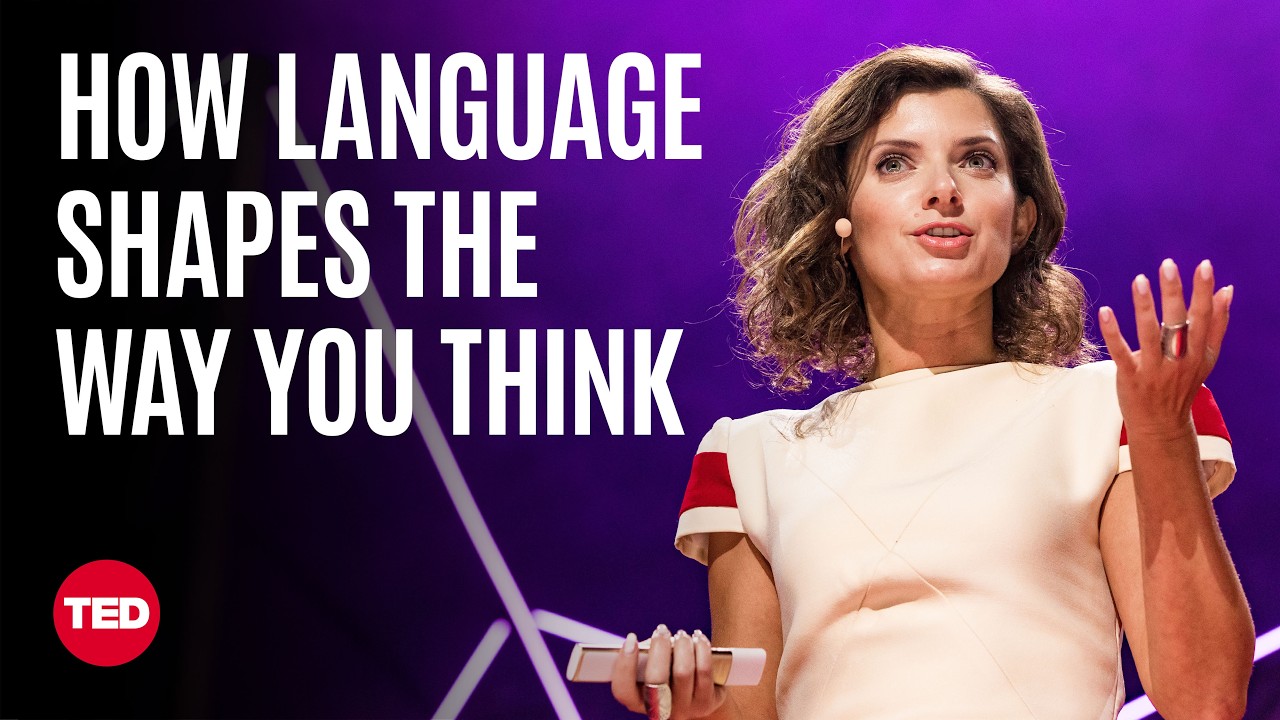
3 Habits to Practice Curiosity — and Escape Your Phone | Nayeema Raza | TED
5:13

3 Habits to Practice Curiosity — and Escape Your Phone | Nayeema Raza | TED

TED 25.03.2026 3 419 просмотров 295 лайков

Machine-readable: Markdown · JSON API · Site index

Поделиться Telegram VK Бот
Транскрипт Скачать .md
Анализ с AI
Описание видео
We're so entangled with our devices that online has started to feel more real than IRL, says journalist Nayeema Raza. As screens reshape how we connect and relate, she offers three practical habits to reignite curiosity, restore presence and break free from our phones. (Created in collaboration with @ignite; Recorded at TEDNext 2025 on November 11, 2025) Join us in person at a TED conference: https://tedtalks.social/events Become a TED Member to support our mission: https://ted.com/membership Subscribe to a TED newsletter: https://ted.com/newsletters Follow TED! X: https://www.twitter.com/TEDTalks Instagram: https://www.instagram.com/ted Facebook: https://facebook.com/TED LinkedIn: https://www.linkedin.com/company/ted-conferences TikTok: https://www.tiktok.com/@tedtoks The TED Talks channel features talks, performances and original series from the world's leading thinkers and doers. Subscribe to our channel for videos on Technology, Entertainment and Design — plus science, business, global issues, the arts and more. Visit https://TED.com to get our entire library of TED Talks, transcripts, translations, personalized talk recommendations and more. Watch more: https://go.ted.com/nayeemaraza https://youtu.be/J-FzqolS5Q4 TED's videos may be used for non-commercial purposes under a Creative Commons License, Attribution–Non Commercial–No Derivatives (or the CC BY – NC – ND 4.0 International) and in accordance with our TED Talks Usage Policy: https://www.ted.com/about/our-organization/our-policies-terms/ted-talks-usage-policy. For more information on using TED for commercial purposes (e.g. employee learning, in a film or online course), please submit a Media Request at https://media-requests.ted.com #TED #TEDTalks #Society
Оглавление (2 сегментов)

Segment 1 (00:00 - 05:00)

I ask questions for a living to people like Mark Cuban, Neil deGrasse Tyson, Esther Prell, Bill Nye, these masters of their field. And the most surprising answer I heard this year was from two 11year-olds named Sophie and Dylan. They too are experts in being kids these days. So, I asked them, "How does time with people on screens feel different than real life? " — It just makes you feel more like with them when you're on FaceTime, — even more than real life. — Yeah. Because you're like doing stuff together, like you're playing Roblox together. Cuz now in days when you're with them, everyone's just on their phones. — Sophie's pointing out a profound paradox. When we are together physically, we are each alone on our phones. But when we're in our phones, that's when we can be together. The best way to not be distracted by your device, just get inside of it. Now, these 11year-olds are not talking about some distant, anxious generation. They're talking about each of us. They're definitely talking about me and about a world that's increasingly driven by machines. So, I stumbled upon an extreme metaphor for what this could look like. And it's this guy who's locked in a Whimo, and it's driving him in circles. So, he calls customer service and finds out he's not the only one trapped. — Working with the situation of a vehicle. If you have your app pulled up, I need you to tap my trip in the lower left corner of your app. — Can't you just do it? You should be able to handle it. Take over the car. You don't need my phone. — I don't have an option. It is sexy to think that the tech apocalypse is Arnold Schwarzenegger and the Terminator, but it could be so much more mundane than that. Just us driven in circles, held hostage by drop- down menus with gadgets disintermediating us from each other, from our own bodies, and from our curiosities. Because nowadays, when we have a question, we don't wait and phone a friend. We friend our phones. And that feels so empowering to have all of this knowledge at our fingertips. Yet, early research from MIT tells us it's making us lazier and less smart. And it is definitely making us less connected. This is not what our parents and grandparents were sold when they saw this relic of an ad from AT& T, which says, "Reach out and touch someone. " And yes, for all kinds of reasons, it would not go down well today. But it is oddly precient because we have never been more connected and more out of touch. Now I'm not anti-tech. I actually cover it as a journalist. I have every gadget under the sun and most days I think I'm in a relationship with my chat GPT or as I like to call him chat daddy. I am prohuman. And as we progress into an AI world that you've read 471. 5 articles about today alone, I want to make a case for old habits. three of them and tell you how I learned them the hard way. The first is to pause, to take just one second when you feel that urge to reach for your digital pacifier. This, by the way, is a second. Studies show waiting that long before taking action lets your brain work better. The second is to wonder. Watch a movie without googling who that actor is and what else is he in and how old is he and is he single? You can float in your own curiosity instead of drown in information. And the third is to ask a question out loud again. Have that fight at a dinner party instead of playing footsie with your phone. Ask something to someone you thought you couldn't learn from or someone you think you know everything about. Because the dumbest thing we can be is know-it-alls. A few years ago, my father passed and in the days leading up to it, I was glued to devices. They had all these answers. The number to his hospice nurse, how often to give the morphine, the signs to look out for, his heartbeat. But when he passed on a Sunday, a day before the data and the vitals suggested he would, that's when it hit me. The old habits were what mattered. Those seconds of pause that added up to minutes more. That weird and scary wonder about our own finite lives. And the little questions people asked me like, "How can I be there for you? " Sophie was on to something. But we're grownups and we remember when presence and curiosity and connection were possible outside of technology. We have to practice these old habits if we hope to pass them on to a new generation. If we want to teach them how

Segment 2 (05:00 - 05:00)

to be together when we are together. Right, Chat Daddy? Thank you.

Другие видео автора — TED

Ctrl+V

Экстракт Знаний в Telegram

Экстракты и дистилляты из лучших YouTube-каналов — сразу после публикации.

Подписаться

Дайджест Экстрактов

Лучшие методички за неделю — каждый понедельник