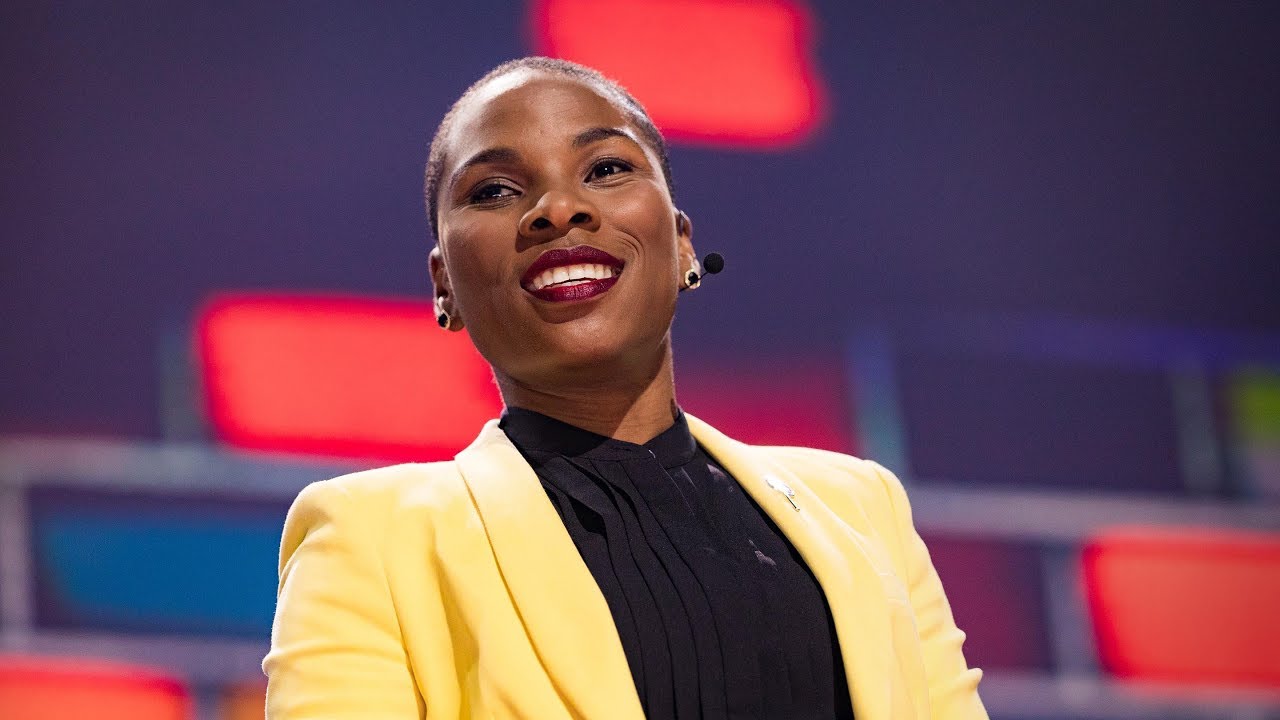
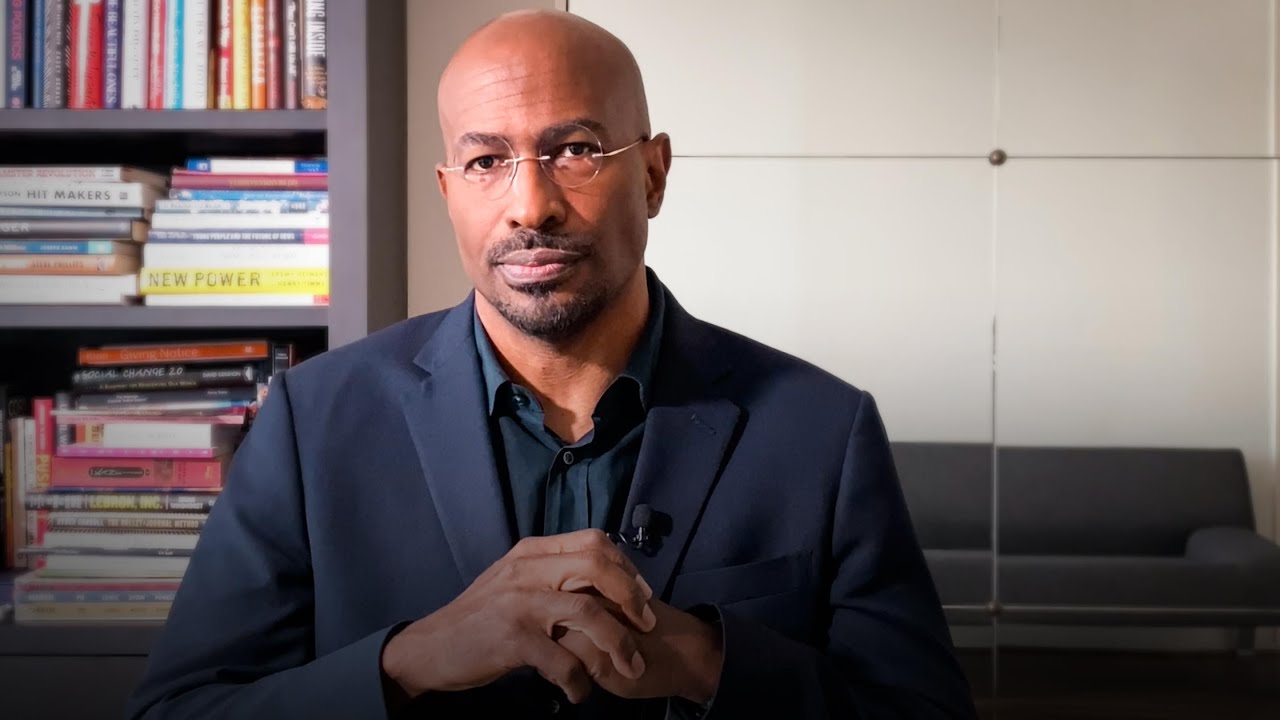
moment. — Thank you all for being here with the TED Global Idea Search. Thousands of people applied and from the selected speakers you will hear today, one of them will be chosen to go on to the TED Main Stage in the spring. That is the biggest global stage for ideas in the world. So, the stakes are really high for these guys today. — I'm really hoping that I can actually make it to the main stage for TED because I have a really big talk that I want to give. There's a lot of content that I had to snip away to make this into 6 minutes and I really think that all of it together is going to hit really hard. Speaking at TED in Vancouver would give me the chance to be in a room of the kinds of people I always want to be around, which are believers, doers, passionate people. It would make me feel amazing if I got to the TED Vancouver stage, speaking in front of so many of the world's greatest leaders, CEOs, just get my story out there. That would be absolutely incredible. — Please welcome to the stage job verbosa. — Yes. — Thank you my friend. Appreciate it. — My name is Joe. Thank you very much. — Kelly. — Hi. — I'm so excited. This room is full. People are excited. Everyone's feeling good. I'm so excited to get started. — I'm just an ordinary bloke, but I'm attempting something extraordinary. I want to become the first person in history to officially run every single street in the city of Chicago. Every corner, every block, every neighborhood. And this is how I run. Now, here's the thing. This journey didn't start because I love running. It started because, well, let me take you back. In March of 2024, I climbed Mount Washington in New Hampshire, home to the world's worst weather. And as it turns out, this world's worst weather slogan isn't just clever marketing. Because on the way down, hurricane force winds threw me onto a rock. I was knocked unconscious. Hypothermia set in frostbite began eating at my skin. Even though I made national headlines for all the wrong reasons, I survived. But recovery wasn't simple. My first lap in the marathon of healing began when doctors told me I need to get my blood flowing again. So, I started running. At first, it was just rehab. But then I discovered the truth. I hate running. — You know, in rehearsal yesterday, he tried putting the flag on during his talk, and I think that kind of slipped him up. So, I'm glad to see that he just started with the flag on. Yes. — But then it hit me. What if running didn't have to be boring? What if I gave it a little bit of purpose? What if I ran the entire city of Chicago? Today, this is my progress within the city. The purple is where I've ran over half of Chicago complete. But what I found has surprised me because if you listen to the news, Chicago's chaos, violence, crime, division, danger, that's the narrative. But the reality, the one I see on foot is something different. It's ordinary life. I've run into kids riding their bicycles, challenging me to races in which I always win. Neighbors chatting on porches, saying hi to me, but wondering why I'm going down a dead end as I pass by. Moments which are mile markers of connection. Challenges exist, but exploration has shown me that the stories we're told don't always match reality. And sometimes the only way to find out is to go see for yourself. Because the world profits off fear. Headlines sell division and polarization. Algorithms feed us reasons to stay home, to stay afraid, to stay in our lanes. But exploration, the act of stepping outside, of seeing for yourself, shows us reality is far more beautiful and far more ordinary than what fear wants us to believe. So my invitation to you is simple. despite what you're told. Explore the streets of life in every sense. I think what he's doing is incredible. I'm not sure if the core of his idea is something that will be new to people or is something that is so grand that like everyone will take away. learning something really new. — I'm buzzing. I got everything out and yeah, when you're there it's just good cuz um yeah, you you're in that moment and it's like the pressure is on but the pressure is good. So yeah, amazing. Yeah, — Dr. Sammy yesterday he struggled. It was a rough rehearsal and he had a lot of work to do a lot. I really hope that he went home and focused. You know, sometimes in rehearsals that stuff happens and it's a motivator. Yeah. — Hi, I'm Dr. Sammy, your friendly neighborhood entomologist. But I wasn't always. See, I used to be terrified of insects as a kid. I couldn't think of anything more disturbing. It actually got to a point where my mom got a call from my second grade teacher. Um, hi Mrs. Ramsay. Um, I just wanted to give you a call. Um, Sammy hasn't been out to recess all week. He said he doesn't want to meet any insects, quote, on their own turf. So, so my mom took me to our local library and parked me in the entomology section all summer long. That very summer, I told my parents, I'm going to be an entomologist when I grow up. And uh, one day in my backyard, I imagined myself as a millipede. Hm. Uh, I don't like that everything can see me really well, but I can't see them because I don't have any eyes. I didn't realize it at the time, but I was solving scientific problems via empathy, something that I had no idea was a skill, but I didn't realize just how well how difficult it would be to be empathic in the scientific community at times. When I became a graduate student, I was so excited to be pursuing my lifelong dream of being an entomologist. Uh I can still remember my first committee meeting. My adviser looked at me and said, "Sammy, something about you just doesn't seem like doctoral material. So, I've decided to dismiss you from the program. " Now, Sammy, you just don't have the right skill set for science. You have to trust me on this one. Uh, and this isn't something that you can learn. — Now look, some folks just want to play in your face. — A lack of empathy is a failure of imagination. She couldn't imagine that someone like me could be a scientist, but I could. — Watching this, you would have no idea that yesterday he struggled. After six months or nine months of fighting through an appeals process, I returned to the program, but with my confidence on shaky footing. So, of course, I chose the simplest, easiest project that I could think of, global honeybee health decline. Simple, simple. But as it turns out, the right skill set for understanding that complicated subject was curiosity co-mingled with empathy. See, our bees are dying rapidly. And at the center of the problem is veroa, this tiny tick-like might that's apparently eating their blood. — The difference between yesterday and today is gargantuan. — I know. — I looked at the parasites feeding on the bees and found that they only fed near the liver. I fluorescently stained the liver and found it inside of the mite's gut. But if I really wanted to prove that these mites were feeding uh on the bee's liver and that it was essential to their diet, I would have to find a way to feed them blood and liver and track which ones were surviving and reproducing. And that is not easy when you're working with parasites. You have to figure out every little detail of how the host interacts with the parasite that triggers the parasite to feed. And if you don't, they just die. And look, for several months, these parasites dying was my entire life, just watching them die. I even made their food look like a little baby bee in hopes that they would feed on that. And they still did not feed. My gosh, I was missing something. And if I was going to figure it out, I would have to from the parasites vantage point. So, I did what I did as a kid. I went through my empathy exercise. And y'all, I face palmed almost immediately. Why did I spend all that time trying to make this decoy bee look like a bee when these little doofuses can't even see? No eyes. Look at that. Not a single eye on that face. — I love that part. And he just changes his tone. It's got so much energy. When I imagined myself as one of these mites, I realized that my world was only smell, taste, and touch. And so I took this really thin membrane that felt like bee skin and rubbed it up against a bee so that it got the bee's smell and taste and then wrapped that around my decoy bee. And voila, the parasites ate. And they lived long, fruitful lives and they had babies. But only if fed the bee's liver. So, I had cracked the case. All these years, these parasites were killing our bees with liver disease. And now that we know that, we can give our bees a fighting chance. — Thank you. — Right. I mean, — but consider this. That study critical for saving the bees almost didn't happen because of how we have intentionally structured science. All of the policies that allowed me to be booted from my program on a mentor's whim are still in place uh at my former institution and at many others around the country. — This is actually the part where I feel like we're going into another talk maybe, you know. — Yeah. So let's embed in the pursuit of knowledge ethical intelligence as we train the next generation of researchers because curiosity without empathy is observation without understanding. And as Mama Ramsay will tell you, people fear what they don't understand. And as I can tell you, fear and lack of imagination are lousy guiding principles in science. Thank you. — He really, really did it. And I am so happy to see it. — Yeah. And there's something about seeing someone struggle so much in rehearsal. I just feel so proud for him to have done that. — Yes. — Oh my gosh, the audience was so kind. I got a standing ovation at the end of that and I wasn't expecting that and now I'm just like, "Yeah, I did it. " Please welcome to the stage Joshua Johnson. — Now we're going to hear from Joshua who is a journalist and really he's a professional communicator giving a talk about how to have difficult conversations. I think that's something that a lot of people are wondering how to do right now. He was a real standout yesterday. So I'm excited to see if he can deliver in the same way today. — When you have to deal with someone whose views you despise, what principles guide you through that? I had to do that a bunch in my 20 plus years of broadcasting, including three years hosting the NPR talk show 1A. Doing that work supercharged my ability to deal with highly problematic people without losing my integrity or missing a chance to connect. Back in 2017, there was a white supremacist march in Charlottesville, Virginia. One of the early episodes of 1A dealt with Confederate Civil War statues, which were a focal point of the marches. One of our guests was a descendant of Confederate soldiers who supported preserving those statues. Now, as a black man, I felt enormous pressure to remain objective, so I decided I'm just going to deal with the pros and the cons of the argument. Well, among other things, he argued that we focus too much on slavery as a cause of the Civil War when there are all these other causes like the economy. Slavery was the economy. Eventually, he just deflated and he said, "It really doesn't matter what I say. " And the moment he said that, I knew I had failed. I had missed a huge opportunity. See, I asked the questions everybody would have asked to interrogate his beliefs. What I failed to do was find out why he believed them. What if I'd asked better questions? Questions like, "Who influenced you the most in forming these views? " Or, "What if I had asked? " Suppose we let all of these monuments stand just as they are. What would that mean to you? If I had let myself get a little closer, I might have seen him, the real him. And that missed opportunity kind of broke everything for me. — He works a sage so well. He really does. — No one is objective, but we can all be skilled at objectivity. In other words, objectivity is an ability, not an identity. Hold it, Joshua. Hold it. Learn without judgment. Park my emotions. So, you just want me to sit there and smile at some who's about six McNuggets short of a happy meal? IS THAT WHAT YOU WANT? NO, be engaged, but do it strategically. Here are three tips for your next unbearable conversation. Ready? Tip one, keep your questions short. 10 seconds or less. Long questions feel like a setup. Tip two, find the narrative. Get the story behind the belief. Help them talk about everyone's favorite subject themselves. And third, don't agree, just acknowledge. Hey, I know this was a tough conversation, but you leveled with me. So, thank you. — If you're going to write a book on how to give a talk, I think you could study this one. It's really got all the elements in both the content and the delivery. — All you really need are a generous heart and a curious mind. And unlike a trained clinician, I am not asking anyone to do emergency surgery on the heart of the nation. Because believe it or not, just a little civic CPR could save someone's life. I really appreciate y'all making time for me today. Thanks for listening. Bye everybody. Thank you so much. Thank you. Thanks. He was amazing during rehearsal yesterday. I didn't know it could get better, but I think it just did. — He's going to be tough to beat. I'm glad I did not make eye contact with my parents cuz then I would have been like an inconclusion and it would have been over with. So wherever they are, I'm glad that they threw a jacket over their heads or something so I couldn't see them. — Next up, we have Tim who is talking about using medicines to bring species back from the brink of extinction. This is a big idea. And I didn't know chemistry could make me cry, but it definitely did yesterday during rehearsal. Sadly, we lost 98% of elephant seals in Argentina last year to aven flu. The state tree of Pennsylvania, the majestic hemlock, is in a battle against an invasive insect, and it's not winning. The greatest pandemic this planet has ever known is a fungal infection called kitrid. It has driven the extinction of hundreds of amphibians already. I'm a chemist who has dedicated my life to improving health and I cannot look away from these diseases. I needed to do something about it. When I met Pebbles, the Hila monster, she had already lost 30% of her body weight. She was infected with a parasite called cryptoperidium. And for a reptile, crypto is basically a death sentence. There's no treatment. And yet, you know those diabetes and obesity drugs you keep hearing about in the news? The first one came from the saliva of a Hila monster. How is it that we built a multi-billion dollar pharmaceutical empire on the biology of this animal? But for pebbles, there was nothing. My lab hopped into action and from the Creature Conservancy, a wildlife rescue center that cares for pebbles, we received a very generous gift of Hila Monster poop. poop jokes always a favorite — and from it extracted the parasite that I show here. This is the first electron microraph of cryptosperidium verani. You cannot kill this parasite with bleach. My lab built an AI agent that could hunt through the entire medicinal literature trying to find a molecule that might be relevant to this situation. And the one that popped out was called peromy. In the lab, we mixed this chemical with the parasite in a test tube and obtained this image. And as you can see, we have abused this bug. Its protective layer is dissolving. Its insides are exploding. Within days, the creature conservancy started pebbles on a treatment of peromy. And I'm very happy to report that following the treatment, she tested negative for the disease. She stopped regurgitating her food and regained her appetite and vigor. and has since put on most of the body weight she loves. Thank you. — He's giving the real science while also making it accessible and easy for the audience to understand, which I think is a real challenge that people struggle with. — Chemists can be first responders in the fight against extinction. Today, we can make precision health products at rapid pace. I know chemists who have invented drugs for all kinds of diseases. Let us now turn our attention to those who need it most. Thank you. — This could be a worldchanging idea. This is important. This is big. I think he delivered it well. I am left wondering a little bit. Was the whole talk clear enough? — Yeah, — the audience is so supportive. Uh and I just I feel like I was remembering uh all the tips that I had along the way. I had the clicker in the wrong hand, but it was cool. — Next up is Chicago's very own Queen of House music. And for those of you that don't know this, uh, Chicago is the proud birthplace of house music. All right. Yes. Now, we're going to hear from Darlene, who is a legend in Chicago. And wow. I mean, yesterday in rehearsal, right, she was — Oh my gosh. I loved Lady D yesterday. I mean, she had everyone crying in the room. She had our chemist Tim crying. Like, it's hard for me to imagine not for people to be moved today. I really came away yesterday from the rehearsal feeling like I had really learned a lot from Darlene. Oh, how many of you would start your esteemed TED talk that way? If you would leave, you are already enlightened. Namaste. If you wouldn't, I'm here to propose a way for you to feel comfortable in your skin, for you to live judgment free and have grace for others, including yourself. I'm a little worried about her holding notes because sometimes speakers tend to rely on it and I feel like it could hurt the delivery if she relies on it too much. Let me explain a little rewind. In Chicago's basement, warehouses, and gymnasiums, house music was forged with resistance, resilience, and ingenuity. — She's a little more nervous. I can feel it. Queer, straight, black, and brown kids created a new world out of the word no. The music was intoxicating. Everybody loved it. Imagine a place for yourself where you feel fully actualized, free. It was like a sanctuary for the disenfranchised, for marginalized folks, and it dissolved barriers. And so if you have a place where you have ever felt the safest and most trusted, that's your dance floor. Okay? If you've ever had a space like that, hold it up here. Oh no. No. No. Oh. Darling. — Part of me wants to think that like she's just so passionate about this that it's almost hard for her to talk about it out loud. It was the feeling of seeing my name on that first flyer with my first DJ gig that I knew that I had inherited real power and responsibility. Responsibility to create spaces of love and communion and justice to elevate moods and to bring people together. — She's doing well. It's just it's a big shift from yesterday's rehearsal. And if you want to dance on many dance floors, literal or metaphorical, you have got to make space, come without judgment, and teach someone your dance. This completes the cycle. Give the next generation the tools to find their own rhythm. Long live your dance floors. That's it. Thank you. The competition today is so high. I mean, I just think like it is a shame and it's just hard, but you know, you've got to really deliver the best version of your talk and Darlene didn't quite get there today. Yeah. And it doesn't help that this pool of speakers is so strong. — Sure. — I think it went great. I mean, I had what, you know, challenges I had, but overcame them and made it to the end. So, I really had a great time. — With the talks drawing to a close, it's time for the audience to reflect on which speaker has left the largest impact. — It was absolutely amazing. I don't think I've been that encaptured for an hour and a half straight in a really long time. I loved it. I felt genuinely inspired. I had full body goosebumps after every single one. — They were all really good. I would have to say my favorite would be Joshua. He resonated a lot, especially right now with what's going on around the world. — I think my all-time favorite was Dr. Sammy Ramsay. — Dr. Sammy was amazing and he taught me so much and now I think I want to appreciate beans a little bit more. — I think I liked Joe Barbosa the best. The guy that was actually running all of the streets of Chicago. — Joe the runner. His message about seeing the good and what's around you and everything regardless of what the mainstream may be telling you. — Joshua was one of the standouts. I love how he's talking about making a difference in the world and changing people's perceptions. The one that sticks out to me is the guy who invented the solution for the honeybees and he's going to change the world. — But ultimately, it's the panel's opinion that counts the most as they sit down to decide who will represent Chicago on the TED Main stage.