The Truth About Nitric Oxide Supplements Revealed
15:42

The Truth About Nitric Oxide Supplements Revealed

Dr Brad Stanfield 18.02.2026 93 852 просмотров 3 155 лайков

Machine-readable: Markdown · JSON API · Site index

Поделиться Telegram VK Бот
Транскрипт Скачать .md
Анализ с AI
Описание видео
For weekly health research summaries and extra insights, sign up here 👉 https://drstanfield.com/pages/sign-up 💊 Supplements I Take: https://drstanfield.com/pages/my-supplements 💊MicroVitamin+ (Pro) Powder: https://drstanfield.com/products/microvitamin-plus 💊MicroVitamin Standard Capsules: https://drstanfield.com/products/microvitamin 📜 Roadmap - how to look young & feel strong: https://drstanfield.com/pages/roadmap Timestamps: 00:00 Nitric Oxide and Its Health Effects 02:10 Challenges with Nitric Oxide Supplementation 06:30 Nitralis from DoNotAge: A Case Study 09:33 Potential Issues with Nitralis 13:42 Good Nitric Oxide Supplement Brands ✔️ Twitter: https://twitter.com/BradStanfieldMD ✔️ Patreon: https://www.patreon.com/bradstanfieldmd Here are the links to the research papers referenced in the video: https://pmc.ncbi.nlm.nih.gov/articles/PMC122975/ https://www.mdpi.com/1422-0067/24/20/15200 https://pmc.ncbi.nlm.nih.gov/articles/PMC11504650 https://pmc.ncbi.nlm.nih.gov/articles/PMC8348219/ https://pmc.ncbi.nlm.nih.gov/articles/PMC14594 https://pmc.ncbi.nlm.nih.gov/articles/PMC4752190 https://pmc.ncbi.nlm.nih.gov/articles/PMC9190231/ https://pubmed.ncbi.nlm.nih.gov/18708287/ https://jn.nutrition.org/article/S0022-3166%2822%2902486-5/fulltext https://journals.physiology.org/doi/prev/09082017-aop/abs/10.1152/japplphysiol.00503.2010 https://pmc.ncbi.nlm.nih.gov/articles/PMC2291275/ https://www.frontiersin.org/journals/sports-and-active-living/articles/10.3389/fspor.2025.1627743/full https://pmc.ncbi.nlm.nih.gov/articles/PMC6369322/ https://www.cambridge.org/core/journals/nutrition-research-reviews/article/role-of-inorganic-nitrate-and-nitrite-in-cvd/47D0870D263E016179F87CD1DAF8D6C2 https://pmc.ncbi.nlm.nih.gov/articles/PMC8512783/ https://pmc.ncbi.nlm.nih.gov/articles/PMC4288952/ https://pmc.ncbi.nlm.nih.gov/articles/PMC4892939/ https://pubmed.ncbi.nlm.nih.gov/29617153/ https://biomedres.us/fulltexts/BJSTR.MS.ID.009914.php https://pmc.ncbi.nlm.nih.gov/articles/PMC5569892 https://www.sciencedirect.com/science/article/pii/S0924224425005898 https://patents.google.com/patent/US10702796B2/en https://www.sciencedirect.com/science/article/pii/S0309174020307075 https://pmc.ncbi.nlm.nih.gov/articles/PMC10271341/ https://pmc.ncbi.nlm.nih.gov/articles/PMC4525132/ https://www.consumerlab.com/reviews/beetroot-nitrate-juice-powder-chew/beetroot/ https://pmc.ncbi.nlm.nih.gov/articles/PMC8512783/ Thumbnail by James Kelly Video edited by Troy Young Script by John Milliken The links above are affiliate links, so I receive a small commission every time you use them to purchase a product. The content contained in this video, and its accompanying description, is not intended to replace viewers’ relationships with their own medical practitioner. Always speak with your doctor regarding the content of this channel, and especially before using any products, services, or devices discussed on this channel.
Оглавление (5 сегментов)

Nitric Oxide and Its Health Effects

I honestly can't believe what I've just read. So, I was going through the nitric oxide supplement literature and it is a lot more promising than I'd initially thought before starting this review, especially since nitric oxide levels, they decline with age. But then I started looking for a good brand and I came across Nitrolis from a company called Do Not Age. The more I looked, the worse it got. So, let me explain the research so that if you decide to start taking nitric oxide supplements, you don't get duped by marketing hype and you can select a good brand. And I'm not affiliated with any nitric oxide supplement brand. So, why did scientists become interested in nitric oxide supplements in the first place? And are there any proven benefits? Well, it all started with an unexpected discovery. So, workers with angina in Alfred Nobel's dynamite factories all the way back in the late uh 1860s noticed something mysterious. Their angina got better during the week, but then it returned to normal during the weekend, and it was because of the nitroglycerin that they were exposed to. So, doctors realized that it could cause their blood vessels to relax and open them wider, relieving the pressure. But we didn't discover the mechanism until the 1970s. It was caused by nitric oxide which is produced as the nitroglycerin is broken down. So nitric oxide it relaxes the smooth muscle cells that line the blood vessel walls. And as we soon learned during the 1980s that nitric oxide was a crucial signaling molecule in the cardiovascular system. So three researchers earned a Nobel Prize for this discovery in 1998. And because of its ability to relax the smooth muscles around the blood vessel walls, nitric oxide plays a key role in the control of blood flow and blood pressure. It also supports heart muscle function. It helps to regulate blood clotting and it has many other important functions as well. And this emerging understanding of nitric oxide stimulated interest among supplement makers. They wondered if we could boost levels as an aid for athletic performance, not just heart problems. So increasing blood flow could enhance oxygen and nutrient delivery and leading to peak performance and greater impacts on exercise. And there's another factor that adds urgency to this area. So the problem is our body's ability to create nitric oxide. It declines with age and that disruption of nitric oxide production has been linked to a whole range of age related problems as areas as diverse as the heart, the brain, reproductive health and muscle health.

Challenges with Nitric Oxide Supplementation

But even if we see a potential benefit of increasing nitric oxide levels, there's a challenge that we need to overcome. We can't just swallow nitric oxide. It's an extremely unstable gas. And in the body, it reacts almost immediately with other substances. It's almost gone immediately. This problem was actually solved by pharmaceutical manufacturers a while ago. So in the clinic, I prescribe medications like GTN sprays and isosorbide monitrate that result in the production of nitric oxide where it's needed in the body. But these are prescription medications and there's an Achilles heel with medications like isosbide monitrate. So patients who are taking them, the body rapidly builds up a tolerance and they lose much of their effectiveness. So that's why they have to be taken only once a day. That's because of the way that these drugs work. They don't support the body's own nitric oxide system. They can bypass it. They act more like a short acting jolt that forces the blood vessels to relax and over time the body can adapt to that and it can stop responding. So supplement developers, they're taking a different approach. Instead of forcing the nitric oxide from the outside, they asked, "What if we could support the body's built-in nitric oxide pathway itself? " This way, we could take something for the long term that doesn't lose its effect, and it may help to counter the natural decline in nitric oxide production that comes with age. So, in that sense, it's not a drug substitute. It's a tool that may help to support one of the systems that's linked to healthy aging. So, this logic makes sense, but how has it worked out in the supplement space? Well, let's have a look at the main strategies that supplement manufacturers have used to try and enhance nitric oxide production and see what the research says. So, if you have a look at nitric oxide supplements, they're often called nitric oxide boosters. And the most common ingredient that you're likely to see is L argonine. So, that's an amino acid that's a key ingredient of the primary pathway for nitric oxide production in the body. And many human studies have looked at L argonine supplements. But while L argonine levels in the blood go up with supplementation, that hasn't reliably translated into improved athletic performance or raised nitric oxide levels. But that's where Lcertrine comes in. So it gets converted into L argonine after ingestion. And research has shown that it's actually more effective than L argonine itself at raising blood levels of L argonine. So maybe Lutraline would be able to raise nitric oxide levels where L argonine failed. Unfortunately though, the research has been underwhelming here as well when it comes to performance. For example, a study last year tested Lcertrulene in healthy young adults to see if it would increase time to exhaustion during exercise, but it didn't. However, a 2019 meta analysis found that liter seems to slightly reduce blood pressure when the dose was at least 6 g a day. But it's not really that much to get excited about. However, more recently, excitement has been building about nitrate supplements. So they target a recently discovered pathway for supplying nitric oxide to our cells. Now pay attention here because this matters in terms of what type of supplements you may want to choose. So nitrate with an A that's found naturally in foods like leafy greens and is converted into nitrite with an I by the bacteria on the tongue and further modified through digestion to eventually lead to nitric oxide in the blood. A popular type of supplement in this category is derived from beets since they are rich in nitrate. So, do supplements targeting this pathway actually work? Well, in clinical trials, the results have been encouraging. So, an important study in 2014 tested the effects of daily doses of beetroot juice containing about 397 mg of nitrate against a placebo in patients with high blood pressure. And the study found that beetroot juice supplementation significantly reduced blood pressure by around eight points. And that effect size is comparable to the impact of blood pressure medications that I prescribe in the clinic. So it is a meaningful amount for reducing the risk of things like heart attacks and strokes. And the study found that beetroot juice supplements also improved blood vessel function and stiffness. Another study found that just one week of daily doses of beetroo juice containing about 378 milligs of nitrate significantly improve the exercise endurance and blood pressure metrics in elderly patients with heart failure. But here is where we have to be cautious. Just because a substance is helpful in clinical trials doesn't mean that supplement companies are going to use it properly in their products. And I want to have a look at one example that demonstrates just how bad it can get so that you know what to look out for when selecting nitrate supplement brands. So the product that I'm going to be looking

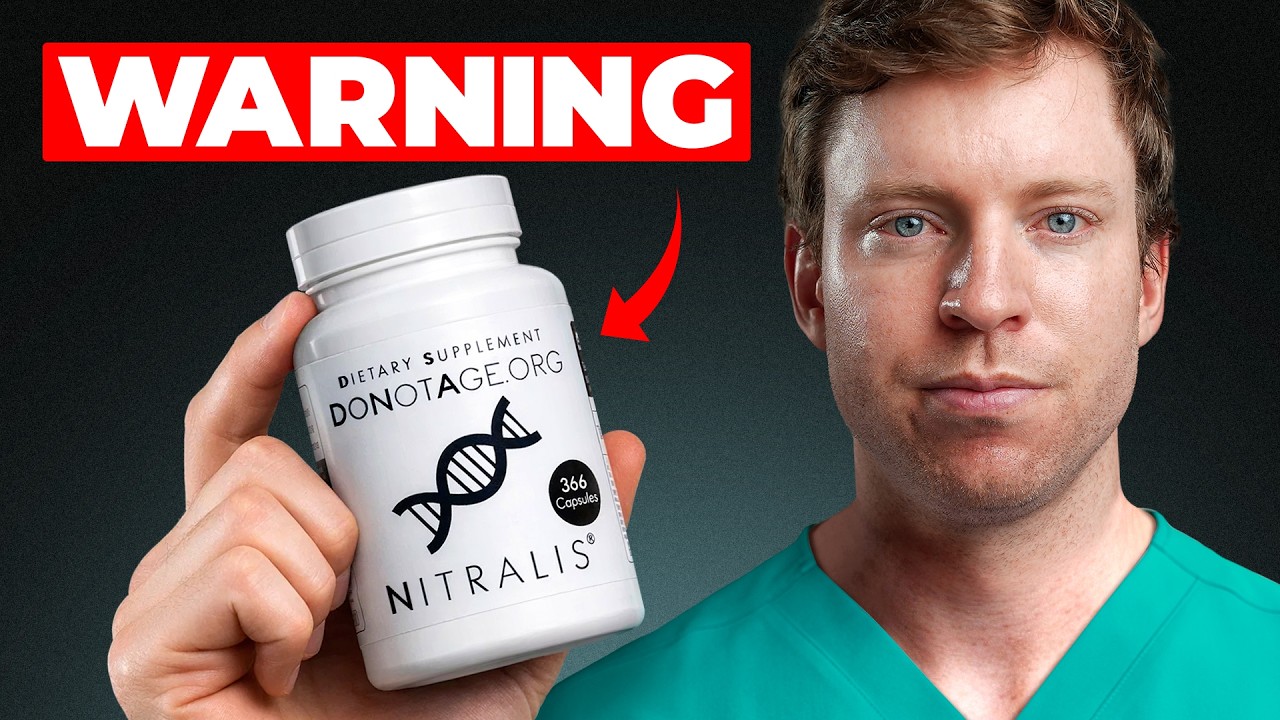
Nitralis from DoNotAge: A Case Study

at here is nitrolus from do not age. So it's based on the nitrate pathway that we've been discussing with fermented beet as the primary ingredient. Now if you have a look at their website you'll see four claims for nitrolus. So supposedly it is clinically proven to boost nitric oxide levels and vascular performance. It boosts circulation and vascular health. It enhances physical performance and it supports cognitive function. Now we've already looked at the research in this video that shows that boosting nitric oxide levels can be linked to some of these benefits, particularly blood flow, vascular health, and endurance during exercise. But what about cognitive function? Well, the basic theory here is that increasing blood flow in the brain should help with certain aspects of our brain's functioning. It does make sense, but the actual data from randomized clinical trials is mixed. Although there have been some positive results, a meta analysis concluded that overall the evidence does not show that nitrate supplements impact cognitive function or blood flow in the brain. So there is a big question mark with that particular benefit. It's not the end of the world. Supplement companies often stretch the truth, but it gets so much worse. Let's come back to the impacts on blood flow, vascular health, and endurance. So, we've seen clinical trial evidence that a nitrate supplement based on beets can help. But what about this particular supplement? So, notice a key claim for nitrolis. It's clinically proven to boost nitric oxide levels and vascular performance. So, great, there's a clinical trial. Let's have a look at it. The clinical trial in question here was published a few months ago in the biomedical journal of scientific and technical research. But before diving into the study itself, it's worth pointing out a few red flags that should make us quite cautious. So first the article was received on October the 3rd and then it was published just 2 weeks later. That is an incredibly fast turnaround for a scientific journal. The peer-reviewed process usually takes much longer suggesting that the journal is more interested in just pumping out papers than ensuring quality. The journal itself doesn't even have an impact factor. So that's usually a signal that the journal doesn't meet the standards of established publications in the field. Then notice the institutional affiliated listed. So it's do not age. org or which is described as a health research organization. Now when supplement or pharma companies sponsor a clinical trial, there should be a wall between the sponsor and whoever actually performs the clinical trial. So take my rapamy and exercise clinical trial for example that's going through the final stages of peer review at the moment. So I wrote the trial protocol, I applied for and received ethics permission and I crowdfunded the study, but a local hospital in Oakland, New Zealand were the ones to actually perform the study and collect the data. So this way over here I had no ability to sway the result and it removes any potential conflicts of interest. That is not what happened in this nitral study from do not age. They paid for the study. They didn't get ethics approval and they ran the study themselves and the sole author and again having one author is also unusual is an employee of the company that makes the product being evaluated. There are clear potential conflicts of interest and no separation between the trial sponsor and the data collection. do not age could literally publish anything so far. Then

Potential Issues with Nitralis

we've got a trash journal. No ethics approval, no separation between the trial sponsor and data collection. Huge potentials for conflicts of interest. Now, let's dive into the study itself. It included 85 participants randomized to either receive nitralis or a placebo for 30 days. So, what were they looking for? Well, given the claims on the product page, you'd expect that they would have checked for markers of nitric oxide levels in the blood and included a measure of vascular health. But here is what they actually assessed. They measured nitrite with an I in saliva. So notice that they say that they measured nitric oxide levels in saliva. That is not what they measured. So remember nitric oxide is a gas with a half-life of a few seconds. It appears, it signals to a cell, and then it vanishes almost instantly. You cannot capture a gas on a dry paper strip in your mouth. Every commercial nitric oxide test strip on the market is chemically a nitrite test. So again, that's nitrite with an I. So let me explain why this is deceptive. When you eat some nitrate from beets, for example, your digestive system absorbs that nitrate, again, that's with an A, and that goes into your bloodstream. The salivory glands then actively extract about 25% of that blood nitrate, and it concentrates it in the saliva where the bacteria in your mouth, convert it to nitrite with an eye. So, that's what the saliva tests are measuring. Here is the problem, though. An investigation found that there was no correlation between having higher saliva nitrite levels and elevated nitrite in the blood. And again, this is nitrite with an I. And it's the and that is what is converted in the blood to nitric oxide. So this study basically shows us one thing that participants consuming nitrolus they got more nitrate with an A which was then converted by the bacteria in the mouth to nitrite with an I. But there is no measure of blood nitrite levels. That is the whole point which they've missed. And I suspect that they've done that purposely, and I'll explain why shortly. And it continues to get worse. There are no measurements related to vascular health. They didn't even measure blood pressure, which is a mind-boggling emission. It's non-invasive, it's cheap, and it's highly relevant here. And I can't help but wonder, did they deliberately choose to avoid measuring an endpoint where the product might fail, opting instead for a meaningless outcome that was basically guaranteed to show a positive result. So, the study is basically worthless. The claim that nitralis is clinically proven to boost nitric oxide levels and vascular performance is ungrounded. This study is solely a marketing gimmick to say that nitrolus participants showed a mean 226% increase in nitric oxide levels which it absolutely does not. And here is the worst part the ingredients. So consider the star of the show which is beets. So the form that they use here is fermented beet and the fermentation process is intended to increase bioavailability. But does it also affect the nitrate levels themselves? Well, I was unable to find much data here, though a patent for the fermentation method claims to yield a beetroot powder with a nitrate concentration of 7. 5%. That would be really high. And according to one source, normal beetroot powder would be about 1. 4% nitrate by weight. Now, the nitrolus packaging, it doesn't tell us. But let's be generous and assume that they're using the higher concentration of 7. 5%. Now the total dose for nitrolus is 800 mg but not all of that is fermented beet but again let's just try and simplify things. Suppose that all of the 800 mg was that fermented beet that would give us up to 60 mg of nitrate. That is a much smaller dose than is used in the clinical trials that have been showing benefits for heart failure and blood pressure. So the older adults with heart failure for instance in that study they got 380 milligs a day. The blood pressure study used around 397 milligrams of nitrate. So nitrolus from do not age it only gives 60 milligrams of nitrate which is about 15% of the doses used in proper clinical trials. And that is if we're being generous. So the dose of nitrate in nitralis is way too low to replicate the beneficial effects seen in the clinical trials. And since it's such a small dose, I wonder if that is the reason why Do Not Age wanted to test saliva nitrite levels rather than blood nitrate levels because the dose this small may not have shown up in the blood. Now, nitrolus of course

Good Nitric Oxide Supplement Brands

is just one supplement and I wanted to highlight it because it's a good example about how easy it is for clinical findings to fail to translate into actually helpful supplements. And it's easy to end up just wasting your money. But if we do want to boost nitric oxide levels in our blood, there is a safe evidence-based approach that we can take instead. We can increase our dietary intake of nitraterich vegetables. So this includes beets, spinach, bok choy, and others. Whole foods are always better than supplements. And if you want the benefits of beets, just eat beets. It's amazing how much nitrate can be found in natural sources. So for one study, for instance, they used a bowl of soup with spinach in it as a source of nitrate. The bowl contained 845 mg of nitrate. Remember, nitrolus has only got 60. And if you'd like to try a beetroot supplement product, it's critical to ensure that you select a good brand where the nitrate content is adequate. So, testing company consumerlab. com found that in the products that they tested, nitrate range from as much as about 500 milligrams to as little as 4. 3 milligrams in a serving. And if you'd like to access their testing results, I do highly recommend a subscription to them. They are a fantastic resource and to be clear, I'm not affiliated with them in any way. Now, another analysis of 24 beetroot products found that only five contained a nitrate level of at least 300 mg per serving. So, those products were Lakewood organic beet juice, Nudson, I'm assuming it's a silent K beet juice, beat it sport pro elite beet juice, and beat it organic beetroot shot. So, notice here that they are all drinks. A capsule cannot carry enough nitrate to make a clinically meaningful difference. And if we're looking to reduce blood pressure naturally, there's another important tool that we can use in addition to adding more nitrate rich foods to our diet, and that is exercise. But some recent research has answered a critical question. What kind of exercise can lower our blood pressure the most? Well, the answer turns out to be a simple exercise that's easy to do at home. So, make sure to check out this next video here to find out

Другие видео автора — Dr Brad Stanfield

Ctrl+V

Экстракт Знаний в Telegram

Экстракты и дистилляты из лучших YouTube-каналов — сразу после публикации.

Подписаться

Дайджест Экстрактов

Лучшие методички за неделю — каждый понедельник