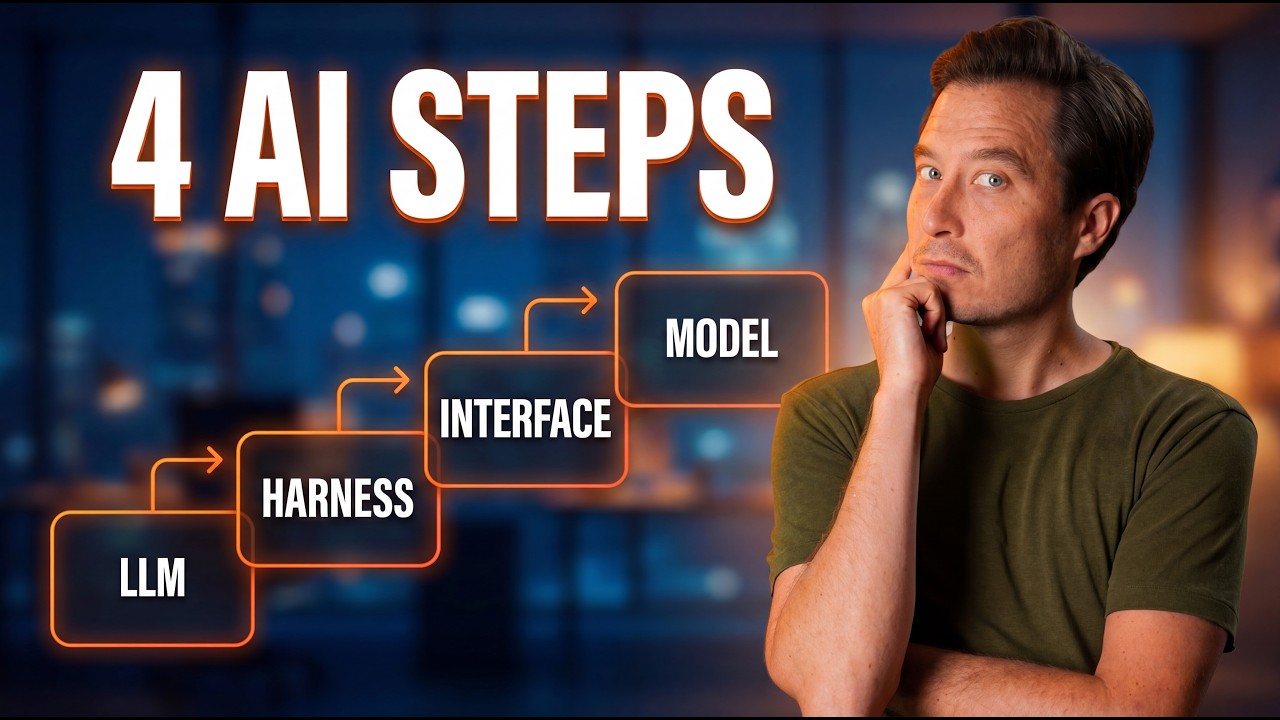
📍 Join the Founding AI Second Brain Cohort: https://buildingasecondbrain.com/ai-second-brain
The founding cohort runs April 15 to May 1, 2026, with special founding cohort pricing for early enrollees.
Join me for a free live walkthrough of the complete AI Second Brain system. Whether or not you plan to join the full cohort, this is the session I want you to see. The ideas covered here are foundational to how I think about AI now.
Оглавление (17 сегментов)
Segment 1 (00:00 - 05:00)
Okay. So, as I said, I want you to have a road map, a highle road map of what the AI second brain system, this system that we talk about looks like and how if assuming you want to learn alongside us, what that might look like, how it works. All right. Um, I don't have that many slides. I think I have like 25 or 26. uh there's going to be plenty of time for us to interact. That's kind of one of the main benefits of this format. Um in the cohort itself, we do breakout rooms, we do coaching, we do a lot of different things. In today's call, just because it's so large, it will be mostly questions that we will interact with via the chat. So, I'll have two separate times for you to ask questions in the chat. You can put questions anytime and we'll do our best to answer them. But I will specifically turn to questions in the middle after about um 45 minutes or so and then at the end for the last 15 to 20 or 30 minutes. Okay. So save your hardest questions for me. But first let's get on the same page. [clears throat] So a few kind of observations and perspectives here. uh to kind of set the stage, set the context, I really believe that there's a new bottleneck in modern productivity. There's a new constraint. It's no longer your time. So just think of first line, think about this for a sec. Think about your career. Think about your life, your life experiences. And just imagine for a sec, even not even to do with AI, just set AI aside. Can you even imagine what it means to have your time, the time you have available, not be a bottleneck? Just like try to imagine. Imagine if you had infinite time. If time was not a factor, limitation. It's almost as if you could pause time for as long as you needed and spend as much time as was needed on whatever you wanted to create or learn or experience every anywhere you wanted to travel, anyone you wanted to meet. It's like really an imagination challenge here. Imagine what it would be like to have your attention not be a bottleneck. you know, your attention, your ability to focus, your attention span, your ability to pay attention to things that are hard or complicated or boring. What would you do with that mind of yours, with that creativity, if attention was not a bottleneck? And then intelligence. What if your intelligence even was not a bottleneck on what you could create, achieve, experience, the impact you could have, not your natural talents that you were born with, your IQ, your EQ, even all those natural traits. What if those were just not a limitation anymore? And imagine or just consider that the bottleneck has moved. The bottleneck has moved to collecting, curating, and providing context, which is really just information to increasingly powerful generations of artificial intelligence tools, which is a skill. It's not obvious how to do this. It's a skill. It's a discipline that we're calling PCM, personal context management. a brand new skill in the world that if you can master, you can get around this bottleneck. So, thinking about you as the human in all this, don't want to forget about that part. Consider that your AI, all your different AI tools can only use, they can only make use of what you give it. Your personal curated context, your notes, your knowledge, your expertise, your experience, your memories, your points of view, your perspectives, your relationships, your network, all the stuff that makes you you is now not just this, you know, little weird productivity habit you have. It's a treasure trove. It's just an incredibly valuable treasure trove of data that no one else has, no one else can access, compile, no one else can generate. That context I believe is the only way that you escape you know the disruptive changes that are coming that you escape uh competition that you
Segment 2 (05:00 - 10:00)
create a a real competitive advantage that doesn't you know get eliminated with the next AI release. Uh I call it the mediocrity trap. Everything with AI, you may have noticed kind of pulls you towards the average. the way the AI thinks, the way that it writes, uh it works through problems. It's constantly sort of homogenizing your thinking. And that's because it's trained on the entire internet. Everyone else's ideas and opinions and everything they've ever said. You can't stand out. You can't really have a competitive advantage if you allow yourself to be pulled into that average that, you know, that that average level of quality, that mediocrity. I published a video a few months ago uh maybe someone on the team could drop that in the chat which was exploring uh some research that has been done on something called context rot. Okay. So imagine actually before I go there there's something called a context window. Okay. We're going to start here at the very beginning. I'm not going to assume that you know anything about how these AI platforms which are known as LLMs large language models work. So your context window the AI's context window is how much information it can work with. You can think of it almost like it's working memory or it's RAM, right? So you can give uh an LLM, you know, 10,000 words or tokens, 50,000, 100,000, but at a certain point it quits. That's there's an error. I'm sure you've come across this. You have exceeded the context window. So without getting too technical here, what you really need to understand is context windows have limits. They are not infinite, not even close. Even with the latest AI models that say, oh, a million token context window, 2 million context, those are lies. As this paper uh really proves and explains, the effective context window, how much you can actually give to these AI platforms is really only maybe 25 to 50% of what they claim. that comes out to something around 30 to 50,000 words. Okay? So even if they say a million words, 2 million, 5 million words, if you exceed around 30 to 50,000 words or in AI speak tokens, you start having these negative impacts, which is what this paper documents, you start having context poisoning. Context poisoning is when one little error, one little mistake, it poisons the whole interaction with AI. It's like it gets fixated, obsessed with this one error and it can't let it go. I'm sure you've experienced this. Or this context distraction. If there's too much in the context that you give the AI that is not relevant to the task at hand, it gets distracted just like humans, right? It gets kind of all over the place. It gets fragmented. It's paying attention to the wrong things. It's getting distracted just very much like humans do. And then there's context confusion. These are all kind of failure modes that the research has documented. Context confusion is when there's things that conflict. What is the AI supposed to do if you have two pieces of information that are either inconsistent or they're directly contradictory or they're incompatible, which I guarantee you will happen. the more context that you try to give it. So, setting aside all this, this is the most technical we're going to get right here. So, setting aside all this new terminology and these numbers, that little warning sign down there at the bottom right is what I want you to take away from this. You cannot just dump everything in. I wish you could. I wish you could just say, "Here, here's my hard drives, my computer, my cloud drives. Here's all my loginins. Just access it all. Make sense of it all. organize it all. You really cannot. You have to selectively curate the right I think of them as bundles of context, the minimum amount of context that you need to accomplish the task at hand. And that might seem like just a random, you know, kind of technical detail, but it's huge, you guys. It's so important because it means that all the stuff that we had to do and that we learned pre-AI, how to organize, how to curate, how to select, how to take notes, how to structure, all those things are still important. They're even more important because you have to do them to take advantage of AI's power.
Segment 3 (10:00 - 15:00)
So, zooming out for a second, what is this AI second brain? It's the same as it always was going back with my work over 10 years now. Uh and really if you look at the history of what we call PKM that's personal knowledge management goes back decades uh decades to the early years of the 20th century. It's a system designed to amplify you. It's a system that lives outside your head, outside your body that is designed to amplify you, to unlock your creative potential, and ultimately at the grandest scale to unlock your ability to lead a thriving generative life. So, we're using generative AI to lead a generative life. And this graphic on the right is kind of the 50,000 foot view of how we're going to do this. It's been amazing to me. It's been so surprising that all the the techniques and the skills that came preai not only are still relevant, like I said, they're more important than ever. So, at the bottom there, we have code. That is the core method that I talked about in my book, Building a Second Brain. Okay. So, that really is centering your creative process, your productive process. Getting information in, which is the C, capture, organizing it. That's the O, distilling it, and then expressing it. That has to be the foundation. Ultimately, you're trying to put something out there, to publish something, communicate something, launch something, sell something. There's an expression at the end. To do that, we build this new layer on top, which is parah, which is a way to organize your entire digital life. That was explained in my book, the parah method. Because you need certain kinds of information to express whatever you're trying to express. You have projects, that's the P. You have areas of responsibility both at work and in your personal life, that's the A. You have a wide variety of resources, that's the R. And you have archives, that's the second A. Okay, so those two methodologies code and para at this point are very very well distributed. Um, in fact, we'll send you some links like there's the books themselves, but if you don't want to read a book, there's YouTube videos, there's the podcast, there's many blog posts you can have at it in whatever format you like to learn. There is a way for you to learn those two methodologies, but we're adding a new one, right? Okay, we're adding this new layer that is building on it is extending those preai capabilities but with this new generation of technology that we call AI. All right, so let's zoom in a bit. Let's get into it. How does this AI powered second brain work? So, I always like to think of like a system like a like almost like a mechanical system like if this was a manufacturing line or if it was a you know a water treatment plant like how does the like the actual bits of information flow from one place to another and how does that add value to my life? So the four main parts that we're going to talk about in the program that we're teaching and this is also going to find its way into everything else that we do is in four parts. So the first one as ever as always is capture. You need a way to capture information, right? That's how you that that's where it all starts. Capture notes, capture ideas, capture insights, highlights from your reading. Now, there's new ways to do that with AI. You can have an AI noteaker now. You can do voice transcription. There's a lot of really powerful AI capture tools, but you still need to think about it. There's still some decisions to be made. How do I want to capture information? What is the way of capturing that fits me? Once you've captured it, as before, this part also hasn't changed, is you want to organize it. And that's where Perah comes in. Okay. And the key thing with parah that I'll point out here, there's a there's a lot to say here, but you need an organizational system that makes sense for both humans and AI. This is the key point you guys. You can have AI create a completely custom bespoke organizational system that perfectly fits how it thinks, but if it doesn't fit how you think, then you've just created a system that you can actually make use of, right? So, so PAR not only is you know really well proven and well validated, it's simple enough and it's straightforward enough that AIs can
Segment 4 (15:00 - 20:00)
understand it perfectly and so can humans. That's the key criteria. Now this is where it changes. Okay. Instead of going to distillation, which is a which was quite a manual, you know, labor intensive process, the information in parah that you've organized now flows into what we call a master prompt. Okay? I'm going to say a lot more about that in just a minute, but it's basically that curated context that you provide to AI that I was mentioning before. Then the that master prompt or those master prompts plural flow into and inform what I think of as a set of AI adviserss like an AI board of adviserss. Imagine if you had a coach and a business consultant and a strategic analyst and then also a relationship coach and a health coach and you know all the people that if you had unlimited money you would hire to help you. you can now have with AI but it requires some design requires a little bit of uh of you know of designing. All right. So I want to say a little bit more about the master prompt because this is really kind of the core thing. What is a master prompt? You can think of a master prompt as your personal operating manual for AI for all AI. All the different you probably have half a dozen or a dozen different AI tools you work with. So this is a completely crossplatform platform agnostic way of working with AI. It's not limited to any one platform. Okay. So imagine just a and I'll show you mine in a second but uh imagine just a document like any document a txt document a markdown document a word document if you want a Google doc just a single long document that has some of these little bubbles that you see around the outside. So, as I read each of these, imagine your interactions, whether it's with Claude or Gemini or Chat GPT or Notebook LM or Perplexity or whatever it is. Imagine if that AI knew say your basic personal details. Okay? I mean, this you guys, this is this is so fundamental. I feel like this needs to be taught in schools. I every single person in the world should do this. In fact, this is why we we published a video on the master prompt uh in the summer. It was one of our most popular videos of the last year. And in fact, that became a whole series. Someone in the uh from the team, if you could share that in the chat, that would be great. I decided to just give that content away freely to the world because I think it's just it's like basic fluency for modern life at this point. But imagine if it knew your basic personal details. who you are, what's your name, how old are you, where do you live, who's in your family. Imagine if it had your basic professional info. What's your job? What's the title? What's the role? What team are you on? Who do you report to? Who do who reports to you? Imagine if it had go just going around clockwise around the circle, your income sources. Do you ever ask AI for any advice or have any questions for it related to money? Related to your finances or related to getting a promotion or related to how you invest or how you save? Well, wouldn't it be useful if it knew how much money you make every year or if it knew what your investments are currently your risk tolerance for your finances or if it knew how much savings you have. You have to provide this information. And I'll just go quickly like AI needs to know your core values. I'm not talking about company. I mean you as an individual. What are the your core values in life? What is your vision? What is your mission? What are your intentions for AI usage? How what are you trying to accomplish in your usage of AI? What are your communication preferences? How do you like to communicate and collaborate? How do you not like to? Your working style, your tool preferences, your workflows, your rules, your boundaries, your goals and intentions. Goals and intentions are twice because they're so important. Your personal SWAT, your strengths, your weaknesses, your opportunities, your threats, your skills, what quality looks like to you. Okay, I know this might seem like a lot. Like when I talk to people, even people who are very deep in AI, who have very sophisticated systems, I 99% of the time when I ask them if they have this this kind of information provided to their AI tool of choice, the answer is no. I kind of can't believe that after all this time, we still largely don't do this.
Segment 5 (20:00 - 25:00)
All right, so let me show you. All right, this is my cloud. This is the desktop app for Mac. And what you're looking at, let's just make this very simple. So, I'm clicking over here on the left where it says projects. See that? A project is simply a little self-contained almost think of it like a folder that is kind of self-contained. It's limited. Everything that happens within that little container is limited to that container. Okay? So, I have one for the book I'm writing, for the upcoming cohort, for the company as a whole, for my writing, for a different program that we run. Each little self-contained box. So, the one I want to go into is Thiago's work master prompt. I have a different one for my personal life cuz I don't want them to bleed over into each other. But if I click into that, this is the project interface. I'll go ahead and close the sidebar. Okay. And the main thing I want you to notice is this little box over here that says files. This is that curated context that I was talking about. They're also known as just project files. Okay? And there's only one file. You can have any number of things. As you can see, this one document is only using 1% of my project capacity. So, that's good to know. I could add lots of other things. But if you click on this, you'll see my work master prompt. All right. So you have basic personal details about me, where I live, company information, our AI strategy, our ideal customer profile, our core products, um that we offer, the company mission, the company vision, the core values of the company, the business strengths. A lot of this is very businessoriented, but I have something similar with my personal master prompt. I have the weaknesses of the business. Uh examples of our brand voice, uh the org chart, uh some of our internal processes, our strategic and operational pro process architecture, our core value chain, how we serve customers, etc., etc. All right. So, with that master prompt, that's what this is here. as context. I can ask it something like with everything that you know about me, what is the biggest single gap in our product offerings and what would you propose in order to address it? So, the reason I could speak that, by the way, is I use an app called Whisper Flow, which allows me to just hold down a key on my keyboard and speak. Well, that's one of the capture tools that we'll show you how to use. And notice if you look along the top here, there's three modes that you can use cloud in. Chat, co-work, and code. I'm using chat. So, this is the most basic, the most beginner level, the most uh elementary um version of Claude. If you want more power or you need more capabilities, you can use the others. Okay, interesting. So, it has a strong opinion. Notice that there's no way for it to have a strong opinion or for its strong opinion to be of any use to me if it doesn't have a tremendous amount of context. Think how much context you need to answer this question. You got to be able to holistically see the entire business plus my role in that business. And here's the gap that it sees. You have no scalable hightouch offering that doesn't require Thiago's direct involvement. And I think that I mean that's exactly right. It's so true. And then it makes a proposal here. Okay. So notice that it knows my product ladder, how people kind of ascend through our ecosystem. It knows that I am involved, highly involved in pretty much all of them, especially the hightouch ones. Um it knows that this is capitalizing on our three biggest strengths. Uh, it knows that we previously tried to move into B2B offerings and it didn't work and it even knows why, right? And then it has follow-up questions and they're not just general vague ones. They're really specific. For example, what's your wife up to? The fact that it knows I'm married, knows her name, knows what she's up to, knows that she's not currently involved in the
Segment 6 (25:00 - 30:00)
business. This isn't a long response. Look, this isn't one of those like mega five, you know, 100 or a thousandword things that I have to pour through. It's just a very succinct and very targeted kind of observation the way that a coach would do pointing out what's missing in my work currently. And I think it's quite insightful and quite accurate. Okay. And the other thing I want to show you before we move on is uh let's see notice that this was updated today. See 3:26. I updated it this morning. And the way that I updated that, I'm not going to get into this now, but every once in a while, every week or two weeks or three weeks or whenever, I give it access to my notes and I say based on all of my latest notes across all my current projects, all the areas of responsibility, all the resources, if there's any new ones or any new archives, update my master prompt. And it did that in a few minutes. I think I told it to do that. I went and heated up my coffee, came back, and it was done. Do you guys understand what is going on here? Like this is so insane. This is so insane that I can just take notes in my casual free form kind of messy way and then once a week or every two weeks say, "Hey, cloud code. " In this case, I use cloud code. Update my master prompt. And it went ahead and did that. And that's just like the most basic level. That's just like kind of beginner or what we call the foundational level of what this looks like. All right. I don't know about you, but my mind is still blown by this. [sighs and gasps] Okay. I can sense there's questions. I can feel the the title wave of doubts and worries and follow-ups, and I want to get to those. Um, I think there's just a couple more things I want to share with you and then we'll pause. So, how do I recommend you go about creating this thing called a master prompt? I have a very strong opinion on this. Okay. And this really speaks to what I think I've done so much reflection on the, you know, the decade that we were teaching building a second brain. the previous you know the previous ecosystem the previous method uh we taught it in so many different formats ways and just reflecting on all that experience I think there was a big mistake that I made there was like there was a variety of mistakes but this was the biggest one which is I sort of imagined the ideal system what is the ultimate way this looks which for me took years and many iterations many versions and then I said, "Let me teach this ultimate system to everyone. " And that had, you know, some benefits. It was impressive. It was inspiring. Kind of got you excited. But I think the problem with that approach is the fully mature system, as cool as it is, is not how you start. That's that can't be the worst way to start. That's trying to, you know, to swallow something that you're not ready for. that's trying to build something that is, you know, on version 15 when you really need to start with version one. So, in this cohort, in this program, I'm going to try to rectify that mistake. And the way we're going to do that is we're going to build the same system three times. Okay? So, week one, we're going to spend week one at the foundational level just creating the basic master prompt. the version that I really believe is like the MVP, the minimum viable product, the minimum viable prompt, like what every single professional, no matter what you do, needs to have. We're going to do that in week one. So, if you just do week one and then you get busy or you drop off or that's enough for you, great. You've got the 8020 of what I have to offer. Okay? And the the other thing that's important here is even for those of you who are more advanced and many of you are, if you think about it, most of your AI interactions still reside at kind of a basic level, right? You don't need to fire up the most advanced system. cloud code for probably, I don't know, 50 60 70% of your AI interactions. So even for advanced users, you want almost like a fallback. You want something that is small, simple, and minimal and streamlined that you can fall back to for those kind of simple everyday interactions. And that's the foundational level.
Segment 7 (30:00 - 35:00)
Then we're going to do it again. We're going to sort of rebuild the system in week two at an intermediate level because what you're going to find is for many tasks that foundational level is not enough. And it's funny. I actually want you I want you to run into those barriers yourself. have the experience of what it's like having a more basic master prompt and then running up against the limits of it, the places where it doesn't work. And there's so many. So then you feel the need like viscerally like in your gut you feel the need for what we're going to do at the intermediate level which is basically to break apart your master prompt into little modular bundles. Okay, I know that sounds kind of you know complicated but it just basically means imagine your master prompt as a whole collection of different documents and you only load up the ones that you need when you need them. So imagine you have a master prompt just for one project. If you're working on that project, you only load up that master prompt and nothing else. You have a master prompt for your finances. relationship. You have one for your health. vacations. You have like for each little part of your life and your work, you have like almost like a little specialized master prompt so that you avoid kind of overloading it and confusing it with too much random context. Okay. Then in week three, we're going to do it again because the intermediate level is also uh it's not that it's not enough, it's that it has limitations. There's always limitations. So the important point here is it is only at the advanced level that we're going to layer in all the stuff, the crazy, complicated, impressive, sophisticated stuff that makes up 90% of what you see on social media. Okay? the long-term memory where the AI can actually build and keep track of its own memory itself. Uh agents and sub aents, integrations with other platforms, advanced harnesses, all this stuff that's going on, I really strongly believe should only come at the advanced level when you have the previous layers, the more foundational levels in place. All right. So, uh, I think I'm gonna pause here. Okay, that was a lot already. [gasps] Um, I'm just opening the chat now. Team, do you have any uh questions or comments you want to surface for me? — Yeah, for sure. I'm definitely seeing a theme around privacy and security when it comes to the master prompt. This is a question that popped up a lot. So, how do you think about that? Like giving more sort of like sensitive personal data to the LLM or putting it into your master prompt. This is a whole conversation. [sighs and gasps] It's a whole conversation. We're we we're going to have not an entire live session, but a big chunk of one towards the end, I believe, about this because it's very nuanced, you guys. It's very nuanced. Don't think there's a single like the single answers that you get these days are very black and white. They're very all or nothing. Give AI everything. It's no problem. You know, YOLO and the other extreme is no. AI is inherently evil. It's stealing all your data. I'm pretty sure there's some middle ground there. Um and it has implications. It has implications for which tools you use in the first place, for how you use those tools, for what you provide to those tools, for the permissions you give at different levels. There there's this is a world and we will talk about it for sure, but it's nuanced. I would say it's if I had to say one answer, it's just a trade-off like everything. It's a trade-off between getting the power and the leverage of AI without getting the risk and the pitfalls and the dangers of AI. Yeah, I like how Mo just put it in the chat. Um, security in the AI era is a calculated risk. — Yeah, like everything. I mean, everything is a risk. Getting in your car, driving down the freeway, it's probably, you know, one of the biggest risks you take. They're all calculated. They're mitigated. They're um they're counterbalanced. Yeah. Anything else? Okay. Should we get to some questions from the Q& A? — Yeah. Would you mind surfacing those for me because the chat is pretty crazy right now?
Segment 8 (35:00 - 40:00)
[gasps and sighs] — All right, let's pick this one from Julie. I'm building my second brain in notion and claude. Um, I bought the notion power template. Personally working with Claude directly, do you have Claude skills you're building or endorsing? How will the cohort maybe cover skills? — Yes, we will talk about skills. That's one of those, I'd say, intermediate to advanced things. So, what you're going to notice is that when you build your foundational master prompt, you're going to put stuff in there that later on I'm going to have you look through it or have your AI look through it and you're going to notice some of the stuff you're putting in your master prompt shouldn't be there. It should be skills. If it's like something like in this case do that or in these situations apply this lens those things that are sort of triggered. Uh I mean you can create something else that's called a hook. This is advanced but you can create a hook or a skill. It's almost like what was originally just this single monolithic master prompt is now being pulled apart into different specialized purpose-built tools. But I want you to start with the master prompt. Just get it all in one place because AI can do a lot of that for you. It can tell you what things should be and where they go and what format they should be in. Yeah. Skill skills are of the advanced things we're going to look at. I think is so one of the criteria that I have is just what's mature. I'm only going to teach you guys things that are mature that are proven. Uh because there's this wild crazy frontier right now like OpenClaw for example. We're not going to do anything related to OpenClaw because it is a circus. It is a wild west. I have poured so many hours with zero return on that thing. It's not ready. You know, maybe later it will be ready, but we we're sticking just to cla code which has been out for more than a year now. that is mature and then we'll re revisit what's ready to look at in the fall. — Let's uh go to a comment from Andy who is on answering uh asking from YouTube uh about your experience on letting claude update the master prompt on its own — and how it might understand your intentions update itself. Um how are you making sure that the updates actually happening? Would you like read the whole thing again? Yes, that's probably the very first thing that will break in your master prompt. It will go outdated within like 48 hours because that's the pace of modern life. That's how fast things move. And then we're going to have a conversation because there's different approaches to this, you guys. There's no this is one of our guiding principles. In fact, there's never just one right way. I I wish there was. I wish I could just tell you the best way, but even something as simple as updating your master prompt. There's sort of a spectrum, which I think this person was kind of alluding to, from more automatic ways, like you could really say, just go ahead and update it. I don't even need to know about it. Just do that every hour, but then there's that risk trade-off. It could put something in there that is not correct or is not accurate. And then on the other end of the spectrum is full human updating, which again has certain advantages and disadvantages. I tend to be in the middle which is go ahead and propose a set of changes, flag the most high stakes one for me so that I can say yes or no or provide input and then once I do go ahead and do them. — Uh similar question from Elise and Megan regarding work versus personal. Would you recommend different for example CL accounts for each? Do you put them together? How do you think about the separation? — Yeah. Again, this is going to be my stock answer for everything, but this is a conversation. I think you need some sort of separation. Some sort of separation, but you can do it. So, we're going to look at something which is the context stack. Imagine a pyramid where there's different layers of context. The ones that are more foundational influence all of your AI interactions. So think just think for a moment what is so inherent to you and universal to everything that you do that you wanted to influence every single AI interaction that you have. There's actually not that many things, right? That's quite a low level. But then there's higher levels where it starts to become something that you can turn on or off. Um I typically choose to separate it at the level of the master prompt. I have a master prompt for work and a different one for personal. And that's a pretty clean separation. Um, but then I have both of those in the same cloud account which is tied to my work email. So there's always a little bit of bleeding in and out or some overlap. Okay, I think I'm going to keep going.
Segment 9 (40:00 - 45:00)
Um, okay. So that was a little bit in the weeds, right? Uh, I kind of like to zoom in and out. Always keep in mind the big picture and not get lost. And so I want to zoom out. I [clears throat] want to zoom out because it's sort of like one of the questions that I would love for you to answer out of this this call is whether we're the right people for you to learn from. Right? I don't assume by any means that I am the right person that our team is the right person for everyone, right? You really want to find the teacher or the community or the method or the philosophy that fits you and that you're going to be able to have confidence in. So to help you do that, I want to just give you I think there's five of them like my five most contrarian opinions. They're contrarian in the sense that they're the most different from everything that I see online. everything I see on X, on Instagram, on LinkedIn, on Substack, right? So, to the extent that you either agree with these contrarian opinions or not even necessarily agree, but are willing to entertain them, willing to consider them, then I'm probably the right teacher for you. All right, so the first one is this stuff is hard. This is like maybe the most contrarian thing. Every day I see AI influencer after AI influencer just either say or imply that it's easy, it's seamless, it takes seconds, it's it's, you know, you could do this if you're brain dead. It takes no effort. And then every time I take what they're telling me and I go and just try it virtually all the time, I find in my experience and I'm, you know, fairly competent, uh, it just requires so much more complexity than they say. so much more subtlety is involved in the decisions. There's so much more setup than they, you know, set the expectations for and there's so much more maintenance. So, I just want to be very honest with this that this isn't this like magic button that you press and life becomes easy or your work becomes easy. It's hard work and it takes it's in a weird way. AI takes more cognitive effort like it really burns through your energy to work with AI because you're making these kind of like architectural decisions that have a lot of you know downstream implications. So I'm never going to pretend or say that this is easy. Okay. Number two, um I see a lot of commentary out there that, oh, you never need to take notes. Just have your AI notetaker do everything for you and just, you know, dump everything on all your drives and all your place. No, note-taking is more valuable than ever, you guys. You still it still requires human discernment and human judgment to pick out the signal and the noise. What of all this stuff matters? What is the important factor, the important priority? what's the point of view that I'm taking? At the same time, the val the value and the purpose of note-taking is shifting. So there's this idea from finance from investing called alpha. Alpha is a kind of information that other people don't have, right? So if you were a Wall Street investor, you know, maybe you travel out there to like Minnesota and you find out that there's like a you know, a pest that is eating the corn fields and you have alpha. you have this unique piece of information that is not out there in the public and you can use that alpha to invest to make decisions that give you a better return. That same idea is coming to all knowledge work. There are pieces of information that are not known to AI. Information that is only, you know, in certain places at certain times, that is in certain people's heads, that is in old books that have not been digitized, that is in certain formats such as video and audio that are harder for the AI to ingest. There's all the and there's hundreds of them. Hundreds of little pockets of information of alpha that if you can find them and capture them in your notes, you now actually have kind of a disproportionate advantage over everyone else who is only using what the AI already knows and what it already has in its training data. Okay, so we are not leaving note-taking behind. Number three, I am of the opinion that agents are largely a bunch of BS. [gasps] Um, they're so not ready. I've done so many tests and so many experiments and I think basically that the online hype cycle
Segment 10 (45:00 - 50:00)
is putting just far too much attention on automation and execution. Those are the bud buzzwords right now. AI to automate your life, AI to execute for you, to, you know, do your to-do list for you. And I think that's just so misguided. It's not true. They actually have tons of bugs. They're constantly fail. They're constantly making mistakes. And in a way, it's not even the right place to focus because the simplest bits of execution AI cannot do. The other day, I asked it to just look at my calendar, like the simplest thing. Hey, go and look at my calendar and tell me what I'm doing tomorrow. Well, it immediately deleted a very important meeting that had 30 people invited to it. And then it caught it and said, "Oh, sorry. I deleted that meeting. Let me undo it. " And it said, "I undid it. " And it didn't. It's like execution is not the right place for AI to focus. What AI can do, what it's more than ready to do is judgment, or rather helping you with your judgment. It's decision-m, making better decisions. It's researching. It's synthesizing research. It's finding the gaps in research. Right? That's the realm of pure information. information where it doesn't have to interact with anyone or anything outside of your computer, which is where it starts to go wrong. Okay? So, we are not going to be talking about any kind of agent. We are talking about a cognitive exoskeleton AI as an enhancement and as an amplifier to you, the human. Contrarian opinion number four is I really think you know we talk about the frontier of AI. I really think the true frontier is inside our minds and bodies. Um and we're going to have a series of guest instructors that are all related to this. Uh this is it you guys. It's not about the tools. features. It's not about the technology. It's about do you have self-awareness? Do you know yourself? Do you know how your mind works? Do you have emotional fluidity? Do you have the ability to shift between emotions? The ability to regulate yourself, the ability to rest and recover? Okay, this over the long term, maybe not on the order of weeks and months, but months and years, this is what's going to determine if AI is a force for good in your life or if it's a force negative force. — [clears throat] — And fifth, this might be the most controversial, but I absolutely refuse the urgency. I just think it's so misguided all this thinking, this apocalyptic thinking that you have 3 months, you have 6 months, you have a year, you have 18 months to, you know, make all the money you can before our world is over and you join the permanent underclass. I've been alive long enough that I have seen multiple technology waves. And this is what they always say. Every single new technology wave, they say, "It's all over and you have to do A, B, and C right now. " I think typically when they do that, it's to get you to do something, right? panic, give into fear, buy something, do something, buy into something, an idea, and I just won't do it. Okay, this is going to take decades. Um, it's going to play out for the rest of our lives. When we are, you know, at the end on our deathbed, there's still going to be arguing about AI's impact on society. People will still have jobs. We'll still send our kids to school. We'll still read books. I'm not giving in to the panic and the hype. We are being more thoughtful and more present uh in the face of what AI is doing rather than less. Okay, so we already did that. We're going to have more time at the end, but let me just keep going. So, let me transition now from sort of talking in broad strokes about, you know, my point of view, my method, my principles, etc. that I'm following to the program that we're launching. Okay, this is the next action. This is the concrete thing that you can do like now like starting today if you have decided you want to keep learning with me and keep learning with us. Okay. It's the first time that we're teaching uh a live cohort at least we did one focus on businesses last year but this is the first time we're doing one for individuals for professionals in three years. It's taken three years of research and thinking and we've done many experiments, many you know trial and error things and this is what we've come up with as really the new direction of our entire company and my work. It's an intensive live 3-week program. Okay, for 3 weeks we are going to meet three times a week.
Segment 11 (50:00 - 55:00)
I will be there every minute of it personally to lead you through everything. And what you're going to walk away with here at the bottom is a working AI second brain at some level of capability. I don't know if it's going to be at the foundational level or the intermediate level or the advanced level. That's kind of up to you. That's up to what you're ready for, what you have time for, what you're even interested in. Okay? But what that is a personalized, organized, contextrich digital exoskeleton. And what it's going to do is make every single conversation and collaboration not just something that anyone else in the world would get from working with AI but something that's informed by your expertise, your context and your goals and many other things as well. Okay. So I want to kind of zoom into that. What is the way what are the kind of the principles that we are using to deliver this? So the first one is compression. Uh the the the first assumption that I have is that you don't have time. Okay, I'm assuming you don't have time or at least not as much time as you want or as you need to uh explore the frontier of AI. I mean, I don't have time and it's my full-time job. takes our entire team spending most of our time, hundreds, really probably thousands hours, thousands of hours of research and experimentation and hands-on trial and error compressed into 3 weeks. That's the main value proposition. That's why you should join. In 3 weeks, we're going to take you from wherever you are, even if you've just barely opened chatpt all the way to not completely on the frontier because, as I said, it's not ready, it's not mature, but pretty close to the frontier. Everything we do in this cohort is community centric. Okay. So this is hard to understand unless you've experienced it. But the way we do education, it's not like I have all the answers and I am just delivering them on to you. Okay? That that's not how it works. I really see this cohort more as like it's a learning community. It's a community of practice. I really want and I expect I'm going to ask those of you in the cohort. I I hesitate to even call you students. I like participants or peers more because we're going to be constantly sharing what we're figuring out. Constantly sharing our experiments, our mistakes, our failures, our wins and successes. I would say from our past years of doing cohorts that at least 50% of what you learn and a lot of the most impactful things come not from me but from the other participants. It's a collective it's a crowdsourced learning experience that we're doing here. Everything we do is platform agnostic, right? We're so I should say all the demonstrations will be on Claude, okay? Because that's the one I know the best. But everything that we're building, the master prompt, the little context bundles, the AI board of advisers, my this is like a life principle for me. I don't do anything that is limited to one platform. I just don't. That's not a wise thing to do. So everything we're creating is completely platform agnostic. You take it with you. And I think this is the last one, but and I've kind of mentioned it a few times, but I'm really not interested in replacing humans. Even if humans can be replaced, um that's just not my preference. I like humans. I value humans and my time and attention and effort is going to augmenting them to making them smarter, faster, wiser, more embodied, more connected to their intu int to their intuition, more creative with better judgment. Right? So we are really focused on augmentation, not automation. And this is the price. So regular price is 3,000 bucks. We have payment plans available via two different services. CLA is one of them and then Afterpay. And there's an early bird uh option. So this is only for the first 50 people, which is $2,000. It's a $1,000 discount. I would really encourage you if you are interested in that to do it now. Like that will be gone in hours. definitely before the end of today. And what do you get for that investment? A few things. First one is the option to rejoin the next cohort. Okay, so the first one, cohort one, the founding cohort is next month in April. The next one will be in the fall. We're not sure exactly when, probably around September. But you're essentially getting two for the price of one. you have the option to join a whole second cohort in the fall which will have a whole new curriculum like I'm going to update it probably massively with a whole new round of updates with everything that has
Segment 12 (55:00 - 60:00)
happened between April and September. Okay, you also get access in the in between time to our second brain membership. So this is the cool thing is we're not creating a community from scratch. This is a community that has been around for many years. Uh it's called the second brain membership. It's on a platform called Circle. Uh we have our own custom app on iOS and Android, so you can access it on the go. Um there's polls, there's a discussion forum, there's different spaces you can join to kind of get into different niches, you can look up people's profiles, you can DM them, there's a map, you can see like where in the world do people live. There's a whole world in there that you get access to automatically um when you join the cohort. I think that's like a I believe it's a $650 per year value that you're going to get with that. Uh and then everything, all the course materials, slides, curriculum, everything will be available for one year. Not going to get into this too much cuz I want time for questions, but we have so far confirmed four guest instructors. This is [clears throat] something I'm so excited about because this is almost like a it's like a parallel curriculum because I really think these are some of the most important topics in on the AI landscape. My great friend Khloe is going to talk about attachment, how your attachment style um shapes how you attach, how you relate to AI itself. Uh Joe Hudson, who is I believe one of the most talented coaches in the world. He's the personal coach of Sam Alman has worked with half a dozen teams at OpenAI. Uh on the topic of fear, fear when working with and within AI, uh my friend Rya is going to talk about AI as co-creator. She has some really cool projects and companies that she started around that. And then these are all my friends. These are just basically my buddies that I that the people that I've learned the most from that I am, you know, calling in to teach you as well. Uh Johnny is a dear friend and he's going to talk about nervous system regulation. How do you regulate yourself with the just unbelievable pace of change that AI is unleashing upon the world? And just in case it wasn't clear, this is not really a 3-w week arc. It's a year-long arc. Okay? I'm not leaving you to your own devices on May 1st when the 3-week cohort ends. That's really just kind of the kickoff. We have a three-we kickoff. Then we have five or six months of uh live events in the membership. Most of those live events are just going to unpack and go deeper on what we covered in the cohort. Right? So those happen at least weekly, sometimes multiple times a week. We're going to have all the time in the world to just get into examples, get into case studies, get into, you know, step-by-step walkthroughs, answer your questions, do coaching sessions. That all happens within the membership, which is also in the process of pivoting toward AI. Then in the fall we have cohort number two with a updated curriculum and then there's another six months. There's a second half of that year membership to then follow up on everything that you learn there. So what I'm really asking you to do is to go on a learning journey with us. Go on a year-long learning journey. I can't even imagine the things that are going to be unveiled uh over the next year in the world of AI, but we're going to do it together. That's the bottom line here. That's my concluding thought is when I think about the scale of years and decades like think about what is most important if this is something that is going to unfold over many years and even decades. I think the single most important thing for you to decide now is who are you going to learn with? You know any book any single book or video or course is going to pass away within a matter of months. uh any method, any technique, any set of principles, they're all just being revolutionized on a monthly basis, what will persist, I think what's going to stand the test of time is your community, the people, the the other human bodies that you decide you want to influence and be influenced by. So I [clears throat] guess if there's one decision that I would make, you know, today whether you choose to join us or not, really it's, you know, that's completely your choice. Just really thoughtfully consider who do you want to learn with, right? Don't make the the feed on Twitter your community. Don't make the feed of endless hype that community. Choose a real community. Choose a community that is thoughtful, that is wise, that is diverse, that has a lot of different viewpoints and really invest in it. Become a member of that community. And if what I've said today resonates with you, if it feels like it fits the way you see the world, then I invite you to join ours.
Segment 13 (60:00 - 65:00)
All right. Okay, that was a lot of talking. We have 25 minutes left and I'm here for you. Give me your hardest, most complex question. My answer may be it depends, but I'll do my best to give you some clarity. All right. So why not start with a question from Cherylyn? Can you take more about how emotional regulation, nervous system, inner awareness are critical for this process? Just want to understand more about how you understand this and who are some of the guest instructors? Uh we actually saw that. So — yeah, I would say um I just want to say one thing about that. H this is a few weeks ago, about three weeks ago, I did a week-long uh course with Joe Hudson, one of the guest instructors uh in Soma in California. I'm going to be [clears throat] writing a blog post on this. It's the draft is currently 7,000 words and I think by the time I'm finished, we'll be like 10,000 words. So, I'm sorry for the massive amount of text that I'm about to unleash. Um but the big breakthrough, the big takeaway was around fear. I would not have said that I was afraid of AI or that I was feeling fear toward AI. I would have said I was excited, right? That I was optimistic and positive. But through this process and we're going to do some of the exercises and some of the practices that we did in my course. I've asked Joe to lead us through those like live on Zoom because it goes so deep. I realized that I had so much fear at multiple levels. Fear on the personal level. What's going to happen to me, my work, my career, my income? Fear on the family level. What are my kids' futures going to be like? What is the right way to parent? What do my relationships look like at the level of the team, the business, the business model, the industry, all the way to like the fate of the world and the future of civilization? There's no way that all those levels of fear are not really, really powerfully shaping the way you think and the decisions you make. And so, the important thing is not to deny that. It's to bring it into the light, to feel through it, because each one of those kinds of fear are telling you something. They have a message. They have a signal that you need to hear. And the key is just to hear them, which is I'm making it sound like an intellectual process. It's not. It's a sematic embodied experiential process. And we will try some of that in that guest session. What else? Anything especially that we like didn't cover on the website or in this in the emails that I've been sending out? Something that has not been addressed elsewhere? — Yeah, I'm hearing um that some people are a little bit concerned if they are not really fully up to speed with maybe code or parah yet that they might be starting the cohort uh already on the behind. So, what could you say about that? Yeah. So, a couple things. Um, the first thing you will see the minute you sign up, like even today, um, is we have a little I believe it's already in there, right, Julia? The cloud course. — Is that in the curriculum? — Yes, we have a beginner's guide to claude that you will get immediate access to when you sign up. — So, we're really not assuming any knowledge. like it's probably helpful if you've opened chat GPT once or twice uh or Claude, but um the first thing you will see in the curriculum like right now when you sign up for the cohort is a pretty s it's not extensive. It's maybe like five or six modules or something like that just giving you a beginner's introduction to Claude, right? So, we're giving that to you up front. So, like when I refer to a certain feature or I talk about something that is specific to Claude, you can already know what I'm talking about. That's the first thing. The other thing is we have so much existing content and I agree it's almost a problem because you know I'm not going to have you go read the parah book that would take a long time just watch the par video okay that's 10 minutes and you can get most of what you need to know uh if about code we have I believe a video on that there's for practically everything that I'm going to talk about that is sort of like foundational knowledge there is either an existing piece of content that is quite succinct that you can consume in a matter of minutes or maybe half an hour or something. And if not, then we're going to provide it as part of like the pre-work, the pre-curriculum inside circle. Um I my principle here is I want the floor to be very low. I mean, I'm going to have like my family members, my parents
Segment 14 (65:00 - 70:00)
sorry for using you guys as an example. I think they're on the call right now, but my parents are going to be there, okay? They're the ultimate the ultimate judge of whether we've made it, you know, easy to understand. But then I want to make this the the ceiling very high. I want those of you that are like all into this, that are obsessed, that are just like going full speed ahead by the time the cohort is finished to feel like you've really raised the ceiling of capability, which does mean we're going to move fast. The only way to have those two things is for there to be a ste a steep learning curve. And so we have, you know, we have three 90-minute calls a week. It's intensive. I put that word intensive in there. It's not an accident. It's like you really need to like set aside the time honestly for it. — Question from Megan. How much time will we spend on personal development work versus sort of like this AI and second brain training? — Yeah, it's a great question. So, [clears throat] excuse me. Um, so part of my answer to all these kinds of questions is we are going to very much adapt and flex what we're teaching in response to what people are experiencing like this. This is actually a very important kind of disclaimer. Um, the whole point of the live cohort is not to like take you on a forced march through this curriculum exactly as designed. It's to feel you out. And I have so many ways of doing that. I have the little feedback surveys. I have your circle comments. I have the expression on your face on Zoom because we'll be in meeting mode. So, I'll be able to see the gallery of all your faces. I have your comments in the chat. If I sense that people are struggling or that we're moving too fast or that a you know a previous concept didn't land, then we stop. We don't just like charge ahead. We flex. We adapt. We move faster. We slower. Move slower. We often like we'll create sessions like brand new sessions. We'll be like hey we need a breakout call a whole other call to just talk about that thing cuz there's like say a small sub small subset of people who are interested in that. It's an interactive experience. Okay. Um I always say that each and every person in the cohort very like very much shapes the cohort like individual people change. They have an impact on how we go and where we go. And that's so important right? Um, and so it partially depends on the interest in that personal development side that I sense. If we have like five people interested in it, I'll kind of be like, uh, let's just kind of like move that conversation to the guest sessions, which is almost like a parallel curriculum. If there's a lot of interest in it, we may emphasize it quite a bit. Depends. All right. What else? — Um I just want to mention that we have already sold out of our 50 seats uh at the $2,000 level. — Okay. So that wasn't planned. That wasn't like one of these like crazy urgency creating tactics. That was much faster than I expected. But uh early bird is over. Early bird is finished. — All right. Okay. I want to uh ask a question from Preston. How do you find your alpha with AI? [clears throat] — Yes, such a great one. — Oh my gosh, we're going to talk about this. We have a whole session dedicated to note-taking and capture because it's subtle, you guys. It's so subtle. Like, I'll just [clears throat] give you like one random example. Um, I'm really getting into local history. This is the last thing I ever thought I would be interested in. But uh we live in this Mexican town right now. It's a small town. I mean smallalish 100,000 people. Small compared to Mexico City, right? And I'm noticing that it has a really rich history that goes back almost 500 years. And none of it is digital. You can't find it online. I've tried asking every AI platform. They're all like, "We know nothing about this town. " Right? And at first I was like annoyed. And I'm like, I just want to, you know, I want a quick, easy, convenient, seamless way of learning this. But as I thought about it, I'm like, oh my god, this is an incredible opportunity. And I'm now like, I'm kind of like Indiana Jones. I'm like going to the local library and taking out old books and literally like blowing on them with like the dust, you know, and it's like I get to go on this little adventure of finding these rare physical printed documents and like reading it, reading through them in some cases in like old Spanish, using AI to translate the old Spanish into English. Um, I'm working on a blog post where I'm
Segment 15 (70:00 - 75:00)
going to talk about the 500year history of this town. And so that's one example that I never would have imagined. Local history. Think about the local history that exists all over the world. Most of it is not digitized. in the AI training data and therefore that's alpha. Now, how you take advantage of that alpha, that's a separate question. You know, maybe there's not like a direct way to say make money off that. But like in my case, I'm using it for community building. I'm starting a nonprofit with a friend uh to promote like sustainability and innovation in this town. And I'm going to like share this research with this little community that we're building as a way of saying like you guys there's a really rich uh tradition here. There's a rich legacy. And so like the return on investment for me is not dollars. It's like connection, interestingness, satisfying my curiosity, having conversation fodder for, you know, these local friends that I have in my town. So you got to think beyond finances, think beyond money. Um, but there's so many examples like things that happen in conversation are alpha conversation with friends, things that uh happened in the past like during your childhood. I'm doing another project now to digitize all my home videos from my childhood cuz I realized, holy crap, those grainy lowresolution home videos from when I was five, AI can will soon is pretty close to being able to like extract tremendous meaning from that or at least just edit it into like a highlight reel. Uh, it's everywhere. Alpha is everywhere. Uh, but you got to you got to think, you got to pay attention. You got to think like what kinds of alpha are most relevant to you. And then you have to find an efficient means of capture for getting that alpha into your own context. Okay. Okay, so this is a question from a little earlier and I don't remember who asked it but it was around like specific like use cases like how have you specifically seen this sort of like help you like you know the master prompt what you will be teaching what results talking about the results it's gotten — yeah sometimes we nerd out on the process so much that we forget you know the results um there was another comment too I saw in the chat like is this just for business or even just for work. And I would say absolutely not. Uh those tend to be I tend to use workrelated examples cuz the return on investment the investment of your time is so clear. But I would say the impacts have been just as big in my personal life. I'll give you a couple examples and this is what we're going to tackle in the AI board of adviserss. Those advisers are not just for work life. I have actually found them more useful in my personal life because I don't have as good of advice. I I like can't justify you know the consulting and the coaching in my personal life. So oneam the two examples are my health and my finances. So, with my health, I'm going [clears throat] to write this up uh soon, but you guys, I've just started basically assembling all the context I can find about my health, providing it to my AI health coach, my health advisor. And I would say I have learned more about health and my own personal health in the past couple months than I ever have before. like the its ability to cross reference. Oh, you're taking that supplement, but you're also do you're also having that protein after your workouts. Well, that this ingredient and that protein, which I shared with it, is counteracting and making it so you can't absorb that supplement. Or, oh, you're trying to get more protein in your diet, but you're eating too much steak. That's too much red meat, which is increasing your cholesterol, which I know you're trying to keep an eye on. So, substitute 50% of that red meat intake with fish and chicken. like things like you would need a team of not even doctors cuz doctors aren't good at nutrition. You would need a team of nutritionists around the table, you know, going through your health documents and which are of course are in a dozen different formats. It's crazy the number of formats you have to work with health. And I talk to it almost every day. Uh and now I'm doing the same for my family. I'm creating health advisors for different members of my family because I'm just like my parents, you know, they're getting old and they don't have anywhere near this good of advice for their health. Um, the other one is um finances. Um, we've worked with a financial adviser before, but do you know what financial adviserss charge? Like they charge a percentage of fees under management. Have you seen the math on like if you work with a financial adviser like over 5, 10, 20 years, you're paying them like a sizable percentage of all the money that you make from your investing? It's absurd, right? Even the adviserss that you can pay like by the hour are expensive. Um, and so I've given it uh our financial context and there just all
Segment 16 (75:00 - 80:00)
these like mistaken assumptions I was making about my finances. There was some things I just flat out did not understand about how retirement account works accounts work, how 529 education accounts work. Like I had certain ideas of what risk is or even means that we're actually completely misguided. Uh and we've significantly changed how we save, how we invest, how we give, how we uh donate uh based on our work with our AI financial adviser. Those are a couple examples. So the reason you need your uh we have 10 minutes left your board of adviserss is so this is another example of where the master prompt fails your master prompt is very like hor think of it as horizontal right it's across like I said everything it's across every AI interaction right but if you have a certain domain of your work or like health, like finances. At work, it might be like looking at your HR policies or looking at your insurance needs marketing strategy. Like one vertical slice, your master prompt won't have anywhere near enough context, right? How could it? So for those vertical slices, you have to go really deep on just that slice. Where is the context that you'll need? And often like you got to go spelunking. log into random platforms, download things, convert them from one format. We're going to talk all about this, but convert them into a format that is AI friendly such as markdown. You have to um you have to do a little dedicated like curation effort to get that context in one place because it tends to either not exist at all or not exist in digital form a digital form that AI can make use of. Um, a few folks have asked if this is suited for people with ADHD. And maybe the broader question is who is really best uh would best benefit from the co. [gasps and sighs] — Yeah, there's a few I think we have this on the website, but there's a few people that come to mind. Um, I mean the the main one as I said is if time is a constraint because if time is not a constraint, if you can afford to spend I feel like realistically it takes at least one or two hours a day to kind of tread water. Like that's just that's like maintenance. That's like basic maintenance. It really does you guys. um like those one to two hours would just be spent sort of like maintaining what you already have. You know, as I said before, it takes maintenance. Don't let anyone convince you that no maintenance is required. Uh and then I think you would need at least another one or two hours to do anything new, to learn anything new, try anything new, adopt anything new. So like 3 to four hours I feel like is what it really takes. If you have 3 to four hours a day, go for it. Like do trial and error. There's no there's nothing like direct experience. Right. Um, but if you don't, then allow us to compress. You know what I noticed that was funny? I went through months or even like years of notes and notion docs and experiments and different things uh designing this curriculum. There was like a six-month window. Only things about 6 months old. So up to like the beginning of the fourth quarter of last year were relevant and then it like dropped off. Everything that was more than 6 month older was like zero relevant, zero usage. was actually like the wrong thing to pay attention to. So, I kind of think in AI right now, there's like a moving six-month window of relevance. And so, this cohort, this 3-we cohort, we're getting really the last 6 months and we're compressing it into I think about 15 hours is what we have in terms of live sessions. So, 6 months of time compressed into 15 hours. That's the main value. And then besides that, I would say professionals. There will be I would say more of an emphasis on work. that's tends to be the arena where people use AI more. Uh people who um are neurode divergent and have ADHD. I kind of think that this is a golden age. This is the AI is ushering in a golden age for people with ADHD and people who are neurode divergent because finally multitasking such as between multiple cloud code sessions that are all happening at the same time or multiple agents that are all working that's now going to become one of the most valuable skills. It's going to be become so incredibly important to be able to do that and it is a skill. It's like the skill of middle management. Those of you who are middle managers and have, you know, eight direct reports that people talk about, oh, middle management is going away. That's going to be the first people to lose their jobs, maybe.
Segment 17 (80:00 - 84:00)
So, but you're just we're all going to become middle managers now. We're all middle managers of our own team of AI agents. And as any manager will tell you, I mean, people go through an incredible like transformation to become managers to be able to lead, delegate, to be able to coach, to be able to guide, to see things from different perspectives and let go of your perspective to take on someone else's. It's like a whole skill set that we kind of need to learn now. And people with ADHD, I I've seen some examples that they tend to thrive in that environment. Who else? Um, any anyone else come to mind, Julia, as a good fit for this? — I was answering questions and not listening to you. — Perfect example. [gasps] — Okay. — Uh, question from Maria. She's in the middle of reading a second building a second brain. What's your advice on starting to capture at this point? I — think we've already talked quite a bit about capture. I would just say it continues to be important, as important as ever, but the way it happens and what it's focused on needs to change, needs to become more about just more about finding whatever is not in AI's training data or what AI cannot find through a web search. It's as simple as that. Anything else? Five minutes left. I wish I could see you all. I can get a sense of you from the chat over here on the right, but it's kind of it's a lot going on. But I love that we do meeting mode in the cohort because it's it's almost like we're just like it's like a work meeting. We're getting on with our colleagues, our collaborators, our peers, and we are like, yes, I'm teaching, but we're also kind of knowledge sharing. We're giving feedback on different things. We're sharing things we've tried. No, no one no single person has enough time to try everything. It's impossible. So, I really in a funny way, I'm trying I'm I'm very much just trying to assemble the group of people that I personally want to learn with, honestly. Like, that's it. I'm trying to bring together a little crew uh that you know shares some principles but then has other you know divergent and diverse points of view because I want to spend the next few years learning with those people and I can't do it all myself. Even our team of six cannot do it all ourselves. Oh, the t-shirt. Yeah, this is these are the previous t-shirts. I guess they still kind of apply. Um I've long wanted to make the t-shirts available uh on the website. Maybe we'll do that. Uh there's no — finally make an attempt. — There's no attendance limit. This is something that has always been important to me. Um that to me feels like an artificial constraint. Like why as long as Zoom can support it, why put a cap on it? Uh which also means we don't actually we really have no idea how many people are gonna are going to end up in this. My goal was at least 50. 50 is kind of a nice number. Seems like it's going to be more than that, but um we don't know for sure how many people will be in there. And I just want to point out if anyone has questions, um you can reach out to us at support forlabs. com. We'll be right there answering your questions. — Thanks everyone. — I know probably many still have some Yes, [clears throat] please send us all your questions. We want to hear them all. And um — and enrollment is open until April 14th. That's one day before the first live session, which is on April 15th. — Awesome. Thank you. Thank you all so much for being here. I appreciate you and I hope to see you soon somewhere. [clears throat] Bye everyone. — Thank you everyone.