The Psychology of Choice

The Psychology of Choice

Machine-readable: Markdown · JSON API · Site index

Поделиться Telegram VK Бот
Транскрипт Скачать .md
Анализ с AI

Оглавление (3 сегментов)

Segment 1 (00:00 - 05:00)

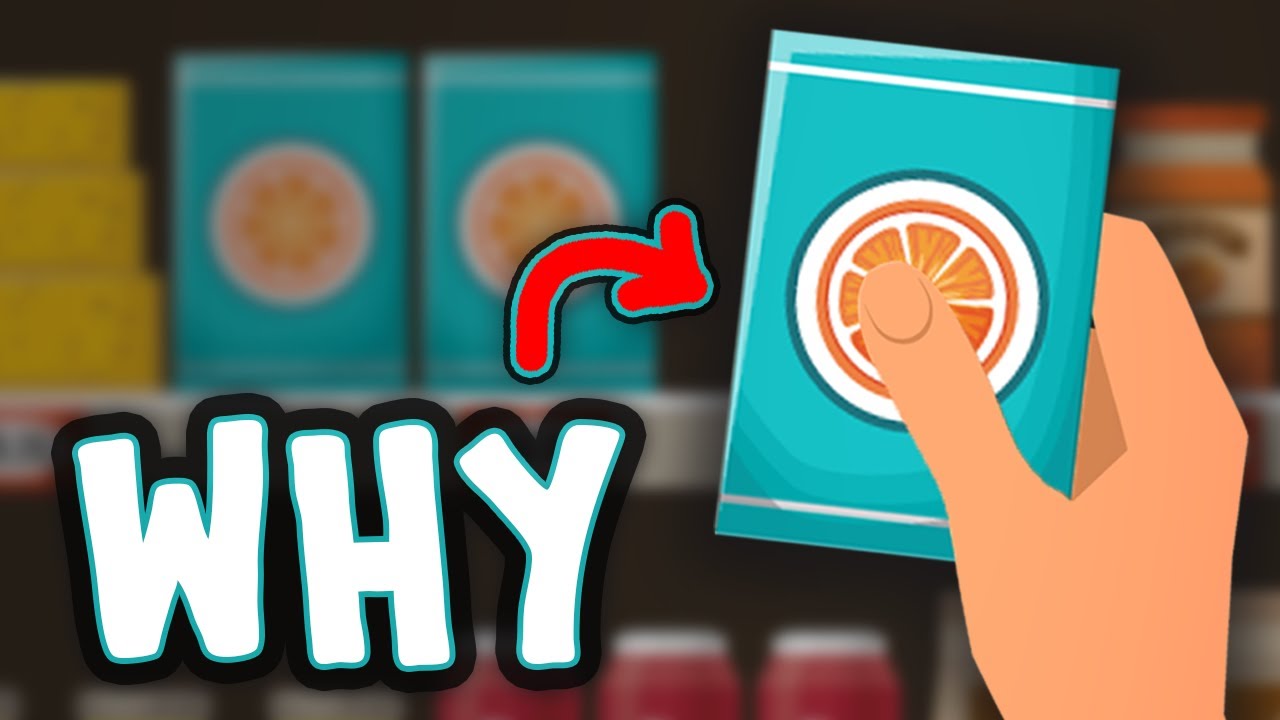
You have three options for yogurt blueberry, strawberry, and strawberry cheesecake. Now, assuming that you like all these equally and assuming that they're all the same price which one are you more likely to choose and why? In this video, I'll explain four factors that subtly guide you toward a particular choice. The first factor is what I call simulation fluency. And this can influence whether or not you buy yogurt in the first place. All else equal, you're more likely to buy yogurt from an open fridge where all of the products are facing you rather than a closed fridge where everything Is behind a closed door. And the reason why that happens is because we're constantly simulating interactions within our environment. So suppose that you're looking at a mug... say from an advertisement. Most people will prefer the image of that mug where the handle faces the right-hand side. When that handle is on the right hand side, you can more easily simulate the interaction. Left-handed people prefer the opposite pattern. They prefer handles on the left because that orientation provides the strongest amount of simulated interaction. We intuitively prefer open fridges because we can more easily simulate ourselves reaching in and interacting with those items and we misattribute that ease with a desire to want to buy those products. In a more direct study, people showed weaker preferences for snacks behind a plexiglass barrier because they weren't able to simulate the interaction as vividly. Now, certain factors like your current bodily state can influence the strength of those simulations and thus your desire for those products. When people drank something sugary, They perceived hills to be flatter because with their heightened energy, they can more easily simulate themselves climbing those hills. There was another study where researchers asked people to estimate the heights of walls and they found that parkour experts consistently estimated walls to be shorter because those people could more easily simulate themselves climbing those walls. Based on those reasons I suspect that you're more likely to buy yogurt from a closed fridge if you are holding a shopping basket. And I'm making that argument because if you're holding a shopping basket that physiology activates the same physiological state as pulling something open. So when that arm muscle is activated from the shopping basket you can more easily simulate yourself pulling open a door. So when you're walking down the freezer aisle and you're looking at that door because you can simulate yourself opening that door more easily You're going to, by nature, misattribute that ease with a desire for whatever is behind that door. And I would also make the argument that you're more likely to buy strawberry yogurt if you're wearing high heels. And that sound weird, but stick with me. There's a much deeper explanation, but essentially... We learn all of the concepts in this world by building them on top of sensory experiences So for example, your concept of physical balance you used that as a basis to learn metaphorical types of balance. So research shows that people standing on one foot think that the relationships in their life are going to end sooner. And that happens because they misattribute their physical instability to more of a metaphorical instability. So because they feel physically unstable it seems like everything around them also has more instability. If people feel physically unstable, they're going to seek metaphorical solutions to that problem. So research shows that when people feel physically off-balance they're more likely to choose compromise options so the quote unquote balanced options, so to speak. Now with yogurt, we perceive strawberry cheesecake to be kind of the extreme option where it might be high on taste, but it's also lower on healthiness. So if we feel physically off balance say from wearing high heels or any type of footwear where we kind of feel wobbly Because of that instability, we're going to be more likely to buy strawberry or blueberry because those options provide the metaphorical balance that we're seeking. and I argued for strawberry in particular because that flavor shares the same fruit as strawberry cheesecake. So it also acts like a semantic compromise between the polar sides of blueberry and strawberry cheesecake. And I don't have time to go into all of the other examples and explanations but this underlying mechanism has such a profound influence over every choice and decision that we make. And I'm writing a new book on this topic, so keep on the lookout in the future. But that was simulation fluency. The next principle is choice closure. Even though you're more likely to buy yogurt from an open fridge I'd argue that the yogurt will taste better if you buy it from a closed fridge for psychological reasons. Research shows that after you choose an option you're going to enjoy that option more if you perform a metaphorical act of closure. So if you take a chocolate from an assortment that chocolate will taste better if you cover the lid on the other chocolates. If you're at a restaurant and you choose a meal you will find that the meal tastes better if you're able to close the restaurant menu. And, in our case with yogurt, that yogurt will taste better if we can close a fridge door. But why does all of that happen? Well it's happening because of the same simulation process that we just looked at. Open fridges are influential before the choice because of that heightened simulation. After the choice, however, that simulation process becomes detrimental because we can still simulate ourselves interacting with the other options that we didn't choose which triggers a sensation called post-purchase dissonance or sometimes post decision dissonance With closed fridges, because they barricade the other options that we didn't choose

Segment 2 (05:00 - 10:00)

it reduces our ability to simulate the interaction with those leftover options which reduces that feeling of dissonance and we end up feeling better about the option that we did choose. I don't want to go too off-track but just like with metaphorical balance We also used a physical sensory concept of containment to derive a metaphorical containment So for example, if there's an emotional event that no longer affects you or impacts you we often say that you reached closure as if you have physically closed something. When people write about some type of event that they regretted in the past they feel less emotion about that event if they seal it inside an envelope. So similar to physical acts of balance physical acts of closure act like a metaphorical enclosure that encapsulates the emotional components so that they no longer affect us. So that's choice closure The next principle is what I call first option advantage. Whatever option that you happen to look at first becomes the option that you're more likely to choose. Once you fixate your gaze on that first option you evaluate that option by asking yourself How do I feel about this option? Now, if you're like me and you enjoy yogurt you're going to be feeling positive emotions merely from this decision because you're going to be receiving something that you enjoy. So you're more likely to answer that question by saying Hmmm. How do I feel about this option? Well, you know, I'm feeling positive emotions Therefore, those positive emotions must be stemming from this option. And by this point, you've attributed your positive emotional state to this first option And because you've already made that attribution you're less likely to make that attribution to the subsequent options that you evaluate. So this first option naturally has that advantage because it becomes the source of your positive mood. But here's a question. What option are you more likely to look at first? All else equal you're a middle option because of the central fixation bias. And here you also experience another mechanism called the central gaze cascade effect. In any choice context, you're more likely to choose the option that you look at the most. And this can also explain first option advantage. We often use that first option as a prototype to compare the other options that we look at. So because of that process, we're naturally considering that first option more often than the other options because we're using it as that prototype for comparison. So it naturally consumes a larger portion of our working memory. But kind of going back. Once you initially look at a middle option you still need to look at the other options so you move your eyes to the left view that option right view that option and then you kind of go back and forth a few times just evaluating the options. Well, each time that you move your eyes to the opposite side You naturally cross over those middle options and because they capture a larger percentage of your attention it triggers that gaze cascade effect where you look at it more often and the more often you look at it, the more you like it the more often that you look at it. All else equal, whenever you look at a set of options You're more likely to look at a middle option and you're more likely to eventually choose that middle option. Finally, another principle is mental categorization. Even though we have three distinct flavors we can categorize this assortment in different ways and each categorization can influence the option that we end up choosing. First, some backstory. Whenever we allocate resources across options we're biased toward an equal distribution. An investment firm might have two retirement accounts: a risky exotic fund or a safer index fund... the option that people should be allocating more of their money toward. Now even though people still might allocate more money toward the safer fund just the mere presence of this risky account then anchors people to allocate more money toward that risky account. Now suppose that the firm separated the safe index fund into two accounts domestic funds and international funds. Now, before there was a 50/50 split but by merely changing the category labels the safer funds now comprise two-thirds of the total options and because of our tendency for equal distribution that category now extracts a larger percentage of our money and what we should be allocating our money toward. And we follow that same tendency with yogurt. Suppose that you're buying twelve yogurts to last you the week. The way that you mentally categorize those yogurts will influence which options that you choose. So suppose that you categorize on flavor. We have three different kinds of flavors so you might buy four of each kind equally. Pretty simple. You could also categorize the yogurt by type of fruit You might combine the strawberry and strawberry cheesecake into a singular category of strawberry. And thanks to our tendency for equal distribution You might buy six blueberry and six strawberry: three regular strawberry and three of the strawberry cheesecake. Or you might categorize on healthiness. You might combine strawberry and blueberry into a singular category of healthy. And you might combine the strawberry cheesecake into a category of unhealthy. And with that type of categorization You might buy six healthy: three strawberry and three blueberry. And you might buy six unhealthy So the way that you merely categorize and conceptualize each option can influence which choices that you make. Now, this video explained four factors that non-consciously influence your choices. In reality, there are an infinite number of things that potentially influence your choices.

Segment 3 (10:00 - 10:00)

If you want to learn more factors you can get a copy of my book Methods of Persuasion or you can subscribe to this channel for more videos. So the way that you merely categor--an categorizize... categorizize? So the way that you merely categori--cat So the way... No, okay. So the way that you merely categorizize. Take umpteen? So the way that you merely categorize... why can't I say this word? Okay

Другие видео автора — Nick Kolenda

Ctrl+V

Экстракт Знаний в Telegram

Экстракты и дистилляты из лучших YouTube-каналов — сразу после публикации.

Подписаться

Дайджест Экстрактов

Лучшие методички за неделю — каждый понедельник