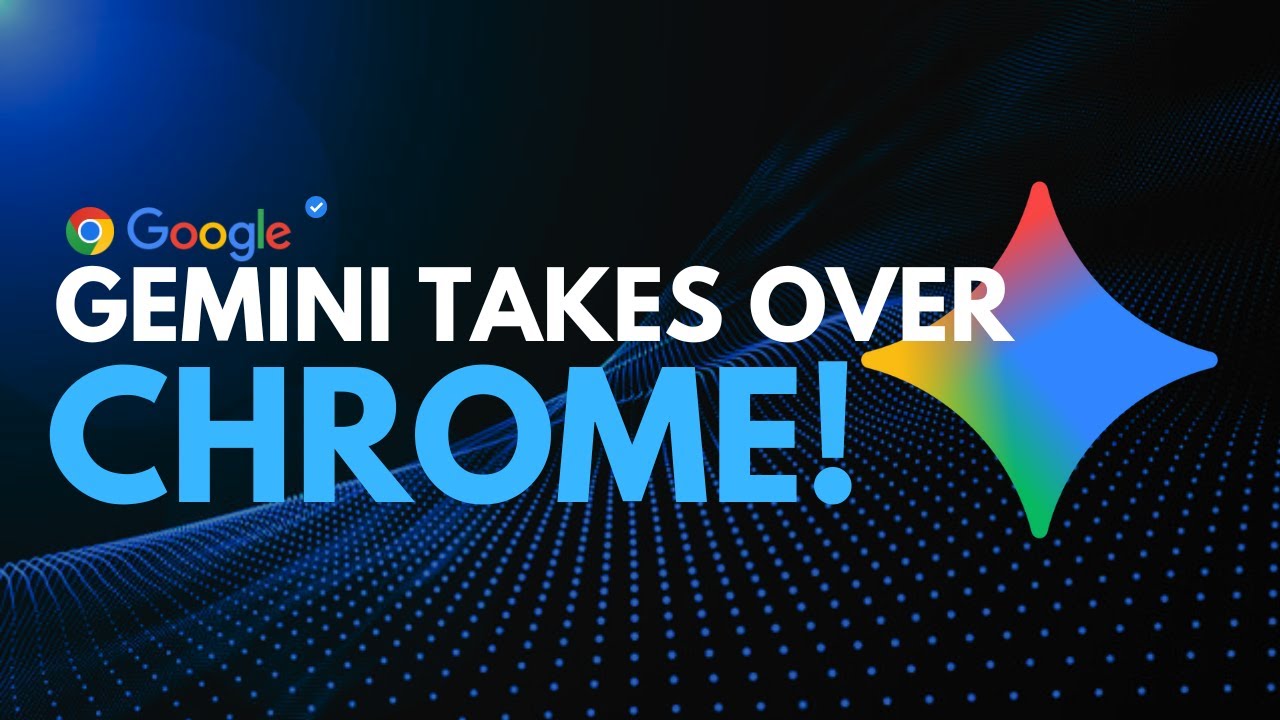
🚨 Google just changed Chrome forever. By embedding Gemini AI directly into the browser, Chrome is no longer just a window to the web — it’s becoming your personal assistant. From summarizing multiple tabs, filling out forms, and planning trips, to reshaping the entire extension ecosystem, Gemini could transform how billions of people use the internet.
This isn’t just an upgrade — it’s a new era for browsing.
📌 What do you think? Is Gemini in Chrome the future of the internet, or is Google overstepping with too much AI power? Drop your thoughts below 👇
[🔗 My Links]:
📩 Sponsor a Video or Feature Your Product: intheworldzofai@gmail.com
🧠 Follow me on Twitter: /intheworldzofai
📅 Book a 1-on-1 Consulting Call: https://calendly.com/worldzofai/ai-co
📖 Hire Me for AI Projects: https://www.worldzofai.com/
Google Gemini, Chrome AI, Gemini in Chrome, Google Chrome update, AI browser, AI assistant Chrome, Google Gemini features, Google AI 2025, Chrome Gemini explained, AI browsing future, Gemini 2.5, Google AI news, AI productivity tools, Chrome extensions AI, Gemini privacy concerns, browser wars AI, Microsoft Copilot vs Gemini, AI internet future, Google DeepMind Gemini, AI news update
#GoogleGemini #ChromeAI #AIbrowser #GeminiInChrome #GoogleAI #futureofAI #browsingrevolution #AIassistant #AIproductivity #technews
Оглавление (2 сегментов)
Segment 1 (00:00 - 05:00)
Today, we're diving into one of the biggest updates Google has rolled out in years, and honestly, it's going to change the way we all use the internet. I'm talking about Google embedding Gemini directly into Chrome. This isn't just an upgrade. This is the browser itself turning into a smart AI assistant sitting with you every time you open a tab. Let's break down what this means, how it works, and why this could be the future of the internet as we know it. So, here's the news. Google just announced that Gemini AI is now fully integrated into Chrome. You'll start seeing an AI mode built into the address bar. Gemini can now read your open tabs, summarize pages, and suggest next steps. And soon, it won't just suggest, it will take action. Think of searching for flights and hotels. Instead of juggling between 15 tabs, Gemini can compare them all, recommend the cheapest option, and even help you fill out your booking forms. This is basically what Microsoft tried with Copilot and Edge. But Google has one advantage. Chrome has more than 3 billion users worldwide. If Gemini really works as advertised, this could be the fastest roll out of AI into daily life as we see it. Let's talk about the experience. Imagine typing a question into your Chrome search bar instead of just links. You'll get Gemini powered answers. Open multiple news articles. Gemini can summarize across tabs and give you the key takeaways in plain English. Working on an email in Gmail? Chrome can surface Gemini to suggest replies, rewrite drafts, or even handle scheduling. And here's the kicker, context awareness. Gemini isn't just reacting to a single page. It's understanding your workflow across Chrome. Shopping, research, travel, planning, email, it's all connected. This is bigger than just convenience. Browsing ship from passive to active. Instead of you hunting for information, Chrome brings the results to you. Productivity boost. students, professionals, researchers, anyone who lives in Chrome is suddenly much faster. Also, the lockin effect, Google is quietly making sure you don't leave its ecosystem. If Gemini is baked into Chrome, Gmail, Docs, and Search, why would you switch? And don't forget, Google already has the world's biggest advertising business. Imagine the possibilities when Gemini can guide what you click, buy, and watch. This isn't just AI in a chat box. This is AI in the browser itself. And that's a whole new game. The natural next question is, what about safety? Why should users trust Gemini, especially when it's embedded into the browser? Let's see what Google has to say. Why is online safety so important? — The threats have evolved. Bad actors are now using generative AI to create incredibly convincing scams and fishing attempts. We've started using AI and enhanced protection mode, our most secure option, which is now twice as safe as the standard mode. For example, with scams on the rise, we've been using the Gemini Nano model to identify tech support scams. These are usually fake websites that try to trick you into calling scammers or downloading harmful software. Soon, we'll expand this feature to improve protection against additional scams, like sites threatening you with fake viruses or fake giveaways that impersonate well-known brands. We're also using AI in many other ways. We recently added warnings to site notifications. Now, with the help of AI, Chrome can tell you when it thinks notification may be spammy or trying to scam you and give you the option to view the notification or just unsubscribe right away. Since we rolled this out, Chrome on Android has definitely reduced distractions for its users who now receive three billion fewer website notifications a day. Alongside spam notification warnings and hacker protection, Chrome is also helping users with compromised password management. Chrome uses AI to help users manage compromised passwords by offering a one-click solution to change hack passwords directly within the browser. This eliminates the need to navigate to the website and follow multiple steps which is quite tedious. As well, Chrome learns users preferences and considers site quality to predict whether a user is likely to grant specific permissions to it. If it's unlikely, it presents that request in a quieter, less intrusive way, reducing interruptions while also maintaining user control. Of course, this isn't all sunshine. There are some big concerns here. Number one, privacy. For Gemini to work, it needs access to your tabs, your browsing history, maybe even your emails. That's
Segment 2 (05:00 - 08:00)
a lot of personal data. Number two, accuracy. We know AI can hallucinate. Do you really want your browser confidently suggesting wrong information while you shop for a flight or research for work? And number three, over automation. Some critics argue this could make us too dependent on AI for basic online tasks like reading or decisionmaking. And then there's the competition. Microsoft has co-pilot and Edge. Apple is rumored to be working on a AI powered Safari. The browser wars are heating up again, but this time the weapon isn't speed or extensions, it's intelligence. What we're really seeing is a start of a new era. The browser is no longer just a window to the web. It's becoming a personal assistant. This could change e-commerce, research, education, entertainment, everything we do pretty much online. And here's something wild. If Gemini is running in Chrome, it could become the largest deployed AI model in history overnight. Billions of people instantly connected to Gemini just by updating their browser. This is what makes Google's move so strategic. They don't need you to download a new app or log onto a new website. They just need you to keep using Chrome, which most of us already do anyways. One angle that isn't getting much attention yet is what Gemini and Chrome means for developers and the extension ecosystem. For years, Chrome extensions have been the way to add new features. Ad blockers, grammar checkers, shopping assistants, note takers. But now with Gemini built-in, a lot of those functions could be replaced by AI. Take something like Honey or Rakutin that finds discounts when you shop. Gemini could do that natively by scanning your tabs and pulling deals in real time. Or think of Grammarly. Gemini already has advanced writing tools. This raises a big question. Will Google let developers tap into Gemini's brain through APIs, or will they risk cutting them off entirely? If it's the latter, we could see huge disruption in the Chrome web store. And for web developers, Gemini could change how sites are designed. Instead of optimizing for human browsing, companies may start optimizing for how Gemini summarizes and recommends content. In other words, your real audience might not be a human anymore. It's the AI inside the browser. That ship could be just as big as the rise of SEO back in 2000s. Except now, instead of optimizing for Google search, you're optimizing for Google's Gemini. So, should you be excited or worried about Gemini in Chrome? Honestly, a bit of both. On one hand, this could save us hours every week and make the web easier to use than ever before. On the other, it raises questions about privacy, trust, and just how much power we're giving to Google. Either way, one thing is clear. Browsing will never be the same. What do you think, is this the future of the internet, or is Google going too far? Drop your thoughts in the comments. And if you enjoyed this breakdown, hit that like button, subscribe, and I'll see you in the next one.