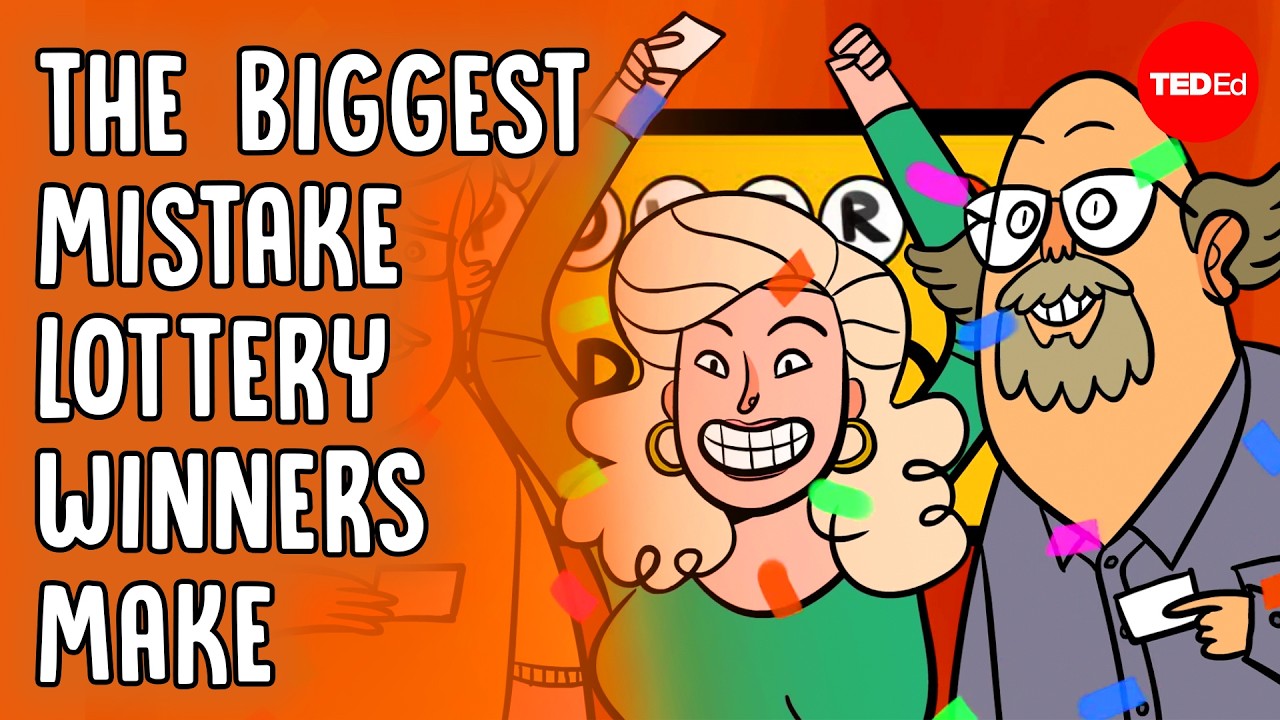
The biggest mistake lottery winners make

The biggest mistake lottery winners make

Machine-readable: Markdown · JSON API · Site index
Поделиться Telegram VK Бот
Транскрипт Скачать .md
Анализ с AI

Оглавление (2 сегментов)

Segment 1 (00:00 - 05:00)

In January 2016, the US Powerball made history by awarding the first jackpot to exceed $1 billion. The three winning ticket holders were incredibly lucky, with odds of roughly 1 in 300 million. By some estimates, you’re statistically more likely to be killed by a nearby meteor strike. After winning such a huge jackpot, you might assume your life would immediately become simpler. But there are plenty of new challenges to navigate. First, most experts advise hiring a lawyer to protect you from fraud, harassment, and other legal risks. It’s also critical to safeguard yourself against impulsive spending. a trap many lottery winners fall into. Take one Pennsylvania lotto winner, who, after winning $16. 2 million, made so many extravagant purchases that he ended up in $500,000 of debt within three months. And you’ll need to make one more decision— one that could dramatically shape the course of your financial future. Lottery winnings are typically paid out in one of two ways: you can choose the full jackpot amount, paid out in annual installments over 30 years. This is known as the annuity option. Or you can take a much smaller lump sum paid out immediately. To better understand the financial implications of this choice, let’s walk through both scenarios, assuming you’re the sole winner of a $3 million jackpot. The annuity would pay roughly $50,000 the first year. You'd then receive increasing annual payments for the next 30 years, reaching a grand total of 3 million. In the short term, it might make sense to pay off any high-interest debts, like credit cards, auto loans, student loans, or mortgages. In 2024, the average American owed around $100,000 across these categories— so the first few annuity payments could clear much of it. Alternatively, initial payments could go towards building an emergency fund, which is typically a savings account that could cover 3 to 6 months of expenses. This would put you ahead of most Americans: a 2024 survey found that only 46% of adults had enough saved funds to pay three months of bills. Receiving your winnings in a slow drip might not be as thrilling as an immediate tidal wave of cash. However, when used wisely, the annuity can provide financial stability from the start, while ensuring a steady income stream for the future. But maybe your goal is strictly to maximize your winnings. In that case, the upfront lump sum might actually be the better choice, even though you’ll forfeit about half the advertised jackpot and it’s often subject to a higher tax rate. A $3 million jackpot might leave you with just $850,000 after all these deductions. Still, with some patience, you could end up with more money if you utilize the power of compound interest. Compound interest builds like a snowball. You earn interest on your original investment and then start earning interest on that interest. Benjamin Franklin famously illustrated this by leaving just £1,000 in two accounts in 1790, with instructions to let it compound. After 200 years, these funds grew to $6. 5 million. So if you took the $850,000 lump sum and invested it in the US stock market, it could grow exponentially over time. Take the S&P 500, an index fund that includes 500 leading companies and is typically considered a stable long-term investment. Historically, it's returned an average of 10. 5% per year. If you'd won 30 years ago and invested the lump sum in the S&P 500, it'd be worth over $19 million today.

Segment 2 (05:00 - 06:00)

Ultimately, choosing between the lump sum and the annuity comes down to knowing your own goals and priorities. Are you content to wait decades as your fortune builds? Does a lifetime of steady paychecks feel more reassuring than one big payout? What kind of life do you want to live? Understanding your values also makes it easier to spend with intention and avoid impulsive buys. And this mindset isn't just for lottery winners. Consider this: say you spend $3 per day, or around $1,000 per year, on lottery tickets. If at 18, you had instead chosen to invest that money consistently, you could likely retire with over $1 million. In other words, while lottery winners are rare, building up your own million-dollar jackpot doesn’t have to be.

Другие видео автора — TED-Ed

Ctrl+V

Экстракт Знаний в Telegram

Экстракты и дистилляты из лучших YouTube-каналов — сразу после публикации.

Подписаться

Дайджест Экстрактов

Лучшие методички за неделю — каждый понедельник