Class 10: Capital Chapters 10-13: Relative Surplus-Value, Division of Labor, Machinery, part 2

Class 10: Capital Chapters 10-13: Relative Surplus-Value, Division of Labor, Machinery, part 2

Machine-readable: Markdown · JSON API · Site index

Поделиться Telegram VK Бот
Транскрипт Скачать .md
Анализ с AI

Оглавление (10 сегментов)

Segment 1 (00:00 - 05:00)

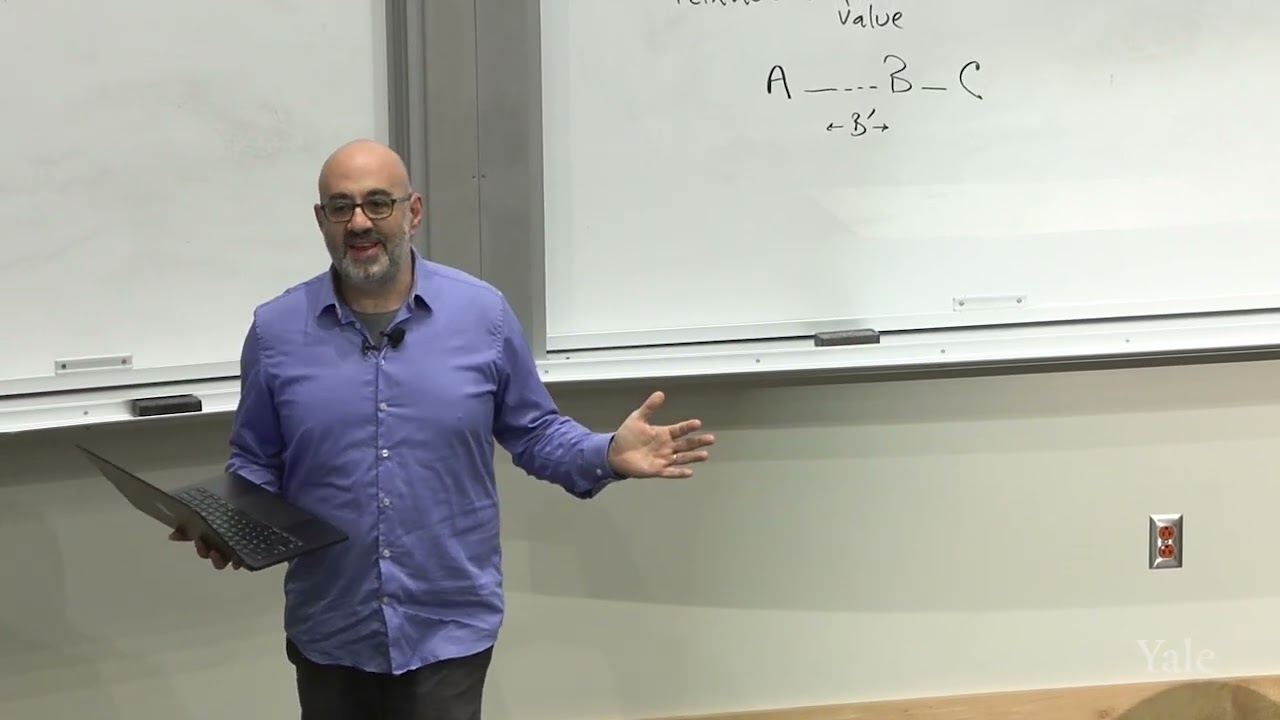
(bright music) - I want to take a moment to reflect on where we are and say some more general things about the stories that Marx is telling in this book for your understanding. He seems to be telling up to this point 3 different tales. One is a tale about the kinds of things that you find under capital. Call that an ontological tale. He talks about the kind of human relations, human groupings call that a social or society, a tale about society. And then the big one which we're getting into, he tells a tale about how these things are interconnected in a dynamic process only under capital. The word for that is system. And in today's material and today's discussion, we'll talk about how system was born. It isn't the case that all societies are systems, though they may have systemic or systematic elements. For Marx, the need for society to be a system is born when labor and making these strange things becomes a process where one step has to follow the other step in a particular order. So three stories, things, society and system. We started with things, you're like, whoa, these are weird things. But then you start to understand that really those things are weird because of the way labor works and why labor works the way it works. The systemic needs that make labor work the way it works are these two, the system needs these two forms of value, absolute surplus value and relative surplus value. And this makes up the center of the book. Does that make sense? You will have noticed that Marx is naming things all over the place. There are things here like absolute surplus value, which you might have previously been named when I wake up and when I get home, or a somewhat indeterminate thing called a day. A day might not even have been an important unit or an important metaphysical item in someone's existence. It might have been something altogether different like an hour in the Middle Ages could last anywhere from 60 minutes to an entire day. The day was not necessarily a unit that was measured or used to produce value. The day becomes absolute surplus value. This is renamed. So if you wanna look for older cultural forms that are being reborn under capital repurposed for the needs of the system because life can only be sustained systemically under capital since everything is interconnected because of the way the things that we need to survive are made. So these things get renamed. This is just to give you another view into what Marx is doing. He's giving names to the way capital uses old things for new purposes in process and system. Process and system are new milos here. I wanna also say what something about Marx's method, it's sometimes confusing to know what he's doing. This is clear for a number of reasons. One of the reasons is that there is some interference between a historical account and an analytic account. Marx is always aiming for in this book, in all volumes, an analytic account. What is an analytic account? What are the parts of this system? How do they fit together? And also in order to see how they're different from other parts, other things, how they developed. But the development that we're looking at is analytical and not always historical. It doesn't matter if these things came one after the other in a historical sequence like absolute and relative surplus value. It is true that absolute surplus value as a desire of the system and as an object to be controlled probably came historically first. Capitalists were like, let's get as much out of a day as we possibly can. And really you could only do relative surplus value, which we remember tinkers with the difference between B prime and B. You could only do that after a certain amount of development of the system historically. So sometimes the analytic development overlaps

Segment 2 (05:00 - 10:00)

and coincides pretty well with historical developments. But you're always looking for the analytic development. That means what are the parts logically of the system and what is a simple version compared to the complex version that we notice now. The complex version might have been born historically right from the beginning, but in order to understand how it works, we need to know what a simple version of it looks like. Like simple exchange is probably an abstraction that never existed in history. Simple exchange. I give you this, you give me that. Much more going on probably in every possible instance even of the exchange between individuals. But he needs to break that out and show it to you because it becomes part of a much different process under capital. Does that make sense? So let's just keep the analytic story going. We know the three tales he's telling are about things society and system. We started out talking about the strange things that he's also giving names to commodities, value, which he calls a gelatinous blob or ghostly objecthood. Remember those things, way in the past now. Value has forms. It goes dynamically through different forms. Money is the highest development of the value form. It cannot develop anymore. Analytically developed, right. We know that money came way before the other forms of value. There was money in history, but it got picked up and used in this way, repurposed in this way as part of the capital system. The other strange things, kinds of things are surplus value and capital and machinery, which you might think of as merely a material or technological change. But in fact it's a technique of producing more relative surplus value. Machinery comes into being because the system requires you to control and increase in this area and machinery is helpful for that. So technological history is subordinated to the history of capital for Marx. Those are the things he talks about and it takes you a while to get used to those weird things. They're all renamed. There's a kind of parallax you're like, well, did I know that thing as you know, work? No, it's surplus labor. So it takes you a while to accustom your inner compass to those things. In talking about sociality in the system, which is the second story he's telling, we're about to leap into a place where these things become even stranger. That's why I'm going back over the basics. So there's things and then there's certain kind of society. I wanna just point out that he assumes three things about anything human. One is that interdependence always precedes independence. Early in his writing he called this species being the species of human beings is to be interdependent. It's also to collaborate in that interdependence on making the things they need to survive to live. Human beings make their life not unlike other species. Unlike other species, they have to collaborate, otherwise they're just not human. And the third aspect of sociality in the system, that is our trans historical basic assumptions. Interdependence proceeds independence. Human beings collaborate on making their mode of existence. The way they make their mode of existence or subsistence changes. This is a Marxian innovation. Marx and Engels both. They make the mode of production. Human society produces its way of producing, okay? These are just taken for granted about any human society. Under capital, these things change, but those basics still hold because it's still a human configuration. But these interdependence is perverted into class relations. For example, the relations between capitalists and workers, let's say. Interdependence for the purpose of making your own subsistence is perverted into everyone serving value production. Sociology is perverted into not just class relations, which could be confused with previous social formations in which there is, let's say a dominant group and a dominated group. There's still But under capital, the dominating group is tiny and has to be tiny.

Segment 3 (10:00 - 15:00)

And the dominated group is enormous and has to be enormous. It's a peculiarity of capital. A small class holds and they don't dominate through domination, they dominate through control and through technical necessities of the system. Does that make sense? So sociology has changed completely. The things have changed, sociology has changed. Those are two of the tales Marx is telling. And the third tale he's telling is about system which is new in history. Capital has to be a system. It is not free. No one in it is free. It's an interlinked coordinated set of processes in which everyone formerly considered as a human being is a function. It doesn't mean you can't have any life outside of the capital system, but anything you do inside the capital system is functional, not personal. And the needs of the system dictate your life. This is Marxist point. I'm trying to be very schematic so we know where we are. The main needs of the system in volume one to do with production are absolute surplus value and relative surplus value. It has to produce both kinds of surplus value because capital has to be returned and increased and these are the only ways to do it. These you could say are the tools of the system or the servos of the machine that adjust the output. The output is supposed to be the return of capital, the increase of capital. Those are the two levers that change that. Absolute surplus value transforms class relations into a struggle and it teaches the capital system how to overcome its limits. This is what Marx teaches us in part three, which is about absolute surplus value. Relative surplus value transforms the class relation into a relation of control and possibly resistance, although resistance is difficult because your subsistence depends on it and makes the capitalist not into a class but into an individual business owner who supervises and organizes labor. Because you're dealing with a small adjustment, the capitalist is in very abstract philosophical terms always exerting their effort to adjust B prime downwards towards A. That's an overview, somewhat lofty conceptual overview. We are now talking about the techniques of producing relative surplus value. That's part four. Chapter 10 is really a fascinating chapter. The concept of relative surplus value. It's relative because of course surplus value here is relative to the amount of time it takes to reproduce labor or to reproduce labor power or to produce the value of labor or to give the workers enough to eat and the basics that they need to survive. The more you can compress that, the more surplus value you make. The only way to make surplus value, I'm just repeating this from last time. Relative surplus value is to diminish the cost of labor power. The pressures on wages to go down, but also the pressure on the production process of means of subsistence to go down in its cost is enormous and causes all sorts of ripple effects in the system. We're in one particular interstice of the working day. The relationship between necessary and surplus labor. Since the length of the working day is set, I'm repeating here but I wanna make sure that you get it. It's fairly clear and precise, but sometimes hard to get from his book. Once the length of the working day is set, the only way to get more surplus value is to reduce the value of labor power. That is the quantity of time needed to produce the means of subsistence. The only way to reduce the quantity of time to produce the means of subsistence is to increase productivity in that area, which leads to a race to develop technologies that do that.

Segment 4 (15:00 - 20:00)

That leads to a constant revolution in the conditions of production or in the mode of production. Technological history is actually serving the production of relative surplus value. This is why we have very, very slow development of technology up to industrial capital. Up to capitalism. Industrial capital is what capital needed to push down the cost of labor power. That make sense? And you can see that this is a different form of class difference because in absolute surplus value, it's the overall output of surplus value that's affected. If I can extend the day by an hour or reduce lunchtime by half an hour, I get more total surplus value. In relative surplus value is relatively more pernicious because it's taking away from the working class directly to give to the capitalist class. It adjusts the shares of the produced value that go to the worker and to the capitalist. This is where it has to happen and it happens in a fairly intersystemic way. So it makes it very hard to strike against. That makes sense. Richard. - Doesn't this constant technological revolution increase the costing capital war, and what the threat because there were capital ties? - Yep, there are costs and one cost for the system is, the question is does the need for constant technological revolutions increase the investment in constant capital and decrease the investment in variable capital? And that's true and leads to thoughts about over the long term, the more you have invested in machinery, the less value you're actually making 'cause machinery only transfers its value directly can't make any more. And the ghost haunting the system is what Marx's called the law of the tendency of the rate of profit to fall. The more you have invested in constant capital, the less more you're gonna make. That is something that comes way down the line. But the ratio of constant to variable capital isn't always an issue for capitalists. And this leads to really creative innovations because you wanna keep down the constant capital and keep up the labor while you need the constant capital, the machines to reduce the cost of labor power. You can see there's a lot of very clever thinking. This might be why we have universities for example, to teach the capitalists enough mathematics and other things to be able to walk that very fine line. But they can't get blood from a stone, they can't get extra surplus value from nowhere. They have to face these trade-offs and there are a lot of trade-offs. And the next three or four chapters will tell you all about the trade-offs. Why some people go in for, you know, a big labor force, a cooperative labor force. But when machines come in, when they come in your neighbor's business, you can't resist the pressure to have machines in your business either. So again, it's a kind of from the capitalist perspective, a race to still produce surplus value while keeping up with the Joneses. And for the worker it's a race to still keep their salary at some level that is livable while the quality of their work and the amount of their work is changing radically. But I did wanna point out here in the overview that from Marx's perspective, the history of technological change, the history of our modernity is not a story of enlightened geniuses who make discoveries like the cotton gin or E equals MC squared. In fact, these are revolutions in the mode of production that are necessary in order to drive down the cost of labor power. Don't ask me here to tell you why the theory of relativity is a technique in the capitalist system, but I could over a long lunch. There are two ways to reduce the cost of labor power. One is to reduce the cost of the means of subsistence. So there's a lot of pressure on agriculture to cheapen its output. Whether that means finding more fertile land, colonizing

Segment 5 (20:00 - 25:00)

places where you can grow things better and cheaper. The other way is to reduce the means of production needed to make them. That is to mechanize agriculture for example. But again, mechanizing agriculture means you're making less value in that particular moment. You can see also here that unlike the mercantile lists, it's not agriculture that's the prime mover of an economy, it's industrial production. Agriculture is completely subservient to industrial production. That is you can, agriculture has to constantly drive down its costs. Okay, what else do we wanna say here? I wanna get us to one more general comment before we dive into the cooperation chapter. There's a lot of temporary gains and long-term stabilizations or losses for capitalists where you're driven to technologize because you need to drive down the cost of the means of subsistence. And when you technologize you can suddenly have a leap in output and be making much more product and selling much more product maybe than other people get it out in the market more quickly. But the dream that the value will go up because of technology is dashed because very soon the market equalizes the gains from technology and the prices of the products then go down. Nonetheless, you can't avoid this drive to technologize, you can't stop looking for technological advantage because you're constantly looking for an edge on the production of surplus value. And you're always assuming, you're anticipating that others are finding them or about to find them. This is the paranoid position of the capitalist absolutely paranoid. If I don't do it, they'll do it. So you have to do it regardless of whether in the long run it actually brings you a rise in your surplus value production or not. So one rule I wanna put out there that Marx lays out in chapter 10 is that an individual capitalist, we talked about this a bit last time. Contemporarily exploit the difference between individual value and social value with what Marx calls enhanced labor. You get this advantage, you have a new technique, whether it uses a physical machine or it's just a different technique of making something for a while, you get a little more surplus value out of it. But that technique then spreads because everyone has to have it or else they go outta business, ultimately. It becomes the new norm you lose your advantage and you're not making any more surplus value. The rule is something like the new socially necessary average labor time only increases value in the long run where it drives down the value of labor power. It doesn't do it in general. Marx gives this rule as the value of, part of this rule, as the value of commodities is inversely proportional to labor's productive power that is just raising production is not enough because the value of each product goes down. There's another rule that comes out of this that I wanna point out to you that is this. That there's a direct, so there's a direct proportion of relative surplus value to the cost of means of subsistence. Well I guess you could call it direct or indirect. Let's call it, sorry. Relative surplus value is directly proportional to labor power's productivity. And so far as labor power's productivity is focused on the means of subsistence. So the more productive you are in producing your own means of subsistence, the higher the relative surplus value for the owner. This is what I call the satanic ratio. The better you work, the less you make. This is the inner rule of relative surplus value production. You work harder, you become the appendage of a machine, you have your skills taken away. The more efficient your output for reducing the cost

Segment 6 (25:00 - 30:00)

of means of subsistence, the less you make and the more the capitalist makes. What's the incentive to become more productive then? The incentive is control. The capitalist pushes and becomes a controller. Okay, before we go on, let's see if there's questions about that. Yeah? - To go back to this, the years that you said there are two ways to reduce the cost of power one ban existence. And I read it, think you said something about, or mechanizing agricultural production. Are those the same thing? - Or mechanizing, what did I say? In writing my notes, I thought this was a coherent thought. Yes, so you can reduce the means of subsistence in a non-technological way. That would mean to find more fertile land, to have the good luck of good weather to colonize a place with good weather. I don't mean to say that glibly, but in a sense in capitalism it's all pretty glib regardless of other costs. And the other way to reduce the means of production is to, sorry, to reduce the cost of the means of subsistence is to increase the productivity of their production through technical means. That could be on the agricultural side with mechanized agriculture, but it could also be, you know, on the processing side, mechanizing making shirts. One thing would be to find a huge fund of cotton growing somewhere. And another thing would be to make the spinning of cotton happen in half the time. Yeah? - And we correct it. And a one coordinated of a system lies therein that the capitalist is justified to be paranoid to exploit the labor 'cause if he doesn't, that means businesses might go under and everyone might lose their job. And I was wondering within this kind of, sorry, mercy was kind of logic where exploitation is necessary. If still anything like an ethical way of judging, like in that they try to reduce the quotation to death with them - Yes. - In order to still make the survive. Or is that just outta depression for Marx to kind of differentiate, you know? - Whereas there not, the question was is there an ethical, can there be an ethical capitalist? And Marx says absolutely not. But that's not because capitalists are unethical. That's because they're unethical. Ethics does not touch them one bit. They're as compelled as workers are. So you laid this out Raphael in your question very well. My favorite line from these chapters is they can go home and be as good as they want to, but they have to go back and be the instigators of the satanic ratio and extort and exploit. So certain philosophical readers of the book confuse those words, exploitation, extortion, extraction with words of judgment. And they certainly, they have negative connotations, but for Marx they're just systemic. Exploitation means using something up. And the drive for the capitalist is to use up all the workers' powers that they can without compensating. Yeah? - Yeah, I'm sure this is gonna come up later, but I think one of the things that I kind of thought was interesting in the last bit of chapter 10 was that he's countering the capitalist propaganda about how increased like a betterment in psychology actually called boot washers. Because an advancement is in technology doesn't necessarily use that your, the day, the working day is shortened in some case of it can actually be long because you can extract more relative surplus up value. But then as you kind of mentioned the thing about trade offs, so then my question is about is there an incentive for capital in, in a particular industry or something to not innovate new technology or to slow the rate of that. - Is there an incentive to not innovate in technology? According to Marx, there isn't. And just from an armchair non historian's view of the last 150 years since the book was written, there is no incentive to not innovate technologically. And you could understand the movement of technology into the consumer realm as the movement of work such

Segment 7 (30:00 - 35:00)

that you are now working in your off hours in so far as you're using technology. At a minimum because using technology is in a sense producing it and reproducing it in so far as you're testing it, you're being its market. Yeah. Richard. - I'm interested in this question of like consciousness and the question of producing technology and writing. If like science, because I think like a lot of scientists or artists who like produce the ways of think about and doing labor are all thinking with any capitalism. Like does the capitalist like intervene? I think Marx is super influenced by Aristotle like beliefs and like all this, like the Socratic like the dialogue is like above any like the serial like thing or whatever. Like it's all like, it's like every active like philosophical site of production, like subject. - Captured by capital's logic. I think for Marx. So Marx was, you know, he was pretty frustrated by the time he got here to the 1860s. He was frustrated with capitalists, illiberal governments and their apologists. He was frustrated with, not with workers, but with those people, charismatic people who claim to represent them like Bakunin and Lassalle people who really were not working in their best interests but claimed to be by making backdoor deals with Bismarck. He was certainly frustrated with intellectuals, all of them I would say without a single exception. And even frustrated with someone like Aristotle who had intuitions about labor. But because of the form of emotive production there that is slave labor couldn't really understand that value was actually being produced and what was dictating the need for slaves even in ancient Greece. So, you know, had there been someone who illuminated these relations, Marx also was frustrated with philosophy not because of its elitism. I mean there's nothing, what could be more elite than this book in terms of what it requires of you to do intellectually, but because it talked about things that wouldn't make a general benefit. What would make a general benefit under capital? The only thing that would make a general benefit is overcoming capital. That's the only thing, that's the only thing worth working for according to Marx at this time. Anything else is a mistake. So it doesn't, you know, it doesn't make philosophical discussion, let's say, or even political discussion doesn't make it captured by the capital system, but it does make it ineffective when faced with the only real challenge of the time according to Marx, which is to ameliorate Satan that is controlling our entire lifetimes. Yeah? - So viewing capitalists and workers alike from the deep point of the system. Is there just no such thing as moral accountability from Marx? Like for example never capitalists become more and more ruthless. All we can do is stand back and get more and more frustrated with capitalism. - Well, you can do all sorts of things, but the basic, you could say the whole thing is immoral if you wanna say it that way. And then, you know, it's a problem that Marxists have and non Marxists have also with Marxism is that, you know, you're basically complicit and there is no non-complicit position except to work towards its abolishment. I mean it's similar to, you know, enslavement of humans and incarceration of humans. It's just another version of captivity. And if you're not for its abolishment, you can be moral, but morality has very little value. (indistinct word) - You have mentioning that under capitalism is consistently an incentives

Segment 8 (35:00 - 40:00)

to like continue technology's enhancement. But like how would Marx view the companies like Apple where they do like increase technology or they like keep it back from the consumer and like intend to sell at a later date. So it's like, is that in the argument that like company will continue to bear technology but the time it literally decided to sell to consumer that would... - It's a great question. Consumer technology is something that Marx could never have imagined. You know, it make any sense and it makes very little sense now too, I have to say. Except if you think of it as a form of work and as bringing you into, I mean it is, let's say, let's talk about the technology we're talking about here. It isn't industrial, it is not the machine, it's the computer. And so one function that I'm not a theorist of technology, Astrid is not here today, but I'll give this, you know, very simple attempt that is to say one thing that consumer technology does when you're going through a technological revolution, like the computer revolution is train everybody in this new technology. It has to take hold somehow. There's a lot of other ways to think about consumer technology. Marx has focused on productive technology. And so no matter what Apple does with its iPhone versions, Foxconn in China that's making the phones is not holding back on technological innovations. It has to make more surplus value. Tomas. - Just a quick schematic question. So we said for that ratio that first of all L? - Labor power productivity. Yeah, sorry for the acronyms. - So when or pivot said that the time you produce the workers' needs of statistic, which is which occupy first half of the day goes down. - Yep. - But this is not exactly your value. This is just achieving the same value in this high. So how does the value of labor go down by a different process? - No, that's the value of the labor power goes down. - So even if they're achieving the same means of subsistence 'cause they achieve it in... - Well they're achieve, it's costing less. So they may have the same, like I may need to eat the same amount of tofu. But if the tofu is you know, 10% cheaper than the owner, the capitalist pays less for it and can convert that other part into surplus value. I no longer have to produce that bit for them. You could derive by the way the personality of capitalists from the need to work in this little space entrepreneurship initiative. All that kind of stuff is, you could say it's the form of consciousness that applies to the only job that capitalists really have, which is to do control an organization such that they can adjust that little gap by any means necessary. Okay, I wanted to get the satanic ratio in there. The next three chapters are about how to produce relative surplus value and how to produce more of it. Cooperation is one version. What is cooperation? It seems like an ethically good thing. Well it's inevitable in the system. It's a preparation for thinking about the machine. Again, you'll see an analytic development, cooperation, manufacturing machinery. This is a conceptual development, not necessarily a historical one. A machine. So here's what I would say, if you want to know where machines come from, they are the concretization in metal of human social relays on the factory floor. Machines develop from human relations just like computers develop from the organizational techniques of capitalists. So if you wanna say class warfare is being fought between machines and computers, you could. We start talking about cooperation, which is just a different way that labor gets done. It gets done instead of having to go to the shop where the tailor is doing their work and having go to the shop where the barrel maker is doing their work. I'm thinking I'm not a historian of labor practices. So whatever old things people did, carriage maker, horse shudder shoe, all of those things. Take a literature person and put them in the middle of Marx and this is what you get someone inventing history.

Segment 9 (40:00 - 45:00)

But you understand my point and Marx is talking about this too. There are old ways of doing things where you have to go to different places to get them done. One thing that cooperation does is it brings it all into the same space. Much more efficient, much higher surplus value. I don't have to go to a barrel maker, I don't need the barrels brought from across town. They're being made right there. They can be made at the exact same time. to measure and like fast fashion just when you need them so that the process of production, which is now a process can happen in its proper time. Sorry, hang on. So here we talk about in chapter 11, the production of relative surplus value using two parameters, the size of the workforce and the organization kind of supervision by a capitalist. Supervision is first needed here. When a tailor is making their own clothes and doing everything in their shop, no one supervises them. What this cooperation will lead to again is the separating out of classes a very small class of capitalists where the pressure is to go smaller and smaller to concentrate capital in fewer and fewer hands. We learn about that later in the book and where the workers group has pressure to become ever larger and ever more malleable and expendable. So larger doesn't mean that everyone's working, larger means that there are big swaths of the population that are waiting to work and need to be waiting to work because when that technological innovation happens and they need people to work this kind of lever, it's not gonna be the people who work this kind of lever. They charge too much. So you need what Marx, we'll call later surplus populations. In any case, you have the pressure to make a small group of capitalists large group of workers who are have a new name, an old name, a Roman name proletariat. You know what the proles were in Rome, just to remind you. They were the property list poor who could only produce offspring, proles for the army. This is a wonderful Roman idea. This is resurrected not by Marx. It had been talked about throughout the whole of industrial capitalization by other theorists as well. But he and Engles take that as the figure that is being built in the new mode of production. Industrial capitalism builds this new social form called the proletariat. Okay, let's say what this cooperation does, it is the most simple enlargement of the workforce. It reduces the cost of the means of subsistence by reducing production. How does it do this? It improves mechanical capabilities he says. Now the list is here in the chapter, but I want to go through them. So sometimes when you hear things spoken, although that doesn't work for my kids, soon as I say it, they don't understand. But anyway. Enlarging the workforce in this way improves mechanical capabilities. That's number one because there are certain jobs that can only be done by multiple laborers. This is obvious. He talks about it. The pyramids are a good example. Lifting a heavy block, working on something all at once in different phases, in different facets of it, different sides of it. On one hand it enlarges the spatial sphere in which work can be done. That is to say, if I have a cooperating group, part of it can be working where the water comes out of the ground and part of it can be working where the steel comes out of the forge so that the water comes to the forge at the right time. I don't have to contract with a separate laborer. Does that make sense? Or someone is dealing with the water source. mill wheel, someone is dealing with the grain. Someone is, you know, getting their fingers crushed in the mill wheel. Where this happens, spread out across space, it makes the space of work bigger. Where it happens all under one roof, it makes the space of work smaller and that can compress a lot of the costs. You only have to pay for one heater. rent of one land. This makes sense, right? This is all clear. So this will increase the surplus value. This is another way to move B prime down

Segment 10 (45:00 - 49:00)

bringing everyone under one roof. You don't have to pay for travel, transportation, delivery, et cetera. Everyone does things all in one place. They can do it all in one time. It compresses the time it takes to do things. You see the levers and the kind of thinking that a capitalist has to do organization optimization, efficiency combination, a kind of processual systematic thinking. You compress the time to do something because people can be doing multiple tasks at the same time. And also coordinate them such that they're finished with a particular task just when the other person needs the thing to be done. So a kind of temporal genius, the capitalist has to be. Samuel. - Is Marx speaking, are we keeping going? He was its idea of no judgment in no legal description or is Marx speaking of this striving towards efficiency? - Yeah, this is just a description. Another good effect Marx thinks is that it makes workers competitive with one another 'cause they're right next to one another. So it increases their animal spirits. So a great 18th century fantasy, but similar labors become more continuous because things can be worked on in different aspects at the same time, you get a much greater economy in the use of the means of production when you're sharing. We might both use the same hammer, just alternatingly in a way that you couldn't do otherwise. So the means of production is being used much more continuously with a cooperating group. And here's a really important systematic concept. Only happens under a labor system, under a social system where society is a system that is individual labor gets the character of societal or social labor. It becomes socially average because if you are just an individual weaver working in your own hut, long live the individual weaver. But you could take as much time as you want. You have no idea how fast other people are working. When you're all working together, you're like, I gotta go faster, I gotta go slower. We have to coordinate our work. Socially necessary labor time. Average labor time arises from cooperation systemically. It's not an invention, it's not even an analytic category put on labor by Marx. It is the system's necessity. If you work very, very slowly, your neighbor is gonna make double what you make and you'll be fired. If you work really, really fast, your things are gonna pile up and they won't be able to fit them into the system, to the process of work for the day. So there is an averaging phenomenon that happens in the system. These are the benefits of cooperation. You can see this is analytical. It's not that any particular factory manufacturing setup is just merely cooperative, but he wants to show you what cooperation as its own thing does before he moves into the next level of things. I just wanna say one other thing before we stop. This is going slowly, but I hope it's coming clear. That is that for a cooperative labor force, you need a bigger capitalist. Again, one of the systemic necessities, not a choice of any like king of capitalism, laborers for sure, and not a choice of individual capitalists, is that you need to concentrate your capital to be able to pay all those people and put them to work with means of production. You have to buy all the raw materials and you have to have all that capital in advance. It takes a bigger capitalist to do bigger capitalism. See you on Monday.

Другие видео автора — YaleCourses

Ctrl+V

Экстракт Знаний в Telegram

Экстракты и дистилляты из лучших YouTube-каналов — сразу после публикации.

Подписаться

Дайджест Экстрактов

Лучшие методички за неделю — каждый понедельник