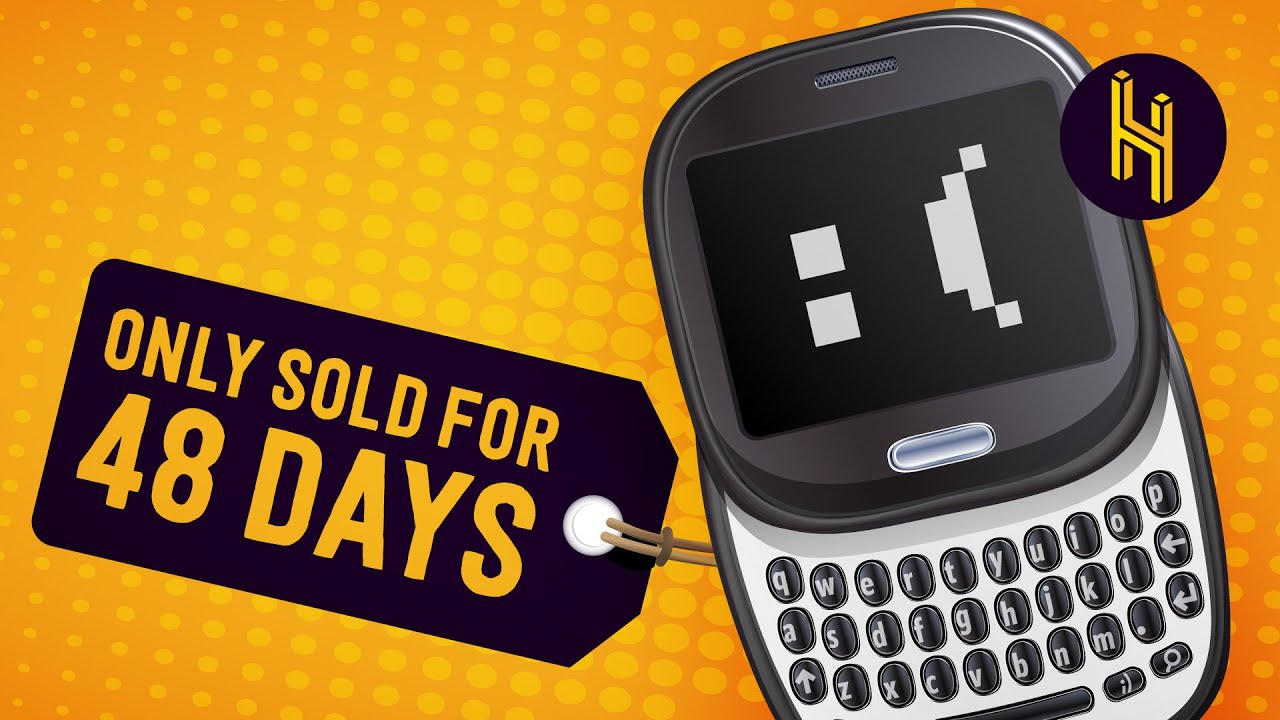
Picture it: It’s the spring of 2010. Plenty of things from this time will be remembered: the oil spill, the Affordable Care Act, Hot Tub Time Machine, et al. Other things will be completely forgotten. Like this: the Microsoft Kin, the worst cell phone ever brought to market. Microsoft pumped a billion dollars into developing this thing, and people hated it—so much so that they didn’t even sell ten thousand units, and by some reports, they only sold five hundred… and three. Just 48 days after release, they pulled the Kin from the shelves and hoped we would forget it ever happened. But here at HAI, we remember. And we ordered one from eBay. And today, we’re talking about all the brilliant choices Microsoft made that made this thing a colossal failure. The Kin arrived in that window where cell phones were everywhere, but smartphones were still more of a luxury. The idea of the Kin was to make a lower-priced, non-smartphone that catered to the younger, social media-loving crowd. A core feature was something called the “Kin Loop. ” Basically, a home screen where all your communications, like texts and calls, but also emails and posts from the people you follow on Facebook, Twitter, and MySpace, would show up in one big chronological feed. That feed also appeared on Kin Studio, a website you could open in any browser, basically putting your phone on the internet. That was convenient, but also helped the Kin get away with not being as “smart” as a smartphone; See, the Kin didn’t actually connect to Facebook, Twitter, or MySpace. It just connected to Kin Studio, which itself was doing the work of pulling the data from social media. Essentially, Kin Studio was the neighborhood gossip who went around learning everyone’s business, and the Kin itself was where you met up with said neighborhood gossip to get all the juicy details. Again, none of this is, in and of itself, a terrible idea: Creating a phone targeted at a younger, more social-media-y consumer with a sub-smartphone price could have worked. I mean, it even had “a Zune experience. ” But in practice, it was a massive, overly expensive, hardly functional flopzilla. Here’s a brief survey of some of the Kin’s issues. The “Loop” at the center of the user interface, which was supposed to be the young user’s 24/7 IV drip of social media content, only updated itself when you told it to, or every fifteen minutes. The social media clients built into the phone were weird in and of themselves: on Facebook, you could only see and post status updates. No friending, liking, poking, commenting, or anything else. Twitter was similar: you could see and post tweets, but you couldn’t view replies or search or post photos. And I don’t know what the MySpace client could do, but the site was already on a steep decline, so who even cared? Also, there was no app store. Which would be one thing if the phone could do everything a hip 2010-er would want it to, but the Kin phones lacked a calendar, a calculator, voice notes, any kind of maps, a standalone YouTube app and, worst of all, games. How am I supposed to use a phone with no games? Also, if your phone is supposed to be “deeply social,” it’s a pretty big oversight to lock it in with Facebook, Twitter, and MySpace, and have no way to add or change those apps going forward. Instagram launched six months after the Kin, and Snapchat came about a year later. So without knowing, the Kin was halfway to obsolescence upon release. But the whole point was to be cheaper than the iPhones of the era, so is it such an issue that it was also worse? Certainly not. But—oops! —it also wasn’t that much cheaper. The Kin One itself initially retailed for 150 bucks, and the slightly swaggier Kin Two, which had a bigger screen and a better camera but all the same problems, went for two hundred—though it was pretty easy to get a hundred bucks off either. So they cost less than the two- to three-hundred dollar iPhone 3GS, but uh-oh, what’s this? Buying the phone locked you into a mandatory two-year plan with Verizon? With a forty dollar minimum monthly charge for calling, and a thirty dollar minimum charge for data? And unlimited texting would be 20 bucks on top of that? Yes to all of the above. You, the consumer, were expected to pay almost—if not more—than the phone cost every single month just to use it. Meaning the people the phone was supposed to be for—who wanted smartphone features at brick-phone prices—couldn’t afford the monthly costs of owning a Kin, and any rational consumer that could afford that and wanted Kin’s purported services would be much better off saving up just a little bit more money and just… buying a smartphone. Perhaps this is why the Kin Facebook application only ever had 8,810 active users: This phone just wasn’t for anyone. Microsoft announced the Kins One and Two in April 2010. They went on sale on May 14th. The reviews were mid to bad, with some praising the idea of Kin Studio, but with just about everything else universally panned. On June 29th, they dropped the price of the One to thirty bucks and the Two to fifty. On July 1st, they announced they were abandoning the Kin product line entirely, including scrapping the European rollout they’d planned, and shifting the team that worked on it to work on the next Windows Phone instead. An anonymous executive was quoted around the time saying, in simple terms, that the Kin One “was killed abruptly because no one was buying it and there was no credible reason to believe anyone would,” which strikes me as solid reasoning. A post-mortem on Engadget described the Kin as, “practically raw in the middle,” which is unfair, because a cookie that’s practically raw in the middle is delicious, and the Kin tastes awful. I know because I made my writer try to eat it. So how does a product this flawed get to the market? Developing the Kin took two years, and the first step, for Microsoft, was acquiring a company called Danger. Danger had made the Sidekick, the coolest and most iconic phone ever—I’m editorializing, but I really wanted
Segment 2 (05:00 - 07:00)
one—and Microsoft wanted to use their IP and cloud computing expertise to build their new line of cool kid phones. They spent half a billion dollars to acquire Danger and proceeded to squander every opportunity that acquisition offered them. They decided that, instead of using either the Sidekick’s operating system or the existing Windows Phone’s operating system, they’d develop a bespoke one for the Kin that took forever and cost tons of money. The delays angered Verizon, who by the time of launch were mad enough at Microsoft that they ditched the cheap plan they’d intended for the Kin and went instead for the expensive mandatory one that rolled out, on the grounds that all that uploading would eat a lot of data. By the time of the launch, nobody involved in the Kin was that into it: Danger was gutted, Microsoft knew it sucked but had a contractual obligation to Verizon to fulfill, and in Verizon stores, employees were cautioning people against buying them. Allegedly, many of these poor decisions boiled down to weird politics within Microsoft and between its divisions that caused people to ignore the product’s problems and set it up to fail. Why this infighting had to ultimately hurt the small handful of people who fell for it all and bought the Kin anyway, I do not know. It’s a cruel world. Perhaps the final nail in the Kin’s coffin, though, was its marketing. We can set aside Microsoft marketing two different lines of phones that didn’t really share features or an operating system—though that was confusing. I’m talking about this ad, in all its 2010 faux-hipster glory, showing a bunch of people using a Kin while this band performs that “Alabama Arkansas” song that was so big at the time. This ad does not tell you about Kin Studio, allegedly the best thing about the phone. What it does do, however, is show a seeming teenager taking an up-the-shirt pic and sending it to some girl, which didn’t necessarily have parents of the world clamoring to get their teens this phone. All to say, inside out and top to bottom, every wrong decision was made to create this piece of junk, but thanks to, basically, contracts, it was sold anyway, for just 48 glorious days. And now, even if you buy one on eBay, the folks at the Verizon store can’t get it working for you, and it’s toured the world in the Museum of Failure. Not a bad paperweight, though. If you hated that ad, stick around for a much better ad product: This video’s sponsor, Factor. Factor delivers fresh, chef-crafted, pre-made meals right to your doorstep that are ready to eat in just two minutes. I’ve been a real-life customer of both them and their parent company, Hello Fresh, for years now, because they make it so easy to eat healthy, nourishing meals at home. Like this pasta dish, which along with being delicious featured cavatappi, the best of the pasta shapes! But if that’s not your vibe, fear not, because Factor has tons of options—over a hundred per week—tailored to your dietary needs and goals: I’m talkin’ high protein, no carb, no shellfish, no pork. Whatever you need, Factor’s got you covered. So whether you’re trying to build healthier habits or keep your good habits from slipping, let Factor help you out. Head to FACTOR75 dot com or click the link below and use code HAIFB50 to get 50% off your first Factor box PLUS free breakfast for 1 year!