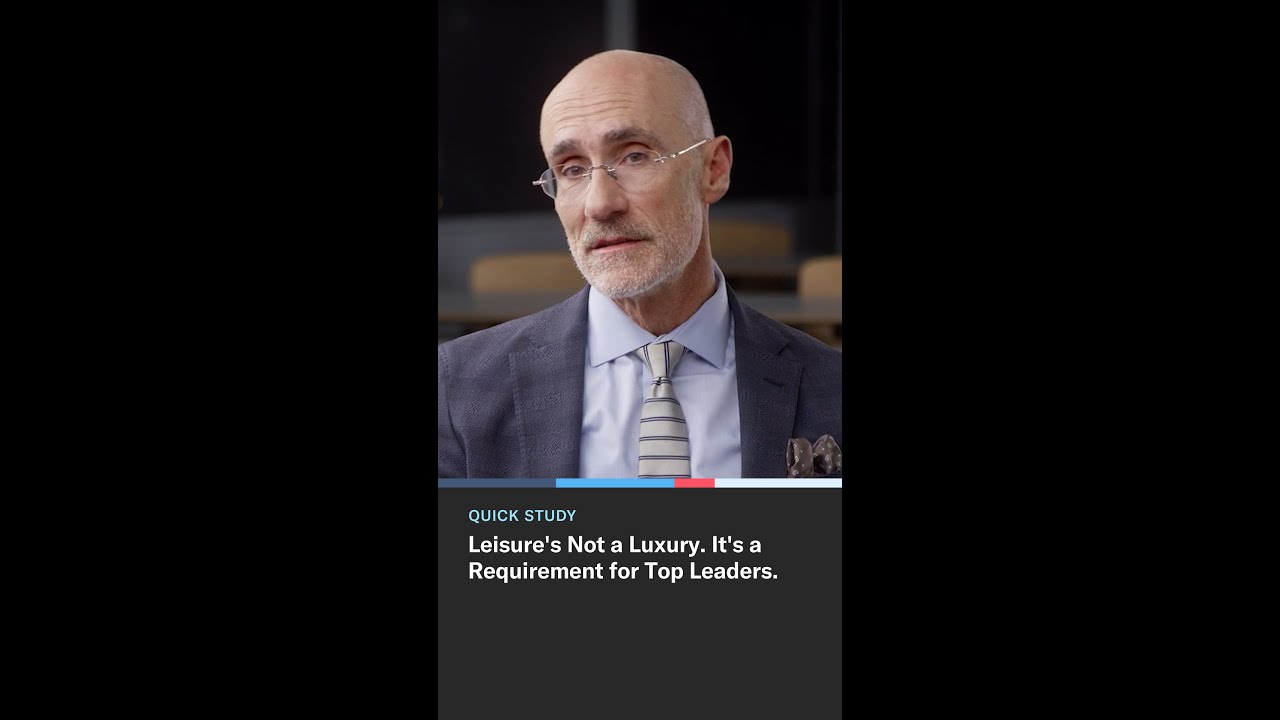
Deliver Hard News with Compassion

Deliver Hard News with Compassion

Machine-readable: Markdown · JSON API · Site index

Поделиться Telegram VK Бот
Транскрипт Скачать .md
Анализ с AI

Оглавление (1 сегментов)

Segment 1 (00:00 - 03:00)

ARTHUR C. BROOKS: One of the hardest parts about leadership is giving people hard news. I've been a CEO. I know. Sometimes you have to say that your job isn't here anymore. Sometimes you have to tell whole organizations that there's going to be a new structure to things. And hard news is, well, it's hard. It's very important that leaders understand that is not a good argument for avoiding hard things. Now, one of the biggest problems that we have is misunderstanding empathy and compassion. They're not the same thing. Empathy is to feel somebody else's pain. And when you're motivated entirely by empathy, it becomes a really hard thing to do, to do these difficult things, and you might even be handcuffed and unable to do them. And you'll wait too long, when it gets even more damaging to other people. Compassion is different. The greatest leaders are compassionate. Compassion has four parts to it, understanding a problem, feeling enough of the pain, such that you can actually be in the place of the person affected, being able to be rational about what needs to be done, and then having the courage to do it. That's what it comes down to. Being a truly compassionate leader is what people need. There greatest bosses are compassionate, not empathetic. And why are they compassionate? Because they love people enough to do what actually needs to get done. And you know what that is? That's just leadership, at the end of the day. Let's say you're in a situation where you need to downsize your employee base by about 20% and that means a bunch of people, including people that you've worked with for years are actually going to lose their jobs. If the only tool in your arsenal is empathy, that's going to be overwhelmingly hard and maybe something you're going to put off, and that's going to make things worse. Compassion is one in which you understand exactly why this needs to be done. You put yourself in the place of other people, such that you can understand what they're going through. You have a plan for how you're going to transmit this information, and actually what you're going to suggest to people who are affected. And then you have the courage to get it done quickly, because that's in everybody's interests. That's fundamentally superior in every way. Now, one quick aside on this. How do you grease the skids a little bit? The Buddhists talk about having a lovingkindness meditation. I'm a religious person, and one of the things that I've done is I pray for people before I have to do a hard thing. I pray for the people that I'm actually going to affect in this particular way, and I pray for the courage. And so whatever your technique is, meditation, visualization, prayer, I would recommend doing that, actually, before you have the interactions with people, as well. So don't misunderstand what I've said here. I'm not saying not to have empathy. I'm unaccompanied empathy. Empathy is only step number two of four steps. And when you shear it off from an understanding of the problem, an understanding of what needs to be done, and the courage to do it, then it becomes problematic because it's on its own. It's an unaccompanied virtue, and as a virtue, it can quickly turn into a vice. [AUDIO LOGO]
Ctrl+V

Экстракт Знаний в Telegram

Экстракты и дистилляты из лучших YouTube-каналов — сразу после публикации.

Подписаться

Дайджест Экстрактов

Лучшие методички за неделю — каждый понедельник