Get the ChatGPT Memory System Prompts: https://forms.gle/GR27ZzEdd7a36Yi66
Free AI Course Creator: https://forms.gle/LcmgdGBN8b3HHehv8
How to Monetize Your Content with Custom GPTs/ChatGPT: A Step-by-Step Guide
In this video, learn how to break free from the limitations of the creator economy by turning your content into profitable digital products and services. The creator discusses a step-by-step system that includes using custom GPTs to develop a vision, craft a business model, create a premium product, write effective sales copy, and build a sustainable content strategy for platforms like YouTube and Instagram. Additionally, discover how to use Vision OS, Product OS, and Pipeline OS to streamline the entire process and ensure your content serves your audience while generating income.
00:00 Introduction
00:41 Overcoming the Fear of Selling
01:44 Creating a Vision for Your Product
02:38 Leveraging AI for Product Development
07:21 Crafting Your Business Model
11:38 Building and Structuring Your Product
22:01 Marketing and Sales Strategies
28:34 Content Strategy for Driving Traffic
https://youtu.be/rv6hthBfoTY
https://youtu.be/_BMcsG4zsU4
https://youtu.be/a24RlwLmpZ0
Оглавление (8 сегментов)
Introduction
We've all heard how the creator economy is supposed to grow by the billions over the next two to three years. And when most people hear that the creator economy is growing by the billions, they think that money is coming to creators. But the truth is, even though the creators are the reason for the growth, they're not the ones who are going to be collecting the money. Because most creators aren't in a position to capitalize on the work they're actually putting in. And that's why the smartest creators aren't just making content. They're turning their content into digital products and services that people pay them for. But that's only a small number because most creators completely shut down at the thought of selling anything. So, if you're one of
Overcoming the Fear of Selling
those creators who don't want to sell anything because you feel as though it's going to be too much work or it's going to take away from your creativity too much time or you don't have anything valuable to offer, I want you to stick around for a few minutes and I'm going to show you that that's not true. And if you're a creator who doesn't want to sit around waiting for a bonus payout or looking for how much YouTube is going to pay you this month and you're looking to start making your own money, then this video is perfect for you. I've had a couple of days where I earned over $2,000 from digital products and services based on those products. So, I have some experience with this. And in this video, I'm going to show you the system that I created so that anybody, any creator can walk through it like a recipe for a cake and just simply follow the instructions and get the same result. Now, I'm not saying that you're going to absolutely make $2,000 every day from doing this because if that was the case, I wouldn't be on YouTube right now. But what I am saying is that it's going to help you create a predictable income. And as your skills in other areas get better over time, your steady income is going to
Creating a Vision for Your Product
increase as well. So let's start with the basics. Now, most videos you watch on YouTube are going to tell you to immediately jump to the product and try to figure out something to sell. But I think that's the wrong approach that is exactly why most creators don't want to sell anything because that approach is purely transactional. And it's my opinion that every successful creator has a relationship with their audience. And so when you got a relationship with somebody, you don't want to sell them anything. You'll just give it to them for free. And there's nothing wrong with that. But if you want to break away from depending on these platforms, then you need at least one digital product that you can offer to your community. And so where we want to start first, instead of starting with the product, we want to start with your vision. We want to find out what your niche is. who you're going to offer this to. and we want to find out all of those little details so we can get a good idea of what type of product or service we should even be offering in the first place. Most people
Leveraging AI for Product Development
are familiar with the basics of using chat GPT, Claw, Perplexity, and other AI chat bots. They know how to ask it to write prompts for them. do certain things. But as far as I know, OpenAI, ChatGpt are the only ones that give you the ability to customize chat GPT with custom GPTs the way they do. And so this opens up the possibility for what I like to think of is AI operating systems. So once you begin to create a custom GPT that specializes in a particular domain of knowledge or in executing a particular set of steps, then you're able to couple that with another GPT that specializes in a different area of knowledge with a different series of steps. And the more that you cluster these together, you're able to handle complex tasks in a very organized and efficient and clean manner. And so what I've done is I've created several custom GPTs that handle different aspects of developing your product and selling your product so that you don't waste weeks or months trying to create a product that no one's going to buy or spending a lot of time on things that no one is interested in. And so the first one that we're going to use is Vision OS. Now Vision OS is going to help you find your northstar. It's the value that you have to actually offer to the market that people are going to be willing to pay you for. I know someone who for over 20 years now has been helping people get 100% disability from the VA. And I was on TikTok about two weeks ago and I started seeing these ads for this company that does the exact same thing for veterans. And I thought to myself, this person has been doing this for free because they know the process. They know who to go to. They know the paperwork to file. They know how to help people. But these people over here know the same thing. They have the same information, the same knowledge. And they packaged it as an offer. They made a business around it and now they're running advertisements. They're reaching people and they're making money. Whereas this person has done it for free. And so right now there's something that you probably help people with all the time through your content and you're doing it for free. But there's somebody right now, I can guarantee you that is running ads or that's creating content just like you and they're charging people to help them with this particular problem. And even though everyone's not buying, enough people are buying so that they're able to run a profitable business. And the only reason you aren't making the money that they're making is because you're not offering the same service or product to your people. And so this is the first step in finding out what our profitable product idea is actually going to be. So the first step is to craft your mission statement. And you can see that it says your turn. Tell me about your business. What do you do? What who do you serve? What are your top three measurable goals? Revenue, users, products. What's your deadline? Why does this business matter? What problems are you solving? So, it's gathering information from you as the conversation progresses. This is why custom GPTs are so much better than just getting prompts because prompts just give you a single output whereas this is a conversation that's gathering real time feedback from you and customizing everything to you. The second step is to craft your vision statement. The third step is to identify your brand using the story brand method which is top tier. Step four is to define your target audience and customer avatar. Step five is to come up with your market positioning strategy. Step six is to define your business north star. Now, the business northstar is something that I added because this is what's going to help you stay focused in the long run when you start vacasillating about your niche and thinking about offering something different because a lot of people just don't stick with something for a long enough time to actually be successful with it. So, this is going to help you just come back to it and realize why am I doing it? Who am I doing it for? And it's going to keep you focused. So, here's the demo version of the answers to those questions. And it's going to work through this situation with you step by step. We will help 10,000 entrepreneurs launch profitable online businesses generate 5 million in collectible revenue and build long-term financial freedom by the end of 2026 because everyone deserves a chance to turn their passion into a sustainable income. Then there's the vision statement, the brand identity using the story brand, the target audience and customer avatar, the market positioning strategy, and the business northstar. We exist to empower 1 million entrepreneurs to achieve financial independence by providing worldclass education and resources because economic freedom should be accessible to all. And this brings us to the second step of this
Crafting Your Business Model
system. So after we get our vision, the next thing we want to do is focus on our model. And by model, I mean business model and offer structure because we are launching a business. If you're collecting money online, you're going to need a Stripe account or some other merchant account. And you're probably going to need to set up an LLC, get an EIN from the IRS, and all of those things are super easy to do. This is going to walk you through that process and make sure that you're offering your digital product in the format that is going to be most conducive to your audience. So, let's just say that the digital product you're offering is an online course. Well, you may offer that course as a standalone course that people purchase and get access to. Or you can offer that as part of a community where people log in, they can make posts, ask questions, you go live and answer questions, etc. So, all we're going to do is take our output from the vision OS and then we're going to paste it here and press enter. And so now it's going to go through the steps of identifying the right market validation and niche selection etc. And as you can see it's researching online. So this is a good time for you to pause and to actually research maybe read some of these blogs if you're unfamiliar with what it's sharing and get familiar with the people that you're looking to serve the audience that you already have. And so once again, I've created a summary for demo purposes and you will walk through this step by step. But we have the first six that we already created with the vision OS. And now we have identifying the right market. And after it's identified the right market and they validated demand because we want to make sure that this is a market where people are actually looking for a solution that we can help them with. The next thing that it's going to do is create a three tier value ladder so that you can understand the different things that you can offer. So it's going to be a do-it-yourself, a done for you, and a done with you. Now depending on which approach you decide to take, the price is going to change. So for instance, if it's a do-it-yourself, I typically believe that the price should be low on that, especially because we have so much information at our fingertips right now. If it's a done with you, then the price is going to be higher because you're actually working with the person. And if it's a done for you product or service, then it's definitely going to be top tier pricing because you're doing all of the work and you're taking all of the risk. Some examples of a do-it-yourself product are a monetization blueprint for digital creators. This is an ebook plus a miniourse. A done for you is a done for you monetization accelerator where they get a pre-built digital product templates, swipe files, and three-month access to a private support group. And then a done with you is a six-week monetization mastermind where you have weekly live coaching calls, personalized business audit strategy plan, direct access to experts in VIP community, guaranteed 90-day monetization success plan. So each of these different products is going to vary in price based on what you offer. So for instance, the low ticket offer is 27 to 37. The done for you is a mid-tier 197 to 297 and the done with you is $9. 97 plus. Depending on the industry that you're working in, the mid tier and the high ticket offer prices can be flipped around. But I want you to look at how it actually gives you ideas for the product, right? So just keep that in mind for now. The next thing that is going to lay out is the scarcity and urgency because if people feel as though that it's always going to be around, they'll wait to purchase. And this is getting into the sale psychology of actually selling the product. But then we have the bonuses, guarantee strategies, and I typically just offer a risk-free 30-day money back guarantee myself for most of my products. And then we have the market positioning and differentiation. Now, typically what I do when I'm working with this operating system is I take all of these outputs, I place them in a document, and this is my business bible. Anytime I have a question about what content I should post, about the products that I offer, about the direction I'm going in, or I feel unclear about anything, I just go to my business bible and I'm immediately reminded about where I'm going, what I'm doing, why I'm doing it. It's all right there. So now what we want to do is we
Building and Structuring Your Product
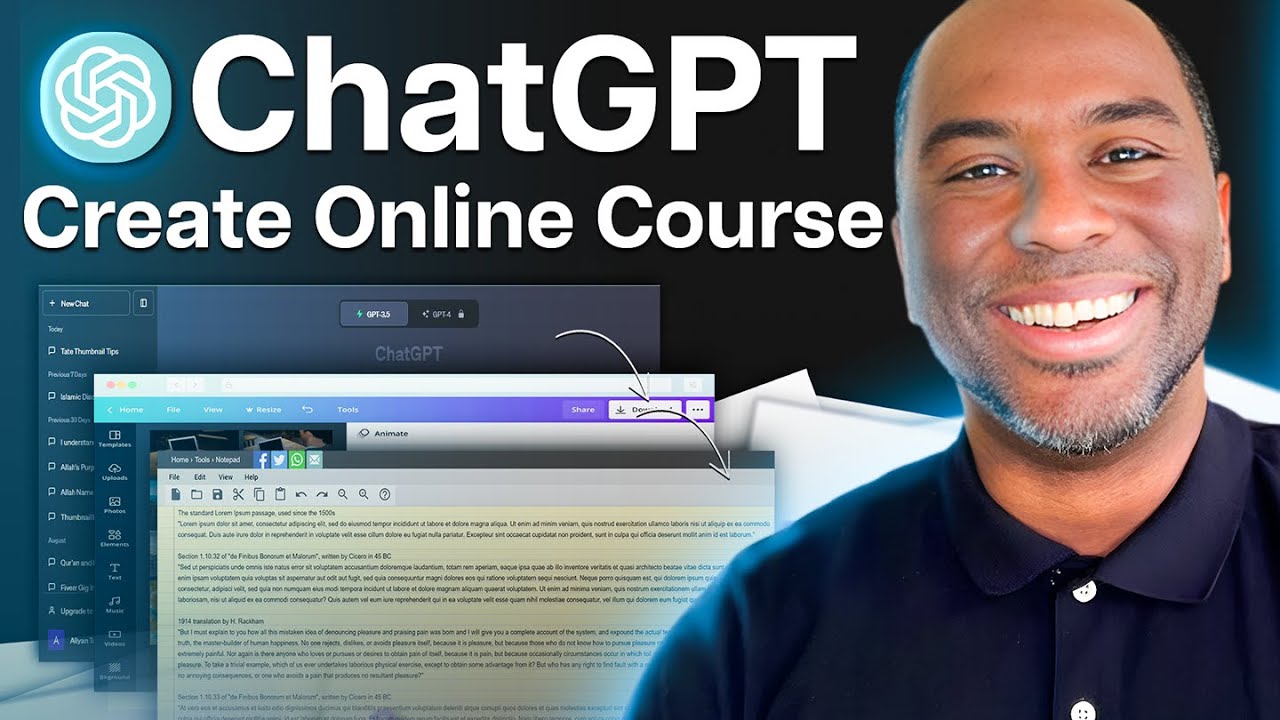
want to go to the next operating system and this is the product OS. Now what this is going to do is build an outline for a premium flagship product and this product can take any format once we get the outline. We can take this outline and create an ebook. a full course. coaching mentorship program. We can create a community. You can take any direction you want after using product OS. Now, this is a premium version of another GPT that I actually have in the GPT store. If you go to the GPT store and you search for digital products made simple, make sure it says by Corey Mlan and you can see that there are over 300 conversations with this GPT and it has a rating of 4. 9. There are no threes, there are no twos, there are no ones because I'm really good at creating these GPTs. But this is the free one that's just on the GPT store. What I want to show you now is the latest version. So all we're going to do now is we're going to take the outputs from the vision OS. mono OS and then we're going to paste them here and press enter. And so now what it's going to do is it's going to start creating my product based on the information that I provided. Now this is so important. And I want you to pause right here and realize why this approach is completely different from everything else you see online. See, online just starts by trying to go out there and come up with something for people. Whereas, we took the time because we're creators. We have a relationship with our audience. We want to offer something that they're going to find valuable. And so, we start with understanding what that value is. And I know that I summarized it, but I trust me, when you go through that process, it's very detailed. There's plenty of opportunities for you to give feedback about how you feel about your audience and the relationship you want to protect and to customize everything so that relationship is protected so that you can offer something that they're going to find valuable and they won't feel like, I can't believe she's selling us this. So now that we have that information, we have the information from the model that we want to operate under. We're providing it here. It's creating our product based off of that information alone. Not random information from the internet, somebody's YouTube video, not looking at what other people are wink, but looking at the relationship we have with our audience and how we can honor them with something that's truly valuable and solves a problem for them. And so now it's going to write the offer for the course. And so the offer is basically the IHEL statement, but it gives it a name. And the monetization engine accelerator, you can change anything anytime in these conversations. But the offer here says, "The monetization engine accelerator will help you turn your digital content into a profitable online business without guesswork, tech overwhelm, or expensive trial and error while overcoming lack of monetization strategies, inconsistent revenue, and ineffective marketing so that you can achieve financial freedom through scalable income streams. " So it it's going to ask you throughout the conversation whenever you're using these operating systems. It's going to ask you, hey, do you like this? Does this course offer align with your vision or would you like any refinements before we move to the course outline? So it's so important that if you see something you don't like, you immediately speak up because that change will be reflected through everything throughout. Now, I'm not going to walk through the entire process here because I have another video that's going to walk through the process. I'll link to it right here where you can also download one of my free course creators or you can go use the one in the GPT store. But after it comes up with the offer for the full course, it's going to create the course outline. Now, this is another important step because everything starts at the top and it works its way down to the individual lessons. But now we look, we say we have phase one, phase 2, and phase three. And there are three modules within each phase and three lessons within each module for a total of 27 lessons. So phase one is the foundation building a monetization ready business. Phase two is implementation and phase three is scaling. So we go through it and we want to look at it and chances are you should be extremely familiar with this outline or the subject matter. If you're not familiar with the subject matter of what's in front of you, then somewhere you've gone wrong with the information that you've provided to one of the AIS, but we look at this and we go through and we say, "Okay, that's step one. That's step two. " And let's just assume that everything is okay. Then all you want to do is hit continue. That's all you literally have to do with these AI operating systems because I developed them so that they will do the work and walk through the process based on your feedback and approval. And so now that we have an approved outline, the next thing that it's going to do is create module notes. The module notes are going to cover the description of the module, the key topics that are covered, the primary results and transformation, and the common challenges and how this module solves them. Now, this is so important because what this is going to ensure is that every step of the process in your digital product is based around the actual results you're trying to help your audience achieve, but not just blindly saying, "Hey, I'm going to help you do this here," but it's also looking at what are the particular challenges that they're facing with this particular step and how to overcome them. And this is what's going to form the basis of every single lesson inside of that particular module. So if you look at module one, monetization mindset shift, because many creators need a mindset shift when it comes to monetizing online. They don't want to sell anything. And so if I look at this, it says, "Many creators struggle with limiting beliefs about making money online. This module helps students shift their perspective and develop a successdriven mindset. By the end, they will have the confidence to take action and build their online business. The outline, the truth about making money online and breaking mental barriers, understanding the entrepreneurial mindset and developing resilience, the road map to success, adopting a profit first mentality. Now, what I can tell you is that for this outline, each of these three are going to be lessons. And so then we have the primary result, the common obstacles and challenges. Then we have the key audience questions that are going to be answered and critical actions for success. And then we have a module offer formula. So, just like we had the course offer formula where we had the number one thing that it was going to help you do the outcome or result, we had the three things that it was going to help you overcome and the three areas or obstacles or limiting beliefs that was going to help you overcome as well with a final outcome. It's the same thing for the modules. So, monetization mindset shift will help you eliminate limiting beliefs and develop a success-driven mindset without feeling overwhelmed or doubting your ability while overcoming fear of failure, self-doubt, and confusion so that you can confidently take action toward financial freedom. I will now structure module two, defining your profitable niche. Unless you want any adjustments to this one, let me know if you'd like to tweak anything. So, now let's just say I want to tweak it. I think this should focus a little more not just on the mindset, but on how creators want to protect their relationship with their audience and how that keeps them from selling anything because they're afraid of damaging that relationship. And I don't see that reflected well enough in these module notes. Can we make slight adjustments to include this in a way that makes sense? And just like that, I send the prompt over and it's going to write a new module notes that blends all of that in. And now when we look at the new outline, we can see that the first lesson is going to be reframing selling from self-promotion to serving your audience. So it's going to help you realize that I'm not just promoting something, but I'm serving my audience. And this is critical if you ever want to make money online. You have to have this perspective that you're serving them and you have to be actually serving them with something they need. Now, typically what it would do is that it would walk through this process of creating the nine module notes first and then it would start creating the lessons. And it only takes a couple of minutes to do, but for the purposes of this video, we're going to skip that and just start creating the lessons. And so, for the purposes of this video, skip the other eight module notes and go ahead and create the first three lessons for this module as a demo for my YouTube audience. And so each lesson has a very clean and simple framework with key steps and tasks that allow you to lay out the information and the knowledge and expertise that you have in a way that helps your audience go from point A to point B. And as they complete each lesson, this is going to help them complete the module offer formula. And so once you've completed this and you have all 27 lessons, most of the hard work is done. So after you complete this conversation, you have the nine modules, 27 lessons, depending on how you're going to offer this product as an ebook, a course, a community, etc. Then you would take this information and you will format it accordingly. If you're going to create an online course, then you would create your slides in Canva in bulk by placing this outline inside of a Google sheet, then uploading it to Canva, and Canva will automatically populate your slide templates. Just simple, easy does it. takes about five minutes to get it done. And I covered that in another YouTube video that I'll link to right here. Or if you wanted to turn this into an ebook, it would be so easy using Google Docs. And I'll link to a video right here that'll get you started doing that. But either way it goes, you have the very foundation of your product already created, and it's easy to convert it to any type of format you want from right here. Now that we have our product, we know that it's based on the model that we feel comfortable operating in, and we know that it's based on the value that we want to offer our audience. And it puts us in a position of service to help them. Now, it's time for us to actually think about how we're going to let people know about it and how we're going to actually sell it. And so, this is
Marketing and Sales Strategies
where the next two systems come in. The next operating system is called Pipeline OS because this operating system is going to help you communicate everything that you created in a way that your audience understands. So, it's going to help you write the sales copy for your website or your landing page. It's going to help you write emails. It's going to help you write social media posts or anything else that you want to communicate to your audience about your product. Now, you don't have to come up with this stuff from scratch. And you don't have to make stuff up. All you have to do is take the information that you've already captured and place in a Google doc or a different document somewhere else, Notion or wherever you're storing your information, and you just want to place it here. Now, there is a process to how it actually crafts copy. there is some information that it needs from you such as what type of copy do you need what are you selling who is your target audience what's the goal of this copy any specific brand voice or style references so I may just say something like I need some sales page copy just use the following information to gather what you need and start writing it and so now what it's going to do is it's going to write a headline a sub headline it's going to talk about the problem the solution and so forth now it's laying everything out. And you may have to come back and tweak some of it, but it's going to give you a simple framework that you can start with to actually let people know about your product so that you don't have to spend weeks or months trying to write the perfect copy on your sales page. And once again, this is not just random copy from the internet. This is copy that's going to be based on your outputs, which come from your input. Now, one thing I didn't show you that I want to show you here is that we can actually weight the copy with this GPT. And so, basically what it does when it weights the copy is that there are about seven different marketers that I've identified and their writing styles. And what it's going to do is ask you how much or how little of their style do you want to apply to your copy. So for instance, when it comes to positioning and differentiation, Al Ree one to five, clarity and simplicity, Anne Hanley one to five. And so for the purposes of this video, let's just say that we go with a scenario of three, five written on a fifth grade level. Five, two, and five. And so now it knows the scenario. It's going to rewrite the copy based on these adjustments. Now, one thing that we have to be careful of because we have three different product ideas. The do-it-yourself, the done for you, and the done with you is that all three of these are in the copy. And maybe you want to just have a single website page where you let people know what you offer and they can choose what they want for themselves. But let's just say that we wanted to focus on this one. Then we could just copy this product. Please rewrite the copy for this product only. paste it, press enter, and then let it rewrite the sales copy. So, let's just say that we want to focus on this product only. Then, we'll just copy that product and come over here. Can you please rewrite the sales page copy so that it only focuses on the done with you program? We do not want to mention the done for you or the do-it-yourself programs. remove those two products from the sales copy and use the extra space as an opportunity to talk about the benefits more of this particular high ticket offer. And so now if we look at canvas, we're going to watch these two offers right here. The do-it-yourself is going to disappear and the done for you as well because it's moving it out of the way. So all it's focused on now is the mastermind, why it works, etc. So this is what we wanted. So now we have our sales page copy and all we have to do is copy this and paste it into our website. If you were using a software like Ajabi, then all you have to do is come into your software, come down to funnels, and then they have all of these different funnel templates laid out for you. So let's just say that this is a simple sales page or a coaching campaign that's already created for you. So let's just go right here for the simple sales page. Click get started. Give it a name, my high ticket offer. You would select an offer, which is something you would create already, and then click create funnel, and it's going to automatically set this funnel up for you. Now, some funnels include emails that are automated based on actions and so forth, or different pages. All of this would be set up for you. So, you can have a clean look at what you're actually doing. And so, I would click on this here, and then all I would do is come over here, highlight the headline, come back to my funnel, click in here, and then paste it. and I would walk through this process to get all of this copy into my funnel. Now, once all of my copy is on my landing page, the next thing that I would do is I would come over here and then I would say now before I start working on designs and graphics and so forth for my funnel to explain the offer, what I want to do is put a video at the top of the page that explains it so I can talk to people personally because remember, you're a creator. You have a relationship with your audience. You're already creating content for YouTube, Instagram, and so forth. So they'll be more familiar with what you're offering and they'll trust it more if they see you on the landing page. And so now I have a video sales letter. And this is just me letting my audience know what this is and why they should probably join like I said. So I would copy this, place it in a Google doc, tweak it, change it, edit it, make it mine, right? And then record it. And then once I record it, I'll come here and I would upload it right here. So that when someone lands on this landing page, my video is here explaining what this is. And for some people, you don't even have to be on camera if you don't want to, and it still works as long as they know that it's you. And so now, not only do you have your product, but you have an AI operating system that's going to help you write your copy, video sales letter, and that's even going to help you write your emails based on the information that you give it, based on what you're trying to say. And so now, not only do you understand your vision, your mission, your northstar, you have a model, an offer, you have a product outline, you have your sales page copy, at least a rough draft of it that you can tweak and make perfect. You have your video sales letter that you're going to record and upload to your website. You're starting to build out your funnel and it looks great, but you're still thinking, "Well, Corey, how am I going to actually get people to the website so that they can actually make a purchase, right? How do I get people over here to the checkout page so that they can actually purchase this program? Right? How do I get people over here?
Content Strategy for Driving Traffic
And that brings us to the next operating system, which is simply the content operating system. This operating system is going to help you put together a 52-E content strategy based on the platform that you're most likely to thrive on. And so, I don't have any prompts here. So, all you have to do is type in something like get started. and it's going to ask us some questions because again I've designed these so that they gather feedback but that they also execute immediately. So now what we want to do is we want to go back to that Google doc gather that information and then paste it here. And so after you type in start to create your 52-E content strategy I'll need to gather some core information first. Here's what I need from you. Target audience and persona and you see vision OS offer and pricing strategy offer OS market positioning vision OS etc. Right. So, all we're going to do is go to our document. We're going to get the information from our business bible. We're going to come back here. We're going to paste it and then press enter. And it's going to do the work for us. So, now it's going to work through all of it. Key insights from our offer document. Next step, selecting the primary content platform. So, do you want to create content for YouTube, Instagram, and Tik Tok or LinkedIn? So, let's just say I go with YouTube. Based on the platform you choose, it's going to give you a different content strategy. So on YouTube, you have long form content as well as shorts. On Instagram, you have long form content, but it's really just reals and carousels, etc. So based on the platform you choose, it's going to give you a content strategy. So because I chose YouTube, it's laying out seasons of content. And what I would typically do is I would take all of these titles because YouTube is very title intensive. And I have a separate tool that I use to actually write titles based on titles that already work on YouTube and are already successful. So I would just take these, place it in another document as always, and I would just rework all of these titles and work with them until I had them finalized and optimized to what I wanted to actually use. But let's just say that we don't want to go with YouTube. I don't think I give me a content strategy for 52 weeks for Instagram. And so now it's saying, "If you'd rather focus on Instagram, we could create a more flexible content plan tailored for Instagram strengths, reals, carousels, and stories to drive engagement and conversions. Would you like a 10-week Instagram content plan to test and refine? A repurposing strategy to turn your YouTube videos a mix of content types? I'm completely abandoning YouTube and I'm only focusing on Instagram. I want to become Instagram famous, so give me a mix of content. And of course, it's hearing content instead of content. But now, it's going to lay out my content pillars, core themes to focus on, educational, engagement, content, authority, and social proof, personal brand, and storytelling, sales, and calls to actions. It's giving me content breakdown reals I need to create formats carousels stories sales images single images sales focus post hashtag strategy engagement strategy so I just want you to see that no matter the platform you choose is going to give you a full strategy because your content is what's going to actually drive people to go to your landing page and then when they they can learn more about your offer your product and from there they can make a decision. Now, most people are not going to purchase. Standard conversion rates are around 2 to 5% of the people that visit your landing page are going to spend money with you. But if people are going to your landing page, and even if just 1% are spending money, that's great because then it's just a matter of okay, how can I communicate better what I'm actually offering here? How can I improve And how can I get more people to go to my website and see it? because the better I get at those three things, the more money I'm actually going to make. And so from that point, it's just a matter of tweaking those three things over time. Creating better content, getting better at letting people know what you have, and making what you actually offer better. And I know that it sounds like I'm oversimplifying it, and you may think that I'm trying to say that it's easy, but it's not easy. It takes time, but it is still simple. This isn't just theory. There are creators using this operating system right now to make money online. They're either doing it themselves or I've worked with them personally. So, if you want to create your offer, I'm going to put a link to my offer AI in the description. I've already told you how you can get the course creator. You can just go to chat GPT and search for digital products made simple and you can get an older version that still works great. It's a lot more detailed as well. But if you want to know how you can do this full system yourself or if you want to work with me to implement this personally, then they're going to be two links in the description. You can check out either one that you want and I'll see you in the next video right here where I show you how to create a full online course with chat GPT slides and all included. Thank you for watching. I hope you got value out of the video. If you did, hit the like button, subscribe to the channel. Take care and as always, have a great night and I'll see you in the next