The Death of Antony & Cleopatra (30 B.C.E.)

The Death of Antony & Cleopatra (30 B.C.E.)

Machine-readable: Markdown · JSON API · Site index

Поделиться Telegram VK Бот
Транскрипт Скачать .md
Анализ с AI

Оглавление (6 сегментов)

Segment 1 (00:00 - 05:00)

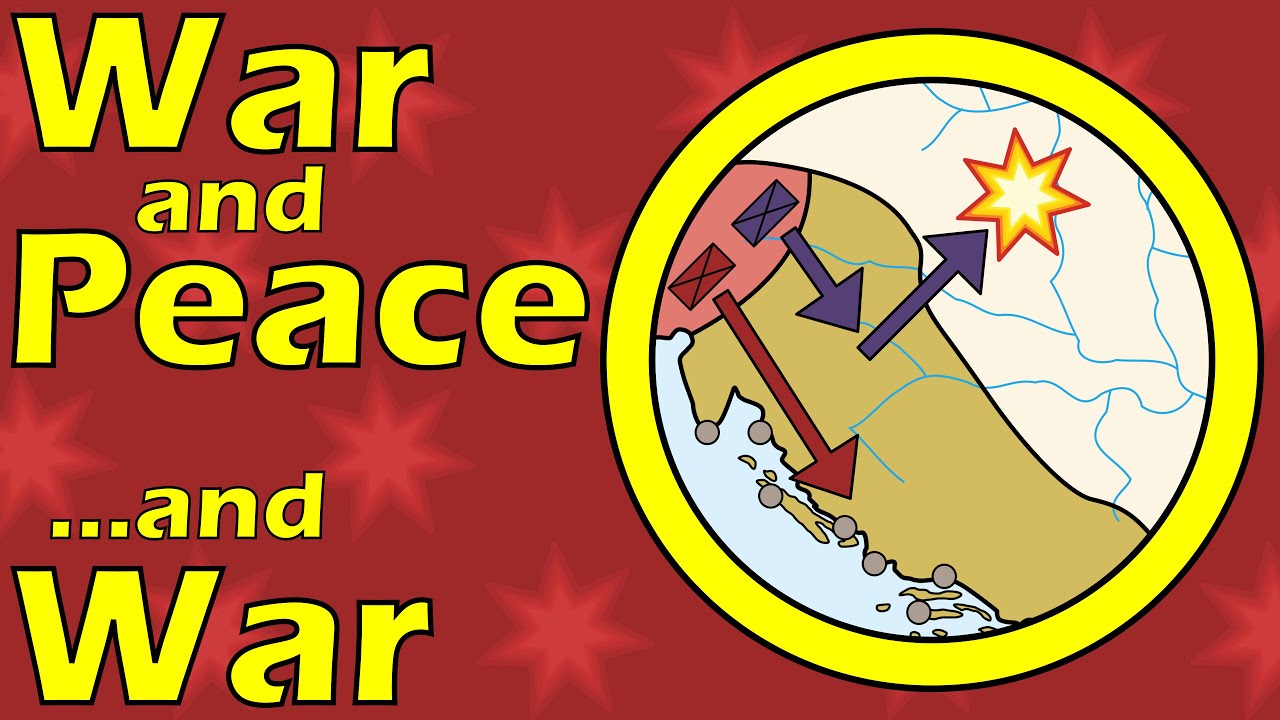
The final stage of the civil war between Octavian and Antony kicked off in the spring of 30 B. C. E., when Octavian landed in Syria. Octavian was using Agrippa’s plan for the campaign, which was to attack Egypt from two directions, one army from Syria and the other from Libya, each army being shadowed by a fleet as they marched up the coast. Two armies, two fleets, attacking from both land and sea from two directions. Many independent moving pieces with no single point of failure. Classic Agrippa. Back in Egypt, Antony and Cleopatra had come to the realization that after losing tens of thousands of soldiers to desertion, they were no longer capable of defeating Octavian on land. They tried sending peace offers to Octavian. Octavian never responded. They tried sending him a massive bribe. He kept the bribe. Cleopatra then had an idea. She figured out how to turn her useless Mediterranean fleet into a Red Sea fleet. With enough manpower and enough engineering, she believed that she could drag her ships over land, Fitzcarraldo style. Once they had a fleet in the Red Sea, they could credibly threaten to cut off Egypt’s trade with the east. She believed that Octavian would rather negotiate with them than deal with a headache like that. If he didn’t want to negotiate, then she and perhaps even Antony could escape to the east. Incredibly, she had her eye set on northwest India, where a number of ethnically Greek kings would have been sympathetic to her cause. Talk about some out of the box thinking! I like this plan! Not even Agrippa had imagined Egypt pulling a stunt like this. Cleopatra put her plan into action. She gathered the necessary manpower, and began dragging the first group of ships overland. But when they were about half way to their destination, they were ambushed by Arab camel riders from the city of Petra. The ambush was successful, the camel riders killed the labourers and burned the ships. You might ask why this happened. The Arab kingdoms in the region were not happy with Antony’s reorganization of the Roman East, and this was their way of getting revenge. An unintended consequence of Antony’s reforms. After learning of this defeat, Antony urged Cleopatra to give up on her extremely good idea. A mistake, in my opinion. Antony still had hope that his 50,000 soldiers from Greece were wandering around the Roman East somewhere. We know that they surrendered to Octavian last year, and if Antony was clear-headed about it he would have known it too. But he was holding onto a deluded belief that they would appear up just in the nick of time. Shortly after this, King Herod of Judea betrayed Antony and went over to Octavian’s side. He rolled out the red carpet and spared no expense supplying Octavian’s legions as they passed through his territory. When Antony heard this bit of information, reality really started to set in. According to Plutarch, “none of this news upset [Antony. ] It was as if he was pleased to put aside his hopes since in doing so he could also let go his worries. ” The couple began throwing expensive dinner parties every night, and would load their guests up with gold and treasure before sending them home. It was as if they knew that the end was near. Antony led his armies on a few excursions that were intended to slow the enemy down, with mixed results. Minor victories in the east, minor defeats in the west, nothing that would make much of a difference. By July 31st, Antony had returned to Alexandria, and Octavian was at the gates. That evening, Antony was in a dark mood. He knew that there was only one thing left to try, but he was fairly certain that it would not work. He was finally looking at his predicament clearly. This was probably his last night on Earth. He hosted a feast, and told his Roman generals, “drink deep, for tomorrow you may have a new master. ” On the

Segment 2 (05:00 - 10:00)

morning of August 1st, Antony led what remained of his army through the gates of Alexandria. Cleopatra sent what remained of her fleet out of the harbor in support. They both knew that Alexandria was in no position to withstand a siege against such a massive force. Their only hope was to go on the offensive and win an unexpected victory. Due to Agrippa’s strategy, one victory would not be enough. They had to win on land and at sea at the same time. Of course there was very little chance of this working. Agrippa had another army and another fleet on the way. Even a crushing victory would only buy them some time until they had to do the whole thing again. But this was how Antony wanted to go down. In a blaze of glory. Antony’s army left the gates, and Cleopatra’ fleet left the harbor. And then, to Antony’s utter dismay, Cleopatra’s ships immediately surrendered. The naval assault on Alexandria would go unchallenged. Victory was now impossible. When Antony’s cavalry saw this, they fled. Antony was left to face Octavian with only his infantry. He harassed and attacked Octavian’s forces, but they easily held their ground. By the end of the day most of his army had been lost, but improbably, Antony was still alive. He fled back through the gates of Alexandria in defeat. Despite his best efforts, Antony had failed to go out in a blaze of glory. Antony re-entered the royal palace and began causing a scene by screaming at random people as they scurried by. How could this happen? Why would the ships surrender without even putting up a fight? He must have been betrayed. Who else could it be? It had to be Cleopatra. She must have ordered her ships to surrender. Now we get into a real ambiguous section, because every surviving account of these next events are significantly different. What we know for sure is that at this time, one of Cleopatra’s servants approached Antony and informed him that the Queen was dead. The other thing that we know for sure is that this was not true. She had in fact taken refuge in her mausoleum for her own safety. Some versions of this story would have you believe that this was simply a misunderstanding. That’s way too cute, I don’t buy it. It is my opinion that Cleopatra heard from her servants that Antony believed that she had betrayed him, and told a servant to go and tell him that she was dead in order to escape his wrath. But again, that is only my opinion. When Antony heard of Cleopatra’s supposed death, Plutarch has him saying the following: “O Cleopatra, I am not distressed to have lost you, for I shall straightaway join you; but I am grieved that a commander as great as I should be found to be inferior to a woman in courage. ” What a charming guy. Antony drew his sword and handed it to his servant, who was apparently named Eros. Eros as in…erotic? That can’t have been his real name, right? Were Antony and Cleopatra giving their servants erotic little nicknames? That’s nasty, man. Seems like an HR issue at the very least. Eros accepted Antony’s sword. Antony ordered Eros to kill him. Eros did the funniest possible thing under the circumstances. He killed himself instead. Eros dropped to the ground and Antony was in shock. He shouted at nearby servants for help, but they all fled. Antony decided that he had to do the deed himself. He picked up his sword, turned it around, and jammed it through his ribs. In true Roman fashion he was aiming for his heart, but in true Antony fashion he missed. He hit his stomach instead. Stomach wounds are not immediately fatal, but they are extremely painful. Servants scattered as Antony’s anguished cries filled the royal palace. He begged passers by to

Segment 3 (10:00 - 15:00)

finish the job, but nobody dared touch him. Eventually, word got back to Cleopatra that Antony was mortally wounded on the floor of the palace. She probably felt sorry for him, again, that’s just my opinion, and ordered her servants to bring him to her in her mausoleum. A word about Cleopatra’s mausoleum. The structure was two storeys, which seems like an unnecessary feature for a tomb but they did things a little differently back then. The top floor had been converted to a living quarters, in case Cleopatra needed a place to hide out while the Romans sacked the city. The bottom floor had been filled to the brim with treasure amassed from all across Egypt, alongside a dangerous amount of flammable material. From these facts alone, her calculations seem clear. She had plenty of cards to play and was perfectly willing to negotiate, but if that failed, she was also willing to destroy an unthinkable amount of wealth and…herself. And then of course there was the most important feature of Cleopatra’s mausoleum. Near the entrance, there was a clever contraption built into the wall. Once triggered, the contraption dropped a giant stone slab in front of the door. By the time Cleopatra learned of Antony’s condition, that contraption had been triggered. Cleopatra was locked inside her own tomb. Her only means of communication with the outside world was a small balcony on the second level. In time, Antony was brought to Cleopatra’s mausoleum, but the servants found that they had no way of bypassing the stone slab to get inside. Cleopatra ran out onto the second floor balcony and began barking orders. The mausoleum was still being worked on, so there was some construction equipment nearby. There was a rope and pulley system that was meant to haul stone up the side of the building, and Cleopatra instructed her servants to tie that end of the rope around Antony’s waist. Cleopatra and her two ladies in waiting grabbed the other end of the rope, and using all of their strength, lifted Antony into the air. Plutarch describes the truly bizarre scene. “Witnesses say that this was the most pitiful sight imaginable. Up he went, soaked in blood and in the throes of death, stretching his arms out towards her even as he dangled in the air beside the wall of the tomb. The task was no easy one for a woman: clinging to the rope as, with the strain showing on her face, Cleopatra struggled to bring the line up, while on the ground below people shared her agony and called on encouragement to her. ” It was a heroic effort. Cleopatra and her ladies in waiting used all of their muscles to get Antony up onto the balcony, and then into the mausoleum. When Cleopatra saw the state that Antony was in, she literally rended her garments in grief. She scratched at her chest and smeared Antony’s blood on her face and wailed uncontrollably. This behaviour was not unheard of in the ancient world, but it belonged at a funeral. Antony begged her to be calm. He told her that Octavian was the kind of man that could be reasoned with. He urged her to get whatever deal for herself that she could. He then asked for a drink of wine, probably to help with the pain, and died. There’s a pretty strong case to be made that Cleopatra was way ahead of Antony, already thinking ahead to negotiations with Octavian. Why else physically separate herself from a defeated Antony by locking herself in her mausoleum? Why else gather all that treasure into one place, alongside the means to destroy it? She must have thought that a bargain was possible. Somebody from Antony’s camp stole his bloody sword from the floor of the palace and personally delivered it to Octavian. We are told that Octavian wept when he received the sword. You can believe that if you want. I don’t.

Segment 4 (15:00 - 20:00)

The next morning, Octavian entered Alexandria. He was accompanied by a local philosopher who had agreed to show him the sights. This was partially for his own benefit I guess, but it was mostly a signal to the locals that he was not going to loot or destroy the city. Octavian had never been to Egypt before, and what he saw moved him deeply. Huge buildings made out of expensive stone. Magnificent public works. Roads that were actually pleasant and functional. The greatest center of learning in the world. The kind of smart, walkable, mixed-use urbanism that’s illegal to build in many American cities. Romans considered their city the center of the civilized world, but compared to Alexandria, Rome was a backwater. Many have guessed that Octavian’s positive experience in Alexandria influenced his own ambitions when it came to reshaping Rome later in life. Octavian sent agents to negotiate with Cleopatra, but she would only speak to them through the stone slab. Cleopatra wanted a formal agreement from Octavian that upon her death, the Kingdom of Egypt would go to her children. If he would not make that commitment, she threatened to burn the mausoleum to the ground, destroying her treasure and herself. This dialogue went back and forth for a while, but no agreement was reached. The next day, the negotiations continued. While Cleopatra was busy speaking through the stone slab, one Roman negotiator grabbed a ladder and sneakily climbed onto the second floor balcony. He descended the stairs and walked up behind Cleopatra and her ladies in waiting. He scared the crap out of them. Cleopatra jumped back, and screamed, “wretched Cleopatra, you are taken alive! ” She drew a dagger and stabbed herself. The Roman negotiator physically overpowered her, and got the dagger away from her. The wounds were found to be superficial. Cleopatra was now the prisoner of Octavian, and in captivity she fell ill. It’s possible that one of her self-inflicted wounds got infected. Cleopatra and Octavian meet face to face about a week later. There are two versions of this meeting that are quite different, but the most believable version comes from Plutarch. He describes Cleopatra as being disheveled, dressed in rags, and visibly sick from the infection or whatever it was. She had also stopped eating. In this version, she throws herself at Octavian’s feet, and begs for the lives of her children. At the time, Cleopatra was literally the richest person in the world. Octavian asked her for a complete inventory of her personal wealth. Gold, treasure, property, everything. Nobody said it out loud, but a deal was taking shape. Cleopatra’s vast personal wealth in exchange for the lives of her children. Cleopatra provided the inventory, but one of her servants came forward and completely threw her under the bus by telling Octavian that she had omitted her entire jewelry collection from the list. Surely this was Cleopatra’s backup plan, as the jewelry alone would have made her a wealthy woman for the rest of her life. She saved face by offering the jewelry collection as a gift to the women in Octavian’s family. Octavian accepted. Shortly after this meeting, word got back to Cleopatra that preparations were being made to send her to Rome. This meant that Octavian intended to have her walk in his Triumph. Cleopatra’s sister had walked in a Roman Triumph, and for a Queen of Egypt, there could be no greater humiliation. Nine days after the death of Antony, Octavian and Cleopatra appear to have come to an understanding regarding Cleopatra’s personal wealth and the fate of her children. Cleopatra arranged for a massive midday feast for her and her two servants. After the meal, she asked one of her Roman guards to deliver a note to Octavian. Some time later, Octavian received the note. It simply read the following, “I wish to be entombed alongside Antony. ” Realizing the implications, Octavian rushed to Cleopatra’s living quarters.

Segment 5 (20:00 - 25:00)

When he entered the room, the Queen was reclined on a sofa, impeccably dressed in full royal regalia, dead. One of her ladies in waiting lay dying on the ground, and the other was not far behind her, making some final adjustments to the Queen’s clothing. Nobody knows exactly how Cleopatra died. Some say that she was killed by a snake that was smuggled inside a basket of figs. Others say it was poison. I don’t find the snake story likely, and frankly I’m always surprised whenever serious historians take it at face value. We know that Octavian’s Triumph would later have a painting that depicted Cleopatra being bitten by a snake, but since the snake was Egypt’s national animal, this could be read as purely symbolic. All of the serious contemporary sources say that death by snakebite was a public rumour at the time, perhaps a rumour that started when Octavian showed the public a painting of that very thing happening, but nobody really takes it seriously as a definitive explanation for her death until like 200 years after the fact. Notably, the Romans tore the room apart after Cleopatra died, and nobody ever found a snake. That seems like an important detail to me. One of the strongest bits of evidence against the snakebite theory is that Plutarch mentions off-handedly that Cleopatra had become obsessed with finding the most painless way to die, and had spent some time researching different kinds of poisons. The Egyptians knew a lot about poison, and they were very much aware that unlike poison, snakebites were not painless and they were not predictable. One ancient source goes further, and says that Cleopatra was rumored to wear a hollow pin in her hair that she filled with a deadly poison. That same source notes that Cleopatra’s body was found with marks on her arms, which very well may have been where she stuck herself with the pin. In my eyes, this is the most likely explanation. Cleopatra died on August 10th of 30 B. C. E. She was 39 years old. Immediately after Cleopatra’s death, her son by Julius Caesar, Caesarian, now 17 years old, was caught trying to flee the country. As the illegitimate son of Julius Caesar, Caesarian was a direct rival to Octavian - or at least that’s what Octavian believed. He ordered him put to death. But aside from Caesarian, whatever deal had been worked out between Octavian and Cleopatra, Octavian appears to have honoured it. He rounded up Cleopatra’s other three children, and had them shipped to Rome to be raised by his sister Octavia. That meant that Octavia was raising one child from Antony’s previous marriage, two children from her marriage to Antony, and three children from Antony and Cleopatra. Octavia never remarried, and I don’t blame her, it sounds like she had her hands full. Cleopatra’s children were raised with honour and dignity, which honestly is surprising. When they were of age, the daughter was married to King Juba of Mauretania, which is a fitting match for the child of the last Queen of Egypt. It seems that after the marriage, all three remaining children moved to North Africa where they lived out the rest of their lives in prosperity. Octavian formally annexed Egypt on August 31st of 30 B. C. E. We all know that the month of July got its name from Julius Caesar, in honour of his birthday. August got its name from Octavian, and there’s a common misconception that this was also in honour of his birthday, but that’s not true. August was named in honour of Octavian’s conquest of Egypt. That’s how big of a deal it was. For the better part of 19 years, ever since Caesar crossed the Rubicon, Rome had been at war with

Segment 6 (25:00 - 25:00)

itself. And now, with the defeat of Marc Antony and the conquest of Egypt, Rome was at peace. It was the end of an era, or perhaps it’s better to say that it was the beginning of a new one. The victory transformed the 33 year old Octavian not only into the richest man on Earth, but much more importantly, into the unrivaled master of Rome. For the rest of Octavian’s life the people who knew him would simply call him Princeps, or First Man, but history would call him by a different name. Emperor.

Другие видео автора — Historia Civilis

Ctrl+V

Экстракт Знаний в Telegram

Экстракты и дистилляты из лучших YouTube-каналов — сразу после публикации.

Подписаться

Дайджест Экстрактов

Лучшие методички за неделю — каждый понедельник