Everything I'm about to reveal to you in this video, I probably shouldn't be sharing. These are the exact strategies that I use across my own business and a thousand client campaigns to generate over $7. 8 billion in sales. Some of these I've never shared publicly and others my team would prefer that I kept quiet, but I don't believe in gatekeeping. So, here are the six marketing strategies that can genuinely change the way that you grow your business. Starting with tip number one. So right now I am running a 48minute ad and this goes against all traditional wisdom or anything that these ad gurus will tell you. They're like, "No, your ads need to be short and sharp and no more than 30 seconds, right? " All of that is because this ad is my highest converting ad that I'm currently running. Meta's algorithm has fundamentally changed. No longer do you need to be a super advanced media buying and stack all of these interests and try to reach the perfect pocket of audience. Now your creative does the targeting. And therefore, if your creative is longer, it has more context for the algorithm to be able to find the people that is going to be directly appropriate to this message. And running a 48minute video gives Meta an insane detail of exactly the type of buyer that you're trying to target. The game is now who can retain attention for the longest. So, here's exactly how it works step by step. What you want to do is take your best performing organic content. If you're like most businesses, you're going to be producing organic content on either YouTube or whatever social platform that you choose. Then, every single month, you want to have a look at what are the top performers based on reach, engagement, shares, all of that kind of stuff. Because that is already proven to you that it is a winning creative. It is already getting shared in the algorithm. That is a sign of confidence like hey this is a banger. Then what you want to do is take that best performing content and you want to insert three to five CTAs in it depending on how long it is. And I typically like to do it like at 25%, 55%, 75%, and then at the very end. And they're short and sharp CTAs. Just like, hey, if you're enjoying this video, then click the link and do the thing that I'm asking you to do. And then at the end of the video, you can give a much more detailed CTA of exactly what they're going to get and exactly what it is that you want them to do. This is like using sawdust to create an entire different ad engine for your business. Most people will upload organic content and then call it a day. Instead, what you want to do is take your two to three best performing pieces of organic content and then move them over to your paid ads engine. And I call this double dipping because it allows you to first of all get all the organic reach and build all the goodwill and branding organically, but then it also fuels the paid acquisition engine. And by using the organic content, something that is already the sawdust in your business, and then allowing it to fuel the paid engine, this is when things really start to get crazy. Here is the 48minute ad that I am running. It is literally a sitting down talking head video of me dropping 17 years of marketing knowledge in 48 minutes. And this thing has gotten like over 1. 2 million views organically. So, I naturally know that it is a banger. Then what we do is we've inserted multiple CTAs throughout that ad that gets people to actually book a call in with my team. Not only is this thing pulling in leads at 45% cheaper than a very well prodduced ad, but the quality of these leads are insane. Like people are already pre-sold before they rock up onto the sales call. And then pretty much all of my sales team need to do is discuss price and terms. Every video that you produce has the potential to be a winning ad. You just add the CTAs and then let the algorithm cook. And that's tip number one, double dipping. Now, double dipping works because effectively the content does the selling. But most businesses are simply selling the same thing. And what that means is they end up competing on price. And this next tip eliminates this problem entirely, which brings us to tip number two. Look, every business in your market promises the same outcome. Lose weight, grow your business, get more leads. So instead of selling on price and the actual outcome that it is that you're promising your prospect, you need to sell the unique mechanism of how that actually is achievable. So the way that we do this is by using something I call a hero mechanism. So a hero mechanism is just a way for you to basically name how it is that you get the outcome for your prospect and why it's different from all the other alternatives that exist. And the beautiful thing about it is once you have a hero mechanism then you can't be put into the same category as your competitors and therefore it is very difficult for them to compare prices because what you're selling is truly unique. So how do you build a hero mechanism for your business? It is a proprietary method. It is a step-by-step system of exactly what are the raw
Segment 2 (05:00 - 10:00)
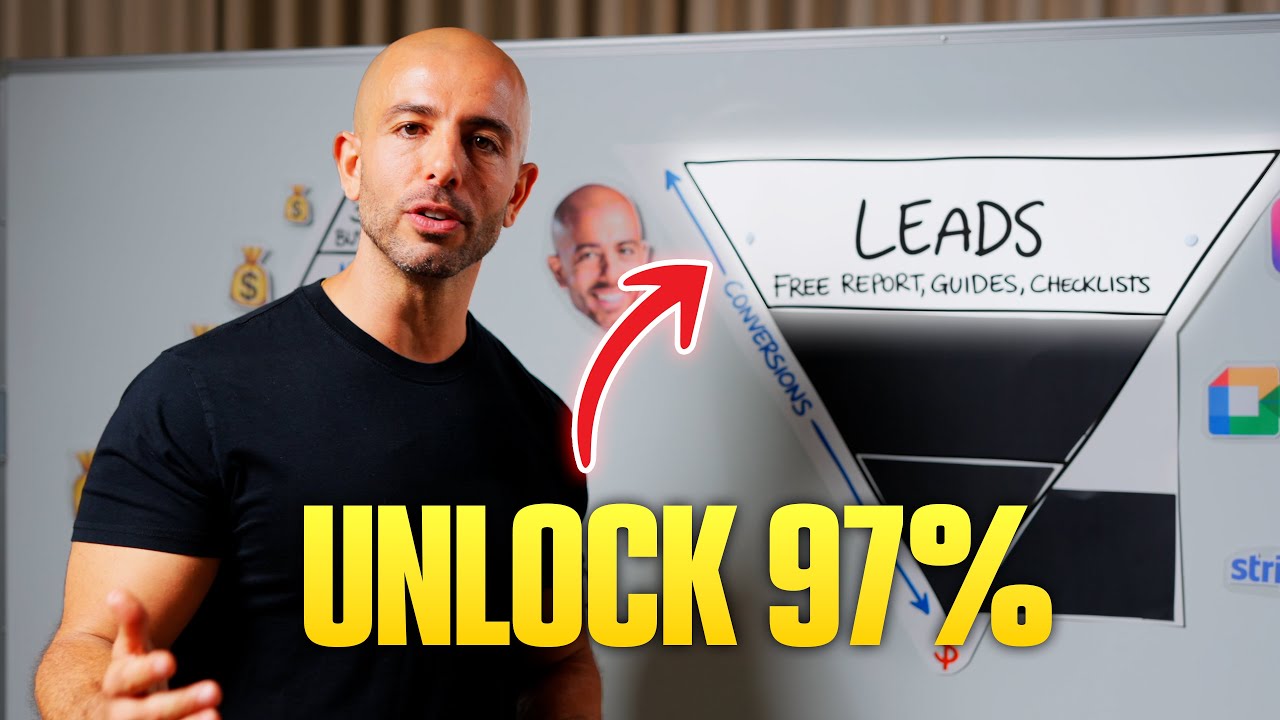
materials that you put into it in either time or the actual ingredients that gets your prospects the outcome. And before you sit there, you roll your eyes and you're like, "Subrey, I've got nothing that is unique. " Well, first of all, there should be if you want to have any edge in your business, there is always a unique angle. You need to use your creativity to think about what is that process. And the more unique and the more novel that it sounds, the more intriguing and value that it has attached to it. And step one is just to map out the sequence of steps that you take when you meet a prospect from where they are to where it is that they want to go. How do you deliver the results? What are the steps that are involved in that? What is it that you do different to your competitors? Even if these differences seem very small. Step number two is to give that hero mechanism a name, i. e. the eight-phase selling system, the metabolic reboot, the three layer ad stack. Having a name makes it feel proprietary and new and novel and different to anything that they've ever seen or heard about before. And therefore, it's harder to compare when they're shopping around and they're speaking everything and you're like, "Yeah, is it the metabolic reboot system? " Like, no one else is going to have that and therefore it feels different. Now, step three is incredibly important. It's when you need to go into the specific details of how your hero mechanism works. This is where you basically weigh up all the other alternatives that they have tried or that they've heard about in the marketplace. And you need to pick them apart. And when you do this, you're no longer just competing with all of the sea of competitors that are out there and playing the game of racing to the bottom. And you have created your own category. And that is tip number two. Compete on the mechanism and not the outcome. So now you've got a way to stand out when people see your message. But how do you actually get people to realize that they have a problem in the first place? This next tip, it completely flips the way that people do lead generation on its head. Most businesses are screaming to the 3% of their market that are looking to buy right now. They're like, "Book a call, get a quote. " They're making hard offers to people that aren't interested in buying right now. And as a result of that, their cost per calls are really high. Their customer acquisition is really high. And the overall lead quality is just super And they have very low conversion rates at every single step of the funnel because they are not meeting their market where they are. They are simply screaming offers. And the way that we combat that is by not going out to your marketplace and simply trying to sell everybody. It's by going out to your marketplace and providing an experience and providing value. So, here's exactly how to apply this to your business. Now, what you need to do is run people through an interactive quiz that actually finds out one, where are they at in their buying cycle? What are their pains, fears, hopes, and dreams? What other alternatives are they currently trying or what have they tried in the past? And you need to do a level of diagnosis before they even commit to actually booking in a phone call. People think that booking in a call with a salesperson is an easy ask. It's not. It is what I call a threatening CTA. You want to have the process that they go through to actually book a call, provide value, and do some level of diagnosis so that they can get something out of that process to begin with because you have to give something to them in order for them to get on the phone call. And once they go through this process, you are illuminating to them of like where they are right now and where it is that they want to go. And that quiz process and that audit process shows them the gap of hey, this is where you are and this is where you want to go. And these are the different solutions to get you there. And we can show you how to apply them specifically to your unique problem or your unique business to get the outcome that it is that you want. And that is the aha moment. It's once you can clearly articulate to the prospect their problem and the solutions to those problems better than they can themselves, then they automatically assume that you have the solution to that problem and therefore they book in a phone call and do the next step that you want them to. So, not only do they feel like that they're getting closer to the desired outcome, but you're also getting incredibly enriched leads. And going about it in this way, typically you see conversion rates at 5 to 10 times higher than a traditional funnel. And the reason for that is you are allowing the prospect to arrive at the outcome rather than you telling them the solution straight out of the gate. Because a quiz that tells you that you're losing $43,000 per month in your business converts a hell of a lot higher than an ad that says increase your leads by 43%. Because the first one, it's their data and you're customizing it and making it personal. You're not just trying to speak to absolutely everyone with the same claim. And this is exactly why doctors and surgeons, they're not going to be writing the prescription before they do the diagnosis. They're going to run you through where is it
Segment 3 (10:00 - 15:00)
tight, how long's it been injured. They're going to show you the scans or the MRI to lead you to understand why they are telling you that you need surgery in the first place. to stop asking people to buy and start educating them and illustrating them why they need to buy. And that's tip number three. Make it their idea. Which brings us to tip number four. Every single business has 5 to 12 standard objections. And the way that they typically handle these is on the sales call. And they think that they need to make like an objection handling script and then give it to their salespeople and then handle all of those objections on the call. or either it's an e-commerce business, they are present, they know about those objections, but they don't really put it into the sales page. They just think about what are all the selling arguments and they might at best stick the objections into an FAQ section. Here's how to handle it instead. If you're running a sales team, if you're doing sales calls, then you could get all the transcripts from those calls, put them into Claude, put them into Chat GPT, and basically get it to list out what are the most common objections. look at your top closer. How do they handle those objections? Then you take them and you basically put them into a Google doc that says all of the objections, all of the concerns that people have that basically get in the way of them buying. And then what you want to do is you want to put all of those objections and you want to handle them before they even arise in your sales messages, in your ads. You want to produce pieces of content that specifically addresses each and every objection. And when you do that, people show up to the sales calls ready to buy because you have already eliminated those things in the first place. The other way that I like to do this is if I'm writing a landing page. What I will do is I will use Claude and I will scrape all of my own reviews. Reddit reviews and all of my competitors reviews on Trust Pilot, product review, Google My Business listing, and I will put it into a spreadsheet. Then I'll take all this scrape data. I will upload it into Claude and I will say give me the five to 12 most common objections that come up. Then I will put in my VSSL script or my landing page and I will say does my copy address each and every one of these objections and it will allow me to preempt those objections and handle them before I even ask somebody to book a phone call in. And as a result of doing that, the conversion rates shoot through the roof. And the same thing goes if you're selling a product. You want to have a look at all of the reviews that you have, that your competitors have, that people are talking about online, and you want to run it through your PDP, your product description page, and say, "Am I addressing everything in the copy on this page? " And it will clearly highlight where your current landing page or product page falls short based on all the objections that people have. Now, it sounds fundamental and it sounds elementary. However, I can pretty much guarantee that nine out of 10 times either I look at somebody's funnel, either I watch their VSSL, either I look at their product page, they don't address all of the objections and people don't buy unless objections are answered. They don't even book phone calls if objections aren't answered. You're missing out on the lion share of the market. So in your VSSL, you need to talk about how the market has shifted and that there are things that are at play with the economy or the competitive environment that makes now the very perfect time to act. Because if you don't act right now, you're going to miss this huge wave of opportunity. That's an example of how you handle an objection before it shows up onto the call. And then your salesperson isn't being like, "Yeah, well now is a great time because we've got this monthly special. " No, that's how a bad salesperson handles it. The job of marketing is to make sales easy. And so, one of the ways that we do that is by handling every and all objection before we ask for the sale. And once you've got all of these objections and you're super clear, not only are you going to basically have specific sections on your landing pages and in your funnels that address all of those, you're going to create email nurture sequence, FAQs. You're going to preempt them and handle them in your video sales letters also so that you don't handle objections, you completely obliterate them. And what this means is that by the time a prospect ends up on a phone call, you've already addressed all these concerns in advance. So you're not relying on the salesperson being an incredible objection handler in order for you to get the sale. And then the discussion on that sales calls becomes what is the next steps that I need to take rather than what is it that you're selling and how much does it cost? Because the businesses with the highest converting funnels aren't the best at handling objections. It's that their marketing completely obliterates them before they even come up. And that's tip number four, the objection obliterator. Now, we've talked a lot about strategy, but there is one skill that underpins all of this, and if you get it wrong, nothing else even matters. Which brings us to tip number five, and this is something that is majorly slept on, and it's
Segment 4 (15:00 - 20:00)
showmanship. Think about your product or service and think about how you can deliver it with some showmanship. How can you make it entertaining? feel like gossip? How can it deliver news and findings to your prospects? Because that's what people want. You need to think about how can I excite, delight, and entertain my prospects before I even ask them to buy? Because the most powerful framework in advertising is to understand that consumption precedes conversion. If you want your ads to convert better, funnels to convert better, then you need to get people to consume your message. And that's the biggest competitor that you have is people simply not consuming your ads and your funnels to begin with so that they never get to the bottom of the funnel where they click a button, they book a call or they buy because you never even get them there. So the biggest opportunity for you lies in how do you increase the consumption of all of your ads by 50%. thus will give you 50% more throughput with the entire rest of your funnel and it would half your customer acquisition cost and double your profit. Think about that. But most people they obsess on the back end of it. offers. What to put in the office where people don't even arrive there. The best thing to do is to start with a founder story. Stories are one of the most powerful types of advertising that you can do because you can't argue with a story. And it's also great at retaining people's attention is because they want to know the end of the story. One of the most powerful ads that you can put together in anything that you do is your story. Why you started your business in the first place. What was the problem that you were experiencing? What are the solutions that you tried? What is the hardships that you had to overcome to then have that epiphany moment where you found the solution and then therefore you started your business around this solution and now it is your mission to basically get this into the hands of as many prospects that were suffering in the exact same position as you. This allows the viewer to empathize with you and show that you are just like them. Just by doing that, you take the we exist, these are the products and service we sell to someone being bought in on your story. And still to this day, these are the highest converting ads that you can ever run. And the best leading indicator whether or not your ads and your funnels are entertaining enough is the share button. How many shares do your ads have? Is there is no shares on it, then it isn't valuable. So, stop writing ads that inform people and instead start writing ads that entertain people and move them emotionally, which is tip number five. Drama sells and logic tells. So, everything that I've shared with you so far is about getting more leads, closing more deals, but there's one thing that I see with businesses that even when their marketing is working, it still keeps them small forever. Which brings us to tip number six. I speak with thousands of business owners every single month and there is one question when I hear them talk about this it tells me absolutely everything about them and it's when they say what is your marketing budget. The only reason that you would have a marketing budget is if your marketing isn't working. Because most businesses when I sit down and talk to them and I'm like okay cool. Like they're like I want to grow my business. I'm like awesome. Where are you at right now? I have my 100 grand a month. I'm like where do you want to be? I want to be at a million dollars a month. Okay cool. What are you currently doing to grow your business? Oh, we run ads. We do this. Well, how much do you spend on ads? Oh, I spend 10 grand a month. What return do you get for that? Oh, I spend 10 grand, I make a h 100 grand. So, I was like, cool. You're getting a 10 rows. Why don't you spend more money? Oh, it's a good question. I've never thought about that. Their business is simply an ATM machine where they put $1 in and $10 comes out and all they're trying to do is put as much money as humanly possible into that ATM. And as you do that, yes, you might go from a 10 rorowaz down to a five rorowaz, but that doesn't matter. It's all about how much cash collected do you have at the end of the month. So, the biggest one you really need to get clear on is what is the lifetime value of a client. Now, a very down and dirty way of doing this if you don't have the technical capability is to simply look at the number of revenue that you did last year or the last 3 years and divide that by the number of customers that you've got. It is very down and dirty. Then what you want to do is understand what does it cost you to acquire that customer? I. e. what is your customer acquisition cost? You want to have a healthy relationship between what it costs you to get a customer to what it is that they're worth for you. And what I have found is that you don't want to be spending any more than 33% of what your lifetime value of a customer is on your customer acquisition cost. Now, once we have these two big numbers, then it simply becomes a game of how much do I spend to get a customer and how much money do I make. However, the devil's in the
Segment 5 (20:00 - 21:00)
details. The next number that you need to understand is what is your payback period? I. e. a customer might be worth $1,000 to you, but that $1,000 might be made in $100 payments per month. Therefore, it's not simply about, okay, I've got a customer, they're worth $1,000. I can spend $300 to get them. Let me just spend as much as possible. Because what happens is you create a cash trough. Let's just say that it costs you $300 to acquire that customer, but you're only making $100 a month. Meaning that it takes 3 months just to break even. And that is what we call the payback period. The percentage of businesses that realistically and accurately know their unit economics is abysmal. Like even some of my business buddies, they don't know their numbers. If I meet with someone, I'm like, "What does it cost you to acquire a customer? " And they're like, "It depends. " Immediately I know that they don't know because if they did know it would be a specific number. It would be like this is how much it cost us last quarter. year. So in your business just understand these core numbers. What is my cost per lead? What is my customer acquisition cost? What is my payback period? And what is my lifetime value of a customer? If you know those four metrics, you will be ahead of 99% of businesses. And I don't mean kind of know them. I mean know them know them. And that's tip number six, the money machine. So there you go. No more gatekeeping. Now, once you know all of these things, it's time to apply them. And if you liked this video, you'll love this one that I put together on exactly how to run Facebook ads from A to Z, everything that's involved. Like, subscribe, and I'll see you in the next