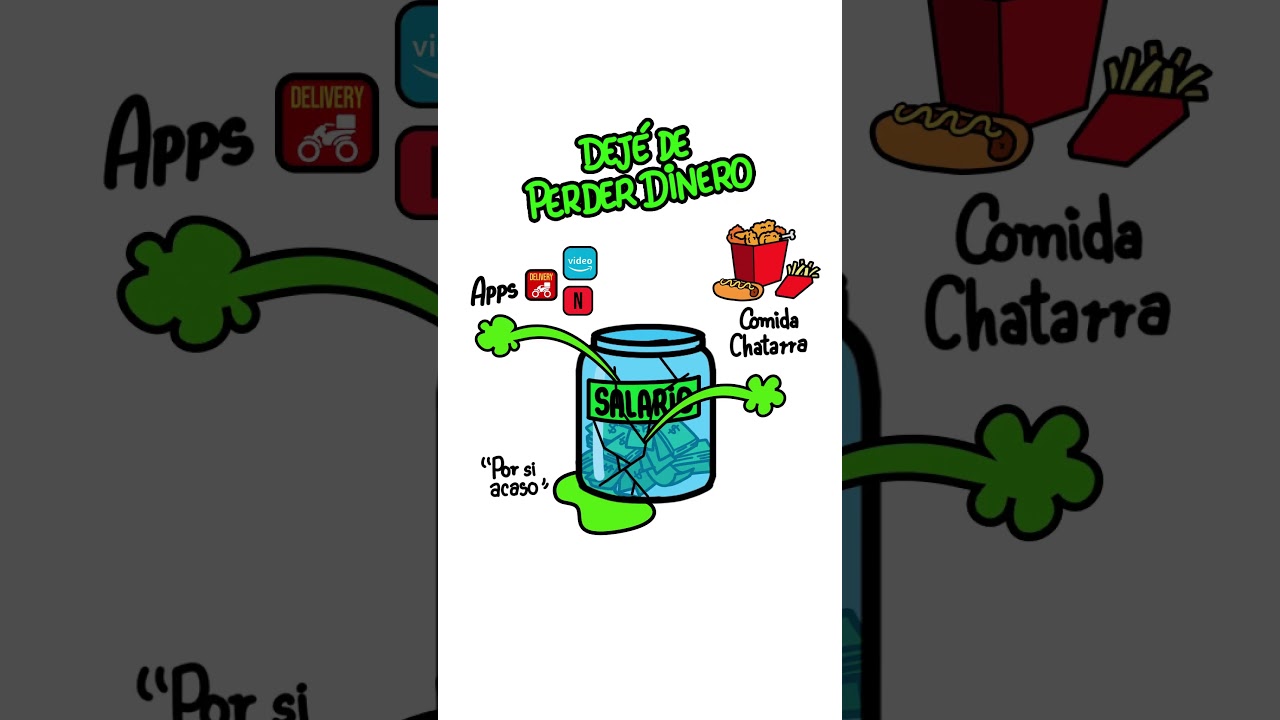
How to manage your money so you don't run out at the end of the month? Julian left the office with a frustrated look on his face. It was payday and he already felt the knot that had haunted him all year. While waiting for the bus, he saw his friend Andrés, who had just left the company and greeted him enthusiastically. Julian was surprised that Andres, earning the same as him, never seemed stressed about money. Andrés, I need to ask you something. How do you do it? I live day to day, I always end the month with nothing. I don't know if the problem is that I earn little or that I don't know how to manage it. Andrés smiled empathetically. Julian, if your salary disappears in a few days, the problem is not your salary, it's the system you 're using with your money. Julian looked at him, confused. Which system? What 's that? the one I changed a year ago. Look, I'll tell you the three things I did to stop breaking even every month. First, make a clear map of where your money is going. Andrés took out his cell phone and showed her a note. The first thing I did was brutally simple, I put everything on paper. I divided my expenses into three columns. On the left side, essential expenses, rent, basic food, medicines, etc. Then there are important but negotiable expenses: internet, phones, subscriptions, education, and so on. And finally, unnecessary expenses or small, recurring expenses, apps I hardly use, daily cravings, emotional purchases. When I saw it like that, I understood that a large part of my money was going to things that didn't even improve my life. Julian opened his eyes in surprise. I've never done that. I think I'm afraid to see the truth. Honestly, Andrés laughed. It's normal. But look what I did next. First, I immediately cut out non-essential expenses that did not affect my quality of life, and second, I simplified important expenses. I renegotiated my phone contract, downgraded my internet plan— small things, but they added up to a good saving. Then he added a phrase that stuck in Julián's mind. Every dollar you free from a foolish expense is a soldier who can fight for your freedom. That's why, Julian, the golden rule is to clean first, then optimize. Second thing, manage money by categories. Then I heard about the 50/30 rule. Julian raised his eyebrows. Ah, yes, but that never works in real life. How am I going to cover the essentials with 50%? It's impossible. Andrés smiled. Of course, earning little makes it impossible. That's why I adapted the rule to my reality. He showed her on his cell phone 65% essentials, 23% personal expenses and 12% savings and debts. See? You don't need the perfect percentage, you need a fixed plan that you repeat every month. Every time I get paid, I divide my income between these three categories. Julian nodded slowly. Oh, I'd never thought of it that way. And I improvise every month. Exact. When you improvise, money slips through your fingers everywhere. Third thing, have financial maintenance routines. The last thing that changed my life was getting regular checkups. Andrés explained his simple system. First day of the month. She makes her budget using her version of the 50/30/20 rule. Every Sunday she does a Sunday review, sees how much she spent on food, transportation, and entertainment, and adjusts for the following week. On the 15th, he does his monthly mini check-up. We're on the map, we've already deviated. And on the last day, Andrés decides what to do with what's left over. Part of it is used to pay off debts, another part to invest, and a small part for a conscious reward to ensure the system is sustainable. Julian smiled for the first time in the conversation. So, did all that help you avoid being broke again? That's how it is. Today I feel that I have my finances under control and I'm not going back. Julian looked at him with relief. Do you think I can do it too? I feel like I've always been a disaster with money. Andrés placed his hand on his shoulder and said firmly, "Julian, you're not a disaster with your money. You're just someone who never had a system and the right habits for managing it. When you do, everything will change. And if you, the person watching this video, also want to stop living paycheck to paycheck and improve your finances, read or listen to the book *The Psychology of Money*. In this other video, I'll show you step-by-step how to download it for free. "