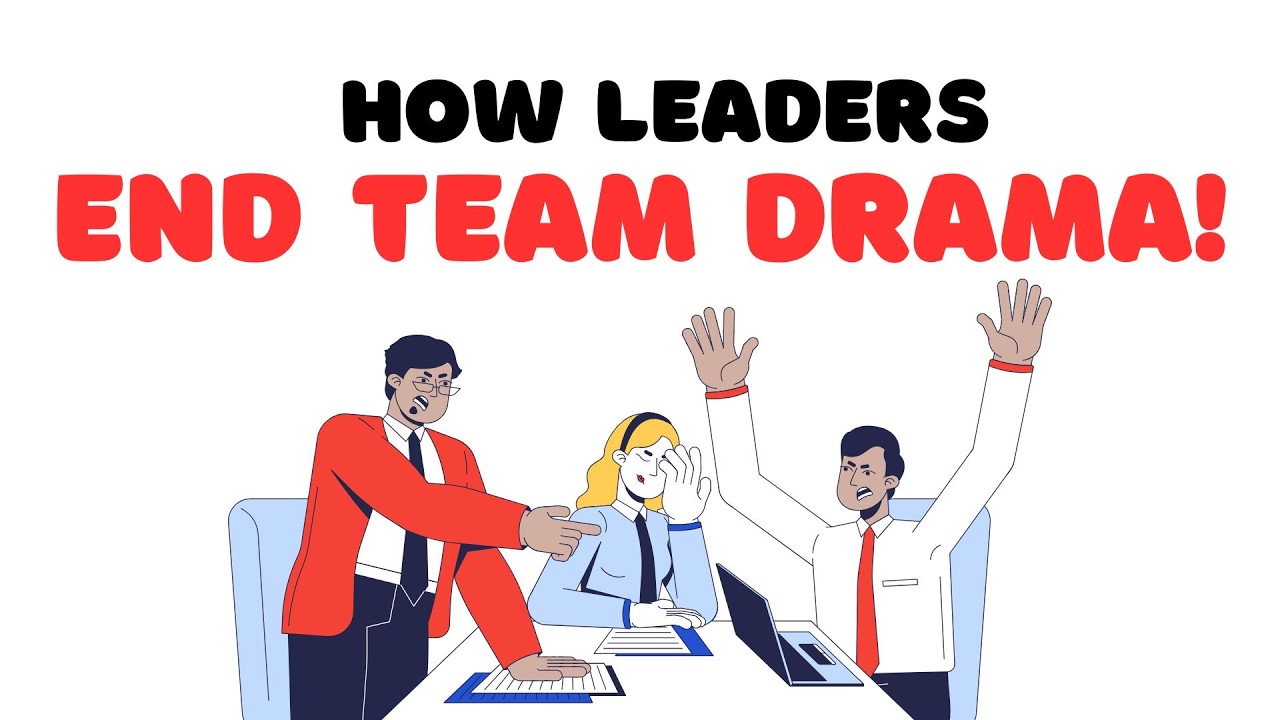
Two talented employees, one unresolved conflict, and suddenly your team's productivity drops. Conflict at work is not the real problem. Unmanaged conflict is. The good news is this. When handled correctly, conflict can actually strengthen your team instead of breaking it. For example, in 1977, two brilliant minds at Apple, Steve Jobs and Steve Waznjak, didn't always agree. Different personalities, different working styles, strong opinions on both sides. Yet together they built one of the most valuable companies in the world. What made the difference? Not the absence of conflict, the management of it. In this video, you'll learn five powerful steps every manager should use to handle conflict professionally and effectively. First, why conflict happens in teams. Before we jump into solutions, understand this clearly. Conflict does not mean your team is broken. In fact, research across high-erforming organizations shows that healthy disagreement often leads to better decisions, more innovation, stronger accountability. Most workplace conflicts are not about attitude alone. They usually come from miscommunication, unclear roles, work pressure, personality differences, poor systems. Even high performing environments face this. For example, teams at companies like Netflix encourage healthy debate, but they also have strong mechanisms to manage disagreements. Your goal is not to eliminate conflict. Your goal is to manage it intelligently. Step one, be proactive. The way you step in matters. Most managers make one critical mistake. They wait. They hope the issue will resolve itself. But small tensions when ignored turn into emotional battles. What being proactive really means? Being proactive doesn't mean jumping in aggressively. It means spotting early warning signs, addressing issues privately, acting calmly, not emotionally, choosing the right tone and timing. Remember, in conflict situations, your approach matters as much as your timing. Early warning signs to watch. As a manager, stay alert for sudden silence between teammates, passive aggressive emails, dropping collaboration, complaints through third parties, visible tension in meetings. These are smoke signals. Don't wait for the fire. For example, think about the intense creative disagreements during the making of Titanic. Big personalities, high pressure, strong creative opinions. Projects of that scale always involve friction, but structured leadership keeps the team aligned toward the common goal. Similarly, your job is to step in early before friction becomes friction damage. Practical action for you this week. Observe team behavior closely. Address tension within 24 48 hours. Keep your tone calm and neutral. Proactivity saves relationships before they break. Step two, deal with difficult people and incompetence. Now, let's address something many managers hesitate to admit. Sometimes conflict isn't just misunderstanding. Sometimes it's difficult behavior or lack of capability. And if you treat both the same way, the conflict will continue. First, identify the real category. Is this person unwilling or unable? Because the fix is completely different. When you're dealing with difficult behavior, common patterns, interrupting others, blaming teammates, getting defensive quickly, dominating discussions, what works? Stay calm and specific. Use observable examples. Set clear behavioral expectations. Avoid emotional debates. Better way to speak instead of you always create problems. Say, "In the last two meetings, there were interruptions. Let's work on giving everyone space to contribute. When the issue is incompetent, sometimes the person is trying but struggling. Watch for repeated errors, missed deadlines, overdependence on teammates, confusion about responsibilities, what works, provide targeted coaching, clarify expectations, create short-term milestones, offer structured support. For example, imagine a product team similar to those at Apple. A senior engineer keeps getting frustrated with a junior teammate. At first glance, it looks like ego conflict, but after investigation, the manager realizes the junior lacks technical clarity. The senior is tired of rework. Solution: targeted training plus clear review checkpoints. Conflict drops significantly. Step three, dig under the surface. This is where great managers separate themselves from average ones. Most conflicts have visible issues and hidden causes. If you only fix the surface, the conflict returns. The rule: What people say is often not the real problem. You must dig
Segment 2 (05:00 - 10:00)
deeper. Questions that reveal the real issue. In your one-on-one conversations, ask, "What's been most frustrating for you? When did this start? What outcome would feel fair to you? What do you need going forward? Then listen carefully not to reply but to understand. Common hidden causes. Many team conflicts are actually about feeling disrespected, lack of recognition, workload imbalance, unclear roles, past unresolved incidents. For example, two sales executives argue constantly over leads. Surface issue, lead distribution, real issue uncovered. One feels the other gets favoritism and there is no transparent allocation system. Manager introduces a clear lead rotation process. Conflict disappears if the same conflict keeps repeating. Don't just manage the people. Fix the environment they are working in. And as we're talking about digging deeper, handling tough personalities, and structuring better conversations. This is exactly where many leaders struggle. You might understand the theory, but applying it daily is different. That's why the leaders toolkit is created because most firsttime leaders quietly struggle with questions like how do I inspire my team without forcing authority? How do I handle tough conversations without damaging relationships? How do I make decisions that people actually follow, not just nod to? That's where having structured guidance makes a real difference. And we didn't stop at the ebook. You also get a checklist to keep you focused, a resource cheat sheet for quick solutions, and a mind map that simplifies everything into one glance. Simple, practical, and powerful. It directly tackles the conflicts we're discussing right now. Because leadership isn't about what you know, it's about what you consistently execute. I've added the link in the description below so you can easily explore it after this video. Now, let's move to the next critical step. Step four, work on communication. Poor communication is the fuel. Conflict is the fire. Remove the fuel and most fires shrink quickly. Your role as manager is you are not just solving the issue. You are designing how conversations happen. Set ground rules for joint discussions. Before bringing both parties together, establish no interruptions, no blaming language. Use eye statements. Focus on future solutions. Respect speaking time. This creates psychological safety. Powerful communication techniques. Technique one, reframing. Convert emotional statements into neutral ones. Employee says he never listens. Manager reframes. So the concern is about feeling unheard in discussions. This lowers emotional intensity immediately. Technique two, future focused questions. Ask, "What would better collaboration look like next week? " or "What can both of you do differently starting now? " This shifts energy toward solutions. Technique three, structured agreements. Always end with clear responsibilities, specific actions, defined timelines. Vague peace doesn't last. Structured clarity does. For example, two designers constantly argue over creative direction. Manager conducts a structured conversation and introduces weekly design sync, clear approval hierarchy, shared feedback document. Within one month, friction drops significantly. Step five, implement change. Here's a hard truth. Many managers stop after the conversation. Big mistake. Conversation alone does not fix conflict. Systems fix conflict. If the environment stays the same, behavior returns to old patterns. what implementation looks like. After conflict resolution, you may need to adjust work processes, role clarity, reporting structure, meeting rhythm, and performance metrics. Follow-up framework after the resolution meeting. Week one, quick check-in. Week two, observe collaboration. Week four, reinforce positive behavior. Consistency builds trust. For example, after resolving conflict between two project managers, the leader defined ownership areas created shared tracker scheduled fortnightly alignment. Within 6 weeks, escalations dropped, delivery improved, team morale increased. That's the power of implementation. How to reduce conflict before it starts. [snorts] Smart leaders don't just solve conflict. They design teams where conflict is easier to manage. First, clarify roles early. Many conflicts start with, "I thought that was your job. " Use written responsibilities, clear KPIs, and ownership charts. Clarity prevents overlap fights. Second, build
Segment 3 (10:00 - 11:00)
psychological safety. Encourage people to speak early, raise concerns, and ask for help. Silence today becomes conflict tomorrow. Third, standardize key processes. Create clarity around approvals, handovers, escalations, and communication channels. Good systems reduce personal friction. Fourth, recognize collaborative behavior. Public appreciation reinforces teamwork. What gets recognized gets repeated. When people feel valued, they compete less destructively. Fifth, train the team on communication skills. Don't assume people know how to collaborate. teach active listening, constructive feedback, meeting etiquette. Prevention is always cheaper than repair. Conflict in teams is not a leadership failure. Ignoring it is when you act proactively, handle difficult behavior and skill gaps, dig beneath the surface, structure healthy communication, and implement real changes. You don't just solve conflicts, you build a stronger, more resilient team. And the best part, these are skills you can improve every single week because great managers are not born. They are built conversation by conversation, decision by decision, and conflict by conflict. If you enjoyed this video, don't forget to hype it up. It helps the channel grow. Thanks for watching and comment below. What's the most challenging team conflict you've ever faced as a manager? And remember, handled poorly, conflict divides teams. Handled well, it builds stronger ones. Check out our next video on why even the best teams collapse, the five dysfunctions of a team. Click here to watch it next.