How I design effective study plans for ANY SUBJECT (and stick with them) | trading, coding etc.
13:45

How I design effective study plans for ANY SUBJECT (and stick with them) | trading, coding etc.

Tina Huang 04.07.2021 82 085 просмотров 4 172 лайков обн. 18.02.2026
Поделиться Telegram VK Бот
Транскрипт Скачать .md
Анализ с AI
Описание видео
Hi friends! Self study is hard! It's hard to design an effective and efficient self study plan and I argue even harder to actually stick with it. It's common to fall into the trap of buying other people's study plans and then giving up. Or falling into tutorial hell and giving up. Or feel frustrated because you feel like you're running around in circles and not seeing progress and giving up. Basically, it's really really easy to give up. So in this video, I'm going to share with you guys 8 crucial ingredients that I incorporate into my study plans. The first 5 is for designing the study plan and the last 3 are to make sure that I actually stick with it. There you have it: how I design effective study plans and stick with them! Timestamps 00:00 Intro 00:50 Ingredient 1 - purpose 02:39 Ingredient 2 - meta-learning 03:45 Ingredient 3 - directness 05:15 Ingredient 4 - breadth over depth 07:02 Ingredient 5 - resources 09:18 Ingredient 6 - schedule 10:58 Ingredient 7 - accountability 12:27 Ingredient 8 - notes _____________________________________________________________________ Links mentioned in video How I would learn to code (if I could start over): https://youtu.be/MHPGeQD8TvI How to learn data science in 2021: https://www.youtube.com/watch?v=Axu4tJl8gbM _____________________________________________________________________ discord: https://discord.gg/5mMAtprshX study with tina channel: https://www.youtube.com/channel/UCI8JpGrDmtggrryhml8kFGw livestreaming google calendar: https://calendar.google.com/calendar/u/1?cid=cDBtOGgxOG1waW92bTJxYzdpZmkzNmgwODhAZ3JvdXAuY2FsZW5kYXIuZ29vZ2xlLmNvbQ SQL for tech and data science interviews course with 10 mock interviews: https://www.udemy.com/course/sql-for-tech-and-data-science-interviews/?couponCode=DF947818F15A561AE84E ($12.99 promotion until July 18th, 2021!) _____________________________________________________________________ Other videos you might be interested in How to self study technical things: https://www.youtube.com/watch?v=_EzmbCuoFcU ______________________________________________________________________ Subscribe: https://www.youtube.com/channel/UC2UXDak6o7rBm23k3Vv5dww/?sub_confirmation=1 ______________________________________________________________________ Real SQL interview question walkthrough series: https://www.youtube.com/watch?v=Td-cmLfQ7uU&list=PLVD3APpfd1tuXrXBWAntLx4tNaONro5dA **Check out StrataScratch for SQL interview prep: https://stratascratch.com/?via=tina ______________________________________________________________________ About me Hi, my name is Tina and I'm a data scientist at a FAANG company. I was pre-med studying pharmacology at the University of Toronto until I finally accepted that I would make a terrible doctor. I didn't know what to do with myself so I worked for a year as a research assistant for a bioinformatics lab where I learned how to code and became interested in data science. I then did a masters in computer science (MCIT) at the University of Pennsylvania before ending up at my current job in tech :) ______________________________________________________________________ Contact youtube: youtube comments are by far the best way to get a response from me! linkedin: https://www.linkedin.com/in/tinaw-h/ email for business inquiries only: hellotinah@gmail.com If you're reaching out through linkedin, please leave a youtube comment just letting me know that you reached out :) ______________________________________________________________________ Links marked with * are tracking links that track traffic that comes from my channel. Links marked with ** are affiliate links where I receive a small portion of the sales price at no cost to you. I really appreciate your support in helping improve this channel! :) #selfstudy #datascience #tinahuang
Оглавление (9 сегментов)

  1. 0:00 Intro 196 сл.
  2. 0:50 Ingredient 1 - purpose 413 сл.
  3. 2:39 Ingredient 2 - meta-learning 253 сл.
  4. 3:45 Ingredient 3 - directness 305 сл.
  5. 5:15 Ingredient 4 - breadth over depth 393 сл.
  6. 7:02 Ingredient 5 - resources 493 сл.
  7. 9:18 Ingredient 6 - schedule 385 сл.
  8. 10:58 Ingredient 7 - accountability 345 сл.
  9. 12:27 Ingredient 8 - notes 286 сл.
0:00

Intro

hey everyone how's it going i want you to be really honest with me okay how many times have you designed your own study plan or maybe bought someone study plan or someone's course or something and then just didn't actually do it or maybe you did it for two weeks or three weeks or a month and then you gave up it's okay i'm not judging you here i can't even count or more like i don't want to think about how much money and time i've actually spent doing that until i figured out these crucial ingredients into how to actually design an effective study plan and how to make sure that i follow through with it so in this video i'm going to share with you guys eight crucial ingredients for designing an effective and efficient study plan and to actually make sure that you stick with it the first five are going to be about designing the effective study plan and the last three are specifically going to be focused on how to make sure that you stick with it and you don't give up all right let's go number one is
0:50

Ingredient 1 - purpose

having a clearly defined purpose so this is something that people generally don't do at all like they just don't really think about why it is that they actually want to learn something but this is actually really important and there's two reasons for this the first reason is that we're in the information age right now there's just so much information available out there but that doesn't mean that all this information is equally valuable equally important towards achieving your specific goal so you need to have a clearly defined purpose so you can make sure that what you're learning is actually directly applicable towards what it is that you want to learn or else it's very easy to end up just learning a bunch of random information falling into a tutorial how learning just bits and pieces and not actually work towards achieving your ultimate purpose and the second reason is that in order to build an effective study plan you need to know what your purpose is so you can actually design in that purpose so you can start achieving your goals from the get-go this is called the principle of directness and i'll be going to more detail about this later in the video now let me give you some examples of what i mean by having a clearly defined purpose you basically want something to be as specific as possible so instead of saying i want to learn to code your more specific purpose can be i want to learn to code so that i can create a web app or for example my current goal right now is i want to be a consistently profitable trader in which i make one to two percent of profit every single month and this is in contrast to me just saying i want to become a trader and make lots of money and let me just throw in a third example uh this is from about a year ago when i wanted to get my current position as a data scientist and a fan company but i didn't know any sql so my goal at that time was to pass the sql portion of my data science interview and this is in contrast to me just saying i want to learn sequel having a clearly defined purpose is really going to be that building block of creating a good study plan number two is learn how to learn we're like
2:39

Ingredient 2 - meta-learning

meta learning what i mean by this is that whatever it is that you're trying to learn you probably don't know the most effective way of learning it or what it is that you need to learn in order to achieve your goal for example if you come from a non-technical background and you're trying to learn how to code you might fall into the trap of trying to remember all the syntax and try to memorize and understand every single detail when instead you should actually be focused more on understanding the high level concepts and then going and applying it because application is by far the best way of learning so what you should do before you even start learning is to go and do some research read other people's articles about their study plans there's also subreddits maybe lurk on the subreddits or ask questions if you're brave enough and also watch other people's youtube videos chances are whatever it is that you're trying to learn someone has probably learned that already and then posted their study plan or made a video about it do your research on what has been effective for other people and incorporate that into your own study plan and here's how much time to spend at this research phase a general rule of thumb from my favorite book ultra learning uh by scott young is that you should spend 10 of the time in which you would be spending doing your studying in total number
3:45

Ingredient 3 - directness

three is the concept of directness this is also a concept from ultra learning and let me read you a definition directness is to learn by doing the thing you're trying to become good at and to not trade hands-on experience for more convenient alternatives for example if you're learning web development then you should focus on learning coding specifically for web development probably in javascript or say you're trying to learn data science then you should choose either our python probably and actually focus on using the modules that people use in data science and focus on how to do data manipulation how to do machine learning if you're into that in this case the track that people fall into whereas scott says the more convenient alternatives is watching other people code because it's so much easier and more convenient to watch other people code and like convince yourself that you actually know what's going on now or just practicing random snippets from whatever course that you're doing that's not directly applicable to you learning the thing that you're trying to learn or for example you're doing trading like i am right now the more convenient alternative would be to watch other people draw like support and resistance and just like doing these analysis as opposed to you yourself going out there and draw your own support resistance put in your actual trades yourself and then have your own hypothesis-driven analyses i always try to incorporate this principle of directness into all of my study plans because by far the best way of achieving your goal is to practice what it is that you want to achieve i hope this also solidifies why it is that having that clear purpose in mind is super important number four is designing a study plan that prioritizes
5:15

Ingredient 4 - breadth over depth

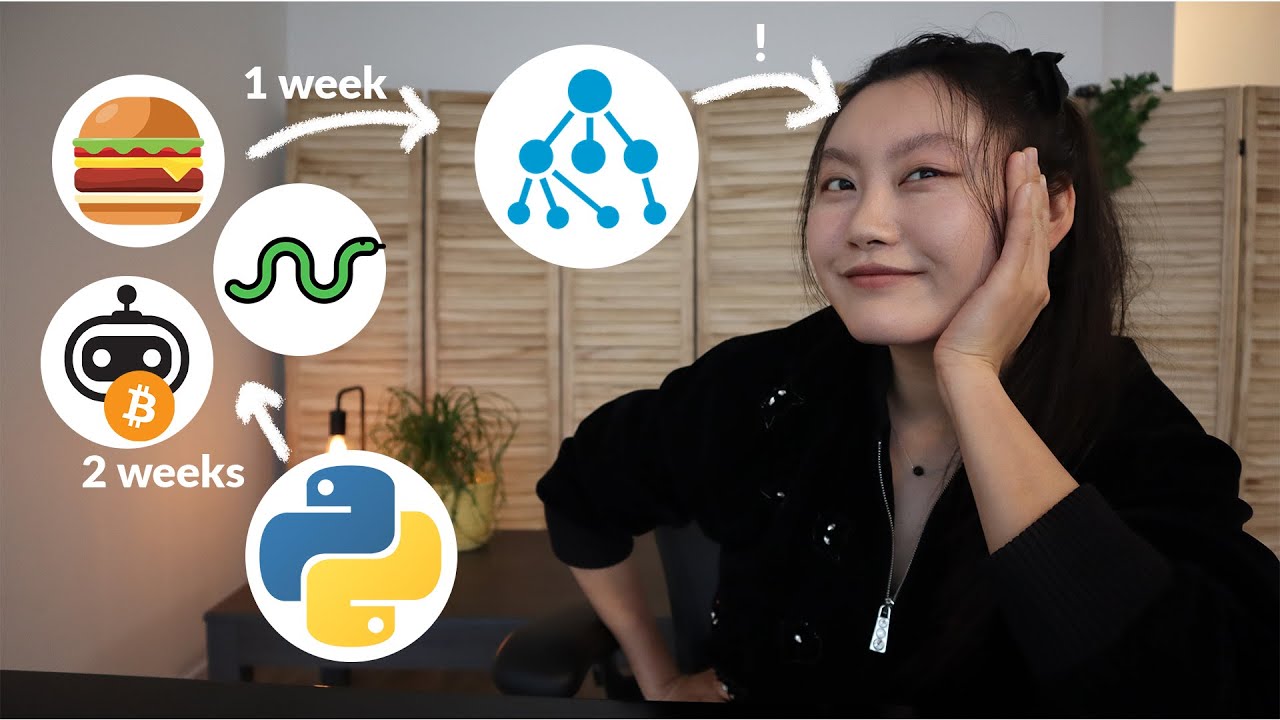
breadth before depth in learning and iterating to increase your depth of knowledge over time i think this is best explained if i illustrate with an example say you're learning how to code and your goal is to build a stock trading bot a breadth-first approach is that you go and learn the basics first for example how to declare variables loops functions if statements and maybe object-oriented programming as well and after you've learned these basics then you will go and implement the most simplistic version of that stock trading bot so for example you can have literally an array in which you go and manually put in the prices of a stock and then do some calculations and then have your code output whether you should buy or sell a stock and how much of it and then you would go and take that output and then put the trade in yourself and then after you build a simplistic trading bot probably what you're thinking is you know what be great if i can actually get this data from some real life source and then have it put in the trade for me and then your next step would be learning about apis and then how to connect the real-time price data to your code and then being able to put the trade in automatically this is in contrast to a depth first approach where you're like okay i want to build this like super cool trading bot right so i first have to learn like all the basics and i also have to learn how to use apis and then i also have to learn like maybe machine learning if i want this to be a machine learning based trading bot and then you like try to learn all these different things and then go and make your bot and the reason why this is not as good as the breadth first approach is because when you're starting out you don't actually know what's the most relevant towards what it is that you're trying to learn so you might just learn a bunch of extraneous irrelevant information and waste your time doing that not to mention that it's really easy to kind of get overwhelmed with all that information that you're trying to learn and you might just give up
7:02

Ingredient 5 - resources

up number five is flexibility with resources so a mistake that i used to make every single time was i would be like okay i have this course i have this resource and i have to finish it from beginning until end and do every single thing and this is probably a mindset that i got from school because in school like you kind of have to do that you can't just like skip parts of the syllabus that you don't want to do but in fact it's actually really important to design that flexibility within your study plan itself and focus on your purpose and achieving your purpose instead of being dependent on a single course or a single resource and the reason for this is because things happen you know like maybe in the beginning you thought this is a great resource and that it's super relevant towards achieving your purpose but a few weeks into it you realize that it's actually not so relevant or you're just like this instructor is starting to piss me off right and you want to be able to be like okay i can go and find another course another resource um and work with that instead something else that i do really often is i would have this one resource i think is really good in terms of teaching knowledge but it's not super good in terms of application so i would learn concepts and knowledge from that resource but on the side i would supplement it with maybe another more applied resource or just come up with projects to do on the side so that i can implement what it is i'm learning directly into projects this is what i'm doing right now for trading as well i have that one focused resource which is trading with rainer and i learned a lot of things from him and then on the side i designed my own system for putting in trades and then kind of applying the concepts into real life remember it's the learning itself and trying to achieve the purpose of you learning it that should be guiding you and not have a single point of failure in a single resource by the way if you want to see some study plans i've designed i will either link it above over here or in put it in the descriptions currently i have how to learn data science and how i would learn to code if i could do it over again also i have a trading study plan right now so if you want to see what that looks like leave a comment below and then i'll be happy to make a video about it too alright next up i'm going to talk about the three crucial ingredients to make sure that i actually stick to my study plan so i'm going to start with the most obvious one which is
9:18

Ingredient 6 - schedule

carving out time in your schedule so this is something that you probably already know but it's very possible that you're know you have to do it but you're not actually doing it or you think you're doing it but you're not doing it correctly it's extremely important to cover up time in your schedule because if you're like okay i'm just gonna figure out some time for me to learn this thing and not carve out that time you're probably not gonna do it you're a busy person right you have lots of things that you have to do in your day-to-day life ready so you really need to dedicate a certain period of time towards learning and it has to be a reasonable amount of time if you work a full-time job and you have a kid or something saying that i'm gonna study four hours a day every single day is not a reasonable amount of time and you are literally setting yourself up for failure what you should do is look at your schedule very honestly and see where it is that you can carve out two hour time blocks i also recommend having time blocks two to three times a week because what i've found from my own experience is that if you don't do it two to three times at least what ends up happening is that you kind of forget what it is that you learned the last study session and then you waste time in the beginning of the next study session trying to remember what it is that you've learned another tip is to try to have it at the same time throughout the week this way it's a lot more consistent and it's easier to form a habit for me personally i do monday tuesday and friday for two hours from 7 30 until 9 30 am cst before i start work i think if you follow these steps and if carve out time your schedule you're like 80 90 there but if you're like me and you're a master procrastinator and you just kind of like somehow weasel your way out of anything um my next ingredient is what made me go from that 80 90 to 100 consistency and that is accountability specifically
10:58

Ingredient 7 - accountability

social accountability this can't work by being in a small study group where everybody's trying to learn something we're learning the same thing and you keep each other accountable motivated i think this works pretty well but what works even better for me is what i do now which is live streaming i literally live stream every single one of my study sessions on monday tuesday and friday what i do is on saturday or sunday i would usually go and post my scheduled live streams for the week on monday tuesday and friday and then i would update my google calendar so that other people can join it and we usually have a group around 100 people or so for each of these live streams and let me tell you this is like the best thing i've ever done or like the second best thing after youtube because i'm so freaking accountable like i'm not live streaming is i can't not show up so i always show up and then over time it's become a habit so it doesn't feel very difficult for me to actually get up in the morning and do this anymore because i've done this for what like five or six months now in fact i really look forward to these live streams now because we have a consistent group of people now who show up almost every single time and we're all studying together and we form like a community at this point and we keep each other accountable and i really look forward to just chatting with everyone and you guys just inspire me so much every time anyways if you want to join in the live stream as well um by the time that this video is out i should have my second youtube channel up which is study with tina i'll be posting my live streams and also the google calendar on that channel so you can join in if you if that time works for you number three is taking notes so taking notes in
12:27

Ingredient 8 - notes

general is awesome because it really helps me focus on what it is i'm learning and also helps me digest all the information that's being presented but not only that though when i take notes i have a written record of all the things that i've learned and when the time comes when i feel discouraged where i just feel stuck which always happens for me um by looking through that written record and just seeing how far it is that i've come it makes me feel better and it makes me more motivated and more willing to keep going and just push through it it's kind of like a subtle thing but it does help me a lot also before a study session what i would do is revise the notes that i made in the previous study session and that helps me refresh my memory and also ease my mindset into the correct mindset to start learning again as most of us know the hardest part of every single study session is actually starting itself so this is a way that really helps me kind of get into that mode and start studying by the way i recently made a video about how i take notes so if you're interested you can check that out which i'll link over here so there you have it eight crucial ingredients for designing an effective and efficient study plan and to actually make sure that you stick through with it i hope this video was helpful for you and next time around i hope that you're able to incorporate some of these ingredients into your own study plan see you guys in the next video live stream

Ещё от Tina Huang

Ctrl+V

Экстракт Знаний в Telegram

Транскрипты, идеи, методички — всё самое полезное из лучших YouTube-каналов.

Подписаться