My career changing computer science masters degree in 15 minutes (Upenn MCIT)
15:13

My career changing computer science masters degree in 15 minutes (Upenn MCIT)

Tina Huang 21.02.2021 64 246 просмотров 1 727 лайков обн. 18.02.2026
Поделиться Telegram VK Бот
Транскрипт Скачать .md
Анализ с AI
Описание видео
I did a pharmacology undergraduate and then a masters in computer science. This is my whole career changing computer science masters degree in 15 minutes. The program is called masters in computer and information technology at the University of Pennsylvania (Upenn MCIT). I hope this video is useful for those of you looking to transition into computer science, data science, software engineering etc. from a non-technical background :) computer science degree in 15 minutes - let's go! ______________________________________________________________________ Timestamps 00:00 Intro 01:00 semester 1 (core classes) 04:36 internship 06:33 semester 2 (core classes) 10:02 more internship stuff 10:45 data science electives 13:16 nlp & databases electives ______________________________________________________________________ Other videos you might be interested in Interview with director of MCIT (lots of info about the program, how to apply etc.) : https://www.youtube.com/watch?v=rd1HKwJT6GM How to learn data science in 2021: https://www.youtube.com/watch?v=Axu4tJl8gbM The resume that got me into FAANG as a data scientist: https://www.youtube.com/watch?v=vx-x-yXXE9I ______________________________________________________________________ Discord: https://discord.gg/uaGFKueJvf Subscribe: https://www.youtube.com/channel/UC2UXDak6o7rBm23k3Vv5dww/?sub_confirmation=1 ______________________________________________________________________ Real SQL interview question walkthrough series: https://www.youtube.com/watch?v=Td-cmLfQ7uU&list=PLVD3APpfd1tuXrXBWAntLx4tNaONro5dA Check out StrataScratch for SQL interview prep: https://stratascratch.com/?via=tina ______________________________________________________________________ About me Hi, my name is Tina and I'm a data scientist at a FAANG company. I was pre-med studying pharmacology at the University of Toronto until I finally accepted that I would make a terrible doctor. I didn't know what to do with myself so I worked for a year as a research assistant for a bioinformatics lab where I learned how to code and became interested in data science. I then did a masters in computer science (MCIT) at the University of Pennsylvania before ending up at my current job in tech :) I have accepted that I will forever be a lazy person so have since decided to embrace that. My motto is to always minimize effort and maximize outcome! ______________________________________________________________________ Contact youtube: youtube comments are by far the best way to get a response from me! linkedin: https://www.linkedin.com/in/tinaw-h/ email for business inquiries only: hellotinah@gmail.com *If you're reaching out through linkedin, please leave a youtube comment just letting me know that you reached out :) ______________________________________________________________________ *The StrataScratch affiliate program give me a small portion of the sales price at no cost to you. I really appreciate your support in helping improve this channel! :) about: #computersciencedegreein #upennmcit #TinaHuang
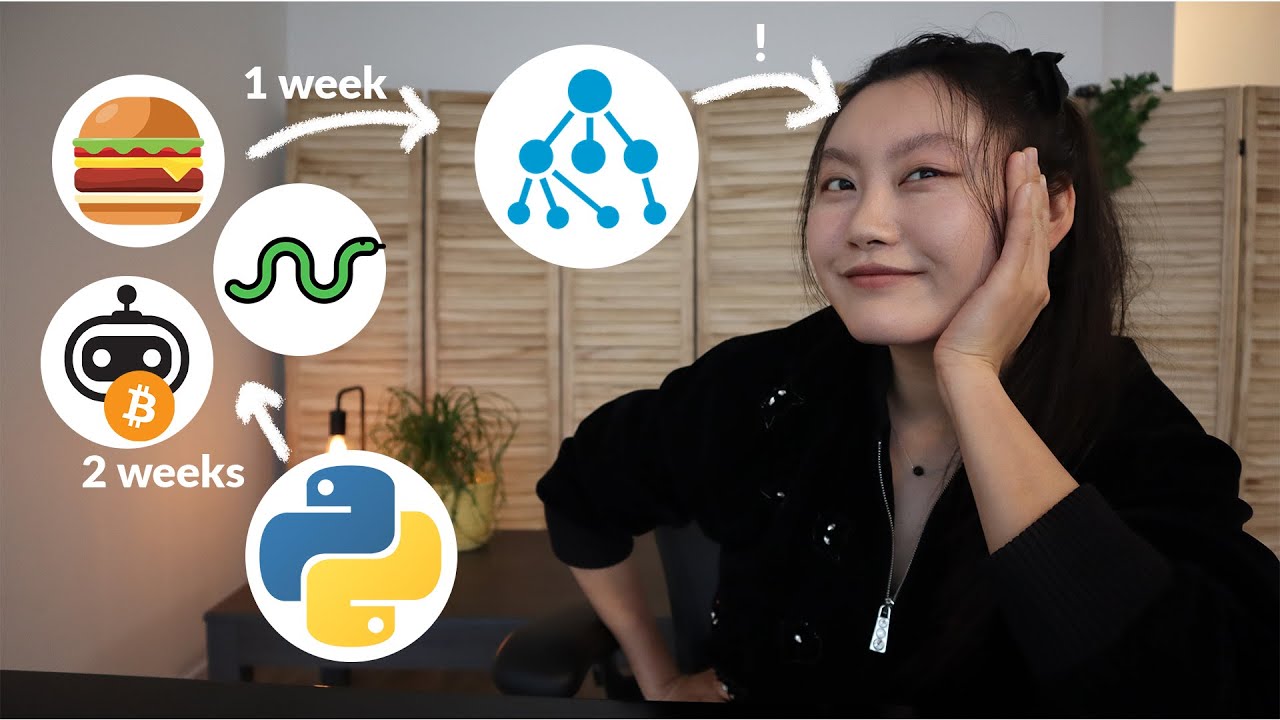
Оглавление (7 сегментов)

  1. 0:00 Intro 198 сл.
  2. 1:00 semester 1 (core classes) 700 сл.
  3. 4:36 internship 409 сл.
  4. 6:33 semester 2 (core classes) 637 сл.
  5. 10:02 more internship stuff 136 сл.
  6. 10:45 data science electives 507 сл.
  7. 13:16 nlp & databases electives 388 сл.
0:00

Intro

my master's degree was called masters in computer information and technology at the university of pennsylvania it is a mouthful but it's essentially just a computer science master's degree what's more special about it is the fact that it's a degree for people who don't have a background in computer science so you get a really interesting group of people from a bunch of different backgrounds in my cohort there was a medical doctor an investment banker mechanical engineer accountant people who did like business majors and english majors basically you name it also the age range was very diverse i think um we have people all the way from 21 to 45. great so now that we have all that information out of the way let me now tell you the story of how i decimated my ego and it was the hardest time of my life trying to balance computer science accelerated computer science learning plus internship plus a job hunt but it was also where i experienced the most growth and i really did make lifelong friends because as they say misery loves company i'm being very dramatic right now all right let's go so
1:00

semester 1 (core classes)

first year of mcit is six core classes three in the first semester and three in the second semester in the first semester they were cit 591 592 and 591 was an intro to java class and 592 was a discrete math and probability class and 593 was an intro to systems class all right so first semester was by far the hardest semester 591 was okay because it was an intro class and i had already learned how to code for my previous job and i also took a couple python classes in my undergraduate in my final year i'll just pull up the syllabus here and as you can see it's your standard intro programming class with object-oriented programming data types loops and inheritance etc the only extra part was some software design stuff in this class we had a homework due every other week and they were pretty manageable basically like your generic coding a blackjack game or coding tic-tac-toe kind of project but 592-593 oh my god okay so 592 was the class that was incredibly hard for me personally we started off with probability and then moved on to proofs with an emphasis on induction and recursion and we ended with graph theory looking back now the class wasn't actually like hard per se but it just covered a lot of stuff in a really short period of time one semester for me i had not done probability past high school and i had never touched proofs before this class so if you combine that with a healthy dose of a debilitating anxiety and that is how i feel in my first test ever in my life in this class so after finding out i feel i actually distinctly remember going to the professor and trying to explain to him um that i think i might have to drop out because i am afraid that i may be too stupid something like that and he just kind of i remember looked at me and essentially told me to calm the [ __ ] down unfortunately i did not and i basically had a mini aneurysm every single week when the homework was due so as i somehow did much better for my second midterm and that boosted my confidence a little bit and as the course progressed i did begin to feel a little bit better as a funny side note i ultimately became a ta for this class and i suspect arvind the instructor asked me to be a ta because of how panicky i was i guess he like probably hoped that i could help calm down the other panicky students armin if you're watching this let me know if that was true with 593 i think it was conceptually a lot easier than 592 but there was even more information and a lot more work we started with transistors and graduated to assembly language and then to see we also had a homework every two weeks but a new homework was assigned a week before the last one was due so what it was actually like in reality was that you scramble really hard to finish the current homework before the deadline and then you try to start the next one asap and each of these homeworks was like not easy i remember distinctly having a semi-mental breakdown because we had to code these colored rectangles using assembly and for my like piece of code i just had like one pixel that just like would not align properly and it was like 30 minutes before the deadline it's just like freaking out and our final project for this class was the code of compiler and c i think i honestly don't remember what it was it was something like coding a compiler i just remember that i was again freaking out continuously because in c you have to control your memory usage and we use this style grind software to check if there were memory leaks and for my code i remember having like 70 bits or something leaking and you get points off based upon how many memory leaks you had
4:36

internship

an obligatory mention about internships so why we were all struggling through our first semester we were also filled with existential dread every time someone mentioned internships like imagine uh that there we were you know learning the very basics of computer science but at the same time we had to be applying to different places and trying to pass their interviews for most of us that was software engineering interviews and we were trying to do this before we had actually learned the things on the interview i remember uh sitting across from the interviewer trying to explain to him that i could not do the graph question because we hadn't learned about graphs yet because that was in semester two for me personally i could barely manage the schoolwork itself so i put in an application for goldman sachs and other finance places because of the november deadline and i just remember like not really thinking that much about it but just hoping that they wouldn't turn around for at least a month or so and luckily i was right for me i think if i had to describe the first semester of mcit in one phrase it would be frequent mental breakdowns so i realized that i might have just painted a rather horrifying picture of my first semester and hey truly it was the hardest time i've ever had academically but like i mentioned earlier it was also a time of a lot of growth for example like realizing that i can in fact fix obscure bugs and see when there's a timer taking down and of course misery loves company i mostly did homework with two other people in my cohort let's call them frank and walter frank was just as if not more panicky than i was and i feel like it was just the two of us you probably would have just given each other heart attacks but thankfully for us walter was a much calmer presence and i think for walter watching his panic kind of like motivated him i don't know trust me just like that the dynamic just kind of worked but yeah the three of us forged a very strong bond doing homework together after classes oftentimes until three a. m in the lobby we're the top of the building where frank and i used to live alright let's move along so this video isn't 30 minutes long
6:33

semester 2 (core classes)

second semester was 594 595 and 596. 594 was a continuation of 591 it was called data structures and software engineering the class is essentially more java and cover common data structures like arrays lists stacks cues trees etc i understand that software design is usually a couple other classes in traditional undergrad but since we had to cover everything in one year they just kind of condensed all these different things into one class and also crammed in software architecture design patterns networking multi-threading and graphics this was definitely a very accelerated course for most of us who were interviewing primarily for software engineering including myself this course along with 596 which i'll go into more detail about later was the class that was the most relevant to interviews i do have to say that although the class was pretty tough it was very thorough and the homework helped me a lot in my interviews actually since we're already talking about 596 let's just talk about 596 now the course is called algorithms and computation and it's considered a continuation of 592 which was the math class 596 was a complement to 594 because it covered a time and space complexity like big o as well as the different sorting algorithms and recursion it also covered graph algorithms like traveling salesman problem and also dynamic programming i remember just when i had finally wrapped my head around recursion we then started dynamic programming and i just remember feeling like so confused again but like eventually i mostly wrap my head around dynamic programming as well and okay like i actually that was when i felt like an actual sense of intense appreciation of just like how cool and smart this stuff actually was anyways overall this was one of my favorite courses along with 592 although i definitely did not appreciate 592 when i was taking it i remember for this class i would leave the recitations with my head spinning but feeling weirdly satisfied at the same time just like thinking wow i think i'm just intelligent enough to appreciate how beautiful this stuff is but currently i'm still far too dumb to truly comprehend it does that even make sense let me know in the comments if you can relate to that and the last of the core classes was cit 595 which was called computer systems and programming this was a continuation of 593 and this was a comparatively easier class for this semester although i would argue that none of the classes are actually like easy whereas we used to call it a u of t like bird courses but comparatively it was easier than the other two we learned more about system stuff and c plus um covered concurrency resource management networking and all the things that have to do with what was happening under the hood for coding language when i was doing 593 and 595 i didn't really see the purpose of it since we all code in java or python these days and we don't really worry about these things like pointers or memory but now looking back as a slightly more wise and more mature tina i have to say i really did appreciate it when i code in java or python i don't technically have to worry about these things but i still have an intuitive drive to write more optimized code which i think was only nurtured through the pain of writing assembly code and manipulating pointers and scenes but really though jokes aside i do think that these classes made me a better programmer and i think i'm also able to pick up languages and technologies much faster since i have a base understanding of how languages fundamentally work okay obligatory excerpt about internships
10:02

more internship stuff

i applied for more things in december and january and february like a lot more things i applied to over 200 positions mostly software engineering but also data science ones that i could find i got rejected from most of them but i did have a final round interviews with goldman sachs blackstone and amazon i eventually got an offer from goldman sachs and amazon and you can check out this video for why i ended up at goldman sachs i also made a video about my whole experience at goldman sachs so do check that out too if you're interested but yep that was my first year of mcit where i did these six core classes that technically caught me up to undergraduate cs level it was a remarkable year the second year mcit is
10:45

data science electives

when you're released into the wild with the other cs masters people like the ones who actually do have a computer science undergrad were related underground you have a bunch of different electives to choose from like analysis and algorithms more systems things you know actually a bunch of these weren't even available when i was at penn there's also machine learning nlp and a bunch of other really cool electives for me i was primarily interested in data science related electives and pbh i totally also wanted to slack off a little bit after that very grueling first year another thing is like i wanted to focus on landing a full-time job since i rather full-heartedly told goldman sachs that i didn't want to come back this year first semester i took big data analytics and stats for data science big data analytics was pretty fun and easy class we recovered everything from data wrangling to text processing and supervising unsupervised machine learning algorithms as well as neural networks it wasn't a deep course on any one subject but more like a breadth-based course that introduced you to all the different types of machine learning and big data technologies you learn how to use modules and technologies but we didn't really dive into the math behind it now stats for data science i took this course as a compliment to the big data analytics course because i figured if i'll be learning how to use all these algorithms i should probably learn how they work under the hood as well right a big mistake this course was so hard we started off with very basic statistics like mean median mode but before i realized we were deriving and proving things from first principles i actually asked the professor in the beginning if it was cool that i hadn't taken any math classes past single variable calculus and basic stats and discrete math and just like very elementary proofs and he was like oh yeah sure it's fine you that's totally fine yeah we quickly realized it definitely was not fine when it would come to his office hours and basically go like i don't even know what these symbols mean i think this course has undergone a lot of changes since i took it and i can't find the old syllabus it was essentially all the ml algorithms plus more stuff that to this day i still don't understand i literally don't even know what the prof was talking about and you had to prove each one of your first principles it was mostly linear algebra and multivariable calculus which i had not taken either of let alone be comfortable enough to prove anything with it i ended up taking incomplete for this class but luckily with the help of online resources especially stat quest with josh starmer i somehow managed to scrape by and got rid of my incomplete in the second semester i literally thought i wasn't gonna graduate from this class and finally
13:16

nlp & databases electives

the final semester i took computational linguistics and databases this was also when covet hit the us so somewhere in the middle were towards the end of the semester things switched to being online but given the nature of these classes because it was all coding based it wasn't too disruptive i really liked the computational linguistics class because it was completely project based and for each concept that the professor taught we would do a project on it you can do it either by yourself or as a group there was also a leaderboard where you can compete with other people which is really fun and it was really motivating to increase your f1 score and see like how you stack ranked as a side note this was also when i truly realized how smart it was by learning by doing projects of my entire degree i have the deepest impression of what i learned from this class because of the projects dr chris callison burch really amazing instructor databases was also an extremely useful class taught by another legendary professor dr susan davidson the course was very well structured and went over how databases are designed from scratch sql indexing transactions query optimization and how to use databases and web development and nosql systems as well as mapreduce really good coverage as you can see and there was also no compromise on the depth of it which is you know really amazing for a course funny thing is that i took this class after i taught myself sql and i landed my data science draw you know it all worked out in the end though so i don't have any regrets for that but yeah i'm really glad that i did eventually take this class it provided me with a lot of foundational knowledge that is still very relevant to me at my job today and that concludes my cs masters i really look back with so many fond memories now this degree pushed me far beyond what i thought i was capable of and i had so many moments i've soaked out i totally wanted to give up so many times but having the friends that i made helped me stick through it well i'll see you guys in the next live stream or video

Ещё от Tina Huang

Ctrl+V

Экстракт Знаний в Telegram

Транскрипты, идеи, методички — всё самое полезное из лучших YouTube-каналов.

Подписаться