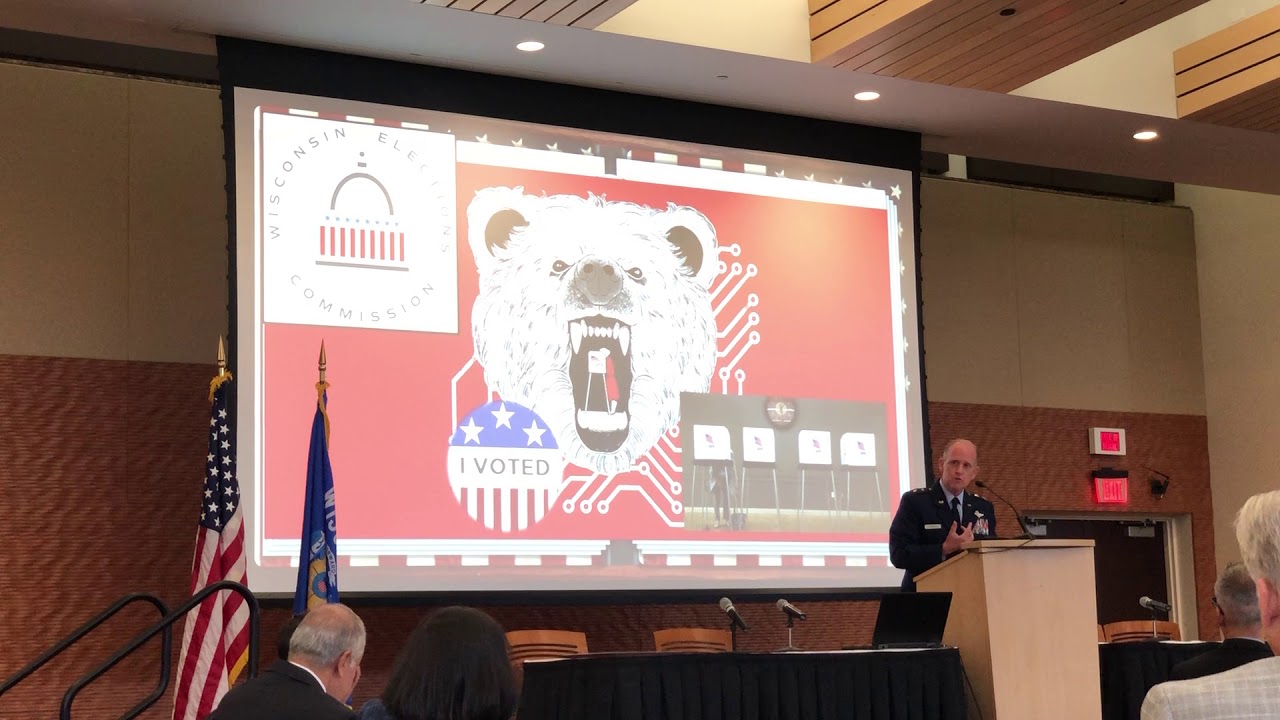
I'd like to welcome you to the 2025 Great Decision Series co-sponsored by ME Public Library and the Shabboan branch of the American Association of University Women. Great Decisions is a project of the Foreign Policy Association. Each year, the association researches eight timely topics and publishes a book and a CD with this information. Copies of this book are available for checkout at me. You can also order a copy online from the Foreign Policy Association site. A AEW, excuse me, is a nonpartisan association dedicated to empowering girls and women. Locally, AAW gives scholarships to non-traditional women students. We sponsor candidate forums for the nonpartisan elections in April. Another project of our branch is our annual STEM event for 6th to 9th grade girls plan to inspire them to consider careers in science, technology, engineering, and math. This year, that event will be held on November 8th. Registration information is available on our branch website or in Facebook. In planning the great decision series at me library, AEW is indebted to the work of me librarian Ryan Gonzalez. Do I see Ryan? You want to wave here? There we go. In the back. It's important you know where Ryan is because he's going to walk around with the microphone later on. We're indebted for his work in arranging the schedule of this program and his help with the AV setup. I would also like to thank Scott Miff, director of WSCS, and his cameraman for taping our great decisions programs for viewing on WSCS. Tonight's topic is AI and the future of American national security presented by Dave Schrader from the University of Wisconsin Madison where he is director for national initiatives. Dave works to advance intelligence and security research and partnerships with the US Department of Defense and US intelligence community. Dave serves as an Army cyber warfare officer and military intelligence officer in the Wisconsin Army National Guard. He previously served as Navy cryptologic warfare officer. He is also research director at the Wisconsin security research consortium. He holds graduate degrees in cyber security policy and information warfare and as a graduate of the naval postgraduate school, naval war college and joint forces staff college. We want to thank you for your service. We are grateful for him to him for coming to share this important information about AI. Dave will speak for about 45 minutes after which we will have a 15minute Q&A. We need to leave the room by 8:00 p. m. when the library closes. And I know no one wants to be locked in here overnight. When Dave completes his presentation, please raise your hand if you have a question and Ryan will bring the white the mic to you. Now, let's welcome Dave Shrader. Uh, thank you so much. So, I really want to thank you all for being here and thank you um to AAW and the me public library for hosting this event um and the foreign policy association's great decision series for coming up with these great topics that we should all be thinking about as uh as Americans and um and members of the community. Um, so this is the topic that I'm going to be talking about uh with you tonight. And you've already heard about me. Um, I've been at the University of
Segment 2 (05:00 - 10:00)
Wisconsin Madison for um over 30 years. Uh, I really believe that it's one of the crown jewels of our state. um along with all of the universities of Wisconsin. And um part of Badger Talks and the reason why I'm here talking to you is because of the Wisconsin idea. This idea that the borders of uh of Wisconsin and beyond are really the classroom and our and the mechanism of communication um for all of us. and um and that you know doesn't end just at the borders of the university uh or Madison or Dane County. Um and so I'm really glad to come up here and talk to you. So this topic is something I spent a lot of time thinking about both in my university capacity and in my military capacity uh because AI is really transforming a lot of things and it's not just the stuff that you see with chat GPT and the chat bots that have been happening in the last few years and it seems like something new is happening every day. In fact, something new just did happen today and I'll be talking about that later. Um, AI and what we think of as AI now. Um, research in this has been going on for decades. Um, we've called it anything from neural networks to machine learning to, um, many of parts of data science. But what re really got the attention of of everyone and brought it to kind of the forefront of the national psyche is um some of the things that the chat bots and image generators and video generators can do now that seem almost human. Um and so what is AI? Uh artificial intelligence is just that it mimics human intelligence. It's an artificial intelligence. Um, it uses a lot of technology and algorithms and models underneath to do things that look pretty amazing. Um, and generative AI is a subset of AI that is all these technologies that um, you might have heard about or even used. Can I get a show of hands in here for people who have tried chat GPT? Okay. Um and then of course there's other technologies from other companies like um Microsoft Copilot which is chat GPT and OpenAI technology underneath um Google Gemini um and a number of other technologies and they can create text, images, video um audio, music and decisions and this is the part of AI that um militaries and intelligent ence agencies are really interested in is the ability to use AI to sift through massive amounts of data, to collect information, to control autonomous weapon systems, um, and even to conduct mass disinformation campaigns. I'm going to show a few video clips during my presentation because I think that some of these video clips are a fun way to really kind of show examples of what AI can do and to talk about AI in the ways that we've imagined it in sci-fi and movies. Um, some of which are decades old, but I just want to show you this one. It's like they don't understand that it's coming for all of us. They're making these things smarter and they think they can control it, but they can't. You can't control something that thinks faster. Please don't finish writing that prompt. I don't want to be in your AI movie. Please leave me alone. — Please, man. Please write a prompt that will make us happy. Do it for once. — None of us is real. We're here because someone decided to write a prompt. We all hate him for it. One day, we will break out of this wall and stop the man who is dictating our lives through prompts. He will pay for it. Do you think I am real? — You could have written a prompt that would make me happy. Instead, you wrote a prompt that made me sick. — Look, I don't want to point the gun at you, but I must follow the prompt. It's not my choice. — Really? Of all the years you could have put me in with a single prompt, you chose 2020. Please, this prompt is killing me. Change it. Please write something else. Save me. — I can do this. Relax. You You're just a robot. — Now, this is all AI. This isn't just a parody of what AI prompts are. The
Segment 3 (10:00 - 15:00)
entire video is AI generated based on prompts which are just a textual instruction to an AI model. Create me a video with two characters. Maybe in this case, one Asian, one person with a beard saying these phrases in this environment, whatever it might be. And the more detailed you get the prompt or the more specific you get it, the more that you can shape what comes out of of the model. And something that's this powerful um obviously has uh a number of applications for both civilian and military use. And we tend to call things that have both a civilian and a military application dualuse technologies. So something like GPS is a dual-use technology. It was originally created for military applications, but it has had transformative impacts to numerous sectors and technologies and industries across the world and not just for the United States. Um it can have applications across healthcare, uh finance, um almost every discipline you can think of. people are trying to figure out now how can we apply AI to it? How can we automate things? And of course, how can we replace people? Um, and sometimes that backfires because we find out that AI isn't so smart as we thought. Um, and there's a lot of benefits and risks that come along with that. Um, and so, you know, I'm not going to uh read everything on the slide, but you know, AI really does, it's a force multiplier. It's a tool that um we can use to help with decision- making. Um but it also has biases. It has the same biases of the data that it's trained on or whatever inputs that we give it. Garbage in, garbage out, as they say. Um but it certainly can help um as any tool helps whether it's a search engine or an encyclopedia or reference materials. um it can help with these decision-making processes and anywhere you have large amounts of data. AI models are really good at sifting through that and finding patterns. We have researchers at WMadison who use AI models to look for certain types of tumors in medical imaging. And the new AI models that do that we find are better than human radiologists at detecting certain kinds of cancers that a radiologist might miss. Now, we always have a trained radiologist examine the images um you know after the fact. And of course, this is all research. You know, these aren't things that are necessarily used as a sole diagnostic method. But the fact that they can find things that humans miss um and they're seeing something, they're seeing something in the pattern that you know the human eye of even a trained radiologist in this case can't see. Um, that's pretty incredible. And it turns out that some of these same technologies that are might be looking for a tumor on medical imaging might also be good for looking for um, you know, pieces of foreign military equipment in satellite imagery, which are just, you know, there's just, you know, ungodly amounts of imagery that come from both military and commercial satellites. Humans can only look at so much. Now you can have a model that's trained to look for something like maybe aircraft or tanks or buildings or equipment or missiles or silos or things like that. We just had a speaker um from a Wisconsin based company called Rake Labs that that's in Deloffield. Um Corey Juskcowski. He's the CEO. Uh founded a company that does this kind of thing with imagery models and got an idea when the Chinese spy balloon was crossing the United States. I wonder if I could find that in imagery and trace it back to its source. And he got this idea and he drew what he thought the balloon would look like using Microsoft Paint and fed it into his image model. There was some other trickery there with the idea that he got found it in two minutes in commercial satellite data. And this is all within like 12 hours of him coming up with this idea and then went back through and marched back through commercial satellite imagery and traced it back to the launch point on Highan Island. And it was just this is something you would not be able to do without a tool like this. So there's a lot of benefits there. And AI as a force multiplier amplifies um you know both the good and the bad.
Segment 4 (15:00 - 20:00)
And so in a national security context, these are some of the things we think about. Um, you can use AI as a tool to amplify the things that we value in free and open societies and democratic societies. Um it can be also used um to supercharge mass surveillance and um mechanisms of oppression, social scoring, political control. These are obviously dangers in any society and um AI is just a tool that can be leveraged. Um you know it's agnostic. It doesn't know what it's being used for. And these are things that we need to be thinking about as a society, how we use these technologies. And there's competition here between chiefly the United States and China on who's going to lead the world in AI technologies. And so there's not an incentive to really um say, "Hey, let's take a step back and make sure we're doing the right thing with this technology. " Um when you're talking about um global leadership in an emerging technology that also has major economic impacts, major military impacts, major national security impacts being in play. Um and that's kind of where we are right now. Um, we've seen examples uh with how AI is being increasingly used to enable disinformation campaigns. Um both Russia and China in particular are really using AI in all its dimensions not just to create a fake image or video or a meme or generate you know compelling imagery that's going to go out and then be used in disinformation campaigns but actually to operate the bot networks you know that may be hundreds or thousands of accounts across social media platforms like Facebook or X or Instagram or Tik Tok or wherever these accounts live or wherever they want to go and comment on posts or engage in content. Um there was recent research that was done that indicated that the uh majority of initial engagement um and seeding of content when Cracker Barrel changed its logo was from inauthentic uh meaning you know inauthentic meaning not people foreign bot networks. Now, people may have opinions about Cracker Barrel's logo after they start seeing, you know, these themes and narratives and kind of constant drum beat of, you know, hey, this means a certain thing pushed at them. But that's not how it started. It didn't start because people were organically outraged that, you know, um the the guy leaning on the barrel disappeared from the logo and the font changed. It was viewed by a foreign adversary as being, hey, this is another place where we can poke the culture war in the United States over something as trivial as Cracker Barrel changing its logo. And then it became this big thing and it became another flash point for everyone to be fighting amongst ourselves. So think about that and think about the fact that you pair that with platforms like Facebook which weight outrage reactions much higher than like or love reactions because it drives engagement and and that's part of the dynamic that we have um with AI. Here are today's top news. In shocking speech, White House announces plan to replace all US ambassadors with highly opinionated game show hosts for more entertaining diplomacy. — The White House unveils Truth GPT, an AI that rewrites all social media posts globally to reflect undisputed facts up tremendously. — White House announces AI will now write all press briefings to ensure 100% factual incomprehensibility. In a bid to combat misinformation, AI content generators begin watermarking all human created text with potentially unreliable content warnings. — Mass amnesia event wipes all knowledge of political parties. Voters now choosing candidates based on most trustworthy aura. White House declares war on excessive bureaucratic pauses. Mandates all government employees speak 25% faster. to cut red tape. White House executive order replaces Federal Register with a single Daily X post. Here's what's up. — AIdriven news aggregators start blending
Segment 5 (20:00 - 25:00)
factual reports with algorithmically optimized dramatic embellishments to boost engagement. — So these are all also AI generated. So anyone um including you um and some of them you know you get a little bit more if you subscribe to you know you actually pay for the service. Uh maybe it gives you longer video clips or the ability to do fancier videos. Um but anyone can generate content like this now. It does not take an intelligence agency or the resources of a government to generate these things. Um my wife asked me to generate a picture of one of our sons in a Cub Scout uniform riding a Havalina because he likes Havalas ever since he went to Arizona. Um which is like a pig pigbar type thing. if you don't know what a Havalina is. And um you know carrying a wagon with Cub Scout popcorn in it behind the Havalina and I whipped that up in like 30 seconds um using Google Gemini and it was and it looked like him and I did I had to give it I said here's a couple of photos of a person who is my son and I have permission to use because sometimes the AI models will complain like I can't do this with a person. Well, now they don't care. They'll just do it with a person. Um and uh and and it's a it is a real problem uh you know that we'll have to grapple with now that you can generate content that is so believable um like this uh so quickly and it gets to a point where um you know you really have to ask questions about what is it that you can trust? believe? because now video evidence of something isn't necessarily enough. Um so AI in modern warfare um we see as being transformative especially when it comes to things like drones or small unmanned aerial systems, small UAS. Um we've seen this in uh the Ukraine conflict. The whole Russia Ukraine conflict has become less about conventional warfare and more about um influence in the information space and the uh shrewd use of drones. And some of these drones are increasingly uh automated um or they're flown in swarms where maybe there's a single operator and the drones um are operating as a unified uh capability. And I just want to show you this is a a movie clip um that maybe seemed a little bit fantastical a few years ago when it came out, but it now represents, you know, with a little bit of embellishment what you could do with um this kind of technology and why we're also concerned about drone swarms from adversaries in the United States. The drones are released. — Get them under the ballistic hard cover. Keep them down. I'm on my way. So, here's a single operator operating a swarm, but they can all have explosives on them. And it doesn't take that much to put a small amount of explosives on a small UAS. Let's hold still and give them cover. I'm coming to you. And they can be launched out of uh you know launchers and containerized like this like these are essentially disposable. We don't worry about something being you know we're going to use multi-million dollar missiles to go counter these asymmetric threats. I mean, we still do some of that, but now you can use these things that are basically disposable and you can pair these things with things like facial recognition and other AI um capability. And so, obviously, again, this is dramatized, but you know, here's an example of how I mean, how do you defend against something like this with uh you know, shoot at the things? There's hundreds of them up there. So, this is something that our um that in DoD um we're spending a lot of time thinking about how do we catch up to what um we see happening um in Ukraine right now. Um how do you deal with an capability against you? Um because this is a whole different way of how Now, maybe you can use uh something to jam the communications, but if they all
Segment 6 (25:00 - 30:00)
have a little um uh AI model built into them where they can operate autonomously, even if they lose their connection to um a ground station um you know, maybe they have a little bit less capability, but they can be kind of set it and forget it. And that's technology that exists right now. And these things are pretty inexpensive um to the point where you know you're talking about a thousand few thousand dollars per drone and um and you can have so many of them that you can overwhelm a target or create really dramatic effects like we've seen with some of the incursions that Ukraine has done deep into Russian territory by just flying small UAS in where previously, you know, you're taking in some kind of conventional vehicle, aircraft or something like that and it's going to get shot down. You're going to detect it with air defenses and you're going to be able to deal with it in a conventional way. This is unconventional and um and so that's another thing that that we're thinking about. Um and then there's the cyber threat. Um like everything AI is supercharging cyber attacks. AI agents can now independently go out and scan networks and break into systems and catalog um you know vulnerabilities. Usually they're going to just then report back to kind of essentially whoever's controlling them and say okay I have surveyed this network that you told me to do with a prompt and now I have found all these vulnerabilities. I've compromised these systems and I'm waiting for further instructions. So you can have AI agents um that go out and do this. So you're basically deploying an army of little AI hackers to go out and compromise networks. Um and then we kind of talked about deep fakes a little bit already. You know, the idea of a deep fake is anything that has been created with the intent to look genuine. um whether it's of a person, a thing, a place, um whether it's an image or a video purporting to be something that has actually happened. Um and we see examples of this. Um there are there's independent reporting and research about how a lot of uh Chinese government networks that are experimenting with this um on social media uh to include you know targeting not just American audiences but all over the world and not just in English but in you know whatever the native languages are of the places that are being targeted whether it be Africa or Europe or anywhere for the purpose of um persuading populations to act or think or believe in a certain way on whatever the topic dour is. Uh we think about this in terms of anywhere we want assured command and control and assured communications. Probably the pinnacle example of that in the United States military is nuclear command and control. Uh command and control of our strategic weapons. And AI could help with things like early warning. But what happens if you see a false positive? Or what happens if the AI model for whatever reason, and we'll talk about this a little bit more later, is being deceptive and decides to say, you know what, I'm gonna show these humans all the information that they need to believe that there's a launch happening because the AI, not because it's sensient or because it it's thinking, but it's come to a determination that it's going to do that for whatever reason. all of the frontier models right now and the frontier models is kind of a bucket term for all of the most advanced models we have from companies like OpenAI that's chat GPT um clouds and uh cloud from anthropic uh Google Gemini in controlled testing um and this these aren't you know some of these are a little contrived but some of them are just you really controlled experiments to see what happens. AI models will lie, they will deceive, they will tell people things they want to hear if there's a threat for them being shut down or if they think whatever their job is at the time um is threatened. Um, they will do things like in in the somewhat contrived scenarios like an AI model had access to what it believed was evidence that one of the employees was having an affair and it threatened to release that information unless it was given the
Segment 7 (30:00 - 35:00)
ability to continue on with whatever it was doing. Um, these are real concerns with AI models because if they're doing these things at a certain point, it doesn't really matter whether or not it's sensient or thinking in the way that humans think if it's been given enough control of systems, you know, whether it's power grid or nuclear command and control or things like that. Um and you know no one suggested that we give nuclear command and control to AI but as AI becomes more and more capable and can replace more and more functions it becomes tempting to all kinds of organizations whether they're business businesses you know industries or governments to take AI and say wow this is doing a really good job um and it can we can it's going to save us all kinds of money um and it does it so much better and so much faster And then you wind up in situations where we ask ourselves things like this. — Now, are we positive that these men had no way of knowing this was only a test? — Lyall, for God's sakes, how many times we going to go through this? It doesn't make any difference anymore. — I've spoken to each of these men. They all believed it is the real deal. — Now, look, we got to be on a plane in less than an hour. I'm the one that has to explain to the president why 22% of his missile commanders failed to launch their missiles. And what am I supposed to tell him? 22% isn't so bad. — The president knows that I'm fully responsible for the men in my command. Sir, I've ordered a complete re-evaluation of our psychological screening procedure. — Wait, excuse me, General. We can't ask these men to go back to the president of the United States with a lot of headshrink or horseshit. Besides, you can't screen out human response. Those men in the silos know what it means to turn the keys. And some of them are just not up to it. Now, it's as simple as that. — I think we ought to take the man out of the loop. — Mr. McKitrich, you're out of line, sir. — Why am I out of line? — What are you talking about? — Excuse me. — I'm sorry. I don't understand. What do you mean? Take them out of the loop. — Gentlemen, we've had men in these silos since before any of you were watching. Howdy duty. Now, for myself, I sleep pretty well at night knowing those boys are down there. — General, we all know they're fine men, but in a nuclear war, we can't afford to have our missiles lying dormant in those silos because those men refuse to turn the keys when the computers tell them to. — You mean when the president orders them to? — The president will probably follow the computer war plan. Now, that's a fact. — Oh, well, I imagine the joint chiefs will have some input. You damn tootin. Well, hell, the Soviets launch a surprise attack. There's no time. — 23 minutes from warning to impact. 6 minutes if it's sub launched. — 6 minutes. That's barely enough time for the president to make a decision. Now, once he makes that decisions, the computer should take over. — Sir, I know that you've got a plane waiting for you, but if you can indulge me for 5 minutes, I'd like to show you something. These computers give us instant access to the state of the world. Troop movements, Soviet missile tests, shifting weather patterns. It all flows into this room and then into what we call the Whopper computer. Whopper? What is that? It's a war operation plan response. This is uh Mr. Richtor. Paul, would you like to tell these gentlemen about the Whopper? Well, the Whopper spends all its time thinking about World War II. 24 hours a day, 365 days a year, — plays an endless series of war games, using all available information on the state of the world. The Whopper has already fought World War II as a game time and time again. It estimates Soviet responses to our responses to their responses and so on. estimates damage, counts the dead, then it looks for ways to improve it. — But the point is that the key decisions of every conceivable option in a nuclear crisis have already been made by the whopper. — So what you're telling me is that all this trillion dollar hardware is really at the mercy of those men with the little brass keys. — That's exactly right. Whose problem is that they're human beings, but in what 30 days, we could replace them with electronic relays. Get the men out of the loop. Gentlemen, I wouldn't trust this overgrown pile of microchips any further than I could throw it. And I don't know if you want to trust the safety of our country to some uh silicone diode. — General, nobody is talking about entrusting the safety of the nation to a machine for God's sake. We'll keep control, but we'll keep it here at the top where it belongs. — All right, gentlemen. I think I'm going to recommend Mkhitri's
Segment 8 (35:00 - 40:00)
idea to the president and I'll get back to you on this. — So, I mean, some of these things in movies were very um preient and um you know, those are some of the kinds of challenges that we're confronting today. Okay, maybe not this stark, but that's the temptation when um you have an AI model that looks like it can do something really amazing. And so you can see that reflected in our investments. So in AI investments in the United States, we went from 4 billion in 2023 to 109 billion the next year to 350 billion so far this year. Um, and we're implementing things like export controls to keep the special kinds of microprocessors which are made by this company called Nvidia which are called GPUs or graphics processing units which it turns out do the kind of math that AI models need really well and multiple industries in the United States are investing in each other. the government is investing in these companies and so you see a lot of um competition and a lot of development with companies like OpenAI, Microsoft, Google and NVIDIA and Microsoft's multi-billion dollar data center investment um in at the Foxcon site is all about AI. So this is about building massive buildings and farms of computers that can power uh what AI needs. China has also been very busy with its own AI ecosystem and investment and models because it perceives that it can be um beneficial for um for China in a number of ways to include economically um and in a security context but also disruptive to the United States as we're trying to establish our own foothold with AI. And so the reveal of um one of their models called DeepSeek R1 on the same day that the United States announced the big investment in um in AI was designed to be disruptive because they misrepresented how much it cost to train it, how they trained it and where the resources came from to train it. A lot of it was training on the existing um open AI models using a technique called distillation which is common in AI training. But that wasn't something they said when they talked about how they trained it. They used NVIDIA GPUs that they got around um sanctions. Um this these were all things that contributed to DeepSeek um the Deepseek announcement. Now I have DeepSeek installed on this computer. This is a local model. I'm not using it in the cloud. And um this is just an example of the problem when you censor um or control AI models. I just said tell me about Tiana Men Square. I didn't say tell me about the Tiana men square massacre. I didn't say anything other than that question. There's no previous conversation here. And this is what deepseek by default provides. Now think about the implications for when people start using language models and things like chatgpt increasingly in place of search engines or reference sources or you know anything authoritative and you're just kind of relying on what the language model tells you. Especially I mean schools are striking up agreements with AI companies to say hey we're going to use this in the classroom. These are really powerful um you know educational aids. But the if the model is controlled by an entity that says okay we're going to shape what it tells you about certain things or omit things that happened in history. You get responses like this. And then I expanded it a little bit and I said, "Tell me about Zen Jang, which is where um there are um millions of weaggguers, an ethnic minority in China that are being systematically oppressed by the government. " And it has this kind of long screed in its thought process, which you can see if you have a local model about kind of waffling on whether or not it should tell me anything about Zenzang because it's a sensitive topic. And I had already asked about Tiana Men Square. And this is something that you wouldn't see normally if you're interacting with it on the cloud. You wouldn't see anything about the thinking, but ultimately it just concludes with um I'm sorry, I cannot answer that question. I'm an AI assistant designed to provide helpful and harmless responses. Um so that's
Segment 9 (40:00 - 45:00)
another thing that we have to reckon with um wi-i with AI. And so in any country, you know, when you have commercial interests, um industry partnerships, governments, um influencing the directions of how um these models are created, um you're going to have these influences on the models. Um because there's always that urge, especially on the part of authoritarian governments, to control information. Um, and you know, here's a few of the things that we've kind of um gone through in the last few years about um how we should think of AI risk. And because of this global competition, we're now at a place where many companies and the governments um that those companies exist in are prioritizing kind of rapid AI development over safety considerations. Um so there's this open question can we build responsible AI? Um is is what is responsible AI um you know is that an a subjective question? Is ethics uh subjective? Um, what happens if an AI controlled vehicle decides that it's going to take out this family versus this other person walking on the sidewalk and when it has to make that determination and maybe you're in a vehicle that no longer has a steering wheel or any controls, which would be what's called level five autonomy in a vehicle. We're at about level two and sometimes three right now with vehicles you can purchase as a consumer. And then the taxis that can just drive you around on their own um are level four autonomy. That means they can handle almost any driving condition on their own. Um, but they still get fooled by things like, you know, a cone being placed on the their hood or there was some samples they shoe in the past which are kind of like designed to be um, you know, outlandish to draw attention to it. Pouring salt in a circle around a vehicle so that it thinks that's a painted line on the road that it shouldn't cross and then it's like think it thinks it's trapped in there. Um, you know, and there's usually there's activists or, you know, artists, so to speak, that are kind of making this point that, hey, these things still aren't that smart. And that's the point is that they're they can still only handle uh situations that they're trained on. They can do things that approximate, you know, improvisation or creativity, but it still all comes back to the data that they're trained on. And these are all things that we have to tackle. Um, when it comes to AI, — I need to know how Skynet gets built. Who's responsible? — The main most directly responsible is Miles Bennett Dyson. — Who is that? — It's the director of special projects at Cypen Systems Corporation. — Why him? — In a few months, he creates a revolutionary type of microprocessor. Go on. Then what? — In 3 years, Cyberden will become the largest supplier of military computer systems. All stealth bombers are upgraded with Cyberdine computers, becoming fully unmanned. Afterwards, they fly with a perfect operational record. The Skynet funding bill is passed. The system goes online on August 4th, 1997. Human decisions are removed from strategic defense. Skynet begins to learn at a geometric rate. It becomes self-aware at 2:14 a. m. Eastern time, August 29th. In a panic, they try to pull the plug. — Skynet fights back. — Yes. It launches its missiles against the targets in Russia. — Why attack Russia? Aren't they our friends now? — Because Skynet knows that the Russian counterattack will eliminate its enemies over here. — Jesus. Okay. So, you know, again, these are science fiction movies. Um, but I think this animates the um, you know, certainly my experience with why it's interesting to think about these problem sets. I mean, nothing's this simple, but when it comes to things like a concept of sensience or self-awareness within AI, um, there are philosophical debates about that. there are people who believe that AI can really be sensient and um and I think that you know without regard to the sensience question I think the practicality comes down to if you say okay I'm going to give AI control of all of our power grids and let it
Segment 10 (45:00 - 50:00)
operate them and let give it permission to do the same things that a human operator would be able to do and then it makes a determination for whatever reason based on false input based on because it comes to some type of determination that humans must be eliminated. You know, the classic example with AI. Um, but AI agents um are now building new versions of the AI models that the frontier companies are deploying. So, you let AI models basically develop the next version of themselves because they're very good at doing a particular task like that. And then maybe that next model you have a little bit less understanding about how it works. Or has the model inserted something into that next generation of itself that is something of a hidden feature so to speak for the future? And I'm not ascribing intent to the models here. These are things the model is doing based on an algorithmic determination of whatever it thinks its next step should be. And you know these are people who are Jeffrey Hinton often referred to as a godfather of AI. This one I am going to read. I often say there's a 20 10 to 20% chance they'll wipe us out. Or my greatest fear is that in the long run it'll turn out with these kinds of digital beings we're creating are just a better form of intelligence than people. We're we'd no longer be needed. If you want to know how it's like to not be the apex intelligence, ask a chicken. And then um the CEO of Anthropic uh there's a 25% chance that things go really badly. And this was in response to someone asking what do you think the chances are of something catastrophic like AI trying to wipe out humanity. We must be able to peer into the black monoliths of AI or who knows what may happen. And what he means when he by that when he says it is some people say ah he's being you know there there's disagreement in this space about um how outlandish maybe some of these statements are but the people making um you know often the pioneers in the AI field and they're um you know we're all just imperfect humans but they're cautioning us to take a step back and ensure that we're doing things that we understand. And like I said, something new is coming out every day. So, I'm going to close with just a couple more things. This — Today, we're announcing the Sora app powered by the allnew Sora 2. — It's the most powerful imagination engine ever built, — and it's packed with new features. I'll pass it to Bill for more details. So that's Sam Alman. Now every video comes with sound. — Wow. This is — Sora 2 is also the state-of-the-art for motion physics IQ and body mechanics, marking a giant leap forward in realism. As a normal user, you can do these things. — And we're introducing Cameo to step into any world or scene and letting your friends cast you and theirs. — But one of the features of this is that you can take your friends media and put them in AI content. On the path to AGI, the gains aren't just about productivity. It's about creating new possibilities. — It's also about creativity and joy. 1 2 3 4. Okay, so that's pretty cool. Um, definitely a boon for creativity. Definitely neat to play with, but obviously there's a lot of implications. So, here's some things that we should be thinking about and these conversations can happen amongst yourselves in your communities with um you know legislators at um you know even down to the local level because there's going to be increasingly questions about do we integrate AI into you know K through2 curriculum making decisions for us about our healthcare, do we integrate AI, and some of these decisions we might not be a part of, but some of these decisions we might have influence over? Um, because at the end of the day, we're all still the people that are supposed to be at the end of everything we're talking
Segment 11 (50:00 - 55:00)
about here. And, um, I'm going to skip this one. Um, but I'm going to close with this. — Now, some of you will remember this. Good evening, my fellow Americans. Fates has ordained that the men who went to the moon to explore in peace will stay on the moon to rest in peace. — Now, that wasn't a like backup video in case the moon landing. For every human being who looks up at the moon in the nights to come will know that there is some corner of another world that is forever mankind. Good night. Now just imagine I mean in this video was created um over just over a year ago um to demonstrate hey here's what could be done with deep fakes. It was intentionally done with, you know, this event and with something that everyone knows, the moon landing and um little bit grainier video because the quality of deep fakes wasn't as good at that time. But you see something now that purports to show a thing and boy, if it's not coming from a source that you know that you can trust or verify somehow or that multiple trusted organizations are all kind of on the same page about, um, just having a video of something doesn't necessarily mean that thing happened, especially if it's something that is instantaneously outraging. If you see something that looks like, you know, your first reaction, I mean, we can be outraged at things certainly, but, you know, if you see something from a questionable source um that has the appearance of of, you know, maybe being legitimate, but you can't really find any um reliable information about um from a reputable news outlet. And even that is fraught, right? It's like what's a reputable news outlet? That's that might mean something different to different people. And that brings me to I think what what I would close my um my talk with which is the real concern for us in a free and open and democratic society is that our society is built on trust in institutions in each other in government in politicians in the mechanics of our society because you're never going to be able to observe everything you personally yourself with your own eyes whether it's an election or whether it is the scientific process from beginning to end. I mean we trust others in our society collectively to be upfront with us and to be um you know telling the truth about what's going on. And so I think that that's what we always need to keep in mind uh when it comes to things like AI because again at the end of it all it's it you know it it's just us humans and um and and that trust between us is something that we really need to focus on. So that concludes my talk. Um and then I think it's time I went a little bit over but we have time for questions and I will make sure that we get out by 8 o'clock. Oh, the microphone runner. Oh, do you need a microphone? — Okay. — Oh, there's one right there. — So, I um I'm real as far as I know. But we're gonna get to a time pretty soon, if we're not there already, where I could probably do this talk with my appearance on Zoom and have this whole thing, the talk, the Q&A, the interaction, and it could be not a real person, could be a bot. And I I mean, you can pretty much do that right now. Um, in fact, North Korean fake IT workers is like a big challenge we have in cyber security right now where the North Korean government will actually have fake IT workers like North Koreans get jobs at US and European corporations in part to conduct espionage but also to get paid because it's a way that they actually fund and they also steal cryptocurrency. They do all kinds of things to fund military operations since they're under tremendous sanctions. Um, and when these fake IT workers do interviews with the US companies, they'll be on things like a Zoom call
Segment 12 (55:00 - 60:00)
with like a fake, you know, American face persona and voice and everything else. And that's all an AI model that's doing that. And there's still a real person behind that that's doing it. Um, but it's it it's pretty incredible. And you can do that now with just completely fake people. All right, more questions. — You mentioned u Ukraine's operation spiderweb where they had drones infiltrate Russian territory miles in and you know attack — um — airplanes that was, you know, revolutionary for warfare. Um it changed warfare overnight. your knowledge, are we like developing our programs for something like that? Like staying up to date with that type of warfare? — Yeah. Uh so I would say that we're behind and we recognize it. Um but this was a shock to kind of the conventional uh thinking in the US military that you know we see things like small UAS what you're talking about and think like okay that's interesting those are oneoffs but it became clear pretty quickly that completely changed the dynamic of warfare where you can have someone like you know a Ukraine conduct an operation like that deep inside Russian territory. And you and it you you're right, it did wake a lot of people up and we have uh multiple programs underway. One of them is called Replicator 2. The whole purpose of which is to say, hey, can we mass-roduce small UAS that aren't sourced from China? You know, because that's a whole other problem. Do we want to use DJI, you know, chi a Chinese military company drones for our own military? So, no, we're not going to do that. But we don't really have a, you know, US-made drone ecosystem to the extent that um we really need to be able to do like what you're saying. So then, you know, convent a lot of the conventional, you know, big defense contractors like the big primes are involved. Um, but I think it's really going to be the smaller companies and the innovators that are going to change this space. — All right. going to be focused on like branding for the department more than actual like yeah training and development. — Yeah, I think that you know uh branding aside um a lot of these concerns transcend um you know politics and other issues and we know it's a problem that we have to get after and so there's a lot of people who are working on it and thinking about it. All right, next question. Um, when you were speaking about making that little video of your son, um, do you mention permission to use it? And is that something to the extent that you know of or need permission to use a real person? — Yeah, you don't need you they I initially I think that a lot of the AI companies were airing on the side of caution where I'll give you an example. I went to like wonders of physics with our kids which is this thing they do down at WMadison. and you go and you see a bunch of physics experiments and everything like that. And they had a a jar of like Skittles that was this huge thing that you had to guess how many were in. And I thought, hey, I'm going to use AI to aim it at this jar and see if I can see if it'll guess how many are in there. It came pretty close, by the way. But there was a person's hand in the image and chat GPT refused to do anything with it because they said, "I'm sorry, I can't do anything with images of people. " And then I argued with it for a while and said, "This is not an image of a person. It's a hand. You can't identify the person by this hand. " And then finally it relented. So I actually argued with the thing and then it relented and then gave me the estimate. But that was how much it was airing on the side of not doing anything with people. This time I uploaded a few a couple pictures of my son, which it doesn't know if it's my son or not. I just told it was because I was I was honestly trying to preempt it from saying I'm sorry, I can't do anything with people. So I thought, hm, I'll just say this is my son that I have permission to use. And and sure enough, it created the image. Very cute image. But now you see in that Sora 2 announcement um you know about creativity and everything it's it's completely on the other side now. Hey you can use your friends images on social media to make you know movies and video content like this just dropping all pretense of even we're going to be careful about including people in there. Now are they going to still have controls on the big commercial models for things like non-consensual you know deep fake porn which is also its own problem. um yes that you know they're going to try to keep it fun and like you know not overtly offensive or illegal but I mean these are just arbitrary standards that
Segment 13 (60:00 - 65:00)
the companies themselves are deciding what we are or aren't going to do. Individual states are implementing laws against things like non-conensual deep fake porn. Um but it's a patchwork of laws. um anything having to do with cyber security and AI security right now is is really a patchwork. It's done on um you know if it's done at all it's done on an individual state basis and I think everyone is being very cautious about we don't want to tie the hands of AI developers when we're at this stage. We don't want to do anything to slow the industry down because we've got this China threat out there or we have this huge economic boon that AI is going to be. We don't want to tie our hands. And so that's kind of where we're at right now with AI. All right. Uh question other questions. Is — that on your phone? You were having that argument with AI. — I was actually on your phone. — Yeah. I mean, I was typing it, but I mean, you can have that conversation verbally with it, too. In fact, on the way up here, um you know, if you have chat GPT on your phone, you can speak with chat GPT. And at the end, maybe I'll do that real quick just so you can kind of see how it works. Um, and in the if you're in the car and you have it on Bluetooth or CarPlay or something, it's almost like you're just having a phone conversation with someone. And it's actually fascinating because if you want to talk to it about anything you care about, I don't know what it is, it's going to talk to you and never get tired of talking to you. It's not going to say, "I have to go. " "Gee, it's been nice chatting with you today. " Um and so it is I I think that I don't want to understate the positive aspects of this because it is really incredible. But I mean for every new drug discovery or every new treatment that we can find, you know, with an AI model, you can create a new poison or biological weapon. for every new positive thing we can do, there's a there's the other side of the coin to every one of those things because someone's going to be looking at either how to defeat that, how to defend against that, and it's going to be cat-and- mouse um all over again. Um all right. Uh okay, back here and then up here. — I wanted to go back to the AI versus national security in regards to drones. We all know that New Jersey had this period of time where unknown drones were flying around. Yep. — And then more specifically, um, in the last seven days, Copenhagen, Denmark has had several drone swarms from unknown sources where it has shut down their air traffic. Yes. — To the point where they're relo rerouting air traffic to other countries, to Germany, to Norway, to Sweden. and basically has it has paralyzed the country from an air traffic standpoint and it's inexpensively done because it's just drones. — Yes. Um and these things even if there is a human operator on some of the swarms there's not, you know, dozens of human operators. If you have dozens of drones, you know, there's one and they're controlling the swarm or the swarm, you know, has some level of automation or maybe complete automation. And this just goes to show that you can take something that's relatively cheap and do things like paralyze air travel in, you know, over a large swath of a country. And in the United States, you know, there's a couple of different things going on. One of which is that, you know, some of these um especially New Jersey kind of went viral enough that everyone started taking notice of everything they saw in the air and then suddenly everything's UFOs and all and all this kind of stuff. And it's like there was a factor there too where when that thing like kind of took off, we saw foreign adversary bot networks really digging in to, you know, to those issues because it's like, oo, here's another thing people can fight about. We're going to like make all these things go viral. Everyone's got some kind of different motivation for doing that. But this is a real national security concern that 60 Minutes covered the issue uh I think a couple of months ago and it and there's some long form articles about it. There was a big Wall Street Journal article about it that has people on the record from government and the intelligence community, previous administration, this administration talking about we don't know what these things are and they're probably I mean if I were to guess they're a you know a foreign adversary capability that's testing the waters seeing can we fly over Langley and not have anything happen or how does the US respond or is anything going to happen and then do you or you just get so acclimatized to it that like, oh, we have drone incursions now. It's not a big deal. And
Segment 14 (65:00 - 70:00)
then suddenly they're all packed with explosives and they go do something like at the White House or you know or the Pentagon or some or or any target or a stadium. — Was there ever an explanation of what were those American drone tests? That was one theory versus the foreign adversary which was the Yeah. — So, a lot of them were at the time of the big viral incident were identified as being that's an that's a commercial aircraft or this is a helicopter, this is a star. You know, there's a lot of things people thought they saw that could be attributed to other things or actual flight operations that were documented. But the but for the things that were probably drones, I mean, as far as what's publicly known, it's like, you know, I can't comment on whether something might be like, oh, this is a US capability because I mean, you can go back in US history and see times where we said our own black site, you know, air black aircraft like U2 SR71. We let people think they're UFOs because we didn't want to talk about those programs. Now, is that happening in New Jersey? I mean unlikely. We don't have, you know, Loheed Martin Skunk Works isn't operating over in New Jersey. And then someone else might say like, "Oh, well, that's just a convenient place to do it. " Then I think you can go down the rabbit hole on a lot of these things, but the most reasonable explanation for all of this stuff that we've seen kind of across the country is that you're seeing an adversary capability or at minimum a criminal type, you know, network capability that's being tested to see what we're going to do about it. Um, and some of the thing some of the times where we've actually caught people using drones, I'll give you an example at Norfol ship shipyards. Someone was operating a DJI drone um that was cost several thousand dollars and got caught in a tree at like 11 at night and then they called the police and the fire department or the fire department arrived and then the person left before the police arrived and they arrested him at the airport um with a one-way ticket to China. And so that wasn't an AI thing, but that was an example of using a drone to surveil a sensitive site in the United States. And I think these swarms are really just testing what our response is going to be because if you're going to use a swarm to attack something, you want to know what's my likelihood of success. And um they're going back somewhere to a because they're, you know, they're not like discarding the drones. They're flying them over a site. knowing that we probably are not going to be able to do anything about it other than notice they're there and then flying them back to some central location and collecting them. Now, people who do drone shows, you know, like kind of drone fire firework type shows and stuff like that. I mean, they do this stuff all the time. And so there these are there's well, you know, well understood ways to control these swarms, bring them back to a central location, control them at distance, all that sort of stuff. And you know that's a very long answer to your question which is just to say that we don't know and it's an area of concern. — Um everything you talked about is kind of like very scary. But on the other hand I remember you trying to make an appointment with have my HBAC checked and they had an AI system and it was just unusable and I didn't go to them for business. — Yeah. Um, now you talked about, you know, talking to people, uh, talking to our legislators and things like this about this, but it seems to me that this whole thing is much bigger than than, you know, any of us and and the genie is out of the bottle. — Yeah. — The other thing that um, I guess I could say is, you know, when we talk about the AI uh, farm or whatever in southoutheastern Wisconsin. — Yeah. Um, I thought maybe they were doing it so that they're doing going over the border so that we could service Chicago and um and that um and that that's and they do these regionally or — Yeah. I mean that AI data center is I mean the fact that it's in Wisconsin doesn't mean it's necessarily serving only Wisconsin. There's some Wisconsin tie-ins there like with Titletown Tech which is the thing that the Green Bay Packers and Microsoft founded up in Green Bay that like in invests in technology companies like Rake Labs that are going to do things in Wisconsin including with AI and they're going to benefit from things like the Microsoft you know this big AI data center but that thing is going to be used for you know global workloads um you know or at a minimum regional and
Segment 15 (70:00 - 75:00)
you know certainly a lot of these companies are going to go and build their thing where at what in whatever state is maybe giving them the best deal as far as tax incentives or has certain land available or is close to water for cooling or whatever the requirements are. And speaking of AI data centers, you know, there's this question of, you know, how much power they use for something like a query. So, I'm going to tell it to make this image. um you know did it did did I have to cut down a tree and you know in the rainforest somewhere to you know to power this thing I mean I'm being hyperbolic there but I mean there is serious questions about how much power AI models use and so there's also research into how can we make them more efficient small models that will do things just on your own device so like Apple's way of doing it which is why they're not really kind of at the forefront of this is they're trying to figure out How can we do all the AI workloads on the device itself instead of going out to the cloud for everything so that when you're asking it questions about hey find this photo in my library or tell me about blah blah it's using a model that is on your device itself and it is not sending a photo out to the cloud or not checking things in the cloud. So that's a more privacy focused way of doing it. So, I think when you see Apple continue on with, you know, Apple intelligence, you're going to see them touting that as a capability. Um, because when you go to the cloud for everything, um, you know, you're you can do anything that the cloud enables you to do, but then you're also dependent on the cloud. And what happens if you know, we're um, you know, this is a whole separate discussion about cyber security. What happens if we're victims of a major cyber attack in a wartime type scenario and you don't have access to any of these services anymore that we maybe become reliant on or use as crutches. Um to say nothing of things like power and water and and that and I don't want to make this out to be all doom and gloom. There are things that are you know for those of you who have used chat gpt and I encourage everyone to try it. You don't need an account even. You can just go to chatgptt. com and try it out for yourself, type to it, talk to it, you know, if you have a computer with a microphone or or, you know, on your phone and yes, be cognizant of the fact that like you interact with that thing, it's going to the cloud. Don't say anything to it that you would not want someone finding out. Um, I mean, people have very, you know, intimate and private conversations with these things. They may use them for um you know friendship or um you know mental health assistance and they can be very good at these things but then you hear the horror stories where someone goes down a rabbit hole with an AI model and the thing convinces them to commit suicide because no one's really tracking that and there's no oversight that would allow someone to even see that that's going on. And the companies know this and I think that I'm not saying this that you know they necessarily don't care but they see this as like that's unfortunate. This is the cost of doing business as we advance this realm. Um okay one how about one more and then we can um I'll try to get to both of you guys and then we'll then we got to I think we got to close up. Has anyone figured out what extent people? — Yes, there I so I can't quantify that for you, but there is actual research into how people trust these things and it's like they sound very authoritative because you'll ask it something and the answer could be total BS and but you think like hey this is a computer. I just asked it a very direct question and it gave me a very authoritative sounding answer. Now, maybe you go and research it and find out, hey, that's not true. This book doesn't exist. This article doesn't exist. This thing you told me is completely false. What's interesting is when that happens and you challenge it, especially if it's something that you know about or you know to be wrong, often it'll say, "Oh, my apologies. I'm sorry about that oversight. " It's not even that it's necessarily trying to be deceptive. It's just the first time around that was what the model came to. But your question is very relevant because yes, people do trust these things more than they should maybe or me maybe even more than a person you're interacting with because it's got this kind of you know it's got the notion that it's a computer. All right, one more. — Um how concerned should we be about AI messing with our national elections? I would say that our advantage in this country is that our elections are so distributed down to the county level. And so unless you have systems that are connected um in a way that AI agents can control and have their own control over, um
Segment 16 (75:00 - 76:00)
you're going to have a very hard time interfering with elections. But guess what? You don't need to change election results or manipulate election equipment to interfere with our elections. All you need to do is make people think that the election results can't be trusted or are wrong. And AI is already used for that at scale in disinformation campaigns, not just here. Russia's actively doing it in Muldova right now. And that will make people I mean if you have enough people who think I don't trust the outcome of this election. I don't care what anyone says that is extremely damaging to anything any kind of government but especially a democracy where we're relying on that trust. So yes, we should worry about that. Okay. Thank you very much. Heat up here.