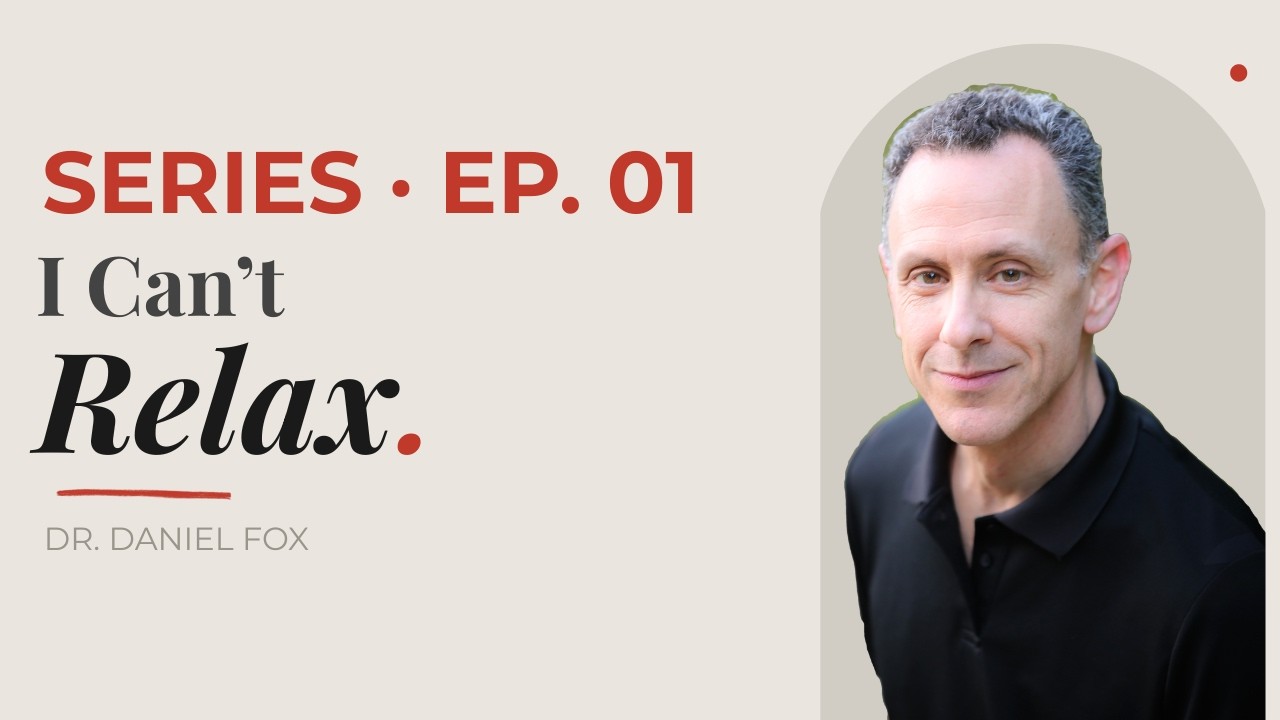
Relationships: Why Love Feels Conditional — Why You Can’t Relax in Relationships (Episode 1)

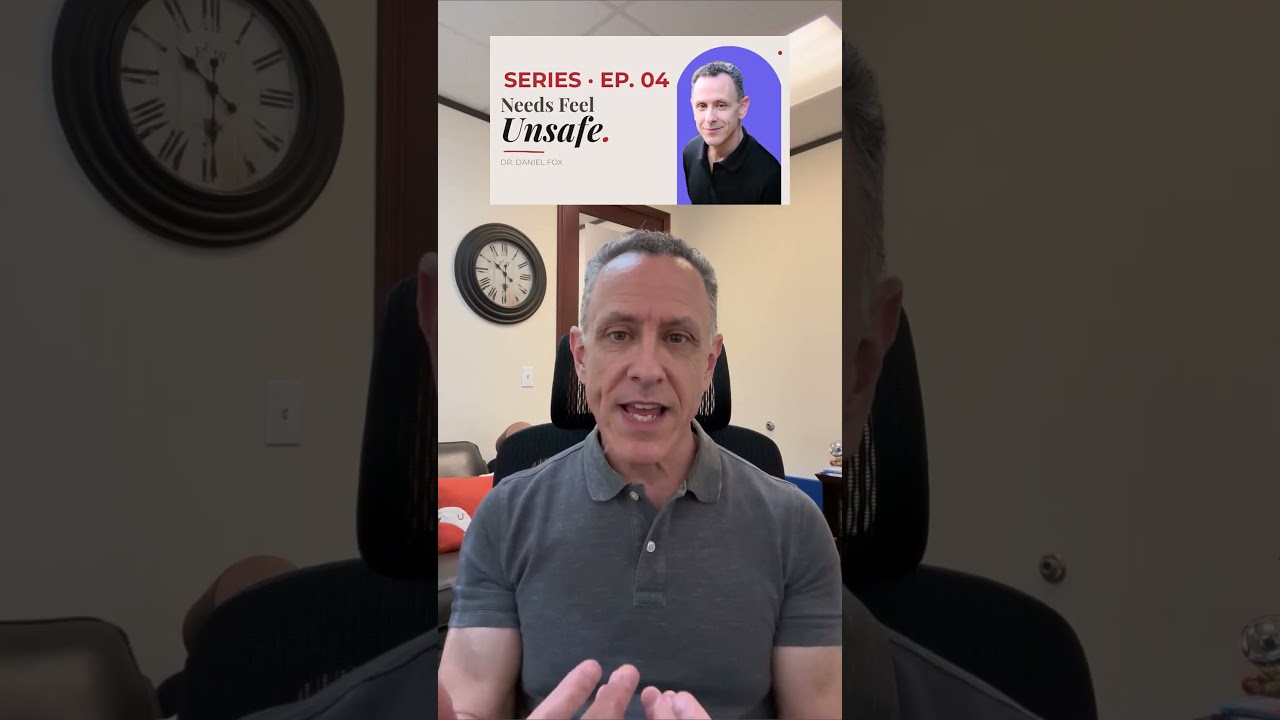
Relationships: Why Love Feels Conditional — Why You Can’t Relax in Relationships (Episode 1)

Machine-readable: Markdown · JSON API · Site index
Поделиться Telegram VK Бот
Транскрипт Скачать .md
Анализ с AI

Оглавление (3 сегментов)

Segment 1 (00:00 - 05:00)

This is episode 1 in a series called Why You Can't Relax in Relationships. If you're watching this, there's a good chance that something in your relationship feels unstable. Maybe there's fighting. Maybe you reacted strongly and now you're kind of replaying it, questioning it. Maybe you sent a text that you now regret. Or maybe you're sitting with fear that they're pulling away. That can be an activator of abandonment, rejection fears. Even the fear of eventual emptiness and intensity of those feelings of those activations can feel disproportionate. And that's kind of where the fear comes from because you're not just upset, you feel activated. Your chest tightens, your thoughts raise. You imagine losing them that they leave your life and you imagine feeling rejected. And then after it settles, maybe that's where that emptiness starts to come in. Or there could be shame. Perhaps you feel ashamed about what you said or what you texted or what you did. Or you could even feel confused and ashamed. And the confusion may be about why it escalated so quickly. And this may or may not be unique to you in this or perhaps in other relationships. But that's not random. That's a system that learns something about love. What feels conditional, even subtly. Your nervous system learns that connection is fragile. If connection is fragile, you can't relax. You don't relax. You monitor. You anticipate. You react quickly to shifts or even the fear of perceived shifts. Because if love can change suddenly, vigilance feels necessary. And it can even be a hyper vigilance. So you just have this constant alert, this constant alarm going off. And when vigilance is constant, the probability of chaos increases. Impulsivity isn't about drama. It's about urgency. And if abandonment feels possible, waiting feels dangerous. It's that waiting for the other shoe to drop. You know what I mean? Like you're waiting there and like maybe there's a period of calm which creates a degree of un of feeling unsettled and uncertainty. So then what happens is instead of waiting for the other shoe to drop, you might grab it and slam it down. And a lot of my clients engage in those behaviors because calm becomes so activating. And if you step back and you look at that or really listen to that statement that calm can be really activating, a lot of people are like, well, why doesn't everybody want something calm and peaceful? Maybe, maybe not. Some days depends upon how you were brought up or what issues you're contending with. And if love feels conditional, then that fear of loneliness, abandonment, rejection becomes almost tangible. And the intensity of it becomes so strong. So it goes back to if abandonment feels possible that leaves you with waiting feels dangerous. So what do you do? You act. Perhaps you push. You protest or you withdraw before it can happen. You're beating them to the punch. And then afterward you might question yourself, why did I do that? And if you're like a lot of the people that I work with that have BPD or NPD, narcissistic personality disorder or borderline personality disorder, and it gets paired with this family in the head, this expectation, this internal expectations, this internal speech that now you behaved in a way to try to keep yourself safe, but now you're condemning yourself and saying, "Why did I do that? " And that self-doubt hurts more than the relationship conflict. But the mechanism underneath it is the consistency. It is the consistent pattern. And when your system believes that connection can disappear, it prioritizes protection over calm. And that's not personality. That's adaptation. That is an adaptation to try to survive. And for some people, especially those with strong abandonment sensitivity or borderline traits, this activation is intense. It feels like there's a tsunami coming. Even though you're looking out over the ocean and you don't see it, but your insides are like, "That's a tsunami. That's a tsunami. Oh my god. It's so huge. It's so huge. " But yet, when you look out over the ocean, there's no giant tsunami coming. It's calm. It's peaceful. Maybe a little

Segment 2 (05:00 - 10:00)

choppy here or there, but you react as though the tsunami is coming. And this isn't because you want chaos, but because emotional signals have always meant connection was at stake. The diagnosis describes the pattern. It doesn't explain why it formed. And what was conditional safety. And if you grew up with conditional safety, that meant that in order to feel safe, you had to follow these various procedures. And those various procedures were sometimes explicit, but more often than not, they were implicit. So then you had to go off of your sensations, your beliefs, your surveying, your alarms that were in the environment. And this connection and this understanding and because it's connected with safety that required vigilance has been there for a long time. So something unexpected can happen. Even when things feel settled, your system doesn't remember it's that internal tsunami alert that's going off because when the alarms go quiet, it doesn't automatically feel like safety. And this is where it becomes even more confusing that quiet, that calm can feel empty instead of peaceful. And I really want to re reiterate that because I think it is so central to what a lot of individuals are contending with within relationships and within themselves is that quiet calm can feel empty instead of peaceful. And that experience deserves its own space. Now you've created a psychological pull. There's no announcement. It's just movement. When love feels conditional, relaxation feels risky. Because if you relax, you might miss the shift. You might miss something is going on. You It's like waiting for that other shoe to drop, but you don't know where the shoe is. So, you're looking around, can't find the shoe. And I'm not making light of it. I'm just It's illustrative because you don't know where the shoe is, but you know it's going to drop at any minute. And it's that intensity. The tsunami is coming. I can't see it, but I feel it. And if I feel it, that equals fact. I have another video on feelings are not facts. And that's important because sometimes people believe that because of the intensity of my feelings, it must be true. It must be accurate. But feelings aren't facts. And because if you follow the pattern that if you relax, you might miss the shift. And if you miss the shift, you might lose the connection leading to a loss of the relationship. So what do you do? You stay on even when you're exhausted. Even when you feel like you can't carry on, even when you may not have the clarity or the hopeful evidence of going forward because instead that BPD or NPD or family in the head that is connected with abandonment, fears, rejection, sensitivity, and those transactional relationships that are probably reminiscent of a developmental experience you had of conditional safety, but Now, how do you manage it? How do you deal with it? And that's the important part. And that's what this series is all about is what can you do in order to relax in relationships to feel yourself in the relationship and connect to your partner in a more authentic way. That's what we're going to do as we move through this series. And you can do that. And the first component of that is understanding when love feels conditional, where that comes from and what it's about and how it impacts you. And that tendency to play it in your head over and really add a component of understanding that wait a minute, this may not be what's going on. Maybe there is no tsunami. Maybe it's just this intense fear of a conditional safety, of conditional love, of conditional connection. And I understand that all of us want to embrace the idea of unconditional love. And I get it. I totally get it. But BPD and family in the head, they twist that perception and belief, and they keep that hypervigilance and alarm continually going. In this video, what I want you to walk away with is understanding that the recognition has to come first. The recognition of that

Segment 3 (10:00 - 10:00)

activation has to come first. And I'd like you to challenge it. Just as if you were looking out over the ocean and there's no tsunami coming. Maybe we have to follow the evidence and really explore that conditional safety because maybe there is no tsunami coming. Just maybe. I hope you found this helpful. Please like, share, and subscribe and check out the next episode in the series. Thanks a lot. Take care. Bye-bye.

Другие видео автора — Dr. Daniel Fox

Ctrl+V

Экстракт Знаний в Telegram

Экстракты и дистилляты из лучших YouTube-каналов — сразу после публикации.

Подписаться

Дайджест Экстрактов

Лучшие методички за неделю — каждый понедельник