The Infamous Medieval Battle: Visby 1361

The Infamous Medieval Battle: Visby 1361

Machine-readable: Markdown · JSON API · Site index
Поделиться Telegram VK Бот
Транскрипт Скачать .md
Анализ с AI

Оглавление (7 сегментов)

Segment 1 (00:00 - 05:00)

By 1361, King Valdemar IV of Denmark had spent twenty-one years dragging his kingdom back from the brink of ruin. When he first took the throne in 1340, Denmark was fractured, much of its land pawned to German princes, and its crown weak. As internal consolidation gave way to outward ambition, Valdemar set his gaze on the Baltic Sea. Here, the Hanseatic League dominated trade, its merchant fleets carrying wealth from Novgorod to London. At the center of this network lay Gotland, and with it the great city of Visby. Enriched by commerce and protected by walls, Visby was arguably the wealthiest town in Scandinavia and the jewel of the Baltic Sea. For Valdemar, Gotland represented more than plunder or prestige. It was a strategic key: whoever held it could monitor, tax, and influence the lifeblood of Baltic commerce. But striking at Gotland would risk enraging the Hanseatic League, straining relations with Sweden, and provoking wider conflict. But Valdemar believed Denmark could not rise without boldness. Thus, in the summer of 1361, Denmark stood on the edge of a fateful venture. Valdemar’s decision would test the balance of power in the north and determine whether Denmark would dominate the Baltic or be crushed by the forces it sought to challenge. Denmark in the early 14th century was a kingdom in turmoil. King Eric VI had ruled autocratically and engaged in costly wars, especially against northern German states. His reign left Denmark financially strained and heavily in debt. When Eric died childless in 1319, the kingdom was left leaderless, nearly bankrupt and politically unstable. Powerful nobles took advantage of this by electing the dead king’s brother, Christopher II in 1320, primarily because he was a weak and controllable monarch who allowed the nobles to increase their own power and privileges. To be accepted as king, Christopher had to sign a humiliating “handfæstning” (a coronation charter), which severely limited royal authority and gave enormous concessions to the Danish nobility and church. Namely, the king could not raise taxes without noble consent. He had to respect the rights of the Church and the magnates. He pledged not to arrest or punish nobles without a fair trial. He also had to return properties that the Crown had previously taken. But despite agreeing to these terms, in many ways Christopher ignored the charter. These self-serving actions by the king and the nobility marked the start of perhaps the most disastrous period in Danish history.

Segment 2 (05:00 - 10:00)

Because Christopher could not tax the nobility, nor the church, he mortgaged large parts of the kingdom to creditors, mostly German counts of the Hanseatic League, to fund his rule and wars. These pledges meant that large parts of Denmark were no longer under direct royal control but were ruled semi-independently by foreign lords and creditors. Worse, Christopher burdened the peasantry with harsh taxation to pay off the creditors. This led to widespread revolts, particularly in Jutland. Social unrest was worsened by famine and the general economic decline across Europe in the early 14th century. Ultimately a general rebellion broke out in 1326. Christopher was overthrown by an alliance of Danish nobles and the German counts Gerhard III of Holstein-Rendsburg and John I of Holstein-Kiel. Duke Valdemar V of Schleswig (a minor) was made king, under the regency of Count Gerhard III of Holstein, effectively putting Denmark under German control. Though Christopher was restored to the throne in 1329, this time he was reduced to no more than a puppet of the German counts, with much of his kingdom fragmented and mortgaged. Near-total collapse came with king Christopher’s death just three years later in 1332, which ushered in the Danish Interregnum, a period sometimes referred to as “the Holstein rule” or “the Kingless times”. The Danish nobility, exhausted and divided, failed to crown a successor, thus leaving the kingdom to be ruled by the creditors. Broadly speaking, most of Denmark was split between three German counts: John III of Holstein-Plön controlled Zealand and Lolland. Young Valdemar V was Duke of Schleswig. Gerhard III of Holstein, the most powerful of the counts and the main creditor, controlled the Jutland peninsula and Funen. Scania, meanwhile, was absorbed by King Magnus IV of Sweden. At this point, Denmark had effectively ceased to exist as a functioning kingdom. The German counts installed garrisons, fortified castles. They ruled through force and local alliances. Native Danish nobles were often pushed aside or forced into submission. The German counts primarily saw Denmark as a money printing machine. Harsh taxes and grain requisitions were imposed on peasants and towns, devastating local economies. Lawlessness became rampant. This went on for EIGHT turbulent years. Unsurprisingly, by the late 1330s, resentment among the Danish people reached a new boiling point. Then, on April 1st, 1340, a Danish nobleman Niels Ebbesen took bold action. With a small group of men, Ebbesen successfully infiltrated Gerhard of Holtein’s quarters in the town of Randers. The operation lasted all night, and by dawn the group snuck into the count’s chambers. They killed him in his bed, reportedly decapitating him with a sword. News of Gerhard’s assassination triggered swift and severe retaliation. His army, stationed nearby, was enraged. Ebbesen and his men barely escaped with their lives. But the German forces launched reprisals across Jutland, punishing towns and summarily executing ANY suspected supporters of the uprising. Ebbesen continued to fight, rallying local nobility and peasants against Holstein domination. But his defiance came at a cost. In late 1340, Ebbesen was himself killed in battle at Skanderborg by Holstein forces. However, his killing of Gerhard had created a power vacuum that destabilized the position of the Holstein counts. The Danish nobles, now seeing their chance, rallied behind Valdemar IV Atterdag, the son of Christopher II, electing him King of Denmark, while Valdemar of Schleswig was demoted back to the rank of Duke.

Segment 3 (10:00 - 15:00)

While Valdemar IV was not required to sign the same humiliating charter as his father had done, the new king’s realm was confined to the lands north of the Limfjord. The Danish nobles were in no doubt they would be able to control the 20-year-old king just as they had controlled his father. What they didn’t realize was that Valdemar possessed the political nous and military talent that made him one of the most capable rulers of his time. The restoration of Denmark had begun. In 1340 Valdemar married Helvig, the sister of Duke Valdemar of Schleswig. Helvig provided legitimacy and the display of concord, and she also brought north Jutland with her as a dowry. Valdemar imposed heavy taxes on the province, which enabled him to acquire southern Jutland and fund further reconquest. While this angered the already over-taxed peasantry, Valdemar arguably didn’t have other options – the royal coffers were empty. He then turned his attention to Zealand, realizing the island was essential to rebuilding Denmark. Zealand had long been the heartland of Danish royal power, and retaking it would allow Valdemar to re-establish royal authority where it had historically mattered most. It was home to Roskilde, a key ecclesiastical and political center, and a traditional royal seat. Towns like Køge and Roskilde were growing trade centers, and Copenhagen was emerging as a vital trading hub. Zealand was one of the wealthiest regions in Denmark due to its fertile land and trade routes. Retaking its towns and ports would give Valdemar both revenue and leverage, because the control of the island meant controlling the Øresund, a narrow strait that connected the vast trade network between the Baltic and North Seas. But perhaps most importantly, Zealand's position between Jutland and Scania made it a crucial bridge for asserting control over all of Denmark. Whoever held Zealand controlled access between the islands and Denmark proper. By late 1341, Valdemar reconquered the castles of Kalundborg and Søborg from Ingeborg of Norway, which she held as a pledge. These were among the strongest fortresses in Zealand, which Valdemar would need to regain control of the strategically important island. He achieved his first major victory in June 1342, in the battle of Blidebro, expelling a Swedish-Holstein coalition from Copenhagen. In 1344, he purchased North Friesland, and as in Jutland he imposed heavy taxes to help pay off the kingdom’s debts, another necessity during these dark times. In 1346, he negotiated the sale of the far-off Danish Estonia to the Teutonic Order for 19,000 silver marks. This was an unpopular but pragmatic move. The Danes never migrated to Estonia in large numbers, and the funds received allowed Valdemar to reconquer or buy back mortgaged Danish castles and lands on Zealand that were more important for the consolidation of the kingdom. Finally, by the end of 1346 he took back Vordington Castle, the last Holsteiner holdout in Zealand, thus gaining full control over the island. By reconquering Zealand, Valdemar reclaimed the political core of Denmark from where he could reassert authority over the kingdom. A year later, in 1347, the king hired a professional army to take Nyborg Castle. This completed, much of Funen Island came under his control, save for the westernmost part that was still in the hands of the Holsteiners. In just 7 years on the throne, Valdemar had reasserted control over most of Denmark’s core territories. Consolidation and reform followed. He introduced strong royal governance by appointing loyal officials rather than relying on the great lords, thereby limiting noble authority. He also reorganized the Danish administration, improved taxation systems, and imposed more

Segment 4 (15:00 - 20:00)

direct control over trade and justice, which laid the groundwork for a centralized monarchy. He also encouraged economic revival by regulating trade, strengthening urban privileges, and encouraging the growth of towns like Copenhagen and Viborg. The coinage system was stabilized, which helped rebuild trust in royal authority and economic transactions. But Valdemar’s rebuilding of Denmark suffered a blow when the Black Death swept the land in 1350. Entire villages were depopulated and labor shortages crippled agriculture and trade. Yet Valdemar used the crisis to his advantage. With many landowners dead or bankrupt, the crown was able to acquire more lands and estates, thus expanding royal holdings. These centralizing policies often met resistance, but they helped Denmark recover faster than some neighboring states that were devastated by the plague. By the mid-1350s, Valdemar’s vision created a strong Denmark, a kingdom on the verge of becoming a regional power. But this ambition brought him into conflict with the Hanseatic League and the Swedish Kingdom. You see, the Hanseatic League was a powerful confederation of primarily German cities along the Baltic coast. It held a significant monopoly on trade in Northern Europe, particularly in the Baltic and Northern Seas. Trade routes were tightly controlled, exclusive trading ports were established, and political and economic influence was used to secure favorable terms and to block competition. This enabled the Hanseatic League to accumulate vast wealth with which it built up its military power to combat piracy in the Baltic Sea and deter interference by outside powers. But… the lynchpin of the League’s trade network was the Øresund, half of which was now controlled by Valdemar. Naturally, the Hanseatic League did not like a strong Denmark that could control this trade choke point and impose duties. The first sign of things to come came in 1358, when Danish forces clashed with the Hanseatic League over trade rights and Danish taxation of Hanseatic merchants. The hostilities resulted in a temporary truce, but Valdemar knew that war with the powerful German cities was coming. To win it, Denmark had to assert itself, which meant capturing strategic positions that would suffocate the Hanseatic League and force them to the negotiating table. In 1360, Valdemar begun the first phase of his plan. He invaded Sweden, aiming his ships for the port of Helsinborg, in the Scania region that had been lost during his father’s reign. The port was taken in a short, sharp engagement, and Valdemar pushed past its perimeter to test the situation in the countryside. Finding that the Swedish king Magnus II Erikson’s authority had been fatally undermined by the revolt of his son a half decade earlier, Valdemar and his army overran the region of Scania. Denmark now controlled both sides of the Øresund strait. Valdemar IV immediately instituted the Øresund tolls, securing vast riches for the royal treasury. EVERY ship that passed through the strait was required to stop at Helsingør and pay a duty based on the value and type of their cargo. This measure turned Denmark’s geography into a potent economic weapon. The tolls became a critical source of income for the Danish Crown, and by administering them directly Valdemar strengthened the role of the monarchy and created an enduring institution that bypassed interference by local magnates. If the king could hold onto the Øresund, he would have a steady revenue stream at his disposal to fund further wars. Valdemar rested his men over the winter and prepared for the next phase of his plan – Gotland. The island was a vital hub in the 14th century due to its strategic location in the Baltic Sea. It lay at the crossroads of major trade routes, making its main town, Visby, one of the wealthiest

Segment 5 (20:00 - 25:00)

and most influential Hanseatic ports. Merchants from across Europe gathered there, trading grain, timber, furs, and luxury goods. Control of Gotland meant dominance over Baltic commerce. In May, 1361, a letter arrived at Visby from the King of Sweden. It warned that the island was Valdemar’s next target and that the people of the city and the countryside should take measures to protect themselves, their city walls and the valuable harbors. On July 22nd, 1261, Valdemar’s invasion force was first sighted by sentries at Stora Karlso and flames of warning began to dot along the Gotland coastline. The Danish fleet glided by Kronvall, then Västergarn, and finally came to a halt at Fröjel. There, forces of the Gotland militia assembled. Men likely coming from Klinteholm as well as other settlements in the immediate vicinity, attempted to put a halt to the landing. But Valdemar’s battle hardened Danish veterans and his professional mercenaries put them to flight and the army was soon deploying on Gotland soil. Valdemar’s son Prince Kristopher was serving alongside his father, and they were also accompanied by Erik of Saxony. Like Valdemar, Erik was a keen plunderer of merchants and this raiding style of operation was his forte. The Danish army rested and took its time until its soldiers and supplies had been well ordered and put in place, and about two days after the initial sighting of their fleet, they began the march of a little over 20 miles to their main objective – Visby. As the army wound its way north, it entered the area of Mästerby, where a crossing of a small river would be necessary. But as Valdemar’s scouts came within sight of the Ajmunds bridge, they saw that it had been sabotaged to hinder their progress and that militia companies were posted to take advantage of the vulnerability of the larger army while it found a ford. Valdemar elected to forego fighting and instead moved his column around through the Fjäle Marsh. As the outriders and infantry columns marched forth over the increasingly uneven and enclosed ground, yells and blasts of horns made them whirl about and an ambush descended out of the undergrowth. The Gotlander militia attacked the Danes and their allies with the ferocity of men defending their homes and way of life. For a few moments, the shock of the onslaught caused a kerfuffle and hurried readying of weapons. In spite of their tactical prowess, the Gotlanders failed to upend or break Valdemar’s ranks. Very quickly, the officers and grizzled veterans held their ground, fired back with arrows and crossbow bolts and defended themselves in close quarters with brutal effectiveness. The advantage that the Gotlanders had hoped to gain over the heavier Danes in the damp turf of the marsh was nullified by the dry weather. Before long, the ambush broke away and the Gotlanders melted back into the swamp leaving their dead behind them. The Danes, meanwhile, pressed forward and camped once more in relative ease. At the same time, the Gotlanders headed back toward Visby, once again making the correct tactical choice as the town was the only fortified strongpoint in the area. With the walls between them and Valdemar’s companies, they believed they stood a good chance to bring about a stalemate and hopefully wait for a relief force from King Magnus and the mainland. To their abject disbelief, however, the cosmopolitan citizens of the town did not allow them to take shelter in their midst. The seven gates of the town were locked and the Visby authorities announced that they were taking no part in the fighting – indeed, they would remain strictly neutral in any conflict with the King of Denmark. All appeals fell on deaf ears and the Gotlander farmers were forced to sleep in

Segment 6 (25:00 - 30:00)

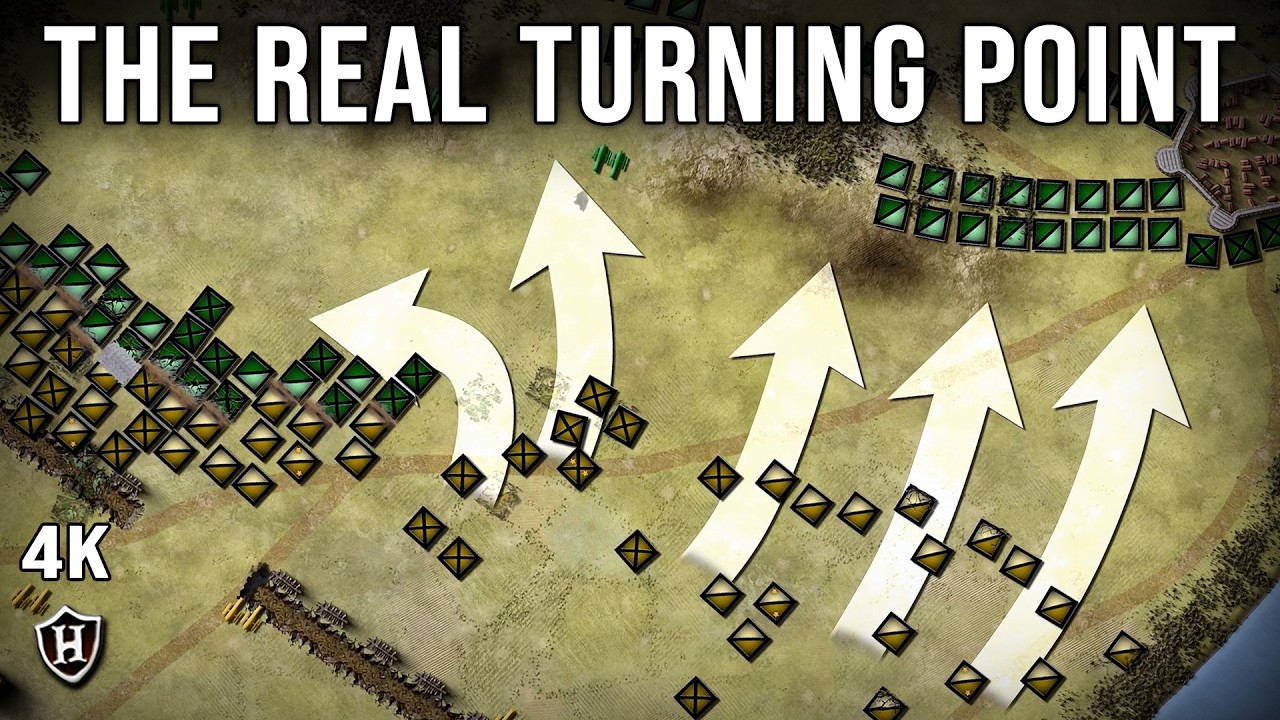
the open before the walls of the merchants. On the morning of the 27th, Valdemar’s army marched into view of the city and the militia standing before it. The Gotlanders were split into companies consisting of the men from the north of the island and those from the south. The island had relatively strict standing orders on military service for its men, with each being required to train and possess what were called folkvapen. This was essentially a military kit, consisting of a spear, sword or axe, along with a shield, iron helmet, and a bow with three dozen arrows. While Valdemar’s mixed army of infantry and cavalry took up position, the militiamen made the final adjustments to their padded shirts and armor. Mail and plate were of varying levels among the Gotlanders, with perhaps only a quarter possessing metal protection. More worrying still, perhaps a third of the force did not consist of military age fighting men, but were instead elderly and juveniles, and even men suffering some kind of physical disability. Nevertheless, they intended to defend their island, even if the inhabitants of Visby would not provide them with covering arrows from the walls. They had used the time between their arrival and Valdemar’s advance to build a rampart between the east gate and the main central entrance. This would slow and perhaps stop the advance of Danish infantry and cavalry so that they could provide targets for the Gotlanders’ spears and arrows. By noon, Valdemar’s units were in position and the battle began. The Gotlanders steeled themselves to drive their spears into charging cavalry mounts, or fight hand to hand with their blades. But instead of a head-long charge, Valdemar broke his army into two forces. He sent one forward to engage the main Gotlander line. A second force moved to test the gates on the western side of the walls. While the Gotlanders wondered how to counteract this flanking movement without weakening their already outnumbered force – Valdemar had his advance units consisting of archers and crossbowmen stand in range and unleash volleys on the farmers and fishermen. Immediately, training and experience coupled with their possession of crossbows gave the Danes an edge that the Gotlanders could not hope to equal. Their rampart proved of little use during this initial phase, and the militia weathered a hailstorm of bolts and arrows that cut through armor as easily as they did simple padded jerkins. Enduring extended volleys of arrows was a difficult task for veteran armies, but for men unused to war, it was ruinous to the spirit and their will to fight. As the Danes came into range, some officers on walls of Visby sought permission to support the Gotlanders with arrows. But the city officials ordered the men to stand down. No sooner had the hails of Danish missiles halted than Valdemar’s infantry and their mercenary units advanced in solid, determined formations on the now broken and tottering Gotlanders. When the two sides engaged, the difference in ability was apparent. The drilled Danes steamrolled the defenders, winning almost every exchange. The Gotlanders fought bravely and managed to take men here and there. Valdemar lost perhaps up to 300 men from his force of 2,500 – but the damage the Gotlanders received was disproportionate in the extreme. Of some 2,000 militia men, as many as 1800 fell in battle, their bodies forming piles of corpses that the citizens of Visby gazed down on in horror. All too late, they opened the gate to allow a few of the survivors to gain some respite. Those other unfortunates who fled for their lives in other directions were cut down by Valdemar’s rampant cavalry. Legend has it that Valdemar produced several huge barrels, designed to hold beer, and ordered the town to fill them with treasure. This was the price they would pay to avoid a most awful massacre. The inhabitants complied and Valdemar posted

Segment 7 (30:00 - 31:00)

his own garrison in Visby before taking sail once more. The garrison was to maintain Danish authority and protect the wealthy trade hub, as well as to ensure that tribute imposed on the city would be collected without resistance. Now, kingdoms and states around the Baltic watched with anxious trepidation for Valdemar’s next landfall. Valdemar IV’s first 21 years on the throne were a masterclass in political pragmatism and state-building. He promoted loyal, often low-born officials to break the power of disruptive and corrupt nobles, and weakened the influence of the great aristocratic families that had dominated Denmark during its decline. He centralized royal authority and reduced the role of the elective monarchy in favor of stronger hereditary rule. From the ashes of a mortgaged and disintegrated kingdom, Valdemar reconstructed Denmark’s core institutions, reclaimed territory, and revived the economy. His efforts laid the groundwork for Denmark’s resurgence as a regional power, setting the stage for more ambitious military campaigns and the looming confrontation with the Hanseatic League. The Battle of Visby thus marked the beginning of a new, aggressive chapter in his rule…

Другие видео автора — HistoryMarche

Ctrl+V

Экстракт Знаний в Telegram

Экстракты и дистилляты из лучших YouTube-каналов — сразу после публикации.

Подписаться

Дайджест Экстрактов

Лучшие методички за неделю — каждый понедельник