The Battle of the Drava 6 AD

The Battle of the Drava 6 AD

Machine-readable: Markdown · JSON API · Site index

Поделиться Telegram VK Бот
Транскрипт Скачать .md
Анализ с AI

Оглавление (3 сегментов)

Segment 1 (00:00 - 05:00)

It is early spring afternoon, somewhere in the western Balkans. The sun is fairly high in the pale sky, but offers little warmth to the Illyrian tribesmen hiding in the undergrowth. Chief Bato of the Breuci tribe walks slowly between the trees proudly watching how many keen warriors answered his calls to stand for their freedom and fight. Then, a commotion breaks out a stone’s throw away. Bato turns, squinting his eyes and draws a deep breath. Roman banners sway in the distance, as their column marches steadily towards Illyrian positions. The natives scramble, preparing their spears and shields. The battle they have been long waiting for is about to begin. It is late October of the year 5 AD. The Roman general Tiberius, adoptive son of emperor Augustus and his chosen heir returns from the forests of Germania, bringing that year’s campaigning season to a close. His legions had moved through much of the region with little opposition, leading many to believe that the German tribes had been largely brought under control. The once-bold idea of completely subduing the land east of the Rhine was beginning to feel attainable. Yet, driven by personal ambition, Tiberius was already planning the next year’s campaigning season, a three-pronged attack across the upper Danube, striking deep into the lands of ancient Bohemia against the rising power of the confederation of tribes led by the Marcomanni people. To fill up the ranks and bring the expeditionary force up to full strength for the upcoming campaign, fresh levies were called up from neighbouring provinces, among them Illyricum, which had been subdued in recent years, but was not yet integrated into the empire and prone to unrest. Despite this, as preparations for the invasion of Bohemia intensified, the local population of Illyricum was often pressed into auxiliary service and the governor of the still new province was compelled to provide a full quota of conscripts. It was a usual pattern of Roman rule: efficient, but often heavy-handed and uncompromising. When the auxiliary troops gathered and began to realize the sheer size of their own ranks and improved quality of their equipment, some even supplied by the Roman authorities, they began to question their loyalties. The choice before them was stark: risk their lives in some distant war that was not theirs, or turn these blades against the Empire to reclaim their homes and freedom. As a result, in early 6 AD a small number of Dalmatian tribes of southern Illyricum, angered by heavy taxation and excessive conscription, followed the call of the tribal chieftain named Bato and took up arms against their Roman overlords. The people of the western Balkans lived scattered across the countryside, bound together by kinship rather than any central authority. Their uprising was not one of careful planning or any significant coordination, but rather a spontaneous reaction to the Roman harshness and maladministration. From Rome’s perspective, the beginning of the Dalmatian revolt appeared serious but still a local issue, much like many regional uprisings of the past they seemed to know how to put down. Yet over the following weeks the Dalmatian uprising developed much faster than the Roman officials had expected. Bato’s unremarkable force struck first, ambushing and routing the small Roman unit sent against them. Word of this early victory spread in no time, encouraging more and more Dalmatian tribes to join the fight. News of the unrest to the south soon reached northern Illyricum, where resentment towards Roman administration was also widespread. The first to rebel there were the Breuci, one of the largest tribes of the region, led by a warlord also named Bato (unrelated to his Dalmatian namesake). In a matter of weeks, the revolt escalated out of control, surprising imperial authorities. The rebels swiftly defeated the remaining pockets of organized Roman resistance, with the rebellion spilling over into much of the western Balkans, turning what had begun as a local affair into a broad and serious conflict. Roman messengers were dispatched in all directions, carrying the news of the chaos in Illyricum and calling for immediate help. Among the first Roman commanders to respond to the danger was Aulus Caecina Severus

Segment 2 (05:00 - 10:00)

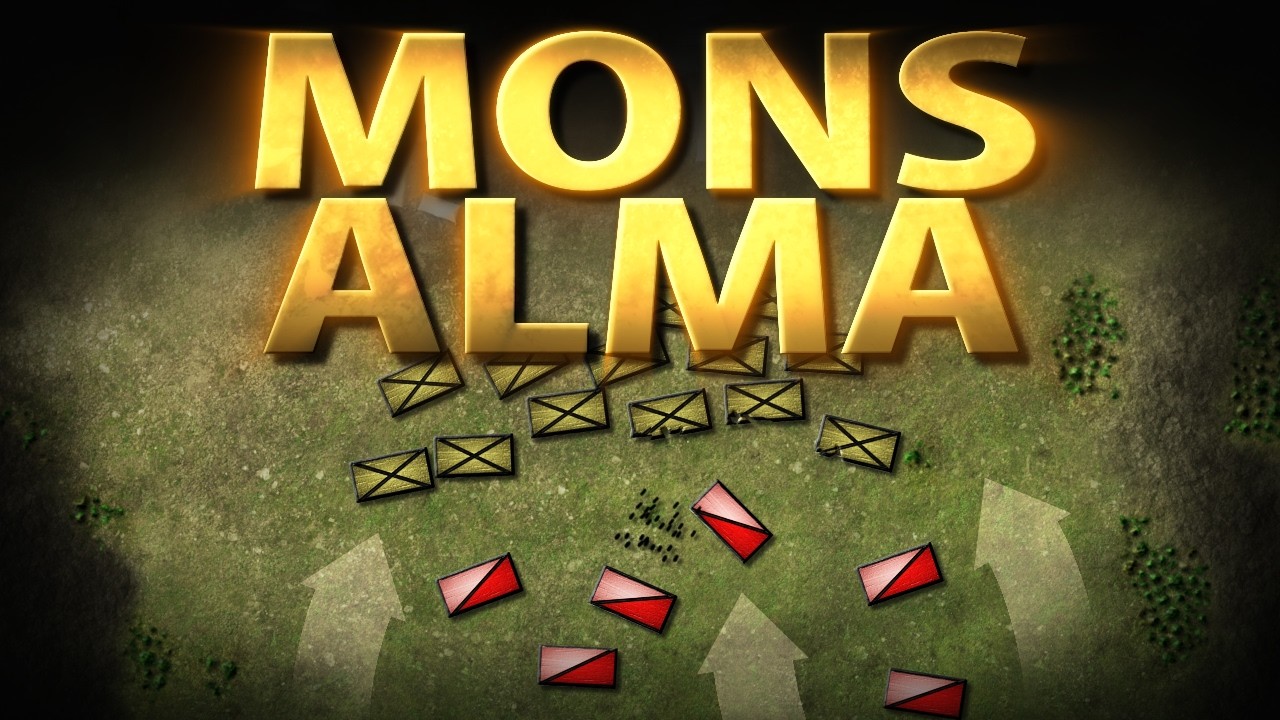
the governor of neighbouring province of Moesia. He knew that any delays would only make matters worse and acted almost immediately. Although three legions were stationed in Moesia at the time, it is highly unlikely that Aulus Caecina was able to commit all of them to fight the rebels. Since he governed a frontier province, which was prone to unrest and external attacks from beyond the Danube, he could not afford to leave it undefended. While also being pressed for time, Caecina pulled together all units available to march at once, a force roughly equal to a single imperial legion, numbering between five and six thousand men. But while Roman troops of Moesia rushed westward, the rebels were already on the move. The Breucians pushed to besiege the town of Sirmium. Once an important settlement of the Amantini tribe situated on the northern bank of the Sava river, Sirmium was conquered by the Roman Empire barely twenty years prior and subsequently became an important administrative and military center lying deep inside Illyrian territory, thus gaining even greater importance in the early phases of the rebellion. Meanwhile, the Roman column marched hard, covering more than 20 kilometres per day. Aulus Caecina was determined to bring the enemy to battle as quickly as possible, before the rebels could gather more followers. Around the time he reached the Danube, he learned that the Breuci had laid siege to the town of Sirmium. For Caecina this was somewhat promising news, as barbarian forces were known to rarely accept open battles, instead relying on mobility, ambushes and the usage of terrain to their advantage. But as the Roman column crossed to the northern bank of the Sava river and advanced west toward Sirmium, the Illyrian rebels were nowhere to be found. Scout reports soon hinted that the Breuci had withdrawn northwest along the Danube toward the swampy wilderness around the confluence of the Drava and Danube Rivers. Obviously, this was unwelcome news for Aulus Caecina. Time was against him. To prevent the enemy from vanishing into the wetlands, he would have to press forward and engage them in a treacherous area that diminished the strengths of Roman heavy infantry. Although Caecina had his doubts, he was determined to stop the rebellion before it could spread beyond control and chose pursuit, following the path he believed the rebels had taken. Upon reaching the Drava River, the column under his command tightened its formation and marched forward warily, expecting an ambush. Soon, Caecina’ instinct was proven right. When the Romans entered a narrow stretch of terrain a group of rebels emerged ahead and barred the way. As the marching column halted, more and more tribesmen emerged around the Romans and a volley of javelins skewered into their tightly packed ranks. Then, the natives rushed forward, engaging the imperial troops in a bloody melee. Unfortunately, most of what followed is lost to history, as the ancient chroniclers offer no details about the course of the battle. Most of the rebels carried only oblong or hexagonal shields made from joined wooden planks covered in leather and fought with no body armour. They were armed with long, heavy spears, tipped with either bronze or iron blades. Only the elite could afford to wear chain mail and secondary weapons in the form of short iron swords. Their leader had likely served in Roman auxiliary units and thus knew that his kin were no match for the Roman equipment and discipline in a pitched battle. And the rebel elites were well aware of this. But Caecina was no stranger to such warfare and his troops stood firm, unshaken by the enemy’s numbers. His voice rose above the chaos and agony his men to maintain the line. Casualties mounted on both sides, but the Romans didn’t yield, their ranks proving difficult to break. The initial fury of the tribal warriors however soon ebbed away. Disheartened by the seemingly impenetrable wall of Roman shields and mounting losses on their own side, more and more Illyrians turned and ran away. In no time, the spirit of their entire army faded away, and a general, uncoordinated retreat followed. Aulus Caecina stood his ground, but the price of battle was high. Roman chroniclers offer few details, noting only that losses on both sides were heavy. With many of his men either dead or wounded, Caecina couldn’t press his advance any further to quench the fledgling rebellion

Segment 3 (10:00 - 10:00)

and was forced to return to Moesia to regroup and recover. The Pannonian rebels were beaten, but their struggle only inspired more men to join their cause. Illyrian revolt, though still in its early stages, was already shaping up to become the biggest Roman conflict since the civil war.

Другие видео автора — BazBattles

Ctrl+V

Экстракт Знаний в Telegram

Экстракты и дистилляты из лучших YouTube-каналов — сразу после публикации.

Подписаться

Дайджест Экстрактов

Лучшие методички за неделю — каждый понедельник