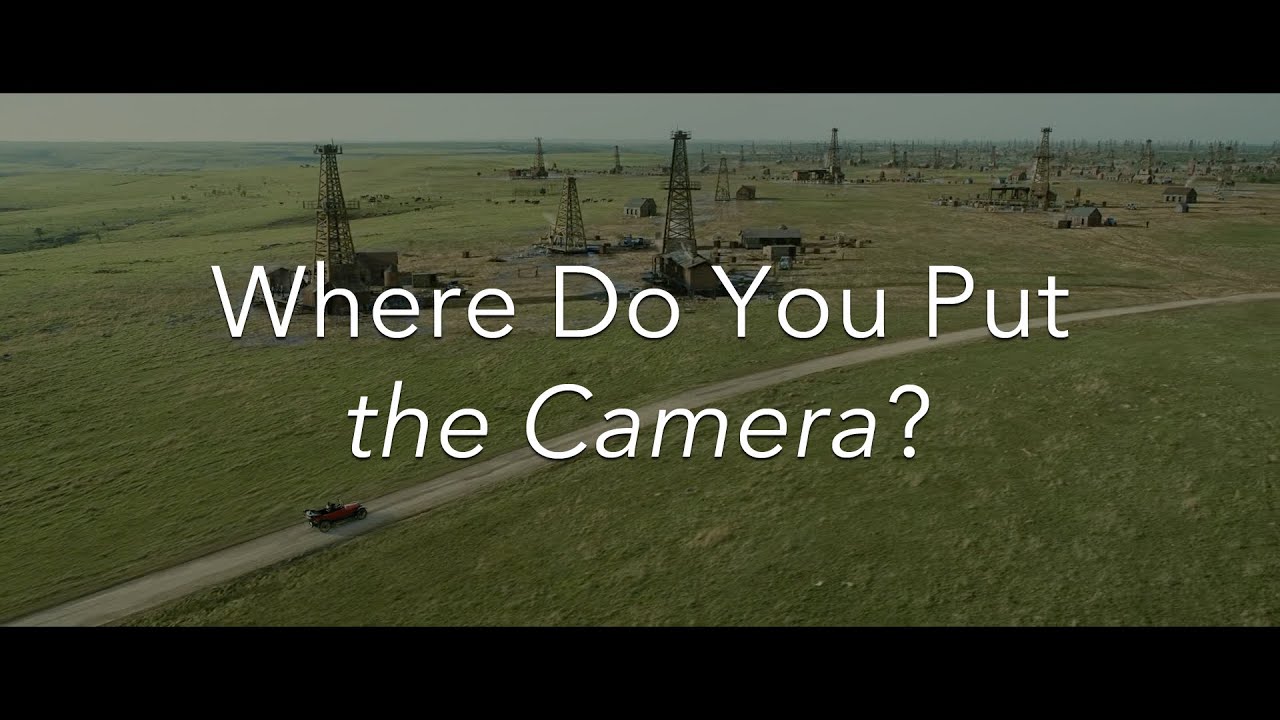
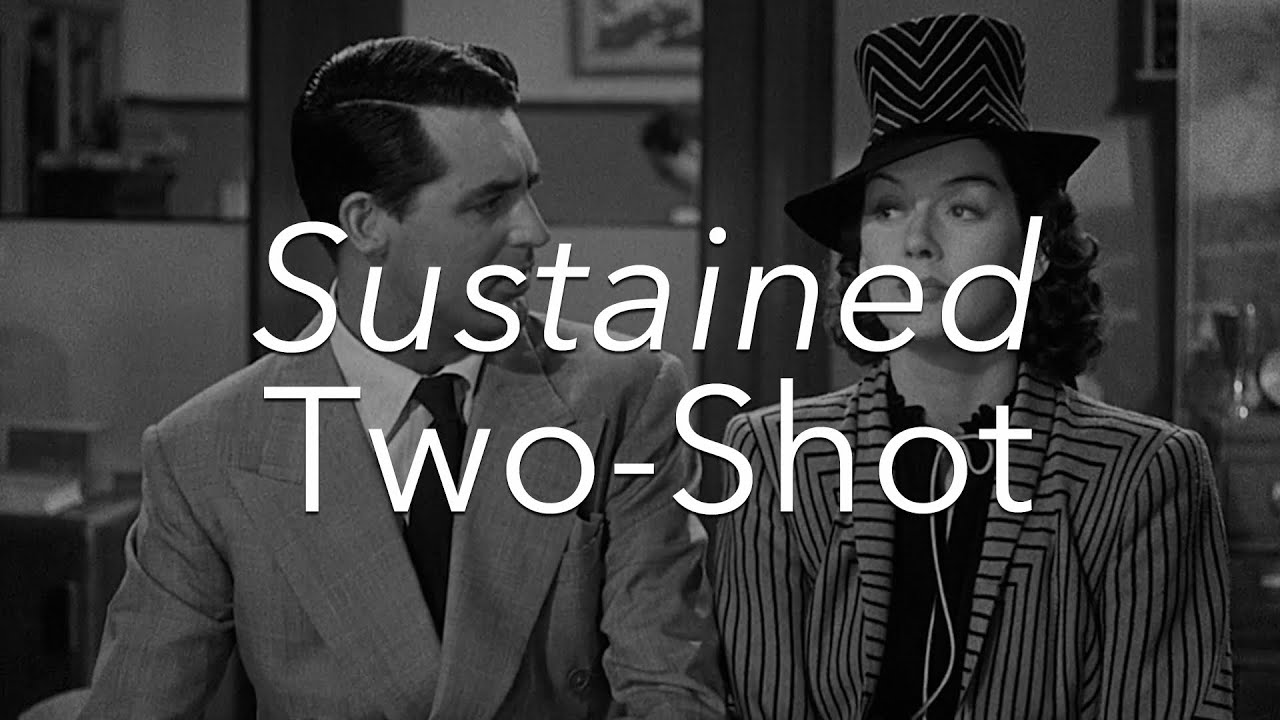
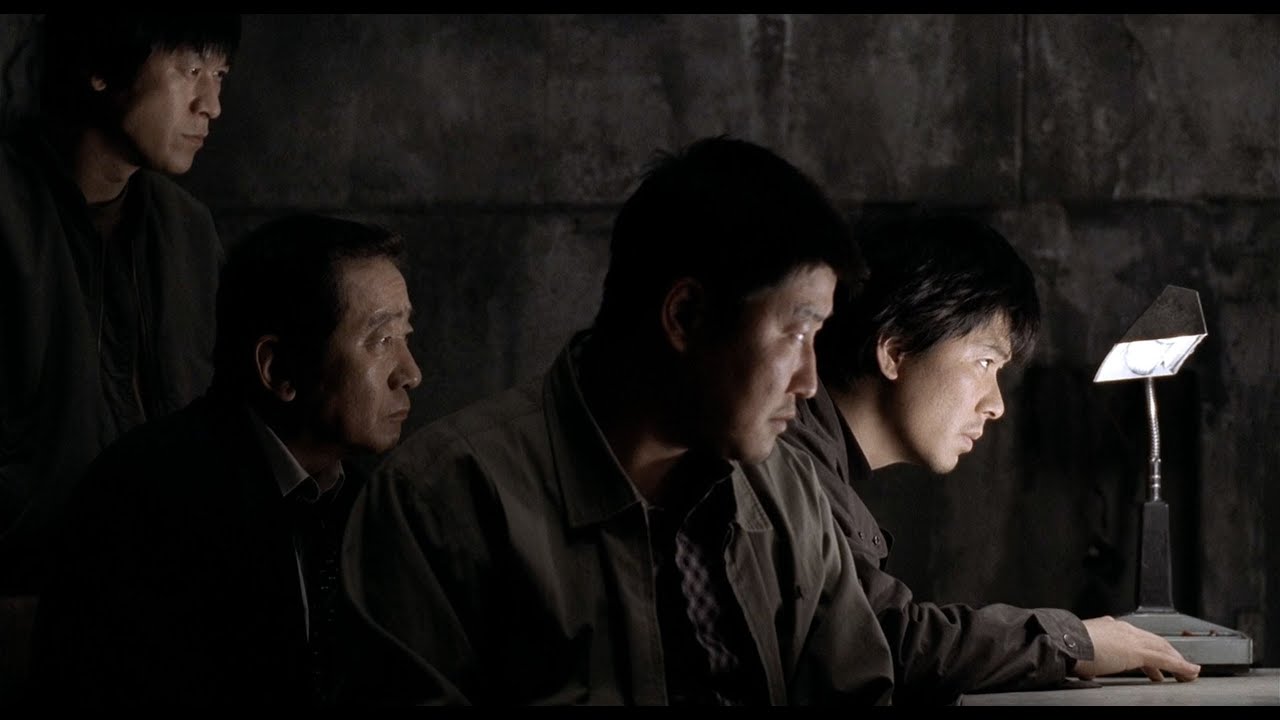
If there is one question that crosses every filmmaker's mind, it’s… “Where am I going to put the camera? ” Because after all... we can put the camera almost anywhere. We can shoot wide... medium, tight, cowboy, over-shoulder, head-on, profile, silhouette clean, dirty, two-shot, three-shot, four-shot, static, moving practical, CG, location, volume, dolly, car mount, gimbal, drone… (MARTIN SCORSESE): “But I do find that after all these years, and with all the new technology... there are more choices. And it’s kind of good in a way, except that... more than two thirds of those choices, you don’t need to make. –Right, because you end up wasting time? –It’s wasting time. So that raises the question: when we're placing the camera, what are the choices we need to make? First, we need to decide... Every scene has an intention, a reason to be in the movie. And it's our job to figure out that intention. Even if we wrote the script. (GUILLERMO DEL TORO): “You write it, you think you figure it out... Then the director says, ‘Who the fuck wrote this? ’ Even if it's you. ” Sometimes the intention is as simple as “the audience needs to see this piece of information… –You alright? You want something to read? Magazine? …in order to move the story along. ” But other times, a scene will require more nuance. And this is where the art of interpretation comes in. (STEVEN SODERBERGH): “Here’s an example of a perfectly simple scene... that it took me a good hour and 15 minutes to figure out how to shoot. The scene wasn't important. What was being said wasn't important. –Oh God I think I lost my card. –Are you serious? –Oh Jesus, I’m so stupid. –You are so stupid, you know that? Even though a scene might have five, ten, fifteen things going on... it is ultimately about one thing. (SODERBERGH): And so I just sat down at a certain point and I thought, okay... The scene is about a guy in the cart. That’s what the scene is about. And as soon as I figured that out, designing that shot was easy. ” And Soderbergh has placed the camera to direct the audience's attention to that one thing. “But it’s really that simple sometimes like... What information do we really need to get out of this scene? ” The next decision is... “Laughing, ha ha. Chaffing, ha ha. ” Whether we solve it with storyboards, figurines... or during rehearsal How the actors move often informs where the camera should go. (ROGER DEAKINS): “How do you construct the shot though? What’s the process of actually working out... choreographing the camera related to the actors? ” –The story is a dull one. –Burn it, Pidgeon! –Sir (DICK POPE): “Fundamental this, absolutely fundamental. We watch the action first. ” Let’s take a look at the same scene, blocked two different ways. In the 1969 version of True Grit Rooster Cogburn is standing on a staircase by himself... when Mattie Ross approaches. –Mr. Rooster Cogburn? –What is it? –I’d like to talk with you a minute. Because of where she's standing, the two of them are placed at an equal height. While in the 2010 version... Mattie is already at the bottom of the stairs waiting for him. –Rooster Cogburn? –What is it? –I’d like to talk to you a minute. –What is it? And as a direct result, he towers over her. In this blocking, he keeps moving and she has to chase him. But in this blocking, she stops him. No matter how he moves, she's already there. (JOHN STURGES): “You don't go out there with... preconditioned notions of how you're going to set the camera for every scene. You watch the scene. ” –I’m afraid nothing is going to be done about Chaney unless I do it myself. And there's a place to see it. –Nobody here knew my father and I’m afraid nothing is going to be done about Chaney except I do it. That's where you put the camera. The third choice is a bit more abstract. (SCORSESE): The shots were designed. Or at least, the – I like to call it like a “philosophy of a shot” With every project, even every scene we choose a general approach for the camera, which influences where we want to put it. (DEL TORO): “I do this counter-movement in all my movies... which is you receive them and you counter with the character. It’s in The Devil’s Backbone, it’s in Cronos, it’s in Hellboy 2. Because I think it’s great to discover the space first with the character. ” What's interesting about this is that no two filmmakers have the exact same view. Some people stick to a general philosophy and then they refine within that While others... have a different camera style for almost every project. (GRETA GERWIG): Well I kind of had an image of Lady Bird that I wanted it to be almost like stained glass windows in churches, because it is Catholic school and all of that, I was thinking of everything as a presentation within a frame. But then when I got to Little Women, I had the opposite feeling. I felt like I wanted the camera to be alive and curious and a dancer. Like I almost wanted the camera to start young and then get older, like the girls did. What matters is that we choose something that the crew can work off of. Because inevitably, some of it will change due to the realities of production. (DEAKINS): “I always tell the story of Fargo
Segment 2 (05:00 - 07:00)
because they said they wanted the feel of a Ken Loach movie, that it was kind of observational. And the first shot we set up with... was a 150-foot tracking shot. So the first shot, it went out the window. It still had that feel at the end. You still had that original concept. It’s just, sometimes you break it, don’t you? ” But deciding where to put the camera is not just about story... or blocking... or theory... or practicality. It’s about something more personal. (SCORSESE): “It always goes down to the basic, the basic. As an actor and as a director... For us, this is the crucial choice. “What do we want to say? ” informs everything from the intention of the scene... to the actors’ performances… to the behavior of the camera. And this question is the most difficult because it’s the most personal. No one else can answer it. And in the middle of production, with everything going on, it can be very easy to lose track of it. (SCORSESE): “And what’s in the way? Something’s in the way. What the hell is it? Is it the technology? Or is somebody distracting you? It’s that simple. Sometimes, the thing in our way is equipment. Sometimes, it’s the weather. Sometimes it’s a lack of resources. And sometimes the thing in our way... is us. (FRANK DARABONT): People have asked what directing is like. What is the experience like? I have to admit that it’s always a bit nerve-wracking, none more so than your first time. Where you’re surrounded by a lot of people with more experience at what they do than you have at what you’re doing –And it’s a cut! –Ugh, seatbelt! –(LAUGHTER) –AAAH! (DARABONT): “The truth of it is... is that you have nothing to rely on at the end of the day... except your own instincts. For me, the process, the creative process is the process of learning to trust that your creative instincts will carry you through. There aren’t specifically right or wrong choices. There are the choices that make sense to you and those are the choices that you must make