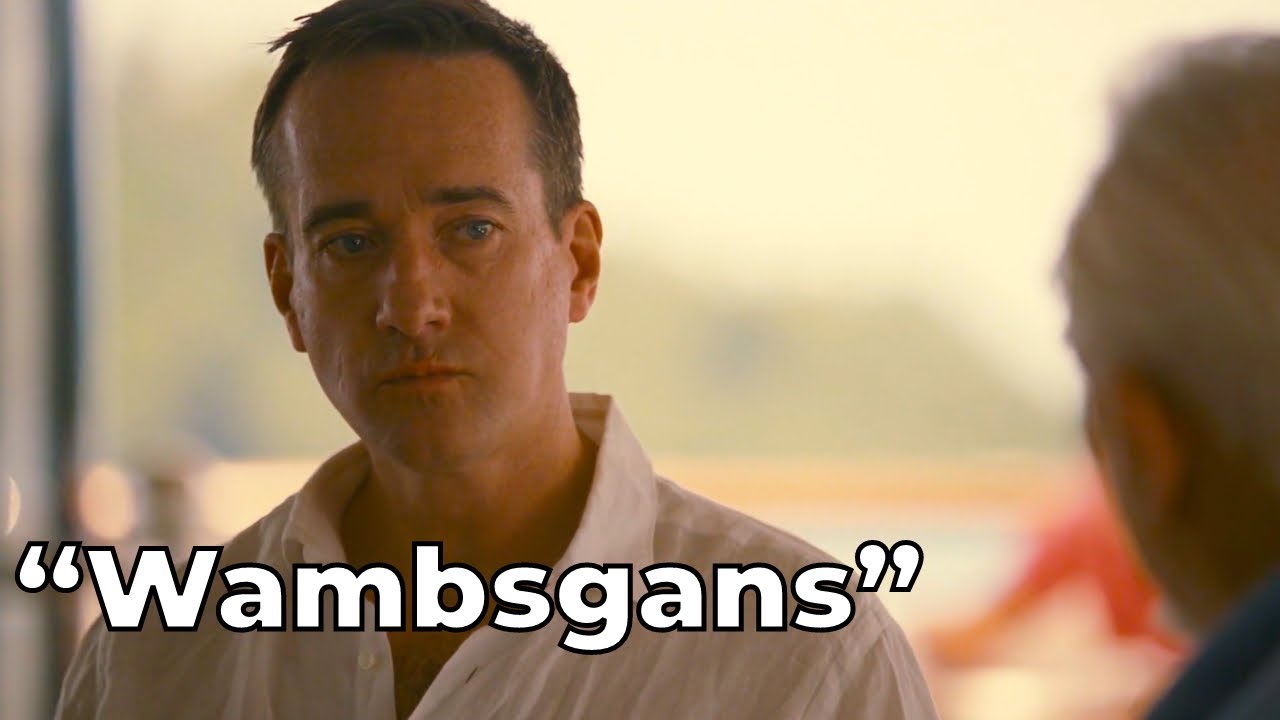
What is the Sunken Place?

What is the Sunken Place?

Machine-readable: Markdown · JSON API · Site index

Поделиться Telegram VK Бот
Транскрипт Скачать .md
Анализ с AI

Оглавление (7 сегментов)

Segment 1 (00:00 - 05:00)

sink into the floor wait wait now you're in the sunken place let's start watching cable I've been watching I was watching Poltergeist last month I got a question why don't white people just leave a house when there's a ghost in the house it's like an Eddie Murphy bit this idea of like if black people were in you know the leads of a horror movie it would go very differently oh baby this is beautiful we got a chandelier hanging up here kids outside playing it's a beautiful neighborhood we ain't got nothing to worry I really love them this is really nice he hears cat out too bad we can't stay baby it turns out everybody whatever race you are everybody wants the main character to do the smart thing I felt this feeling that everyone in the theater was Chris everyone is looking through the same set of eyes get out Stars Chris a black photographer from Brooklyn who visits his girlfriend Rose's Family in Upstate New York his first night there Rose's mom Missy Armitage pressures Chris into a hypnotherapy session seemingly to cure his smoking addiction during the hypnosis Chris reveals that as a child his mom died in a hit and run accident and he feels responsible for her death because he didn't call for help instead for reasons he doesn't understand he watched TV and did nothing and he feels that same motionlessness during the session with Missy you can't why can't I move you're paralyzed just like I did when you did nothing now Frozen Missy tells him to sink into the floor revealing one of the most iconic movie moments of all time the sunken place writer director Jordan peel originally came up with the sunken place when he thought about the phenomenon when you're about to go to sleep but then you feel like you're falling and catch yourself I always thought to myself what if you didn't catch yourself wake up where would you fall to but after he wrote the scene he realized that clearly wasn't the whole story I really started noticing the parallels to the prison industrial complex black men are essentially abducted at a completely disproportional rate Chris is part of a system his father was never really around fathers not being around is an epidemic in the black community my father wasn't around tossing black men to the back of their minds literally and figuratively the sunken place is a metaphor for that the sunken Place itself perfectly captures the feeling of helplessness that peel was going for Chris completely loses his agency he can still perceive reality but that reality is physically removed from him and his screams cannot be heard this metaphor for the loss of agency proved so powerful that after the release of get out it entered common lexicon someone in the sunken place now describes any disadvantaged person unwilling or unable to acknowledge the systemic issues affecting them you know I originally felt like it was black people but I've had many people women many people of all different races tell me they've felt that a feeling of the voiceless I think the sunken place has remained so iconic because it captures a distinct feeling from deep within our Collective psyche something you've definitely felt but have maybe never put into words a psychological phenomenon felt by black men and women by those without a voice and by you watching this video you'll live in a circum place in his iconic book beyond the Pleasure Principle Sigmund Freud identifies one of the core symptoms of trauma the need to quote repeat as a current experience what is repressed instead of as the physician would prefer to see them do recollecting it as a fragment of the past in movies we see this phenomenon most clearly in the traumatic flashback where a film cuts from the present day to a character's past traumatic experience which we then relive alongside them throughout Sergio Leone's famous 1968 Western Once Upon a Time in the West the main protagonist plays a harmonica but it's not until the final showdown that we realize why as he faces his Nemesis Frank we cut to the main character as a child and we realize that Frank forced him to kill his older brother and then Frank gave him that harmonica through a cut to the past we understand the emotional turmoil the character constantly goes through in the present when he uses the harmonica this kind of cut gives a past event the visceral feeling of a current experience through editing we eliminate the distinction between past and present we can feel the urgency of this kind of cut when we compare it to a fade-in which does make the memory feel distant because movies are an audio visual medium they feel uniquely suited to portray when an actual flashback feels like showing the past and present side

Segment 2 (05:00 - 10:00)

by side mimics the way we all feel intrusive thoughts which hijack the senses and in the most extreme cases Force the victim to relive the past and get out uses this exact technique when Chris has the opportunity to save Georgina in a way he couldn't with his mother show him as a kid and show Georgina one last time to sort of signify this connection of like if he doesn't get her now he's never going to beat his demon and the sunken place takes this idea of reliving the past one step further instead of a montage of shots that still moves the viewer forward in time the sunken Place removes the viewer from time altogether if we consider the sunken Place through Freud's description of trauma the place becomes an extreme version of that repetition of the past Jordan peel has said that everyone sunk in place would look different depending on their past traumatic experience in Chris's sunken place we see the world only through a small rectang angle just like the TV he watched when he was Frozen as a kid and he does the exact same scratching with his hands so the terror of the sunken place is that it's not just a flashback that comes and goes it is the never-ending feeling of being literally trapped in a past event the actual hijacking of your present this metaphor feels so much closer to what reliving a past event feels like than a simple cut like Freud Jordan peel is clearly onto something yet the Resonance of the sunken Place goes beyond Freud's idea of trauma as a repetition of the past the sunken place also shows us what can make a past event so difficult to come to terms with open your eyes since Freud published his original theories on trauma Scholars have expanded further on what makes a past event like Chris's in get out so difficult to resolve in her book unclaimed experience Professor Kathy Carruth points out that it's not just that the event was intense or disturbing it also has to be something that quote is experienced too soon too unexpectedly to be fully known consider how the movie in Kanto portrays the exact same event both with and without trauma the opening of the movie gives the classic Exposition we've seen in countless Disney movies abuela tells the story of her husband dying and the family gaining the miracle of the candle which gives them their Magical Home the story focuses on Magic and spectacle and uses soothing music in gradual Fades to make the event feel like a well-understood distant memory we hardly see anything disturbing the destruction of their former home is only hinted at off-screen and when her husband dies he simply Fades away and we're reminded that through this tragedy the family received something great contrast this telling with the exact same event shown later in the movie after we learned that abuela has in fact to not yet come to terms with what happened have never been able come back here in this flashback we get to see the cinematic techniques that make an event feel traumatic something experienced too unexpectedly to be fully known instead of gradual fade-ins we get harsh cuts a shaky camera and tilted angles we see the violence firsthand instead of just hints of it and the story lingers on the suffering positioning the soldiers at a high angle with abuela looking powerless and crucially Mirabelle exists inside of the memory itself both she and the viewer have been hijacked from the present and forced to relive the past through abuela's eyes and it feels the same as if it were a current experience happening right now right in front of us in that original telling we get a simple story that makes sense it neatly explains the current magical situation of La Familia Madrigal but in this second telling we feel the uncertainty of the event that maybe the miracle doesn't fully protect Abuelo from the pain and suffering she went through and that past pain hasn't been fully addressed or acknowledged through this retelling Encanto challenges The Familiar Disney construct that the past simply becomes myth and instead shows how mythmaking can actually prevent generational Trauma from being addressed sometimes a story is too simple and too familiar which in the case of Encanto literally hides the cracks within the foundation Carruth points out why Freud turns to literature to explain trauma because quote like psychoanalysis literature is interested in the complex relationship between knowing and not knowing in other words literature and storytelling more broadly doesn't always give simple answers to the central conflict and in doing so storytelling provides the same profound ambiguity that makes traumatic events seemingly impossible to make sense of and movies like all art provide that same Insight I can't tell you oh because I don't know in Encanto abuela latches onto the miracle to safeguard her from her pain but when unknowns appear like Bruno's vision and mirabelle's lack of the gift they expose the uncertainty beneath the flimsy narrative we saw in the beginning of the movie the conflict in Encanto provides a perfect example of why Kathy Carruth calls her book unclaimed experience because that's what trauma is a past event that hasn't yet been incorporated into a reliable narrative one that hasn't been claimed leaving behind an event that is not fully understood and re-enters the past through uncontrollable flashbacks unresolved past experiences large and small feel Bound in this phenomenon of the unclaimed experience in get out Chris hasn't gotten over the death of his mom but the real trauma like all trauma is not simply in the tragic event but in his not knowing I just said dude you didn't call anyone no why not

Segment 3 (10:00 - 15:00)

and that's how Missy gets Chris into his sunken place like with all her victims she places him into that limbo of knowing and not knowing something is wrong yet not knowing why he did nothing you're paralyzed so it's no surprise that the sunken place is designed to make Chris look powerless not only can he not move while in the real world but his screams in the sunken Place cannot be heard we instead look down on him at an extreme high angle and like abuela and Encanto he tries and fails to reach out and stop it I came here to see you because I know that now you'll tell me what you're after one of the biggest appeals of film is the promise of resolving one's own trauma in Once Upon a Time in the West the harmonica symbolizes the protagonist's inability to move on from his brother's death but after the final showdown with Frank he gives the harmonica back showing he successfully got his revenge and beat his demons and in get out Chris gets a similar opportunity to overcome his trauma when he has the chance to save Georgina having a character act on their past traumatic memory gives them what psychologist Pierre Jeanette called the pleasure of completed action the ACT allows them to approach and resolve a traumatic event on their own terms they can claim the previously unclaimed experience and apply it to their own narrative it's a classic element of the hero's journey so it's no surprise that this narrative is so popular in storytelling it creates a strong narrative Arc and fulfills the fantasy that one can overcome their demons even in really intense and gruesome stories a sense of agency can provide that narrative fulfillment throughout the movie Saving Private Ryan we see many deaths that seem to have been for nothing like when soldiers drown or when a soldier gets killed while a medic tries to save him unlike once Upon a Time in the West these deaths feel unjustifiable not only do they happen at random but they do nothing to help the war effort or drive the story forward it makes sense that the movie did trigger PTSD for combat veterans because it is full of moments that Freud described as a quote experience of helplessness these moments feel like unclaimed experiences because they don't fit into any meaningful narrative and it's not just in the violence that we feel the meaninglessness of War when the soldiers begin their mission to find Private Ryan and bring him home they similarly don't understand why they're risking their lives for just one person and throughout the movie many of their actions do end up just wasting time and risking lives even the soldiers personal lives contain elements of The uncleaned Experience One textbook traumatic moment comes from the character Irwin Wayne Who as a kid pretended to be asleep so his mom wouldn't talk to him after he shares that story he says oh I did that exactly like Kristen get out Irwin doesn't understand why he remains motionless and ignored his mom and it's precisely through Irwin's not knowing through the constant senseless violence and through the seemingly mean meaningless mission to save Ryan that the events of Saving Private Ryan feel traumatic and unclaimed and even Ryan himself shown as an older man at the beginning and end of the film still looks traumatized from his past experience but despite all these traumatic moments the movie tries to give itself a simple patriotic narrative first the movie places the seemingly pointless violence within a larger context towards the end of the movie we get a voiceover of a letter written to Ryan's mom by a World War II general which states that the war was a campaign against tyranny and depression and that the sacrifices weren't for nothing in the solemn Pride that must be yours to have laid so costly a sacrifice upon the altar of Freedom this poetic rationale turns unexplainable present experiences into past justifiable actions through this speech the film tells the audience why the violence had to happen and second the movie gives Ryan himself the agency to incorporate his experience into his own narrative Captain Miller commands Ryan to earn the sacrifices they all made for him and when we go back to the present day Ryan wants to know if his wife thinks he did exactly that tell me I've led a good life she assures him that he did and that does seem to be the case Ryan has his conventional white bread family with him we hear the Patriotic music in the background and he honors his experience by saluting Captain Miller's Tombstone through this ending the movie tells us that World War II was not an uncleaned experience because it gave Americans like Ryan the freedom or the agency to live a good life a life where traumatic experiences can actually inspire you instead of leaving you sunken but war is rarely that simple what would it look like if a World War II movie did the opposite foreign the movie Grave of the fireflies is a Japanese animated movie following the lives of two siblings sija and satsuko trying to survive in World War II Japan like Saving Private Ryan the film begins and ends with the same scene and the middle is a flashback of their experience during World War II but unlike Saving Private Ryan the opening scene shows Siege dying all alone shortly after the war Sita is not supported or respected like Ryan but rather called disgusting and disgraceful

Segment 4 (15:00 - 20:00)

his death is one of the many seemingly meaningless deaths caused by War unlike Ryan Siege did not earn anything and the ending scene isn't reality but rather a dream-like fantasy of a happy reunion that never occurred in real life so unlike Saving Private Ryan the war itself has no meaning to sieja to the point where he doesn't even know the war has ended until much later a clear reminder that even though the war has actually ended he is still stuck in the past not knowing what all the violence was even foreign the ants provided no relief to Japanese civilians whose homes and families are still completely destroyed whereas Saving Private Ryan reminds us that some American soldiers like Ryan got to go back home inspired to live a good life in the opening scene of grave of the fireflies a dream like Siege just stands against a dark background and watches his real-life equivalent die in a train station it feels all too familiar to the sunken place he's not in control of his story he can only watch himself from a distance unable to reach out and stop it periodically on Reddit someone will ask a question like what is a movie you can only watch Once what you end up with is essentially a list of movies where the central trauma is left unclaimed movies like Requiem for a Dream Manchester by the Sea and unsurprisingly Grave of the fireflies all these movies endings leave the viewer with the harmonica they leave the viewer in an unclaimed experience they cannot escape from they leave them in the sunken place and I think a movie like Saving Private Ryan would get added to this list if it's beginning and ending changed what if Ryan was more like Tom in hacksaw Ridge and like many actual traumatized veterans visiting his fellow soldiers tombstones unhappy and Alone movies like get out and Kanto and Grave of the fireflies show the impossibility of turning a traumatic experience into a neat linear narrative it's sometimes impossible to reduce a past event because to do so would erase the emotional truth of what happened so the act of trying to turn trauma into a neat narrative can itself be painful in the movie Hiroshima monomor a French woman describes her love affair with a German soldier during World War II she plans to a love with him but he died on the same day France was liberated when her parents found out about the affair they locked her in a Cellar where she went mad once she shares the story with her Japanese lover in Hiroshima she feels she has betrayed her own trauma where were you when she died I don't want to think about that the reason you haven't told her this is because you don't want the woman you love to know that you are the type of person who abandons your family in the hesitancy of these characters to speak of their past we understand why trauma is so difficult to put into a story movies give events a beginning middle and an end but unclaimed experiences are experienced not as a story but rather a Non-Stop disruption that begins out of nowhere and feels like it'll never end in other words the French woman's past feels like the sunken place a place she and Chris enter without their control and a place that they cannot Escape everyone's room and sunken place would look different foreign I went to this idea of like you know what's worse than death and of course this feeling of being trapped in your own body for eternity everyone is looking through the same set of eyes for dreams it's a dream I was in a hole or something and I couldn't move I don't know how are you in the movie Manchester by the Sea Lee Chandler mistakenly starts a fire in his house that kills his three children

Segment 5 (20:00 - 25:00)

later in the movie he has a dream where he sees his kids and one of them says this scene directly references a story told in the seventh chapter of Sigmund Freud's the interpretation of Dreams where a father also has a dream where his son asks him father don't you see I'm burning the father then awakens to realize that a candle had fallen on and burned the body of his dead child who had recently died of a fever and in Manchester by the Sea Lee also awakens to a burning except his burning is the burning of sauce on the stove Freud told this story to introduce a question about dreaming why would the father even stay asleep and dream of his child instead of instantly waking up to stop the burning According to Freud the father wanted a way to see his child alive which Freud described as wish fulfillment satisfying a desire through some involuntary thought process such as a dream even if that fulfillment prevents the dreamer from acting in real life and that's exactly what happens to Chris when he stays to watch TV instead of trying to get help for his mom it's a form of wish fulfillment I was watching TV can I be watching the television and remember asking myself why I'm not doing anything I'm just watching the TV I'm letting this contraption sort of offer me a way out of my responsibilities Chris's denial of that harsh reality creates a psychosis that Missy weaponizes into the sunken place and the sunken Place does feel very dreamlike especially since peel did originally associate the sunken place with the feeling of falling when trying to sleep so Freud's theory of wish fulfillment answers Chris's unanswerable question of why he did nothing to help his mom the answer is that facing the possibility of a Dying mom is simply too much for a child to Bear something too unexpected what Kathy Caruth calls a lack of preparedness and the only safe response is to remain stuck in wish fulfillment unwilling and unable to face reality and all these movies contain elements of wish fulfillment characters initially deny some part of their experience such as by Living in a Dream like Fantasy by overlooking the clear warning signs or by rejecting reality entirely you're not burning so through this lens the sunken place is a place that visualizes this Universal feeling of being stuck the feeling of wanting to move to make noise to feel grounded but instead being trapped in a headspace that keeps you suspended in air in a nightmare-like state trapped in a Perpetual state of wish fulfillment which begs the most important question of all how do we escape the sunken place and get out and in the interpretation of Dreams escaping the sunken place is just as important as the sunken Place itself psychologist Jacques Lacon felt that the idea of waking up plays a huge role in how we understand trauma where Freud asked why we dream Lacon asked why do we awaken when the child asks don't you see I'm burning Lacon sees the question as a command for the father to leave the dream and confront reality in Manchester by the Sea the obvious reason for Lee to awaken is to stop the burning on the stove but the act of Awakening also affects him in a deeper way it forces him to confront the reality that his trauma is not resolved that he has to go back to Boston because at least there he's in more control even if it's as simple as being able to invite his nephew so you can come visit sometime so it's no coincidence that Lee makes the arrangements for his nephew in the scene immediately after the dream using the language of chocolate Khan and Sigmund Freud we can see that the act of Awakening from Lee's dream is what ended his state of wish fulfillment allowing him to accept the unbearability of his trauma fully aware of the reality of his situation he can finally admit why he can't stay in Manchester I can't beat it so Awakening from the dream becomes the opposite of wish fulfillment instead of staying in a state of denial waking up allows the dreamer to acknowledge the truth of their trauma two as karuth puts it bear witness to their trauma in some way shape or form but getting out of our sunken places is not always as simple as Awakening from the dream for Chris and get out and for all of us it's more complicated it's weird that scene I mean Judith did say unset yo this is in the annotated screenplay for get out Jordan peel describes how Chris uses photography to awaken himself from his trauma it became this perfect defense mechanism for Chris specifically in the party scene he gets uncomfortable and says I'm gonna take some pictures his trauma ties into his profession for somebody who had been through the worst day of his life when his mom died and was in the stasis while watching television it would make sense that he chose photography he's freezing moments and collecting them this ability to step back and investigate through a telescopic lens from this angle photography is the antithesis of the sunken place instead of being forced to watch the world through a rectangle Chris controls the rectangle himself he can move and preserve his memories instead of being stuck in them when we first enter Chris's apartment in the beginning of get out we get a series of his own photographs one shows a pregnant black woman and a man walking away from her the staging in this picture reflects Chris's own upbringing as a child raised by a single mother without a father Chris's father whether he was literally in prison or not there is a relevance with the idea of The Disappearance of black men so through his art Chris literally captured the

Segment 6 (25:00 - 30:00)

trauma of his childhood Chris's childhood trauma is not fully resolved yet like Lee in Manchester by the Sea he does manage to Bear witness to and Memorial realize his trauma in his case through photographing the black experience and this ability to investigate the world around him reflects Chris's general perceptiveness which peel emphasizes with the song in the background of this scene he's talking about stay woke which I needed the whole audience to understand that the lead character Chris is woke he's not an idiot he's alert he's going to be making the right decisions the phrase stay woke has multiple meanings in the context of get out the most obvious reason is what Jordan peel himself said he wanted to create a horror movie with a woke black protagonist someone smarter than the white people Eddie Murphy described in horror movies not only does Chris know when he's in danger but he's also woken up to Greater systemic issues he understands the racial undertones beneath the seemingly innocuous comments made by the Armitage family and the guests at the party but in get out there's another more literal meaning to staying woke when Chris gets trapped in the sunken place he's stuck in a dream like trance so the term also relates to the sunken Place itself like the phrase get out stay woke is a command for Chris to avoid the sunken place and go back to being that in control Smart protagonist and Chris isn't the only character to lose his wokeness both literal and figurative when he enters the sunken place in the opening scene Andre Hayworth starts off savvy and self-aware like Eddie Murphy understanding his lack of safety in a white suburb not today not me very simple it's a ghost in the house get the [ __ ] out you know what I like to do [ __ ] out here man but once Andre becomes sunken with the brain of a white man he's no longer self-aware he's instead trapped in whatever traumatic dream Missy Armitage constructed for him living a wish fulfillments fantasy that he's in no danger I find that the African-American experience for me has been for the most part very good the ghost told them to get out the house white people stayed in there now that's a hit and a half for your ass it is only after Chris uses his phone to awaken Andre from the sunken place that Andre utters the title of the movie the command to avoid the sunken place the command to stay woke you know sorry man according to peel it's no coincidence that a camera flash is what awakens Andre and Walter out of their sunken places as we were making the movie I realized the implications of camera phones and how they've become such an important tool in The Fight Against Racism it's connected to this idea of his eyes and point of view as a black man being his special power he's equipped to know something [ __ ] up is going on because he's perceptive his eyes his art his point of view it's his weapon in this context to the term wokeness applies not just to Awakening from a dream but also to Awakening to the racism in the world around us and get out and in unclaimed experience wokeness is the explicit denial of a kind of sleep it is the demand to leave a wish fulfillment dream and wake up to reality a reality where one confronts trauma both individual and Collective Chris uses a camera to awaken people from their sunken place literally through a flash camera and metaphorically by using photography to acknowledge the systemic issues Chris faces as a black man and Jordan Peele does the exact same thing as a filmmaker through his implementation of the sunken place he forces the audience to Bear witness to the collective trauma inflicted on black Americans through the abduction and appropriation of their bodies so let's go to the sunken Place uh not everybody who resonated with get out is a black person in America and not everyone who resonated with the sunken place has experienced the trauma of feeling responsible for their own mother's death and yet the sunken place is a visual representation of something we have all felt the disruption of our own narrative the loss of understanding our entrapment in a past with no escape and it's a feeling touched on in countless other works of art the movie Get Out uses it to comment on black male enslavement the prison industrial complex and white people appropriating black bodies Jordan Peele used in all two familiar feelings so that when Chris gets hypnotized everyone is looking through the same set of eyes the movie was bringing people together as opposed to tearing us up further apart that to me teaches me a ton about the power of story trauma is not easily resolved sometimes it's never fully resolved it's not like Missy's hypnosis actually cured Chris of his past and now Chris has to deal with that new traumatic experience in the Armitage house another sudden violent event get out shows us that we can't always get revenge on the bad guy or team up to fight some straightforward cause there's no easy narrative when trying to address trauma on the individual or systemic level and that's what all these movies about trauma accomplish they show the difficulty and necessity of acknowledging trauma as it truly exists and that what matters most is expressing our issues even if they can't yet be fully resolved and that's the beauty of the sunken place it's the ultimate metaphor for what an unresolved

Segment 7 (30:00 - 31:00)

past event feels like and by seeing that feeling expressed in a movie get out wakes us all up it Bridges our own unclaimed experiences our own feelings of not knowing with those felt by Chris there's probably something you're struggling with and with Sigmund Freud and Jordan peel and Kathy kruth have taught me is don't rush into turning your problem into some neat narrative simply to acknowledge it to express what's actually there sometimes that's brave enough so when I look at the sunken place I see what storytelling is capable of and I see a reminder that you've got to use art to help Escape your sunken place to get you out of your motionless wish fulfillment to use your eyes in this moment so that now you see it foreign

Другие видео автора — Now You See It

Ctrl+V

Экстракт Знаний в Telegram

Экстракты и дистилляты из лучших YouTube-каналов — сразу после публикации.

Подписаться

Дайджест Экстрактов

Лучшие методички за неделю — каждый понедельник