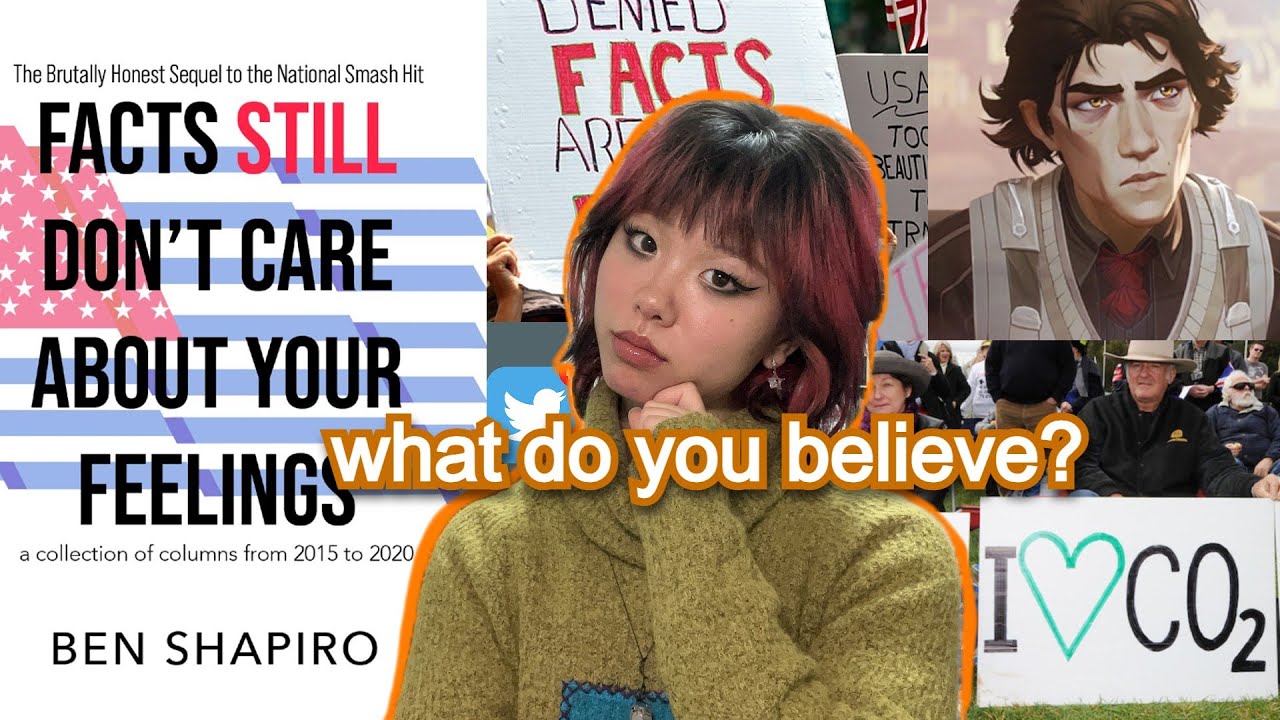
when is offense justified?: analyzing norms of respect & offensive content

when is offense justified?: analyzing norms of respect & offensive content

Machine-readable: Markdown · JSON API · Site index
Поделиться Telegram VK Бот
Транскрипт Скачать .md
Анализ с AI

Оглавление (7 сегментов)

Segment 1 (00:00 - 05:00)

imagine a classroom discussion of Lawrence V Texas the US Supreme Court's Landmark decision holding sodomy laws unconstitutional one student argues that the Court's ruling was correct because a state may not base its criminal laws on bare moral disapproval another student responds that if that principle were sound polygamy and beastiality would also be immune from punishment a third student chimes in to observe that those comparisons are offensive even harmful and urges or Intimates that the second should apologize what should happen next this is the imaginary scenario that philosopher Benjamin idolon considers in his recent paper the etiquette of equality it's representative of scenarios where one person says something that logically and semantically speaking is unproblematic but on some moral level it ends up offending others how and when does this happen how do we figure out who is right or wrong one natural thought is that it depends on whether the offense that the third student took or supposed others would take is justified in one sense we can say that the second student is just performing a reductio which is when you criticize an argument by showing how it leads to an absurd conclusion for example when Socrates said humans are defined as featherless animals with two legs and diogenes brought him a featherless chicken to prove him wrong similarly the second student is logically showing how the first student's principle a state may not base its criminal laws on bare moral disapproval leads to absurd consequences such as making BDS realityy immune to punishment there is nothing offensive about that quote yet I suspect many will share my instinct that this point of logic is not all that matters from a moral point of view if many people interpret the second student as making a moral equivalence between same-sex intercourse and beastiality and feel insulted by it then even if their offense might be mistaken it's still important to investigate why this feeling of offense happens in fact some people might think that the very feeling of offense can be a good reason to blame the second student for acting wrongly but we should be careful the more we treat misunderstandings as genuine signs of harm the less we are able to talk to one another it can cause the very people we want to create a caring space for to feel increasingly offended and to have a false idea of who is out to get them more on this later now whether you think the third student's offense was justified or not whether you think the second student is blameworthy or not the point is that there is some ambiguity in how to treat this scenario navigating situations of offense can be very difficult part of what makes it difficult to talk about the complexities of offense is how politicized it has become especially when offenses are identity related which makes total sense given that offensive statements exist within a context of systemic injustices but we should talk about it how we communicate with one another and how we signal respect and disrespect is extremely important to get clear on thus we're going to follow Idol footsteps and approach this topic both sympathetically and critically but please don't take this video to be an end all be all as with all my videos they should jump start your journey to learn more not to give you a definite answer throughout this video I'm going to use some examples that you all gave me on Instagram follow me at Alli sunva if you're so inclined to ground our reasoning in concrete cases the first case I want to start with is this article written in 2014 called is it right to jail someone for being a offensive on Facebook or Twitter it garnered a decent amount of attention as most media remotely related to free speech does but basically there was a teacher named Anne Maguire who was stabbed to death by one of her students Jake Nome a 21-year-old posted on his Facebook page personally I'm glad that teacher got stabbed up feel sorry for that kid he should have pissed on her too a few days later he was arrested charged and jailed for 6 weeks under the 2003 Communications act for sending quote by means of a public election ronic Communications Network a message or other matter that is grossly offensive or of an indecent obscene or menacing nature I read through the comments on this article and there were definitely mixed reactions keep in mind that these are from 2014 but I think it reflects similar sentiments on the internet today some comments were appalled by the fact that people could get jailed for saying offensive things that it was a violation of free speech of course it isn't real internet discourse about Free Speech without someone making compar comparison to Nazi tyranny but there were also comments agreeing with the choice to Jail the 21-year-old they claimed that Free Speech doesn't include verbal abuse or the right to hurl insults at your mother walking down the street regardless of which Camp you fall more into I hope we can all agree with the first two sentences of this article what follows is offensive the facts are unattractive and there is no hero in this story this is going to be a reoccurring theme while the imaginary scenario with the students was about whether something is offensive or not this debate about jailing people

Segment 2 (05:00 - 10:00)

over offensive comments is about what the correct response to offensive behavior is and at a more preliminary level what the distinguishing feature of offensiveness is put another way here are some different questions we can ask about a potentially offensive scenario one is it offensive if we decide it is offensive two what makes it offensive and three how should we respond to answer question one we often need to answer question two but I don't think that's always the case sometimes comments are so blatantly offensive that there is no disagreement on its offensive nature such as the Facebook comments about the deceased teacher but even after offensiveness is agreed upon there's still room for discussion on what to do about it I'll try to implicitly touch on these three questions throughout this video though I will probably fail to adequately answer any of them hopefully you can all continue the discussion down in the comment section to begin tackling the ambiguity of offense it's good to start from an intuition that people generally share offense is not synonymous with harm and uh what beus really um it's [ __ ] up for the utilitarian John Stewart Mill offenses are never harmful and thus should never be regulated by the state you can be offended by how bad someone smells in public but it doesn't harm you a homophobe can be offended by seeing a gay couple kiss but it'd be strange to say that the couple harmed them by kissing so this gives us a potential answer to question two and consequently question one something is offensive when it causes a state of mind that we dislike such as disgust discomfort outrage Etc but while there is a difference between harm and offense as Concepts people today tend to think that in practice offense can be harmful when someone offends people's aesthetic taste the way Bianca seems to excel at or violates Norms of politeness like engaging in too much PDA it can be uncomfortable unpleasant but you can't say they're wrong in the moral sense however when someone offends our moral principles our core values or sense of self it can seem harmful for example in 1977 when the American Nazi party applied for a permit to parade through skoi Illinois a largely Jewish neighborhood that seems pretty bad so what's the difference between a harmful offense and a non-harmful one because this will affect how we respond to the situation well harm can be defined in different ways but I think we can go with James o Young's definition as a setback to someone's interests if you're offended by people rubbing their loving relationship in your face it's reasonable for us to advise you to just look away or ignore them but if someone broke your leg it'd be really weird if the advice was to ignore it you can't get to school or work you can't engage in a lot of activities some of your important interests have been set back so similarly sometimes offenses can also set our interests back in a way that's harmful for example the biggest funer of the UK's Conservative Party named Frank Hester said that seeing Diane Abbot Britain's longest serving black MP makes quote you just want to hate all black women because she's there and that she should be shot it would be much better if she died she's consuming resource she's eating food that other people could eat hearing these statements from Frank it doesn't seem so reasonable for us to tell someone especially if they're a black woman oh just ignore that this extremely negative statement about all black women from a person in a very influential position makes it likely to think that the interests of black women are going to face some sort of setback now I'm sure someone will quickly say you can't know that for sure when my leg's broken I know for sure that I'm not going to be able to move the same the harm is physical it's objective but when someone says they feel offended because something sounds racist where's the harm I don't see a bruise they're just words you're having a subjective reaction to them but you can choose to close the article and ignore what he said you can't even access other people's minds so why are you assuming the worst maybe Frank was making a joke and logically speaking he's only insulting the individual MP who just so happens to be part of a marginalized group in fact it's up to us to grow thicker skin if you get offended that's your fault people shouldn't need to police their speech you might recognize this line of reasoning from Reddit Edge Lords who Pride themselves on having extremely offensive humor there is a point here though which again is why most people agree that there is some difference between harm and offense in general our tolerance for certain types of offensive material has increased telling people to kill themselves is just a casual Sunday morning activity on Twitter 2024 Twitter would send 202 Twitter into cardiac

Segment 3 (10:00 - 15:00)

arrest because this is how we were moving back then in contrast I feel like people today are relatively LAX about calling others ugly or just commenting on people's appearance and there's an expectation to not voice any offense taken on that front there's a lot we could say about why this has happened I'm thinking about theories of reclaiming offensive language as a mode of empowerment or just general desensitization on the internet but I won't get into that the point is I'm not saying you have to ditch your edgy humor you can continue to tell other people to go kill themselves I do want us to notice though that it is perfectly combatible to hold the belief that people should ignore offensive statements and that the offender must stop what they're doing James oou gives this analogy quote sometimes my children who are normally delightful tease each other when this happens I will tell my son that he ought to ignore his sister and not rise to the bait this is true but his sister still ought not to tease him knowing that he will not like it similarly there is a presumption that I ought not to engage in an action that will offend others so you can tell people to toughen up if you also will tell the people spewing offense of [ __ ] to shut it one of the main problems I have with people obsessed with free speech is that they tend to place the entire burden of responsibility on the person who feels offended but communication is not a one-way Street and sometimes the [ __ ] people say is just bad more importantly though there can be very good reasons to police our speech even when you don't want to or when you think the rules for speech are arbitrary to see why this is let's explore the Norms of etiquette oh hi Mary hi morning how are you we've missed you a cheerful greeting for friends you meet an inquiry about their welfare and everyone feels more at ease you're buying a cup of coffee the Barista says good morning how are you say I'm doing okay how about you now the Barista didn't have so hot of a morning she forgot her Presto card or metro card whatever it's called in your city so she decided to take her chances and commit Fair evasion but of course the one and only time that she doesn't pay her Fair the fair inspectors come hopping aboard for her terrible crime of not paying $330 she has now been fined for $425 good morning how are you I'm not too bad take care why does the Barista say this even though she doesn't believe it to be true she could have not answered the customer or she could have honestly said I'm doing horribly and I'm too preoccupied with my own problem to care about this interaction but this seems wrong because the customer can't access the life experiences or inner thoughts of the Barista they have no way of knowing what the intentions are behind her saying I'm doing horribly and I don't care about you the only way to clearly Express respect or disrespect especially in these short 3se second interactions with a complete stranger is to use publicly recognized practices such as asking someone how are you we all recognize this phrase as an expression of polite respect not a literal question about our well-being since we live in a society it's very important that mutual respect is not only there as a foundation but is clearly communicated at the same time we don't want that communication to take too much effort or else we would never be able to do anything so instead of telling every stranger I acknowledge your dignity as a fellow human being I have good harded intentions towards you we substitute it with please and thank yous essentially we want a quote recognized social currency that symbolically operates as thoughtfulness but simultaneously alleviates its strains thus we have routine manageable predictable practices like saying thank you holding the door for someone walking behind you wearing dark clothes to a funeral and it's not like has intrinsic worth but in our social context it conveys the right attitude towards others mely an attitude of respect towards a deceased person that's why if you're invited to a funeral from a different culture where the norm is to wear white it would be offensive to stick to your own cultural practice of wearing black you could explain to everyone that you come from a culture where wearing dark clothes to a funeral is respectful but a that takes a lot of time and effort B who knows if they'll believe you and C people are going to wonder why you're so hellbent on being counterculture it's just clothing color again since don't have access to people's inner thoughts isn't it more important to make sure others don't question our respect for a deceased person by externally displaying shared practices of respect and once we frame the issue that way it seems clear that those who chafe at so-called woke Norms on the ground that they are capricious or unjustified who object say that there is nothing intrinsically disrespectful about referring to the blacks or asking where a person of apparent Asian ancestry is from and so forth are often just missing the point there's nothing intrinsically

Segment 4 (15:00 - 20:00)

objectionable about wearing bright colors to a funeral either but you still shouldn't do it there are very strong moral reasons to say or not say to do or not do various Things based on our interest in being recognized as equals what this shows is just as how we have etiquette norms for displaying politeness we also have what idolon calls an etiquette of equality norms and practices that designate how to signal respect for members of socially subordinated groups and to avoid affirming derogative attitudes and stereotypes just as how there is nothing intrinsically wrong with wearing different colors to a funeral or not saying thank you there is nothing intrinsically wrong with calling me a [ __ ] shout out to that one person in my DMs who calls me a [ __ ] every time I post by the way but words phrases and practices don't exist in a vacuum they carry sociolinguistic facts such as facts about who uses or has used them or the types of discourses they belong to by choosing to address someone with a slur that creates an association with a certain Community or discourse Jeff nberg puts this succinctly when he writes racists don't use slurs because they're derogative slurs are derogative because they're the words that racists use so when a bunch of white people wear t or Chon a Chinese traditional dress like kerson dun in the first Spider-Man movie Emma Watson Paris Hilton Jennifer Aniston this girl who wore to prom there are Chinese people who get offended not because there is something intrinsically wrong with wearing a certain type of dress but because of the sociol linguistic facts about this dress and the practice of wearing it tea got popular in Western fashion because it was perceived as an exotic Oriental piece Chinese clothes in General carry an exotic otherness and the Chinese people growing up in the west felt that when I was younger I was very embarrassed to wear Chinese Cultural clothing to school because I felt like it would make me look like an outsider I was trying to not be seen as a foreigner so when Chinese people in China don't feel offended by white women wearing teaps it's because they don't feel these sociol linguistic facts that Chinese Canadians and Americans have to be aware of due to our lived experience to Native Chinese folk maybe it's just a white person wanting to wear a dress I'm getting a little sidetracked from the main point of the video but I do want to point out two things one native Chinese people get most excited about white people wearing teapa white people because they have adopted colorist and eurocentric beauty standards over there skin whitening getting double eyelid surgery heightening our flat Asian nose Bridges to be more prominent it's not uncommon to see white models in China it's very rare to see darker skinned models so it's not just that they're excited about sharing their culture a lot of the times they're excited that they're sharing their culture with white folk they feel happy that they're getting validation from white folk number two is that having white women wear a teotw to prom or the red carpet or an episode of Friends isn't really a sharing of culture most of the time white women wear it because they quote simply found a beautiful modest gown and chose to wear it they chose it because of a surface level aesthetic appeal not actually because they are interested in or appreciative of the culture that Lies Beneath the clothing of course I'm not trying to disavow the perspectives of native Chinese people the continuing conflict in opinion is what makes cultural appropriation a fuzzy topic what we've talked about so far about offense being towards sociol linguistic facts and not intrinsic worth helps us figure out why we think some people are just totally unjustified in feeling offended if you've ever watched the show Community the character brda is a classic example of someone who just gets offended without good reason she seems to make up sociol linguistic facts that aren't there would you change clothes in front of her Annie I know your lack of World Experience creates curiosity but questions like that can make you seem a little bit homophobic when people got offended at Alia's interlude for wearing Moon boots on the beach that was silly sure you can be offended on an aesthetic level but some people gave her lashings like it was a moral crime okay putting that aside I think we can now revisit the scenario from the beginning of this video the third student got offended not because there was something logically flawed in the second student's argument but because there is a derogatory history of comparing same-sex relationships to morally abhorent practices like beastiality and pedophilia by choosing to make this comparison even indirectly it might signal an affirmation of those past homophobic discourses it might be a choice to align oneself with that type of community I want to emphasize the might because I am by no means saying that we can know the second student endorses homophobia from this one statement it's not even clear that the second student has done anything wrong even if they did say something offensive that doesn't automatically mean the best course of action is to focus all our

Segment 5 (20:00 - 25:00)

anger and effort on that one student while it's absolutely important to create a safe space for people and to make sure we're thoughtful about the language we use at what point does a focus on an etiquette of equality prevent us from achieving actual material equality idolon and myself are very sympathetic towards upholding an etiquette of equality I personally try my best to be Progressive with my language I certainly don't want to risk others thinking that I am prejudiced towards them but an unavoidable consequence of adding more rules to the etiquette of equality is what idolon calls respect inflation the bare minimum for being respectful keeps increasing which creates more opportunities for people to feel offended quote not only shouldn't you show actual disrespect you shouldn't even appear to be showing disrespect but since that is itself a form of disrespect you also shouldn't even appear to be doing that is you shouldn't even appear to be even appearing to show disrespect and so on this draws out the difference between our etiquette for politeness and the etiquette of equality saying please and thank you is simple virtually everyone knows about these norms and we all have a similar interest in saying please and thank you but what counts as showing respect for specific identity groups depends on social practices which are constantly changing it depends on what discourses you're part of and different groups will have different interests in using certain language I want to hear you say thank you just as much as you want to hear me say thank you by contract because I'm online and I'm aware of incels referring to women as females has taken on a new level of meaning that many offline academics are unaware of they have no interest in avoiding the word females because they're embedded in a different discourse so to account for all these differences to avoid offending the greatest number of people while also being alert to as many bigots as possible it will necessarily involve in exaggeration or inflation of what things signify for example when people wear a pin of the American flag on one level it's just an expression of patriotism or an identification with being American though it can be hard to conceive of in our current political climate it is possible to be patriotic and to believe that one's country is awfully unequal and unjust someone can be patriotic because they believe their country should be and can be way better than how it currently is but nonetheless it is a social fact that there is a correlation between people who wear American flag pins and people who hold a particular politically conservative view of what patriotism is quote for me to wear the pin could thus furnish evidence about my views on any number of issues that I favor the mandatory Pledge of Allegiance in schools that I disapprove of the athletes who have taken to kneeling during the pledge and so on an observer who thinks that I know this moreover may take my choice not only as evidence of these other views but as an effort on my part to Signal them so if I do not want to evoke or endorse these additional resonances that gives me a substantial reason for issuing the flag pin even if I feel a great deal of patriotism and would prefer all else equal to express it in this customary way I'm not trying to be an apologist for Patriots but an etiquette of equality does mean that some forms of expression are off the table unless you want to risk signing disrespect and that is a genuine restriction I want to be clear that highlighting these difficulties with commun ating respect for identity groups is not to erase the fact that there are strong moral reasons to avoid offending others I am not indorsing the edgelord path of intentionally offending others so that they toughen up and we can just use whatever slurs we want the issue isn't even about fragile snowflakes who are easily triggered those metaphors Focus us on a person's tolerance for a given magnitude of insult or injury but respect inflation is probably better seen as describing a change in what is being done to a person not in their own Constitution if more and more behaviors come to be reasonably taken as evidencing a speaker's lack of respect for you that amounts to the barbs getting sharper or more numerous not your skin Getting Thinner again the Barista says good morning how are you and have a great day even when they really had no motivation to because it is important to clearly signal our respect for others we don't want to make respect an ambiguous puzzle similarly there are good reasons to think about what parading around an American flag will mean to others even if you aren't actually racist so what's the answer etiquette of equality good bad being offended Justified or unjustified here's the unsatisfying answer I think it's extremely important to uphold an etiquette of equality to be critical of the words we use and how we express ourselves to others for example the shift from saying slaves to enslaved persons is impactful because

Segment 6 (25:00 - 30:00)

there is tons of research backing how the structure of language affects how we think about people so instead of making enslavement Define the whole person we use language to represent the state of enslavement as separate from the person but there is a real cost of making offense more common it's not pleasant to feel offended when it's harmful it will set back our interests sometimes it makes us think people hate us even when they don't I mean that's what's so frustrating about the internet in general Twitter and Tik Tok seem to care more about calling people out for sounding offensive than about the actual outcomes of doing the call out otherwise why do they seem incapable of thinking in degrees in fact if your activism extends only to this communicative realm equality becomes reduced to a symbolic show being mindful of our language and practices is important but doing actual on the ground work like protesting donating building Community with real people is probably more impactful sharing infographics with your ooms doesn't count I saw this tweet the other day by this user called four which said dating by guys is cute till you talk about getting married and having kids in the future and suddenly the air smells like he'd be so much happier with a girl I read this as for revealing his own anxieties about not being able to have a gay marriage and family because marriage and family are so heavily associated with heteronormativity to my surprise there were are so many people calling him out for being bif phobic I can see where it comes from like if you squint hard enough the Tweet is describing a negative feeling that involves a by person liking men and women but I think we should put our reading comprehension caps on and see that the negative feeling the Tweet describes is not caused by the guy being by even if you still had doubts though a quick look through the replies shows for publicly defending bolk against bif fol IIA they're good to have fun with but not to be in a relationship with to which for said well no let's not turn them into a kink what the [ __ ] they are people personally I'd never date a by guy I mean Hello double the competition and temptation to which for said that is not love if you don't even trust your partner not to cheat LOL work on that someone else said get them to which for replied there is no one to get this is not a call out tweet the fact that many people either disregarded for's clear disapproval of by phobia or just didn't bother to look for more context about the Tweet just shows how there are some people who care about signaling their moral superiority rather than actually combating harmful offensive content okay as I was going through this video I feel like I was too definite on this part this tweet here makes a reasonable point that although for's intention wasn't to be bobic it created the opportunity for people to voice their bobia which is true hence why for had to respond to bobic views under his tweet I think this just perfectly shows the great complexity of interpreting language any mention of finding by relationships difficult because by people can be in heterosexual relationships may carry a sociol linguistic fact it is a fact that there is a social pattern of biphobia arising as complaints about by people being unfaithful or being straight people cosplaying as gay but some people will find this in forc tweet and find it offensive and others won't similarly the third student saw a certain sociol linguistic fact about gay relationships in the second student's reductio but not everyone will what and when sociol linguistic facts become apparent to us is varied depending on our lived experience and our sensitivity to the etiquette of equality too long didn't read communication is hard upholding an etiquette of equality can also come into tension with building solidarity between various groups and solidarity is very important for practical onth ground change for example suppose you're a teacher and you're trying to get your students to have a discussion about abortion they have a diverse range of opinions the discussion can already get sidetracked in numerous ways now the teacher being Progressive wants to use the term persons capable of pregnancy because they don't want to exclude trans and gender diverse communities but from a practical standpoint they also don't want to alienate students with more conservative viewpoints who already don't really want to talk about abortion or to draw attention to trans discourse rather than abortion which again is already a loaded topic the teacher might hope to change the minds of these more conservative students in which case using the word women would be more palatable quote the teacher is trying to convince students with diverse views that they are engaged in a common discursive project and that even unpopular ideas will be met with respect rather than derision yet the emergence of etiquette like Norms that make the choice of language here a significant test of the speaker's attitudes towards transgender people while also overdetermining the meaning of the prescribed Choice seems to eliminate any such symbolic Middle

Segment 7 (30:00 - 32:00)

Ground a difficulty with etiquette is that there is really no middle ground if I say please and thank you that is polite if I don't impolite if the teacher says person's capable of pregnancy that signifies an affiliation with gender Progressive discourse if the teacher says women that signifies the opposite these are all really tough situations that I don't have a good solution to I know I'm useless but perhaps we can start by being reminded of the fact that identity groups are not monoliths there are different opinions and different practices within racialized groups within queer groups within disabled communities sometimes people will disagree about whether new practices and terms actually are helpful or not so there isn't one universal etiquette of equality that everyone uses moreover maybe if we gave people more opportunities to explain themselves then we would be less prone to assuming the worst for example Randall Kennedy is a legal scholar who works a lot on racial conflict he sometimes refers to the black community with more traditional terms like colored folk blacks and this word we might take this to Signal an affiliation with politically conservative stances on Race he's just another Larry Elder however Kennedy explains that he does this to resist thinking that only one term can be the correct way to refer to the black community he uses traditional names for black folk he also uses is some Modern Progressive ones for him there is no Universal perspective that can represent an entire community's opinion whether you agree with him or not at least with his explanation we get a better sense of what he actually stands for most importantly though it's crucial to recognize that at the heart of the ambiguity and the difficulties associated with the etiquette of equality are the systemic injustices that people face the problem is ultimately not with the restrictions we face in an effort to be woke systemic injustices make an etiquette of equality necessary in a social context characterized by plainly visible yawning gaps in both opportunity and recognition it makes perfect sense that members of subordinated groups and avowed allies would be drawn to and then keenly sensitive to the use of our respect communicating practices to situate oneself relative to those glaring inequalities so in so far as the escalation of the etiquette of equality may be regrettable the Lion's Share of the blame rests with the systemic injustices that make that escalation a logical and possibly inevitable response please be respectful in the comments make sure you're signaling your respect with etiquette as usual sources are linked down below thank you so much for watching let's keep talking and I hope to hear from you soon bye

Другие видео автора — oliSUNvia

Ctrl+V

Экстракт Знаний в Telegram

Экстракты и дистилляты из лучших YouTube-каналов — сразу после публикации.

Подписаться

Дайджест Экстрактов

Лучшие методички за неделю — каждый понедельник