Evaluating the Derivative of Composite Functions Using the Chain Rule Given a Table of Values

Evaluating the Derivative of Composite Functions Using the Chain Rule Given a Table of Values

Machine-readable: Markdown · JSON API · Site index
Поделиться Telegram VK Бот
Транскрипт Скачать .md
Анализ с AI

Оглавление (1 сегментов)

Segment 1 (00:00 - 01:00)

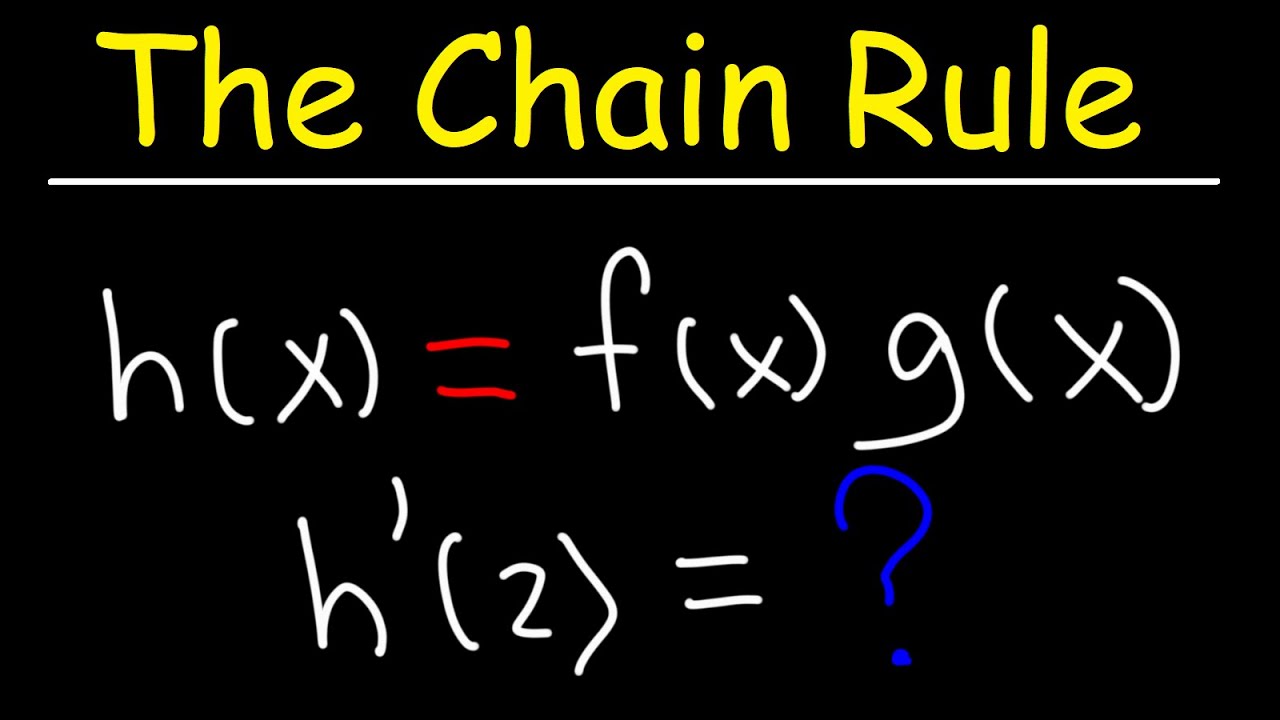
Number 41. If h ofx is equal to f of g ofx, what is h prime of 2. So let's begin. Here we have a composite function f of g ofx. Whenever you want to find the derivative of a composite function, you need to use the chain rule. The derivative of f of g ofx will be frime g ofx. So first we need to take the derivative of the outer function f and then we're going to multiply by the derivative of the inner function g. So it's frime of g ofx * g prime of x. So we want to evaluate h prime of x when x is 2. Replacing x with 2, we have frime g of 2 * g prime of 2. So now we need to use the data in the table to get the answer. So first let's focus on g of 2. When x is 2, what is g? g will give us a value of 1. So g of 2 is 1. So let's replace g of two with one. And so we have frime of 1. Now we need to find the value of g prime of 2. So when x is 2, what is the value of g prime of x? We can see g prime of x is four. So g prime of 2 is four. And then we need to find the value of frime of 1. When x is 1, frime is 6. So h prime of 2 is going to equal 6 * 4. And that will give us an answer of 24. So answer choice C is the right Answer.

Другие видео автора — The Organic Chemistry Tutor

Ctrl+V

Экстракт Знаний в Telegram

Экстракты и дистилляты из лучших YouTube-каналов — сразу после публикации.

Подписаться

Дайджест Экстрактов

Лучшие методички за неделю — каждый понедельник