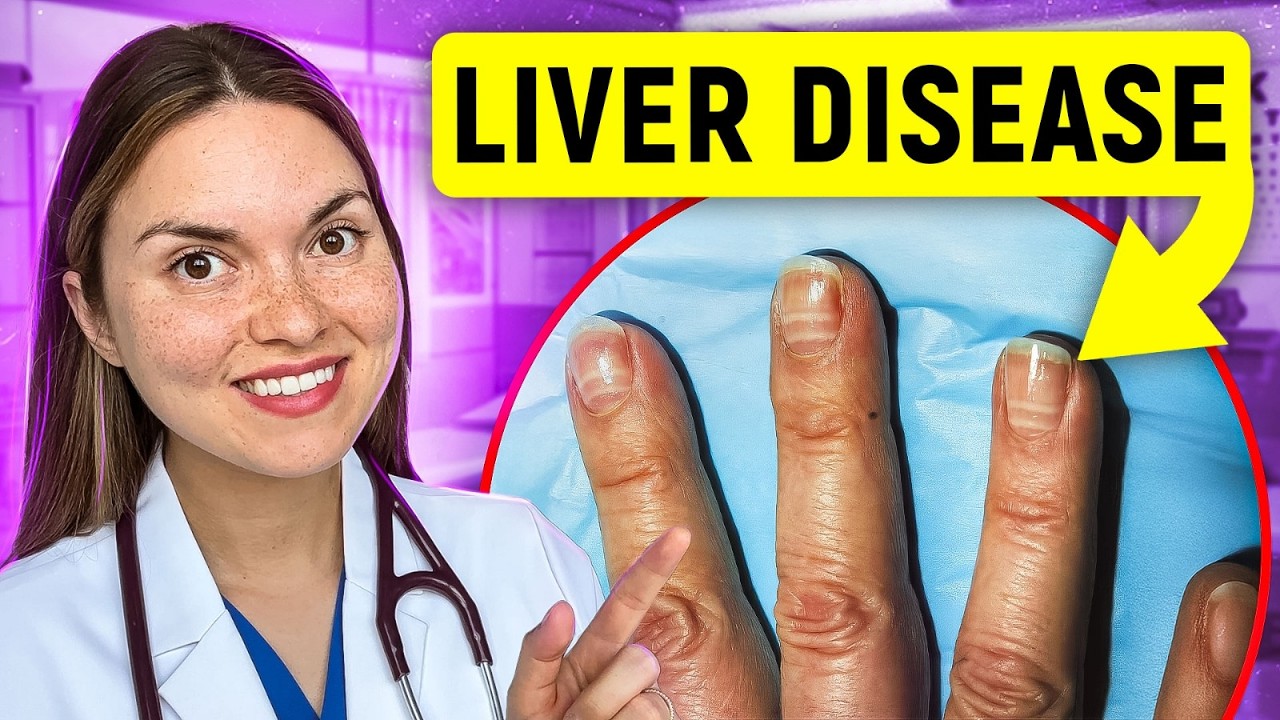
Did you know that your skin, nails, and even your breath can give you important clues about the health of your kidneys? Kidney disease is something that I see and treat every day. It's more common than you think, and it's often hiding in plain sight. In fact, it's estimated that up to 90% of people with chronic kidney disease don't even know they have it. This is a major problem because if we can catch kidney disease early, we can usually treat the root cause and prevent further damage. So, today I'm going to show you the top 17 signs of chronic kidney disease, which may just save your kidneys and your life. These two bean-shaped organs sit on either side of your lower back, just under your ribs. Now, most people think of kidneys as filters, and it's true. They filter out toxins and get rid of them in your urine, but they do so much more than that. They help regulate levels of salt, potassium, and other electrolytes. They balance the acid levels in your blood. They even control your hemoglobin levels and help maintain your bone health. So, the question is, how would you know if these delicate, sophisticated organs were in trouble? Let's start with foamy urine. And I don't mean a few bubbles that disappear within seconds. I'm talking about a true layer of dense white foam that sticks around, similar to what you might see on top of a beer. This is a sign that a protein from your blood called albamin is leaking into your urine. And to understand how it gets through and what it means for your kidneys, let's take a closer look. This is a glomemeilus. Just one of about a million tiny filters that make up each of your kidneys. It's a tiny bundle of blood vessels so narrow that red blood cells have to squeeze through single file. But we need to look even closer. Now you can see what looks like tiny little hairs all over the surface of the blood vessel. These are actually tiny tentacles that extend from specialized cells called ptoices. and they create a living filter. But protocols flatten and that leads to gaps opening in the filter allowing proteins like albumin to leak out. And that could easily go unnoticed. But luckily, albumin has a structure kind of like soap, which is why it creates this thick foam. Actually, this is a bottle of albumin that we use in the hospital, and you can really see how foamy it gets. Okay, now let's do a quick test together. This is something I do on almost all of my patients in the hospital. Roll up your pant leg and then gently press your thumb into the lower shin bone for about 5 seconds. Then check to see if it left an indent. If it did, it's called pitting edema. And the reason this happens is related to the frothy urine. As you pee out albumin, you end up with lower levels of albumin in your blood. And albumin plays an important role in holding fluid inside your blood vessels through osmosis. So without enough albumin, fluid starts leaking out into your tissues causing swelling. And this free fluid tends to follow gravity, which is why most people notice swelling in their legs and feet. Although it can also end up in loose tissue, like around your eyes. But here's the problem. Even though you're swollen, you actually have less fluid circulating inside your blood vessels. And your kidneys assume that means you're dehydrated. So to try and help, your kidneys retain salt and water, which just makes the swelling worse, and that's a vicious cycle. In severe cases, that fluid can even leak out into the lungs, making it difficult to breathe. But before you panic, there are a lot of causes of leg swelling. A small amount can even be normal after standing all day. But that should usually get better overnight when you're lying down. If your leg swelling doesn't get better or becomes more pronounced around your eyes, then it could be related to your kidneys and you should get that checked out. All right, now on to a common myth. I find that most people think that if you're peeing a lot, then your kidneys must be healthy and doing well. But when it comes to your kidneys, quality matters more than quantity. In fact, the first thing to go when your kidneys are struggling is the ability to concentrate urine. And this is most noticeable at night. Normally, your kidneys make concentrated urine overnight, partly because you're not eating and drinking, but also because of a hormone called ADH. So, if you're forced to get up to go to the washroom multiple times at night, we call that nocteria, then it could be one of the first signs of kidney disease. Okay. Now, take a look at your nails, especially the color of them. It's normal to see two colors, particularly on the thumb. The lighter part at the base of your nail is called the lunula, which just means little moon. And you can think of it as nail that's still under construction. Now compare that with these nails of a patient with chronic kidney disease. They also have two different colors, but don't be fooled. That's not a normal lunula. And the other half of the nail has a reddish brown color. These are called half and half nails. Not everyone with chronic kidney disease will have nails like this. And we actually don't know why it happens, but there is a really clear association between those nails and kidney disease. Now, let's switch our focus to phosphate, a mineral
Segment 2 (05:00 - 10:00)
that your body tightly regulates and causes major issues when levels start to rise. We primarily get phosphate from our food. In fact, most of us get too much phosphate in our diet. But healthy kidneys can easily handle that. Although, when your kidneys become damaged, they can no longer get rid of that excess phosphate and so levels start to rise in your blood. And the reason this matters so much is because phosphate will bind to calcium forming calcium phosphate crystals. And depending where they deposit in the body, they can cause a whole host of symptoms. When those crystals deposit into the skin, it's called calcinosis cutis. It usually shows up as whitish yellow bumps that are hard under the skin and it's painless. Sometimes they can break open and what comes out sort of looks like a thick paste of calcium phosphate that reminds me of toothpaste. Aside from kidney disease, you also see this in autoimmune diseases like scleroderma or dermatomyioitis. So, as a rheatologist, I see this quite often. While these can be pretty awful for patients, in some ways, it's sort of best case scenario because those same calcium phosphate crystals can also deposit inside blood vessels and that can lead to a medical emergency called calcifilaxis. In those cases, blood vessels get blocked, organs and tissues don't get enough oxygen, and in severe cases, it can be fatal. But there's another more subtle way that high phosphate can impact your blood vessels. Take a look at this X-ray. Yep, I know he's missing part of his finger. We'll leave that to ortho to deal with. What I want to draw your attention to are his arteries. You are not supposed to be able to see them that clearly on an X-ray. So, what's going on? Well, your arteries normally have smooth muscle cells that can constrict and relax to control flow and pressure in the blood vessel. But when they're bathed in phosphate, these cells have a total identity crisis. They actually start acting like bone cells, laying down calcium phosphate into the walls of the artery. So, the artery wall, which is typically stretchy, becomes hard as a bone, and you can actually feel it under the skin. The best way that I can describe it is it's sort of like a guitar string underneath the skin. So clearly high phosphate levels are a major problem and part of the way your body tries to manage that is with a hormone called FGF-23. This hormone tells your kidneys to get rid of phosphate in your urine and it also tells your intestines not to absorb as much phosphate as well as calcium and it does that by preventing the conversion of vitamin D to its active form. Eventually, calcium levels start to drop, and that can lead to excruciating muscle cramps, particularly at night when you're trying to fall asleep. Although low calcium isn't the only culprit, early on in kidney disease, you can also have low magnesium, or you can have too much acidity in the blood, which can all lead to muscle cramps. So, if you have unexplained muscle cramps and you didn't just start a new exercise routine, then it's worth getting your kidney function and electrolyte levels checked. Okay, let's shift our focus back to calcium. When calcium levels are low, your body releases parathyroid hormone, which tells your cells to start breaking down your bone to release calcium into the bloodstream. It's a great temporary fix, but over time, you can imagine you're just fixing one issue and causing another. This leads to weak, brittle bones that are prone to breaking, which we call osteoporosis. An important sign of osteoporosis that I look for is height loss. So, it's really a red flag when a patient tells me that they're a few inches shorter than they used to be. Of course, breaking a bone after falling from a standing height is a clear sign, particularly fractures of the wrist, spine, or hips. But beyond electrolytes, there's a whole mix of toxins that build up in the blood when the kidneys start to get into trouble. We call this uremia, which is a nicer way of saying urine in the blood. And the earliest symptoms can really impact your sleep. A relentless whole body itch that is usually worse at night can sometimes be the first symptom of kidney disease. That's exactly what happened to this 57year-old man. He went to the doctor after itching his skin raw and blood work showed that he had advanced kidney disease. A few things can cause this. Uremic toxins can build up in the skin and cause irritation and those toxins can also switch on an itch receptor called PAR 2 which can make your nerve endings ultra sensitive. Even worse, they can eventually get into the brain and chronically activate your itch circuits, leaving you constantly itchy. Now, restless leg syndrome is a horribly annoying condition that causes an overwhelming urge to move your legs. And symptoms are usually at their worst when you're lying still at night trying to fall asleep. The leading theory is that when your brain is low on iron, it can't make enough dopamine, which triggers this irresistible urge to move. But what does this have to do with your kidneys? Well, uremic toxins drive inflammation, and this leads to the production of hepsidin, which is a hormone designed to
Segment 3 (10:00 - 15:00)
protect your body from bacteria, which thrive on eating iron. Here's how it works. During an infection, Hepsidin takes your body's iron and puts it into storage, and it also prevents additional iron from getting absorbed from your food. This helps to starve the bacteria while the immune system goes and kills them directly. But here's the problem. As your kidney function worsens and toxins accumulate, hepsiden levels rise inappropriately. So even when your body doesn't have an infection, it's chronically starved of iron and that's what leads to restless leg syndrome. So that's all to say that if you're having difficulty sleeping for one reason or another, it's worth taking a look at your kidney function. As toxins accumulate, it can also affect your taste and appetite. If you love this kind of information and you want to support the channel or if you have questions that you want me to answer in a monthly live stream, then click the link up here and become a channel member. Imagine you're about to bite into your favorite treat and then it just tastes like metal. Almost like licking a penny for those of you who remember what that's like. We actually don't have pennies in Canada anymore. But anyway, a metallic taste is a really common complaint in kidney disease. When ura builds up in your blood, some of it makes its way to your saliva. There, your normal oral bacteria break ura down into ammonia and other compounds. And these byproducts stimulate specific receptors on your tongue that most people experience as a metallic taste. And unfortunately, these compounds can also make your breath smell a bit like urine, which we call uremic feeder. So when your breath smells like urine and your food tastes like pennies, it's no surprise that many people with kidney disease lose their appetite. But believe it or not, it gets worse. Uremic toxins directly affect the brain by activating receptors that are normally used to detect food poisoning. This is the chemoceptor trigger zone. It has no bloodb brain barrier, so it can detect toxins quickly and accurately. When it does sense a toxin, it tells your body to stop eating and throw up as a way to protect you. It's a great defense mechanism, but not if you have kidney disease. Unfortunately, uremic toxins also can trigger this sensor in the brain, leading to a loss of appetite, nausea, vomiting, and over time, unintentional weight loss. Next up, easy bruising. My husband Mark is constantly banging his knee against the corner of our bed frame, and most of the time he barely even gets a bruise. On the other hand, patients with kidney disease will develop these massive bruises, and they don't even know how it happened. Normally, when you get a cut or an injury, tiny blood cells called platelets rush to the damaged blood vessel and clump together to form a plug. It's your body's natural band-aid. But in kidney disease, uremic toxins make your platelets less sticky, so it's harder to stop bleeding. Some signs you might pick up on would be your gums bleeding more easily when you brush your teeth or getting more frequent nose bleeds or just more bruises on your skin. Now, this is a 39-year-old man with kidney failure who missed a few of his diialysis sessions. Take a close look at his skin and notice how his skin is covered in a fine white powder. This is actually a late finding called uremic frost. Basically, his sweat is so concentrated with ura and other toxins that when it dried, it left this fine white powder of crystals on his skin. This is rare to see, and if you do, it's a sign of advanced kidney failure. There's another interesting late finding of uremia that I wanted to highlight. Uremic toxins can cause chronic inflammation of the paricardium which is a thin sack that surrounds the heart. And when it gets inflamed, we call it paricarditis. But unlike having an inflamed knee, you can't just rest your heart until it feels better. The heart keeps beating and rubbing against this inflamed tissue, which causes quite a lot of pain. And when I listen with my stethoscope, I can hear a scratchy sound like this. That's wild. It's actually the sound of the inflamed tissue moving as the heart's beating. Okay, getting back to common symptoms. I think the one patients tell me about the most is fatigue. There are many things we've already talked about that can contribute to feeling tired when you have chronic kidney disease. Poor sleep from muscle cramps, itchy skin, and restless leg syndrome. changes in your electrolytes and uremic toxin buildup. But there's another important cause that's not too difficult to treat. Your kidneys are responsible for producing a hormone called ariththropoetin, which tells your bone marrow to make more red blood cells. Yep, that's the same EPO that Lance Armstrong admitted to using to raise his red blood cells and boost his performance. If high levels of EPO can help you win the tour to France, then low levels in chronic kidney disease can make climbing a flight of stairs feel impossible. But thanks to injectable synthetic EPO, we can actually reverse a lot of the anemia that comes with chronic kidney disease. And the last sign to mention is no
Segment 4 (15:00 - 16:00)
symptoms at all. We classify chronic kidney disease into five stages where one is the most mild and five is the most severe where you're often starting diialysis at that point. The truth is many people won't notice any symptoms until they've already reached stage three. And if you find out earlier than that, it's often picked up incidentally on blood work or urine testing. So prevention is key. There are many reasons that your kidneys can get into trouble. For example, in this video, I discuss a real case where a pretty common snack resulted in serious kidney damage. But the most common culprits by far are diabetes and high blood pressure. Two conditions that we can often prevent and that we have great treatments for. Another cause that I'm seeing more frequently is the overuse of medications like ibuprofen and neproxin. Medications that are so easy to just pick up over the counter at the pharmacy. You know, I think that people underestimate the risk of chronically using these medications and not just on the kidneys, but also on the stomach and the heart. So, I'd try to use those sparingly. And if you are using them consistently, then talk to your doctor about checking your kidney function. So, hopefully this video helped you appreciate how amazing your kidneys are and why it's so important to keep them healthy. If you're feeling motivated, I'd recommend watching this video next where I go over the evidence-based strategies to lowering your blood pressure naturally without medications. As always, stay curious, stay healthy, and I'll see you in the next video. So, bye for now.