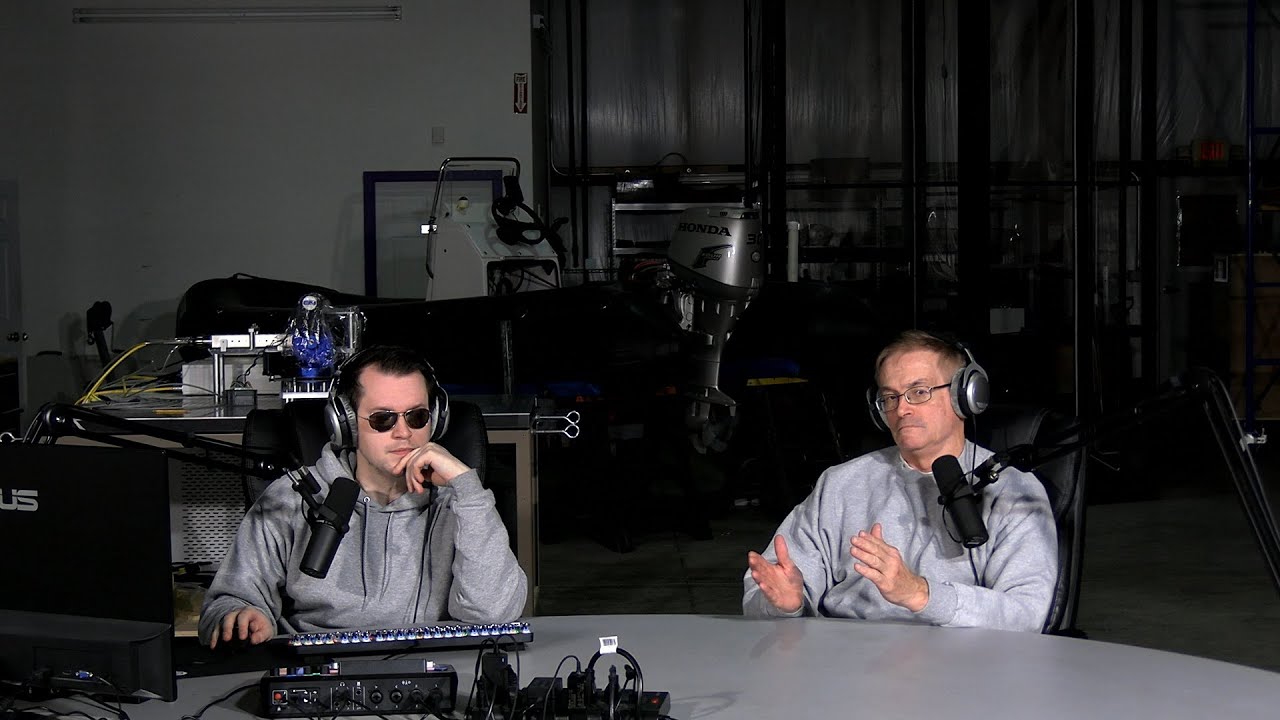
used. Uh could any of Okay, it sounds like everybody's saying no audio. Okay, I'll restate uh what I did uh before. So, thanks for tuning in again. We're having so many like uh computer problems and everything. — Yeah. — Um uh but hopefully you watched the uh previous video. — Um a cucumber was the best laser shield. Hopefully you watch that and that's what we're going to be talking about today. And I'm just check I'm looking at the chat right now to make sure that you guys can Yep. Okay. Everybody can hear us now. So, if you can restate everything that you said as well. — Sure. You know what's funny is like with all the high-tech stuff we do, some of the most difficult problems we have is just dealing with the YouTube. Uh but now that we're up to speed and we're only about what 15 minutes late, uh we'll get going. Uh to begin with, we're going to talk about that video, but it is an open forum. So, if you want to talk about any science, technology issues that are on your mind, we're open to talk about that. But, I did want to give you a little bit of background about some of the things that weren't in the video and some of the comments that people had made that seem uh common. There's a lot of uh similarities in some of the comments and I think I can address those and maybe simplify uh some misunderstandings. The first thing I want to bring up is let's see where you can see it best. Right here. — Yeah. You see that? — Yeah, they can see that. — See the Okay. No, I was not in a bar fight. Um, it's an interesting story because what happened was um yesterday uh this was after we had filmed the uh video and everything. Uh my wife mentioned that I had a black eye and I said, "I do? " And I'm figuring I'm in the machine shop all the time. I'm dealing with all the, you know, dirty tools. And I figured, no, I must have just wiped my face with some dirty finger. And so I said, "No, this doesn't hurt. I feel perfectly fine. " She said, "No, it's a black eye. " So I look in the mirror and it's like it was a black eye. And I What's interesting is I don't really remember or didn't remember at first what could possibly have caused the black eye. Well, you see these goggles here. Uh we wear these whenever we're working with lasers and some of you even when you're not working with lasers have similar goggles with clear faces so to protect you from debris or sparks when you're working in a machine shop. And the interesting uh commonality to these goggles is this very thin tightly wrapped ridge that goes around the outside of the goggle and it presses all the way around your eye like this and you can feel it. It's a fair amount of pressure. Well, after you're wearing these things for a few hours, you kind of forget they're on. And what I realized is that at one point when I was bending over, moving these bricks and some of these heavy objects, I did bend over a little too close and bumped the side of my protective goggles and must have pushed hard enough to cause the very, you know, delicate tissue right below the eye uh to rupture a few blood vessels. So, I must have gotten the bruise then, but didn't notice it. I didn't really feel it and didn't pay much attention until it was noticed later. So, I think it's just sort of an ironic thing that you wear these things to protect your eyes. And in fact, they were the cause of my only eye injury uh short of an explosion a few years ago. So, we could talk about that later. — Well, and the reason you were wearing those is because of uh this video that we just recently. It's a nice call back, but — I'm kind of assuming that most of you have seen the video, and you really should watch it because it was a lot of fun to do it. And one of the interesting things about uh the last few videos we've done is that they cover only a very small fraction of the work and the engineering that's involved with bu building this directed energy device. And it's a rather, you would think, kind of trivial aspect, you know, the back wall of the room, but it was a deal killer because if we couldn't stop the beam, we really couldn't do the video because it would obviously be hazardous for people outside of the building. So, we had to solve it. And it wasn't clear we were going to be able to come up with a good solution. And the fact that we were able to with a very inexpensive
Segment 3 (10:00 - 15:00)
method uh was really gratifying. And it sort of evolved from some of the comments that were given in the previous videos about using water and waterfalls and using something that's got water in it. Wet is always anti-heat. And it turns out that by utilizing water but in a captive form so that we're not dealing with water that's flowing into the room and flooding the room. Uh it's an excellent solution. and I really like it and it's going to be what we're going to use and I'm going to be starting to fabricate some of these panels. Uh, in addition, now that we've got that handled, and I know I could put one of those things up with Alex's help, we could probably assemble the entire wall in a day or two. Uh, now we can reach out to the smart people. Uh, and we're going to reach out uh back to Chris. We're going to ask him if for some recommendations, but — I think he may have moved on in his career. And so it may be necessary for us to uh connect with some other people with good, really good robotics and programming and computer skills uh to help us with the parts that I'm just weak on. Even with Alex's greater skills, robotics is uh that's a different field. — Yeah, that's and not my field. I I'm okay with computers. Well, you would probably all disagree since — after the last 15 minutes. Right. But that's sort of my forte is computers, but not mechanical engineering or anything like that. — Right. And the robotics is a really interesting sort of profession because it does sort of marry the idea of mechanics, mechanical engineering, I mean what's a robot — with all the programming and then interfacing those things practically. You know, you could understand one, you could understand the other, but if you don't have that sort of bridge, you can't visualize what can a computer control and what is a computer control able to do to mechanical devices. You know, you can't be unrealistic about structural qualities and you know all the components that are necessary. So anyway, robotics is what we need to finally finish the triad of the issues of the laser, the environment, and then control. and I'm going to be reaching out as soon as we get to Monday and uh hopefully we're going to get some good names and some people who are enthusiastic about working on this kind of project and we have extra goggles so we'll be okay. Yeah, that would always uh be fun having, you know, someone here in person, not just like we've uh talked about it, but having like a Zoom call with, you know, people, but I think it's always more fun like uh when Lars was here and we had the in-person, you know, — yeah, discussion. — It just seems more, you know, comfortable like you're having a real, you know, conversation as opposed to a communication. Uh, an interesting thing somebody brought up, one of the first people that uh, we may see if we can arrange uh, a live stream with is Nighthawk and Light. — And, uh, somebody brought up in the comments, I'm I saw his video, but he posted a video, I think it was yesterday on using, uh, organic materials to build organic plastics. And it's a very good video. If you haven't seen it, uh go take a look at it because I think you'll find uh it's there's a lot of similarities to kind of the approach that we try to take, which is realistic science and engineering, not just how fancy and how big can you get. And uh it's it I'm definitely going to talk to him about it if we do get them on the uh the show. It would be fun to talk about that. Um the uh other sort of thing I wanted to bring up too is one of the issues that we're going to have with these uh these drones and taking them down is that practically speaking uh what we're doing is we're sort of uh what's that thing where you know the you develop a problem. I mean they could even bring this up like you know the whole uh issue about co you create the problem then you create the solution then you enhance the problem and solution. It's a great business model — uh self a selfcorrecting or uh — that's kind of like the opposite. It's like selfcreating a problem because what we're actually showing people how to do with the protection of the back wall is we're kind of showing people how to protect drones — from the very devices that we're showing people how to use with drones. — But that's actually the principle because what not what we're not trying — we're not trying to uh create a weapon. We're trying to get everybody that is interested up to speed on what is out there and what its capabilities are so that you don't get these fantastic science fiction views of laser devices and think they can solve all problems. They can solve a lot but you have a sense for what they can't do as well as what they can do. And that's why we're developing this to sort of give a give people that kind of information. So, it doesn't really matter if we're talking about the, you know, the white and the black pieces on a chessboard. We're
Segment 4 (15:00 - 20:00)
really talking about the rules of the game, like how it's played and how the principles uh operate. So, it's science, it's engineering, and it's educational, and it's an opportunity to cover issues like optics and mechanics and chemistry, um, and even, you know, environmental issues and legal issues and safety issues. So, it's it's a blast and that's why we're focusing on this as a major project while we do our other videos in the meantime. — Yeah. Right. — Yeah. Um, some other uh kind of interesting things that we've discovered with the laser system is that uh Max Photonix, which is the manufacturer of a couple of these lasers, keeps upping their power levels. It's really kind of intimidating. Okay. Now, off the shelf, if you wanted to and you had the cash, you can buy 120,000 watt laser that you can roll right into the room. 120,000 watts. And if you saw the video that uh we did this morning, that's 120 times what we used for the test against the target. With both of our lasers, we're able to achieve 3,000 watts or 3,200 watts. So the this the development of these fiberl lasers and their progress is so fast that a lot of the principles will also change you know what can be done with them things that would have been impractical are now almost cost effective so it's a moving target so to speak with respect to developing these sorts of devices. — Do we have any interesting questions or something because I can just keep rambling but I don't want to — uh yeah that's fine. Um there's a couple of questions here, but actually maybe it'd be good if you want to — do what? — Take a look at any of these. — Oh, okay. Let me just take a look at this. — Yeah. — All right. — And while he uh uh looks at uh his phone, um we appreciate all the uh comments and everything. So, um I'm not ignoring any of your uh comments, but we're just trying to stay on topic. That's all. — Sure. Um the two that uh I think are probably uh the most important I just brought up the tests that power levels, the tests that we were using uh the laser for all of our tests was 1,00 watts. And uh the lasers are capable of 1,600 watts and we have two lasers. The reason we got two lasers is because we anticipated the fact that for power levels that are up in the range that would be practical as a, you know, directed energy device, you're needing to get into the 100,000 plus watts range to be practical against practical threats. And it seemed that it would be like likely that you would have to have multiple beams. So, we decided to include that in the development of the engineering two of them. you if you can build it with two, four or nine or 16 or 25. The engineering is pretty similar. So that was the reason for doubling up on the lasers. But as you can see, these were bought about a year ago and they're already up at 120,000 watts. And that that's not the largest ones that are made, just to let you know. Uh the other one is uh why I was an MD turned engineer. I've given that history, my own history before, but like 20 seconds. I started out in physical chemistry in college and was going to go to graduate school in physical chemistry but decided that I didn't like the isolation of only working in a laboratory and ultimately decided that I had a lot of interest in medicine and enjoyed you know the concept and so I transferred over even though I've retained that interest and now having retired from medicine I have the freedom to ex uh to explore that and I don't think a channel based on medical information would be as broadly uh valuable to people because a lot of it would be proprietary and sort of too removed from their daily lives that they wouldn't find it interesting. Um so that's why I made that change. So let me give you your phone back. — Yeah. Well, and if you uh want to keep uh answering uh question — Okay. Yeah. All right. just because there might be another — we're having a chat issue here with the uh computer. So, this is a good way to do this. Yeah. — Um what I'm do what we're doing here is commendable. I agree. I think we're very commendable. That's great. — Um — uh how about would lasers work with Fresnel? Uh, you leave out the S. That's one thing that I had to learn. Yeah. A Fresnel lens. Um, no. Because see, Fresnel lenses because of the fact that
Segment 5 (20:00 - 25:00)
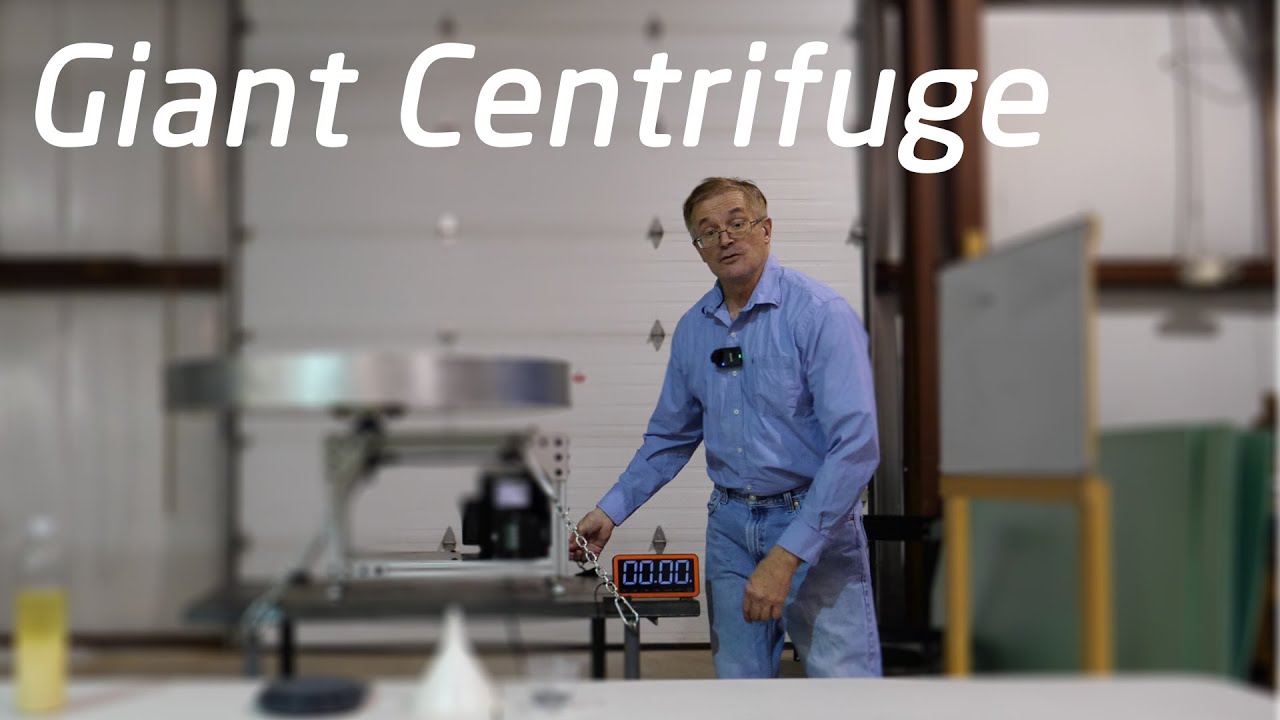
they have discrete um, shapes, if you've never seen a Fresnel, you've I'm sure you've seen Fresnel lenses, you might just not know that you were looking at them. Anytime you look at like LED lamps, um some even fluorescent lamps, they have flat plastic uh surfaces in front of them that look flat on the large scale, but when you look at them, they have little ridges. And if you look carefully enough, the ridges are actually triangular. And what they do is they effectively work like you took a large curved lens and then took all of those curved surfaces and put them into the same plane. If that makes sense. So it's almost like you've got a thousand nested lenses that have all been put into the same plane. The reason they won't work with lasers is because that uh discontinuity between the lenses would lead to tremendous amounts of defraction. you'd end up getting a lot of light that doesn't end up in the final focus. Uh that decreases efficiency and it also means that your light beams are going to be going everywhere, not only to your side and to innocence but also to the target that you're trying to hit, you do not want to use a frenel lens. Uh but for concentrating solar power on a solar cell or for taking light out of a discrete device like an LED and spreading it smoothly over the room, they're great. And they can be made out of plastic. They're inexpensive, great solution, uh, but not for high energy optics. It's just like I talked about when I was talking about the chromatic aberration you have with lenses. And that's why our aiming beam seems to focus at a slightly different distance than the firing beam because they have a different wavelength. Chromatic aberration is the difference in the focal length of a lens with lights wavelength. And that's one of the issues that you have to deal with when you're dealing with laser optics is you can't correct that as you can in a microscope, a telescope, um a camera lens because you have to minimize the number of elements. You certainly can't glue lenses together uh because the heat buildup and the energy loss through the multiple additional lenses doesn't work. Uh keep it simple stupid is the better way to do it. Um, and I think for a lot of people who have commented on the video this morning, we're done with looking for a solution. There are other, you know, aerog gels or should we use starlight graphite or waterfalls. We're done. Uh, we don't want to sort of keep focusing on the solution to the problem because we've got a great solution. It's cheap. It's easy to build. It's inexpensive. It has low toxicity. It's easy to dispose of. and we know how to make it and it clearly works. So rather than waste our time going through more materials just to kind of gain more knowledge about this subject, we've got enough to be able to move to the next stage. So I thank you for, you know, offering these other suggestions, but we really aren't going to go down that route. We really want to focus our limited time on other interesting videos and progressing with this device. We want to get this thing working. Um, let me see. — Yeah, that makes sense. — Oh, and some people were asking about pulseed lasers, like why you're not using pulse lasers. Um, there's no real reason to do this because pulse lasers have one uh very uh limiting factor like phmptoc lasers, super fast pulse lasers. They produce wonderful cuts in very delicate materials and uh they're very precise. But the problem is their average power is limited because the fibers can only take a certain amount of maximum power. Not over time. I mean at any time even for a phtoc you reach the limits of the glass's atomic interconnects and they can actually create dark centers and uh reign the chemical structures in the glass. So high enough energies and you will damage the fiber. So if the limit of the energy is in the pulse and you've got a quiet time between pulses, that's 99% of the time, your average output is very low. So with a moving target, something that you've got to put as much energy into as fast as you can because you got to move to another target or you may lose the target because of tracking or something like that. You don't want to waste that 99% of downtime. You want a continuous beam. You want it as tight as possible and you want it to be as powerful as possible. — Yeah. And uh I can uh read another question if you want. Um — Sure. — Uh — oh, and for other people while you're reading those things, — uh one of the other things that we are working on for those of you who are wondering because we keep hinting at it is the centrifuge.
Segment 6 (25:00 - 30:00)
— Um we're all ready to sort of film that video because it's done. It's working. We even shared with our Patreon people a couple of short segments that we filmed while we were testing it, getting it up to speed and proving that it didn't blow up. — Yeah. And sadly, you can't see it, but it is over there and it's still set up there. Um, if you could uh it is impressive. And yeah, on Patreon, you'll be able to see it in detail. So, — right. And that's what we do a little bit with the Patreon as a thank you to our Patreon supporters, is we provide some of the filming, which isn't all done in one step. Sometimes we film something and then we come back a couple days later as we've developed it. And so some of those um filming episodes, which are rather short, are done in advance of doing the final video that you see produced. It's over time, and they're consistent enough. They're almost like video shorts. uh but whenever we would put video shorts up on YouTube uh we got very few people to watch them and in addition we really appreciate the Patreon uh community because it's really providing the support that makes this possible. So we've already released I think one or two on the centrifuge our initial videos — but the final sort of throw the whole thing together and kind of go through the detailed explanation of what's going on. We're ready to film that. So that's most likely going to be our next video. We'll hopefully get it up as soon as we can and you'll get to see that it does work. Uh there are some issues, things you got to watch out for. Uh but for the most part, it's a successful project and we'll show you how to reproduce it if you want to. Yeah. Um, so, uh, do, uh, do you want to keep talking about, uh, this video and you could, uh, read more comments if you want or, um, I might be able to. — I could, um, Yeah, this we're don't know what YouTube is doing. Uh, no, I love you, YouTube. — Yeah, right. You are. Yeah. — Really, because they can hurt us more than we can hurt them. Um, yeah. See, that's the thing. We're getting comments like the sponge, you know, somebody say you should use wet sponges and everything like that. We've got a solution. Uh, if you've seen the video, you'll see how easy it is to do. And I even uh one detail that I didn't cover is it's even easier than I showed you. Uh, since we filmed that a few days ago, uh, I discovered that you can take the liquid that I put in the bowl initially to demonstrate in real time that this gels up, I've discovered that if you simply place the particles in the appropriate amount of water, give it a little bit of a stir, and it's still right now just a thin soup, you can pour this into the top of a completely enclosed chamber, build the entire thing, seal it up, leave the top open, and just with a bucket, pour the liquid in there. It will gel all the way from the bottom to the top. It doesn't just gel the bottom. It will go all the way to the top. And in a clear tube, it looks like you have a solid tube of glass. Uh but it works. Uh so it's going to be even easier to build than we thought. So we really don't need any more suggestions. You can make them. I'm not, you know, I'm not going to tell you not to. Uh but we're not going to spend any time looking more into that. I think we really do need to move on. What I would like to hear is what other things you think it might be interesting for us to uh hit with the laser. Uh not as a background target, but maybe as something that um it could be useful for, not just for destruction, but something, you know, creative. One person had asked a question whether or not you could drill a well with a laser. I know they have microwavebased well drilling equipment that can actually melt through uh and create a bore hole with the advantage that the microwaves produce so much heat they actually fuse the outer layers like you're putting in a casing. The problem with a laser is you saw all the particles that were flying out of the front of this uh these panels and those particles un through a long bore hole obviously are going to produce a lot of debris which is going to really distribute the laser over a larger area. And so you can but I don't think it's a cost-effective way to do it. If I was going to go high-tech I'd go microwave. Um, but just like people are saying that projectile weapons are a good way to take care of drones, lasers can do it, too. But it's nice to have a couple of tools available to you. — Sure. — Any other uh questions or — uh not that I'm not uh there's obviously questions, but um I was wondering if like we wanted to move on to the next topic or not. — We could if you want to. Uh we're speaking kind of in code here because — Yeah. In code — um because we got somebody uh who uh can join us. It he arrived here a little bit ago and uh it might be interesting to have him come because remember when I
Segment 7 (30:00 - 35:00)
was originally uh bringing up the fact that we're going to have to contact uh a robotics person to help him with the lasers. — Right. — This is related to the fact that um I am pretty much a computer incompetent. Uh I'm not much better than my father was. Um and so the point is we need people that have this kind of skill and have developed it over a long period of time. And you've met uh him before, but not for a long time. Uh but my other son of the main presenter uh Paul um arrived here a little bit ago and he can maybe give you a little bit of insight into some of the things that he's been working on. Not in robotics uh not that but just some of the computational skills that's made it possible for me to get along with all the things that we've done uh without really understanding enough about programming and software and everything like that. — Yeah. And like what I was saying before, it's like I'm better uh at uh anything um relating to computers than you are, but still nothing. — Not a high bar. — Yeah. But not compared to what he's able to do or especially when it comes to like programming and software, you know, aspects. — Yeah. And I've got some questions for him that I think it would be good to u is he available? Is he going to be — I'll go see I'll see if he's — okay. — Yeah. If you want to just um — so um — just give me a second. — Beyond the uh the computational stuff, uh one of the things that uh we're also going to be trying to do beside the live streams is uh we're also going to be trying to increase the frequency of some of our videos. And so hopefully we're going to be able to produce videos as often as a week apart, which would really be neat. uh we're looking at potentially involving some other people and that might be uh an interesting move. So, um if we start to produce videos more frequently, uh you'll see that. So, the proof will be in the pudding. But, uh right now, we've got about four or five on the uh the table. And I don't want to hint too much at them because about half the videos we start to work on end up as a video that we end up producing. Some of them are just fails. Um, and I can give you a list of those because you might find them as good as the ones that we actually end up producing. Um, you good? — Uh, yeah. Sorry. Sorry if you have the weight. — Sure. So, um, one of the, uh, videos that was sort of an interesting fail that I had recently. — What was it? — Well, you know how we've done a lot of videos on distillation, fermentation, that sort of thing. — Yeah. And one of the things I was interested in is whether or not we could take some of the uh skills that we developed in um distillation and be able to create uh different types of substances that aren't just wine or aren't just um alcoholic beverages uh but things like uh extractions like lemon oil that we you know did your finger still numb about. Uh but looking at uh doing uh heat treatments or heat processes um for different kinds of plastics and different types of um polymers to see if we can strengthen them or change some of their properties. And uh the what I ended up doing is taking a number of different plastics and seeing if I could infuse them with other substances like say graphine. Could you actually take a finished product and somehow soak it in a graphine environment and introduce graphine, a conductive, very strong material, and turn it from a soft piece of plastic to a diamond hard piece of material? — Well, I didn't actually even tell you this story. — I'm listening to it now, but it sounds like the video that we just made. — Well, so no, because — Okay. No way. Because what would happen is you could take like say a plastic toy, a child's toy. — Yeah. — And turn this soft, squishy piece of toy into something that looks like a carbon fiber product out of a 3D printer. — Okay. — You create the hardness in the polymer after the fact. — So it can be blow molded like you know a milk bottle or something like that and then you infuse it. I see. — Well, the failure was the fact that I had a temperature control system and I was using that to allow the vapor to get onto the plastic — and just like you know our initial video here um it failed. Uh but I wasn't in the room at the time and I had a couple of plastic items uh inside of the chamber and they were supposed to be warmed up to about 80° C, a little below their melting point. And — well, the temperature monitor went to
Segment 8 (35:00 - 40:00)
400° C and it was busted and the smoke was so the smoke alarm went off, but the smoke was so thick that I couldn't find my way around the room. This was in the my part of the shop. I couldn't find my way around the room to be able to pull off pull — and it's all built out of wood, — dude. So anyway, so I found the cord by tripping. And no, that's not what caused this. I found the cord by tripping and pulled it out. And then I grabbed a flashlight out of the car, found my way to the object, pulled it outside, and let it continue smoking for a couple of hours. — Yeah, it's probably good that you didn't tell me about this. — No, I didn't. But the point is, not everything you see on the camera is a successful project. There are a lot of them that fail. So, you know, that was something I did two days ago. — Yeah. So, in any case, uh, is Paul going to be able to join us or — Uh, yeah. Yeah, I think so. — Okay. — Um, — Right, then let me shut up and why don't you come on in, Paul? — Yeah. — Yep, he's there. — Cool. — All right. Hi, guys. I don't know if you can see. — Uh, I can see you now. Yeah, I can see you. Yep. — So, welcome. — And hopefully, and I'll adjust the uh framing if you need that, but — should be good. Yeah. Uh, this should be freed up. Okay, you're good. — Yeah. And keep that on the left hand side. Yeah. — I think the last time uh Paul would have been in any of our videos is if you can see behind me where my hand is sort of Let me see if I can get it right. This thing here is when we were building the tornado chamber. He was helping us because we needed three sets of hands in order to put the thing together. And I think that was the last time you would have been on any of our videos. Right. — Right. And then I was in a couple of full videos that you guys did. The Christmas lights made in a lab. — Oh, yeah. Yeah. Those are good. — Yeah, that one. And then the radio data sender. — Oh, yeah. Yeah. — And so that was like uh if you go back to the old tech ingredients videos, um you'll find those videos maybe like two years ago, do you think? — Uh I'm going to see if I can uh pull it up. My guess would be about four or five years ago, — but maybe for the oldest one. — Yeah, maybe for the oldest. But uh — but Christmas lights made in a lab I think was only like two years ago actually. — That it could be more recent. — It could be. I think we've got like over a hundred videos and it's kind of hard to keep track of. Yeah, exactly. — Uh this one would be this. Uh I don't really — It's hard to Oh, yes. Yes. That was it. — It was that. — That was that. Yeah. — Yeah. How old was that? — Uh, it's difficult because I'm signed in. So, — Oh, okay. Now, I know with this search he's going to end up blowing up the live stream. We'll see. But — Oh, I don't think so. Ingredients. Not this one, but No, it'll me like — just go to videos and roll down. You'll find it. I can find it for you. Do you want me to find it? I'll find it. — Um yeah, I don't think you'll be able to find the mouse. — Yeah, let me — go for it. — Well, as those guys fight over the mouse Oh, okay. We can see them together. All right. So anyway, it's been a couple of years and um I was bringing up the idea of the — robotics that we were doing uh with MIT and wondered like you know would Paul be able to do that? And he had said no I you know I'm not really like into robotics like I understand the programming and the software and everything like that but robotics that's an area that I'm just not I don't really like working with. I think he probably could, but the point is um he's just not interested in it. — Here it is right here. — Oh, okay. Found it. Okay. — Yeah, this is it. — I totally forgot. Oh my Yeah. Okay. — And let's see. I want to get a good picture of what we were doing. So, that was our setup. Yeah. — Um — room looks the same. — Keep going forward. We'll see the end product at some point. probably the big hump near the end. — Yeah. — There it is. — Yeah. So, they're like uh Christmas tree. Here you go. — Uh but uh they're like Christmas tree bubble lights. So, the uh bubble lights that you would find on Christmas trees. — They would hang down. — Yeah. They would normally hang, but uh we made really large ones that are like desktop kind of style. — Yeah. — And uh it was really fun. It was super
Segment 9 (40:00 - 45:00)
And um the reason that um sort of we were discussing this because — when I brought up the idea with the robotics thing back here and Paul was saying h no I just you know it's not my forte it's not the area I'm interested in. We started talking — about uh just software and computers and Alex had brought up the fact that because editing some of these long videos with 4K and a lot of the filming that we do was taking him a very long period of time. uh he was working you know for hours and hours simply because the computer itself with a lot of the rendering was taking so long that with all the other manpower you also added in that. So he started building a new computer for that purpose and in the process we then started talking about software and then Paul brought up um the fact that he is you know really hot about certain kinds of programs and then I you know my eyes crossed. — Yeah. So basically I'm here to talk about um software engineering because I'm a software engineer and uh I studied computer science at RIT Rochester Institute of Technology. And um so anyway, but the thing is I've always been into programming ever since I was like eight or nine years old. And I just wanted to um talk about how I got into it because was um a very strange thing because I it's not like one day I decided I want to get into programming or something like that. It all happened on accident. So what happened was um I was upstairs on um D well I call my mom D. Okay. Her nickname is D. So — I call her that too. So — yeah, everybody calls her D. Everybody — But anyway, I was on D's writing computer. So my mother is a writer and uh I was it was a wind old Windows 98 PC and um you know me always being curious about how you know stuff works. I was going through the system folder and so I'm going working my way through the system folder and it's like I'm going and just running random exes in there and just seeing what happens, you know, which you know isn't exactly a good idea, but you know, — 10 years old. — Yeah. — Isn't exactly a — It's not exactly a good I like that. — Yeah. So, anyway, I'm running these random exes on Windows 98. And that's when I discover one that's called QBasic. Okay. So, I run that and I'm looking at it and I'm like, what is this? It looks like some kind of notepad, you know? So, I start typing into it like as if it's a text document, you know, like Word or something like that, right? And it keeps saying syntax error, syntax error. And I'm like, you know, why is it doing this? What is this? I remember I asked D, "What does syntax mean? " And she was like, "Oh, it has something to do with grammar or typing or something like that. " And I'm like, "Hm. " So, I go uh on a different PC, one that actually had the internet on it. And I looked up what that meant. And that's when I realized, oh, this is a programming language, and I was like, hm, okay, like this, — you know? Yeah, it was kind of interesting. You know, it was intriguing because it wasn't very intimidating, right? It just looked like a word pad or like notepad or something like that. Okay. — Except a really old one, you know, clearly for DOSs, — right? Did you want me to uh pull that up now? — Uh yeah, in a sec almost. — Um it's good that you got it loaded. Yep. — Um but anyway, so it's like, you know, I pull this thing up. It looks like a notepad type thing. I start typing in there — and, you know, it gives me these errors. Well, I eventually find out it's a programming language. And so I start looking up the very basic commands that you can do. And what I discovered is that it's really simple and it's really easy. You know, it's like you can get something very simple going really trivially, you know, like you can type in circle or something like that and give it you got to give it a screen mode to use. — It's Englishbased. In other words, English language based. It's not just all letters and numbers and code. — It's a very high level language. Okay. — Right. So there's low-level programming languages and then high level. So you could think of it kind of like an onion. Okay? It's like an onion. It's like at the core of the onion, you have things like binary and assembly language, stuff like that. And then on the outer level of the onion is where you have stuff like basic or Python or uh JavaScript even kind of uh although JavaScript's maybe a like the second layer down from the onion but like it's one of the really outer layers of the onion — and they're all operating like binary and assembly for you. In other words, it's still of course it has to convert
Segment 10 (45:00 - 50:00)
eventually down to binary because that's what computers are binary. — Right. Right? But it has to get down to that level and there are different methods of doing that. There are interpreters, there are compilers, there are um virtual machines, uh bite code interpreters, there's many different kinds of processes that can be used to convert that English more human readable stuff that syntax into the assembly language. Got it. Okay. Right. And so, uh, what is so cool about QBasic is it's a pretty high-level language on the surface, but deep down it compiles down into assembly language pretty efficiently. So, it runs pretty quickly. At least it did back in the old days. You know, nowadays there are a few better choices like pure basic. And pure basic is something I want to talk about a little bit more here because it's something I really love. — Where's the basic basic commonality? — Why is it always called basic? Well, it's a dialect of basic. Like there's uh many different programming languages out there and basic just happens to be one of the ones that I really like. I really like basic. — They share some similarities. That's why they're in the family of basic. — Right. It's sort of like a romance language or something like that. You know, it has a similar kind of syntax to — Got it. — Um — so yeah. So anyway, it's like you can just type in say screen 12 and then type in circle and you give it a couple of coordinates. You give it the x and y position and then the size and then you run that and you have like a circle in the screen, right? And so when I did that, I think that was the first thing I did — as a young kid. That's got to be kind of like rewarding where it's like I'm making the computer make a circle. — Yeah, right. I know it's a trivial thing to do, but to be able to do that with just two lines of code. Yeah. It does make it pretty intriguing because you're like, what can I do with that? Maybe I could make a screen saver or something. — Well, that's a question though. You um the coordinates that you come up with though, would that differ based on your screen resolution? — AB: Absolutely it would. Um however, in DOSs, DOSs is very simplistic. Okay. It only has a few like a select few screen resolutions. Okay. It has uh 320x 200, — 320x240 — uh and then 640x480. — Is that why this like is not scalable? — Uh yes. Yeah. Yeah, that is part of it. So he um so let me get into this. So, we have uploaded on the screen up here — a program called QB64. — And so, essentially what it is it's a modernized uh recreation of QBasic, the old DOS program that I really liked back in the day and what got me into programming. And, you know, I thought that like, you know, for this channel, Tech Ingredients, it's like a very engineering ccentric channel. And I feel like um you know people that are engineers but like not actual programmers would probably like really appreciate uh languages like this especially — um because they're simplistic but they're also incredibly powerful and um so we're going to be today looking at two different modern alternatives to QBasic just because even though QBasic is good you know it's from the DOS days. So, there's QB64, which is a 64-bit uh modern recreation of QBasic uh that is syntax compatible, meaning you can type in the same kind of code in there as you would back in the day. — So, somebody who could use QBasic — could use QB64. If they knew how to use one, they'd know how to use the other. — Right. Exactly. So, it's just a clone except it's for modern computers. — Got it. — Um so, there's that. Um, but people may find that uh it's kind of limiting of course because even though it does run on modern hardware, it is trying to recreate that DOS experience. — Oh, — okay. So, in order for it to be 100% DOSs compatible and all that stuff, it's, you know, it's a little bit limiting in some ways. — So, uh, that's why we're also going to take a look at Pure Basic today. and Pure Basic. I absolutely love Pure Basic as a programming language. I think it's fantastic. It's incredible. And part of what makes it so good is that um it goes from like a super easy to understand uh syntax that's very uh you know, humanlike, you know, very English-like, and it takes that and compiles it all the way directly down to the lowest level of assembly language. Okay, — we're making it super fast. — Well, right. Thus, when you run the program, it's really fast. It's really efficient. — And see, that's a rare thing. — Can I interrupt you for just one second? Can we clarify this for everybody?
Segment 11 (50:00 - 55:00)
— When you say it's an English, because I introduced this an English language, — it's actually compatible with any human language. It's just it is a you know, sort of like you could program in French, right? — No, actually, I don't believe you can. No, it is a uh a French uh it's made by a French guy. Um his name is Fred something. Um and I'm actually considering doing an interview with him in the future. We'll see if we're going to do that, but we might do an interview with him because he's really interesting. — So even though he's French, — right, — because of the origins of the basic family — is English meaning English, you know, language. Okay, never mind. I didn't mean to interrupt. Sorry. No, it's okay. Um, but yeah, so, uh, anyway, the thing is what's so great about it is there's very few languages these days that go from that kind of very easy to understand syntax all the way directly down into assembly language. — Okay? — See, like for example, Python. So I really want to talk about Python because I think Python is really overused by uh people that are trying to teach programming or get uh people into programming or even when I went to university RIT they started me with Python. And you know, now that I've experienced many other programming languages, I program in C, a little bit of C++, but I think it's a little overly complex. I prefer procedural languages for people that are more advanced. That's what I prefer. Um, but anyway, the thing is um there are very few languages that convert all the like they bypass all of the layers of the onion, right? — And get right to the core — to the core, right? So it goes super fast. Like something like Python is an interpreter, runs as an interpreter. So what Python does is there's actually a program written in say C or C++ probably, I'm guessing, written in that language that then parses your code file in Python and then tells the computer what to do via C++ or via C. They're not the same level of the onion, — right? It's not it. See, it's taking your code and it's uh putting it down to the level of C or C++. Then the C and C++ has to be compiled and then it has to do its thing. — Got it. — Okay. And so it adds more steps thus making it much slower. I've uh done some benchmarks on uh Python versus Pure Basic. And what I discovered is that it's on average 42 times slower. So on average one bad test on average narrow category — what do you think is actually the slowing function? Is it the Python to the C or is it the C component? — Oh no it's not the C component. Okay. — Yeah it's between the Python and the C. So where it's the part where uh C is parsing that file that code file that you're giving it. it has to go through it and act like an interpreter, like a person that's interpreting and talking to you in English or whatever language you're converting. — You know, it's like that you're actually talking through a third party instead of talking directly to the CPU. — That's a lot slower. — Yeah. — So, Python is a lot slower. And then on top of that, it also has a syntax or a grammar. If you're not a programmer, you could think of that as grammar. It has a grammar and uh type of coding style that's very uh esoteric and it doesn't really translate well to other learning other languages. — Okay? meaning like if you want to become a C programmer or JavaScript or Java or something like that, learning Python isn't really the best thing because the you're not going to learn the best coding skills, the best coding practice when you program in a language like that. — It would be like the distinction between the romance languages being also one category and then you're learning Korean. — It's like it's so different that a lot of the skills don't translate. — Right. Okay. — Right. like uh in Python you you're not going to learn about code blocks or uh variable types and stuff like that. Um whereas something like purebasic will get you familiar with um those kind of important uh aspects of programming that you will find in other more traditional programming languages like C or Java or something like that, — right? And so that's why I think pure basic is like the best language in this day and age for beginners. Uh but it's also good for uh like not necessarily beginners but like people that are like
Segment 12 (55:00 - 60:00)
engineers and they also want to be able to program right or even me. I actually I still use Pure Basic a fair amount of the time. You know I would say about a third of the software I write is Pure Basic. — If I'm not dumb. But I'm dumb in computers. — Yeah. — If you were to say sit down with me and I was a student of yours and you started me off, how long would it take, do you think, before I'd be competent enough to be able to use that software to maybe do fairly simple programming things like I do in my engineering here. you know, these sort of like trying to make, you know, switches operate automatically from computer timers or sensors controlling, you know, light levels, that kind of engineering type. And I'm making a very bad example, but you know what I mean. — You know, I know exactly what you mean. So, for that kind of thing, uh Frank, if you don't mind, um could you switch to the uh that what you've got showing up there? — Uh yeah, and expand that just a little bit. Um — like make it bigger on the display. — I mean I mean the Sorry, that the — Oh, this though. — Yeah, make the window a little bigger there. Yeah, there you go. Okay. Now, uh can you roll down and look for cereal, I believe it's called. Keep go. Just roll down. Roll down. Keep going. Oh, okay. Stop. Serial port. See that right there? Serial port. Yeah. — Okay. So, for the kind of stuff that you would probably be doing as an engineer with this language, you'd probably be using the serial port function a lot. — Okay. Because that would be for controlling machinery or an Arduino or something like that. Okay. So, if you roll down a little more, you'll find the commands that it offers for that uh purpose. — Okay. Okay, let me see here. Okay, — so uh you can see is serial port. So that's like for checking if something is a serial port. — ID, timeout, status. Yeah, data. Okay, got it. — Yeah, it's a rather short list. — So yeah, cuz it doesn't need to, you know, you're just reading and writing data from the serial port basically. — So yeah, you know, it doesn't have to be that long or complex. — So how long do you think it would take me? — Well, I it's hard to say because you know it depends on what you want to do. — I like it's like okay well what I was trying to you'd never do it or like 80 years or something like that but what I'm trying to get across is like — because when I first learned programming it's why I got turned off to it. I was down at IIT almost — with punch cards. Right. Yeah. And literally large cardboard boxes with thousands of punch cards in it run walking through rooms that had piles of punch card punchouts in the corners. This is how I started in programming. But I got turned off to it because of the sort of demanding nonforgiving non-languagefriendly sort of program. It was very very dry. And so I never went any further with that. But if I was to sort of like get your tutorial and you sort of try to get me up to speed kind of like you're almost starting now with an introduction in a month, 6 months, a few years, what would it take? — Well, I would say, you know, if you take a look at what's up there, um yeah, this is pretty much what you'd have to be able to do. Okay. So it doesn't take that many lines of code. But of course, you know, it depends on the type of hardware that you're interfacing with. Like say you're interfacing with an Arduino that has a very simple function like say, I don't know, read data from a certain sensor or something like that. — Read data from a temp temperature probe and then turn on and off a heater switch. — Yeah. Then that would take just a few lines of code and you could probably do it in a week or less. I could learn how to do that on my own and not keep calling you. — Yeah. Right. Okay. — But then if you're, you know, trying to control a laser and do PWM or some sort of fancy stuff or a certain protocol that's not just like a normal serial port kind of thing, — that's going to take a lot longer. — Um, you might have to find a library as well. — Okay. So, that's the next step. It's not just more code because they've got more delicate monitors. You might say like I might need a library that has choices of control functions and maybe interfaces with certain specific hardware. — Yeah. — Okay. Now I would say that at this point uh Pure Basic is a little bit rudimentary when it comes to uh
Segment 13 (60:00 - 65:00)
interfacing with hardware type stuff like Arduino. I mean you can of course you can use the serial port library that's in there but um if you want to do some more advanced stuff I think there will be in the future though because see there is a Raspberry Pi version of Pure Basic coming out — and I think that is a if not maybe it's already out actually. Um, but I think that is a really solid thing and I hope that Fred continues to develop that more specifically because um I what I think it is thus far is it's just a clone of the Windows version of Pure Basic except it runs on Raspberry Pi. — But what I'm hoping for is that he'll add libraries to it that make it such that it will interface with the Raspberry Pi's GPIO directly. GPIO meaning it's a data interface. — Okay, so that is the distinction. It's not just the size of the Raspberry Pi versus some Intel device or something like that. It's the input output uh system. Yeah. — Priorities and numbers and everything. Okay. — Yeah. — And well, if I could interrupt, I just saw like uh — Yeah, we got to pay attention to comments here. Well, we a fair number of comments I saw that people were complaining about the lack of libraries for pure basic. Is it something that exists or that you're annoyed by or is that not true? — To me, I'm incredibly impressed with the number of libraries like that it has built into it already. It's got all of this stuff built into it as you can see. Um, and it's like if you need thirdparty libraries, you can find them on the web forum. And then there are also some other external websites that have libraries as well. Now, see, I think part of what it might be uh if you're having trouble finding libraries for it is that um Pure Basic is kind of like a it's a very small, not super small, but it's a medium-sized tight-knit community. And it's a very tight-knit community in the sense that if you want to find stuff for pure basic, you go on their forum or their website or something like that as opposed to going on GitHub because if you go on GitHub, you know, which is where, you know, programmers, they always tend to go on GitHub. If you go on GitHub, you're not going to find much when it comes to Pure Basic. It's more of like its own kind of niche community. Um, now of course, you know, there's never going to be as many libraries for Pure Basic as there would be for Python or for uh Java or JavaScript or something like that. There won't be, you know, because it is a small language, right? Uh, but I found that after using it for a while, there's pretty much a library for everything I need. And you'll find something on the forum if you can't find it already built in. Um or uh if you have to you can use a C library. So what you can do is you could go to GitHub for example and say uh compile a C library into a DLL and then you can import those functions from the DLL into PureBasic. Okay. So kind of like you would do back in the days library is basically what you're doing. Yeah. — Well, it's not really even hacking. It it's meant to do that. — Oh, okay. It's a feature. It's so back in the days of uh VB6 uh Visual Basic 6 — um it's like they would do that very often where uh VB6 was very lacking in terms of its built-in functions. It not even close to the kind of functions that uh PureBasic has built in. Um but what people would do is they'd take a DLL written in C and then they would call those functions into the language. And so you can do that exact thing with uh pure basic as well. — Also what you were saying too is it's not a super sophisticated and when I say sophisticated I mean higher level language like the Python. So it's going to be interesting to a narrower audience but that also means you're going to have a narrower support group but because they are relatively tightly bound they may communicate more efficiently. — Yeah. That's true. But the very first thing that you said is kind of in inaccurate. — Okay. Um, see, pure basic is an anomaly because you can't really designate it as a highle language or a low-level — because it's different than anything because see, it's like on the surface it is a highle language, right? Because it's very easy to understand. It's very human readable. It's very digestible, right? But it compiles directly into binary into assembly language aka binary. Okay. So because of that it's like it really is a low-level language
Segment 14 (65:00 - 70:00)
at heart but it appears as if it's a highle language. — It's just missing the interpreters. It's missing the middle language, — right? And that's a good thing. Like that's what makes it so unique and so good. And that's why I love it so much. So maybe high and low is actually a misnomer because high is sort of suggesting it's better — and high is suggesting that it's like you know it's superior and low level is like cheap. — But in fact that's not that's maybe that's a very good point. — It's a bad syntax or it's a bad way of like phrasing it because we've just gotten used to it and it we accept it. But it should be more like an — kind of like not a higher level but like it's a metal language. It's a language that includes — bare metal. Yeah. — Bare metal language. Yeah, you could say that. — Yeah. — Yeah, that's a good way. That's a very important point. Like — I'm glad you made that point because it's like there's like — there's a lot of people even a lot of programmers that will use that terminology of like this is high level or this is lowle. And it's like when you hear when a non-programmer or maybe somebody that's not a super programmer hears the term lowlevel, you know, it's like they think, oh, that must not be good. You know, it's low level. You know, it's not good. By the way, there's actually an excellent YouTube channel called Low Level Low-Low Learning or Just Low Level. I believe he used to be called Lowlevel Learning, now he's called Low Level. Uh he's like a cyber security expert, but he's also like a programmer. — And I really like his channel because he talks about exploits, uh code exploits, and you know, how people are hacking into stuff and stuff like that. Okay. — But anyway, he calls himself lowlevel. So, it's kind of like, you know, for people that don't know about it, it — you'd think he's not sophisticated or he's, you know, he's a homeless guy, but in fact, the he's just more fundamental. It's Yeah. Right. — It's Yeah. The lower the level you go, the more advanced it gets because then you're dealing with binary and assembly, — which is interesting because that's actually like how physics works. It's like we deal like with in the real world with all the integration of all the physical principles in the universe and they spend billions of dollars to try to figure out how a proton works. And you wouldn't call the proton a low-level particle. — You'd call it fundamental. — So it's kind of like that might be a better way to describe it. Even if you want to keep the high and the low just go for, you know, meta — and fundamental or something like that. then it implies extra layers but not that the fundamental isn't any more important as a foundation. It's a foundational language. It's a fundamental language. But we're getting so much into this sort of thing. I don't know if you know — are there any pertinent questions? You know, cuz I want to make sure I'm not ignoring you. — No. Oh well, no, but the chat is h having a field day. Uh some people going on Well, no. Some people are agreeing with you and some people are disagreeing with you. It's like a lot of people are saying like why are you using pure basic and blah blah and then some people are saying it's like it's a fine programming language. — Yeah. Well, what is their but what is their complaint? Like what's the primary complaint that you're seeing so many kind of like anything stupid pure basic is too niche. Don't do it. — Oh — um yeah you know similar things to that which is probably — needs to grow. It needs to grow because it's niche and unique in a beautiful way. It's like the demo scene. Okay. It's like uh Pure Basic comes from the demo scene. That's why like when I first found So Pure Basic, okay, it's like I was going through the thing of it and I assumed, oh, this is some kind of interpreter. Okay. It's like I'm just going through the file system looking at the files that were part of it and it's like it's an interpreter, right? you know, but then I see Fathom in there. It says FASM. FASM stands for flat assembler. Okay. And you can get there's flat assembler. net. Uh and it's made by uh Thomas Gzar or something like he's a Polish guy. And um it's uh an assembler. It's an assembly language assembler. And so when I saw that, it made me realize like, oh, okay. This is serious, you know? It's like this is not um this is not some kitty basic language kind of scripting type thing. No, this is a real compiler and it's made how compiler should be made. It's made in a very low-level way, right? It's not made like uh Python or something, but anyway, um it's like it was something else I wanted to mention — with the library thing with the new — I already mentioned that um but I was going to say something. Well, but w with regard to that niche thing or the library thing, — what would he what duty, what action, what kind of programming result — would you be looking for that you couldn't find in pure basic? Is it just a general term saying, "Oh, it's too niche or specifically did you look
Segment 15 (70:00 - 75:00)
into it, try to solve a problem, and fail to be able to find the solution through pure basic? " That would be the question I would put up with any criticism or even any support. Have you ever used it? You know, and what have you found? And if you have a specific complaint or a specific issue, then that might be fun to address, but a general one doesn't — Well, no, but I I think what they're saying is just like the library thing. It's like it's too limited. That's all they were saying. I don't think there was any deeper meaning to it. — Well, yeah. I mean I already addressed that in the sense that you can just import a DLL. So you have a C library DL and you can just use that like you would in Visual Basic or even uh C or whatever language that supports importing functions from DLS or from a dynamic lib or whatever it's called on Mac. Uh you know there are different names for it. — Uh but PureBasic is great because it's also crossplatform. you know, it works on Windows, Mac, Linux, and Raspberry Pi. And um you know, it's like usually the explanation for like why do we make uh programming language interpreters or virtual machines or something like how Python or uh C runs, right? Like why what is the advantage? Why do we do it that way? Well, way primarily for crossplatform nature so that it you know has that — compile into a language that can be understood by that processor. No, crossplatform. So many different — processes, — right? The interpreter selects the platform it's going to be creating the — for many different ones, right? But the point is so it's done that way. Okay, it's done that way for those languages in a bite code interpreter or virtual machine or whatever, right? But see, PureBasic does it the right way. It does it by just making a compiler for each one of those platforms and building it, right? So it's designed such that it's pretty much code compatible across any platform. You can write the same code on Mac or Linux — because it's already down to binary, — right? It's well — because it's already going down. — It's going down to binary and this in a similar way on each platform. Right. — Right. As opposed to building a whole virtual machine and then porting that virtual machine over to different platforms. That's the philosophy of something like C or Java or whatever. That's how they do it. But that adds so much overhead, right? — What then? What do you think? I mean, you obviously are a strong advocate for this. You really like the language. — Yeah, I love it. — And the thing — that demo scene, that's what I wanted to talk a little more about that. — Okay. Uh hold that thought. But why do you think people like in general this wouldn't have just taken off like gang busters and everybody's using it if in fact it is this good? What would you say as a devil's advocate? What would be some of the reasons? — Okay. Yeah. Number one, I think the primary reason why Pure Basic hasn't quite taken off is not that it's doing badly. I mean, it's doing pretty well. Um, it it's because it's got basic in the name. I think that's really what it is. Cuz see, pure basic, — the basic is so under representing what it really is. — Yeah. — It uh it makes it sound like it's something for kids or it's something just for learning purposes. — Um it doesn't uh really Yeah. It's not the right term. Uh I don't know what you would call it, but it's Yeah. — Well, that's the reason they did Windows. — It sounds cool. — Windows on a screen. Windows to see through things. I don't know. Well, it's a marketing thing is what I meant. You know, the marketing aspect of Windows, you know. — Well, I just I just wanted to interrupt because it was a while ago, but uh you got uh some um uh pro uh people. So, — um — Well, but go to the not pro people. I want to see what the people that are against. — I tried to save it, but I couldn't. — Okay. — Um — I'm in a fighting mood. No, I just want to but someone was agreeing with you about the uh DLL like being able to uh — the uh import what however — No, you got it. You got — Yeah. — Um — I've seen Okay. It's just random. Um — demo scene. Don't forget. — Yeah. And then well let me just talk while he's looking. Okay. — Um so you asked me the question. So the name I think the name and then number two I would say
Segment 16 (75:00 - 80:00)
— it's because the language of basic itself is kind of seen as archaic — because it's been around such a long time. It's kind of just developed this old kind of koginly sort of nature to it. Even though pure basic is not that at all. It's it's a very modern thing. But yeah, you know, when people hear the term basic, they think of like go sub and go to — you know, you probably know goto. — Yeah. Even with the punch card, — they had go to. Yeah. — Okay. Yeah. Well, — that's the thing. It's like when you program in pure Yeah. I mean, you can do go to. I think they have — I see go sub up there on the screen right now. So, I know they have go sub. Uh but you don't use that kind of stuff anymore. It's just to retain backwards compatibility, right? — Okay. — Um, but the modern way of programming, you would never do that. — Um, so yeah, those are, I would say, the primary reasons why it just has not taken off. And oh, there's one more reason. Uh, it's proprietary. And in this day and age, everything has moved to this open-source kind of thing. — And so — there are positives and negatives to that. Pure Basic isn't open source. — No, it is not open source. And I think that is a big negative uh that I don't personally mind, but a lot of people do mind — and I can understand why they do. And I would say out of the main negative things that I've listed here, that would be the one that I think is the most viable like that I almost agree with. you know, where it's like, yeah, you know, it not being open source, you know, you can't go through the code itself. Um, but I find that it's really solid and it works well. I've not run into any sort of like clear errors inside of the engine or inside of the compiler or something like that. Um, — does open source have anything to do with your ability to sell something that was built using that software or is it only in order to get inside of the software to see what it was doing? — You can still sell software that comes from open- source stuff, but it depends on the open- source license. There are many different open- source licenses out there, okay? — And uh, some of them prohibit it, some of them don't. — Okay. — Um, but yeah, so it's a very specific kind of thing. — Okay. But it's probably mostly for just looking over the code just to see what it's doing behind the scenes, making sure it's good. — Um, but there was something else I was going to mention that it's like, — you know, it see — it being, you know, something that you have to pay for like that. I think it kind of adds a certain barrier to entry, you know, because people they want in this day and age, you know, see back in the day, something like Pure Basic, I think, would have gained traction much quicker than it would today because GitHub and Source Forge and these open- source sites have become so large, okay, that they've just kind of drowned out all other kind of stuff out there. And so because of that, it's like which is it's good because it makes programming easier in many ways. Um but then it's also bad for small uh tight-knit things kind of like the pure basic, — right? Got it. — Um so yeah, but then there was the demo scene thing, — right? — So the demo scene is I don't know how many people here know about the demo scene, but I I've not I'm not a demo scene programmer. I'm not that level of a programmer. Um, but the I think the demo scene is really cool cuz what it's about is it's about trying to fit as much advanced graphics and cool like effects and stuff like that you can make into the smallest. exe possible. Okay? So, you're trying to make the EXE as small as possible. Sometimes they'll have competitions where they'll say like, "Okay, your. exe can only be 64 kilobytes or something. " So, it's a philosophy, not a particularly language uh specific process. It's a philosophy. — Uh, no, it's neither. — Okay. — Uh, it's neither. It's like a competition, — but — it's a it's a game. It's a Yeah. Got it. It's like a group. It's not a group that all meets together in the same building and they all know each other and they're all friends. — Make a world class food out of somebody's kitchen supplies, you know, that kind of thing. It's a challenge, but it's not a way to, you know, handle cooking in the future. It's a challenge. It's specific to the — Yeah. But what I was trying to say, though, is that it's like not a group of people that like all know each other and stuff like that. It's kind of a sort of spread out nebulous kind of group. Yeah. Over the internet. Okay. And so they'll have like competitions like you make an. exe that's 64K and it can do this and
Segment 17 (80:00 - 85:00)
this or whatever. And you know, people do their thing and they make their demo with the graphics and fun stuff. — Cool. — Um, and yeah, so I mean it's like the thing is you know it pure basic kind of originates from that sort of philosophy, right? Okay. — Clean, efficient. — Yeah. From very small, very clean, very efficient code. And to me, it absolutely blows my mind that like all of those libraries that you saw on the screen earlier, there's like probably 50 libraries in there, you know, there's a ton of libraries in there. Now, now what you see right now is just a small subset of it. It's the ones on the right hand side. Yeah, right there Um, but the thing is all of that stuff is a hundred megs or less. Like I believe my pure basic installation is only about um 90 megabytes I think. — Oh wow. — And so it show it just shows it's incredible because it's like with something like say Visual Studio, right? Visual Studio is about 50 gigabytes in size. Okay. And I would argue that Visual Studio doesn't even have a lot of the library functions that uh Pure Basic does. I would say Pure Basic has actually more. It's got more. — Then why is it 50 GB? Visual Studio so big? Cuz it's bloat. — That's the bloat. — Is it like there are more features? Yes, there are more features necessarily make it 50k. — No, they don't. There are many more features but the point is that the number of added features does not equate to like how big it is in scale right like it should be maybe it should be like — 500 meg or a gig that that's what Visual Studio should be like given what it has in it. — It shouldn't be — if it is bloat — then you would expect from its inception to today — it's gotten bigger. Oh yes it is — because if it function then that's the core. — Yeah. — Anything beyond that has to by definition be bloat — because — well unless it's additional functions. It could be they're adding more features and functions. — Okay. — Which like Frank said, you know, he was he's right about that. — Okay. — You know, it's like they are adding more stuff, — right? — For sure. — You know, but it's — along with bloat. — But yeah, but it's mostly bloat though, I think. Yeah, — it is. — Okay. — Yeah. And so it's just incredible how small it — if I was to use AI. — Yeah. — Uh to sort of work with one of these. — I don't think they have AI. I haven't looked though. I don't know if they have an AI library. — That's what I was wondering is like is that something that's going to be excluded from say AI developmental programming? — Oh, you mean like to help you program with AI? — Exactly. No, I've already used AI with Pure Basic and it works great. — Okay. — Um, you know, like for example, I that game that I made, — the reason I asked that is because you said it wasn't open source. — Pure Basic itself isn't open source, but the AI can still learn Pure Basic as a language that it knows. — Okay, interesting. — It still can. It doesn't have to be open source to learn it. — Okay. — But that's a good point though. — Yeah. I mean it — yeah I guess you know an AI learns a language just like we would it doesn't learn it by just reading the code of the compiler or something like that and studying the structure of voice box you don't care you just listen to the words yeah right so that's how it does it um but anyway that reminded me of that game that I made the other day that I showed you remember that game that I had you play that it's those blocks that fall — they're falling you want to stack and figure out where you get the most collapse It'd be nice if I could bring that up, but I can't. I didn't bring it. — What language did you use? — I used pure basic. So that that's why I mentioned it. So what I made a game that is uh it's kind of like connect 4. Okay. Well, Tetris kind of like connect 4 at the same time. There's a old True there's an old game called um Bricks from uh it's an old DOS game. It's called B R I. Okay. And what it is there's these blocks, okay, that fall from the top of the screen like Tetris. They're falling down and they uh there's four different colors. There's red, green, blue, and yellow. Okay, they fall down and they fall down in a random order, right? And what you want to do is click on the blocks that you see are four colors all in a row or all vertically or um I don't think there no diagonal is not. So it's just horizontal or vertical or if it's in a
Segment 18 (85:00 - 90:00)
— cluster like a block thing. — Um so yeah, so you click on those ones that are all the same color and then they go poof, you know, then they disappear and then the blocks on top of those collapse down into it. — Well, that what the reason part of the reason why I made that game was just as a little uh like foray into what can AI do with Pure Basic, you know, how good is AI with Pure Basic. you showed me. — Yeah. — Was in pure basic. — Yes. — But it was written by AI. — Yeah. I'd say 90%. 90% written by AI. Yes. — Yeah. — Uh could I — Yeah. It's incredible. — If you were to Well, could I super — Yeah. Two of them. Sure. Yeah. Sure. — Um so Ali and he's uh super chatted before. Um but he said here you can read it. Um I would use Python uh for anything in planning slashperception then move to C/Rust for produ production. — Yeah. Okay. Yeah. I mean if that's his preference I can understand you know cuz it's like the popularity of those things is huge you know so it's like there's a lot of stuff for it. — Um — you know it's like — I don't know. Yeah. I mean it's just it's a preferential thing you know. I think it mostly comes down to preference. I do like Rust. Like Rust is another language that I think has a lot of promise and he mentioned that there. Um you know like Rust is a language that lowlevel talks about a lot and um you know he will always in each one of his videos he'll do a thing where he'll say like would Rust have fixed this? — Right. Okay. So, it's one of these things where like, okay, if this program had been written in Rust as opposed to C or C++, because usually that's the kind of code he's looking at. And if it was written in Rust, would it have prevented this exploit from happening? Right? And I'd say good like 80 to 90% of the time, Rust would. — Okay. — Right. And so, the point is that Rust is a language that makes it's a low-level language. Okay. So, fundamental language. — Yeah. So, it's lowlevel. uh it's kind of like C okay or C++ except it has more safety to it. Now you know there's a question between you know is safety good or not but this kind of safety is not the kind of safety that really restricts you that much. It's the type of safety that prevents exploits from happening. Right? prevents buffer overflows or other kinds of issues where you can read outside of the bounds of an array or you can, you know, you forget to free something or whatever. And it's like, — you know, preventing that kind of stuff from happening is really important when you're programming at a low level exploit that — for production as you're saying like for production, — right? Where you can't afford to just sort of like delay something. it'll break something or it'll like to produce what you want to do. You're gonna act you're acting outside of the box. You're acting on something else. And so you want something that is going to be more robust to failure — even though you may lose some flexibility or some high level you know — you don't even really lose you don't really lose like if rust is great — then why use the Python as he said for like interpretation. — Why use the Python? It's because Python has become so um ubiquitous — like the lingua Yeah. the lingua franc frana or whatever however you say it. — Yeah. I think it's frank. Yeah. — Yeah. But that of the AI world of the um other kinds of like deep learning type stuff world that world is all Python. — Okay. And so I think that's probably why he's choosing Python as his like primary or his like experimental kind of language. Yeah, it's because of that, you know, it's super popular for that kind of stuff. — What was the other one? — Yeah, another one. Uh yeah, e uh thank you very uh much for the uh five. Um so at tech ingredients and I'm assuming this is for uh for you since you were talking. Uh so question for your brother/son you. uh what language uh does he use regularly for work? Uh if he doesn't mind me asking also — that at the end, you know, programming. — Oh, Vim or Emacs. Yeah. — Why don't you start with that part? — Well, this guy's not going to like me. He's I don't know if I should even answer. Could you well because whether he likes you or not, could you repeat that second part because I don't even know what they said. Uh like no one in the audience. — You won't understand it even if you read or emac. You won't understand. You're right. Well, but I would give your opinion like even if he's going to be pissed.
Segment 19 (90:00 - 95:00)
— Oh, no. I'm not ignoring him. I'm just putting your phone back here. — Yeah. No, but I'm — I'm going to answer. — Yeah. Okay. Yeah. And it'll be more fun if he is. — Yeah. Well, okay. — No, but thanks for the five. No, no. — Now, now you're going to get you get to get your fives worth. Okay. — The answer is C. Okay. The answer is C#. That that's my main language. Okay. And then Vim or Emacs. Um, yeah. I don't use either of those. I use Visual Studio. — What's the controversy? Like, why is this sort of funny and like he's not going to like it? funny and it because it's I'm not a Linux. Uh I mean I use Linux, okay? I use Linux, but I'm not a super Linux geek, okay? I'm not one of those like um you know, uses Vim, uses Emacs, you know, gets into the uh very ergonomic kind of keyboard thing. And I don't have a problem with that. like I you know if that's how you want to do your thing that way you know but it's like it's I'm just not super into the Linux environment of programming and that's how you program in the Linux environment primarily. — Okay. So it's actually a personal preference of yours because Linux is just not a favorite environment to work in. — Yeah. — Okay. Not like it's a lousy environment and some people might like it if they've been brought up on it or they're used to it. — Yeah. — Okay. — And I mean I could get into why I prefer not to use Linux, but I think it would I'd rather not. — I always thought it was the opposite that you like preferred Linux over Windows. — See, well, okay, that this is an interesting thing then. I don't like I should be clear. I don't like Windows or Linux these days. — See, I really I want a new operating system. I really No, actually, no. I think there is a certain uh faction of people that are in this same boat as I am. — Okay. — Um where it's like they're not really happy with Linux today and they're not happy with Windows today either because see Windows has become a bloat bomb. Okay. It's a bloat bomb. It's also spyware. You know, it's got all of this stuff in there that you don't select and it just starts auto updating or doing thing. I don't like operating systems that do things behind your back. Right. I really don't like that kind of thing. — For your good. — Yeah. Right. Uh but see, Linux has become that way, too. It's like I find both Windows and Linux to be like that. Linux is less like that, you know. So, I do appreciate the that aspect of it. Um, but it's like, yeah, see, I really want a new operating system and I think that there's a lot of promise in this thing called uh Serenity OS. It's called Serenity OS. Um, so if you're not aware of Serenity OS, look it up. Uh, that is my that's my OS. Serenity OS is my OS. It's beautiful because it looks like um Windows 2000. Looks like Windows 2000. It's uh you know very efficient, very small. Um it's written in C or C++. It's um it's got a Unix type core to it, but it's got a Windows user interface like an old Windows, not like Windows from, you know, today, not Windows 10 or 11, but like Windows 2 2000 or maybe even XP. So it has that kind of interface and then it has the core of Unix, right? So I think it's beautiful, right? And it's like I think that that's a project that I really want to see like explode and become like really huge, right? Because yeah, I don't like Windows or Mac. When you say a project like say for example you like this and would like — would this project excuse me would such a project involve hundreds of people for 5 years to develop a system that like promoted it produced libraries for it um you know found applications for it or is that something that one or two people working together could create like I don't have any idea the scale of these things — you mean to create the operating system Yeah. — The whole thing. — Well, yeah. — Okay. Yeah. I mean, that takes a while. It takes a while, but it's like um it was started by one guy, Andreas. Andreas, I believe, is his name. Uh it's like a Swedish guy or something like that. So, it was started by just one guy, but then it was expanded upon and there are a lot of people in the team now. I would guess there's probably around a hundred people around the world working on it. my guess. I could be off though because it's probably been like two years since I looked at that project. Um, but I do I really love it. And so the point is yeah, making a an entire operating
Segment 20 (95:00 - 100:00)
system, it takes a lot of time, a lot of resources. It's not something that it well see an individual could make an operating system that's simple, you know, like for example, uh, Temple OS by Terry Davis. That's a good example of a simplistic operating system that's really well written. — But then you Sorry, I just I want to just finish my point. — But the thing is if you want to build an operating system that's like Windows compatible, that kind of level of thing. Yeah. That's going to take thousands of people for a while. — Yeah. So E thanks for the five. Um the uh he was the one that commented about the uh VIT Emacs thing and then he asked um how about Temple OS. — Oh yeah. Okay. He mentioned Temple. It's funny cuz I just mentioned that just — Yeah, that that's why I interrupted because it was — I did not see that at all. — No, I know. I I'm reading it to you now. — It just came up. — Yeah, Yeah, I know. That's why it's claiming to be innocent for having like — Yeah, I think it's funny. I — And No, but that's why I was interrupting you that you didn't see. Of course, you didn't see. — I get it. — Um Yeah. No, I get — No, — but yeah, it's really cool. Yeah, — it takes that long to develop that stuff. — Well, I Okay, — go on. — I just want to make sure I don't forget my point about Temple OS. — Okay. Yeah, go on. It's like Temple OS, you know, is like a work of art. It's an absolute work of art because it's made in such a cool way. What it is it compiles itself on boot. For people that don't know what it is, it compiles itself on boot. So, it's an OS that's open source um except you can read and change all of the source code, you know, yourself and then it builds itself every time you boot it up. and it boots up in just like 3 seconds or something like that. And so you can go in there uh you know change whatever you want. Now granted it for me it's too advanced. It's like the code that's in there is too advanced. I mean if I really you know read through it for months and really got acquainted with it. I'm sure I could do something with it. But it's something that I you know I don't want to take the time to like invest that much into it. But like as a concept, Temple OS is incredible because there is no other operating system that has ever been made in that way. — Boot essentially compile on boot up would seem to me to be like an extra step each time — it is. That's true. It is. — Why bother? or why doesn't anybody else — because it makes it super flexible in terms see uh like say Linux or you know Windows or whatever you know they have to have a bunch of servers set up to build their operating system right and that process of building could take days you know or at least hours right it takes a while so every time they want to build a new release it takes many hours right — whereas with um temple OS it just builds itself every boot up you're saying It's actually building a new release which might be the same as the last one — but it's building a release each time you boot — a release of the operating system. Yeah. And so it means that you can make little tweaks here and there very easily. — Right. Almost as if the operating system was written in an interpreted language. — Yeah. you know something like Python or for example you know like if it was written in a way that is something that you don't have to compile it kind of hides the compilation process — but it doesn't have the bloat or the additional like time of compiling it — right and that's why the compilation is pretty quick cuz it's not very bloated — but it's also really small though because it was written by one guy okay so it's not something that's viable for like oh the future of operating systems or something like no Hold on. You know, it's like a hobby, right? It's a hobby project for programmers. — I see. — Um, but the point is though that I think the concept behind Temple OS should be put into play in a operating system that is something that could be used more seriously. You know, maybe not as seriously as Windows or Mac or Linux or whatever, but something that could be used more seriously, but using that same design philosophy, I think, would be a really good idea. Yeah. — Yeah. He also wrote his own program. It's programmed in his own programming language. — So he wrote his own programming language and then took his name is Terry Davis. — He took that and then you know made his OS in his own language which then compiles itself. — Is he still around? — No, he's dead. Uh but in a — in a it's a dark story. — It's an interesting thing when you say a dark story because
Segment 21 (100:00 - 105:00)
it's kind of like a lot of these — super brilliant people. — Yeah. — Uh often have like some complex history to them. — He has mental issues. Is he had schizophrenia? — Right. But that doesn't mean that he isn't able to do some amazing things, you know, in the in while he's with us. So yeah, I'm sorry to hear that. That is a shame because it isn't it would be an interesting legacy if what he created and then didn't you know see flower if it flowered you know that'd be kind of neat. — Um was there another one? — Yeah I had a uh another super chat. Thank you Ali. Um for the uh 200 um not USD. — Yeah. — Um — oh are you giving it to me? — No dot. It's Oh yeah unrelated uh to the uh programming questions. Cheeky digression regarding the laser shield. How about my laser shield gel lasagna? Okay. Uh, layer smaller gel bits between three or four membranes or thin sheets. Then as the back plate use polished aluminum plate of a certain millimeters. Okay. Um, yeah, it's an interesting idea. Let me just give that back to you so you can hold that. Okay. That's an interesting idea. basically what we did, but instead of putting all of the gel in one monolithic layer, uh you divide it up like lasagna is with, you know, noodles and cheese and then meat and then meat and it sounds pretty delicious. But the point is I'm not sure why the um separation in the plane perpendicular to the laser beam. What? — Keep going. Oh, would be very uh would be good because when you think about the beam burning through, what you really want to have is as Alex had suggested during the video, the liquid, the wet gel can kind of settle into the holes that are formed by a previous perforation to fill them up with more liquid, more liquid water. And so I don't know uh why front to back or again perpendicular to the axis of the beam would be of any disadvantage or advantage. Um if I had to fantasize maybe because of leakage but we're not seeing much leakage. Uh it's not a real big problem. Uh it's possible that it might also cause some gathering inside of the um plastic uh so that certain areas don't get as much of the gel. They may actually have an air gap. They may be isolated from the rest of the liquid. So I think if anything, it's probably a negative or just more work. So that's why we didn't do it. It's again the KISS theory. I think what we've got just doing it very simplistically is great. and somebody else that brought up uh screws to stabilize the walls. I avoided that even though it was very tempting simply because those are metal reflective objects and you don't want the screw to be hit by some laser beam bad luck and it fires back into the room. So glue is the way to go. — I just wanted to mention uh vermaculite. — Yeah. — Um what do you think about that idea? I did I tried it and what happened was it didn't hold on to the it was because it's not soluble. Uh it's sort of like a particle. It's a suspension. Yeah. — And so what ends up happening is you get the water in there and you get the vermaculite in there. And when I did this in some cups and some beers, what happens is the vermaculite and the water because of their different densities separated. So, what I'd probably end up with is a large panel with vermaculite on the bottom third and then water above it. — And if I fill it all the way up with vermiculite, I think it's vermiculite. And you pour water in it, it's going to displace some of the water that is really what's doing the job. — So, you're just going to probably lose the value of the water. — The reason for the gel is really just to to keep it from popping out of the holes like the soda can. — Yeah. And then my one other idea was the gel except put those uh little beads that you put in the bottom of a fish tank, you know, to kind of break the beam up and make it diffuse the gel. — That's what I thought uh the nano particles would do. — Okay. — And that's what I thought the concrete would do. — Okay. — And — well, concrete isn't like reflective, though. — It isn't until you rupture it with a beam and throw it into the material. That was again my theory. — Yeah, — I was wrong — because it turns out it doesn't help. If it does, it's within the noise. — Okay. — And so — putting in the concrete adds weight — doesn't improve the performance. — Yeah. — Uh put in the nano powder powders to cause it to diffuse like a cloud or a fog instead of through the clear material. — Yeah. — Didn't help. Now, it might be if we just burned it for 25 minutes, we might eventually get through it and find out that the particles are better. But
Segment 22 (105:00 - 110:00)
again, it's another step. It's another material that's going to be like, you know, thrown at us as a vapor and, you know, contaminate the environment. — So, ultimately, all of my bright ideas, they were, you know, worth testing. They didn't help. — Well, just — I mean, do you think it's still worth a try like from a fish tank store to just get some of that? — It could be a translucent kind. — Yeah, I know. I know what you mean. Um, it could, but I think ultimately what I was saying earlier on, I don't know if you had arrived by this time, but what I was saying earlier on is — with a limited amount of time and limited staff. — Yeah. — I really want to get this laser taken drones out of the air. I want to get it going as fast as I can. — So, what I wanted is something that would block the beam, make it possible for us to move forward. I've got a great solution. It's cheap, and I could build that in a couple of days. Now I need to get to the next step. So for fun, you know, sometime on a weekend, we could take a few objects and sort of fire it up. It takes three minutes to get the beam going. We could try a few of those things. We could do this. And ultimately, I might find that, you know, in that discovery. Maybe we find something that's such an effective blocker that we show drones how to protect themselves from lasers. So that that's the other aspect of this. And as I brought up before, I'm not on either side in any kind of battle. I'm just for knowledge. So, it might be worth it. And if we came up with say some sort of odd modification that doubled or tripled the efficiency and lowered the weight, that would then be what you put up on the drone as opposed to the back wall back there to protect it from the laser. So, we keep, you know, it's that business where you create the problem, then you solve it. — Yeah. So, — all right. Any questions for either of — Any of us? Any questions? It was mostly just like compliments or criticisms, but like pretty much back and forth. And uh we haven't had a uh super chat in a while. Um and if there's — you can read that if you want if there's anything that you can Yeah. — Well, uh actually — Oh, Zojo. He talks about Zojo. Okay. Yeah. Zojo is kind of like Visual Basic. Um it's not bad. I briefly looked at it. I think it's not bad because it is compiled. Um, but I do still pref prefer uh pure basic to that though. — Maybe if we're slowing down and we're kind of thinking we might close this down relatively soon. There's a few things I wanted to say. — Okay. — Uh, one is I think you mentioned this Paul, but just sort of in passing, but we should probably more formally say it. — Yeah. — Are you going to reach out to the uh gentleman that has um Yes. We'll see if he might come on. Fred, the guy that made Pure Basic. Yeah, I'm thinking about doing an interview with him. — So, we might do a Zoom interview with him. And he's not in the US. He's in — he's in France. — So, that may affect our timing a little bit. Maybe with a live stream or maybe he's, you know, a night owl and that won't be a problem. The other one is I'm pretty sure we're not going to do another video release next Saturday morning. Uh we might have a video that's very close to ready, uh but I wouldn't trust it. And so you could check back and just see um and if there is uh a video that would be released, it' be released at 11:00 a week from today, next Saturday. But odds are it's going to be the following week. Uh I don't think unless he agreed or we talked to Nighthawk and Light and somebody wants to do a video next like a Zoom call or an interview, I don't think we would do a live stream next Saturday. Um do you see any reason why? I'm just trying to give people an idea of what the schedule — I probably wouldn't unless if — he responds like super quickly and like then I I'd be fine with doing that. — Yeah, I would be too. So maybe you could find out in that case and then if he's going to do that then we can put out uh some notifications. — So it's probably worth looking just in case because we've got a couple people that might say yeah right away tomorrow. So, if that's the case, keep an eye because we won't release a video uh in that morning, but we may have a very interesting live stream. So, that's probably worth keeping your eyes on for uh for next Saturday. So, — yeah. — And uh yeah, so thanks everybody uh for tuning in and the Paul list is the first one, but probably not the last. So, thanks for having me. — Thank Linda too because nobody saw her, you know, she's been moderating this thing for a while and it's been kind of nice. — Yeah. and know that and we definitely appreciate her. Yeah. Thank you. — Thanks, Linda. Really appreciate it, too. Oh, and for the uh the time and everything. Yeah. What? — Before we go, though, did uh Linda have any specific questions that she might have pulled out of the chat. Anything that would be perfect? — Yeah, I got a couple emails and I uh read them already, so we're all good
Segment 23 (110:00 - 115:00)
there. — So, we're all good. Okay. Well, thanks, Paul. That was a lot of fun. I appreciate it. — Yep. You're welcome. — You're welcome anytime. And especially if you got people you could bring in, too. Yeah. So, — yeah. So, everybody have a good night and thanks for tuning in. — Stay safe and we'll see you soon. — Bye. Heat. Heat. Hey, hey. Peace. Heat.