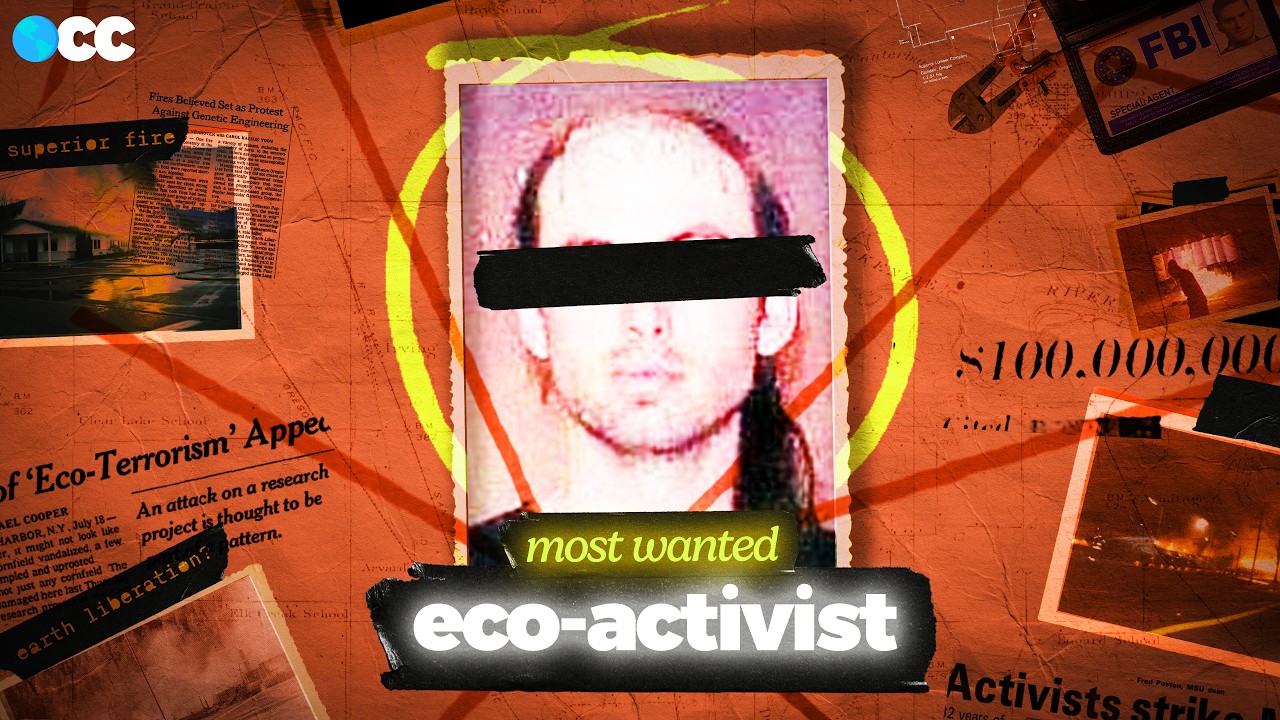
It’s 2 am on October 19, 1998. And a man nicknamed Avalon, a wilderness guide, environmental educator, and lover of nature, is about to burn down a ski resort. He and his co-sabateur, Country Girl, drive through a snowstorm up winding switchbacks to the ridgeline of the Vail Ski resort in Colorado. Their truck briefly stalls along the snow-covered slope, but soon they make it to their first stop: the nook where they stashed the fuel canisters days before. On top of the mountain, snow blankets the peaks. All is quiet. As dawn approaches, Country Girl drops Avalon off at the ridgeline and then makes her way down the mountain to a nearby park for a quick getaway. Meanwhile, Avalon gets to work; he scoops up the incendiary devices and jogs his way along the mountain. Peeking his head into each structure to make sure no one is inside, Avalon sets fire to a ski lift, then a lodge, then a cafe, then another ski lift. By the time he finishes his route, 8 buildings are alight with flames, stark against the night sky. One building fewer than planned because Avalon found two hunters sleeping in one of the cabins slated for the burn. But now the fires rage, and Avalon needs to make his escape. But before he does so, he sneaks a quick look back at the sun peaking over the Colorado Rockies, admiring his work: an inferno reducing the wealthy ski resort of Vail to ashes. The mysterious and elusive Earth Liberation Front had struck again. That fire on those mountain peaks in 1998 was the environmental groups' biggest hit yet. But it certainly wasn’t its last. Those fires that rocked the Vail community and national media were signals to the industry, to the United States, to the world. The Earth Liberation Front was here and was ready to wage war against corporate extraction. Avalon, however, would come to witness another firestorm that began long before he set that first milk jug of fuel off under the Vail ski lift, and would last far longer. He would witness one of the biggest series of property damage incidents in recent U. S. history, and he would experience the subsequent crackdown on those responsible. Avalon and Country Girl didn’t know it yet, but the Earth Liberation Front would be turned by the U. S. government and media into a specter of ecological radicalism for the American public. Industries destroyed. Hundreds of millions of dollars of infrastructure reduced to ashes. Bonds shattered. Trust betrayed, and even a life taken. This is the story of the Earth Liberation Front. [overlapping news clips front] Intro: Part 1: The Rise Before we get into the video, I have an important message about some future content, and I want to ask for your support. If you don’t have the financial means right now, no worries, click ahead to this timecode for the important message and to watch the rest of the video. But if you do have the means, I’ll give it to you straight. These days, Our Changing Climate’s sponsorships and ad revenue aren’t what they used to be, and things are certainly on a financial downtrend for the channel. Nothing dramatic will happen to the channel just yet, but right now, the majority of the channel’s revenue, some 2/3rds comes from in-video sponsorships and YouTube ad revenue. And those are slipping, and as I dive into more controversial topics like this one, the threat of demonetization only makes things worse. This means I am at the whims of whatever other companies want to pay, and to a lesser extent, see. This is where you come in. The last third of my revenue comes from the backbone of this channel, the Our Changing Climate Patreon supporters. Over 700 of ya’ll pledge to back OCC month in and month out, and that support is the sole reason I’m able to take big risks like making this three-part series on the Earth Liberation Front. Sadly, Patreon support hasn’t been enough to sustain this channel. To pull back the curtain a bit, it is just me, Charlie, working to bring you all this ecosocialist content for free every month. This series alone took six months of work, and I did that work with no prospect of getting paid or even the video doing well. I just want to put out high-quality and engaging stories that examine the climate crisis, capitalist destruction, and what we can do about it. And I want the videos that I make to be free and accessible to everyone. Unfortunately, though, I have to pay my rent, healthcare costs, and the remarkably extreme prices of 3d models and assets. Looking towards the future, I’m hoping to continue making big, high-quality series like this one, but if I’m not able to make the finances work, I might need to reassess. So, if you have the means to keep this channel afloat, literally just a quarter of the cost of one movie ticket,, I humbly ask supporter. And, I want to make becoming a channel supporter a mutually beneficial
Segment 2 (05:00 - 10:00)
relationship. So, when you become a member on Patreon, you get access to all of my videos, including the next episode in this series one month early and ad-free. We also have lovely little Discord community for talking climate and leftist politics, and there’s also a trove of bonus videos and extended content as well. If something else might entice you to become a supporter of Our Changing Climate, please do let me know. If you’re still here, thanks for watching, and if you become a Patreon supporter to keep these videos high-quality and free for all, you have my endless gratitude. You are truly amazing. And finally, one last thing: after the third part of this series wraps up, I plan on making a debrief video covering your questions, concerns, critiques, and points of confusion. So if you disagree or are confused, please **respectfully** comment below or on Patreon or through the Patron-exclusive Discord server! 1. 1 Warner Creek Three years before the destruction of the Vail Ski Resort, environmentalists are under siege in the Cascade mountain range at the Warner Creek encampment. The year is 1995. A group of land defenders is dead set on preventing the logging of the 14-acre timber sale on the Willamette National Forest. They’ve been dug in for 342 days. On the logging road into the forest, land defenders built a barricade complete with a drawbridge over a 15-foot deep trench and stood their ground for almost a year through the bitter cold and snow. But on August 16, 1995, the 343rd day of the encampment, the forest service cops pushed through the blockade. They toppled tents, tackled and attacked protestors, and dragged seven protestors away in handcuffs. Bulldozers rammed through the makeshift wall, and the logging trucks chugged into the old-growth forest to hack and saw a stand of ancient trees. The almost year-long struggle had come to an end. Defeat had come at last. But from that defeat was born a new form of resistance. It was at the Warner Creek encampment that Bill Rodgers, a long-time environmental organizer who went by the pseudonym “Avalon” to avoid the constant state surveillance of eco-activists in the Pacific Northwest, found comrades. Avalon dug trenches with “Country Girl,” built Bipods with “Seattle” and locked himself to concrete cylinders alongside Donut, a man otherwise known as Jacob Ferguson. ” In the aftermath of Warner Creek. Those on the barricades made their way back to their various homes across the Pacific Northwest, but there was something on the wind. Rumblings of an underground group of eco-saboteurs were making their way to the United States from its alleged birthplace in the UK. The potential of an underground, direct action environmental group sparked hope in the disheartened defenders of Warner Creek. The Earth Liberation Front was about to take root in the communities radicalized by struggle at Warner Creek. And the epicenter of this escalation of tactics was found in Eugene, Oregon. [Play clip transition] The 1990s. A time when many mainstream environmental groups were spinning their wheels on their primary mission: protecting the land and water from extractive industries. In the wake of the landslide of grassroots environmental pressure campaigns throughout the 1970s that pushed a conservative president, Richard Nixon, to establish the Environmental Protection Agency, pass the Clean Air and Water acts, and the Endangered Species Act, the environmental movement became increasingly institutionalized and professionalized throughout the 1980s and the 1990s. The Nature Conservancy, the Sierra Club, and the National Resource Defense Council turned from grassroots campaigns to lobbying. Mainstream environmentalism turned from action on the streets to voting better and influencing the right politicians. Big Green had formed, and its success was tightly tied to maintaining good relations with corporate leaders and the State. For those directly confronting industry, like at Warner Creek, it seemed as if the organizations that claimed to be on their side were cozying up with the devil. Getting on the good side of George H. W. Bush or Bill Clinton, who greenlit the Willamette timber sale, was not the answer to protecting ancient redwood groves. [Rick Baily: Well moderate environmentalism is bureaucratic in nature. The issue the way I see it is right here; that's the issue. The issue isn't uh sitting and cutting deals in smoke-filled rooms. ] [Nancy Morton: The major environmental groups are still are reform. They still believe in the system. ] [Jeff Hoffman: The mainstream groups a lot of times aren't even saying what I'm saying, it's you know their positions are far too moderate they're willing to give up too much um to um commercial interests. ] For frontline and direct action land defenders, the mainstream green non-profits were bureaucrats, or at their worst, traitors. They were bending the knee to the State and corporations. This inevitably bred frustration as eco-activists across the country witnessed the continued
Segment 3 (10:00 - 15:00)
destruction of ecosystems at the hands of corporate greed and the profit motive, while large eco nonprofits cozied up to the perpetrators. This climate was a perfect crucible to forge a more radical and daring underground movement. Indeed, it was decided in 1995 that the Eugene, Oregon-based group Earth First! -- which had, since the 1980s, spearheaded numerous environmental direct action campaigns in defense of the natural world– should eschew its direct action and monkeywrenching contingent. A decision that would allow the organization to become more public-facing, while leaving the sabotage and property destruction to more clandestine groups. In the background of this transformation, tactics were escalating. As small-scale monkeywrenching like gluing locks, smashing windows, and pouring sugar into excavation equipment spread, individual actors like Ted Kaczynicki were planting bombs in mailboxes… [Newscaster: For the last sixteen years the Unabomber’s attacks have killed two men and wounded 23 others. ] And in Oregon, anger was rising. The National Forest Service, which is an arm of the Department of Agriculture, was green-lighting loggers to clear-cut old-growth forests into oblivion. The Forest Service’s job is not to protect forests, but instead to make sure there are enough trees so timber companies can cut them down. And this all came to a head in Eugene, Oregon, in 1997. Meanwhile in Eugene… In the summer of 1997, the people of Eugene were battling for the fate of forty ancient trees. Forty gnarled, majestic, sweet gum, redwoods, big leaf maple, and black walnuts. For hundreds of years, those trees watched over the land that would come to be known as the city of Eugene, breaking up the blue sky with a shower of leaves– dappling the ground below in sunlight. That is, until the cybersecurity firm Symantec, famous for its Norton Antivirus software, wanted to cut down those trees to build a parking garage. Local environmentalists were immediately outraged. They mounted a pressure campaign to persuade the city council to cancel the project. The date was set for a tense public hearing meeting on June 2, 1997. But, as the date drew near, the city announced it would start hacking down the trees one day before. This completely sidestepped the will of the people to appease the newly growing tech companies. So, eco-anarchists, Earth First! ers and environmentalists took matters into their own hands… It’s 2:30 in the morning on June 1st, 1997, and 11 tree defenders are in the midst of scrambling up the walnuts, the sweet gums, the old trees of Eugene. As one of the protesters, Jim Flynn, explains in the documentary If a Tree Falls, [Jim Flynn: We just went and did it, hoping we could stave off the cutting for one day until that public hearing could happen]. The mission was clear: All they had to do was stay in those trees for 24 hours. The 11 activists handcuffed their hands around the trees in high up branches, and prepared to weather the storm. And the storm certainly came. Play tense music [XX Play clip of riot cops walking in] The clock ticks to 6 am. Riot cops arrive on the scene. Gas masks covering their faces, batons in hand, pepper spray and tear gas on their hips. They immediately get to work protecting the destruction of the historic landscape for soon-to-be property of Symantec. Tear gas canisters fly into the crowd protesting the tree cutting in the streets below. Police push, drag, and rip protestors away from the fenced-in lot that is home to the ancient trees, while another group of cops set up the cherry pickers. One by one, the law enforcement agents ascend into the foliage to face down the tree defenders. They take out scissors and start cutting the inseam of each tree sitter’s pants. Like unfeeling machines of the State, the cops subject the protestors to chemical torture until they relent. They douse each person in pepper spray all over their body, but especially their crotch, until they relinquish their hold on the old trees. 11 tree defenders soon turn to 7, who soon turn to 3, and then to 1 last tree sitter. As the cops drag down the protestors, the arborists drag down the redwoods, the black walnuts, the sweet gums, soon after. By mid-morning, only one sweet gum still stood. An editor for the Eugene-based Earth First! Journal, Jim Flynn stood strong as the Eugene police relentlessly showered him with pepper spray. Every piece of his body was an inferno of pain. He just had to hold out for another 16 hours. As the crowd below watched the horrors of state repression above, they started yelling and shouting. The police escalated. [Onlooker: The cops grab a guy off a bike and smash his face into the pavement and he was not resisting he repeatedly said I'm not resisting as they twisted his arms behind his back and that wasn't enough they had to stand on his head as well and then force the spout of a pepper spray can into his eye and nose and mouth]
Segment 4 (15:00 - 20:00)
[Onlooker 2: I watched children be maced. I'm avid hunter and a logger. I grew up in a logging town] 8 hours later, Jim Flynn is still defending the sweet gum. The cops had unloaded roughly a dozen pepper spray canisters onto him to get him to budge, and for 8 hours, Flynn bore excruciating pain to save the tree that he now hugged. But the chemical fire that burned white hot all over his skin and eyes reached a tipping point. Jim Flynn had endured enough torture. He finally relented. The cops hauled him down, washed him off, and threw him in jail for sitting in a tree. And as Flynn rode in the back of the police van to the jail, the last sweet gum fell. Paradise could now be paved for a parking lot. For many Eugene environmentalists, this day marked a moment of radicalization. The city ignored public hearings. Peaceful tree-sits were met with chemical torture from agents of the state. The government seemed more interested in protecting the property of a tech corporation than the environments and bodies of the people it supposedly represented. Debates started circulating: was nonviolent protest enough? For three green anarchists named Jacob Ferguson, Sunshine, and Kevin Tubbs the answer was no. They were fed up with the inaction of the large so-called “green” non-profits. They just witnessed the clear-cutting of the Willamette forest that they had built the Warner Creek barricade to protect. They had watched as friends and comrades were chemically tortured for sitting in trees. After having exhausted all other tactics, battling the state and corporations on logging roads, streets, and in the courts. After education campaigns fell flat, and voting harder led to Bill Clinton, those three soon turned towards the ideology and structure of the Earth Liberation Front. Ferguson, Tubbs, and Sunshine would bring fire and wrath down on the logging profiteers that were ripping apart old-growth forests… What is the ELF? Ferguson and his friends didn’t start the Earth Liberation Front. Its origins trace back to England where a similar atmosphere of warring environmental ideologies and tactics was at play. [7:27 - When decades of attempts to solve problems via legal means have been fruitless are we supposed to continue to work strictly within the law or give up altogether? When the state profits from and causes the injustices how is it logical to believe the system will change without force. ] Supposedly, the Earth Liberation Front began with a group of individuals who broke away from an Earth First! Chapter in Brighton, England, but the movement quickly spread around the world with early ELF attacks in Holland and Germany targeting airports, hunting platforms, and neo-nazis. Across these disparate actions, the Earth Liberation Front was connected not by bonds of membership or leadership but through ideology. Because this wasn’t your typical organization. The ELF was underground, leaderless, and non-hierarchical. [Craig Rosebraugh: The ELF is organized into autonomous cells which operate anonymously and independently from one another and the general public] That’s Craig Rosebraugh, an important figure in this story, but we’ll get back to him in a little bit. He goes on to explain in this ELF, [Craig Rosebraugh: the group contains no hierarchy or Central leadership, but instead operates under an ideology, and if an individual believes in that ideology and they follow a certain set of widely published guidelines, he or she can perform actions and become part of the Earth Liberation Front] Those guidelines reflect the core ideology of the Earth Liberation Front. Three rules that require all who claim the ELF name [Craig Rosebraugh: to cause maximum economic damage as possible to a given entity that is profiting off the destruction of the natural environment and life for selfish greed and profit] [Craig Rosebraugh: To educate the public on the atrocities committed against the environment and life] [Craig Rosebraugh: To take all necessary precautions against harming life] Melding together philosophies of green anarchism, social ecology, and deep ecology, the ELF wasn’t just interested in raising awareness about ecological destruction or voting harder for green champions. Many who formed ELF cells saw capitalism, the profit incentive, or perhaps even civilization as a destructive force. [Craig Rosebraugh: the destruction of life is not a mere random occurrence but a deliberate act of violence performed by those entities concerned with nothing more than pursuing extreme economic gain at any cost] The wide array of Earth Liberation Front cells across the world was connected by a belief that one of the most effective ways to slow down industrial extraction is to directly attack corporate profits, not through bargaining or lobbying. [Leslie Pickering: When the state itself causes and profits from the various injustices we struggle against how is it logical to believe the system will change without being forced] ELF tactics used property destruction to force the system to change. This meant cells were under increased scrutiny from the police. So, to avoid detection from the State, alongside removing the supposed ills of hierarchy, the Earth Liberation Front championed a leaderless model and was highly anonymous. ELF cells never communicated with each other and did not know each other’s real identities. This leaderless and mysterious organizational structure meant that even if one ELF group fell into the hands of the state, others could continue untouched. This also meant, as Craig Rosebraugh puts it [Craig Rosebraugh: there's no realistic chance of becoming active in an already existing cell take initiative form your
Segment 5 (20:00 - 25:00)
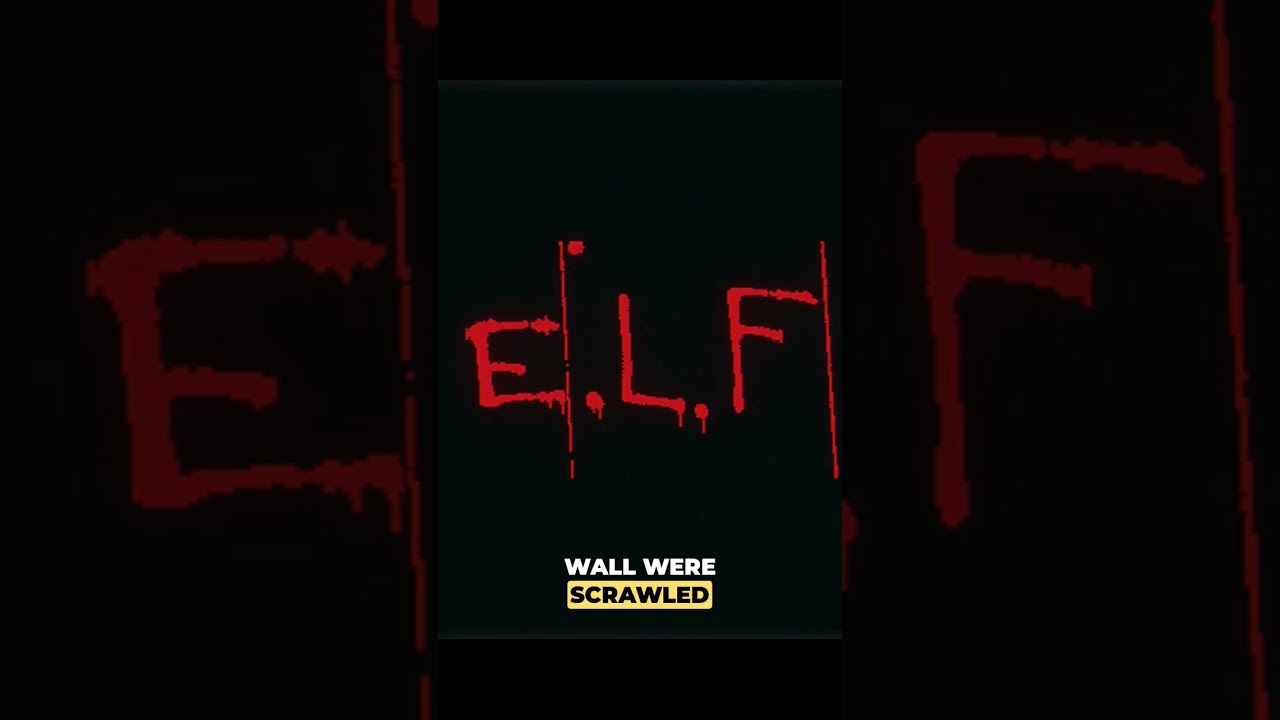
own cell and do what needs to be done to protect all life on this planet. ] Sunshine, Jacob Ferguson, and Kevin ubbs did just that. With ideological guide and principles in mind, they formed an Earth Liberation Front cell that would soon strike fear in the hearts of the industrial barons of the Pacific Northwest. [transition music] The first actions In the early morning hours of October 28, 1996, a newspaper carrier from the Salem Statesman Journal was working his route in Detroit, Oregon. Slinging papers onto the front steps of homes and businesses. All was normal until he passed the Federal Ranger station on the outskirts of town. There he saw licks of smoke curling from a forest ranger’s truck. In a matter of seconds, the truck burst into flames. The fire department came quickly, and quenched the flames. In the aftermath, as they sorted through the ashes, it became clear that this was no accident. On the roof of the station was a milk jug full of a mix of diesel and gasoline. It had failed to ignite, saving the building from disaster. But there was no question as to who was responsible. On the station’s wall were scrawled the words “Earth” “Liberation” “Front” Just two days later, on October 30th, the Earth Liberation Front struck again. Roughly 130 miles away, at a ranger station in the forests outside of Oakridge, Oregon, three figures dressed in dark clothes, faces covered, pulled up to the dumpster outside the outpost and placed a DIY firebomb inside. Along the eastern wall of the property, they placed a second gas-filled milk jug. Both were set to go off once the incense sticks inside of them burned down. With the firebombs set, the group scattered nails along the driveway to slow down firefighters, swapped the tires on their borrowed Subaru, and made their getaway into the night. This time, both devices did their job, because in the morning, the forest rangers of Oakridge station woke up to find their place of work reduced to ashes. Two fires. October 28. October 30th, 1996. The first real actions of the Pacific Northwest ELF cell. Acts of destruction, to be sure. But were these two arsons an act of rage, or a strategic escalation of tactics in the long struggle to defend the last remnants of untouched old-growth forests? For Jacob Ferguson, Sunshine, and Kevin Tubbs, it was perhaps a bit of both. All three had witnessed and lived through the hard-fought struggle of Warner Creek. Had witnessed the Forest Service barrel down the blockade and lay out the red carpet for chainsaws and trucks, and for years had been forced to watch as peaceful blockades were violently broken apart by local police and forest service agents in the name of a logging agency that was rapidly leveling the surrounding ecosystems. For these three, it was time to chnage their tactics. It seemed to this trio that the only thing that the capitalist state and the barons of industry would pay attention to would be a direct hit to their bottom line. So, Ferguson, Tubbs, and Sunshine filled up some old plastic milk jugs with a mixture of gasoline and diesel, wedged a sponge in the handle, and drove to the ranger station. Claiming the destruction in the name of the Earth Liberation Front. And with those two actions, they ignited a spark that would burn white-hot in the coming years… [Transition music] The Press Office and Communiques: Nine months later in late July of 1997, Craig Rosebraugh walks into his local Post Office in Portland, Oregon. A longtime animal rights activist in the Portland scene, Rosebraugh, together with six other organizers, formed the Liberation Collective a year earlier, in 1996. An organization that sought to connect larger social justice issues with the animal liberation struggle, the Liberation Collective soon became a clearing ground for messages from the direct action group, the Animal Liberation Front. So, as Rosebraugh collected letters out of the Liberation Collective’s mailbox on that hot July day, he wasn’t surprised when he noticed a “strange-looking note” amongst the stack of envelopes. The handwriting of the address was purposefully distorted, and there was no return address. Cautiously, Rosebraugh ripped open the envelope flap, and inside he found a communiqué from the ALF and the cheekily named Equine Zebra Liberation Network, or EZLN (a nod to the Zapatistas, who are also known by the same acronym). The letter was clear. The ALF and EZLN were claiming responsibility for a recent attack on the Cavel West Horse Rendering Plant in Redmond, Oregon a few days before. The Cavel West Fire Under the light of the full moon. Jacob Ferguson, Kevin Tubbs, and a fellow organizer, Seattle, who was also at the Warner Creek encampment, alongside one other sneak onto the grounds of the Cavel West Horse Rendering Facility. It’s July 21st, 1997. A few days before, the Associated Press published an article revealing that 90% of the wild horses rounded up by the Bureau of Land Management’s Wild Horse and Burro Program ended up in slaughterhouses. And one of those slaughterhouses was The Cavel West facility.
Segment 6 (25:00 - 30:00)
Outraged by the article, Ferguson, together with Seattle and 2 others, lug 35 gallons of a mixture of soap and petroleum to Redmond, Oregon. Their goal: to end Cavel West’s ability to profit from slaughtering wild horses. Night has arrived, and Tubbs sits in the car, manning the police scanner– keeping the engine warm for the getaway. Seattle, meanwhile, drills a series of large holes in the walls of the slaughterhouse office, making sure to wait for the loud hum coolers to kick on to mask the noise of the drilling. After he finishes, the rest of the team fills those holes with the highly flammable fuel mix, while Seattle moves on to the building housing the refrigeration unit to again prep holes for the fuel. In a matter of minutes, the holes are full of fuel, and the team places electrically timed lighters in the holes, ready to burn the entire place to the ground. On their way out, the group checks to make sure no one is inside the buildings. They place the remaining 10 gallons of fluid in the storage shed and pour 2 gallons of highly corrosive muriatic acid into the air conditioning vents. The job is almost finished; Seattle just has to connect the batteries to the electrical timers, a risky job as one errant spark could set the whole building alight early. He connects the first incendiary device. [click] Success. He moves over to the second device, and as Seattle moves the battery towards the ignition device, a spark jumps the gap [play explosion]. The building erupts in flames. The group needs to leave immediately or risk dying. They stream off the property, shed their clothing into a hole, pour the rest of the acid on top of a heap of shirts and plants, and cover it in dirt. In just a few minutes, they pile into the getaway car, and Tubbs slams on the gas. The next day, Cavel West is ash and burnt timber. The single action dealt at least $1,000,000 in damages. Cavel West was never again able to rebuild. And with this victory, members of what would soon become a notorious ELF cell would send a communiqué to the Liberation Collective, claiming responsibility under the more well known acronyms ALF and EZLN. A letter that Craig Rosebraugh would open in the middle of a post office in Portland. Overnight, the group stopped what so many had tried and failed to stop for years. But this escalation of tactics into industrial sabotage wasn’t just contained to Oregon. By the latter half of 1997, Earth Liberation Front cells and actions were emerging across the country, and Craig Rosebraugh, alongside his fellow organizer Leslie Pickering, was fielding communiques from across the country. [Show map of actions up until vail Colorado] The Pressure Increases This powder keg would explode on October 19, 1998, in Vail, Colorado. After setting 8 buildings alight, Avalon makes his escape. Locating a hiking trail, he tears off down the mountain. But in the dark, rocky terrain, Avalon badly twists his ankle, slowing down his escape. He soldiers on, desperately looking for the right trail. He finally finds the bike path he’s been looking for, limps down it, and makes it all the way to the park where Country Girl sits in the car. They immediately take off down the road, and on the radio, reports are already trickling in about the fire on the mountain. [XX play news clips about vail fire] As the smoke cleared at Vail, the ELF had dealt $12 million in damages, and a communique landed in Craig Rosebraugh’s inbox. The arson was committed on “behalf of the lynx. ” The communique warned that “Putting profits ahead of Colorado’s wildlife will not be tolerated. This action is just a warning. ” Two years before the fire, in August of 1996, the US Forest Service approved an expansion of Vail south of the resort’s ski area. The expansion would encroach on one of the last roadless regions in the heavily developed area. A region which was a known habitat for marten, boreal owl, golden-crowned kinglet, and, perhaps most importantly, one of the last remaining habitats for the Canadian lynx, which had been seen in the area just four years before. In the wake of that decision, a coalition of environmental groups like the Sierra Club, the Colorado Wildlife Foundation, the Colorado Environmental Coalition, and others submitted an official request that the expansion decision be overturned. Indeed, the expansion was so unpopular that by 1997, the US Forest Service citizens’ comments were 80 to one opposing the expansion. Legal battles ensued, but in October of 1998, the federal court once again greenlit the expansion. The construction would break ground on October 19th… that is, until the Earth Liberation Front struck that morning. The Vail fire would open the floodgates for a countrywide uptick in ELF arsons and actions. And with that pressure on extraction capitalists and private property came increased media scrutiny. [Newscaster: “they call themselves ecoterrorists] [Newscaster: A radical new terrorist group is operating in our area] [Newscaster: There are terrorists carrying on business as usual right here at home] The actions of the Earth Liberation Front were denounced, and the group was labeled terrorists.
Segment 7 (30:00 - 35:00)
[“Most dangerous and mysterious groups in the country”] 0:34 And while the Earth Liberation Front, which had yet to kill or injure a single person, was being labeled terrorists, the U. S. was continuing its long history of terrorism throughout the imperial periphery… [“It was the CIA that armed the terrorists”] [B-52 bombers fired cruise missiles deep into Iraq] This frustration with globalization, with US imperialist intervention, would boil over at the World Trade Organization conference in 1999. Mass protests against the World Trade Organization erupted on the streets of Seattle, where the conference was located, and the police came down hard. Curfews, tear gas, rubber bullets, pepper spray, and beatings pushed some into more aggressive means of defence. The battle in Seattle had begun. [Play music and clips of WTO protests] WTO protests and the growing of the ELF cell It’s there, on the streets of Seattle, that we meet Daniel McGowan. Frustrated with the imperialist politics of the US and the violent tactics of the Seattle police, McGowan donned his darkest clothes and fought back. [Daniel McGowan: I was involved in the protests. Black Bloc part of the protests… We got attacked by undercover cops, and people were accused of fighting back. ] From his hometown of Rockaway in Queens, New York, Mcgowan moved to California to protect old-growth forests. He had been active in the Pacific Northwest radical environmental scene for a couple of years, but the police repression on the streets of Seattle during the World Trade Organization protests was the final straw. In the aftermath of the WTO protests, McGowan moved to Eugene [McGowan: to get involved with the EarthFirst! Journal, and also meet up with some of the people who I was hanging out with in Seattle, who I had feeling were interested in bringing me in to something. ”] It was in Eugene that McGowan connected with the Earth Liberation Front. The Pacific Northwest ELF cell was growing, and they wanted McGowan to be a part of it. McGowan was no stranger to direct action tactics. He had a history of GMO crop destruction across California and Oregon. [McGowan: I had engaged in a lot of sabotage actions by that point, maybe 20 or 15]. The ELF would certainly mark an escalation in tactics for McGowan, but as he joined up with a few of his other comrades he met in Seattle, he was ready to do more than just pull up GMO crops… Examining the role of property violence, is this good or bad? As McGowan considered whether to escalate his tactics, a broader conversation emerged both within environmental circles in hotspots like Eugene and the national media about whether the ELF was effective in their goals. The ELF was a shock to a movement that had long viewed itself as rooted in non-violent ideologies. Was property destruction a necessary, useful, or even strategic escalation of tactics? Nineteen years later, human ecologist Andreas Malm grapples with this question in his provocatively titled book How To Blow Up a Pipeline. Throughout, he digs down into the root of why property destruction is such a disparaged tactic on the environmental left. [Andreas Malm: Our entire capitalist culture and bourgeois civilization are built around the idea that private property is sacred I mean in the u. s in particular it's the most sacred thing there is]. When examining whether economic sabotage, and more specifically property destruction, is “good or bad” or even just an effective tactic, the context in which that destruction takes place is crucial. For Malm, climate change is violence. Destroying the property of a fossil fuel industry that causes tens of thousands of climate change-related deaths for each pipeline and refinery they construct, perhaps, is a justified tactic. Regarding a newly constructed pipeline by french fossil fuel giant Total Energies, Malm calculated that it would [“kill nearly 8 000 people every year, and that's only the deaths caused by heat. So not the floods, not the hurricanes, not the drought, nor the food supply shocks. ”] But it’s crucial to note that destruction and sabotage are not proposed as the answer to these problems; instead, they are obstacles to slow the momentum of the train barrelling off a cliff. [Andreas Malm: “violence certain types of violence if you define property destruction as a type of violence can be necessary to break down the inertia and the resistance of a deeply a trend entrenched order and all the power interests that come together can't come with it and the scale of the transformation of our society that we need i mean changes of this proportion i think have never in history been accomplished without confrontation”].
Segment 8 (35:00 - 40:00)
Property destruction, then, could be perhaps best understood as a useful delay tactic for a much broader movement. One that wields countless other tools in the toolbox. Almost every movement for social change, whether the suffragettes, the U. S. Civil Rights movement, or the South African Anti-apartheid movement, has been accompanied by militant wings that went beyond nonviolent civil disobedience. The histories of those struggles suggest that without militant escalation, those more peaceful movements would have been less effective. Take the civil rights movement, for example. While Dr. Martin Luther King, Jr. staged sit-ins and marches, Malcom X and later the Black Panthers took up arms to defend themselves from the police and white supremacists. Indeed, Dr. King himself even had an armed escort at times. To white America, the perceived militancy of Malcom X’s black nationalism made Martin Luther King’s non-violence seem more appealing. Indeed, Malcom X explains this tactic clearly: “I want Dr. King to know that I didn’t come to Selma to make his job difficult. I really did come thinking I could make it easier. If the white people realize what the alternative is, perhaps they will be more willing to hear Dr. King. ” This is known as the radical flank effect. A phenomenon that occurs when a more militant wing pushes the public towards accepting the main movement. Whether it was the suffragettes smashing windows to drive men towards the negotiating table or Black Panthers defending the streets with guns, making sit-ins look more reasonable, academics have argued that escalating towards radical tactics has led to increased support of the more mainstream movement. The ELF can best be seen in this light. As a radical flank that made tree sits, and logging blockades seem tame, and therefore more acceptable. But when it comes to the tactic of property destruction. At the end of the day, it’s a question of politics. For Craig Rosebraugh, the violence of industry far outweighs the destruction of a ski resort [play clip of explanation]. For those who fought back against police brutality and globalization on the streets of Seattle in 1999, property destruction is justified. As Kurdish revolutionary leader, Abdullah Öcalan, argues, these acts of destruction are like a rose growing thorns to defend its beauty. For those deeply embedded in capitalism and the sacredness of American property, however, such acts are horrid [Woman at WTO: Vandalism is vandalism. Destruction is destruction, whether it’s of lives or property, it’s not acceptable. ] This, however, cleanses history of the many acts of property destruction taken in parallel with nonviolent movements for justice. Because capitalism demands the deification of property, and to a broader extent profit, the effectiveness of radical flanks and more radical tactics like property damage are often brushed over in mainstream histories of social progress. [Andreas Malm: A comrade in some conversation called this peace washing. ”] In a follow-up to that woman’s response to vandalism at the WTO protests, we can see this peace washing in American history: [Man: What do you think of the Boston Tea Party? Woman at WTO: I thought it was wonderful. ] So, then the question of whether the property destruction of the ELF is justified, seems to be a matter of politics. For the owners of those businesses, and some of those who relied on logging or skiing to put food on the table, this was terrorism, plain and simple. But for the members of the growing ELF cell in the Pacific Northwest, after the failures of the mainstream environmentalist movement, it seemed that there were no other options to prevent a long-term disaster that would affect the entire globe except to meet power with power. The burning of Superior Lumber Back in the Pacific Northwest, Daniel McGowan linked up with Jacob Ferguson, and other new members of the ELF cell, like Suzanne Savoie, in the winter of 2000. The cell was growing as their actions gained more attention. Steeped in his environmental work at the Earth First! Journal, McGowan was ready to strike back at old-growth logging companies. Companies whose trucks were full of the corpses of redwoods passed by him every day in Eugene. One of those timber corporations was Superior Lumber. In McGowan’s own words on the Green and Red Podcast, Superior Lumber was [“logging old growth forests in hard-to-find spots”]. Their target was set, but they needed to come up with a plan. To avoid the ever-present surveillance of local police and federal agents, Avalon, together with Ferguson and new members like McGowan, met in secret using books as code. Using pre-decided texts like The Dispossessed by Ursula K. LeGuin, they would use page, line, and word numbers to disseminate messages across the group to determine gathering times and locations. This
Segment 9 (40:00 - 45:00)
code was later used by the FBI as a means to paint the cell as a cult. Describing these meetings as “The Book Club” with figures like Avalon and Ferguson as leaders. [McGowan: We had these little skill share sessions that the government called “the book club. ” No one ever called it that] It was at these skillshares and discussion circles that Ferguson, Avalon, McGowan, and others set their sights on Superior Lumber. Superior Lumber was one of the hundreds of Pacific Northwest logging companies that were chopping down some of the last remaining ancient forests. [McGowan: “we picked this place because of its unspectacular nature”]. Like many of the other timber companies operating in the area, Superior Lumber had been in and out of courts trying to get the green light to chop down trees in protected areas. Finally, on December 29, 2000, the Seattle District Judge okayed the sale and extraction of a patch of forest on Bureau of Land Management land that had previously been halted for failure to follow environmental regulations. So the ELF got to work planning, and on the first day of 2001, they struck. [transition music] McGowan sits in the back of a van dressed all in black, with another new ELF member, Suzanne Savoie. It’s past midnight on January 2nd, and McGowan’s palms are coated in sweat. He’s racked with anxiety as the group drives through the pitch black forest towards the Superior Lumber offices in Glendale, Oregon. In the front, sit Jacob Ferguson, Kevin Tubbs, and another ELF member, Stan Meyerhoff. They arrive at the site in the dead of night. McGowan hops out of the van before they arrive at the office building and holes up in a nearby ditch with a good view of the target. He’s lookout number one. With McGowan in place, a two-way radio in hand, the other five make their way to the second lookout location south of the offices. Savoie gets out of the back seat and positions herself in a phone booth, ready with her radio to alert the team if anything seems off. The coast is clear. The final three quickly make their way to the building and get to work. They nestle two five-gallon buckets full of gasoline and diesel along the east wall of the building that abuts the parking lot, then make their way around the building to the west side. There, under the electric meter, they plant three more buckets of fuel, set the electric timers, jump back in the van, and drive away. By the time they scoop up McGowan and Savoie, only 15 minutes had passed. At 2:29 am, the police scanner in the van pings with activity. The blaze had begun. And thanks to the position of the fuel along the walls, the flames reached the attic before setting off the alarms. The entire roof was on fire before anyone was notified. The next day, as Steve Swanson, the president of Superior Lumber, walked through the remains of his offices, it was clear the ELF had succeeded. The heat was apparently so extreme that computer monitors and lights melted. Years of files and documents turned to ash overnight. Over $1,000,000 in damages. In the aftermath, an email landed in Craig Rosebraugh’s inbox. Signed by the Earth Liberation Front, the first four words read “We torched Superior Lumber. ” But it seemed the fire at Superior Lumber was a call to action, as the communique signs off with “This year, we hope to see an escalation in tactics against capitalism and industry. While Superior Lumber says, 'Make a few items, and do it better than anyone else,' we say, 'choose an earth raper, and destroy them. '” And the call was heeded all over the country. 2001 would be a busy year of property destruction for the ELF. ELF spread like wildfire While McGowan was battling in the streets of Seattle, and the Pacific Northwest ELF cell grew, others were taking action in the name of the ELF. Across the country, the flames of ELF and its ideology sparked fires of resistance that licked at the heels of other industries spreading capitalist decay [play music] At Michigan State University, the ELF set fire to the offices of Catherine Ives, a GMO researcher linked to Monsanto funding. Years of research turned into fuel for a raging inferno, causing $1,000,000 in damages. In the Midwest, another ELF cell set its sights on urban sprawl, burning down a partially built luxury home encroaching on the Lake Monroe Watershed in Indiana. A few months later in Minnesota, the ELF deals $500,000 in damages to excavation equipment constructing the Highway 55 reroute. Again in Indiana, a series of acts of sabotage from April to September target logging, excavation equipment, and even a Republican Party office building. With the diversity of ELF cells came a diversity of goals. While the Pacific Northwest cell had focused on forest and wildlife protection up to this point, other cells sought to strike back against globalization, GMOs, and capitalist destruction. But it was an ELFs fight against luxury condominiums and urban sprawl on Long Island that would burn the hottest. There, an ELF cell would form, hit hard and fast, waging "an unbounded war
Segment 10 (45:00 - 50:00)
on urban sprawl” from July of 2000 to January of 2001. The cell’s first target: a group of condos in the midst of construction that they deemed to be “future dens of the wealthy elite. ” To test the waters, the Long Island ELF cell smashed hundreds of windows and spraypainted at construction sites throughout the fall of 2000. But it soon became clear that this was just the prelude to the main act. [transition music] It’s the night of December 9th, 2000, and the half-built houses at the Spring Lake development in Middle Island, Long Island, are about to burn. Four figures sneak across the construction site, checking to make sure no one is in the buildings while they place DIY incendiary devices along four rows of condominiums. 16 homes felt the kiss of flames that night. One structure completely burnt to the ground, while three others were heavily charred. In the aftermath, the group sent a communique claiming that “Window breaking and disabling vehicles can only do so much, and in the battle with our earth in the balance, we can not hold back or go soft on those pillaging the planet for profit. ” The Long Island cell had decided to escalate, as their counterparts had across the country. But they were far from finished. 10 days later, they burned down another luxury home construction at Miller Place. Then, 10 more days later, they hit a third target. This time at the Island Estates in Mount Sinai on Long Island. Four more luxury homes under construction were reduced to ashes. December 2000 marked a true hit to the profits of the condo developers of Long Island. Over the course of 5 months, the Long Island ELF cell took eleven major actions against urban sprawl, marking one of the most active periods for the Earth Liberation Front on record, and dealing millions of dollars in damages. But like any flame that burns bright, the actions quickly died out. The cell dismantled as their security culture failed. One member boasted to his friends about the fires, and they were caught. In the interrogation room, he folded and snitched on the rest of the cell, leading to the capture of the other three members. The cops had finally managed to take down an ELF cell. Those arrests foreshadowed a coming storm… The UW and Jefferson Fires Back in Eugene, Daniel McGowan finally found a chance to strike at the GMO industry that he had long struggled against. This, however, would be the last action he would ever take under the ideological banner of ELF. But he would certainly go out with a bang. The plan was to hit two places at once, hopefully dealing a devastating blow to genetic modification research. [transition music] It’s May 21st, 2001. 10 members of the ELF cell are on the road to their targets. With Savoie behind the wheel, McGowan, Stan Meyerhoff, and two others drive south towards Jefferson Poplar Farm, a research center for genetically modified poplar trees in Clastskanie, Oregon. Adrenaline building, the group desperately hoped they wouldn’t get stopped by the cops driving through the small town of Clastskanie, because in the trunk lay the makings of firebombs. They pull up to the site. While one of them jumps out to be a lookout, three others, including McGowan, lug several 5-gallon buckets up to the walls of two buildings, set the electrical timers, and then get to work on the trucks. Under each truck, McGowan places a tray full to the brim with gasoline. Then, he runs a fuel-soaked rag between each tray to make sure each one will catch. All is ready for the match, and McGowan is soaked to the bone in gasoline. So far, no one has seen them at work. It’s radio silence from the lookout. McGowan strikes the match, and the farm goes up in flames. Hundreds of miles away at the University of Washington, Avalon, and four other new members of the cell set their own incendiary devices in the offices of GMO researcher Toby Bradshaw. [“Toby bradshaw is working to develop a fast growing poplar tree for the paper industry”] The electrical timers spark. And flames roar to life in Washington and Oregon. [Newscaster: a radical environmental group claims it started the fire that severely damaged part of an Oregon tree farm, and the fire that damaged part of the University of Washington] In just that one night, the ELF cell did $3. 5 million in damages across two states. [Newscaster: “reduced to ashes the labs and offices of 50 people”] [Newscaster: Not far away, and at about the same time, two buildings on an Oregon tree farm were also destroyed] In the aftermath, however, new information came to light. The group had acted on bad intel. It turned out that Jefferson Poplar wasn’t growing genetically modified trees. They were using tried and true grafting methods that had been around for centuries. The ELF had burnt it down for nothing. This was a crushing blow to McGowan. [Daniel McGowan: “It left a really bad taste in my mouth. ] Combined with a growing internal debate of whether to escalate
Segment 11 (50:00 - 52:00)
tactics even further or pull back, the cell was on the precipice of disbanding. McGowan, himself, was feeling disillusioned [Daniel McGowan: Like, wow, look at this huge intense action, and look what happened in Washington. Am I really ready for this? This is super serious. It's super big. ] From the outside looking in at the fervor of activity, it seemed that on the East Coast, the Midwest, and once again the Pacific Northwest, ELF was building momentum in the revolutionary struggle against capitalist destruction. Little did the public know, however, that momentum would soon be dashed. Cracks were growing. The group would soon splinter. Betrayal was on the horizon. And lurking in the shadows were agents of the State. Soon, everything would change. McGowan, Avalon, and Country Girl in the cell would find themselves behind bars. And their capture would come from a betrayal within the cell itself… If you want to watch the second part of this series right now and learn about the fate of the Earth Liberation Front cell, and the federal government’s almost decade-long hunt for the eco-saboteurs, it’s available right now, ad-free, and a month early, when you become a Patreon supporter. As I explained in the beginning of the video, the channel is in a financial downturn. So, not only will you be able to watch the next part of the series but, becoming a OCC Patreon supporter means you’ll help keep high-quality, non-AI slop videos like this one free and accessible everyone. So, please consider supporting Our Changing Climate on Patreon if you have the means. And if you can’t spare the $3 or 6 a month right now, no worries, just liking, commenting below, or even sharing this video with a friend below is more than enough to bring this video to new audiences. Thank so much for watching all the way to the end and for your endless support, and I’ll see you next month for the Hunt for the Earth Liberation Front.