Mysteries of the Twilight Zone | Worlds of the Deep

Mysteries of the Twilight Zone | Worlds of the Deep

Machine-readable: Markdown · JSON API · Site index

Поделиться Telegram VK Бот
Транскрипт Скачать .md
Анализ с AI

Оглавление (8 сегментов)

Segment 1 (00:00 - 05:00)

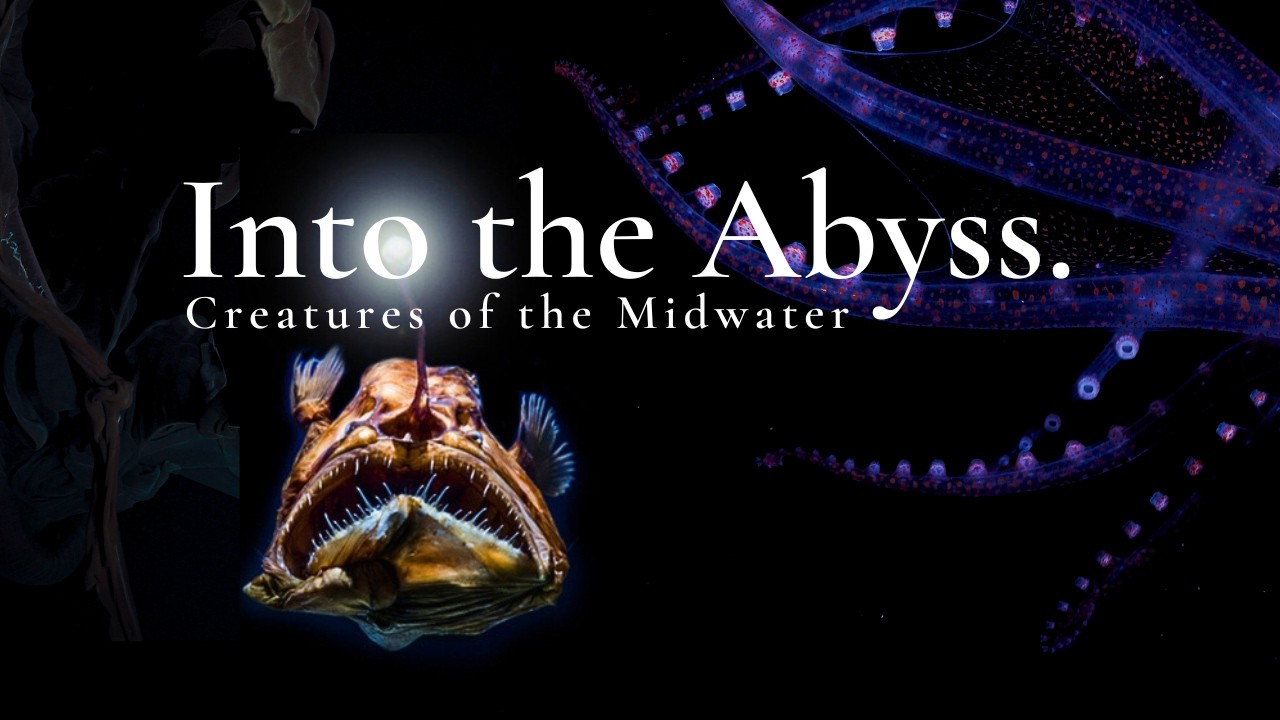
thank you to Masterworks for sponsoring natural world facts in the depths of the ocean life moves to a slower tune this place is a world within our world a place of Silence emptiness and darkness where wonders are found drifting in a formless void with every new discovery that is made in this fascinating World We Come a Little Closer to understanding the processes at play and the more complex it starts to appear in 1843 naturalist Edward Forbes proposed the abyssus theory in which he postulated that the abundance and variety of marine life decreases with depth and altogether ceases is below 550 M of course this theory is long superseded and we know now that the depths are home to remarkable biodiversity existing across an array of interconnected worlds in the deep sea life is concentrated at chemosynthetic Oasis and communities that form where primary production is made possible via synthesis with bacteria converting hydrocarbons into food at Cold seats and hydrothermal vents and although these oases are hotpots for Life Treasures can still be found elsewhere in the deep sea but adapted to an entirely different set of challenges the non-emetic regions of the deep are divided into to two very different worlds first is the midwater an ecosystem that encompasses the water column where pelagic Wanderers tread migratory roots that span entire oceans and planktonic Drifters and their predators take part in bioluminescent light shows glimpsing in the dark suspended drifting moving in tune with the currents while conserving vital energy and Below lies the deep dark benthos the world of the deep sea floor like the surface of an alien planet a kingdom of mud and ooze where sessile creatures cling to any solid outcrop they can find reaching hungrily into a shower of scraps and debris the deep sea floor is at first glance a place of Filth and decay destitute perhaps and full of Horrors but if we look a little closer we uncover a place of beauty a realm where corals craft Mighty kingdoms on the sea mount crusts where the delicate structures of sponges provide refuge for others and where scavengers attend Bountiful feasts that last for decades the Two Worlds of the deep could not be more different and yet their stories are fundamentally intertwined not just with each other but with the rest of our planet let's dive in and explore the wonders of the first of these worlds the midwater the deep sea is defined as anywhere below a depth of 200 M and with the average depth of the ocean being 3,688 M that's an awful lot of deep sea almost all of it falls within the midwater a region that encompasses more than a billion cubic kilm of living space the largest ecosystem on the planet and one of the most poorly understood despite being an endless void it is not a uniform world we can divide it vertically into a series of zones based on depth and light levels with each Zone exhibiting its own challenges

Segment 2 (05:00 - 10:00)

and hosting unique creatures that take on an array of unusual adaptations to survive this is RV falor 2 one of the most advanced research vessels in the world on a mission to discover our vast ocean ecosystem since 2009 the nonprofit oceanographic Research Foundation Schmid ocean Institute have been exploring the worlds of the deep across more than 80 research Expedition I conditions they have helped shed a light on the Wonders lurking in the ocean's depths their remotely operated vehicle Sebastian has opened a window into this realm for all to see outfitted with a suite of sensors and a 4k camera Sebastian is well equipped to explore the depths Sebastian is capable of diving to 4,500 M down in the sunless depths of the midnight zone but in order to understand the unique conditions and challenges of life in deep sea midwater we have to begin at the surface here the epipelagic or sunlight zone spans the upper limit of the water column down to a depth of 200 M it's a vibrant World more than 90% of all marine life dwells here and much of that belongs to the bustling cities of coral in the tropics where food shelter and reproductive partners are not in short supply even out in the high seas the sunlit waters host an astounding array of Life by developing a g filled float called aapor the Portuguese man of war drifts at the surface and uses wind to move while downward facing tentacles are used to feed they are members of the newon a community of floating animals that reside at the interface of air and water primary production is made possible near the surface by the rays of sunlight that filter through the waves microscopic plant-like animal called phytoplankton take on the role of producers converting water and carbon dioxide into oxygen and glucose via photosynthesis the biomass produced by this process supports all nonos synthetic life in the oceans and without it the depths below would starve dip below the epipelagic and we enter a world of Gloom this is the Twilight Zone or the mesopelagic from now on we are in the deep sea and already at just below 200 M survival is more of a challenge there is not enough light for photosynthesis and the great Blooms of phytoplankton are absent the only food source is a steady shower of feal pellets and dead material organic particles called Marine snow gently sinking from the bustling world of sunlight up above the presence of this Marine snow gives rise to a unique Niche that animals can exploit and the great expanse of Gloom brings forth the weird and wonderful

Segment 3 (10:00 - 15:00)

many of these Treasures are gelatinous zup Plankton swept by deep currents and unable to move against them a host of delicate Nomads drifting through the expanse the gossa worm or tomopteris is a segmented worm belonging to a group called poletes meaning many bristles and unlike its cousin the earthworm it moves not through sediment but through the open ocean it ulates its bristles like the paddles of a canoe in order to swim and after it's fed the gut within its transparent body reveals the color of its last meal but this can blow their cover since many of the animals it eats are bioluminescent creating light through a series of chemical reactions there are others that have found creative ways to overcome this challenge the bloody belly cone jelly undulates its hair likee cyia to attract prey reflecting light to cast a rainbow Shimmer it takes on a deep red color to blend in since the wavelengths of red light do not reach the deep sea so astonishingly adopting a red coloration conceals the stomach and filters out any light being emitted by the prey within while they're digested there are relatives of snails here too like cardiod placenta a rare pelagic gastropod and another species carinaria Japonica with its large swimming fin seems to prefer swimming upside down in search of prey siphonophores related to jellyfish are not one organism but many there are drifting colonies of tiny animals called zoids that work together and partition biological functions between different structures nectop fores act as swimming Bells assisting in propulsion in much the same way as the umbrella of a jellyfish new metaphors help with buoyancy and at the far end gastroids dangle tentacles lined with stinging cells into the water and it's their job to capture prey the colonial way of life mirrors that of multicellular organisms with the Zoid structures seeming homologous to organs but it gives the siphonophores a unique advantage in most animals damage to one organ or physical structure can be fatal but if individual zoids become damaged it's less likely to affect the entire Colony they repeatedly clone themselves and can become effectively immortal this siphonophore belonging to the genus aalia is thought by scientists to be the longest animal that has ever been observed rough calculations based on the position of the ROV suggest that it reached 50 m in length longer even than a blue Wale many tunics are also Colonial like pyrosomes and floating necklac like SS all of these Plankton examples can be classified as Hollow Plankton meaning they are permanent members of the Plankton throughout the entirety of their life cycles

Segment 4 (15:00 - 20:00)

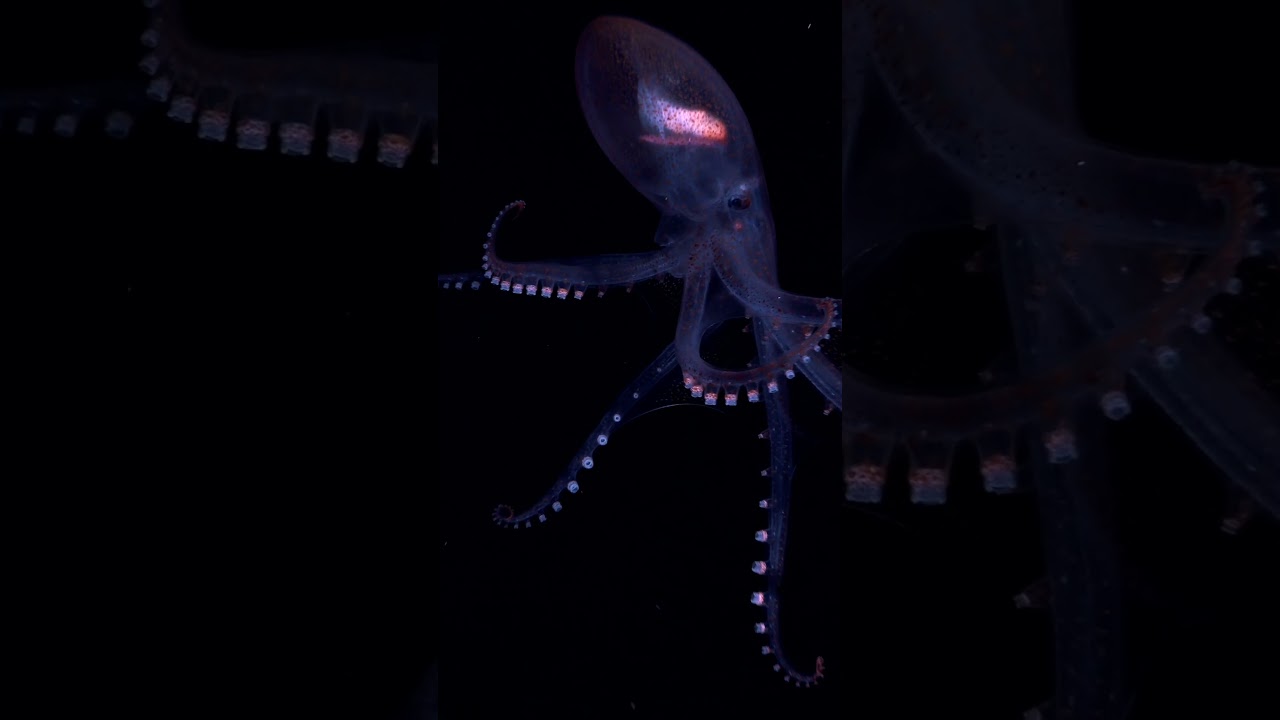
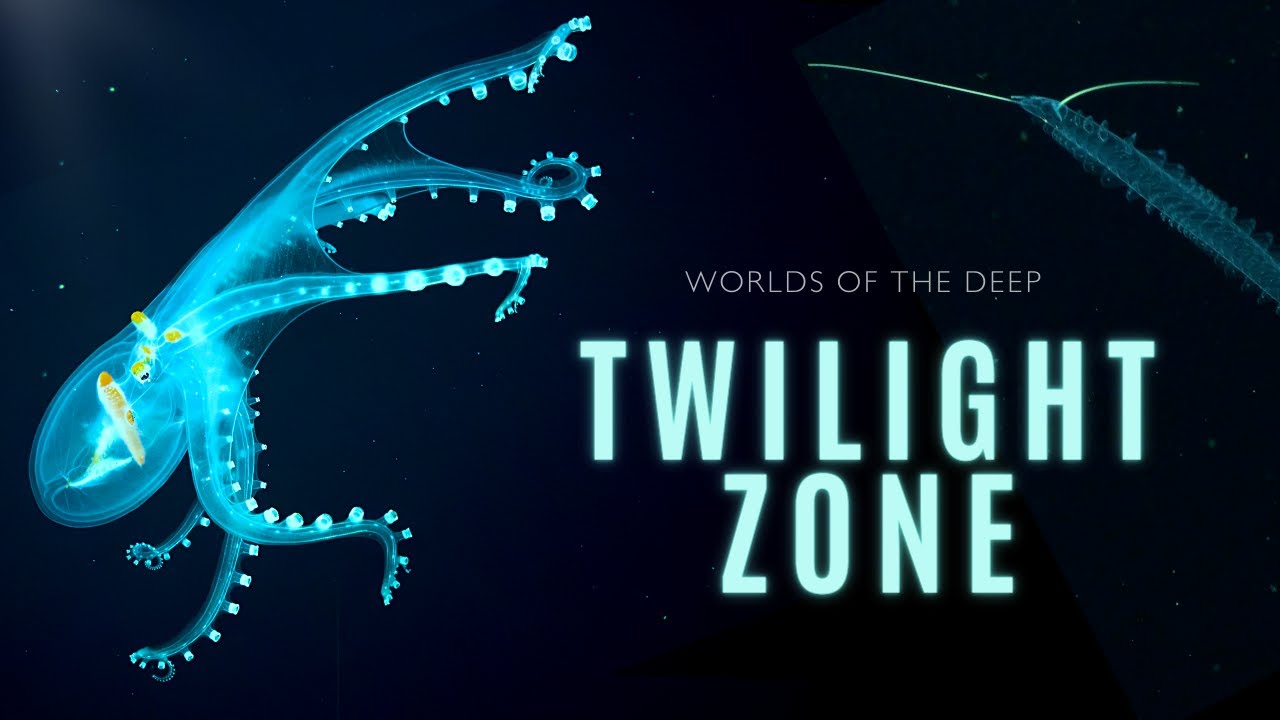
meop Plankton on the other hand are only planktonic temporarily and are typically the lavel stages of fish or species that spend the adult stages of their life cycles in the benthos Far Below like mollusks Crustaceans and Ain ofms who will one day settle on the sea floor for some animals the reverse is true and it's the lavel stage that cile the life cycle of many jellyfish begins with a polyp form on the seabed planul lari settle and develop into aista before asexually reproducing to create a stack of developing juvenile muui called a stroba these juveniles Bud off one by one and develop into pelagic adult forms of jellyfish and the midw are full of them but since the sea floor is so far away many jellyfish here lack a polyp stage altogether and complete their entire life Cycles in the water column some host the young ly within their Bell as they develop the dinner plate jelly swims with its tentacles extended forward a technique that allows them to stealthily sneak up on larger prey without startling them with large water movements remember in all the footage we're seeing the lights of an ROV are Illuminating the animals and the surrounding Waters so it's hard to imagine just how difficult it would be for prey to avoid slow moving Predators like this one in the Gloom there are also active swimmers necton rather than Plankton and a great number of them are seapods the squid octopus and cuttlefish the largest and most intelligent of the ocean invertebrates they are MKS related to snails and Biv valves but their basic body structures are modified and specialized to make the most of life in the open ocean the mantle has become streamlined and a modified foot serves as a set of eight or more arms at 650 M down we find an octopus that is almost entirely seethrough this is a glass octopus and it's around 40 cm long the eyes are one of only a few structures visible within its glass-like mantle the glass squid with its bulging eyes has also developed a body that is transparent most of the time when it suits them they change the color of their skin and fill their mantle with ink to turn deep red their rink also contains ammonia which is lighter than seawater and allows the squid to remain buoyant see-through animals are more abundant in the deep ocean than anywhere else in the depths there are no harmful UV rays to necessitate cell pigmentation as a way to protect them from solar radiation inking is also used for defense when spooked squids flee quickly and

Segment 5 (20:00 - 25:00)

leave behind a shroud of ink in the form of a cloud rope or other shape resembling ghostly apparitions in the Gloom the ink masses are thought to be animal lookalikes dubbed pseudomorphs and they serve as a decoy some look like comb jellies or jellyfish others resemble siphonophores in some cases it may be advantageous for the squid itself to look like another animal juveniles of the sword tail squid were observed mimicking seonor of the genus nomia when young they possess ornate tals that double the length of their bodies and seem to copy the shape and colors of their gelatinous neighbors they even position their tentacles in such a way that makes the deception more convincing saop fores are not a dense source of food they are mainly water and this coupled with the stinging cells that line their bodies means they are not on the menu for many animals and so the juvenile swordtail squid appear unpalatable to Predators who mistake them for the seona fores in their adult form KIRO toothed squids become impressive Hunters the two feeding tentacles are expelled rapidly tipped with clubs at the end lined with suckers for grabbing prey for nearly all creatures of the Twilight Zone there is one thing that gives them away to Predators when they are seen from below their dark Silhouettes stand out against the low levels of downwelling light but this challenge has given rise to some rather creative methods of camouflage some use countershading expressing darker pigments on their upper body and lighter colors below in order to blend in from all angles others achieve this effect to a greater degree by emitting their own light bioluminescence produced from glandular organs called photo fores that line their bodies with a pattern of glowing dots like those of the Firefly Squid as they ascend they increase the intensity of their lights to match the levels of sunlight radiating from Above This principle even gave rise to a naval tactic called diffused light camouflage where counterillumination was used to make ships blend in against the backdrop of the night sky counter illumination is one of three dominant methods of camouflage that midwater species employ to resemble their environment the second is transparency like we saw in The planktonic Drifters and glass squid and the third is silver lacking scales and instead covered with highly reflective skin consisting of microscopic guanine crystals the needle like cutless fish resembles polished steel this effectively imitates transparency since although it stands out in the lights of an ROV the vertically oriented mirror makes these fish invisible from the side in the Dusky water

Segment 6 (25:00 - 30:00)

it's so effective that almost all upper ocean fish including sardines and Herring use silvering to blend in the hatchet fish has a laterally flattened body just a few millimet thick making it almost invisible from head on and below and on its skin the guanine crystals are perfectly spaced to scatter any light but they also manipulate this light and funnel it downwards towards a set of photo fors on its belly where it contributes to their counterillumination this serves a dual purpose for towards the deeper extent of their range the downward scattering of light via their photo fors May throw off the search lights of midnight Predators silvering is found in spilop pods too using not guanine but proteins called reflectins to create a mirror-like effect one squid species has undergone the deep sea equivalent of extreme body modifications this is the cockeyed squid one of its eyes is very big and the other rather small it positions itself in the water column so that the small eye looks downwards spying for flashes of bioluminescence in the Blackness below meanwhile the large eye looks up a bulbous tubular shape takes in as much downwelling light as possible and a yellow lens may allow it to see through the counterillumination of prey there's a reason why so many adaptations here Converge on looking upwards and taking in more light by living at an intermediate depth creatures of the Twilight Zone have an advantage the light levels are low enough that the Gloom provides a level of protection but just enough light remains that animals can use their remarkable light sensitivity to identify the coming of the night a time when predators of the surface waters become less active and in response every night the denisons of the deep pay a visit to the shallows to feed on the Abundant phyto Plankton it's a phenomenon called the D vertical migration as night falls vast numbers of animals rise from the depths of the mopic under a blanket of Darkness deep sea jellyfish siphonophores squid and many others gather near the surface to feed in their wake the entire food web of the mesopelagic follows and up from the depths come the innumerable sharks fish squid and all manner of deep sea Predators these vertical migrations unite planktonic organisms

Segment 7 (30:00 - 35:00)

and their predators in a constant cycle of movement together they form the largest synchronous migration on planet Earth it's been postulated that animals May migrate at night to remain in their preferred light climate or is alum using this ability an estimated 5 billion metric tons of organisms migrate up towards the surface every night and migrate back down come the dawn a mass movement so dense that it was first discovered when Echo Sounders on board World War II US Navy vessels detected the Gathering of animals as a mysterious second floor in the ocean far shallower than the ocean bottom was thought to be as a gathering of creatures from vastly different groups the migration is a vertical Feast that fuels the ocean's food web take the lantern fish for example they are the most widely distributed in abundant vertebrates on the planet with an estimated Global biomass of up to 16 gatons and accounting for 65% of all fish biomass in the deep ocean because of this they are a crucial food supply for many animals and a fundamental Link in marine food webs their most notable predators are the Red Devil squid which Gather in shs of up to 1,200 individuals near the surface every night there entire bodies flash red and white to signal to other members of the sh though the reason is unknown it may be an invitation to reproduce or perhaps it's to warn others not to get too close for when the supply of lantern fish runs out they turn on each other cannibalism is Rife among Red Devils as studies of their stomach contents revealed the remains of fellow squid in a quarter of specimens this could explain how they're able to grow so large so quickly reaching well over a meter long in less than a year the 24-hour cycle of the vertical migration is one of the great forces that shapes the diversity and productivity of entire oceans it shows off the ability of life to make use of cycles and cues that allow them to exploit resources in different habitats Life In The Deep Sea would be nowhere near as diverse without the migration it fulfills an important role in the biological pump since the phenomenon sees midwater organisms feeding at the surface and bringing the acquired biomass along with an enormous amount of carbon down to depth here a few different processes see the carbon make its way to the sea floor it enters deep food web via predation and sinks through the water column in the form of marine snow and feal pellets this provides not only a means of sequestering carbon away from the atmosphere but also a vital ecosystem service to deeper dwelling communities by providing a more direct pathway for food to reach the midnight zone below where the total absence of sunlight makes vertical migrations far more challenging and So Below around 1,000 M there is a sharp decline in biodiversity you could travel through this zone for hours and see very little and yet it is not a dead zone far from it although a challenging world it is also a stable one where the direct influences of the Sun the waves and the tides are not felt creating a habitat that is barely changed at all in millions of years in the next episode we'll explore the elusive wonders of the midnight zone a place of Giants and deceivers

Segment 8 (35:00 - 36:00)

huge thank you to Masterworks for sponsoring natural world facts and helping to support my film making Masterworks are a leading firm for buying and trading shares in multi-million dollar Blue Chip artworks making it possible for anyone to invest in these works at a fraction of the cost their pioneering approach has consistently delivered impressive returns of 15 25 and even 35% to investors and has handed back a profit with each exit rewarding everyone who participated even during the turbulent times of the stock market's worst year since the 2008 crash Masterworks has managed to sell a staggering $45 Million worth of Art and here's the best part those net proceeds are directly distributed to investors like you allowing you to reap the benefits of this thriving Market experts predict that the Art Market is far from reaching its peak in fact they anticipate a mindboggling growth of $1 trillion by 2026 because of these prospects Masterworks has a wait list for participants but in support of my channel they have kindly provided exclusive passes for viewers allowing you to skip the wait list and enjoy Priority Access to the service find out more in the video description down below

Другие видео автора — Natural World Facts

Ctrl+V

Экстракт Знаний в Telegram

Экстракты и дистилляты из лучших YouTube-каналов — сразу после публикации.

Подписаться

Дайджест Экстрактов

Лучшие методички за неделю — каждый понедельник