Quantum Tunneling Explained in Simple Words for Beginners

Quantum Tunneling Explained in Simple Words for Beginners

Machine-readable: Markdown · JSON API · Site index

Поделиться Telegram VK Бот
Транскрипт Скачать .md
Анализ с AI

Оглавление (1 сегментов)

Segment 1 (00:00 - 03:00)

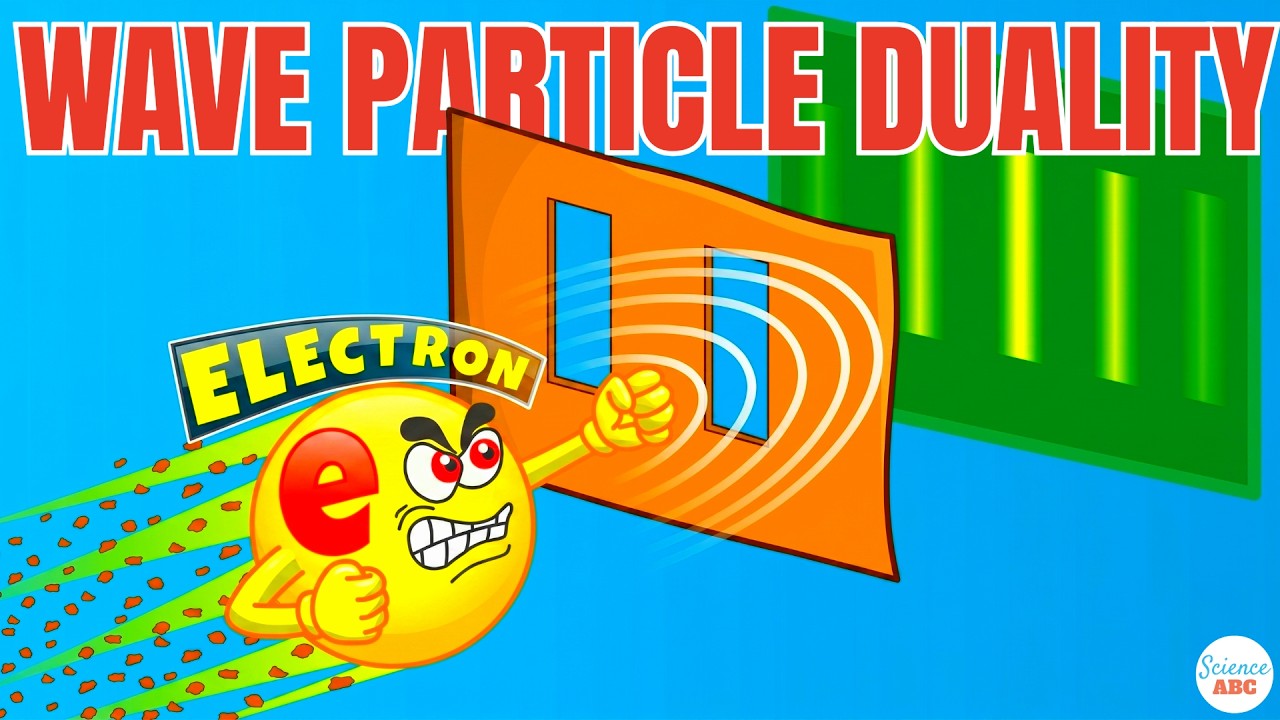
Quantum tunneling is a phenomenon in the realm of quantum mechanics, where a particle crosses a gap or barrier that it shouldn't be able to cross in classical terms. Let me explain this with an example. Imagine you're sitting in your living room with your cat. Suddenly, the cat jumps up and dashes to one of the walls of the room. When it reaches the wall, it starts to sniff and lightly touch it. After a minute of doing this, it goes around the wall, out of your sight, and into the room to investigate what's on the other side. The cat wanted to see what's on the other side of the wall, but it had to go around the wall to be able to investigate. Now, imagine if the cat could simply disappear and then appear on the other side of the wall. Sounds like science fiction, right? This is an oversimplified analogy to explain what happens during quantum tunneling. This concept seems paradoxical from a classical standpoint, because it allows particles to pass through a barrier without needing to have sufficient energy to cross it. The rules of quantum mechanics state that the quantum state of material particles, such as electrons, can be described by a wave function. In classical terms, describing a particle's state with a wave function may seem strange. This is where wave-particle duality comes in. This is a concept in quantum mechanics that suggests quantum entities can exhibit both particle and wave properties, depending on the experimental conditions. In simple terms, this means that a particle, like an electron, can behave as both a particle and a wave. This is why a particle can be described as a matter wave. It's this matter wave that can be represented mathematically as a wave function. In simple terms, particles such as electrons are not just points in space, but also exhibit wave-like properties. In the classical world, particles can be precisely located in 3D space using x, y, z coordinates. However, in the quantum world, which deals with elementary particles, the location of these particles is described in terms of a probability wave. This wave indicates the point where the electron is most likely to be found, the crest, and least trough. It's important to note that this is all based on probabilities. For example, even though the probability of finding the electron at the crest of the wave is highest, it does not mean that the electron absolutely cannot be found at the trough. The probability of that is very low, but it's not zero. If there is a barrier, there are chances that the electron can be found on one side as well as on the other side of the barrier. So, in theory, this means that the particle could just tunnel through the barrier and reappear on the other side. This is quantum tunneling. Quantum tunneling plays a significant role in the nuclear fusion that powers the Sun. This is one of the primary reasons why life exists and is able to be sustained on Earth. Without quantum tunneling, the Sun as we know it might not exist. Quantum tunneling is also used in certain technologies, such as scanning tunneling microscopy, STM, which allows us to capture images of surfaces directly at atomic or submolecular resolution. The concept of quantum tunneling reminds us how strange and wonderful our universe is. It also emphasizes that there's always more to explore, and even more to understand, about the

Другие видео автора — Science ABC

Ctrl+V

Экстракт Знаний в Telegram

Экстракты и дистилляты из лучших YouTube-каналов — сразу после публикации.

Подписаться

Дайджест Экстрактов

Лучшие методички за неделю — каждый понедельник