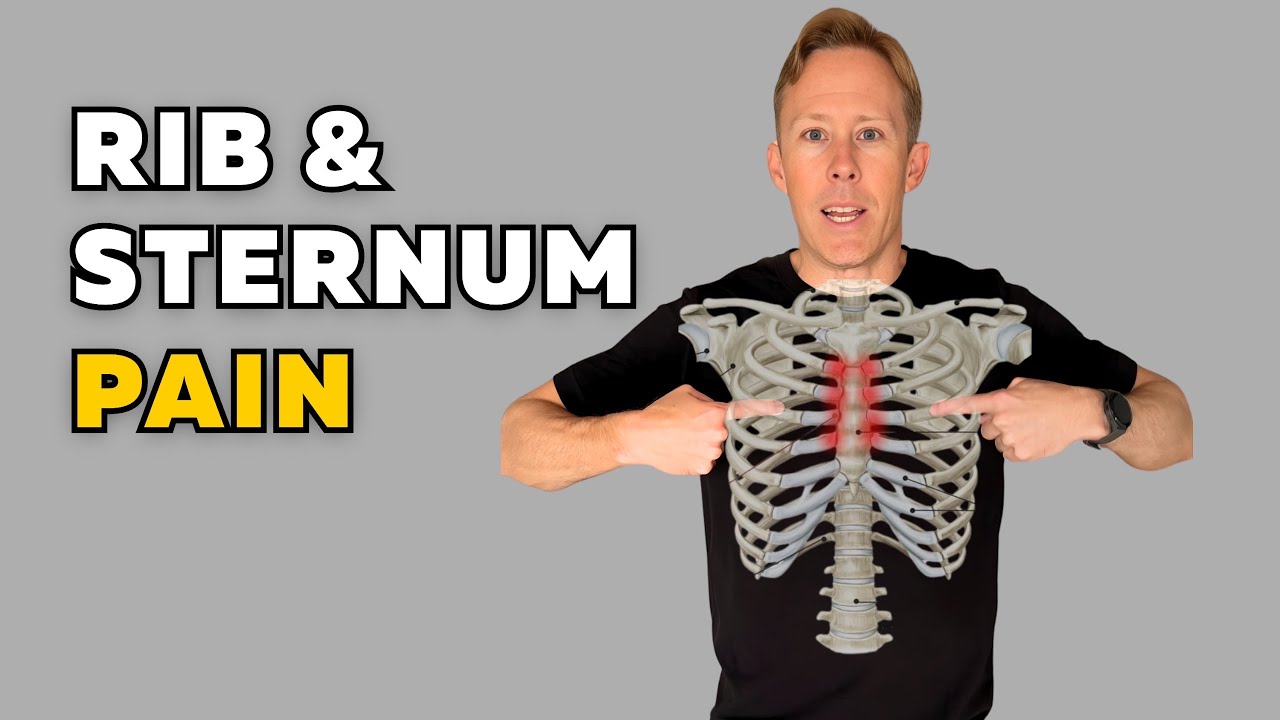
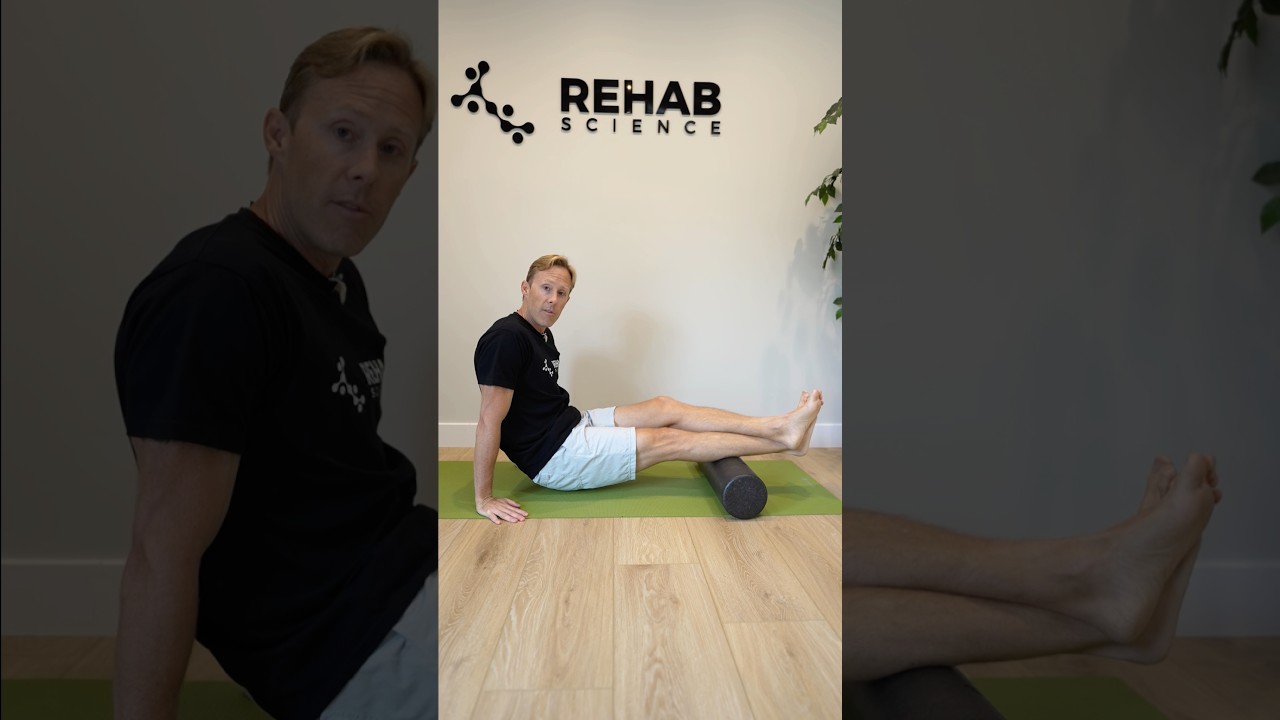
What's going everybody? Welcome back to my channel. In today's video, we're going to be looking at four exercises to help with a condition called costtochondritis, which relates to irritation and inflammation right here along the sternum where our ribs connect in. So, if you've got pain there, maybe with breathing or coughing, these will be exercises for you to implement. If you're new to my channel, my name is Dr. Tom Walters and I'm an orthopedic physical therapist. So again in today's video we're looking at this condition of costtochondritis inflammation irritation right here along your breast bone along your sternum where our ribs hook into the cartilage there. Now in this condition usually it's brought on by a trauma to the rib cage. So it could have been a car accident where somebody maybe their chest hits the steering wheel. I actually had this issue uh years ago when I was training in Brazilian jiu-jitsu. hurt my rib in jiu-jitsu. And for a few months, I had this pain. And like I said in the beginning of the video, it hurt with breathing, taking deep breaths, coughing, and when I'd move or stress, even when I try to do bench press or push-ups and use those muscles that pull on the ribs, it would cause this pain. So besides the exercises we're going to look at today, you've really got to look at things in life that are irritating the cartilage here along the sternum, and you've got to modify those things, maybe temporarily take a break from them. In my instance, I had to take a little bit of time off of jiu-jitsu. I even had to take a break from heavy bench press because it would just re reerritate things. So, just look at that in your life. In physical therapy, a big part obviously are the physical therapy exercises. But another big piece is behavior modification. So, we've got to change the things in life that are irritating our tissues just temporarily while everything's healing. So, let's go ahead and get into the first exercise. Our first exercise is going to be a thoracic spine extension mobilization. All of the exercises in this video are going to be gentle thoracic and rib cage mobility exercises. So, only move as far as you can without pain. You don't want to push into pain. You'll just irritate things more and it will take longer to heal. Remember, our ribs, they attach into our sternum and then they wrap around behind us and they attach to our thoracic spine, which is the middle part of your spine in between your neck and your low back. So, if we improve thoracic mobility, it will help with rib mobility, and that will help with kind of making sure we don't get stiff uh stiff and reducing pain. So, for this first one, you're going to use a foam roller. I've got uh this kind of shorter one. There are longer versions of this. Both work for this. Just um you know, use the one you have. If you don't have one, I'll put a link for this down in the description. You're going to lie the foam roller down on the ground, sit in front of it, grab it with your hand so it doesn't roll away, and then you're just going to lean back, and you can either have your arms across your chest or behind your head if holding your head is uncomfortable for your neck. Then you're going to lift your butt up, and you're just going to roll along your thoracic spine. Now, just go, you know, take this nice and slow. If it creates a lot of pain up in that sternum region, then you may need to wait a week or two for things to kind of calm down and heal because this is putting some force on the thoracic spine which is then pushing the ribs forward anteriorly. So, it does apply some stress up here. So, again, um if your pain is more than mild, then maybe just skip this one for now and go to the other exercises. If you can do this with mild pain or less, then this is a great one for massaging the muscles along the thoracic spine and improving thoracic and rib cage mobility. So, typically I'll tell people to spend anywhere from 30 seconds to 2 minutes kind of working through here. And this is something you can do several times throughout the day. Uh really as much as it helps you. Okay, so that is our first exercise, which is a thoracic mobilization. For our second exercise, we're going to use our longer foam roller. So, probably best just to get a long foam roller if you don't have one. So, for this now, we're going to lie it on the ground again like we did before, but we're going to have it uh set up this direction so that you can lie. You can kind of basically sit on the roller and then you're going to slowly go back and let your whole spine rest against the roller including your head. And then what we're going to do here is a shoulder mobility exercise called an angel. And the reason we're doing this is that part of our shoulder, half of our shoulder joint is our shoulder blade, which rests on our rib cage. And when we move through this angel exercise, we're going to take our arms out to the side and all the way overhead. As we do this, it requires so many of these different muscles that attach to our shoulder complex to lengthen and stretch. And a lot of those muscles go from our shoulder to our rib cage. So when we look at people who have rij injuries or have thoracic spine injuries, working the shoulder complex, mobility of the shoulder complex often helps when people again have rib cage or thoracic injuries. So again, we in the beginning I was talking about the pectoral muscles. That's a good example. Our pectoral muscles run from our shoulder to our attach on our ribs and near our sternum. And so an angel exercise like this is a great one actually for dynamically stretching our
Segment 2 (05:00 - 09:00)
pectoral muscles. And if we can increase some flexibility in the pectoral muscles, reduce some tension, that can help take some stress off of the rib cage. So for an exercise like this, again, it's a mobility exercise. Think about, you know, anywhere from maybe you do three or four sets of this each day and 10 to 15 repetitions in each set. Just experiment with it and see what works best for you. Okay, so this is our second exercise. It's called the foam roller angel. The third exercise is called the thoracic cat cow. This mobility exercise is one that probably many of you are familiar with. And what you're going to do here is you'll be on all fours on your hands and knees. And we're going to think about rounding uh flexing and extending our thoracic spine. So you're going to try to target the part of your spine where your ribs connect. Again, that's the area sort of between your shoulder blades. So, I'm going to round my thoracic spine, which is spinal flexion. And then I'm going to extend and kind of look up. And it's okay if the rest of your spine extends, too. And again, just move as far as you can without creating pain. If you hit a spot where you feel sharp pain or any kind of pain that's more than mild in your sternum region, in that breast bone, then just stop there. And over time, as the area desensitizes, you'll be able to move farther and farther. So again, think about a few sets of this each day and probably somewhere in the 10 to 15 repetition range. Again, we're just looking at getting things moving, getting blood flow into the area, and making sure that we don't get stiff. You know, a lot of times when people are injured, they just totally stop moving and then all of the tissues stiffen and weaken. So, we're trying to prevent some of that with these exercises. Okay, so that is the third exercise. It is the thoracic cat cow exercise. All right, this is our last exercise and this is going to put the most stress on the spine and rib cage. So, just move gently with this and move up to this one when you uh when your symptoms are ready. So, this is a thoracic rotation mobility exercise. And what you're going to do for this one is lie on your side. You're going to make sure to do this on both sides so that you get right and left rotation. You're going to bring your hips up to about 90° with your legs stacked. Your bottom arm is going to kind of hold your legs down right there. And then what you're going to do is reach up with your top arm and then just slowly rotate. So in this situation, I'm rotating left. I'm going to left spinal rotation. I'm just going to go as far as I can. Again, if I get any of that pain in my sternum, then I'm just going to stop there. Hold for a second. If you just feel a stretch, then that's okay. Just go as far as you feel comfortable. hold for a few deep breaths and just really work on improving that spinal rotation mobility. So, what I'll typically do here is I'll do two to three reps like this um on a side. So, I'll go like this, hold again for 10 to 15 seconds, and I might do two to three reps and then I'll roll over onto the other side and make sure I get that direction of rotation, too. Okay, so this is just a good one. It feels really good. You can just lay here and sort of relax. Just gives this really nice spinal rotation stretch. All of your muscles get to relax because gravity is just pulling on my arm and my body here and stretching my spine. So, I'm just showing it here on the one side so you can see what it looks like. But make sure you do that stretch on both sides. Often times people find one direction is more limited or creates more symptoms than the other. So, all right, that is our last exercise. Thanks for checking out today's video. I hope these exercises help you. If you need a more comprehensive program for the midback and rib cage, I'd encourage you to check out my book and my app. In the book, you'll find this midback and rib cage pain program on page 317. This program, like all of the programs in my book, is going to take you through three phases and have pictures of me doing all the exercises. Essentially, the programs are more comprehensive physical therapy programs, like if you came to see me in the clinic, and allow you to do your own rehab at home. So, the book has all of the programs in picture format. I also have a rehab science app. And in the app, you'll find a similar structure where each body region has programs. So, we have a head and neck, shoulder. If we go down here past the prehab programs, the app also has prehab programs. In the back section, we'll find the thoracic spine program, thoracic and rib cage, and it will guide you through three phases as well. But all of the exercises are in video form. The other really cool thing about the app, I sort of think of it as sort of like having me as your physical therapist in your pocket. Every week I do a Zoom session, a live Q&A where you can come in, you can sign up, you can ask me your own personal injury and pain questions, and I will help create a program for you. If you'd like to learn more about the book or the app, I will put links down in the description. Thanks again for watching today's video. I'll see you in the next one. Bye.