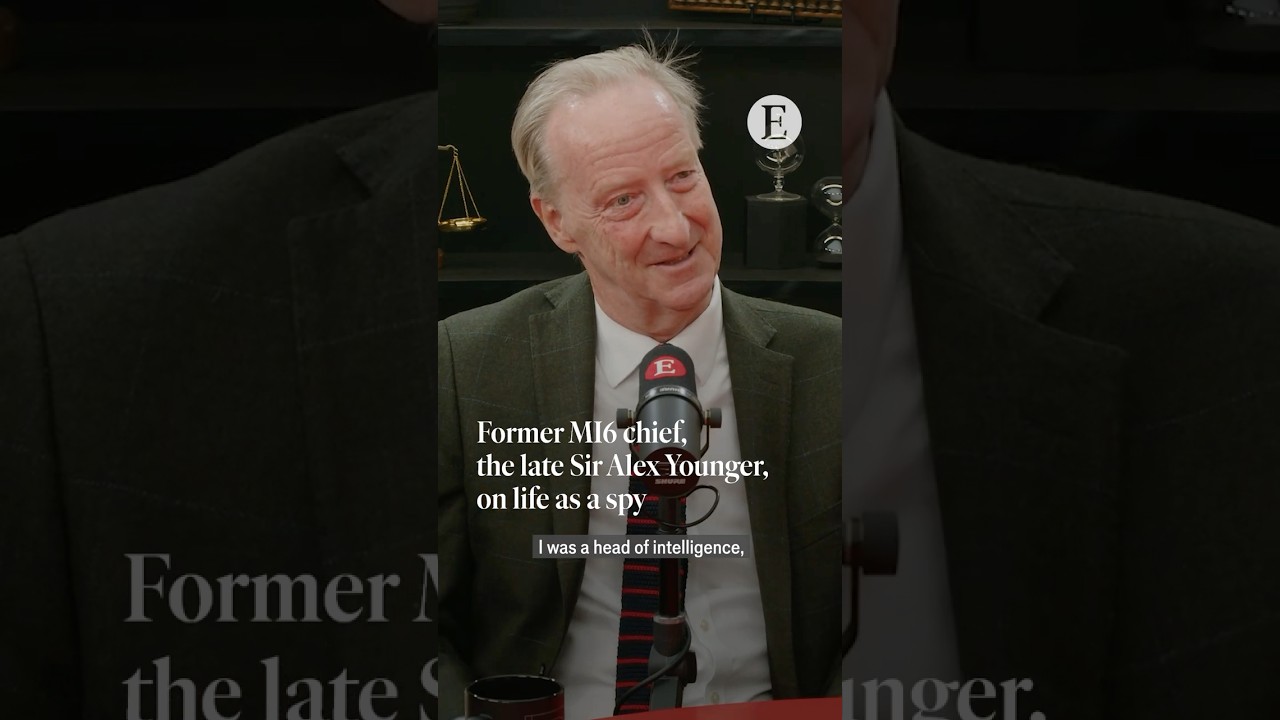
Former head of MI6: Iran has the “upper hand” in the war | The Economist

Former head of MI6: Iran has the “upper hand” in the war | The Economist

Machine-readable: Markdown · JSON API · Site index
Поделиться Telegram VK Бот
Транскрипт Скачать .md
Анализ с AI

Оглавление (2 сегментов)

Segment 1 (00:00 - 05:00)

I feel the war is at this really important juncture. President Trump is trying to reopen the Strait of Hormuz by military means through threats against Iranian power plants and to seek to end the war through diplomatic talks. I think what people are struggling with, what I'm struggling with is a full understanding of who has the upper hand right now, who is in a stronger position as that process unfolds. Iran. I think um and I regret having had come to this conclusion because like many MI6 officers of my generation um we faced the violence and brutality of the IRGC for most of our careers. That's the Islamic Revolutionary Guards Corp. Yeah. So there is no love lost between us. And I shed no tears for Ali Khamenei um who was killed at the beginning of this war. But the reality is that um uh the US underestimated the task and um I think as of about two weeks ago lost the initiative to Iran. In practice, the Iranian regime has been more resilient than I think anyone would have expected. They took some good decisions actually uh as early as last June about dispersing their military capability and delegating the authority for the use of those weapons which has given them uh significant extra resilience against this incredibly powerful um air campaign. They have embarked on what's technic called technically called horizontal escalation i. e. firing rockets at anybody within range which at the time honestly um Shashank I thought was nuts but in fact has been a very good way of putting indirect price on the US sort of worked and then um they've understood the significance of the energy war and held the streets at threat and globalized and essentially not internationalized just globalize the conflict in a way that gives them some uh some weapons. So, uh, you know, they've played a weak hand pretty well and at the same time, my second point is that Donald Trump has said some stuff that will have confirm something they knew already, which is that they're in a civilizational war in their terms. You know, they're um in a war of existence. Donald Trump made it very clear that he wanted to see them um, you know, up against the wall basically. uh whereas America has embarked on a war of choice and um in those terms I think they that's um imbued them with more staying power than their US and certainly US counterparts and they know that now and I think that really is giving them the whip hand and then finally there's a very technical point which you'll be as expert or more expert on than I am which is about stocks of drones And the reality as I understand it that whilst this has been an almost perfectly executed military campaign from the air, you can't reduce the threat to zero. And while zero, Iran can hold the straits at threat. Even with just 10% of its initial drone stocks, it can hold the straits at threat because these are not military people that it's not a military audience you have to satisfy. is people who own oil tankers and captains of oil tankers and that really does give them the whip hand. So I think the options for the US and Israel are pretty limited and not great. That really brings us to the question of the regime which is you know in place weakened um but still the Islamic Republic stands as an as a revolutionary entity the revolutionary guard the organisation that planted roadside bombs that killed many of your colleagues in over those years that stands and is surviving. So to start with have they been more resilient than you thought? How do you understand their survival and their endurance now? I think that they um are in the death throws and um uh but I think the irony is that the biggest threat to them is peace not war. The January uprising showed that they have no answers. The hatred that engendered is endemic and will will last for decades. Uh the estimates are up to 10,000 of their own citizens machine gunned in the street by IRGC sponsored militias. I don't expect them to survive into the long term as a result. But of course, ironically, this situation

Segment 2 (05:00 - 10:00)

is an environment where they um they get an extra lease of life because uh it's hard for opposition to organize in the face of an air campaign and they're licensed to be even more brutal than they were before. I think um when it comes to the nuclear stuff um the very large majority of Iran perhaps 80% of them are against in fact they are they've had it with the theocratic regime and that actually was sort of how the voting went when Masoud Pezeshkian was elected that you know so this is data from president of Iran and it wasn't a manipulated election you know it showed that pretty well 80% of Iran wants nothing more to do with this sort of total resistance theocratic ideology, but the 20% or probably even less 10% are the ones with the guns and that is proving decisive. They are empowered by this situation to continue to brutalize the population. You've got this interesting attrition that's taken place at the top of the regime and new faces coming through. Uh some of them though probably quite well known to you, the new IRGC chief, General Vahidi. He's a former goods force commander. The Quds force was of course very active in Iraq and Afghanistan and and you would have seen them up close. Um you've got uh of course Ali Larajani killed last week in an air strike but people like say Jalilei and other figures who were long you know at the top of this regime still there. Um many of the people you'd have been studying closely SSIS chief I'm sure have died in the last two weeks. You know there's been huge turnover. What do you make of the kind of ideological complexion of the regime as it has changed in these last four weeks? I think the net effect which was probably going to happen anyway is that the that we've seen the end of the theocracy actually with the end of Ali his successor was never going to be as powerful as he was. That's kind of it. And in Mojtaba although he's ostensibly a cleric he doesn't have his father's credentials. you basically see an IRGC takeover. Not a dictatorship so much as a junta, I would say. Um, and that's how Iran is being run now. So you know paraphrase the beards have got shorter. Tell me a bit more about the IRGC because they're the regime's Revolutionary Guard. They're in a way a bit like the PLA. They're the armed force that guards the revolution, not the state. That's the regular army which is disempowered, not very influential. But how religious is it? How ideological are they? Because they also have big business interests, don't they? They're also corrupt. They're sort of smuggling things across borders. Who are these people? Yeah, they're no less ruthless than Ali Khamenei, but they are more corrupt and um uh significantly significant beneficiaries of the sanctions regime. So, they're sort of invested in this um sort of uh black economy that's being created by the long-standing sanctions, which is one of the reasons why you might think they would be more pragmatic in these circumstances. It's important to understand Mojtaba as just a sort of I mean, we've never even seen him. He's just a figurehead to all of this. So, these guys are in charge. None of them, as you say, have any sort of track record that might imply leanings toward reform, but they are, I think, more pragmatic. That's certainly true. You say the regime is in its death throes now. You know, that process, it can be terminal, but that process could last a long time for Iran. What follows? I mean, you're not a mind reader, but what are the prospects you would put on a democratic transition versus some other kind of rather messy and unpleasant transition? Yeah, I actually think in some ways this war, as I've said, may sustain their capacity to brutalise the regime. But I particularly think after what happened in January, yeah, the chances of them keeping the show on the road indefinitely are low. Look, what comes next, who knows? All I can counsel is just sort of listen to the dialogue in particular, anything that any sort of buyers remorse around the Mushtaba appointment when they could have put in someone like Ayatal Humeni's son who is a much more pragmatic person but has real religious credentials that would have been another way to go that in fact would have ordered a some kind of shift. Masoud Pezeshkian, listen to him, you know, fundamentally a secular reformist figure, but clearly really under the thumb of the IRGC at the moment. If he starts speaking more freely, then you have the prospect of the 80% of Iran that is actually just sort of had enough of this starting to prevail, not just demographically, but electorally. Maybe that would be a clue that I would be listening to.

Другие видео автора — The Economist

Ctrl+V

Экстракт Знаний в Telegram

Экстракты и дистилляты из лучших YouTube-каналов — сразу после публикации.

Подписаться

Дайджест Экстрактов

Лучшие методички за неделю — каждый понедельник