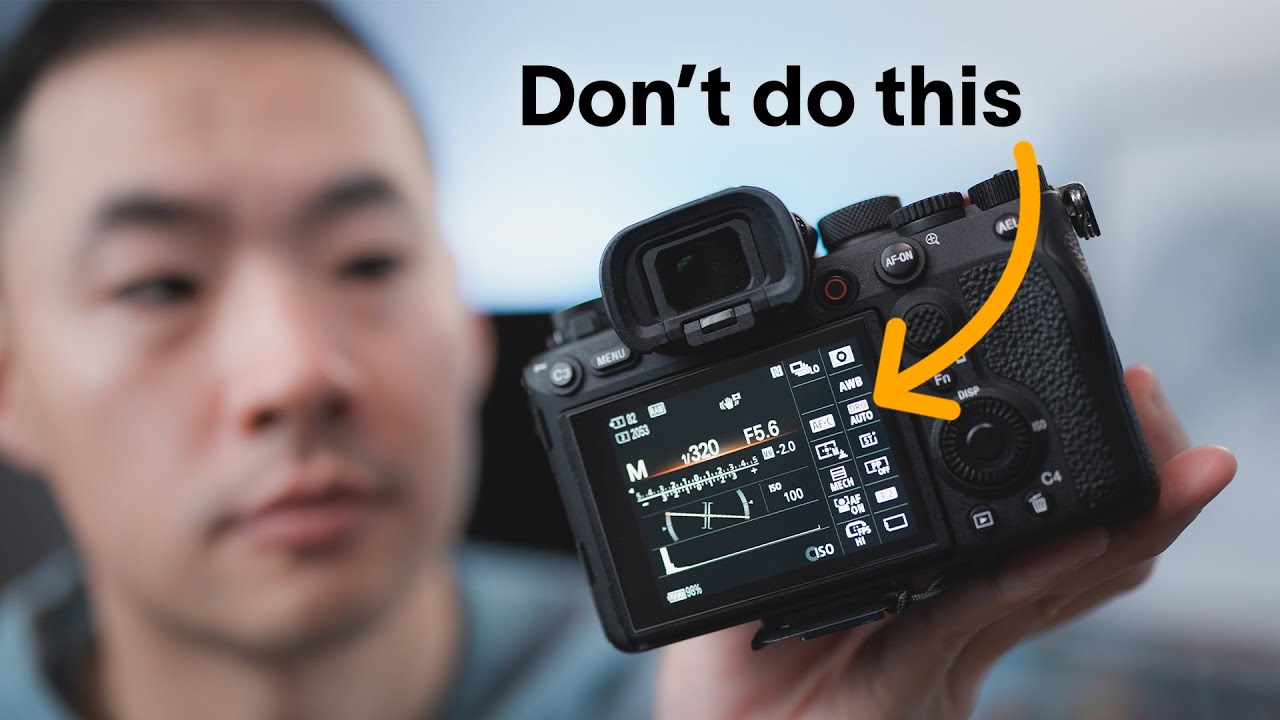
Are you actually still a beginner photographer or have you leveled up without realizing it? There are five subtle signs that prove you're well on your way to becoming an intermediate photographer. And number four is one that almost no one talks about. Hey, I'm Pat K, a travel photographer and Sony digital imaging ambassador based in Tokyo, Japan. And I am obsessed with learning. You know, when I was in my beginning stages of learning photography, I remember that I would obsess with learning the right thing, which is actually kind of hard because in photography there's just so many things to learn. And sometimes when you learn something that is a little bit too advanced for where you are now, it takes far too long and that learning experience isn't as efficient as it could be. So I would always like to start to assess myself and know what stage I was at so that I could find the material that was just one level above where I am instead of many levels above where I was. And still I learn like that today when learning any new skill. It's a most efficient way of learning anything. Now, that's the aim of this video, to assess whether or not you're out of the beginner stages and ready to start learning intermediate or even intermediate advanced topics and whether or not you should be done with the beginner stuff. Now, this video is sponsored by Aftershoot, but more on them later in the video. Number one, you notice light more than thinking about technical ability. One of the hallmarks of a beginner photographer is thinking a lot about settings. you know what aperture to use, how to quickly adjust shutter speed, what ISO to set your exposure at. All of those things are very, very important to get right for sure. However, an intermediate photographer has largely mastered or at least is very intentional with selecting all of these different settings and they're able to use and change them quickly, often without even thinking. The beginner often becomes obsessed with camera gear and specs and megapixels and the latest stuff, thinking that new gear will enable them to take better photos. However, the intermediate has gone through this phase and is comfortable with what they have. From there for the intermediate and onwards into mastery. Oftent times you are not actually thinking about gear and technical settings and instead you're noticing light. You know light is the first thing that you're seeing walking into a cafe. The first thing that an intermediate photographer sees is that amazing patch of nice light softly hitting that table and then they begin to capture it instantly. A beginner only ever sees that if they're actually sitting in the seat. Remember that light is the most important thing in photography. Subjects, composition, technique, all of these things end up effectively as light. And the intermediate acknowledges this and is always on the lookout for nice quality of light. Number two, you can start to previsualize a shot with good accuracy. As you become more and more experienced, you realize that photography is actually first done in your mind or your photography vision. Your vision determines whether a scene is even good enough to pull out your camera in the first place. And the intermediate photographer recognizes this more and more often. At first, the beginner sees this as well, but the photos come out vastly different from how they imagined it. Over time, the intermediate version of this is where the vision of your photos starts to align with the actual execution more and more, right? Advanced photographers then will be able to envision what a composition looks like at a, you know, different compression level, different focal lengths and so on. But this takes time. For now, if you're starting to see compositions in the wild and then you're able to replicate them occasionally, you are well on your way. Doing this requires a lot of realworld practice. Not only taking thousands of photos and testing every single time, but also doing it on different sensor sizes and focal lengths and different gear. There is no substitute for time in all of this, but keep at it and you'll get there. Number three, you're deleting less photos. Somewhat related to number one and number two, if you feel yourself getting more and more keepers and deleting less photos, you are well on your way to becoming an intermediate photographer. You know, I remember when I first started doing street photography, I would get maybe like one good photo out of every two, three, four, 500 photos. You know, I was like
Segment 2 (05:00 - 10:00)
super slow with like the settings. I would miss shots. I needed to experiment a lot because I couldn't visualize the shot in my mind first. But as I got better, the strike rate also became better. You know, one out of 100 would be great, then one out of 50 would be great. Now, if it's a nature or a landscape scenario, I get close to one a lot of the time, unless it's an action shot, of course. It's like, you know, when you're learning to become a chef or you just want to be a better cook, right? Initially, you buy a lot of food and you cook something with it, but you have a lot of waste. There's not only a lot of wasted ingredients, but wasted time, wasted technique, and so forth. But when you become really good at cooking, you take a look at the ingredients that you have, and you know exactly what to do with every single little thing. It's exactly like that. If your strike rate is improving such that one in every 50 or 100 photos is a keeper, then you're well on your way. This video is sponsored by Aftershoot. Aftershoot is an all-in-one photography app where you can cull, edit, and retouch your photos either manually or by AI. Now, they're launching an AI retouching feature which promises to give your images that final polish to your photos in a natural and fast way, fully integrated into your editing flow. A big focus of this feature was natural looking result by default. You know, too often other programs might have an AI look and if you know it, you know that's not it. Instead, the team prioritized natural retouching of skin, hair, and facial details that stay true to life. When you don't have to manage things like skin smoothing and acne and skin blemishes and glare from glasses and flyaways and object removal and so on, that is a huge step of the post-prouction workflow you no longer have to do, saving you a bunch of time in just a single click. AI retouching is completely free to use through summer 2025 with no usage caps or per image charges. And even after that, unlike other tools, there are no surprise fees here, just one subscription and unlimited retouching. All Aftershoot plans include AI retouching completely free and unlimited during the public beta, available until September. So, if you're interested in trying AI retouching in Aftershoot, then sign up with the link in the description and try for free with your Aftershoot plan. Number four, you can identify what makes a good photo. Here's the thing that almost no one talks about in photography. You know, how do you know that your photo is good? What objective proof do you have that makes a good photo a good one? And how do you even know that that's true? Is it how well it performs on social media? Instagram? Is it, you know, some big wig art critic saying it's good for me? And you can steal this. Good means intentionality. It means that you can see the intention the photographer was going for and that they clearly communicated that in their photo. The rest of it is subjective. Whether or not you like a photo is different to whether or not it's good. Photography is about visual communication after all. And visual communication means that there's a message to be interpreted. How well an image communicates is down to the techniques used in which to communicate it. I call this visual language and within it there are visual patterns used to communicate. Think of it like words and sentences and paragraphs but in visual form. I have an entire playlist for these techniques which you can find in the description below. Now for you, you know that you're progressing into an intermediate level when you can start to see the intentionality in a shot and the visual patterns that communicate it. You know, things like understanding why the photographer framed elements in a certain way or why they chose a certain color palette over something else or how they decided to position elements within a composition and how they relate to one another. Now, eventually when you start to see like this, it's like unlocking a secret code, a code that you can then replicate in your own work. Number five, people start asking you for advice. And finally, you know that you're becoming more of an intermediate photographer when people start asking you for advice. Because here's the thing, most people don't ask other beginners for advice cuz that just doesn't make that much sense. People only ask advice of the people who they think are doing a better job at the thing than they are. And this is the crux of the sign. People think that you're better at the craft than they are. So they ask you, right? And this can only occur if you've been doing photography for a little while now and people have seen you get better and better, continually displaying good
Segment 3 (10:00 - 10:00)
examples of work over and over. This body of work creates an impression of authority because not many other people are willing to put in the work of continually creating this body of work by showing up every single day. So if you see people asking you for or your advice on photography, then you know you're on to something and you're doing it well. All right, that's it. Five signals that you're no longer a beginner photographer. Did you resonate with any of these signals? Let me know. What did you get out of the five of them? Let me know in the comments below whether or not you would like an intermediate to advanced version of this video. All righty. Thank you again to Aftershoot for sponsoring this video. Hit the link in the description if you want to check out AI retouching and I'll see you in the next one.