Toyota's i-FORCE MAX One-Motor Hybrid System

Toyota's i-FORCE MAX One-Motor Hybrid System

Machine-readable: Markdown · JSON API · Site index

Поделиться Telegram VK Бот
Транскрипт Скачать .md
Анализ с AI

Оглавление (3 сегментов)

Segment 1 (00:00 - 05:00)

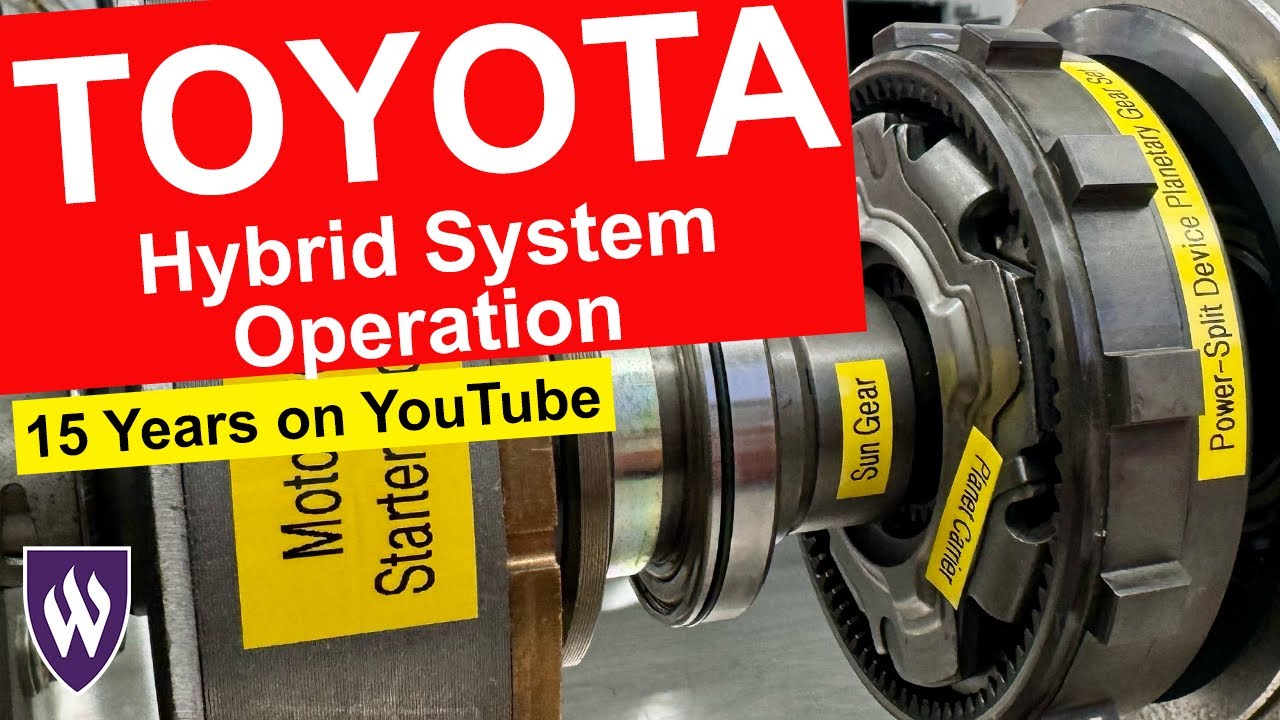
Hello, I'm Professor John Kelly and this is the Weber Auto YouTube channel. Did you know that Toyota introduced a brand new type of hybrid system used in the Tundra and Seoia and also in the Tacoma and 4Erunner? It's called the I Force Max system. And we are going to take a look at the individual components and parts involved in that system and show you how it works. So, let's get started. Okay, the first part involved is the crankshaft of the V6 engine. In the Tundra and the Seoia, you can get a 3. 5 L twin turbo. They call it the I Force engine. And this is a V6 crankshaft. It has a flywheel and a torque damper on the end with a torque limiting clutch that's used in all of their other hybrid vehicles also. Okay. The next component involved in this system is the automatic transmission. For the Tundra and the Seoia, you have a 10-speed automatic transmission like this one here. For the Tacoma and the 4ERunner, you have an 8-speed automatic transmission. Both of those transmissions have been beefed up and enhanced to handle the additional torque of an electric motor that's going to sit right here in between the back of the crankshaft and the front of the automatic transmission. Okay. The next part that I'm going to slide in here is called the hybrid generator module. And this slides right in and is bolted up to the front of the automatic transmission. And then the engine crankshaft connects to the front of this module. And this contains an electric motor that adds additional power to the engine as you accelerate. So let's take a look at the pieces inside of this module and see how they interface between the crankshaft and the transmission's torque converter and input shaft. Okay, so this hybrid generator module here is the major component that makes this uh I Force Max system so powerful. Of course, there's a high voltage battery and other parts involved. But let's look at mechanically what this thing does. It has an input shaft right here that connects to that torque damper on the flywheel at the back of the crankshaft. On the other side of this module, it has this flex plate that connects to the torque converter and input shaft of the automatic transmission. So, in other words, if this rotates, then there's power being delivered to the automatic transmission and the vehicle can move down the road if it's in gear and ready to go. These two sides are not connected together all the time. There's a special clutch pack inside here that connects them together. So, let's take a look at the clutch pack and the electric motor that's inside of here that helps the engine crankshaft rotate and gives it more power. Okay. When you unbolt the front cover and remove it, the stator assembly for the electric motor is bolted to this front cover. So, we will set that out of the way because we don't need that for our mechanical demonstration here. But inside of the housing, we have this rotor right here. This part that's rotating. The rotor is an internal permanent magnet synchronous motor. And it is connected to the flywheel on the back of the generator module assembly here. So, if this rotor rotates, so does the torque converter. and the input shaft of the automatic transmission. Now, on the input side here, we have the input shaft that connects to the torque damper on the back of that crankshaft flywheel that we saw. And notice that when I rotate it, the electric motor's rotor does not rotate. So, this yellow label right here, if you watch it, that's the rotor rotating. But if I rotate the input shaft from the internal combustion engine, the crankshaft, uh, it does not rotate the rotor. Okay. So, if I unbolt this front cover to the rotor and take it off, then we can see the input shaft and the drum that it connects to. And then we can see the rotor itself. In between the input shaft on all these little splines right here and the inside of the rotor assembly is a hydraulic clutch pack with alternating steel and fiber plates. There are five sets of fiber discs in here. Just like an automatic transmission. If you squeeze all these together, it's going to connect the input shaft to the rotor.

Segment 2 (05:00 - 10:00)

And that's done hydraulically through a special valve body that's bolted on to the bottom of this uh generator module assembly. This valve body has two solenoids. Uh one of them slowly applies this uh clutch pack for engine starting. The other one gives full line pressure force to it. So after the engine is started and you need all that extra power that it holds these clutch packs from slipping under high load. So, now I can remove the rotor. There's a snap ring I've taken out. And we'll just take the rotor right off. Here's our rotor. And then on the back of the module generator module assembly, I can pull the flex plate and the output shaft that go to the automatic transmission. Okay, I've removed all of the pieces from the hybrid module here that goes in between the engine crankshaft and the automatic transmission. We've got the stator assembly that the rotor sits inside of and rotates. I'll just get that out of the way for now. Uh we have the hydraulic valve body for this module and the hydraulic clutch pack that it controls that goes inside of the rotor. And I'll just get those out of the way for the moment and we'll just get right down to the three main pieces of this hybrid system. Okay, I have all three pieces assembled and sitting in some VB blocks here. So once again, the input shaft rotating here is rotated by the crankshaft of the engine. Notice it does not cause the electric motor's rotor to rotate. If the motor rotates, then the flex plate back here rotates that turns the torque converter of the automatic transmission and moves the vehicle down the road. So, there is not a solid connection between the engine's crankshaft and the input shaft of the automatic transmission. What connects it together is a hydraulic clutch pack. This is a five fiber disc hydraulic clutch pack with alternating steel and fiber plates. And it's hydraulically activated. We have uh plates that have teeth on the outside that connect to the rotor. And then we have plates that have teeth on the inside that connect to the input shaft and the crankshaft of the internal combustion engine. And if we squish those together, it connects the input shaft to the output shaft through the clutch pack. Okay, there are four modes of operation for this hybrid system. The first mode is electric vehicle mode. In that mode, the hydraulic clutch pack is disengaged, which means the engine crankshaft is not connected to the rotor and the torque converter, and the rotor can just spin and propel the vehicle down the road uh just through the automatic transmission to the rear axle and the rear wheels uh normally. Um then once the battery power is depleted to a certain state of charge, then we need to start the engine to propel the vehicle. So this also starts the engine. So now we apply the clutch pack using the valve body in the bottom of the module assembly. And we connect the input shaft to the rotor, but we do it softly so that you don't feel a big surge as the engine starts. And we start the engine by spinning the engine crankshaft at a high speed. And it just fires right up. And once it starts, then we move into hybrid mode. So in hybrid mode, the internal combustion engine crankshaft is spinning the input shaft. The clutch pack is engaged and we're turning this rotor. Now while this rotor is turning, we can be recharging the high voltage battery. Uh or we can also have the battery supplying current to the stator assembly and driving this motor to assist the internal combustion engine in propelling the vehicle down the road. This would typically be um under higher loads you would need this to uh do that. But it can also help improve fuel economy uh by allowing you to stay in a certain gear of the automatic transmission without having to downshift by adding additional torque uh to the engine torque and propelling you down the road in that particular gear. The fourth mode of operation is regeneration. So when you slow the vehicle down then through the powertrain and the torque converter the flex

Segment 3 (10:00 - 14:00)

plate will be rotated here and that will spin the rotor inside of the stator assembly over here and be it'll become a generator at that point. So we've got the four modes of operation. We have electric vehicle mode, we have engine start mode, we have hybrid mode and then we have regeneration mode. And this is a very powerful motor. This motor can add another 45 kowatt of power or 60 horsepower uh to the internal combustion engine power and deliver up to an additional 250 new m of torque which is also 184 pound- feet of torque. Uh so combined with this little 3. 5 L twin turbo V6, this is a very powerful combination and it puts these vehicles in a class where they have high torque and good fuel economy uh when you need it. And it's a very impressive system. They built this system to where this module that you see over here, this module can be bolted up to just about any engine and transmission combination. making it universal. So, it's a it's a nice design. There are other vehicle manufacturers out there that have parallel hybrids. Uh the Fords that we have here uh have a parallel hybrid system somewhat similar to this. Uh Jeep has the 4XE system that's a parallel hybrid also. Um but this is the Toyota system that's used in their Tundra, Seoia, Tacoma, and 4Erunner. and it seems to be a very good system. Uh the only thing I can say about it that surprises me is how big that module is. It's 9 in wide, which is 228. 6 mm wide. So it length it lengthens the overall engine and transmission transfer case if you have a four-wheel drive version. But it fits just fine. And you can see here in these photos from a local car show a few years ago the overall powertrain uh layout. And you can see the orange painted hybrid module there in between the internal combustion engine and the painted gray automatic transmission, the 10-speed automatic transmission. Uh just a few other things on this module. So let me get these parts out of the way here for a moment and we'll bring the module in. Um on the module itself it has two fluid passages. Uh right over here we have line pressure which is the uh oil pump pressure that is fed from an electric uh oil pump in the automatic transmission. Uh then we have lubrication fluid also to lube the bearings and also it's used for cooling of the stator assembly. Uh this does have its own little oil pan and a drain plug that needs to be drained whenever you change the transmission fluid. Uh the fluid fill, however, is done through the regular uh automatic transmission side of this big assembly. It's not done through here. Um so that's something unique. As far as serviceability on this module, uh the only thing that's serviceable that I can see is the valve body, the solenoids, the oil pan gasket, uh this high voltage cable, set of high voltage cables that connects to the uh stator assembly. But other than that, what I've taken apart and shown you is not uh an authorized service procedure. Uh and there's probably no parts available for repair either. It's just a replace only system, but there's really not much here to fail. It looks very robust and I suspect is very uh reliable, but of course, time will tell. All right. Well, that's all here from Weber State University in Northern Utah. Thank you for watching. and have a good day.

Другие видео автора — WeberAuto

Ctrl+V

Экстракт Знаний в Telegram

Экстракты и дистилляты из лучших YouTube-каналов — сразу после публикации.

Подписаться

Дайджест Экстрактов

Лучшие методички за неделю — каждый понедельник