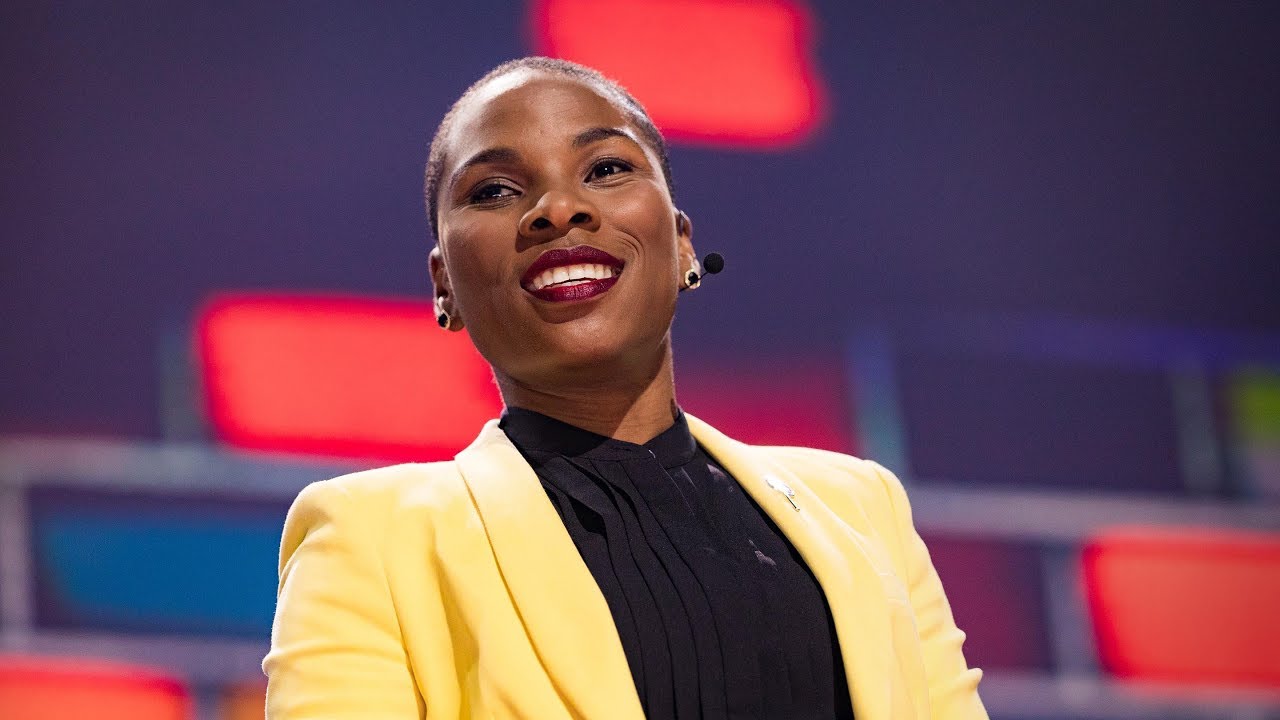
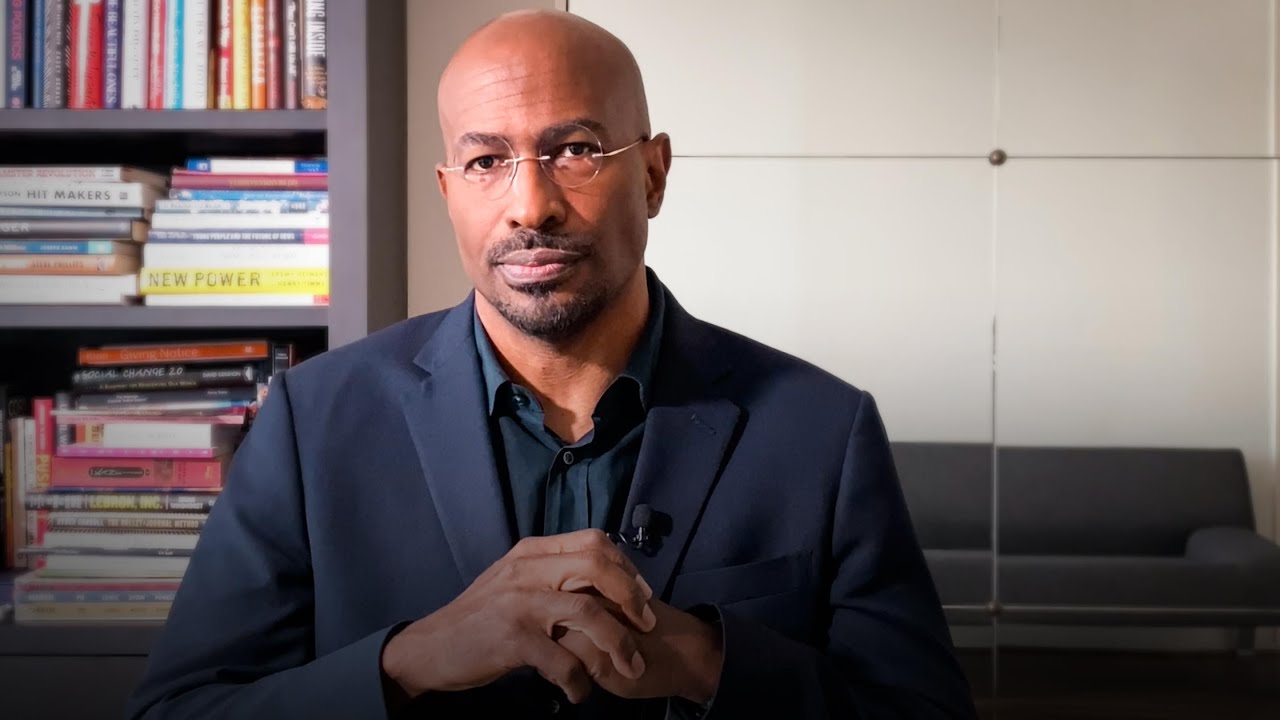
What do you do when the world declares something impossible? When physician-scientist David Fajgenbaum was dying from a rare disease and social entrepreneur Kiah Williams was confronting the realities of economic hardship, they began asking a different question: What can I do today? In this conversation, they discuss how turning hope into action can drive meaningful change — one step at a time. (This conversation is hosted by The Audacious Project’s Alexandra Tillmann) (Recorded at TEDNext 2025 on November 10, 2025.)
Join us in person at a TED conference: https://tedtalks.social/events
Become a TED Member to support our mission: https://ted.com/membership
Subscribe to a TED newsletter: https://ted.com/newsletters
Follow TED!
X: / tedtalks
Instagram: / ted
Facebook: / ted
LinkedIn: / ted-conferences
TikTok: / tedtoks
The TED Talks channel features talks, performances and original series from the world's leading thinkers and doers. Subscribe to our channel for videos on Technology, Entertainment and Design — plus science, business, global issues, the arts and more. Visit https://TED.com to get our entire library of TED Talks, transcripts, translations, personalized talk recommendations and more.
Watch more: https://go.ted.com/davidandkiah
• What to Do When You’re Told There’s Nothin...
TED's videos may be used for non-commercial purposes under a Creative Commons License, Attribution–Non Commercial–No Derivatives (or the CC BY – NC – ND 4.0 International) and in accordance with our TED Talks Usage Policy: https://www.ted.com/about/our-organiz.... For more information on using TED for commercial purposes (e.g. employee learning, in a film or online course), please submit a Media Request at https://media-requests.ted.com
#TED #TEDTalks #Change
Оглавление (6 сегментов)
Segment 1 (00:00 - 05:00)
Alexandra Tillmann: Alright, David, Kiah, thank you so much for being here. Let's jump in. Can you both share when you realized that life couldn't just happen to you, that you had to actively start choosing a path forward? David, I'll start with you. David Fajgenbaum: Sure. I might start back when I was a medical student. I had promised my mom that I would become a doctor in her memory when she passed away, when I was 19 years old, and in my third year of med school, I was really on my way to making that progress, helping patients in my mom's memory when I personally became critically ill with a disease called Castleman disease. I was so sick that I had my last rites read to me, I spent six months in the intensive care unit, and my doctors told me that we were out of options, but they gave me chemotherapy, seven different chemotherapies all at once. And amazingly, those chemotherapies worked. They saved my life, but what they also did is they opened my eyes up to this idea that none of those seven chemotherapies were made for my disease, but they saved my life. So when I relapsed a year later, my doctors told me, "We're out of options, you're going to die from this disease. " I said, wait a minute, didn't you give me these seven chemotherapies that weren't made for my disease and they worked? How do we know there's not another drug out there that could help me? And so this sort of opened up my eyes. I eventually discovered another drug that could save my life, but opened my eyes up to this idea that even when the world thinks there are no more options, no more hope, sometimes there's a solution that's literally as close to you as your neighborhood pharmacy. Kiah Williams: I think for me, it was when I was young, my family just fell apart. And we were teetering at the edge of poverty. And I remember going outside, I grew up in West Philadelphia, I remember going outside one night and literally saying to myself, like, I have to be the one that saves myself, that creates a new path for myself. And so I'd always, you know, focused on school and trying to do well. But I made this decision at a young age to just say, like, I was like, I need to get out of here and I need to do something and have a better life than this for myself. And the only one who's going to do it is me. That obviously wasn't true, I had a ton of help from like, teachers, even my parents, etc. But I remember being very young, 15 years old, and saying, like, "I've got to do something different, I need to do something different and better" and was able to, like, work really hard, buckle down in school, got a full need-based scholarship to Stanford. And essentially that was the beginning of me recognizing, like, I could harness my own power and try to make something of myself. And I think fast forward years from then, when I was actually working in clinics, in medical clinics, and was going to be the first doctor in my family and would see patients who weren't getting better, doctor leaves the room, it's just me in the room as a health coach, talking to patients about whatever they want to talk about, and learning that sometimes people weren't getting the medicine that they needed because they couldn't afford it. So that's why their blood pressure is still high, their cholesterol diabetes is not getting better. And I realized that I wanted to do something that could address that at a root level for those patients who were trying to take care of their health. And just all of these external factors were blocking their ability to be well. AT: You know, as you both talked about, our life is shaped by our circumstances, right? Some more formative than others. You nearly lost your life. And some we can control more than others, but they all contribute to where we head. As I shared, you know, these can be dramatic, or they can be small. David, you know, your near-death experience with Castleman's disease led you to become both patient and researcher really simultaneously. And Kiah, as you just shared, the economic resources of your family that you were born into really affected kind of, what you dreamed for your future. These are the realities of your lives, but you manage to use it for your creative fuel, for your energy. Can you talk a little bit about how you took those things out of your control and used them to expand rather than to contract, which I think can be a very natural experience for some people? KW: I think -- there's a really good quote that one of my co-founders used, and I love this because I think it so speaks to me, "sometimes motivation follows motion. " Not the other way around. And so I think sometimes literally just by putting one foot in front of the other, you don't have to have 100 percent of the answer. You can have five Just start moving towards that. And so I think when we think about this big issue, even of 30 percent of people in the US not being able to get medicine they need because it's just too expensive.
Segment 2 (05:00 - 10:00)
We don't have to have all the answers to fix everything now. We can just start on the thing that we know to be true, which is this is a dumb problem, and we know that there's surplus that exists to actually meet some of that need. And let's start moving forward with that now. And I think a lot of that also, just like from my personal experience and just thinking about my own family and kind of where I came from, I mean, my dad always told me this growing up, he was like, you know, my grandfather wasn't literate. And people would ask him like, well, how does he function? And I remember someone asked specifically, how do you drive if you can't see street signs? And my dad told me that his father said to him, "I look at the stars. " And so I'm like, if my grandfather can look at the stars to find his way and navigate through streets, what excuse do I have to not do everything I possibly can for the patients that we're serving, and to plot a better life? Look at the stars. AT: It's incredible. And David, how about you? DF: I love that. For me, I think that the moment that drug sirolimus, which is the drug that ended up saving my life, the moment that drug started working for me, I started seeing my results improving, started feeling better. I just haven't been able to get this question in my mind. If this drug is working for me, how many more life-saving drugs are sitting at our local pharmacy that could treat more patients and more diseases today? And I think exactly as Kiah is saying, you know, once you see something like this, once you experience something like this, whether it's learning about access to medicines or the work we're doing, learning about the fact that there's all these hidden cures that are unmatched, you can't unsee it. Especially when you see the impact that it has on humans, patients that are alive because of these medicines. And so I think, to answer the question, once you see something like that, it's about continuing to push forward and say, OK, maybe this helped me, but can this help the person down the street from me? Can this help someone else in my community? And then when you start seeing that it can, you can just keep asking bigger and bigger questions. Can it help people all over the world? And I think that's so important in guiding us. AT: Kiah, you just were touching on something. You were talking about the fragility of healthcare across the country, which really led you to start Sirum. In your work, you often confront systems that are not easy to change or that aren't fair. And you've witnessed, as you shared, families that are making impossible choices between being able to afford medicine, being able to get food on the table for dinner. These are issues we're all hearing about every day on our news, too. How do you counsel others who see systems working against the greater good or perhaps are plagued by injustice, but wonder, do they really have the power to make any change? KW: I think that's a very timely question. What do you do in your own community? this state, what do you do in the country, whatever level you're looking at? And I think Sirum has really shown me the power of getting out there and just getting stuff done. We started as a very ragtag, like, this started as a student project, and has grown now to the largest redistributor of unused medicine. But sometimes it's literally just picking up the phone and calling a local legislator. So, for example, we actually were able to launch a home-delivery pharmacy in the state of Georgia, but the way that happened was literally we got an email from a retired person in Georgia, and we got one of these emails that was like, it was like all purple font. So we were like, how legitimate is this? Everyone knows those emails that you get in inbound to your like, hello@sirum. And we were like, this may or may not be legitimate. Concerned citizen that says, "Hey, how do I make this happen in my state? " Emailed us in, called his local legislator, got us a meeting with the chair of public health in the Georgia legislature. That was the beginning that was the spark. So I think we can actually trace back in every area that we're working in this country. It was usually just one person who was concerned. It was a concerned pharmacist who saw unused medicine. It was just a random person who read an article about us and said, "I want to do something, what can I do? " And we said, if you can get us a meeting with the state, that would be awesome. And like, from that moment of just them calling their legislator to say, "Hey, I want to see this program happen, we were able to make inroads. So I think that it can feel very -- A lot of it is just unclear what is the path forward. Again, you don't have to know every step, but doing something rather than nothing, choosing action over apathy, I think it just bears out. And I've just seen this multiple times, the value of an email or a phone call, and what it can be to changing, fundamentally
Segment 3 (10:00 - 15:00)
the destiny of our organization, but also our ability to serve tens of thousands of more patients. AT: Incredible. David, I'll turn to you. Many people feel like they need permission or like, a dramatic wake-up call to chase their audacious dreams or really affect change. But what would you say to someone who senses this can't be all there is, you know, but isn't sure quite whether or how to show up? DF: Yeah, great question. I think that no matter what you're going through in your life or the challenges you're facing, I think it's worthwhile asking yourself, what am I hoping for every day? What am I wishing for? What am I praying for? Like actually reflect on the things that you're praying for, wishing for, and hoping for every day. And that can oftentimes tell you exactly what you should be doing, because whatever you're hoping for and you're wishing for, that is actually the inverse of what you should be doing. You know, what can you do today, tomorrow, and the next day to create the thing that you're hoping for, to solve the problem that you wish would be solved. And there are a lot of challenges that we face every day that feel insurmountable, and many that truly we have a hard time actually having an impact on. But there are also many problems in our lives that we're hoping for a solution for, that we actually have something that we can do to help to solve that problem. And as Kiah mentioned, it may be that we can call a state legislator, or maybe it's that we can post something on social media to raise awareness about a problem. But there are tangible things we can do. But I think it all starts at reflecting on what are you hoping for? What are you wishing for? And I think that's a great place to start with, what you should be doing every day. AT: Yeah, you call that, in your TED talk, actionable hope, right? That it's not enough to just hope for something more, to say, well, in six months or in a year, right? Maybe talk a little bit about that. DF: That's right. I've realized there's this circuit and it all starts with hope, you know, what are you hoping for? And that hope really needs to drive action. And if that hope drives action, what I found is it often will drive impact. And what does impact do? It gives you more things to be hopeful for, more hope. You create this incredible circuit. Hope, action, impact, leads to more hope, action, impact. And all of a sudden, years later, you're sitting here with these two amazing people and all of you and able to share about an organization, Every Cure, that's saving lives of patients all over the world. But it all starts with that first hope and turns to action and impact. AT: I know we're going to talk about a lot today, but, you know, for Every Cure and Sirum, like, how can people be part of it or support the work that you're doing? DF: Sure, I'm happy to start. Yeah, absolutely. So many of us in this room have received medicines for diseases that they're not approved for to treat us. It's called off-label use. In fact, 20 to 30 percent of all prescriptions in the US every day are off-label. So doctors are trying drugs for diseases they're not intended for. Unfortunately, it happens very randomly and there are a lot more opportunities for those drugs to be used systematically. But it's just not profitable in our system to find a new use for an old drug. Eighty percent of drugs are generic, so unfortunately, the system isn't built for this, to find new uses for medicines. But the reason I share that as background is that means that most of you all have received a drug for a disease it wasn't intended for, and maybe it helped some of you. You can go to everycure. org/ideas and you can tell us about a drug that you've received that maybe has helped you, that we can look into. We can look into our AI platform to see how is it ranking versus all of our other repurposing ideas. Second is that you can help to support us financially. We run large clinical trials that are very expensive, and we want to reach patients all over the world. And finally, awareness raising is really important. We find treatments for diseases that we never would have imagined, like lidocaine for breast cancer or DFMO for Bachmann-bupp syndrome. And amazingly, the problem for a lot of these medications is just awareness, just getting that drug to the patient. It's a matter of letting patients and doctors know. So helping to spread the word about our work at Every Cure. KW: For us, there is an opportunity, if you have -- in some instances, individuals can actually donate their unused medicine as long as they're in sealed containers, unexpired. So there's an opportunity for you to potentially donate. The other thing I would just say is, this is TED. Like, y'all are well-resourced, well-connected individuals. If you want to see us come to your state to bring a full solution for medication access to your state, reach out. AT: You know, going back to what David was talking about, actionable hope, I think that's such an important thread. And Kiah, we were talking yesterday, and I've heard you say before that it's a privilege to do hard things. Kiah also has a new baby, so she's in the thick of doing hard things right now.
Segment 4 (15:00 - 20:00)
And something that you also have said is that, really thinking about short-term pain for long-term gain. So maybe talk a little bit, Kiah, about how you kind of, rationalize those feelings of the pain and the gain. KW: So like, hope is a tough concept for me because I am... I am a probably realistic, pragmatic pessimist. Like, I don't think anyone who's ever worked with me would say "Kiah is a hopeful, optimistic human. " Which is kind of a weird thing to say, considering I'm doing social entrepreneurial work and trying to have impact in this world. So like, why am I doing this? And how do I get up every day and continue to do it? And I think a lot of it comes down to like, you know, when you are having personally experienced, when you are living at the edge and you're like, I've just got to put one foot in front of the other. I've got to make sure I have what I need. I have to make sure there's a roof over my head. electricity because the electricity got cut off. Like, you're not necessarily thinking about the hopes and dreams of the future that you want to have. You are thinking about living today and making to tomorrow. But I think that in and of itself, I've realized, is a form of hope, because you do not just lay down and die. Candidly, like. And this is something I say to myself because I am not an optimistic person. I'm not a very hopeful person. "Well, Kiah, you have options and hopefully you choose to make this world a better place and to keep going. " And I think what you referenced around, like, how do I make this all work in my head, is, at the end of the day, now that I am not in that situation where I am worried about basic needs, like, it's such a privilege to be able to choose the hard things in your life. For so many people in this world that is not a choice that they have. That thing is sitting right in front of them, staring at them every single day. So the fact that I have food on the table, good health insurance, a roof over my head, I get to now choose what are the things that I'm going to take on that are hard. And so like, I reflect on that, especially now being on a stage like this in a room like this, what a privilege it is for me to choose hard things and to go out and tackle those. And all of us in this room, I think mostly, probably, have the ability to choose the hard things that you're going to tackle in your life. So you can choose career, you can choose to start a new job, organization. Like, these are all choices that we have, and it's a privilege of choice. And so I think for me, that is what gives me more hope. And that lights a fire under me of this idea of every day I get to wake up and choose to go out into this world and tackle some of these systems of oppression. Systems of inequality. And so like, what a beautiful life that is, to be able to wake up every day and be at Maslow's hierarchy of need at the top, working on self-actualization. AT: David, for people who are navigating some of that crossroads that you're talking about, a big change, maybe it's you want to start an organization or change jobs, but for those of us who might be in that place but feeling a little bit stuck, what small everyday choices or mindsets do you share with people to kind of help them move forward or build like, a more meaningful path? DF: I think there's three things that can really help you during a really tough time. And I learned this from the six months that I spent in the intensive care unit when I was dying from my disease, Castleman's. And the first is that you have to have a vision for what you're fighting for. So you have to be able to actually see what is it that you want and that you're wishing and hoping for. So for me, I was wishing and hoping for a family with my girlfriend at the time, Caitlin. I was wishing and hoping that I would be able to find drugs in memory of my mom and treat patients in her memory. That vision was so important for me as I was struggling to survive for those six months. The second is that you have to have an amazing team of people by your side. My sisters literally held both of my hands eight hours a day for those six months, giving me the strength that I needed. My dad sat with me, my girlfriend was there with me as well. They provided strength and support. And of course, when you think about it from a professional perspective, the team that you have around you is everything, right? It's so important, it is truly everything. And the third is that you have to take things one step at a time. If someone had come to me at the beginning of the six-month period and said, "You're going to suffer the most unbearable pain you've ever felt, you're going to be on the brink of death for six months. You're going to say goodbye to your family. " I would have said, there's no way I have the strength to make it for six months. I would have said, "Where's the white flag? " No way I can do that. But taking the approach of one step and one breath at a time helped me so much. I remember there was one point, about 11 weeks into that illness
Segment 5 (20:00 - 25:00)
where my doctors told me that we were out of options, and I started slowing my breathing. It was so painful to breathe and I was starting to let go. And I remember looking up at my sister and everyone else had said goodbye, you know, said goodbye to all the people that I love. And my sister looked at me and said, "Just breathe, Dave. " And I remember hearing that and I was like, "You know what? I can do maybe one or two more breaths, let's go. " And I did a couple more. I can do a minute of this, I can do an hour of this. And those couple of hours to couple of days were the difference for the time we needed for the chemotherapy to kick in to save my life. And so I think with all these challenges that we face, if you can have the vision for the future, the support by your side, and then really take things one step or one breath at a time, I think we can overcome so much. AT: Resilience is a topic that's been touched on a lot over these last couple of days, and I think that the perception often is that social entrepreneurs or leaders like you are always full of hope, like, always ready to go forward and conquer more. Like, is that how it feels to you? Do you always feel that way? KW: I think I already said no. I'm a very pessimistic human. In a lot of ways, on a daily basis. But I am, it's interesting, I don't know that I have always hope. I faith. And faith, weirdly, in this country. I have faith in humanity. And I think going back to what is the vision that you want to see and what is the world you want to live in, like, it's much better for me, and I can wake up and be happy and recharged thinking about this world and humanity as a race that is ultimately going to save itself than it is to think about this country or humanity as a race that's going to implode and destroy itself. AT: It's helpful to hear. KW: So... I think, yeah, a lot of us are tired, like, people are tired. And at the same time, like, this is it. Like, I think you had mentioned previously this concept of short-term pain, long-term gain. I think many of us are in this room or watching this talk, because you've had a lot of really cool opportunities to be successful. And I think what we learned from that is delayed gratification oftentimes. To say, OK, you put in these hours studying, you do schooling, you wait for that promotion, you work hard, you put your head down and you grind to get to some next step. And that is great, that is awesome. At the same time, I want to just raise the alarm that we cannot defer life and we cannot think about like, well, you know, right now is really challenging, hopefully five years from now to be better. I think that there is a time in which you have to decide for yourself, when am I in that grind-it-out, delayed gratification. I'm going to just put in the time and then pop my head out later. And when are you going to say to yourself, like, this is my life now? How am I going to make decisions and take new actions that change my life, my family, my community, my world for the better? AT: I find that so powerful. David, anything you want to add to that? DF: I just completely agree with Kiah in everything she said. I think I probably fall on the end of the spectrum of being maybe a little bit more optimistic and hopeful. Which I think is great, I think the important thing is that it's finding some balance. I think it's important that we get to work together and do tough things. But I think that what I would say is that I sort of, you know, have the mindset of what's possible in terms of treating patients with horrible, deadly diseases. And I get a chance to see people that said goodbye to their family, that were on their last legs and were able to save their life with a medicine that wasn't made for that disease. And it's hard for me to put it into words. Just what that means when you get to see someone come back, literally, from the dead, where you literally get to see someone walk their daughter down the aisle on their wedding day, get to hear their child speak to them for the first time. These things are so powerful and they give you so much energy. It's hard to describe. I think another piece of this is when you say goodbye to people you love, and you start to wake up and you're like, oh my gosh, I got another day. Like, this is incredible. It gives a glow to life that's hard for me to overemphasize. At the same time, we also have patients that we're not able to help and patients where we try everything for them and they still die from their disease, diseases that we're working on so hard, and we want treatment so bad and we just can't find them. And so I think that when you bring all those together, it's the excitement of life and the fact that we're all here and it's just amazing, the excitement of being able to help people that shouldn't be here, that are living what we call overtime, but it's also sitting with the pain of the patients we're not able to help
Segment 6 (25:00 - 28:00)
sitting with the pain of the diseases that we're not able to treat yet, and having that pain drive further action. AT: What is one thing that you would leave people with? Or like, an action that people can take to start to like make change in their life starting today? Kiah, I'll start with you. KW: I think we're in an incredible moment where thinking about what really matters to you, what really matters, not the things -- There's a million things that everyone says that they care about, right? Because, like, to be a good human, person, you must care about a lot of things. You must do all the things, you must vote, you must recycle. You must go to see your dentist every six months. Like, there's all these things that we all have to do. I think there's too much. There's so many things. It's so hard to feel like you are a good person that is doing good things. And I think this is a time -- I've really been thinking about this because I have a new priority, which is I have a child now. It's how do I focus on the things that actually really matter? And for me, it’s understanding more authentically for myself, what are the things that, like -- for me, it's again, it's like, what are the things that bother me? anger me, what are the things I'm excited about? Like, for me, it's all about the strong emotions that come out and how do I focus my life and my work and my mission on impacting those. And it's going to have to be, for me, the way I choose to do that, is going deep in a couple areas and having to maybe say, I maybe didn't go to the dentist in the last six months and like, I'm OK with that. Like, maybe I'm taking a break from some of these things because I want to focus on these others. So I think it's really just understanding for you what are the things that actually just deeply matter and taking action on those because it's the recognition you can't do everything. And I'm a person who wants to do everything. And so I think rather than being really sad about that, it's using that as the empowering statement to myself to say, I can't do everything but the things I'm going to do, I'm going to do really well, I'm going to be really focused and I'm going to see impact in those areas. AT: But it is very important to go to the dentist every six months, don't forget that. David, just quickly. DF: Sure, so, completely agree with Kiah's points. And one way that I've sort of framed this in a way that's been really helpful for me, is that I've considered the moment that I nearly died for the first time to be the start of my overtime. And overtime is a sense that many of us can relate to. So think about at the end of a sporting event where your game goes into overtime, and if you're playing in one of those games, it can be really scary to be in overtime because like, at any minute, the game could end, if you make a mistake in overtime, the game is over. the first half the game, you can make up for it. So overtime can be really scary. But overtime can also be really clarifying. When you're in overtime, you focus only on the things that are most important to win, whatever that sporting event is. And so I found for me that I've been in the state of overtime now for 15 years, I guess I'm in my fifth overtime by now. But in this overtime, it helps me to sort of cut out the noise, the things that I don't care about, the things that aren't important to me, and to just focus on the things that are really important to me. And so I think that I've, when I was 25, sort of first realized that we're all in overtime. But the truth is, And, you know, none of us know how long our overtime is going to go for. But all of us have the ability to make the most of every second in overtime. AT: What a great way to end. David, Kiah, thank you so much for a great conversation. (Applause)