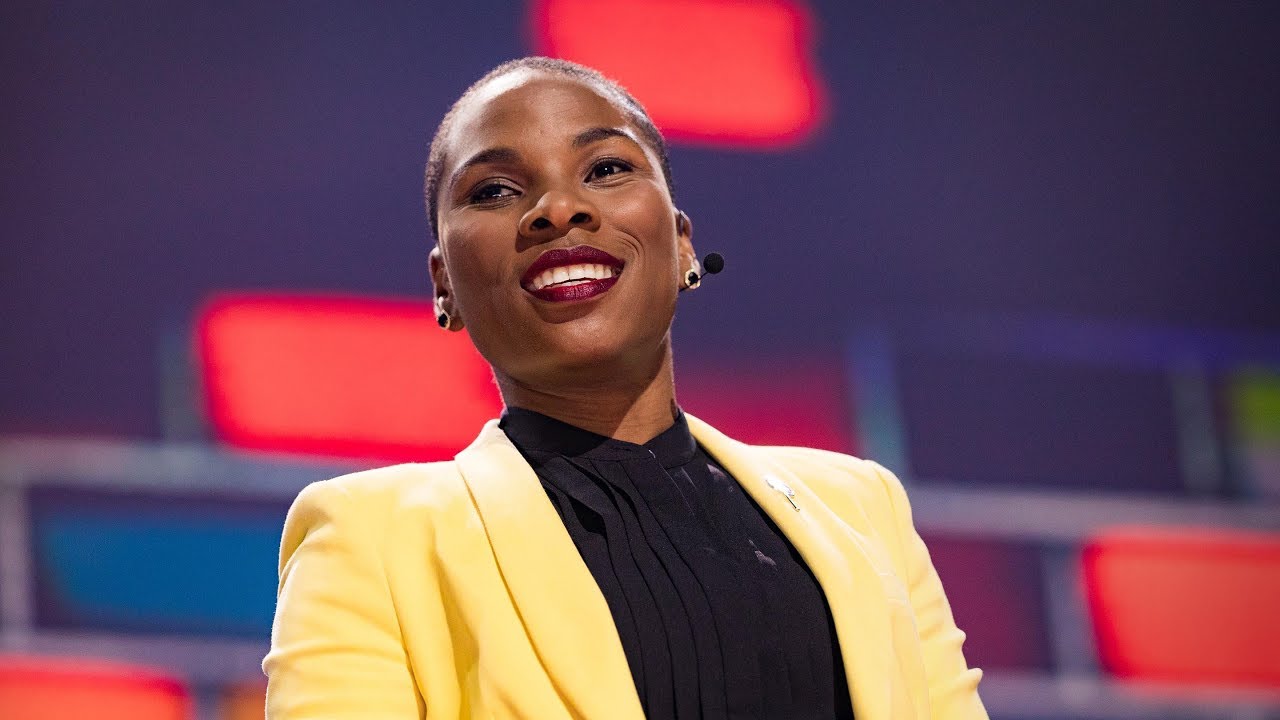
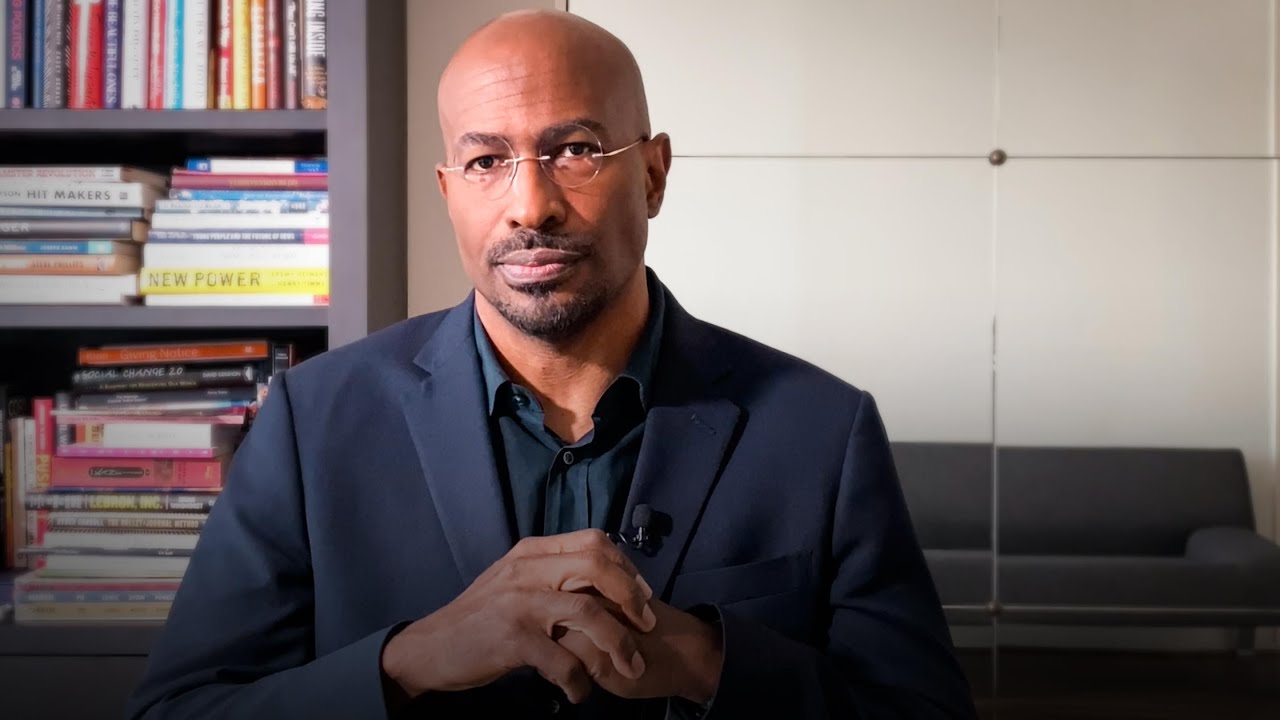
This special session from TED2026: All of Us brings together 11 speakers from around the world, each selected through TEDx-hosted Idea Search events. Now, they take the stage at our flagship conference in Vancouver, BC, Canada. Experience a full lineup of thought-provoking talks, along with unscripted moments that are sure to surprise and delight.
Hear from:
Joshua Johnson — Chicago, USA
Jessica Irwin — Sydney, Australia
Sukriti — Mumbai, India
Fiori Zafeiropoulou Fronimopoulou — Athens, Greece
Li Hongyi — Singapore
Gabriella Di Laccio — London, UK
Vincent Egoro — Lagos, Nigera
Joaquin Navajas — Buenos Aires, Argentina
Tim Cernak — Chicago, USA
Nelly Attar — Amman, Jordan
Reggie Watts
TED2026 is streaming live from Vancouver! Be one of the first to watch every talk from the full conference, as it happens — including some exclusive moments — with TED Live: https://tedlive.ted.com
Follow TED!
X: https://www.twitter.com/TEDTalks
Instagram: https://www.instagram.com/ted
Facebook: https://facebook.com/TED
LinkedIn: https://www.linkedin.com/company/ted-conferences
TikTok: https://www.tiktok.com/@tedtoks
The TED Talks channel features the best talks and performances from the TED Conference, where the world's leading thinkers and doers give the talk of their lives in 18 minutes (or less) — plus originals, podcasts and exclusive content. Look for videos on Technology, Entertainment and Design as well as science, business, global issues, the arts and more. Visit https://TED.com for our entire library, transcripts, translations and personalized recommendations.
https://youtube.com/live/6pITvnRpIvg
TED's videos may be used for non-commercial purposes under a Creative Commons License, Attribution–Non Commercial–No Derivatives (or the CC BY – NC – ND 4.0 International) and in accordance with our TED Talks Usage Policy: https://www.ted.com/about/our-organization/our-policies-terms/ted-talks-usage-policy. For more information on using TED for commercial purposes (e.g. employee learning, in a film or online course), please submit a Media Request at https://media-requests.ted.com
#TED2026 #TED #TEDTalks
Оглавление (23 сегментов)
Segment 1 (00:00 - 05:00)
I didn't see anything. Let's go to the Good morning y'all. Good morning everybody. Hi, I am Kelly Stzzel — and I am Kelly Shu and we are your hosts for this session, World Class Wonder. And hey, if y'all are watching in the loop or in Simocast, come on in the theater. We got some seats in here and this is the place to be right now. Um, so Kelly leads YouTube for TED and she just celebrated her first workversary here at TED, right? Go Kelly. Um, I'm a bit more of a veteran of this place. Um, and I haven't been on staff here for a few years, but I've also kind of never really left at the same time. Um, and you know, being here this week to me just really feels like being home. and Kelly and I got to team up recently and we went on this global search that led to the speakers for this session and we're so excited to share some of the people that we met with y'all today. So, Kelly and I went on a bit of a mission to find these speakers. We put out this global call for applicants and we partnered with nine TEDx teams all over the world. Together, we held these special idea search events in each of these countries to hear from finalists. And in the end, we chose one standout speaker from each city to come here to speak at this session. Yeah. I mean, each place we visited was like a portal into another TED universe. We saw these communities gathering around TED and TEDex, each with distinct culture and speakers with different lenses on how ideas can change their part of the world. And you know, we got to work with the most amazing TEDex teams in every single country that we visited. And these like some of these TEDex organizers and teams have been building their communities for many years. And these are people who like they come together and they gather and they get so excited to see each other every time there's event. And it's so much like what we're doing here this week and it's like it's happening all over the world literally. And then today this session is being live streamed on YouTube. So joining us for this session we have friends and family and TEDex communities from all the countries we visited. Plus there are watch parties happening right now in Japan, Mexico, Portugal, India, Italy, Taiwan and more. And then also our whole big global TED community is all like so many people watching from their homes today. And so we just want to say hi live stream friends. — Hi liveream. Enough from us. I think we should probably get going right Kelly. — Let's do it. Amazing. Our first speaker comes from our very first event at TEDx Chicago. He's a broadcast journalist and through his work, he's learned a thing or two about how to connect with others. Yes, all others, even during challenging times. So, y'all, let's please give a big giant warm welcome to Joshua
Segment 2 (05:00 - 10:00)
Johnson. Idiots. are everywhere. Some people drive you right up the wall with their opinions, their attitudes, their politics. I dealt with all kinds of people in my 20 plus years as a broadcast journalist. Eventually, I found moderating tough conversations with whatever kind of difficult people you just thought of kind of simple to do. Not easy, but simple. The trick is to go somewhere I know you'd rather not be closer. Distance makes things worse. I came up in public radio trained by old school journalists who taught me the art of neutrality. You neutralize your opinions, dead in your emotions, and you can get through most conversations without rolling your eyes. Generally, it worked and it built me a strong reputation for fairness. But when the subject matter felt personal, neutrality felt phony. I used to host a national talk show on NPR called 1A. And in one of our early programs, I interviewed a descendant of Confederate soldiers. He argued that Confederate monuments should be historically preserved. Now, as a black man, I felt enormous pressure to remain neutral, so I decided I was just going to focus on his arguments instead of on him. His logic felt kind of flimsy, and I called him on it. And eventually he just folded and he said, "It really doesn't matter what I say. " And the moment he said that, I knew I had failed. I may have had a point, but I missed a huge opportunity to really do my job. See, my neutrality allowed me to interrogate his beliefs, but the distance prevented me from seeing why he believed them. What if I had asked better questions? Like, who influenced you the most in forming these views? Or suppose we let all of these monuments and statues stand just as they are. What would that mean to you? Getting his story might have shown me him behind his canned arguments. Grilling him changed nothing. It felt pointless. When you consider someone problematic, there's a better way to deal with them, keep your sanity, and maybe even connect. And it sounds insane. Move closer. Not to embrace them, but to explore them like a doctor studying a sample. You need a microscope, not a telescope. Doctors actually helped me learn this way before I became a journalist. As a teenager, I was part of a summer program for future doctors. Clearly, it worked. And I found myself working with clinicians studying cancer and thrombosis and HIV, very serious conditions. I kind of naively expected them to be these crusading scientists, but they were just level-headed people doing their jobs. But there was a lesson in that level-headedness. See, I am not neutral about the cancers in our world. Bigotry, hoaxes, political violence. I want them gone. However, as a journalist, I often had to deal with them in my clinic on the air. I survived it by getting as close to those problems as I could and studying them like samples in a petri dish. In other words, I had to shift from neutrality to objectivity. And no, they're not the same. Objectivity is just when you park your emotions and learn without judgment. I don't have to like it. I'm just here to learn from it. Neutrality negates your opinions as if you have no judgments. Does anyone here omnous honestly believe I have no opinions on race right now? Notice I said park your opinions. When you park your car, you don't abandon it in the garage. You're coming back for it. So you can choose when to focus inward on what you think or outward on what you can learn. Of course, sometimes your car ain't where you left it. And maybe your opinions will move, too. That maybe is why objectivity feels so vulnerable. That's why it works. That vulnerability is a sign of openness. And a conversation that's not open is pointless. But if you can stay open, amazing things can happen. Another time on NPR, I was interviewing a former Baltimore police officer who had become this fiery advocate for law enforcement reform. And he was going on and on just a long rant in autopilot just and I was trying to stay objective and listening as best I could when I thought I heard his voice waver just a little. And in that waiver, I detected more than his rage. It sounded like trauma. So near the end of the interview, I mentioned hesitantly that he seemed
Segment 3 (10:00 - 15:00)
traumatized by his experiences as a cop. And could he reflect on that? He said, "I put people in prison cells who are better people than me. " Whoa. Sure enough, he went right back to his talking points. But it didn't matter cuz in that moment, that sliver of his story, his defenses dropped and he shifted from being right to being real. Look, some people are just difficult, but we can deal with them more simply. Here are three tips to get you started. First, get the story, particularly the key decisions and the turning points. What someone believes is not as important as how they chose to believe it. Second, my NPR host pro tip, keep your questions short. 10 seconds tops. Long questions can feel like a setup or like you're rambling. And third, use that mental microscope. Look as closely as you can. Remember, you don't have to like it, but learn from it. It is time to reconnect, even to the people you can't stand. But this time, we're going to make those connections count. You could learn a lot from an idiot, especially if you resolve never to act like one. I really appreciate y'all making time for me today. Thank you for listening. Bye, everybody. Thank you. Thank you so much, Joshua. Um, so we met our next speaker at TEDex Sydney, and let me tell you, the crowd went absolutely wild for this one. Jess is non-verbal and she is just a creative Swiss Army knife and she is working extremely hard to make sure all non-verbal people around the globe are heard. Let's please welcome Jessica Irwin. I am Jessica Owen and I have never spoken a single word in my life. Even to say my name, nor the vital word of stop. The truth is I have so much I would like to say. Many witty comebacks rolling around inside my head. Through typing on my communication device, I can express about 25% of what I want to say. The other 75% stays trapped inside my head for only me to hear. This happens every single day. Why is this? I have a level of cerebral pausy that means my mouth muscles simply won't allow me to physically talk. That is the sole reason. Let's focus on slowly sounding out the letter J. Did you feel your tongue on the back of your teeth as you sounded the letter out? I am unable to move my mouth and tongue that way. Which means the only way you can hear my intelligent thoughts and ideas is when I type them out for you on my communication device at the rapid speed of seven words per minute. The robotic voice outputs what I'm saying, but it doesn't express my quick wit. Or can it quickly express something in an emergency? Imagine seeing your little niece about to touch the hot stove. Gracie, stop. I am unable to quickly say those words. My only hope is that I can manage to push her over with love. Many non-verbal people spend a lot of time in hospitals. We enter a system that is brilliant at some things but untrained in hearing voices like ours. So, it becomes a place of fear. Many people in my situation can't physically use our communication devices when we are lying down. Our voices are suddenly not there. Imagine lying in a hospital bed with an injured hip with wounds and bone fractures and nurse comes up to your bed, bypasses your notes, and goes to roll you straight onto your injured hip. What can you do to prevent the extreme pain that you know is coming your way? Absolutely nothing. You can't say the single word stop. I mean you can start crying but you are on pain medication that has a side effect of irritability. This is misinterpreted by the nurse as the patient is just fussing because they don't want to roll. And your only option
Segment 4 (15:00 - 20:00)
is to brace for the extreme pain and take it like a non-verbal person. This is not hypothetical. It has been my horrifying reality. This is why I'm bringing communication training into hospitals. I don't want other patients to experience unnecessary pain. And here's the brilliant thing. This problem is solvable. All it takes is knowing one simple thing. Assume the patient is intelligent. Ask yes and no questions and ask them to look up for yes and look down for no. Let's try it together. If you're with me, look up for yes. Now look down for no. Awesome. Just like that, without a single spoken word, we've had a conversation. This also works for complex scenarios like, "Are you in pain? Do you want me to call someone? Can I examine where you are hurting? Can I run through the alphabet? " So you can spell out a word by looking up on the correct letter. Four simple steps, but they can save a life. Sometimes people ask me to squeeze their hand to signal yes. In my type of cerebral pausy, I have a high involuntary muscle grip. So my hand muscles will begin to involuntarily squeeze like a bear trap. You will be thinking, why isn't she letting go of my hand? and I will be thinking, "Bollocks, my hand won't let go. I'm stuck and they don't know. " It's hilarious sometimes. Here's the thing. Cerebral pausy is a brain injury. And when people hear the words brain damage, they automatically jump to intellectual impairment. But when somebody has brain damage, it should not mean their entire brain should be disregarded. My case affects movement, not intelligence. Being non-verbal doesn't mean we don't have opinions and knowledge to share. We often get loudly spoken down to and patted on the head because people just don't know how to approach us. So, here's a tip. Simply start a conversation with, "Hi, my name is and just let the conversation grow from there. " There's no need to talk loudly or slowly. speak to us like you would the person sitting next to you right now. Can you imagine patting them on the head? How weird would that be? And these head patters are likely the people to assume I'm the one with unusual behaviors. Look at our facial expressions and eye movements. Try humor to see if we laugh. If we do, that proves we can hear and understand you. observe whether we are typing on our communication device. Look for a digital screen in front of us. You hold the power to give someone back their voice. That is a beautiful thing. So whether you are a professor, doctor, nurse, or a future friend, please try to communicate. Remember, I'm so much more than my physical appearance. My name is Jessica Win. I am a photographer, artist, author, keynote speaker and a human being. I am just like you. Oh, thank you, Jess. So, we wanted to take a moment to tell you a little bit more about TEDex. So, from its beginnings in 2009, TEDex has done some truly incredible things and it's grown exponentially. Later this month, the TEDex community is set to host its 50,000th TEDex event. Yes, that is 50,000 TEDex event, right? Um the impact is astonishing. So that's nearly 260,000 talks in 124 languages viewed almost 9 billion times. Right? It's amazing. In a time when media companies are floundering and news organizations are struggling to figure out ways to report stories from around the world, the TEDex community is a shining example of just a very different
Segment 5 (20:00 - 25:00)
story. It's genuine community building from the ground up. It's this is communities by communities and for communities. And it's just a really beautiful reminder that a thirst for knowledge and curiosity are human traits that are shared around the world. So can we actually have any and all TEDex organizers, if you've ever been a TEDex organizer in this room in Simocast, stand up so we can see who you all are. And y'all please put your hands together and if you're in similar class, clap in there too because these guys put in an amazing effort. And then thank you so much everybody. — Shall we keep going, Kelly? — Yeah. — Um, so our experience in Mumbai at TEDex Gateway was just nothing short of magical. I mean, we heard from a rock balancer, a doctor that was developing solutions so corneas can heal themselves and a fire dancer. But we learned so much about India's influence from our next speaker that you just have to meet her yourselves. Let's please give a very warm welcome to Secreti. Seven minutes, seven outfit changes, and the 4,000year saga of how Indian fashion shaped world history. Get ready, folks. I'm your guide for this ride. I've spent nearly a decade researching and writing a book about this. So, buckle up and let's head back in time to 2000 BC, ancient Egypt. We see an Egyptian pharaoh getting dressed. That iconic black eyeliner, the gold headdress. But when the poor man rifles through his wardrobe, gh beige linens, brown wools, making him reach for his favorite fit from Gujarat, India. Cloudsoft, colorful, beautifully decorated cotton. Gujarat of course is part of the Indis Valley civilization. one of the earliest to cultivate cotton but also to imbue it with vivid dyes, intricate patterns. Till today, believe it or not, excavation into ancient Egyptian tombs keeps throwing up scraps of Gujarati cotton. But let's jet ahead to 77 AD and another grand old empire, ancient Rome. Papa, there is Commander Plenny stomping around the Pantheon, ranting to his army BFFs about India. Plenny growlingly calls India, get this, think of the world's gold. Because by now our cotton is so popular, its imports are draining the treasuries of even Rome. The Romans have nicknamed this woven wind. A clue. This is history before air conditioning when a breezy cotton would be just as coveted as rich silk. And India conveniently has mastered both. Exhibit B. Our magnificent silk tie-dye weave poll. If you don't know what poll is or how it's made, Google it and hold your job before it hits the floor because it takes a team working 12 hours a day, nearly a year to make this. And if one of us riff raff wore this in 15th century Indonesia, oh boy, we'd be chased by royal guards and stripped because in Malaysia, Thailand, Indonesia, only royalty wears poll. It's imported in for their most special sacred ceremonies. I spot a royal guard right here. So, let us flee across oceans, across time to the Caribbean. I wagan. You might recognize this as a festive or carnival dress of the Caribbean, but it is actually Madras checks from the south Indian town of Madras, present day Chennai. And you guys, you got to actually wear this to feel how special it is. Because unlike tartan, gingham, plaid, all of which are really thick and woolly or simple two-tonones, madras is a breezy rainbow. Little wonder then that when European traders bring this over to Africa and the Caribbean, our mates in maximalism, it's adopted by many as a national or ceremonial dress. Onward time traveler to America and the
Segment 6 (25:00 - 30:00)
wild west. We ride into a ranch farm clipclop spot a good old cowboy and one very familiar handkerchief around his neck. The all American bandana which comes from the Hindi word bandhana or bandi tie- dye. Yep. Bandanas were imported Indian tie- dye handkerchiefs. But I have another Yankee staple for y'all. The Dangari. Strange name, right? Dangari. Not for the town of Dongari. Back in my home state of Maharashtra, which first produced this rough and tough cotton weave, making the dungaree a staple for factory workers and soldiers worldwide. I have one more sear sucker. Maybe this is in your bed linens or your best suits. It's certainly a staple at Wimbledon and the US National Congress even celebrates Saka Thursday every June. Another Indian fabric. It literally comes from sir sakar milk and sugar because these stripes alternate between smooth and crinkled. A nifty little innovation meaning it'll never stick to your skin keeping you cool through the summers. And our final fabric for today is history's prettiest harbinger of destruction. Kalam curry. Literally art of the pen or paintbrush. These are all natural vegetable dyes that don't stick to fabric. So making this is a 23-step ordeal perfected by South Indian artisans. Wearing it is like draping yourself within a watercolor masterpiece. And guys, you actually know this fabric already as the English chintz because by 1680, the British East India Company is sailing home a million pieces of chintz every year. Chintz sweeps Britain, decorating nobility, royalty, people's entire homes. And like Rome, British Parliament is horrified at how much they're importing from India. Right? Unlike Rome, wy Britain asks one wy question. What would it take for Britain to make these Indian fabrics? You know, we forget today that the first products of the British industrial revolution were not cars, not weapons. Spinning jenny, flying shuttle, power loom. What took Indian hands 50,000 hours was made by British machines in 2000. Quality of these fabrics w. But are they cheaper, faster, and thanks to the whole empire exported everywhere? We lived on innovation. We nearly died off it. A nation that had dressed history from ancient Egypt through the industrial age teetering on extinction until one dude came along. I propose for your consideration today that Gandhi was a legit fashionista. He spun cotton at rallies, championed handmade fabrics like khadi and even put a spinning wheel at the very heart of the old Indian flag. Today in re-emerging India, our artisans are creating again and creating smarter. We fly every Gen Z green flag, organic fabrics, sustainable dyes, androgynous style. And already the Indian textile industry is the second largest employer in the nation, a huge employer of women. And boy am I excited because we are the clothes that dressed pharaohs and Caesars. Clothes that launched a thousand ships. Clothes that spawned the very words you use today. And I cannot wait to see how we reshape history. Thank you, Sukiti. So, our event in Mumbai where we met Sukiti was extra special because uh an amazing group of TED fellows from across India came and joined us there. And the TED fellows program is this group of over 500 incredible innovators from more than a hundred different countries. Um, and they're supported by TED across the arc of their careers. And so, first we're gonna hear from Lily James Olds
Segment 7 (30:00 - 35:00)
who leads that program. And then after Lily, we're going to hear from TED's uh, chief program and strategy officer, Monique Ruff Bell, with some fun news and things to look out for TED 2027. Over to you, Lily. — Thanks, Kelly. So, a close mentor of mine died uh a couple years ago and she spent the end of her life trying to bring back a word from the 1500s. Respair, meaning the return of hope from a period of despair. She thought we'd lost it and needed it back. What is irreplaceable about human beings? What do we do that cannot be automated or optimized? I spend my days trying to answer this question by finding people who live it. This year from a rigorous global application process, we selected 10 fellows. These are immunologists and mayors, ethicists and inventors, technologists and choreographers. What they share is harder to name than a job title. It's a quality of attention. It's a refusal to accept that things must be this way. And it's a commitment to the possible over the probable. These are the people doing the hard specific work that the big questions require. They fill me with resp. It is my great privilege to introduce your 2026 TED Bellows. Joining more than 500 artists, inventors, dreamers, builders, founders. Please welcome our 10 TED tech fellows for 2026. All building a better future. This immunologist is developing vaccines and drugs for emerging viruses. This technologist developed systems to preserve and verify millions of images, videos, and other media documenting human rights abuses. By reviving donated human organs that cannot be transplanted, this biomedical innovator is turning them into powerful research tools. This philosopher and AI ethicist urges stronger privacy protection, warning the public about our over reliance on prediction. Using music as a tool for social political resilience, this cultural activist and composer offers space for underrepresented and diaspora people to unify and thrive. This biotechnologist and mosquito enthusiast studies their behavior to deepen our understanding and prevent harmful disease. Leading California's public banking movement, she's redirecting funds from big banks back into communities. Japan's youngest ever mayor is sparking a new wave of young leaders in government. This dancer choreographer combines powerful social dance styles with contemporary choreography. And me, I co-created gravity-free manufacturing to make impactful products faster, smarter, and more sustainably. Let's build a better future. Isn't that an amazing cohort? Good morning everyone. I'm up here just for a few minutes, not housekeeping, to share some updates on some upcoming events for TED. First, we're going to start off with TED AI Vienna. It is back for its third year and it's taking place, yes, October 28th to the 30th. And if you are looking for more of a deep dive on the AI topic, it's not just about technology, but how we create, how we connect, and how we work. So, it's going to be an amazing event. So, if you are interested, you can find more information on conferences. ted. com. And now to give you a little bit more update about San Diego. I know you've heard San Diego a hundred times during the week and it is my job to get you excited about this transition. And so in conjunction planning TED 2026, we have been also planning TED 2027 at the same time. So over a year, our team and I have been on the ground in
Segment 8 (35:00 - 40:00)
San Diego meeting with venues, meeting with new vendors, meeting with partners, and we are super excited of what we're planning. The creativity is just bursting out of us. And so we wanted to share next year's dates. San Diego TED 2027 San Diego will be taking place March 1st through the 4th. Now, you might notice a little change about the date. Basically, we are moving it outside of April because, hey, we hear a lot about school breaks and all of that good stuff. So, we were able to get different dates, but also you might notice that it is 4 days. And so, what happens is during our conference week, you have two half-day bookends. We start off with pretty much of a half day at the beginning of the week and we end with a half day at the end of the week with three robust days in the middle. And so we've decided it just makes a little bit more sense if we optimize your time and just do full four days in San Diego. So that is just one of the changes that you will see. We will have absolutely the same wonderful great mainstage program, a bunch of discovery sessions, activities, brain dates, and of course parties. But we also have an opportunity to refresh some formats to take you outside a little bit more since the weather hopefully is going to be a little bit better for you. Um, and give you different activities where we can integrate you into the destination. We have met with civic leaders, organizations, and tsters who are based in San Diego to help us reimag what we can bring to you to make this next year even better than ever. Um, so registration is actually open now for San Diego. You know, with us going back and forth, we've been creating quite a buzz in the region about TED moving to San Diego. As you know, we started in California, came here for 11 years, and we're going back. And so, there's been a lot of buzz. So, we want to exclusively open registration just for you right now before we do public registration in May. So, you will get an email about where you can register. You can go to the check-in desk to register. There is a registration link in the TED Connect app as well. And if you decide you want to register early, we have a little TED gift for you. to get you ready for that move to San Diego. Um, so please if you have any questions, comments or anything, you can always ask me, ask or go to the info hub to get more information. Now, before I walk off this stage, I want to tell you a little bit about tonight. You know, we know how to throw epic parties. And so, you know, a few years ago, we decided to build a house and give you a house party. After that, we brought the circus to you. Last year, we took you to space. And this year, my friends, are you ready for this? You're about to go to Tedella. So, it takes place right in this building on the ground floor. We have something epic. We have to throw the epic party for our last year in Vancouver. So, I truly hope you're ready. Thank you, everyone. If you have any questions, let me know. Thank you, Monique and Lily, and fellows. Um, so we met our next speaker in Athens where she's um the third generation in her family to run a fashion factory. Um, but she was not okay with just doing things the way they've always been done. And she's built an operation that I think can really inspire us all. Please welcome Fiori Zafira Pulu from Pulu. Imagine the most exciting building in your city. is not a museum, not a mall, not a tank campus, but a factory. For most of the last century, we have been building our cities under one assumption that factories should be far away from us, out of sight, outside the city, hidden behind distance, logistics, and somebody else's labor. I believe in the age of AI, we might want a new type of factory back. Not the old factory, not the dirty one. The old system hid exploitation and spread waste across distance. I'm not saying bring exploitation back home. That is not my
Segment 9 (40:00 - 45:00)
dream. Through my work as a senior researcher and a social entrepreneur trying to reinvent manufacturing and global supply chains, my dream is this. Imagine a living campus in a historic building in your city. A factory that is also a public space. Makers nights, school and family visits, community showcases. Through the glass you see the R& D studio, small batch lines, robotics, AI, 3D knitting machines where a sneaker can be modeled in the morning and knitted for running by the afternoon. upstairs. Education and training throughout transparency labels linking stories with people, not just products. I'm talking about fashion, but I could be really talking about electronics, food, cars, medicine. Anywhere we have hidden the making from the people it is made for. This is the factory of the future where science meets technology and the arts. Not a place that produces just objects, but citizens and meaningful jobs. For the last 12 years, we have been building this in Athens, the social fashion factory, Sofa. One of the clearest examples, a fashion brand handed us its unsold items instead of discarding them. So, on a table sat five women that would never normally work together, a fashion designer on her first job, a an experienced pattern maker, a migrant tailoring technician still in training, a seamstress, survivor of modern slavery, and me asking one question. Can all clothes bloom again? And the answer was the bloomer. 16. One of a kind items. One saw shape. Another saw structure. Another saw hidden potential in the textile. Another brought mastery at the final making. What looked like leftover stock became luxury with a second life. People think AI in factories and they imagine fewer humans, less meaning, fear. I imagine the opposite. AI lets machines do the repetitive work while humans do what we do best. Interpret, collaborate, care, create, improve. In the old system, humans had to adapt to machines. In the new system, machines adapt to human imagination. And to be clear, this is not a beautiful workshop model. Garments are one side of the story. Sneakers are different. They are one of the hardest everyday products to bring back locally and that is exactly why they matter. They force us to use robotics, AI, 3D knitting, digital traceability, not as decorative but as tools to make nearshore manufacturing possible because making is not just economics. Making is sovereignty. Another part of the factory began with a hiring choice. I wanted inclusive employment building the model from the beginning. So I started working with women rebuilding their lives after violence, trafficking and forced displacement. To integrate they were asked to leave part of themselves behind their language, their stories, their memories, even their sense of beauty. What if integration did not start with erasure? What if integration began with authorship? That question became where your origins. The hidden faces behind our clothes should not stay hidden. Women that have lived through violence, reinvention, migration should not be beneficiaries of fashion. They should be authors of it. One of these girls, I will call her Alithia. It's the Greek word for truth. She came to Greece from Congo as a teenager. As a child, she was forced into marriage, then trafficked. She arrived pregnant, survived, gave birth, and started rebuilding her life. When we interviewed her, she said, "To me, freedom is everything. Freedom is a luxury. " She was paired with a Greek fashion designer, Vasiliki. What connected them in the beginning was not design, it was motherhood. That share recognition became trust. Together they created a collection called viv li live free. In the old system Althia would be seen only as invisible labor. In the new system she becomes co-creator, storyteller, cultural source, income generator from
Segment 10 (45:00 - 50:00)
the income she helped from the uh products she helped bring into the world. Because the opposite of exploitation is not employment. agency. So the future is not a giant building, a giant factory. It's a constellation of local hubs closing the loop where people live. And none of this happens alone. It grows where people and fashion revolutionaries around the globe ask one simple question. Who made my clothes? and then ask what would it take for my city to deserve a factory like this? If the 20th century scaled extraction, the 21st century can scale belonging. Factories don't have to be places hide, they can be places cities love. AI is the loom. Community is the wiver. Let's become all of us makers again. Thank you. Thank you, Fiori. So, our next speaker comes to us from Singapore and he's worked in the Singaporean government for many years. As many of us know, many governments work have that topdown approach, but he is fighting to do something radically different. Let's please welcome Lie Hong Yi. When you think about government, what do you think of? Big, slow, bureaucratic. Most of all, you probably think of frustration. A website yet that didn't work. A form you had to fill in for the third time. or some process you got stuck in for weeks because of some stupid rule that just didn't make sense. You probably know somebody who swears they will never work in government and without asking another question, you know exactly what they mean. But what if it didn't have to be that way? A few years ago, I started an experimental team in the Singapore government. The idea was simple. Instead of the usual top- down decision-m, we build small teams of skilled practitioners and empower them to seek out and solve problems all across the public sector. The way this works is that every year for the month of January, we put aside all non-critical work. We go on field trips to schools, hospitals, meet social workers to understand their problems and prototype solutions. At the end of the month, we see which projects are the most promising and we spend the rest of the year bringing them to launch. You see, the problem we're trying to solve that government's traditionally based on a military structure, top-down central decision-m optimized for command and control. It's designed for a small group of people to set direction and for everyone else to align quickly and consistently. Now, this is great if you already know what you need to do and just need to execute. It's not so great if you need to figure out what needs to be done. You see, with central decision-m, you end up with an intellectual traffic jam. Ideas get stuck as they flow towards the center, waiting for attention from people with not enough time and even less context. You literally run out of brain power. So even if something gets enough political attention to get pushed through, well, that just means everything else gets pushed aside. This is why government can do billion-dollar construction projects but still has to keep asking you for your birthday. When decision makers are overloaded, you can make the government bigger. It's really hard to make it better. See, the limit is not money or even political will. It's our ability to pay attention. If you have a lot of problems to solve, you need the creativity and initiative of a lot of people. This is the opposite of command and control. So, we need to approach this from the opposite direction. What if instead of a top- down structure, we design government from the bottom up? Small teams close to the ground getting things done instead of waiting for instruction. Rather than giving orders, leaders focus on supporting with resources and connections to help people take ownership. This increases our intellectual surface area, giving us more ability to pay attention, build expertise, and solve problems. So that's my theory. How well does it work in practice? Well, one year a team visited a fire station and saw how firefighters spent so much time every day just taking inventory of their fire trucks. They had these big paper log books that they carry around, you know, while they check their equipment. So, we built a simple app that let them do this more easily on their phones. It's now being used by all the fire stations in Singapore, and it saves thousands of man hours every month that would otherwise been wasted, literally ticking things off on paper.
Segment 11 (50:00 - 55:00)
Another year, a team met with some social workers and learned that for every hour they met with a client, they had to spend another whole hour just typing up their case notes. So, we built a tool for them that doesn't just transcribe conversations, but automatically generates usable case reports. Another team worked with ER doctors to implement a Q management system. By intelligently prioritizing cases, we're reducing emergency room wait times by 20%. So far, we've done over 40 different projects. Each of them an example of a small but important problem that would have likely never gotten the attention it needed. They required solving tech, design, policy, and operation problems all at once to address real pain points faced by real people. Similar government projects normally take years and cost tens of millions of dollars. We're able to consistently launch new systems in just six months with teams of just five people. As citizens, we spend so much time arguing over what we want government to do. What we need to be doing is fixing how it works. Government does not have to be the gatekeeper of the public domain. It should be the means by which we empower each other to take on problems that we cannot solve alone. When we remove the intellectual bottleneck, not only do we get more ideas than any leader could come up with, but each problem gets the attention it needs to actually get fixed. Because this worked for government offices, we decided to try opening up to the public. And we honestly weren't sure if anyone would be interested because after all, why would private citizens care about the public good? Well, we got hundreds of applications, hundreds of ideas, machine learning to predict the best time for beach cleanups, tools to help senior citizens stay connected with their community, a system to track wildlife populations using AI to screen audio recordings. For a tiny fraction of what a single government project would normally cost, we gave Singaporeans a way to not only express what they cared about, but a way to take action on it. People want to do this. It turns out there's something really natural about wanting to do good. I think all of us here want to do something meaningful with our lives. We just need the opportunity. Government is frustrating because of how much better we wish it could be. It seems like no matter how hard we try, we get stuck expecting more and more from a system already choked by the scale of its responsibilities. The world is getting very complicated and if we don't take a different approach, governments will fall behind and everything we're building together will slowly fall apart. But it doesn't have to be this way. Government can be less about control and more about empowering more people to do good. We can increase our intellectual surface area by pushing for better structures, bringing visibility to problems, and taking action where we can to solve the challenges we can see. We can have a society that's not limited by the attention of its leaders, but one that is driven by the imagination of its people. Thank you. So, our next speaker is an award-winning soprano from Brazil, but we met her where she lives now in London. She's here to share some discoveries she knows to make all of our music listening lives a little bit richer. Let's please give a very warm welcome to Gabriella Dilro. This song is almost 900 years old. It was written by Contessa Deia, a poet and composer from medieval southern France. It is the only surviving melody written by a woman from that entire tradition. So, let me start with the question, who decides which voices survive?
Segment 12 (55:00 - 60:00)
I never really thought about that until a few years ago when I was walking on a secondhand bookmark in London and I found an encyclopedia that listed 6,000 women composers in the history of music. I could not believe it because at that time I think I could name five. But as soon I started looking into their names and listening to this incredible music, I kid you not, I would not shut up. Well, I haven't shut up. I'm hearing and I just were sharing this music with everybody all the time. In fact, please allow me. You can I mean, can you believe that? Did you hear all the classical strings, the afroamerican dances mixed with the romantic music? Well, welcome to my husband's life in 2018. Now, my husband, he's a railway engineer, which means he's now the railway engineer who knows the most about women composers in the whole world. I know it's not a very competitive field, but still. So one day, one day he said to me, "Look, it's very nice that you're playing this music by these women at breakfast for like I don't know a year now, but you do understand that nothing is going to happen if you just tell me. I'm an engineer, so are you going to do something or what? " And I was like, "Fair enough. " So I did. I made a list of these incredible women. I put it online and within months, women from all over the world, they start writing to me. And they said, "Thank you so much for what you're doing. I'm a composer. Could you please add me to your list? And I tell you, this list continues to grow. It is now a foundation, and we are now uncovering over 18,000 women composers in the history of music. Now, this story makes absolutely no sense. I'm a professional musician. How is it possible that I spent my life training and performing without hearing about thousands of women who wrote beautiful music? Well, when I started doing my own research and I came across the data, then it became clearer because it turns out that nearly 90% of the music we hear across genres is written by men. That's a very big gap. Can you all imagine all the amazing music we've been all missing all this time? But also that AI is now learning from that same silence on one platform. Only more than 50,000 AI generated tracks are added every single day. The systems can only learn from the data available to them. But right now that data is missing half of humanity's creativity. Now I believe musicians should be writing music, not machines. There are millions of talented people who can do that. Writing music fills our soul as well as humans. And to generate music from artists work without their consent or proper remuneration is wrong. But the technology is here to stay. So let's make sure all voices are heard. Right? So how do we do that? It's actually quite easy. We must record the missing voices. the historical ones but also the current ones who are not represented because a recording makes this m music searchable, teachable and part of the systems shaping what the world will hear next. It brings this music to classrooms, to radio stations, to streaming platforms so everybody in this room can play and share it. So here's my invitation. What if every tech company making AI music and anyone profiting from it would invest in making our musical catalog more complete. Can you imagine what get her? What gets heard? It is chosen and those choices will shape what the future will remember. So who decides which voices survive now more than ever? We do.
Segment 13 (60:00 - 65:00)
And I want to leave you all with one woman's story. Ilber was a poet, a singer who was imprisoned in the ghetto of theat during the second world war with her family. As she was there, she didn't write symphonies, but she wrote songs to entertain the elderly and the children. That's the power of music and that was the gift of one woman. She and her son sadly died in Avitz but her husband buried her manuscripts under a tool shed and because of that a few of her songs survived. This one is a laabi. It's called vigala va vit. So you seem green and rich deep. Artificial intelligence is learning. Let's teach it to remember the sounds of all of us. Thank you. Thank you, Gabriella. And y'all, Gabriella made us a playlist. Can we get that QR code up? Um, I think it's Spotify. You can snap that. If you don't capture it right now, I believe it's going to be in your newsletter that you get tomorrow morning, too. Um, but enjoy some female composed goodness. And now on to Nigeria where we met our next speaker. Um he's been working for many years on the energy transition across the African continent. And he has seen um that some of the solutions on the ground while wellconceived well well-intentioned and even wellconceived have real obstacles that prevent them from succeeding as they should. He's here to share his observations and a solution that scales. Please welcome Vincent Igoro. For 5 years at university, I studied by candle light because the diesel generator powering our campus shut down at 1000 p. m. every night. That experience shaped how I see energy. Energy determines whether people can study, run businesses, refrigerate vaccines, irrigate crops, or even imagine a different future. Fast forward to today, I am head of Africa region at Resource Justice Network and I work across more than 30 countries helping communities navigate the shift towards clean energy systems. As I travel across the continent, I've seen something extraordinary. Solar mini grids are lighting up villages that never had electricity. distributed renewable systems are reached in places where traditional power grids never reached. There is just one problem. When these systems start to wear down or break, very few people know how to fix them, which means people turn back to fossil energy instead of waiting for a repair that is not coming. Take Sum in Namibia. A solar mini grid powers homes, a clinic, a school, and small businesses. Now, for a community that once relied on
Segment 14 (65:00 - 70:00)
candles and kerosene, this is a real transformation. But a few years after installation, while the system was still running, it wasn't as healthy as it once was. Batteries overheat as temperatures reach 48 degrees C, leading to a declining solar output. Across Africa, this slow drift to failure repeats. But the most revealing evidence came from my home country, Nigeria. Visiting five states, we tracked 106 solar projects valued at over $6 million US. Just two years after installation, nearly four out of every 10 had already degraded or stopped working. So we asked what is the issue? The issue is there was no one responsible for maintenance. So when the infrastructure broke, it remained broken. You see, we invest in hardware while ignoring the operational ecosystem needed to keep the hardware alive. And that led to a realization that project success is not about the hardware. In Nasarawa state, Nigeria, I saw many grids that actually worked. Not because the technology was better, but because they solved the maintenance problem before the system was switched on and they didn't have to re uh rely on external specialists. They built the system so it could be maintained by the people already in the communities. So when something fails, it is detected early and someone nearby already has the skills and the ability to fix it. So the mini grid becomes part of a maintenance ecosystem and solar is no longer a product that you drop into a village, but it becomes a service that stays alive. And this leads to the real solution that I think is not talked about enough when we have conversations about energy transition. Africa doesn't need another training program or a pilot project or technology. We need to make renewable energy systems repable within the repair economies that already exist across Africa. Millions of people already know how to keep machines alive. We've got electricians, repairmen, technicians. But the knowledge to repair renewable systems is scattered. So the mechanism is simple. Standardize that knowledge, make it accessible and embedded within the trades that already exist. So electricians diagnose faults and technicians fix these systems and this way renewable energy becomes something that ordinary people can maintain. What's been missing is a connection between the repair economies and renewable energy systems. Once that connection is made, renewable energy in Africa will no longer be an experiment but become a real infrastructure. Yes, I do agree that the energy transition is about installing technology and it is also about ensuring that societies know how to keep that technology alive because the energy transition is a repair transition. And in the end, the most important component in a power system is not the panels on the roof or the battery in the room. It is a person with the tools and the knowledge to keep that system alive because people are the power plant. Thank you.
Segment 15 (70:00 - 75:00)
Our event in Argentina was held in this prop storage warehouse for the very iconic Cologne Theater in Buenes Aris. and we were so excited to meet our next speaker there. He's a behavioral scientist who's studying how groups think, learn, and decide and how that relates to political polarization. Some of his recent research has recently surprised him, and he's here to tell us more. Let's please welcome Navajas. There's an argument that people who oppose democracy often use. They say that democracy should be the rule of the many, but instead is ignorant and irrational. The thing is that in times where polarization is making everyone politically more extreme and biased, arguments like this one don't sound so crazy anymore. Right? I'm a behavioral scientist and I study how groups think and make judgments together. In my work, I try to reduce polarization by bringing people together, asking them to deliberate, find common ground, and ideally reach consensus. So, you know, next time your family dinner gets a little bit heated, call me. It could be fun. Well, the thing is that polarization seems like one of the big problems of our time. But what if we are barking up the wrong tree? What if polarization actually brings some benefits to democracy? I know it sounds strange, but let me try to convince you. And to do that, I want to tell you a story. In 1906, a British scientist called Sir Francis Galton believed that democracy was doomed because too many people were ignorant according to him in political matters. So he decided to test how popular judgments were made. In his study, 800 people at the country tried to guess the weight of an ox. Each person was far off. No surprise. They were as wrong as any of us would be. But when he averaged all their guesses, the answer was almost exactly right. Without meaning to, he demonstrated something that today we call the wisdom of the crowd. the idea that people can be wrong at the individual level but collectively wise. Galton even had to admit in his paper that democracy is more powerful than what he initially thought because the so-called rule of the ignorant, well, it's actually surprisingly good. But when I first learned about the wisdom of the crowd, I thought that this analogy with democracy was too optimistic. We never are a single crowd converging to the truth. Most of the times because of polarization, we look like two different crowds. Each one living in completely different realities. So I decided to run my own experiment. Only that this time instead of asking about the weight of an ox, a little secret, it's an animal that's hard to find in the city of Wenocidis. Um I try with a different question. How many jelly beans are there in a jar? But I added a twist. I framed the question so that half of the crowd would believe that there were too few and the other half many. In other words, I created a perfectly polarized crowd with no moderates left in the room. My plan was to show that polarization obviously kills the wisdom of the crowd and destroys collective intelligence. I was already seeing the headlines. But I was completely wrong. When I combined both groups, the too few and the too many, the average was closer to the truth than any non-polarized crowd. This preliminary finding ended up informing a larger set of studies where I replicated this result across four different contexts and dozens of questions. Same effect every time. And there's a reason for that. The wisdom of the crowds needs diversity to work so that different errors will cancel out. And when people move towards extremes, the crowd as a whole becomes more diverse. So the collective mind of a divided crowd turns out to be wiser than that of a united one. And this means that there are certain aspects of opinion polarization that might not be as bad as we think. In fact, political scientists have long noted that with a healthy dose of polarization, some good things happen. Citizens become more engaged and their choices become clearer.
Segment 16 (75:00 - 80:00)
Now, some of you in the audience may rightfully tell me, you are missing something. A disagreement about jelly beans is hardly the same as a fight about abortion, healthcare, or immigration. And because of that, well, now your two little crowds, they hate each other. And that's real. That's an excellent point, but one that is at the core of my own argument, which is that polarization alone doesn't break a democracy. But what does break a democracy is polarization combined with political violence. And that happens when we no longer see the centers as opponents, but as enemies, people who don't deserve rights, dignity, or even life. And here's the key point. Political violence doesn't only happen in divided countries. It also happens in places where there is seemingly no polarization because disagreement is simply not allowed. And my country unfortunately learned that lesson the hard way. 50 years ago, there was a military coup that led to the deadliest dictatorship in the history of Argentina. Imagine this. Thousands of families searching for their loved ones who never came back. So believe me when I tell you that yes, polarization might be messy. It might even be a complete disaster. But this is still much better than the silence of repression. So in these moments of uncertainty and unrest, let's try to focus on the most urgent problem, the violence, and let us all build democracies that embrace disagreement, even polarize disagreement, and lead us all to collective wisdom. Thank you so much. Okay, so now I have to shout out another amazing TEDex I mean not TEDex another amazing TED community. Um when we were in Buenos Aris where we met Waqin um we worked with the incredible TEDx Rio de la Plata team there and we got to hear about what they are doing with TED in Argentina and they have gotten TED into over 2,000 schools in the country there which is pretty amazing and the thing is that TED and student talks are happening all across the world and that is down to this guy and his amazing team um he first got involved with TED as a TED fellow himself and now he is TED's head of learning and education and he's working on something pretty cool. Logan, over to you. Thanks. Hey everybody. Thanks. Um so I'm going to get to show you some awesome pictures of that uh incredible adoption of TED in Argentina in a moment. Okay, here we go. So, in between the incredible talks in this session, you've gotten to hear a little bit more about TED fellows and the TED X program. And I'm here to tell you a little bit more about TED's youth and education initiative, TED, and the amazing work that my team does. But before I do, I actually want to tell you uh how much those first two programs I mentioned mean to me. As Kelly mentioned, I was lucky to be part of the inaugural TED Fellows class in 2009. Uh if you were in Long Beach that year, uh you saw Darius and I on stage. Um and I also was able to be a co-organizer for TEDx Jackson Hole in the very early days of TEDex uh in 2010. And it was through those communities that I was actually able to pitch TED to TED. And that opportunity, access to those communities changed the trajectory of my life. And I think that's what we really want you to take away from this session today. Not that my life was changed, but that this statement can be true for anyone anywhere and especially for young people. In essence, this is what TED tries to do for educators and learners throughout the world. And this is how we do it. I don't have time to go into each of our free highquality offerings. I don't have time to go into depth for each of our free high-quality offerings today, but I'll give you the headlines for each. My team create has created 1,700
Segment 17 (80:00 - 85:00)
TED animations to date. Their original animated video, each with an expert, an animator, a voice actor, a sound effects artist, a musician. Those 1,700 videos have been viewed by learners over six billion times. Uh just last year in 2025, students spent over two millennia watching TED videos. Um, over two million Thank you. That's for my team. Uh, over two million people, uh, sorry, over two million students have learned invaluable, uh, presentation literacy skills and gotten public speaking experience, a critical skill, uh, through our student talks program. And over 50,000 educators throughout the world have received highquality free professional development from TED over the past few years. And that last program, by the way, is poised for massive scale in the coming months. So watch that space. But do these offerings change lives? This is in Argentina. Over 20% of the schools in Argentina have fully integrated TED into their curriculum. How life-changing do you think an event like this and everything that leads up to it is for the students and educators you see in this picture? How about for the students and educators who made that event even bigger the next year and even bigger the year after that? This is a TED ed hub in Bangkok, Thailand. It's attended Yep. It's attended by uh multiple districts every year. And these are the awesome high school students who made it happen. What doors might their participation in the TED community have opened in their future? This is a shot from our for students by students event at our New York City theater. The talks recorded of student ideas at this event have been viewed by millions on TED. com. In many cases, their lives changed overnight. And this is a shot from a Title One school district just outside of San Diego called Elcohone. Shout out to David Miaro if you're here. Um, Elkahon has been filling stadiums around student ideas for over a decade using TED. And you'll get to ask them whether this program impacted their lives when you meet some of the alumni and current participants at TED uh 27 in San Diego. Before then, you can ask any of the millions of educators and learners who are participating and who have fully integrated TED into their classes, schools, districts, and educational organizations in over 130 countries throughout the world. TED is used by learners and teachers over two million times a day and by hundreds of millions of unique learners and educators every year. I hope that you want to learn more about the TED animations and the student talks and the educator talks that I briefly mentioned. And if you do, I'm excited to tell you that my team has made two really awesome videos that will be looping in the simo casts in between the sessions. So, grab a friend, sit in front of the sim one of the TVs in between the session and learn a little bit more about TED. And as you watch those videos, please keep this in mind. By simply being here and supporting the TED community, you're making this incredible community more accessible to students and educators everywhere. And we truly believe actually we know that can change everything. And I hope you know that now too. Thank you. Thank you so much, Logan. That is just the coolest thing ever. Um, so earlier in the session, we heard from Joshua from Chicago. Yes. Well, guess what? There was another speaker in Chicago whose idea we just could not get out of our heads since we heard him. He is a chemist and he is pioneering a whole new field that will bring us new tools for the fight against extinction. No big deal here. Let's all please welcome Tim Cernac. Somewhere right now a sea turtle is dying of cancer. Strange thing, isn't it? Here we are living in the greatest era of medicine in human history, but we're also living through a biodiversity crisis.
Segment 18 (85:00 - 90:00)
I'm here today to talk about a new field called conservation chemistry where we imagine we could make medicine so fast as to prevent the extinction of endangered species. Well, I am a chemist. When I got to organic chemistry in uh college, I was like, that's it. I just want to draw these hexagons for the rest of my life. And uh since then I've enjoyed a career in big pharma, biotech and academia. Worked in Alzheimer's, infectious diseases, heart failure, and cancer. Seen a transformation of the speed with which we invent medicines spurred on first by genomics, then by robotics, today by artificial intelligence. We live in a golden era of medicine. So when I learned that cancer is the primary reason sea turtles get stranded on the beach in America today, I was shocked. Two years ago, I met Bellatrix, a sea turtle just riddled in tumors. For a creature in this condition, there's really few options other than surgery. I run a drug discovery lab where we hunt for disease targets that we could match winning medicines to. I show one of them here. The cool thing is that this is a protein from sea turtle cancer. Using modern protein folding AI, I'm able to look at what that looks like and plug in all the tools of modern drug discovery. But sadly, it doesn't end with sea turtles. We recently lost more than 95% of elephant seal pups in Argentina to aven flu. And the greatest pandemic this planet has ever known is happening right now. It's a fungal infection called kitrit. It has driven the extinction of hundreds of frog species already. These are hard realities of the modern world, but we can fight back. Here's what that frog fungus looks like under the microscope. It's bizarre. It swims totally alien in the fungal kingdom. In my lab, we're getting really good at killing this scourge. The cool thing is that we're optimizing the medicine specifically for frog patients. They were always the intended patient from the beginning. There's really few chemists who are approaching endangered species in this way. So, the opportunities to make an impact are enormous. When I met Pebbles, the Hila monster, she had already lost about 30% of her body weight. She was infected with a parasite called cryptosperidium. And for a reptile, crypto is basically a death sentence. There's no treatment. And yet, you know those weight loss drugs you keep hearing about on TV? You know the ones. The first one came from the saliva of a Hila monster. How is it that we built a multi-billion dollar pharmaceutical empire on the biology of this animal, but for Pebbles, there was nothing? Well, my lab hopped into action and from the creature conservancy, the wildlife rescue center that cares for pebbles, we received a very generous gift of hila monster poop and from it extracted the parasite. I show you here the first electron microraph of cryptosperidium verani. It's a truly bizarre parasite. You cannot kill this thing with bleach. Pebbles's body weight just kept going down. So, we had to do something. My lab built an AI agent that could scour the entire medicinal literature trying to find a molecule that might be relevant to this situation. And the one that popped out was called peromy. In the lab in a test tube, we mixed the parasite and peromy and obtained this image. And as you can see, we have abused this bug. Its protective layer is dissolving. Its insides are exploding. Within days, the creature conservancy started pebbles on a treatment of peromy. And I'm very happy to report that following this treatment, she tested negative for the disease. She stopped regurgitating her food and put on most of the body weight she had lost. She's now stable. Well, Pebbles has been in remission for a full year now, and this has convinced me. Chemists can be first responders in the fight against extinction. The tools, the ethics, the logistics of this, it's all been laid out by the conservation biologists of the past 40 years. It has brought back pandas and rhinos from the brink of extinction. Conservation chemistry is just about taking a molecular view. And today's modern tools for precision medicine, they don't care if your patient has two legs, four legs, feathers, or a shell. So, let's put them to work. In my lab today, we're
Segment 19 (90:00 - 95:00)
developing precision antivirals for raptors with aven flu. Selective insecticides to wipe out the sapsucking invasive insect that is taking out the state tree of Pennsylvania, the majestic hemlock. And for the Panameanian golden frog, an animal last seen in the wild in 2009 but kept alive in zoos as a ray of hope, we've discovered exquisitly potent antifungals and are today optimizing them uh for frogs as patients. Because we are living in a golden era of medicine, but we are also living through a mass extinction. Conservation chemistry is what happens when you refuse to accept both at the same time. We are getting so good at developing new cancer medicines. Maybe one of them could be helpful to little guys like this so that they don't have to suffer the same fate as Bellatrix the sea turtle. Just as conservationists from before my time brought back pandas and rhinos and humpbacks is my hope that conservation chemists can unite for ecosystem health. I know chemists have invented drugs for all kinds of diseases. Imagine the opportunity we have to rescue some of this planet's most beloved species. Thank you. Thank you, Tim. So, y'all, our event at TEDex Ammon in Jordan was absolutely epic. It was held in a 2,000year-old Roman theater in the center of the city. And there were 4,000 attendees dancing in their stone seats until well after midnight. And that is where we met our next speaker. She is a mountaineering legend who has achieved many firsts and summited the world's highest peaks. Um, and she continues to pave the way not only for athletes and for climbers, but really for all of us. Let's please put our hands together for Nelly Atarad. Wow. Hi. — Sports has taught me something that changed my life. The further you're willing to step outside the norms, the further you're going to go. And not just you, those around you, too. I'm the first Lebanese to climb the five highest peaks in the world. But my story didn't start with sports. In fact, I was born and raised in what was once considered the least active country in the world. I started my journey, my career in Saudi Arabia about 15 years ago. I worked as a psychotherapist. Now, as many of you know, Saudi back then was quite different. Not only was it ultra-conservative, sports was not in the culture, especially not for women. A few months into working at the hospital, I felt inspired to deliver dance classes. I love dance and I wanted to move. Now, anywhere else in the world, the idea would have seemed simple, but back home, it was quite a risk. Music wasn't allowed in public spaces and anything to do with female sports at the time happened unofficially or on the download. How will this be received? Will I get into trouble? There's only one way to find out. I gathered a group of psychologists at the hospital and delivered a dance class. That first class was a mess. I completely forgot my dance routines. But it didn't matter. What mattered is everyone wanted more. So I started offering these classes weekly. Eventually I expanded beyond the hospital to include more and more women wherever I could drag my little speaker. The response was incredibly positive. Yet the main issue I kept facing was accessibility. There were many restrictions around who can attend from private groups, high security, enclosed neighborhoods. So my stepfather offered a temporary solution using a warehouse in his office building. The warehouse looked like a construction site. I mean, it pretty much was, but it was the only option I had if I wanted to make my classes more accessible. To test it out, I ran a free dance program from the space and announced it to a few friends through word of mouth. To my surprise, so many women showed up. From the first class, it was full. We'd awkwardly wait out of the office building for the men to leave after work hours before we'd sneak in to move.
Segment 20 (95:00 - 100:00)
A few weeks extended to a few months, other trainers started to use the space. My initial fear and embarrassment of teaching from the warehouse was quickly forgotten. The energy was fire and each class did something subtle. It made the next class easier to imagine and plan for. My stepfather thought this was a temporary solution. We were not going to go anywhere. I quit my full-time job in therapy and decided to focus entirely on growing this community. In a span of 5 years, we went from being an underground community in a warehouse to becoming Saudi Arabia's first dance studio. It was around that time that Saudi was undergoing major national transformation. We rode the wave and partnered with a newly developed Ministry of Sports and brands like Nike and Apple to enable tens and thousands of women to move across the country. Imagine this. Physical activity rates shot up from 13 to 45% in just two years. Move wasn't just a dance studio. It became a national movement. A movement Saudi needed. Now, how does this tie down to climbing when I wasn't running the studio? You'd find me training. I drag tires through sand dunes and I spent hours running up and down one of Riyad's high skyscrapers to train for hikes and races abroad. I wasn't an athlete, but something about setting a big physical challenge and learning how to overcome it in an environment full of limitations felt incredibly liberating. And I wanted to show women in my community that sports was for everyone. So I went from barely being able to run 400 meters to running marathons and triathons across the world. From day hikes in the desert to Mount Everest and there I was literally and metaphorically on top of the world in 2019. But I didn't know what was coming. In 2020, CO plagues the world. In Saudi, we go in full lockdown. move struggled. I kept trying to drag it out with online challenges, online classes, but eventually I had to shut down the business and I felt that would be the hardest thing I'd ever go through. In November 2020, I lose my father to co from on top of the world in 2019 to the darkest rock bottom in 2020. I felt stripped away from every bit of strength or courage I had. How do I move forward from this? What do I What would my dad want from me? Let's hear it from my dad. — Only those who risk going far can find out how far they can go. He want me to keep going. And this is when I understood something. The limitations I had spent a decade challenging externally, I now had to challenge internally. The story I told myself about what I was capable of, what I deserve to build again, what grief was supposed to look like. Those are norms, too. A few days after dad passed away, I started a virtual initiative in his honor called Sunday Sports. Dad loved running 12 km on Sundays and I encouraged people to join me. So people all across the world started to join in. Not just Saudi, not just the region, all across the world. One week later, I taught a virtual dance class for a Nike campaign called You Can't Stop Sports. I showed up with my grief, broken, and danced. Anyways, one year later, I made it to the top of
Segment 21 (100:00 - 105:00)
the world again. this time becoming the first Arab to summit one of the world's most dangerous mountains, K2. — Never give up. — These are happy tears. Since K2, I've continued to climb dozens of peaks across the world, making history as an Arab female athlete. in a sport that's largely dominated by men. I also recently set a world record for the two most finger pull-ups in one minute in my mid-30s. Because what women can achieve in any sport and what any of us can achieve at any age, those are norms too. Norms that are meant to be challenged. Experience has taught me that cultural norms and norms in general are not permanent. Even when things seem unshakable, norms are just standards. And standards are meant to be rewritten. Rewritten by who? By you. All it takes is for one person to move differently and someone else joins in and then more and more people start to join in. And together, that's how we find out how far we can truly go. Thank you. I mean is that not incredible with a two-finger pull-up? I can't. Um so this global search that we've been talking about, we actually filmed it and made an entire YouTube series out of our all of our journeys with our production partners at Wing. Um, it is a beautiful six episode dock series on YouTube. It was just incredible. And that iconic Reggie Watts is the host of that series. And while we set up to hear from Reggie himself, we'd love to give you a backstage pass to the amazingness of the idea search. I know for Kelly and I, it will just be something I will never ever forget. From ancient ruins to modern mega cities, it's a journey that took us across the world. Different places, different stories, united by ideas. Ideas shaped by culture, experience, and change. — My talk will save lives. It's so big. — This is the real deal. — It's a really powerful idea. It can make so much impact. It's such an encouraging, warm environment. I'm getting goosebumps right now talking about it. — I couldn't take my eyes off you. — You're going to make me cry. — It's making me emotional. — I want everybody in the world to feel that. — Ideas born in homes, classrooms, and conversations. Ideas that ask us to look again at the world we think we know. — But the stories we're told don't always match reality. What will it be like when we all get involved? — He pulls it out of the bag. — Oh, look at that. Come on. — One, two, — do not be. — We are just like you. What began as a search ends as an invitation to keep listening, to keep questioning, and to keep sharing. Hongi — Joshua Johnson — because ideas left alone change nothing but ideas shared they have the power to move the world. 1 2 3 — I will change everything. — This was the search. What comes next is where it begins.
Segment 22 (105:00 - 110:00)
begin with the way that I always begin is where small thing but uh we must begin as we are inspired to begin and our first race. So let's scare it. Now, that's just one way that you can introduce yourself to several people using one of the oldest languages in human history. Another way is generally that makes people step further away from you, but it is something you can use. Um, I'd like to do one of my favorite um things. Um, I believe. Um, well, let's see. This is backwards, but we'll do our best here. Going to take this and I'm going to plug it into the back of this. Once it's in the back of this, I will flip this switch like this. And then I will take what this is similar to this, but not this. And I will place this in this. There's a lot of thisness going wrong. All right. Here we go. Now a part of this. All right, let's try this. in that body of day. the big D. She should feel You know you're I am Lord She isn't. I used to be a sailor, but I'm not. Not anymore. not now. I'm just a land.
Segment 23 (110:00 - 113:00)
I use a lot of triplets. Yes, I do. Lots of triplets. Yes. D don't triple. It's just don't trip. Hey everybody, don't you know what's going on anymore? But I can tell you it's a thing that I adore. I love you. Just remember that you're made of love and molecules and waves and stuff. Quantum. Yes. Quantum. Yes. The quantum. So remember when you remember that you are quantum. It's just amazing. It sometimes doesn't mean but it can. And it's you know it's all realities are happening simultaneously and we're all consciously choosing which part on the infinite horizon we want to go to. And I'm very excited to say that it was quite my honor and pleasure to perform here one last time in Vancouver. And I will say that TED more than ever is a very important thing indeed bringing all of us into the room to at least discuss what it is that we wish to live in the future. Thank you. Oh, wow. Thank you, Reggie. So, y'all, a fun fact that you may not have known about Reggie is we actually first met him at Ted's first ever idea search, which was in New York City in 2011. And that's how he became such a beloved member of the TED community. started there. Thank goodness for idea searches. Am I right? Can we give it up for our speakers one more time? Thank you speakers. Okay, y'all. Before we say goodbye to the live stream, I do want to tell you about an event that we have coming up on June 13 with our partner visit Philadelphia. Um, can we bring up I think we have a Q. Yeah. Okay. So, um, we've assembled, it's TED Democracy Philadelphia, and we have assembled a dayong program about the future of democracy and what democracy needs in order to thrive. That QR code will get you information about the program and about tickets. Or you can come see me um, Emma and Ted's partnerships team or the Visit Philly team, which I think they're hanging out in the Brain Date area. Um, but would love for all of you to come. And I am so sad because I think it's time to say goodbye to our live stream friends. Bye live stream friends. And thank you to all the TEDexers who are watching. Bye TEDexers.