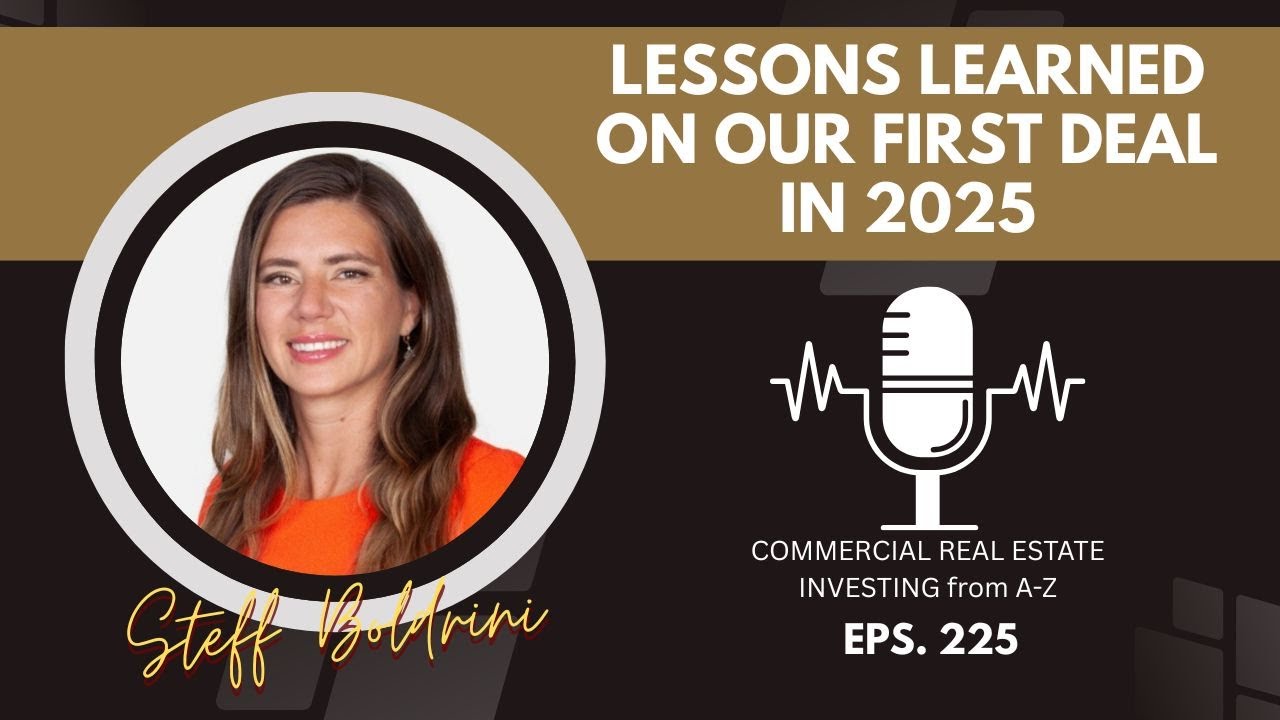
Lessons Learned on Our First Deal in 2025
20:11

Lessons Learned on Our First Deal in 2025

Commercial Real Estate Investing from A-Z 30.10.2025 34 просмотров 2 лайков

Machine-readable: Markdown · JSON API · Site index

Поделиться Telegram VK Бот
Транскрипт Скачать .md
Анализ с AI
Описание видео
Today we are talking about a deal we recently raised for, mostly so you can understand some of the things that happen behind the scenes and why we decided to have this be our first syndication for 2025. Read this episode here: https://tinyurl.com/2km2c2k9 Listen to the episode here: https://tinyurl.com/4x7y3hv4 Why did it pass our test besides the fact that these partners have a great track record and having exited 4 deals with them? 1. Low vacancy. There is a shortage of small bay industrial in the Phoenix market, people have been building large bay industrial. For the small tenants that need a smaller space, the available inventory is very low. 2. Leases expiring and below market. A lot of the tenants had their lease expiring during our ownership, and the vast majority is below market, one of the largest tenants in the property with the biggest rent upside, already decided to not renew. We underwrote them not renewing a year from now, and they are significantly below market. 3. IG Leases. All of the tenants except one are on industrial gross (IG) leases. We are converting all of the tenants to NNN leases. This will also increase the bottom line for our investors. 4. Prohibited cost to build. Besides the market having very low vacancy, the vast majority of tenants being between 30 to 70% below market, and the leases expiring in the next 24 months, small bay industrial is cost prohibited to build. It costs more to build than the rents that you’re going to get. We are purchasing the property at a significant discount to replacement cost. The property was built in 1999 and it looks really good. 5. Location. The property has freeway visibility and is right next to the freeway exit. 6. Market. Phoenix is a phenomenal market. It has a 16% population growth since 2010, a job growth of 45 to 50% since 2010. The personal income tax is very low at 2.5%. They’re exploding in terms of plants, campuses, and jobs being created in the area. There is a $65 billion chip plant being created next to the property. There is a $20 billion Intel expansion. These are all creating jobs, which is always a great sign of a phenomenal market to be in. Final Thoughts The raise took a little bit longer than what we thought it was going to take. We did not finish the entire raise and still have a couple million to go, however, we did manage to close on the property and the couple million that we have to go is mainly for reserves, so that still needs to be finalized. Commercial Real Estate Tips Learned Recently: Turn expense into income: e.g., rent dumpster out. You can open a Senior Living home in any state if one tenant has a disability due to the ADA / Fair Housing Act. Always over-raise in case investors don’t send funds. If a deal blows up, attorney often refunds fees (to keep you as a client). When you refinance, you don’t pay taxes. This means you can cash out of a property, or get a line of credit, and buy another property without paying taxes on that down payment. Make sure you are comfortable with the LTV’s when you cash out. Interest rates are always negotiable, you can get ~0.25% interest rate break if you open a checking/savings with lender. When developing a property from the ground up, always assume that the piece of land has all of these: endangered species, wetlands, easements, utility issues, trees – until proven otherwise. This means you need to get all of these reports and surveys done (amongst many other things)) before purchasing a piece of land for development. Join our investor club here: https://montecarlorei.com/investors/
Оглавление (5 сегментов)

Segment 1 (00:00 - 05:00)

Welcome to the commercial real estate investing from A to Z podcast. Named one of the best commercial real estate podcasts by Business Insider. I'm your host, Steph Bodrini. We review all aspects of commercial real estate investing and bring the top people in the industry to share their best tips and lessons learned. In today's episode, I will be sharing the story about the latest deal that we were working on, and it's the main reason why I haven't uploaded a podcast in a couple of weeks. Also, I'm going to be sharing part of the notes that I have been taking over the last year from multiple conferences that I have attended, not only from my self- storage mastermind, but also from women in commercial real estate investing and a couple of other events that I attended. The rest of my notes will be shared in the next episode. I'm going to share about the deal that we have just recently raised for just so you can understand what goes on behind the scenes and how we determine if it's a good potential deal for our investors and when it's not. So, this is the very first indication that passed the test for the entire year. And it is a 506b. So, this is not marketing the deal. I'm just sharing how it came to us and why we said yes and what were the results so far. This is a deal that came to us or it came to one of my business partners through a sponsor that he had worked with in the past and they have together done four successful deals that have all exited. Out of the four deals, two were above irr and two were slightly below irr. So these partners are fantastic operators and these all exited within the time frame that was underwritten for. So not only this is the very first thing that we look for people that we know and trust and have great ethics, but also of course we do a deep due diligence on the deal. So, what was this deal for? It was a small bay industrial in Phoenix. And why did it pass our tests this year? Is number one in Phoenix there is a shortage of small bay industrial. people have been building large bay industrial and for the small tenants that need a smaller space the vacancy is very low. Secondly, a lot of the tenants were had their lease expiring during our ownership and they were all below market. The vast majority was below market. one of the largest tenants in the property already decided to not renew. We were underwriting them not to renew a year from now and they are significantly below market. And not only that, all of the tenants except one are on industrial gross leases. So we are converting all of the tenants to triple net leases. So this will also increase the bottom line for our investors. So besides the market having very low vacancy and the vast majority of tenants being between 30 to 70% below market, these leases are also expiring in the next 24 months. And also small bay industrial is cost prohibited to build. That is why there is a lot of demand and a very small vacancy in the market because it costs more to build than the rents that you're going to get. And so we are purchasing the property at a significant discount to replacement cost. Not only that, the property was built in 1999 and it looks really good. and it also has freeway visibility and is right next to the exit to the freeway exit. So, deals like that are very hard to come by and deals that have a targeted 16 to 18% irr. I don't know about you, but I don't see a lot of deals that are genuinely between 16 to 18 targeted irr to the investors nowadays because the interest rates are very high. And it's hard to find a good

Segment 2 (05:00 - 10:00)

value ad deal. In my personal opinion, Phoenix is a phenomenal market. It has a 16% population growth since 2010. A job growth of 45 to 50% since 2010. The personal income tax is very low. It's two 2 and a. 5%. And also they're simply exploding in terms of plants and campuses and jobs being created in the area. So there is a $65 billion chip plant being created next to the property. There is a $20 billion Intel expansion. These are all creating jobs, which is always a great sign of a phenomenal market to be in. So vacancy for this type of property in the Phoenix market is 4. 7%. And that is pretty much the value ad. And part of the due diligence was to talk with every single tenant and understand if they were renewing or not. And all of the tenants were interested in renewing their leases. So when you present a deal like that to the investors, of course you also have to talk about potential risks that can come along. And so the risks that we all could think of were very minimal. But however, of course, there are risks for any investments. So we have to disclose those. So the risks that we could think of that could potentially happen for this property is specific tenant failure. And the way that we have mitigated that is the fact that not only have we interviewed every single tenant but also there is a shrinking supply and also we have a very diverse list of tenants. So if a specific industry fails, we are not bound by that industry that could potentially take the whole center down. We have a very diverse roster of tenants. Another potential risk is having higher leasing costs than budgeted. So let's say a tenant does not want to renew their lease because the market rent is cost prohibited and we need to do some TI tenant improvement and that will cost more than what we budgeted and the way that we potentially solve that problem is to value engineer costs down. So what that means is you basically get with the architects or the designers or whatever it needs to be done in that particular unit and you say okay how can we make this item cheaper that item cheaper. So those were the main two risks that we foraw and how we would potentially solve them. The raise took a little bit longer than what we thought it was going to take. We did not finish the entire raise. We still have a couple mil to go. However, we did manage to close on the property and the couple million that we have to go is mainly for reserves. So, that still needs to be finalized. It was very handson. The feedback and lessons learned here were that do not ever raise in August. Everybody is traveling. Some people wanted more cash flow up front. This one has more cash flow towards the end when we exit the deal. So we are potentially exiting within two to three years and that's when the bulk of the irr comes along. I think that these investors wanted cash flow, a higher cash flow sooner is because this investor base is a little bit older. So, they prefer stable cash immediately versus having to wait. And the fact that we have done four other deals with them that were successful and that exited within the proper time frame, I think that also helped. So, reputation is always incredibly important. And me and my partner, we are all about reputation. And I think that's all the feedback I have to share with this opportunity and lessons learned. So now I'm going to move on to my notes from some of the conferences that I attended over the

Segment 3 (10:00 - 15:00)

last year. Turn the expense of a property into income in another property or in another business. For example, if you have dumpsters in your property, you can rent that dumpster out. Another point, you can open a senior living home in any state if one tenant has a disability. So many people may know that a lot of states and neighborhoods give a very hard time for senior living homes coming into their neighborhoods. But one way to make that go through in any state is if you have a tenant that has a disability. Another tip, over raise in case investors don't send the funds. We never really had the problem that investors didn't send funds because it's a very short time frame. We've had maybe one or two that have signed the PPM agreement, but they backed out in the ends, but the vast majority of people, they come through. So, this tip is more for a fund structure. And by the way, funds right now are very difficult from what I've heard to raise. Investors want to have a very specific deal that they know exactly and what is going on and that they decide yes or no, I want to be part of that deal. So if a deal blows up, your syndication attorney will often refund their fees in order to keep you as a client. So, if something does not go right with a deal, normally they will refund their fees. Another thing that I never really thought about is another incredible reason why I believe in buy and hold. Buy and hold real estate forever. Here it is. When you refinance and when you cash out of a property, meaning you take a line of credit against that property or you refinance and you take some money out, you do not pay taxes on that money. So, you can take a line of credit or you can refinance and take some money out and buy another property. Think about that. So, now you have two properties. You don't need to sell a property and pay taxes if you don't do a 1031 and you will end up with two properties. Of course, make sure that your loan to value is comfortable for you. This is a tip that I learned this year. This one you all should know by now, but everything is negotiable. even the interest rates that you get a term sheet from your lender. And if you actually open a checking or savings account with that bank, you typically get a quarter% break on your interest rate. When you are building a property or when you are doing your due diligence to build on a piece of land, always assume that all of the following problems exist until proven otherwise. These problems are endangered species, especially if you're in California, wetlands, easements, utility issues, and trees. So, always assume that these things exist in that piece of land, which means you have to get all of your reports done to prove that they do not exist. Right now, a lot of sellers are open to doing seller financing. It is an amazing time to buy, at least for self storage and other asset classes, because the rates are so high. Some sellers are willing to take on a note at a lower interest rate just so they can get rid of the property. For self storage, we have a broker that gives us the insights when they put a property for sale at a 6 and 12 cap. They're actually selling at about 8 and 1/2 cap rates depending on the state and location. When the market was super hot just two, three years ago, they were getting about 8 n 10 offers. Right now, they're getting a couple of

Segment 4 (15:00 - 20:00)

offers. So, the bottom line is make an offer. You should be calling brokers regularly so they can keep you in mind. You should also, for some of you, if you're starting with smaller properties, tell them, "I want the things that you may not want to bother with, and I will pay you a full commission. " So, the deals that are too small for these brokers that take the same amount of work as a larger property, tell them just send it my way and I will pay you a full commission. When you are of course making an offer, you need to add your background. For example, I am Stephanie Bodrini. I own X number of units of self- storage. I own other properties. I'm part of Scott Meyer self- storage mastermind which has I don't know how many million square feet of self- storage as a group. And here is my offer. Now I will move on to a couple of specific asset classes. In one of the conferences there was a speaker that only does luxury student housing. Uh so she said that there is a 50% shortage in student housing. In student housing, your leases are from June 1st to May 31st. They are typically a two-year lease and she basically takes a large home right next to a very good bar that all of the students wants to go. So, you have to be very specific about location and she basically furnishes the entire house is the most beautiful house uh for the students. So, they do a master lease, and I'm not sure exactly how that is done. If it's just one of the parents, she has a 2-year wait list for her homes. And some of the rules are the students have to introduce themselves to the neighbors, they have to give the neighbors their phone number, and they have to handle their own work orders. Uh so that shows responsibility and the students are not just telling the parents. So the parents reach out and create the work orders. Uh very interesting. She also has a WhatsApp uh group chat with everybody and she also hosts a parent student party so everybody can get to know each other. Uh the house is again fully furnished. She's getting more than twice uh the rent as a normal room is getting in other homes and uh the students only have to bring their pillow, their sheets and their towels. So really interesting asset class and I encourage you to obviously as always take courses on it if that's something you want to pursue. Moving on to just one tip on the multifamily world. Today, there are some operators that have 96% of their leases done without tours, without in-person tours, and that is done through Matterport. I don't know who would do that myself. I need to see the place in person. So, I just cannot comprehend how 96% of their leasing is done through Matterport on their website. Uh, as far as self storage, so for self storage, sometimes if you have extra piece of land, instead of building and expanding with an actual buildout, you just get containers that are specifically built for self converted to self- storage units. So the you just buy an actual shipping container that has been subdivided between four and eight units and you just put the container in your extra piece of land. That's just a way to add value to your facility without spending a lot of money in construction. So this tip is that these containers must have ventilation. There have been some of them that everything inside of their unit has rotten because uh it did not have ventil proper ventilation and that was a tip that one of the operators learned the hard way. So those are the tips for this episode. I will continue with my notes on the next episode. I hope you guys learned something from it. And as always, if you'd like to learn more about our next opportunities, make sure

Segment 5 (20:00 - 20:00)

to subscribe at moneye carloi. com/investors. And I will see you next time.

Другие видео автора — Commercial Real Estate Investing from A-Z

Ctrl+V

Экстракт Знаний в Telegram

Экстракты и дистилляты из лучших YouTube-каналов — сразу после публикации.

Подписаться

Дайджест Экстрактов

Лучшие методички за неделю — каждый понедельник