Why Backlog Refinement Feels So Exhausting
5:07

Why Backlog Refinement Feels So Exhausting

Mountain Goat Software 31.03.2026 632 просмотров 25 лайков

Machine-readable: Markdown · JSON API · Site index

Поделиться Telegram VK Бот
Транскрипт Скачать .md
Анализ с AI
Описание видео
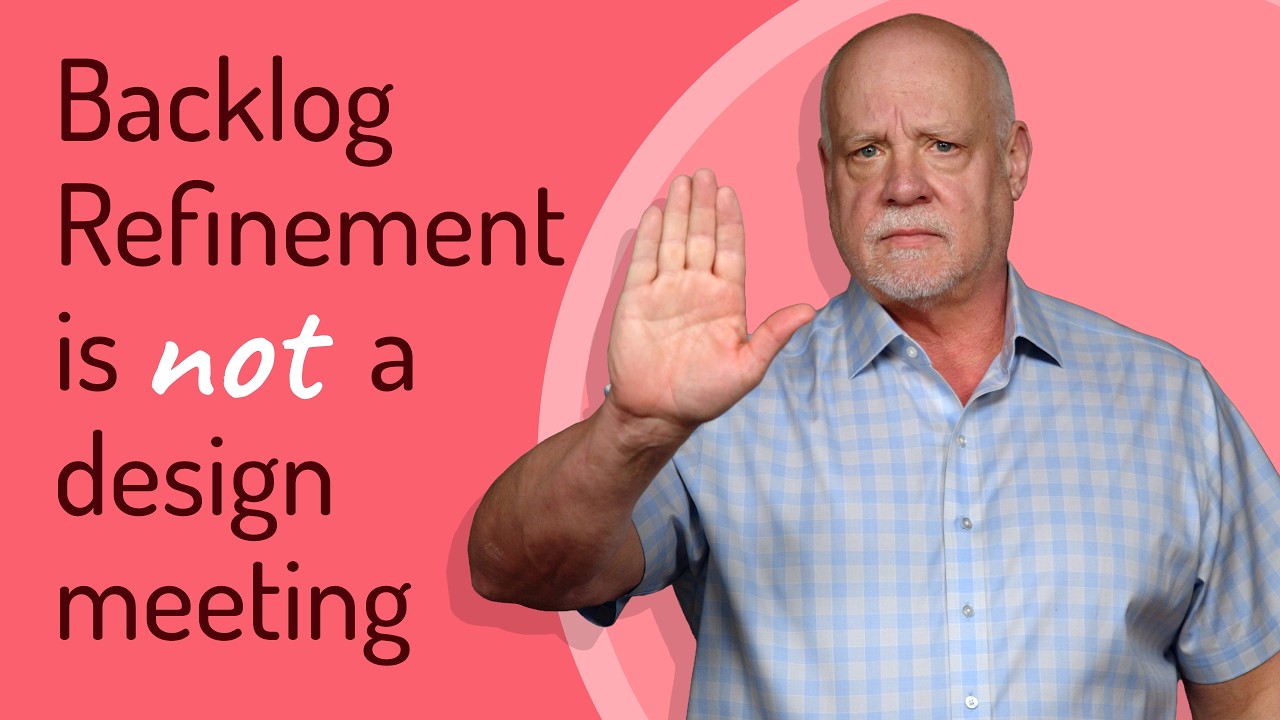
Backlog refinement is supposed to make sprint planning easier. But for many teams, it becomes the most exhausting meeting of the sprint. Why? Because refinement quietly turns into a design session. Instead of clarifying scope, teams debate architecture, optimize solutions, and try to eliminate every unknown — long before work even starts. Here’s the shift: Refinement is not about designing the solution. It’s about reducing sprint-threatening uncertainty. If the team can reasonably believe the work will fit in a sprint, refinement is done. Anything beyond that? You’re probably over-refining. Watch next (Agile Estimation & Planning Playlist): ▶ https://www.youtube.com/playlist?list=PLQC5drIXMW_DGwEQHtc4ylrz4W2puEbdZ Get practical Agile guidance: https://www.mountaingoatsoftware.com?utm_source=youtube&utm_medium=video Chapters 00:00 What Backlog Refinement Is Supposed to Do 00:15 Why Refinement Turns Into Design Meetings 00:37 The Real Goal of Backlog Refinement 01:35 A Simple Test: Scope vs Design 02:01 The Right Question to Ask in Refinement 02:19 Do You Need the Whole Team in Refinement? 04:00 The Problem with Over-Refining Too Early 04:36 How to Keep Refinement Focused and Effective
Оглавление (8 сегментов)

What Backlog Refinement Is Supposed to Do

Backlog refinement is supposed to make sprint planning easier, but for many teams, refinement itself becomes the most exhausting meeting of the sprint. The reason is simple. Refinement quietly turns into a design session. You

Why Refinement Turns Into Design Meetings

schedule an hour to clarify upcoming work. 40 minutes later, you're debating architecture, comparing frameworks, sketching diagrams, and optimizing solutions. And you still haven't answered the only question refinement exist to answer. Can this fit in a sprint? Design work is not the problem. Good teams design thoughtfully. The problem is timing. Refinement has a specific

The Real Goal of Backlog Refinement

job. It clarifies scope. What's included, what's not included, what assumptions are we making, what unknowns could dramatically increase scope? Refinement is about reducing sprint-threatening uncertainty, not eliminating all uncertainty. If the team can reasonably believe an item will fit in a sprint, refinement of that item is done. You do not need a finalized design to start work. Teams drift into design for predictable reasons. Uncertainty is uncomfortable, and designing feels productive. It feels like progress. Many engineers have been rewarded their entire careers for solving problems early and thoroughly. So, refinement feels like the right time to do that. And sometimes meetings drift simply because no one has clearly defined what refinement is for. If you don't define the purpose of a meeting, it will expand to fill the space. Here's

A Simple Test: Scope vs Design

a simple test. During refinement, ask whether the conversation is clarifying scope or optimizing a solution. If you're debating frameworks, refactoring strategies, or architectural trade-offs, you may already be past the level refinement requires. That doesn't mean those discussions are wrong. It means they should happen at the right time. Come back to the threshold question. Do

The Right Question to Ask in Refinement

we know enough to believe this item can probably be completed in the sprint? If yes, stop. If no, identify the biggest unknown and resolve that. That question requires enough clarity to commit responsibly, not a perfect design.

Do You Need the Whole Team in Refinement?

design. There's another subtle issue. Some teams assume involving everyone in refinement means discussing everything in front of everyone. I don't think that's necessary. Refinement is about surfacing the majority of important questions, not exhausting every possible one. On many teams, you can involve most, but not all of the team in a session and still surface the vast majority of issues. You should rotate participation so everyone stays engaged over time without turning every refinement meeting into an exhaustive design review. The goal is not maximal participation. It's sufficient clarity. Over-refinement also happens when teams work too far in advance. They debate design decisions for items several sprints away. By the time the sprint arrives, priorities have shifted or assumptions have changed, and the team has to revisit the discussion. That's wasted effort. Refinement creates the most value when it focuses on the next sprint or two, where clarity directly improves commitment and predictability. Here's a practical guideline. During refinement, stay at the level of scope and risk. Clarify what the story includes and what it does not include. Identify assumptions, surface dependencies, highlight any unknown that could dramatically increase the size of the work. If resolving an unknown requires a short investigation, that may be appropriate. If resolving it requires designing an entire subsystem, you're probably going too far. Over-refinement has real costs. It consumes time, it drains energy, it

The Problem with Over-Refining Too Early

creates the illusion of certainty, and it reduces adaptability because once a team feels it has thoroughly designed something, it becomes harder to change direction. Lightweight refinement preserves flexibility. The purpose of refinement is not to design the solution. It's to make the work achievable within a sprint. Design continues during the sprint when the team has real context and real feedback. So, if your refinement sessions regularly feel too long, technical, and exhausting, tighten the focus. Ask what

How to Keep Refinement Focused and Effective

must be true for this item to fit in a sprint. Answer that, and then stop. You don't need certainty. You need enough confidence to commit responsibly. If you'd like a practical checklist to use during backlog refinement, along with a full guide that walks through these ideas in more detail, you'll find links in the description. And I'm curious, on your team, does refinement tend to drift into design, or does it stay focused on scope and readiness?

Другие видео автора — Mountain Goat Software

Ctrl+V

Экстракт Знаний в Telegram

Экстракты и дистилляты из лучших YouTube-каналов — сразу после публикации.

Подписаться

Дайджест Экстрактов

Лучшие методички за неделю — каждый понедельник